- H
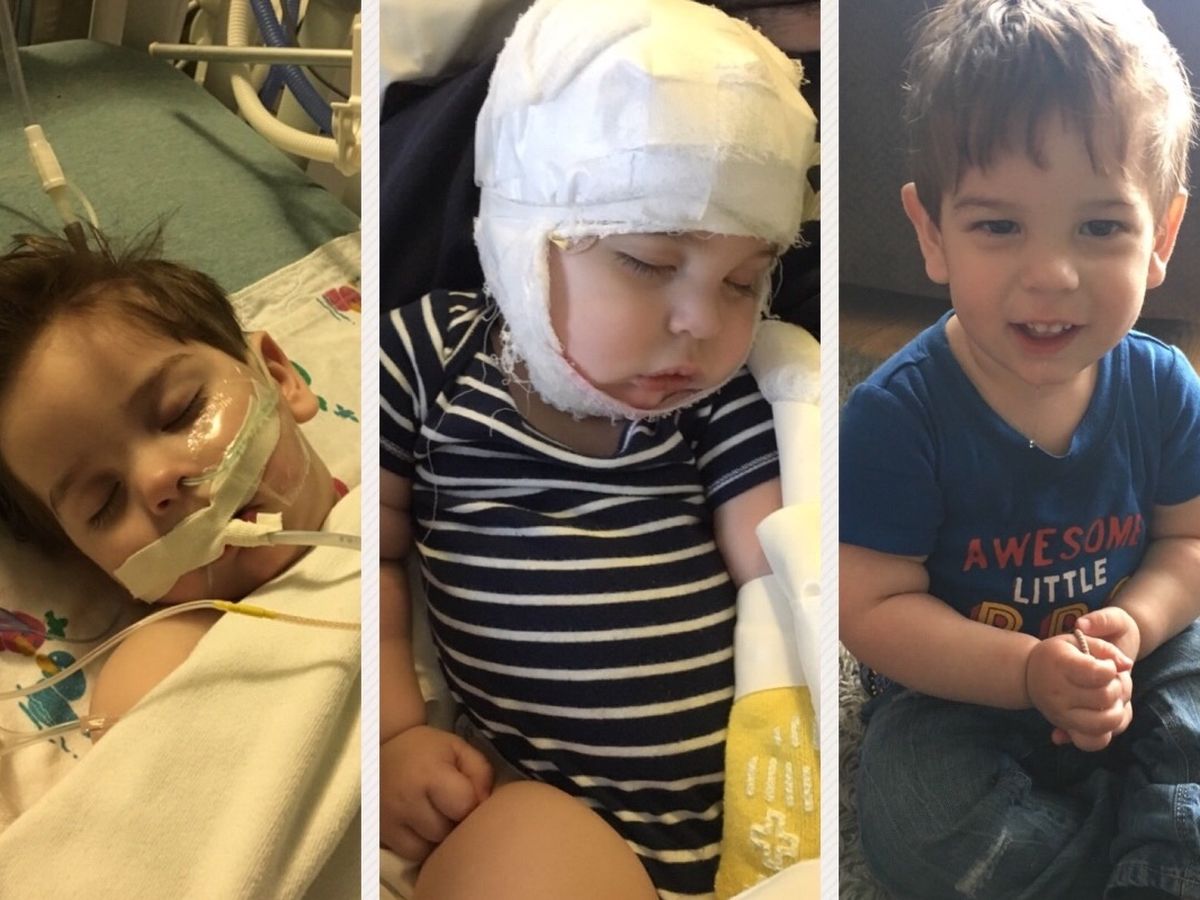
After years of fertility issues, Sawyer Morin was born a healthy baby boy to Sam, Sara and big brother Salvador. He was a happy, smily, content little guy. Then at 4 months old he had his first seizure. He went on to have seizures every month or two until he was about 8 months old. At 6 months he was put on his first seizure med. When he was 8 months old he had his first status grand mal seizure that lasted 2 1/2 hours, and stopped his breathing and heart. Sawyer was gray when he was ran from the ambulance into the emergency room. He was induced into a coma to get the seizure to stop. He was able to come off the respirator after only a few hours, and he was able to breath on his own. But this seizure set him back months. He had to relearn to crawl, stand, and eat solid foods. He did recover after a few months, and did well with no seizures for almost 4 months. But right after his one year birthday Sawyer started having partial seizures and absence seizures daily. And on January 20th at 12 months old Sawyer had another big grand mal seizure that last 40 minutes. And then another grand mal seizure two days later. The next 4 months were filled by multiple seizures, hospitalizations at the PICU and comas due to his breathing stopping when trying to stop grand mal seizures that would last 40+ minutes. On March 8th Sawyer was diagnosed with SCN1A gene mutation, and then Dravet Syndrome. Dravet Syndrome is an uncontrollable serious form of epilepsy that is lifelong. One in five children do not make it to adulthood. Sawyer requires 24 hour care, along with multiple weekly therapies, and multiple daily medications. Sawyer is also in the Keto diet for Epilepsy, which is extremely strict diet to follow that is very high in fat, and low in protein and carbs. He is only 4 weeks into the diet, but it has helped Sawyer with his behavior, congnative skills, and seizure control.
Recently Sara had to cut back her daycare, and will soon stop all together to give Sawyer the full time care he needs. This has effected the Morin Family’s income and day to day life. Any support given is greatly appreciated as the Morin Family gets through this time and hopes for a brighter future for Sawyer and their family.
Below is from the Dravet Foundation Website, which goes into depth a little more about Dravet Syndrome.
“Dravet syndrome is a rare, catastrophic, lifelong form of epilepsy that begins in the first year of life with frequent and/or prolonged seizures. Previously known as Severe Myoclonic Epilepsy of Infancy (SMEI), it affects 1:15,700 individuals, 80% of whom have a mutation in their SCN1A gene [1]. While seizures persist, other comorbidities such as developmental delay and abnormal EEGs are often not evident until the second or third year of life. Common issues associated with Dravet syndrome include:
Prolonged seizures
Frequent seizures
Behavioral and developmental delays
Movement and balance issues
Orthopedic conditions
Delayed language and speech issues
Growth and nutrition issues
Sleeping difficulties
Chronic infections
Sensory integration disorders
Disruptions of the autonomic nervous system (which regulates things such as body temperature and sweating)
Current treatment options are limited, and the constant care required for someone suffering from Dravet syndrome can severely impact the patient’s and the family’s quality of life. Patients with Dravet syndrome face a 15-20% mortality rate due to SUDEP (Sudden Unexpected Death in Epilepsy), prolonged seizures, seizure-related accidents such as drowning, and infections [2,3]. Research for a cure offers patients and families hope for a better quality of life for their loved ones.”
Recently Sara had to cut back her daycare, and will soon stop all together to give Sawyer the full time care he needs. This has effected the Morin Family’s income and day to day life. Any support given is greatly appreciated as the Morin Family gets through this time and hopes for a brighter future for Sawyer and their family.
Below is from the Dravet Foundation Website, which goes into depth a little more about Dravet Syndrome.
“Dravet syndrome is a rare, catastrophic, lifelong form of epilepsy that begins in the first year of life with frequent and/or prolonged seizures. Previously known as Severe Myoclonic Epilepsy of Infancy (SMEI), it affects 1:15,700 individuals, 80% of whom have a mutation in their SCN1A gene [1]. While seizures persist, other comorbidities such as developmental delay and abnormal EEGs are often not evident until the second or third year of life. Common issues associated with Dravet syndrome include:
Prolonged seizures
Frequent seizures
Behavioral and developmental delays
Movement and balance issues
Orthopedic conditions
Delayed language and speech issues
Growth and nutrition issues
Sleeping difficulties
Chronic infections
Sensory integration disorders
Disruptions of the autonomic nervous system (which regulates things such as body temperature and sweating)
Current treatment options are limited, and the constant care required for someone suffering from Dravet syndrome can severely impact the patient’s and the family’s quality of life. Patients with Dravet syndrome face a 15-20% mortality rate due to SUDEP (Sudden Unexpected Death in Epilepsy), prolonged seizures, seizure-related accidents such as drowning, and infections [2,3]. Research for a cure offers patients and families hope for a better quality of life for their loved ones.”