Reading and Reviewing 50 Galleys of 2026 Books
Be the first to donate
Inspire others and help Mark build momentum.
1st donor
I Have “Advanced Reader” Galleys of 50 Books. I’m Going to Review Them All
From Colson Whitehead to Marilyn Monroe.
Mark Judge
In the past year I’ve announced that I am leaving journalism. It’s taken longer than I expected. There was always one more thing to cover, one more score to settle, something I love that I just wanted to express.
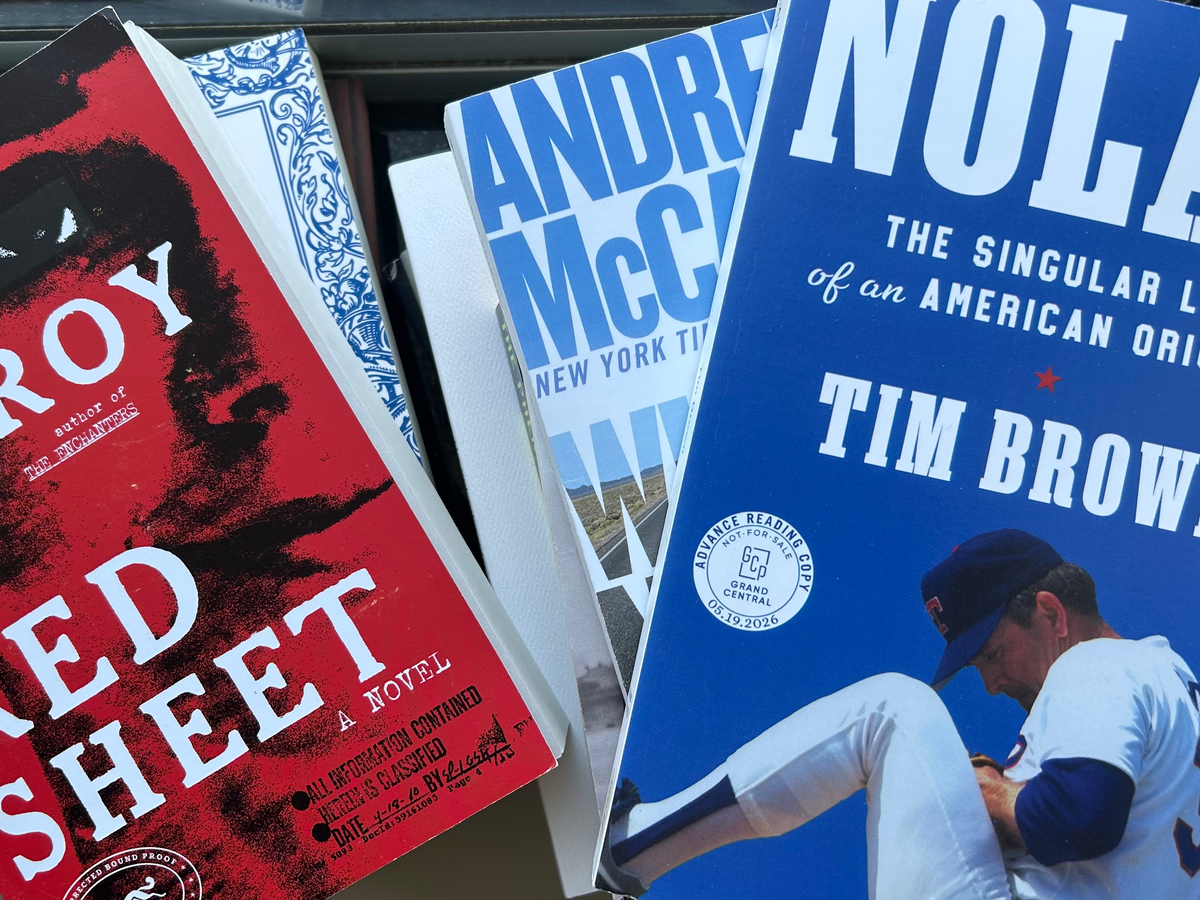
There’s also the 50 advanced review copies of books I have. These “galleys” as they are called are piled high in corner of my office. I love books, and publishers like me because I review their books (well, maybe except for Harper, but I’ll get to that), and I feel like if they were nice enough to send me advanced galleys of some cool-looking books, the least I can do is review them.
All 50 of them.
I’m not going to be weeding out the books to find ones that I find most interesting. I’m just going to take the 50 books in my pile and review them. I won’t give out the full list now, but I will name a few of the titles. The Blue Flame by George Pelecanos; Nolan: The Singular Life of An American Original by Tim Brown; Red Sheet by James Elroy; Honey by Imani Thompson; The Breakup by Kurt Anderson; The Next Journalism: How the Press Must Change to Serve Democracy by Tom Rosenstiel; Bones of Jade, Flesh Like Ice by Gracie Marsden; Every Inch a Lady by Audrey Smaltz; When America Roared: How the 1980s Saved, Then Broke, the Country - and Led Us To Today by Jonathan Kaufman; I Am the Night: The Ultimate Unauthorized History of Batman: The Animated Series by Daniel Dockery; The Jews and the Left by Batya Ungar-Sargonby; Marilyn and Her Books: The Literary Life of Marilyn Monroe by Gail Crowther; The Cool Machine by Colson Whitehead; Exit 8 by Genki Kawamura; D: Heavy Water by Neal Stephenson; Depraved: The Story of Dangerous Art by Daisy Dixon; Last Night in Brooklyn by Xochiti Gonzalez; Pope Leo XIV: The Biography by Elise Ann Allen; Nearshore by Steve Hawk; American Patriarch: The Life of George Washington by H.W. Brands; The Disappears by Marlon James; Punk in Fifty Pieces: Punk Rock, Post-Punk, New Wave, and the Five Years That Changed Pop Music Forever by Kevin Dettmar; and A Sudden Flicker of Light: A Revisionist History of Movies by David Thomson.
I also have galleys of books that are being reissued in new editions: Ordinary People by Judith Guest and To Jerusalem and Back by Saul Bellow.
More than ever, reading is the only surefire way to inoculate yourself against AI and the loss of critical thinking. If you’ve read books, people can’t coerce you. Books also offer a way to understand your place in the world. In his 2025 book Stranger Than Fiction: Lives of the Twentieth-Century Novel, Edwin Frank explores how the novel has reflected and challenged the world over the last century. Frank explores how novelists in the 20th Century broke free of the conventions of the 19th century, using new forms of language and expression to chart the subconscious and address the social change of the 20th Century. He writes, “Books like Lolita, Alejo Carpentier’s The Lost Steps, Ralph Ellison’s Invisible Man, Gabriel García Márquez’s One Hundred Years of Solitude, and George Perec’s Life A User’s Manual seek both to live up to and even outdo the spectacular precedent of the century’s early masterpieces while also trying to reckon with the scandal of the century’s history. That history becomes the overt subject of Elsa Morante’s no less prodigious History, while more concentrated books like Anna Banti’s Artemisia, Chinua Achebe’s Things Fall Apart, and Marguerite Yourcenar’s Memoirs of Hadrian.”
One of my favorite writers Stranger Than Fiction explores is Saul Bellow, author of Herzog, The Adventures of Augie March, Seize the Day and other masterpieces. Bellow also wrote a notorious novel in 1970 called Mr. Sammler’s Planet. Disgusted with the radicalism of the time, Mr Sammler is a precursor to the common-sense American who would emerge decades later to vote for Trump. “New York,” Bellow writes, “makes one think about the collapse of civilization, about Sodom and Gomorrah, the end of the world . . . with disintegration, with crazy streets, filthy nightmares, monstrosities come to life, addicts, drunkards, and perverts celebrating their despair openly in midtown.”
In Stranger Than Fiction, Frank sums of Bellow’s work: “In the great interior, where the great city of Chicago sits on the shore of the Great Lakes at the edge of the Great Plains, the great theme is trumpeted, America, but not pompously and without a trace of philistine narrowness—no, as an occasion of passionate inquiry and dazzled discovery, of adventure.” In The Adventures of Augie March, Bellow “looked back to fine American feats of the imagination like Huck Finn, while the mix of up-to-date lowlife detail and highbrow allusion, and of course the unapologetic Jewishness of the book, making nice neither to the American mainstream nor the immigrant enclave, gave the book an inclusiveness that, at this postwar, post-Holocaust moment, exemplified everything America had to offer….The book was—another defining American quality—athletic, optimistic, and soulful.”
Athletic, optimistic and soulful. That’s America at her best, and that’s the stuff of great literature.