- U
- T
Save Parkland Walk’s Green Edge
0% complete
£3,210 raised of
150 donations
Save Parkland Walk’s Green Edge
One officer has approved a house on Parkland Walk’s last wild corner. No public vote.
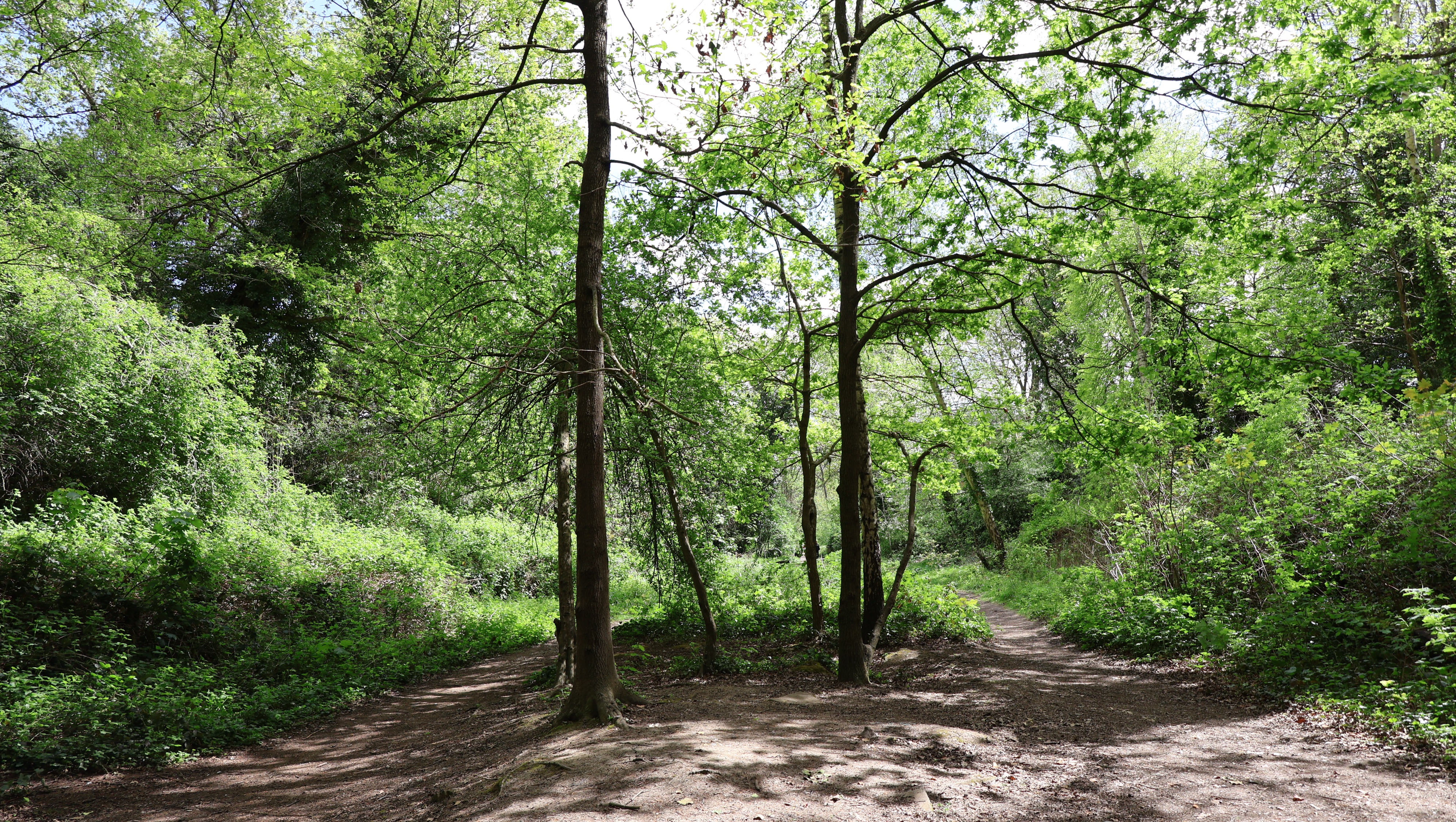
At the end of Shepherds Close in Highgate lies a steep, wooded bank that falls directly down to Parkland Walk, a designated Local Nature Reserve and Site of Metropolitan Importance for Nature Conservation. This is not a gap between buildings or spare “infill”. It is part of the living corridor of the Walk, where bats hunt, foxes move, and hundreds of people pass each day.
For years, attempts to build here were refused. Two Planning Inspectors found this small copse too sensitive for development because of the harm it would cause to Parkland Walk and the Highgate Conservation Area. After the last appeal was dismissed, the developer felled 19 mature trees, fenced the land and re‑labelled it “degraded infill” – then applied again. This time, a single officer signed the house off under delegated powers, with no public Planning Committee, no debate, and no vote. Application Link Here
We are now pursuing a different legal track that addresses the bigger systemic pattern: how councils operate when they're both landowner and planning authority, how trees can be felled with zero planning consequence, and how delegation works when communities object.
The first JR route we explored was too narrow. We are now pursuing a different legal track that addresses the bigger systemic pattern, how councils operate when they're both landowner and planning authority, how trees can be felled with zero planning consequence, and how delegation works when communities object.
We are raising funds to cover ongoing legal advice, potential future JR costs, expert reports, and court fees. Every donation keeps this fight alive.
If you use or love Parkland Walk, please donate what you can and share this page. Even small amounts and shares add up; this is about how many of us are prepared to stand up for this corner before it disappears from the map.
I've also written about what five years of this fight has taught me about care, systems, and what sustains people who defend places. Read Relational Activism; Field Notes #1 here
The full story (for anyone who wants the details) is below.
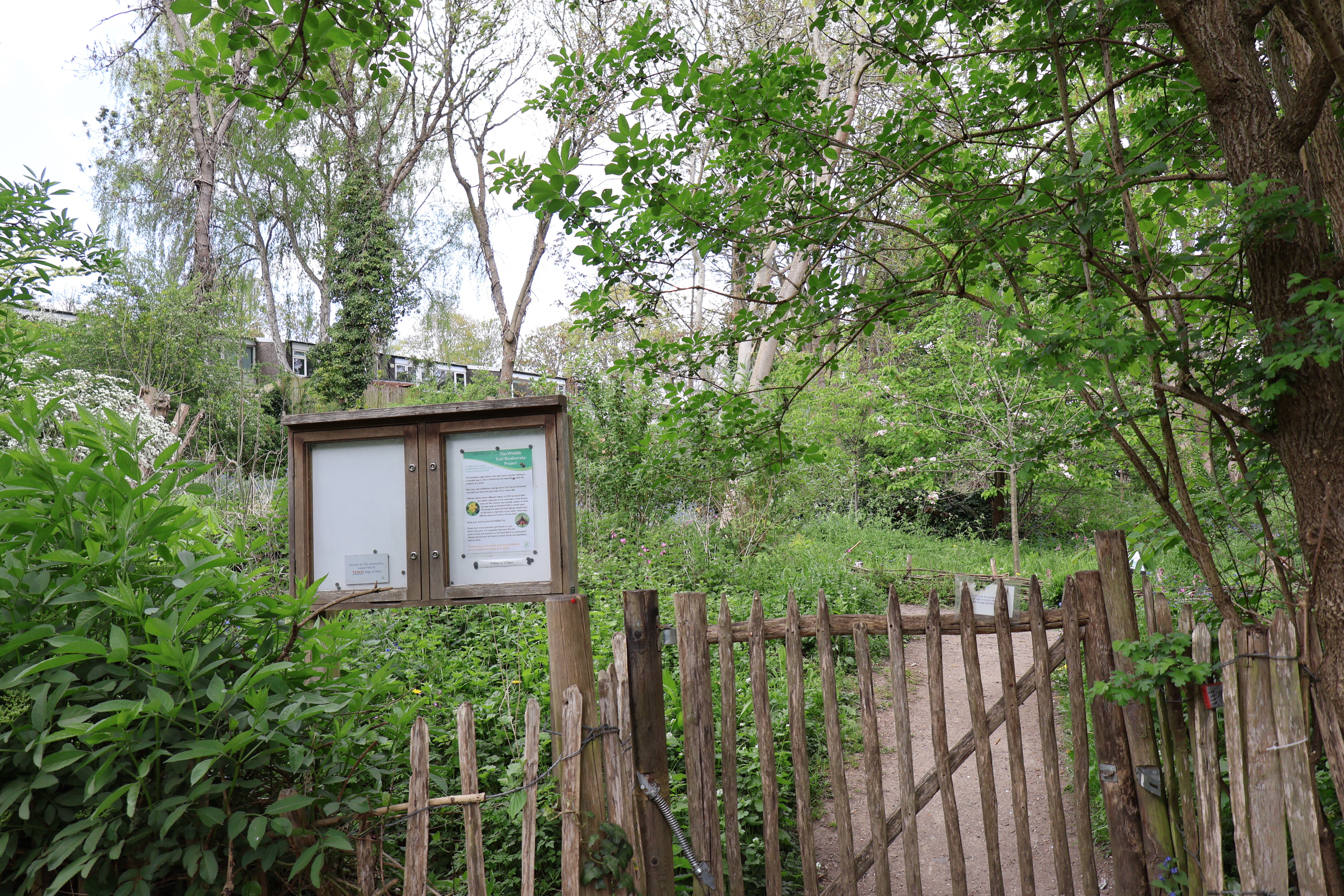
At the end of Shepherds Close in Highgate lies a steep, wooded bank that falls directly down to Parkland Walk, one of London’s longest urban nature reserves. This is not a gap between buildings or infill. It is part of the living corridor of the Walk, a sheltered corridor where bats hunt, foxes move, and hundreds of people pass each day. This is the green edge we are trying to protect. Sign the petition and share.
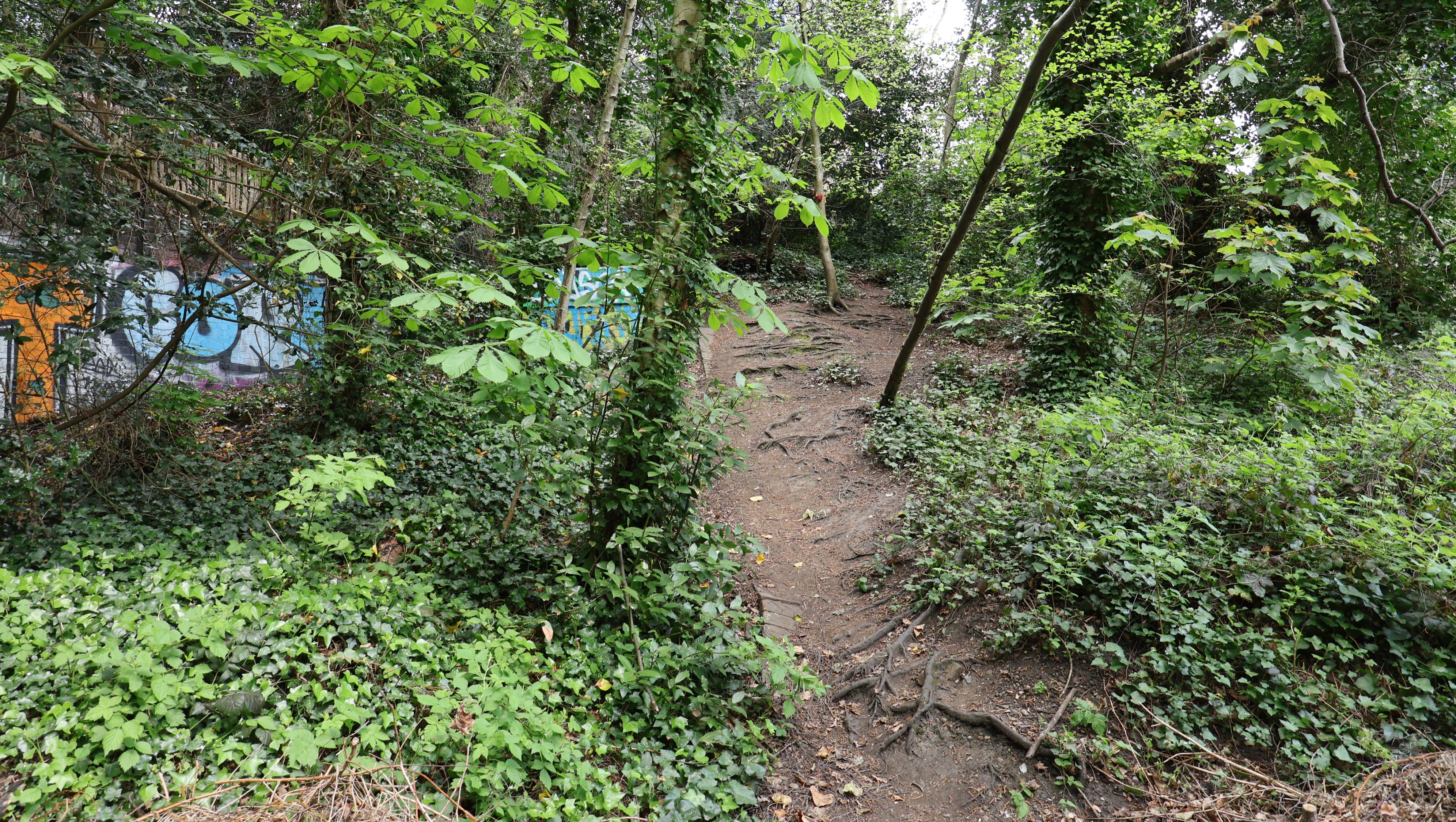
The steep, wooded corridor described as a green lung and bank between the approved house site and Parkland Walk is the green edge we are fighting to protect.
Residents say there is a 40‑year history of planning applications for this small copse being turned down because of the harm they pose to the Parkland Walk and the Highgate Conservation Area.
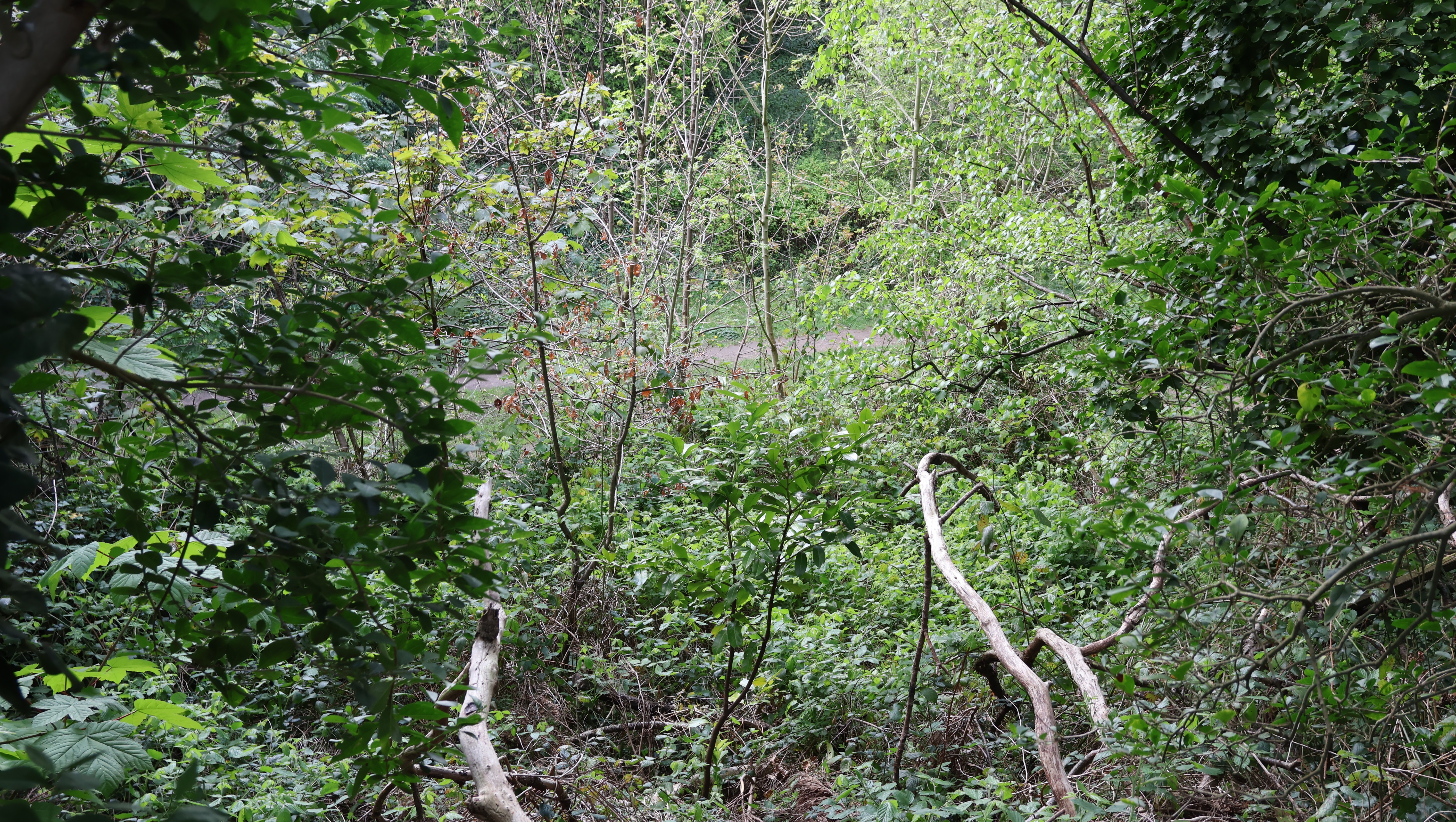
View from Shepherds Close down to Parkland walk, where the developer intends to excavate.
What has happened
Parkland Walk is a designated Local Nature Reserve and a Site of Metropolitan Importance for Nature Conservation.
For years, attempts to build on this land were refused.
Two planning appeals confirmed it is too sensitive for development.
This time, permission has been granted, quietly, under delegated powers, by a single officer.
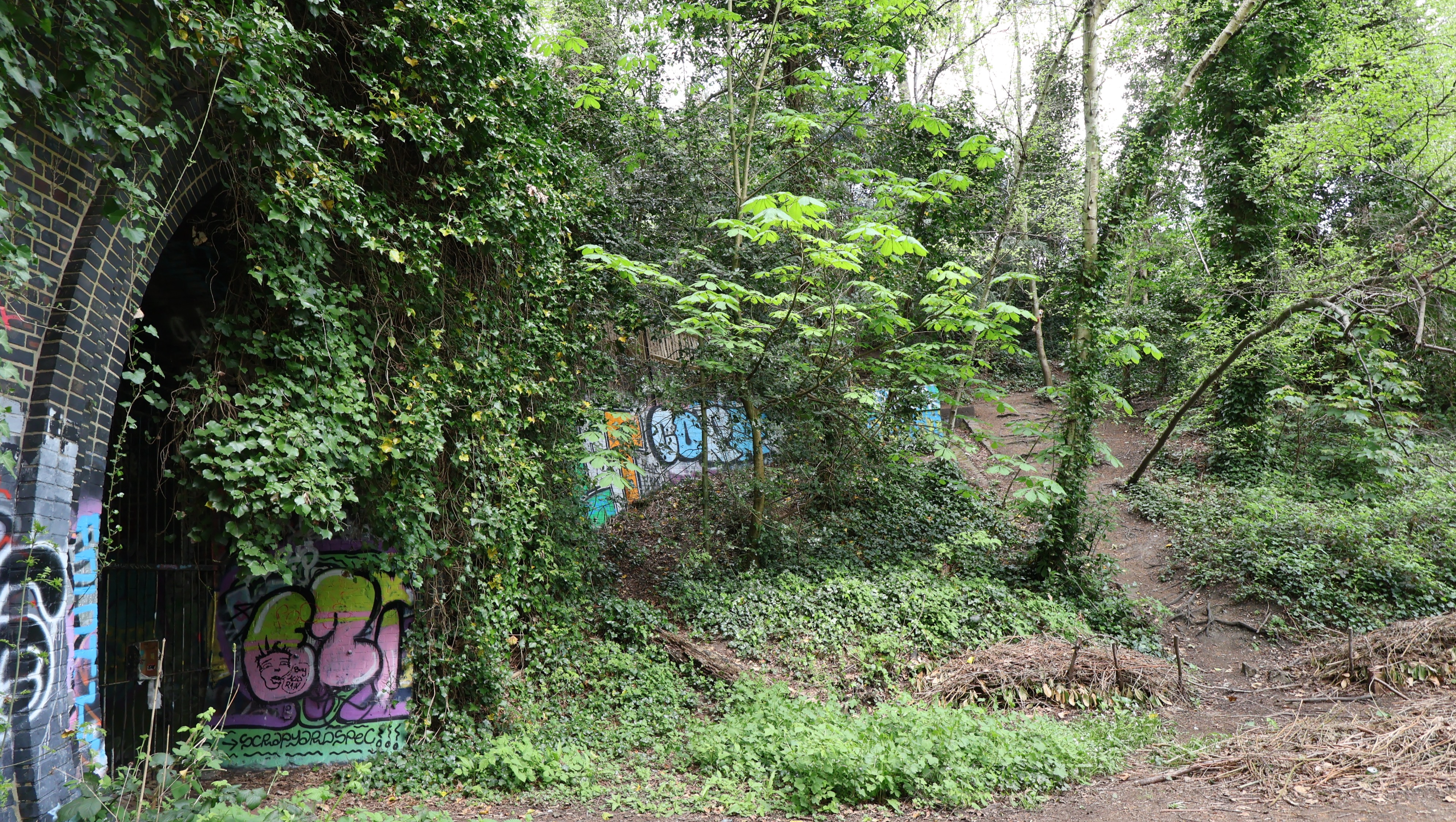
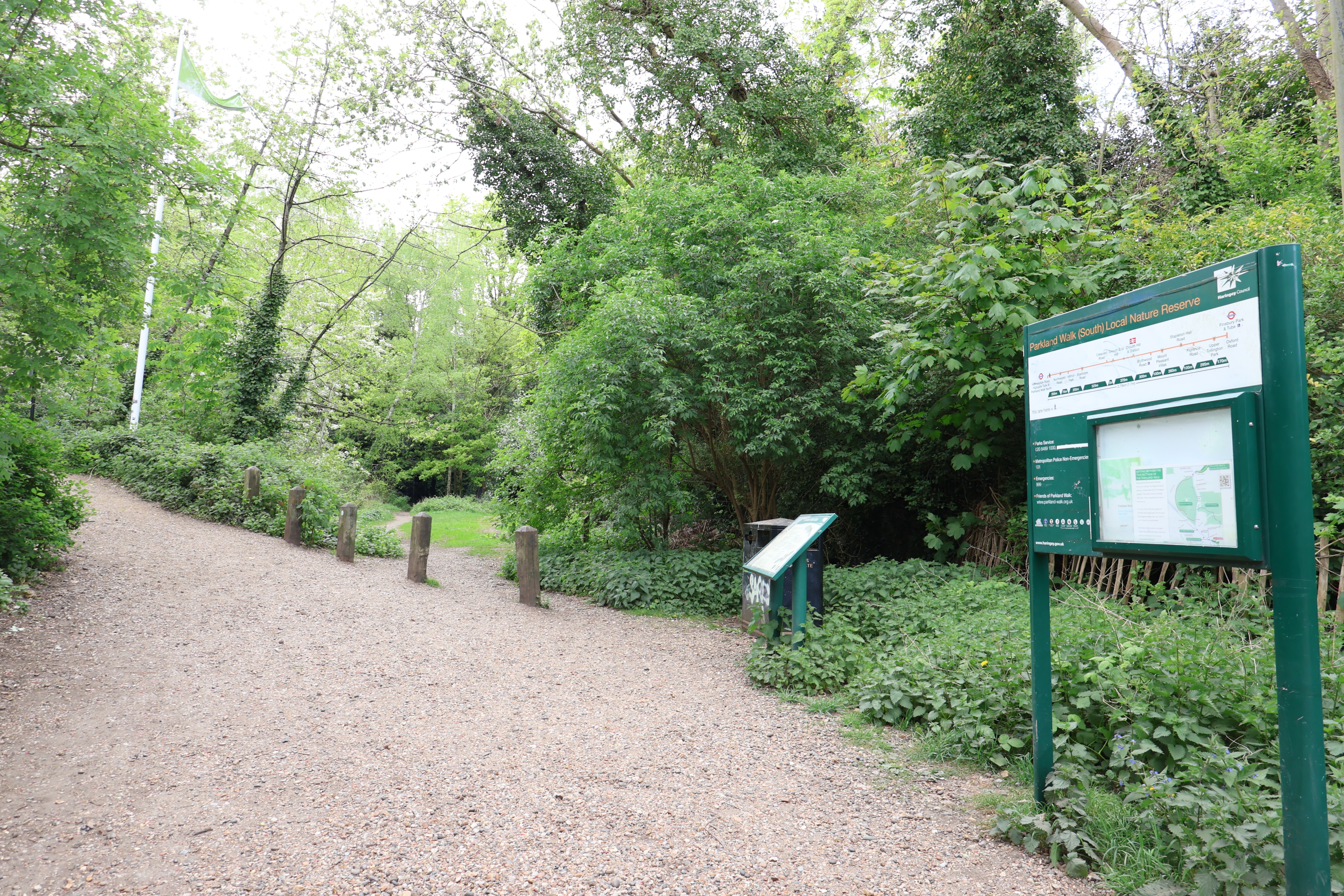
Parkland Walk near the Highgate tunnel, a designated nature reserve used daily by hundreds of people and home to bat roosts.
Why we believe the decision is flawed
We are taking specialist legal advice because of serious concerns;
- Approved by a single officer, not a public Planning Committee, despite strong objections and a long history of refusals
- Two previous appeal decisions set aside without clear or adequate reasoning
- Late design changes were not reconsulted on, including excavation along the steep bank above Parkland Walk. The approved drawings include a deep root-barrier trench (at least 1.5m deep) running along the steep bank directly above the Walk. The applicant’s own arboricultural report identifies these clay soils as sensitive to root damage and compaction.This excavation would cut through root systems connected to the habitat below. We are seeking legal advice on whether these changes required public consultation that did not take place.
- 19 mature trees were felled before the application was decided, and the site has been assessed in its stripped-back state The land has been re-labelled as degraded “infill”, rather than recognised as part of the green edge of a nature reserve
- A 1954 covenant restricting development near the Walk appears to have been breached, with no enforcement action. Specialist planning barristers have advised that the decision is arguably unlawful.
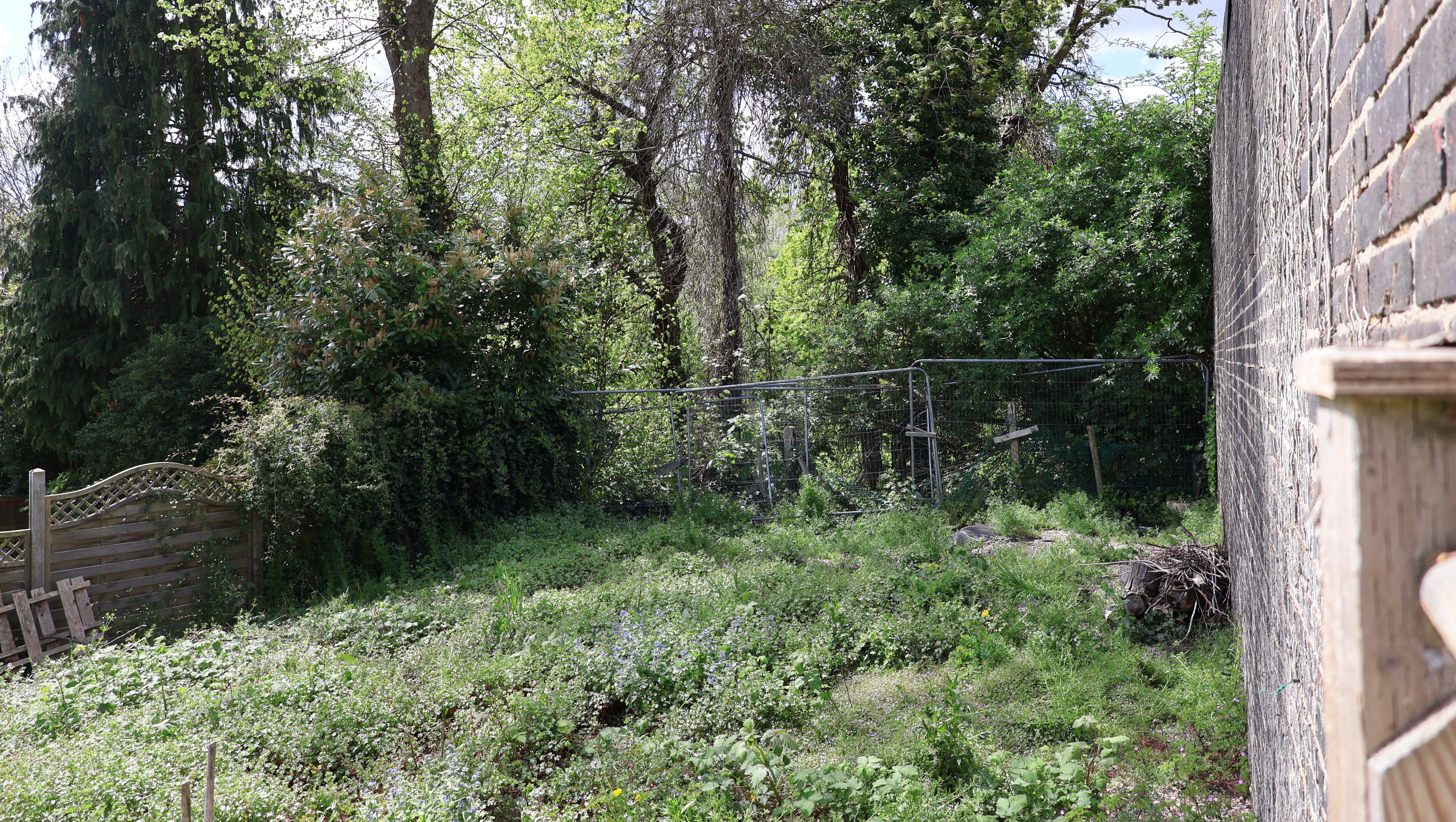
The so-called "infill plot" at Shepherds Close, in reality a vegetated green corridor immediately above Parkland Walk's Local Nature Reserve, fenced and stripped in readiness for development
Why this matters beyond Parkland Walk
If this permission stands unchallenged, it becomes easier for any developer to reclassify a green edge as degraded infill, fell the trees, and obtain permission under delegated powers without a public vote, without adequate regard to planning history, and without proper ecological scrutiny. The same playbook can be used to chip away at green corridors and “protected” spaces anywhere.
The Walk's bat roosts near the Highgate tunnel are among the most significant in North London. Deep excavation on a steep, unstable clay bank immediately above a Local Nature Reserve raises serious questions that were never examined in public.
Once this kind of green edge is gone, it is gone for good.
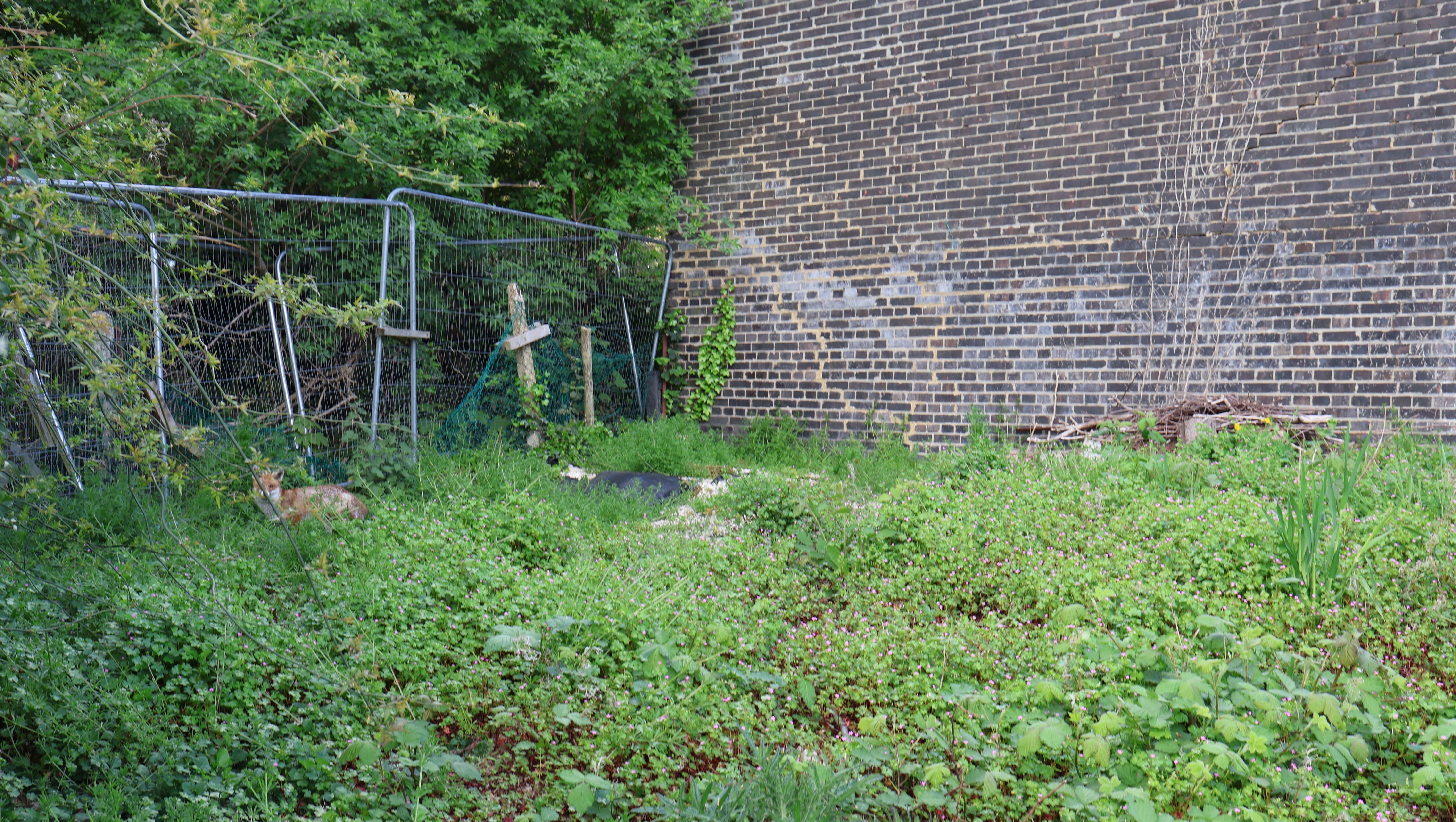
Urban wildlife already uses this small green edge, a fox photographed today on the Shepherds Close plot, above Parkland Walk.
Parkland Walk near the Highgate tunnel, a designated nature reserve used daily by Hundreds of people and home to bat roosts.
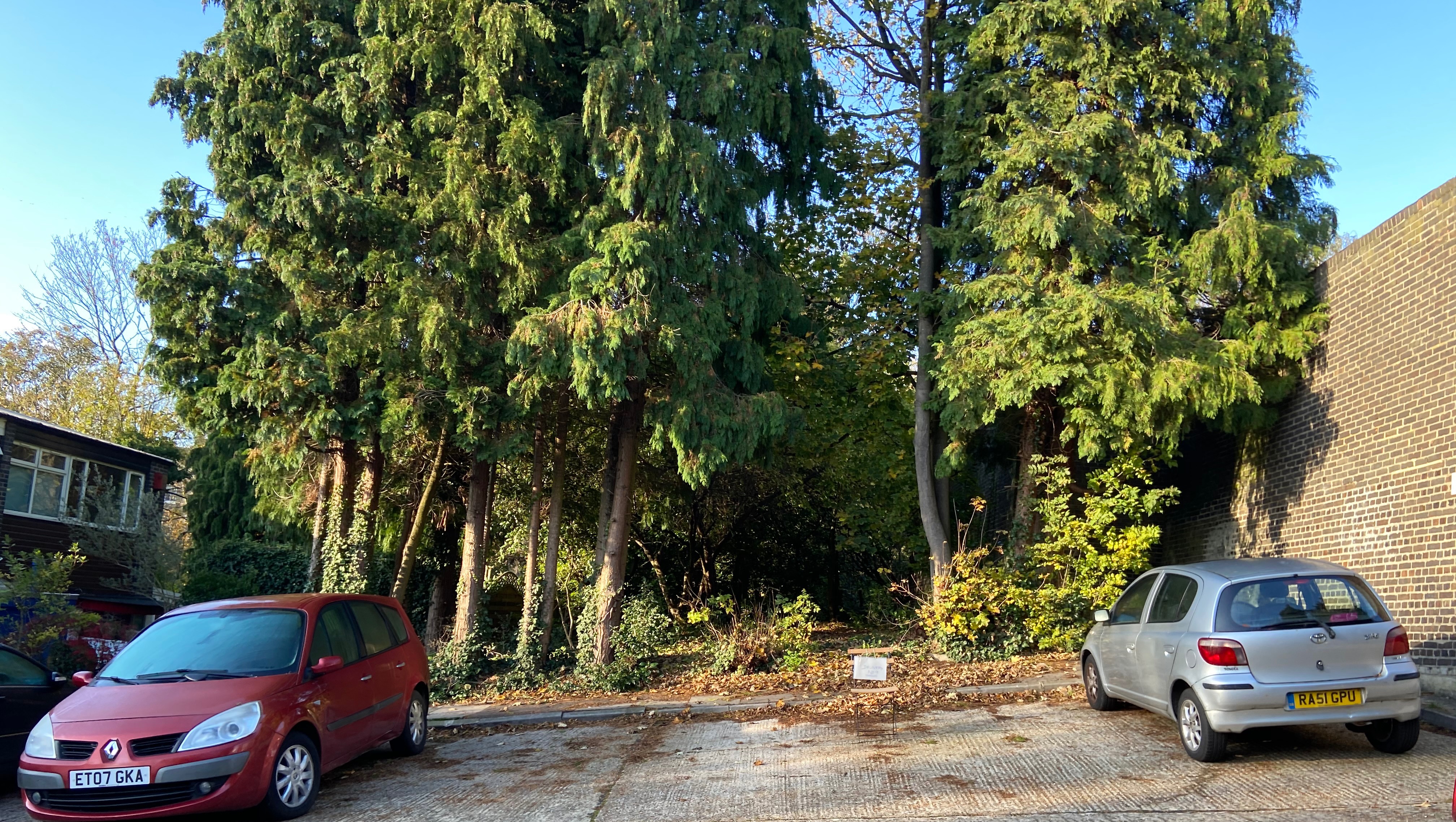
The site's character was significantly altered after the application and appeal were refused in 2020
The site’s character was deliberately altered after the 2020 refusal.
After the previous application (HGY/2019/3260) was refused and the developer lost their appeal in 2020, the trees and shrubs on this small copse were then removed, as confirmed by Haringey’s own arboricultural officer in a 2020 email.
What had been a sheltered green corridor was turned into a bare, fenced plot and is now being treated on paper as “degraded infill” to justify a new application.
In 2020, a Planning Inspector dismissed the appeal (APP/Y5420/W/20/3257208), finding that a very similar house in on this land would harm the character of the area and the setting of the Parkland Walk. You can read that decision here
The FOI response and local reporting together show a clear sequence: The application was refused.
The appeal was dismissed,
and then 19 trees were felled, when there was no new planning permission in place. Ham & High
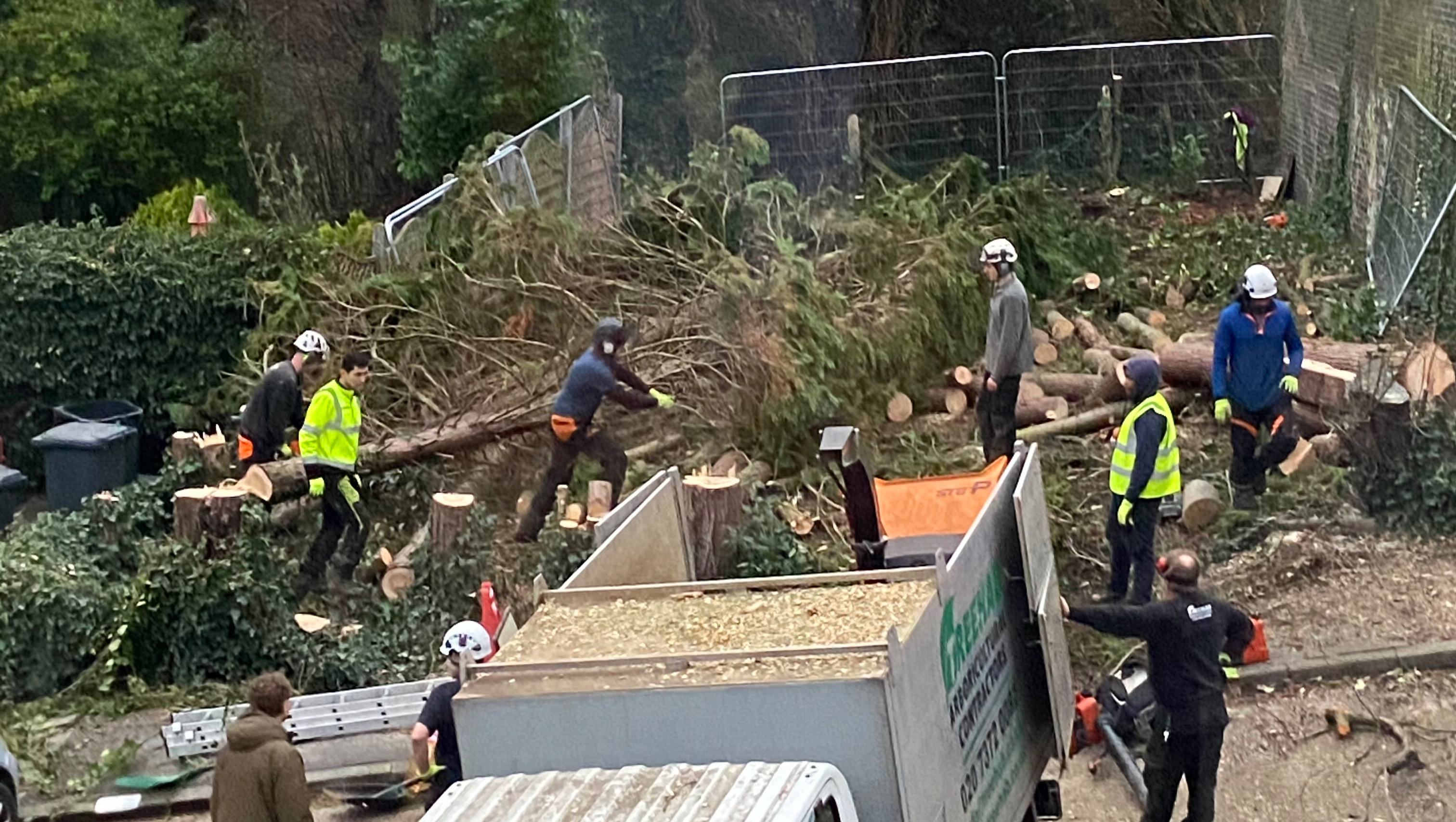
Trees were felled and hard fencing erected, transforming a sheltered green edge into something resembling a derelict gap. The application then used that degraded state as its baseline, presenting the result of deliberate clearance as the reason why development is now acceptable. This circular reasoning and its effect on the biodiversity net gain assessment were never examined in public.
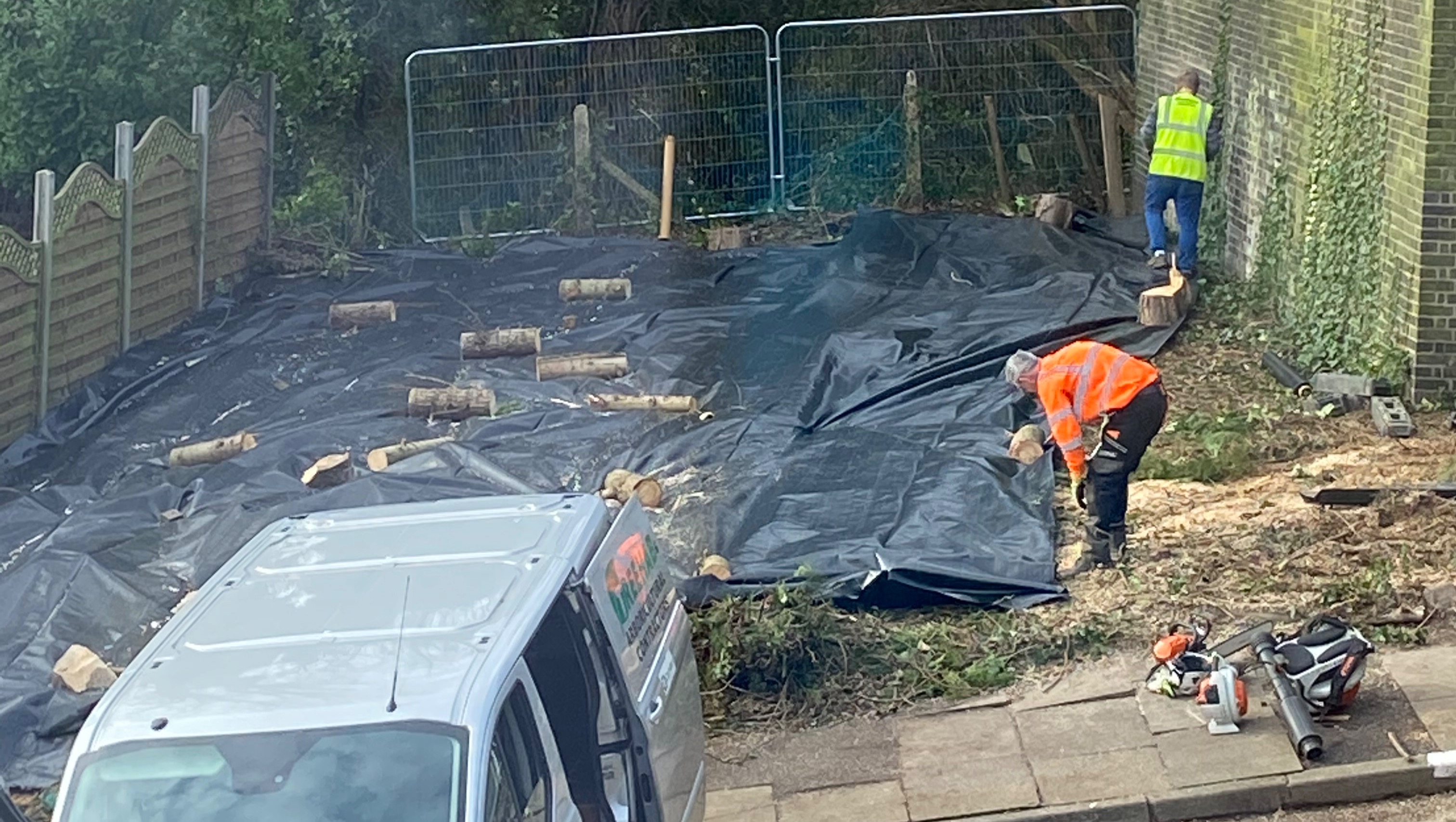
On paper, this is now called a brownfield, infill site within an established curtilage for the people who walk it every day. It has always been the small copse and green buffer between the houses and the Parkland Walk
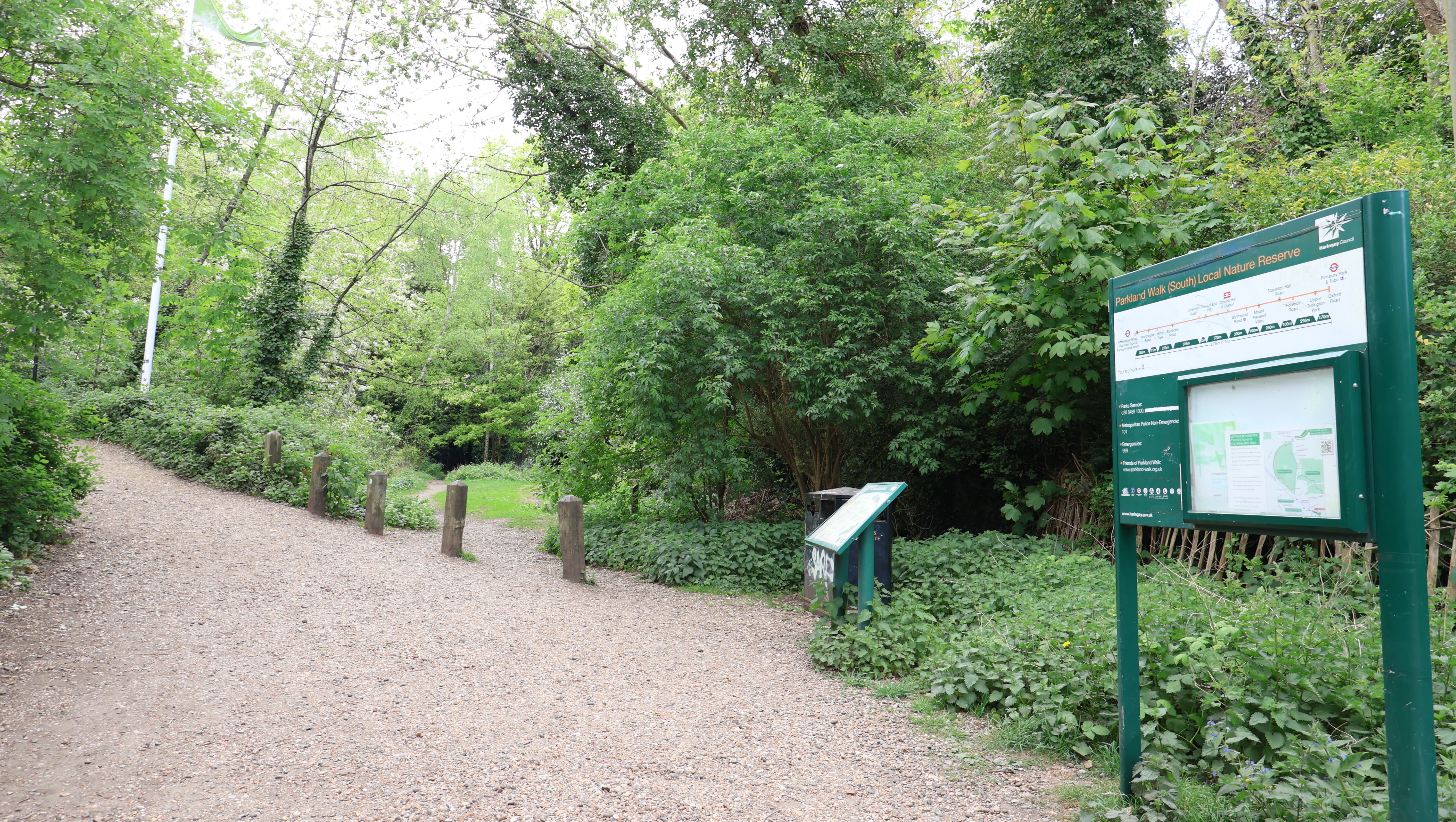
The urbanisation of a green corridor
What was once a soft, wooded green corridor edge is being turned into a hard urban boundary, breaking the visual and ecological buffer that has long separated the Highgate cul‑de‑sac from the Local Nature Reserve and its bat, bird and fox habitat.
What we are doing
Update — 26 May 2026. The pre-action protocol stage is now complete. The 11 May 2026 judicial review deadline has passed without a claim being issued, on the considered advice of specialist counsel that the merits of an immediate JR were challenging. The case is now being pursued through three coordinated tracks, all of which remain live and all of which this campaign continues to fund.
We instructed Alex Shattock at Landmark Chambers, a public, planning and environmental law practitioner ranked in Chambers & Partners for environmental law, whose work includes cases on protected habitats, climate and nature conservation. A formal Pre-Action Protocol letter was drafted and sent to Haringey Council, and the Council's Pre-Action Protocol response of 1 May 2026 disclosed material that had not previously been on the public file.
Specialist planning counsel has advised that there is an arguable procedural case while characterising the merits of an immediate JR as challenging. On that advice, we have not issued a JR claim within the 11 May 2026 window. Judicial review remains available on broader grounds and on the further procedural material now being placed on the formal record.
The three tracks now running
1. Procedural complaint — Stage 2 to Haringey Council.
A formal Stage 2 complaint has been filed, drawing directly on the material disclosed through the Pre-Action Protocol. It addresses inconsistencies in the Council's account of how delegation was authorised, the late completion of delegation paperwork after the decision was issued, the unfulfilled re-consultation note on the file, and the cross-workstream inconsistency in how the land has been characterised. If Stage 2 does not resolve the complaint, the next step is referral to the Local Government and Social Care Ombudsman.
2. Local Green Space designation — protecting the green edge itself.
Separately from the planning permission, we are pursuing Local Green Space designation for the adjacent wooded bank and corridor. This is the substantive route by which the green edge of Parkland Walk can be given lasting protection, regardless of what happens on the permission site. Residents have submitted detailed evidence on the criteria; the Council's planning policy team has confirmed previous boundary advice will be reviewed.
3. Enforcement scrutiny.
The site is subject to enforcement scrutiny under reference ENF/2026/0540, with formal reservations protecting against any commencement before all pre-commencement conditions are properly discharged.
Why these tracks matter
Together, these tracks address the systemic pattern this case sits inside: how councils operate when they are both landowner and planning authority; how trees can be felled with no planning consequence; how delegation works when communities object; and how green edges are reclassified as "degraded infill". A successful Stage 2 / Ombudsman finding produces a documented institutional record of maladministration and can drive service-improvement reforms that benefit every comparable case in future. A successful Local Green Space designation produces lasting protection for the green edge itself. Enforcement scrutiny holds the line on the ground.
A further judicial review remains available on broader grounds, and on the further material now being placed on the formal record. We will only return to that route on counsel's advice that it is viable, and only after presenting supporters with a clear, fixed budget.
What your funds support
This campaign now funds the ongoing legal and expert work across all three tracks:
specialist planning counsel's continuing advice on the procedural case and on the conditions under which a further JR step would be viable;
expert input supporting the Local Green Space designation evidence base (ecological, arboricultural, landscape and historical material);
continued correspondence with the Council on Stage 2, Ombudsman referral if needed, and enforcement scrutiny;
a reserve toward any future judicial review step that counsel advises is viable, on broader grounds and a fresh fact-pattern.
We are not promising a win on any of these tracks. We are committed to using the funds carefully, to reporting back honestly when a track concludes, and to setting out fixed, transparent budgets before asking for any further support.
Cost transparency and the Aarhus cap
The original Stage 1 budget was capped at £10,000, of which £5,000 was the threshold to instruct counsel and prepare the Pre-Action Protocol stage. That stage has now been delivered. Funds raised beyond that level are held against the three live tracks set out above. If a further judicial review step becomes viable on counsel's advice, a full hearing would cost in the region of £40,000–£45,000 inclusive of our team, any capped adverse costs, and court fees. That is a separate decision, and we will only seek that level of funding with a fixed, transparent budget, so supporters can decide for themselves whether to continue.
Because this is an environmental planning case brought in the public interest, any future JR step would be brought with an application for Aarhus Convention costs protection. This caps what a claimant can be ordered to pay the other side if the claim does not succeed. Donations will be used to pay our legal team (counsel, any instructed solicitors, and court fees), to fund the expert input supporting the Local Green Space evidence base, and to cover any adverse costs within the court-imposed cap if a future JR step is taken.
No hidden asks. No blank cheques. Honest reporting at each stage.
Why your support matters
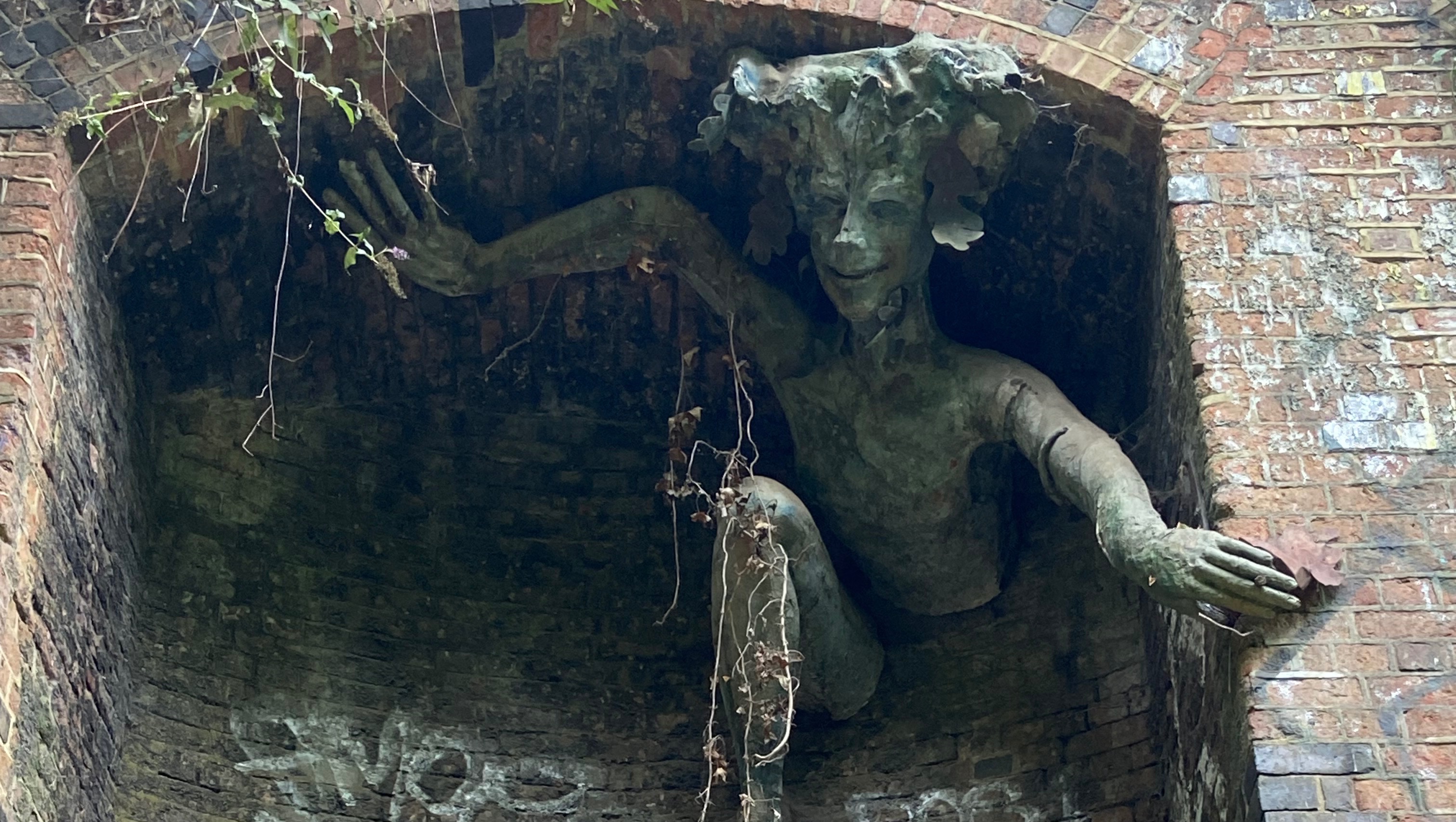
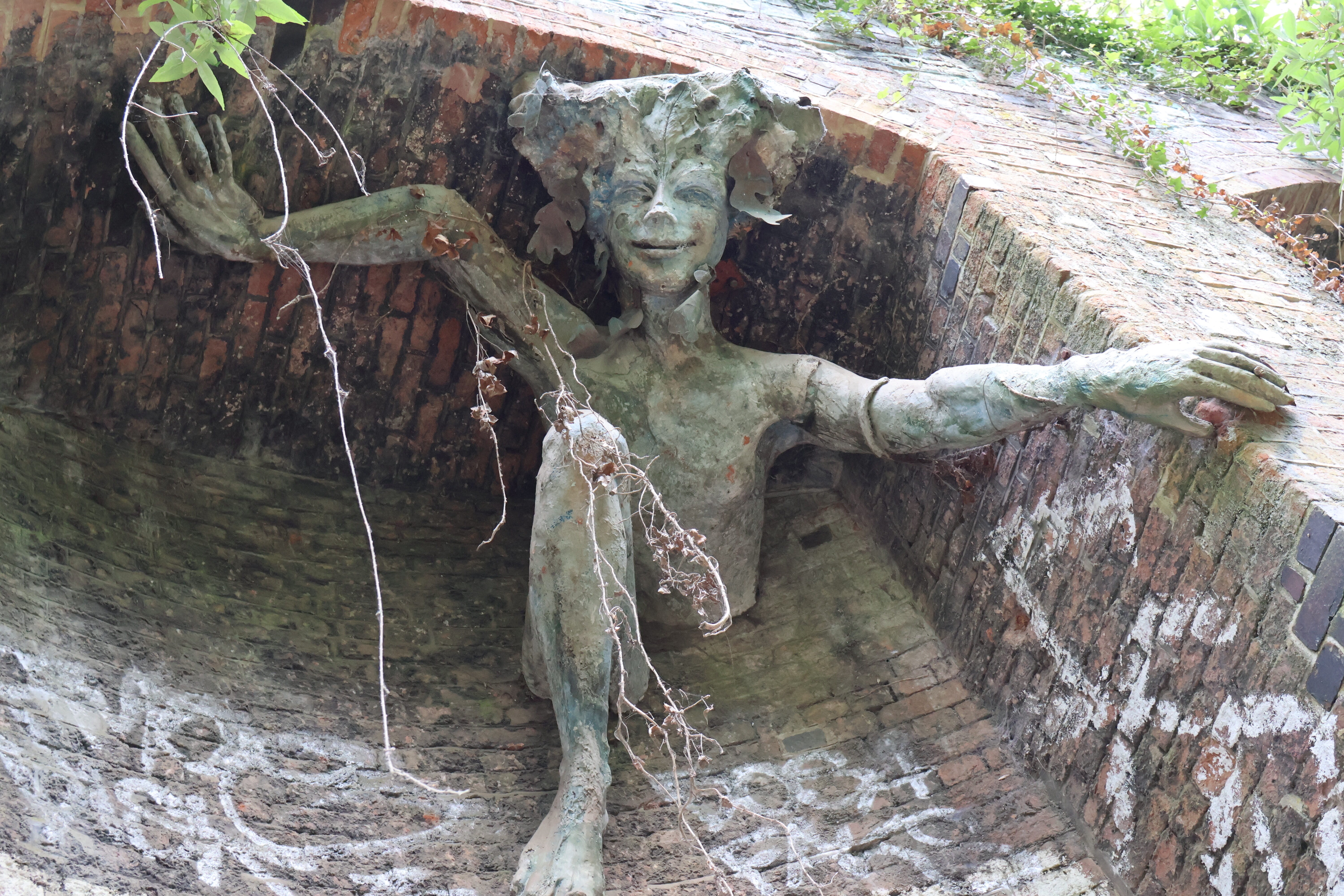
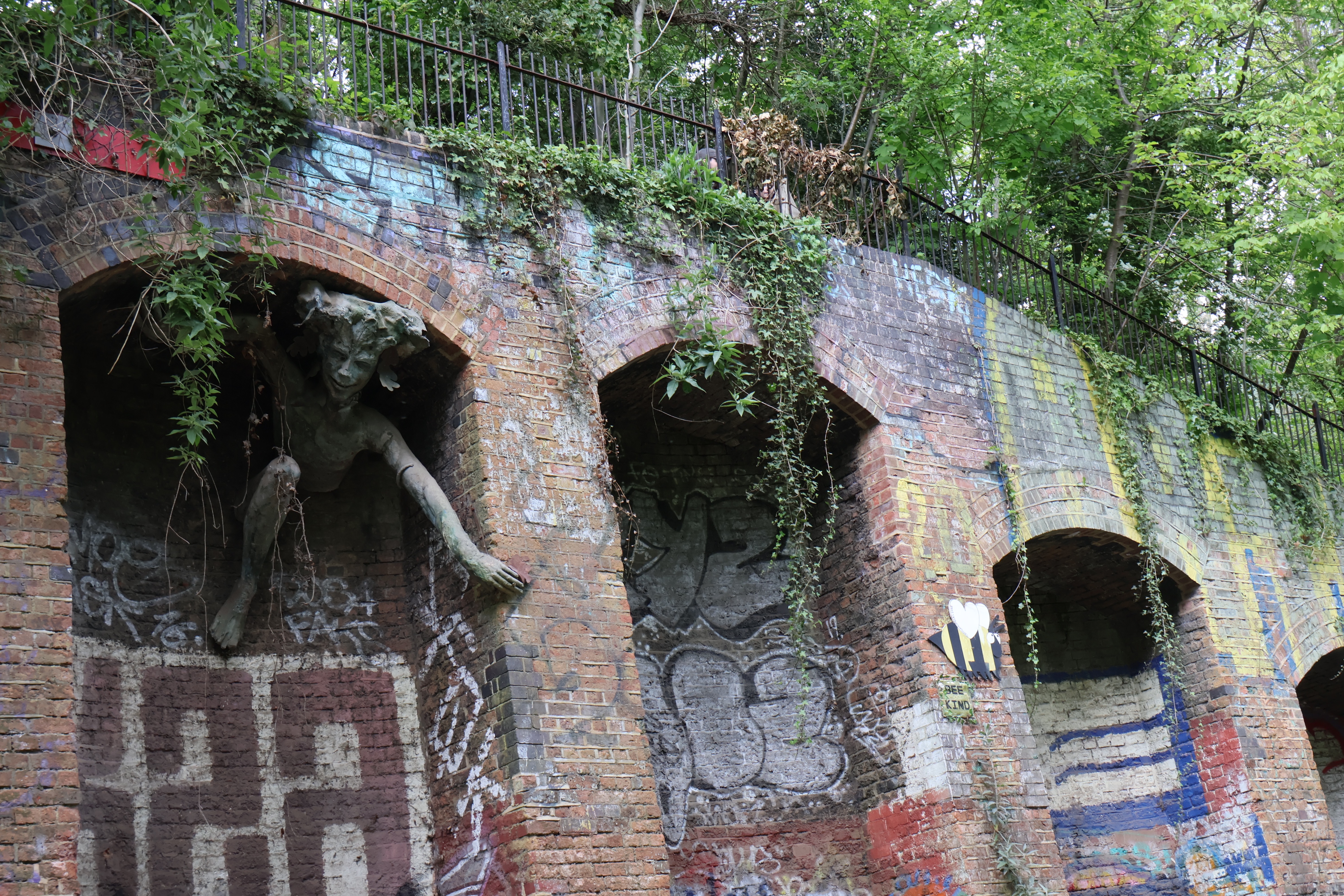
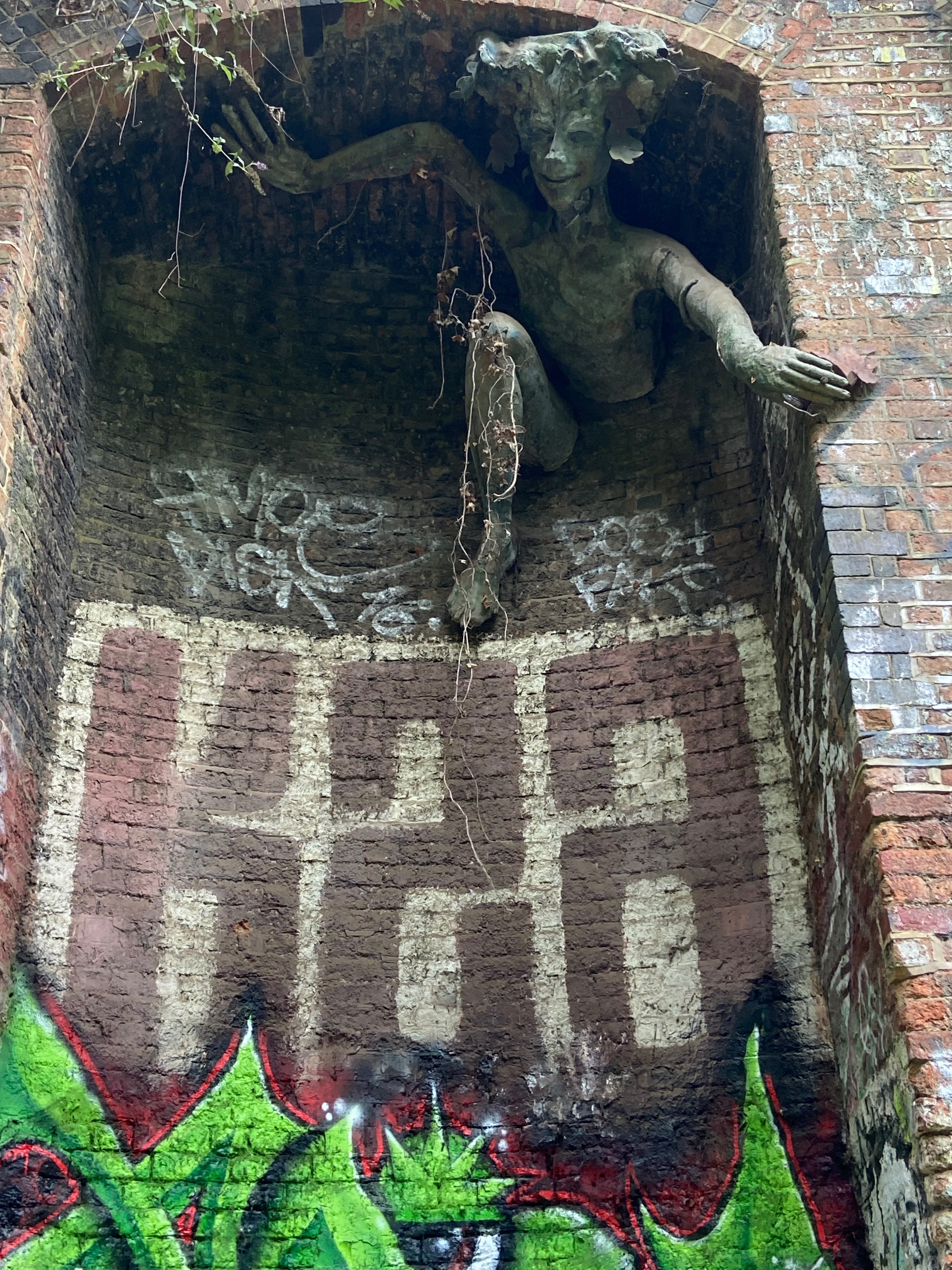
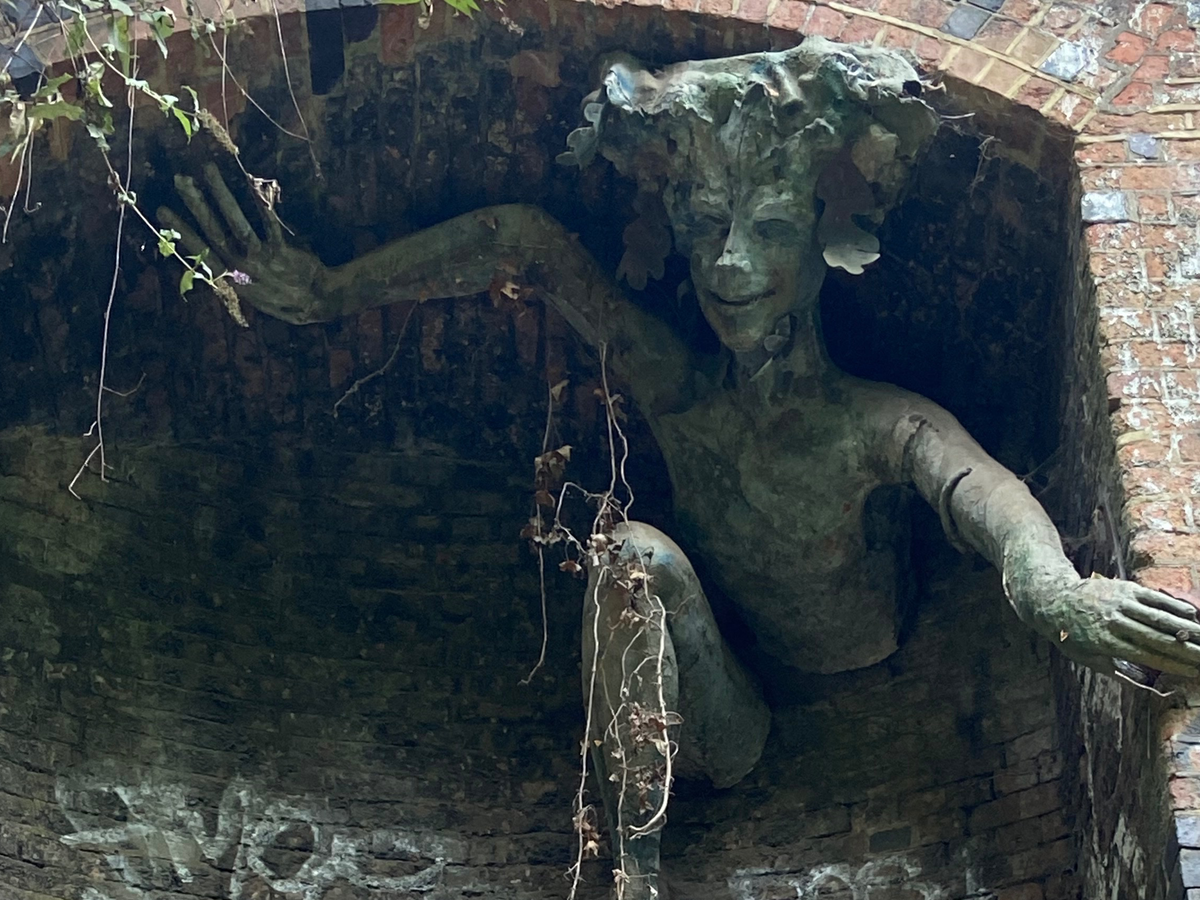
Along Parkland Walk, near the Highgate tunnel, there is an old stone spriggan — a small guardian that has watched over this stretch of former railway for decades. The wood just above him, at the end of Shepherds Close, is what we are trying to give a fair hearing.
The developer has already felled 19 trees and fenced the land. The site is now being treated as degraded infill on paper.
Why is this personal to me?
My work as a psychotherapist and ecotherapist is about how our hearts and nervous systems respond to place, the living spaces we move through, human and more‑than‑human. Parkland Walk is one of those places.
This case is not just about one house. It is part of a wider pattern I have been documenting, linking Highgate and other “hidden” sites across England. I have written a White Paper on a national governance loophole, the way planning law, water regulation, and enforcement work together means environmental law in Britain is barely accountable in practice.
I am working on a book that traces how the same logics of extraction and disconnection that injure the Earth also corrode trust between people. This campaign is one concrete expression of what becomes possible when we return to reciprocity and real participation in a living field.
If that resonates with you, please sign the petition, share this campaign, and donate if you can, so Parkland Walk can keep holding us all.
If this permission stands, it becomes easier to reclassify green edges as “infill”, clear them, and secure approval without public scrutiny.
Every contribution helps
If you can’t donate right now, you can still really help by sharing the link with three friends, or posting it in any local group or chat you’re part of – especially if they know Parkland Walk
Sign and share the petition: https://www.change.org/p/stop-developer-led-abuse-from-highgate-to-the-fens
A nature reserve.
One officer. No public vote.
That is not how environmental protection is supposed to work
Organizer