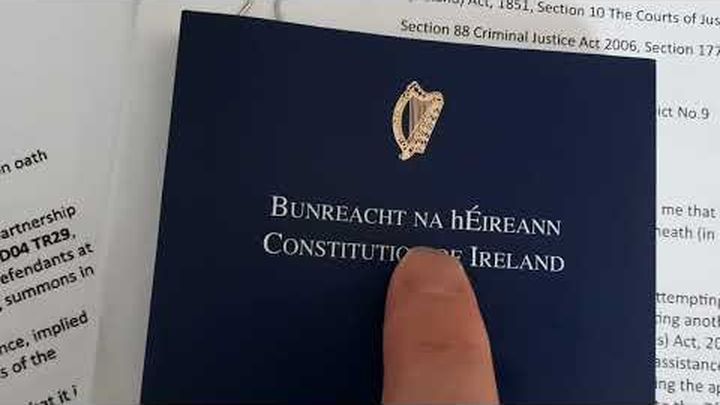
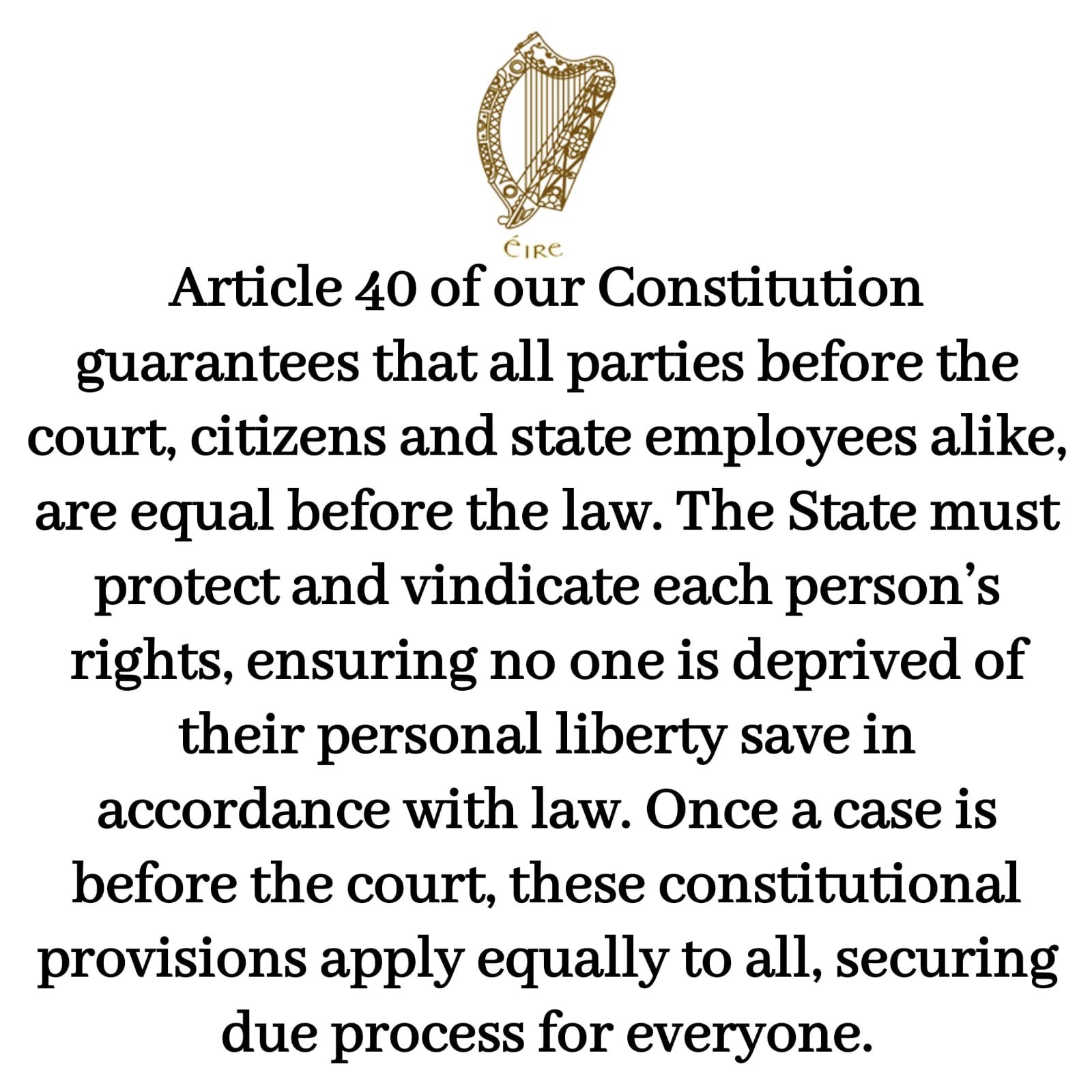
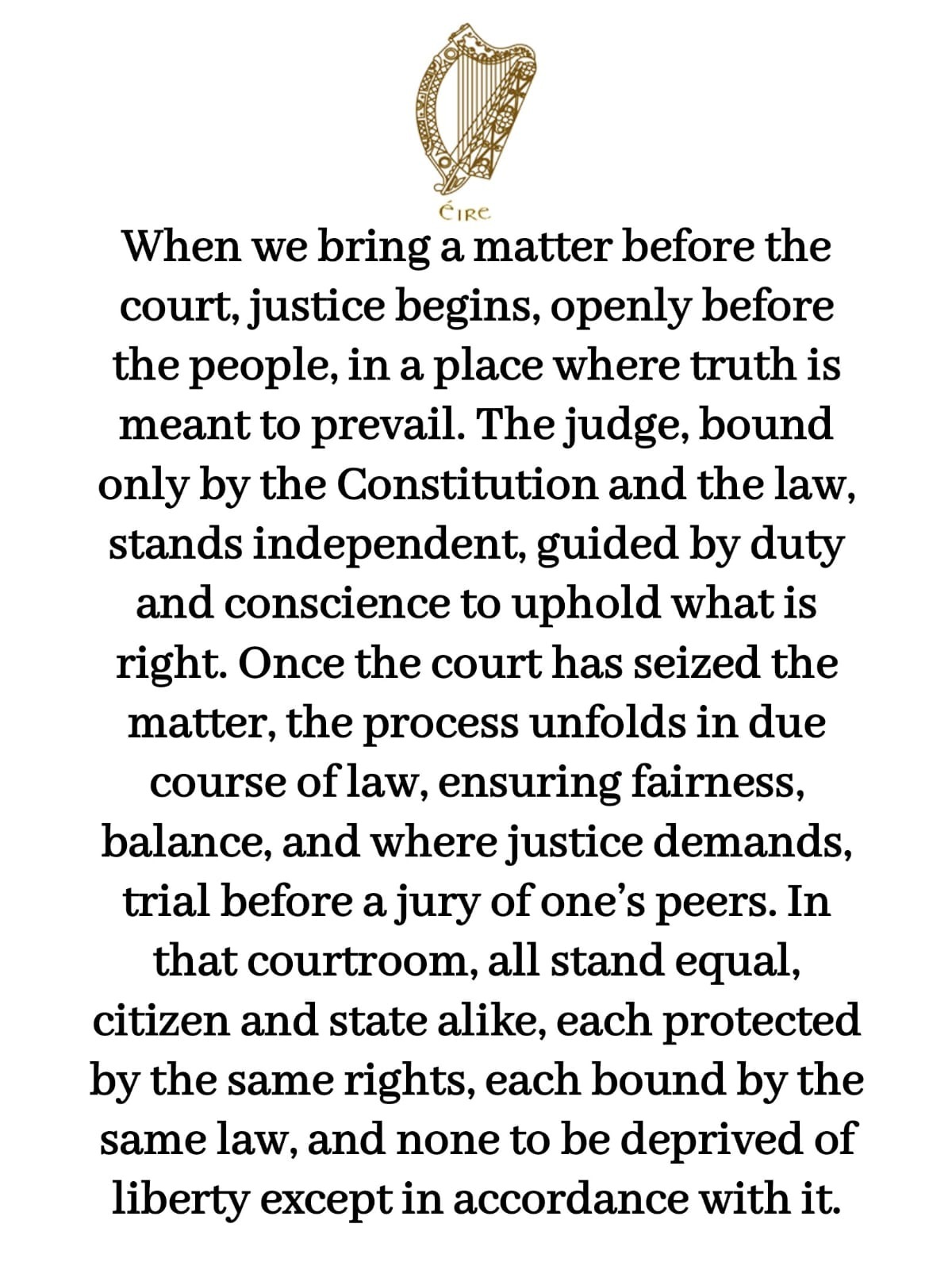
The people of Éire are sovereign. Our Constitution is clear:
“All powers of government, legislative, executive and judicial, derive, under God, from the people.” — Article 6
Yet for many citizens, this sovereignty feels distant or unreachable. Courts feel intimidating. Laws feel impossible to challenge. Public officials often appear unaccountable. There is no public service that teaches ordinary people how to lawfully use the Constitution, the Irish Statute Book, and democratic institutions to defend themselves, protect their families, or change unjust laws.
That is the gap I have stepped into.
From Rights Violations to Unconstitutional Laws
Every violation of a citizen’s fundamental rights can be traced back to a law:
- a local bylaw made by a county or city council
- a statutory instrument made by a Minister or department
- or primary legislation passed by the Oireachtas
If a law infringes personal liberty, equality, private property, family life, education, or religious freedom, then the law itself must be challenged and amended. The Constitution provides the tools to do this — but people must be shown how to use them.
That is exactly what this work is about.
Judicial Accountability: Enforcing the Constitution
For several years, I have been working — voluntarily and full-time in practice — helping people navigate Ireland’s justice system and exercise their constitutional rights. I provide direct, practical support in the Four Courts and the Criminal Courts of Justice, assisting people who are facing unlawful prosecutions or abuses of power by state bodies.
This includes guiding citizens to:
- Challenge unlawful actions by public officials
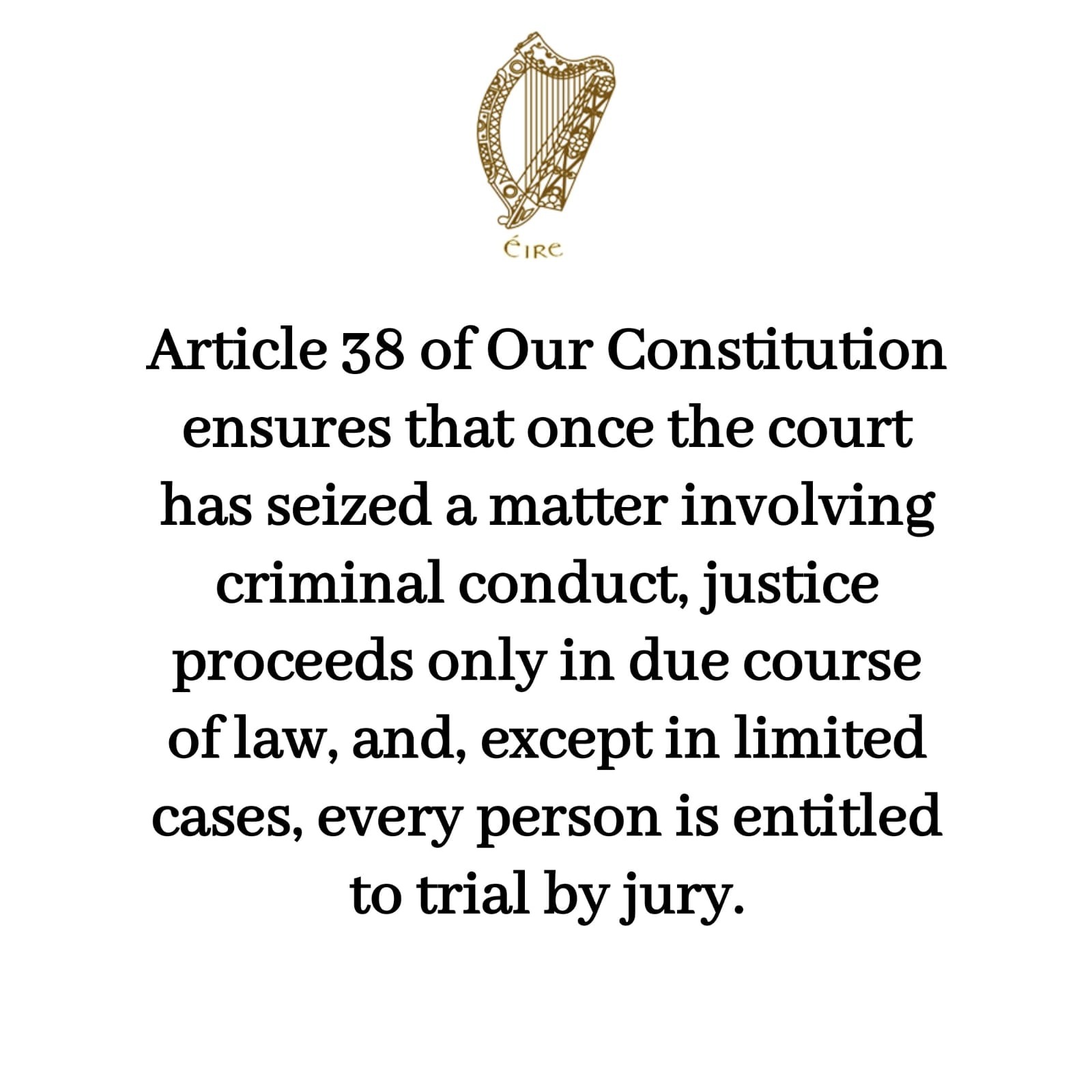
- Defend themselves against unconstitutional prosecutions
- Hold state bodies accountable through judicial review in the High Court
- Use Peace Commissioners and court procedures to initiate lawful accountability
- Transfer unlawful matters from the District Court to the High Court where constitutionally required
This work is not theoretical. It is practical, hands-on, and happening every week.
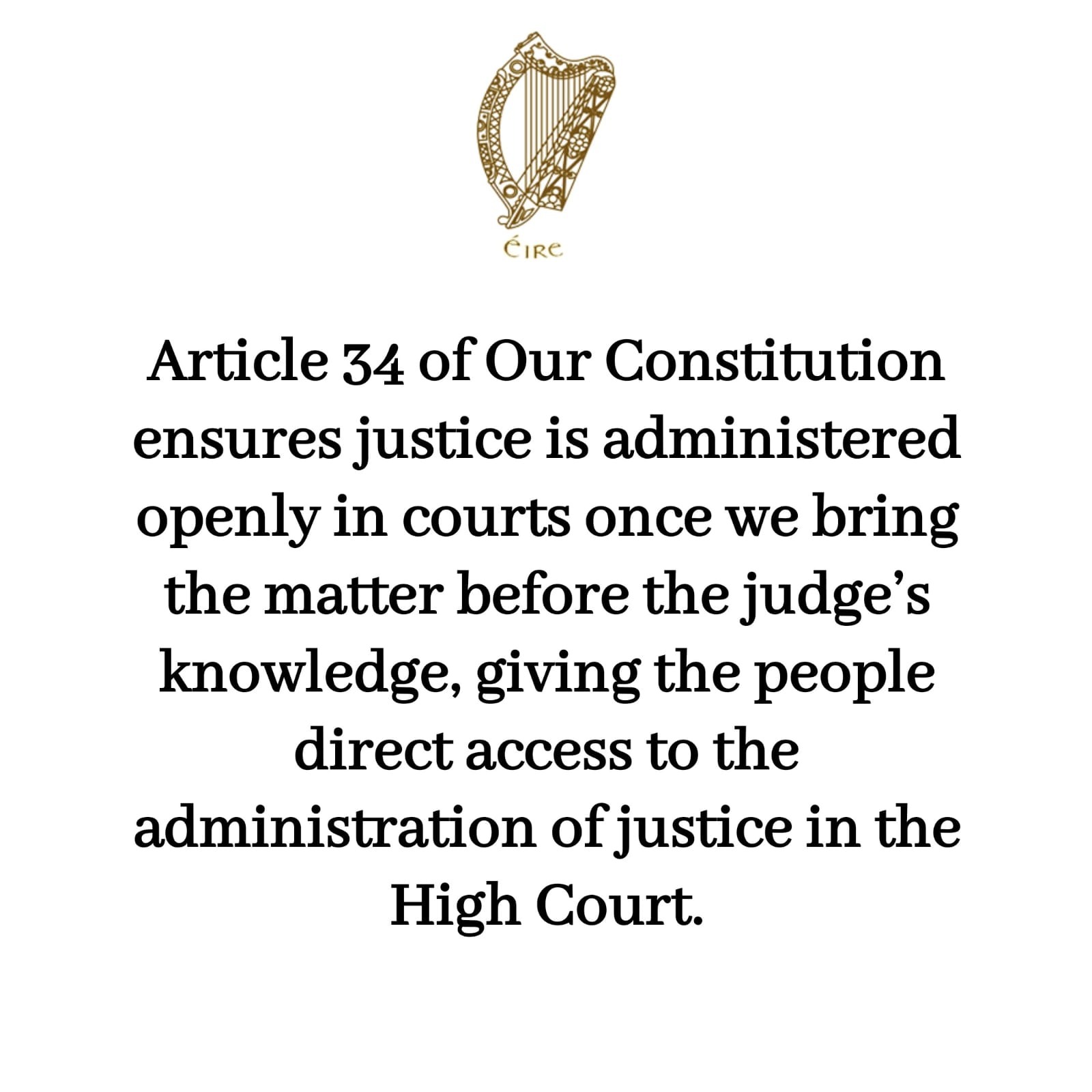
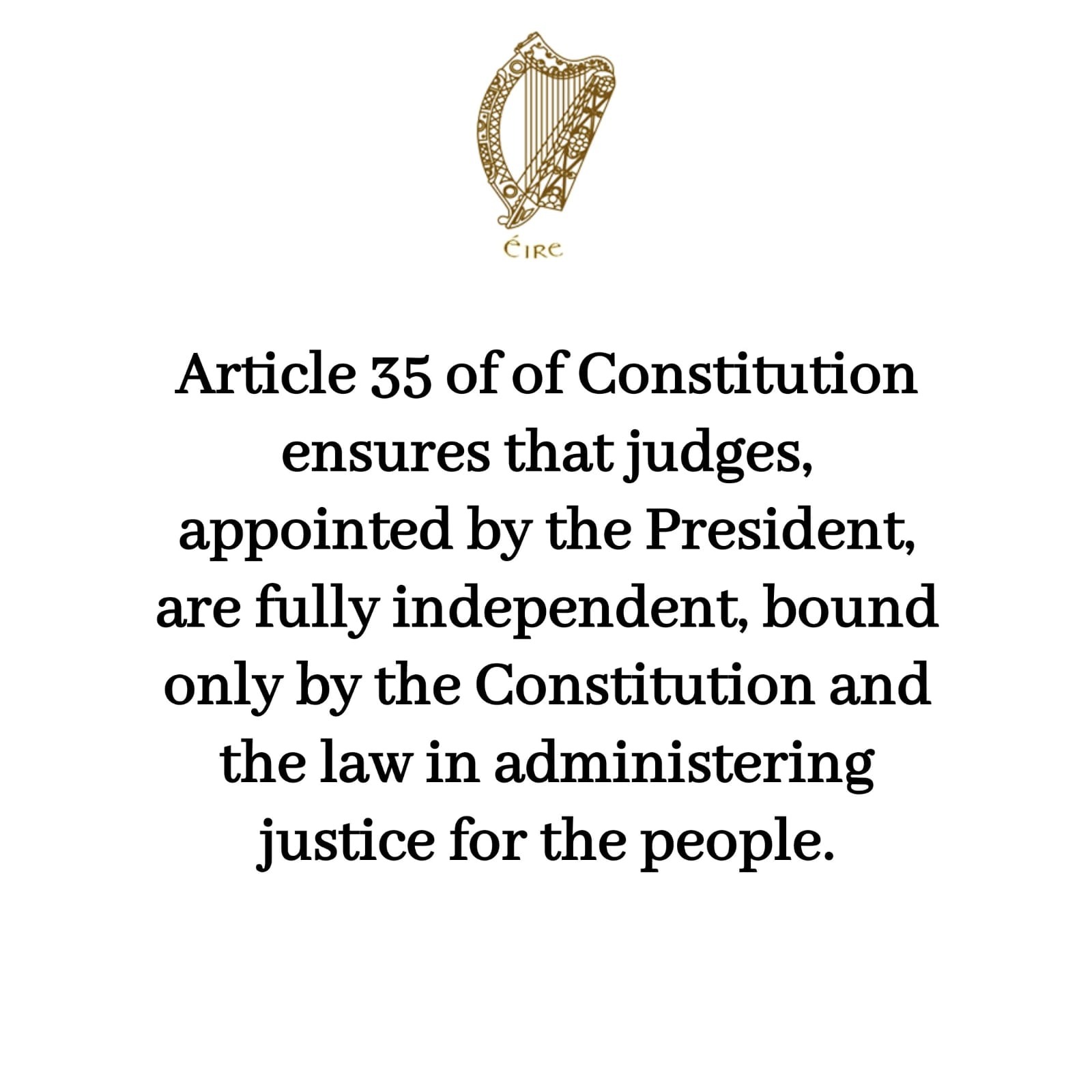
The courts are the constitutional mechanism by which citizens can compel the executive to obey the law and force the correction of unconstitutional legislation.
Local Government Engagement — Article 28A
Accountability does not begin or end in the High Court.
Under Article 28A of the Constitution, local government is expressly recognised as a democratic forum through which local citizens engage directly with power. County and city councillors make bylaws that affect daily life — housing, planning, environment, public spaces, and community regulation.
I show citizens how to:
- Engage with their locally elected councillors
- Identify unconstitutional or rights-infringing bylaws
- Bring lawful motions through local councils
- Amend or repeal unjust local laws at source
This is civic responsibility in action — local people shaping the rules that govern their own communities.
National Law Reform — The Dáil and TDs
Where violations arise from statutory instruments or primary legislation, engagement must move to the national level.
I empower citizens to work directly with their locally elected TDs to:
- Identify unconstitutional Acts of the Oireachtas and statutory instruments
- Draft and promote Private Members’ Motions
- Bring proposed amendments before the Dáil
Use constitutional arguments grounded in Articles 40–44 to defend personal rights, family rights, children’s rights, education, private property, and religious freedom
I give people the Irish Statute Book and show them how to use it — lawfully, confidently, and effectively — to vindicate their rights and the rights of their families.
Practical Support for Real People
To make this accessible, I provide:
- Clear templates for court and legislative processes
- Step-by-step guides to court rules and civic engagement
- A 7-day support line (9am–9pm) by phone, text, and WhatsApp
Access to justice should never depend on wealth, education, or connections.
Why This Matters
Inspired by the Constitution’s Preamble — acknowledging God and honouring those who fought for Ireland’s independence — I am expanding this work as a Civic Justice Facilitator, helping citizens engage with all three branches of government:
- Legislative — to amend unjust laws
- Executive — to enforce rights
- Judicial — to restrain unlawful power
There is no public body doing this. Yet a functioning democracy depends on citizens who know how to act.
How This Campaign Helps
To continue this work sustainably, I am seeking €7,000 every two months. This funds a modest, minimum-wage-equivalent income and supports a 60-hour working week dedicated entirely to:
- Assisting people in courts nationwide
- Operating the daily support line
- Creating court and legislative templates
- Producing clear guides for civic and legal participation
Every contribution — no matter the size — directly helps someone:
- Defend their rights
- Protect their family
- Amend unjust laws
- Hold power to account
This campaign is about restoring the Constitution to where it belongs: in the hands of the people.
The October–November 2025 target has already been reached, and I am now working toward the December 2025 – January 2026 goal.
Thank you for your support.
Together, we can make access to justice — and civic responsibility — a lived reality for all.
Organizer