- J
- E
- A
St. Thomas Aquinas Preparatory School Fundraiser
0% complete
$5,466 raised of $5K
46 donations
Please help us raise much needed funds for the St. Thomas Aquinas Preparatory School in Wiaga, Ghana.
Thomas Awiapo, a resident of Wiaga, knew first-hand the value of education as a means to be liberated from the cycle of poverty and hunger. Thomas was orphaned as a child, and lost two brothers to hunger. He has experienced poverty and hunger in its worst forms and his own life was saved by a school that was founded by Catholic Relief Services. . . Today, Thomas, his wife, and his four children do not know what it means to be hungry and are excelling in life simply because some good Samaritans sponsored his education and hence broke the chains of poverty and hunger that held him hostage. Education is the key to the transformation of the lives of individuals, families and communities and this gives context to Thomas' dream...
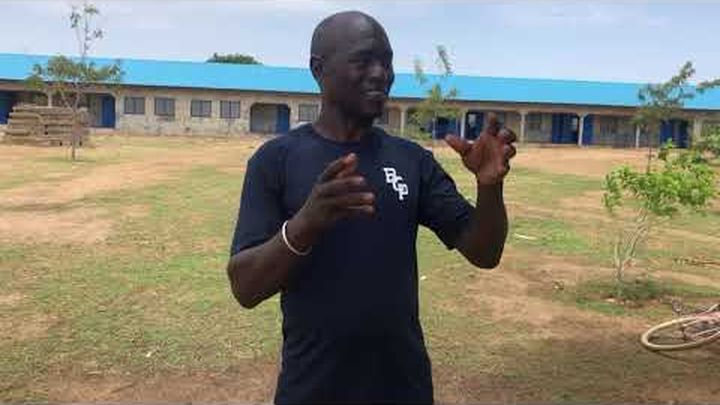
In 2017, Thomas achieved his life long goal and opened the St. Thomas Aquinas Preparatory school in his hometown of Wiaga. The school has resulted in the transformation of the entire village and nearby communities! The school only began with 17 students and today there are over 280 students. The collected funds will go to meet the school's most pressing current needs which includes:
*A medium bus for transportation. For now the school is using using motor tricycles but they can only load a few children at a time.
*A computer lab for practical IT lessons, reading library to encourage and promote reading, and a science lab to encourage the study of science.
* In addition, the school needs more classroom space as the student population is growing faster than expected
*Scholarships for local students.
Background on the Needs of Wiaga:
Wiaga is a sizable village located in the Bulsa North District in the upper east part of Ghana, an area comprised of 15 sub-villages or sub-sections. The population of Wiaga is estimated to be 6,000-7,000. The adult population is a little over 3,000 and 90% are illiterate and do not receive a pay check at the end of the month. For most families, farming is the main means of livelihood and about 99% of the population is engaged in subsistence farming (crop and animal) for survival. In addition, most local families live in straw or aluminium huts with no electricity and no running water.
In as much as parents and families have become conscious of the liberating power of education and desire to educate their children, the biggest challenge they face is lack of access to quality and affordable education in such a rural and deprived environment. It is heartbreaking to know that there are some communities in Wiaga where children still sit under trees as their school. How can children succeed in education under such discouraging conditions? No wonder, educational failure is the order of the day in the village.
Alarmingly, 80% of the children graduating from the existing elementary school in the village of Wiaga do not pass the test needed to matriculate to high school. This failure eliminates their chances to attend high school. They just get that one chance and 80% of them are losing that chance!
The St. Thomas Aquinas School is saving lives!
Enrollment began for the first 3 grades in September 2017, with 17 children. St. Thomas Aquinas Preparatory School was chosen as the name. The target beneficiaries of the school are children of Wiaga, children of the health clinic staff posted to the village, and children of the surrounding villages within 5 miles of the school. The principle of scholarships is “need not creed”. The most vulnerable children are given special attention through fundraising and sponsorship for their tuition. But all parents contribute something towards their child’s education, as well as being involved in the PTA. Today, 280 children are thriving in 6 grades (K-5). There is also a preschool and nursery. Students are fed a full meal each day, and each family receives much-needed extra food at Christmas. Happily, an added benefit for the entire community is the involvement of the parents and villagers in the school, and enhancing the local economy by providing jobs (eg., sewing uniforms, construction, childcare. etc..)