
St Mary's Church Totnes Clock Appeal
0% complete
£47 raised of
4 donations
St Mary’s Church Totnes Clock Appeal
Help fix the clock for Bob!
In Memoriam Robert Seymour 16/7/1935-26/10/2026
This campaign was created by St Mary’s Church, Totnes for those wishing to donate in Robert Seymour’s memory, to help restore our beautiful sounding church clock.
The ‘Fix the clock for Bob’ Appeal
Total bill for repairs: £10775
Amount raised so far: £5000
So we are looking to raise £5775 from this appeal
The motors and gears which drive the winding mechanisms have been in constant use for almost 30 years and have worn beyond repair. We need bespoke motors/gears which will cost £10,775 to be made and fitted guaranteed trouble free for 10 years.
Background
A Timely message from Robert Seymour, much loved clockkeeper
(AKA - 'Bob The Clock' !)....from July 2026:
"People may have noticed that the Totnes St.Mary's Church clock has stopped and is not giving us its customary quarterly (Westminster) chimes and hour strikes.
This is because one of the drive chains on the automatic winding gear ( fitted in the year 2000) has become disengaged from its sprocket due to wear.
A repair is in hand, and the familiar quarter chimes hour strike will return."
(The repair will be carried out by the Cumbria Clock Company)
The above message from Bob coincided with his imminent retirement from being clockkeeper, as we had just installed an automatic timing device and we were poised to have retirement drinks with Bob and to celebrate the new device, when the trouble with the clock started. Bob and an engineer from the Cumbria Clock company managed to fix the clock for a while and then one thing after another seemed to happen to it and now the whole clock has been taken to Cumbria to await repair.
Without a clock the town of Totnes and many in it have been missing its resonant and regular tones and then on Sunday 25th October Robert Seymour, AKA Bob the Clock was himself silenced as he passed to spirit.
Robert Seymour - Bob - was a kind, genial and generous soul and his family, the church team and all who knew him are going to miss him terribly as he was indeed one of a kind. We are inspired by his example of how to live a good life, he made a big impression on all who got to know him. His youthful and gentle spirit was a blessing.
In some ways it seems fitting that the clock wasn’t working the day Bob died, as the clock was silenced indeed and brings to mind the poem ‘Stop all the clocks’ by WH Auden. The fact that Bob died the day the clocks changed has also not gone unnoticed, which seems very fitting timing for an avid and trained horologist.
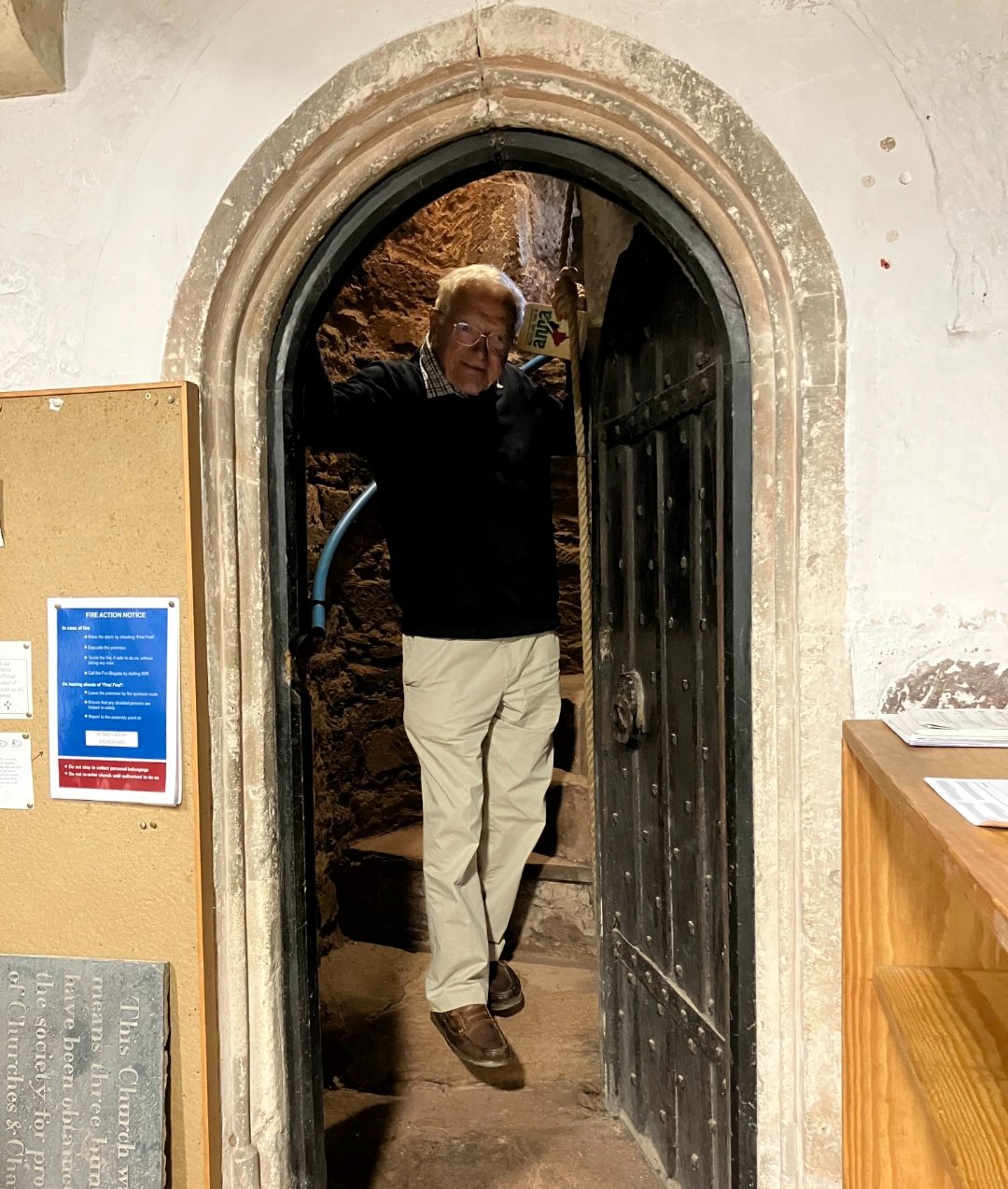
Bob kept a close eye on our clock for the last 22 years, visiting the church at least once a week to help it keep time and climbing 47 steep medieval stairs in the tower’s turret of St. Mary’s to do so. We estimate Bob has been up and down those stone stairs at least 1,144 times !!!
We are aware that it was upsetting for him that it was not working over the last few months after all the care and attention he paid to it.
We want to ensure the clock is restarted as soon as possible and we have a big bill to pay to fix it - hence this appeal. We want to do this for the town, the church and also very much in honour of Bob.
Bob himself was very keen that we ‘put the clock right’, noting that (..) “all 3 of the original units are worn out after 26 years”
“It's just the way things happen. New, fairly stressed, mechanisms don't last like Victorian engineering! “
More Technical Aspects of the repairs required
Bob wrote these words for an update on the clock earlier in October, not long before he died:
"The technical reason that the St.Mary's Church clock has stopped is because the' Power' ,which comes from a weight, is not being evenly transmitted to the going (pendulum) part of the clock. So the pendulum, which regulates the steady movement of the clock gears, isn't swinging.
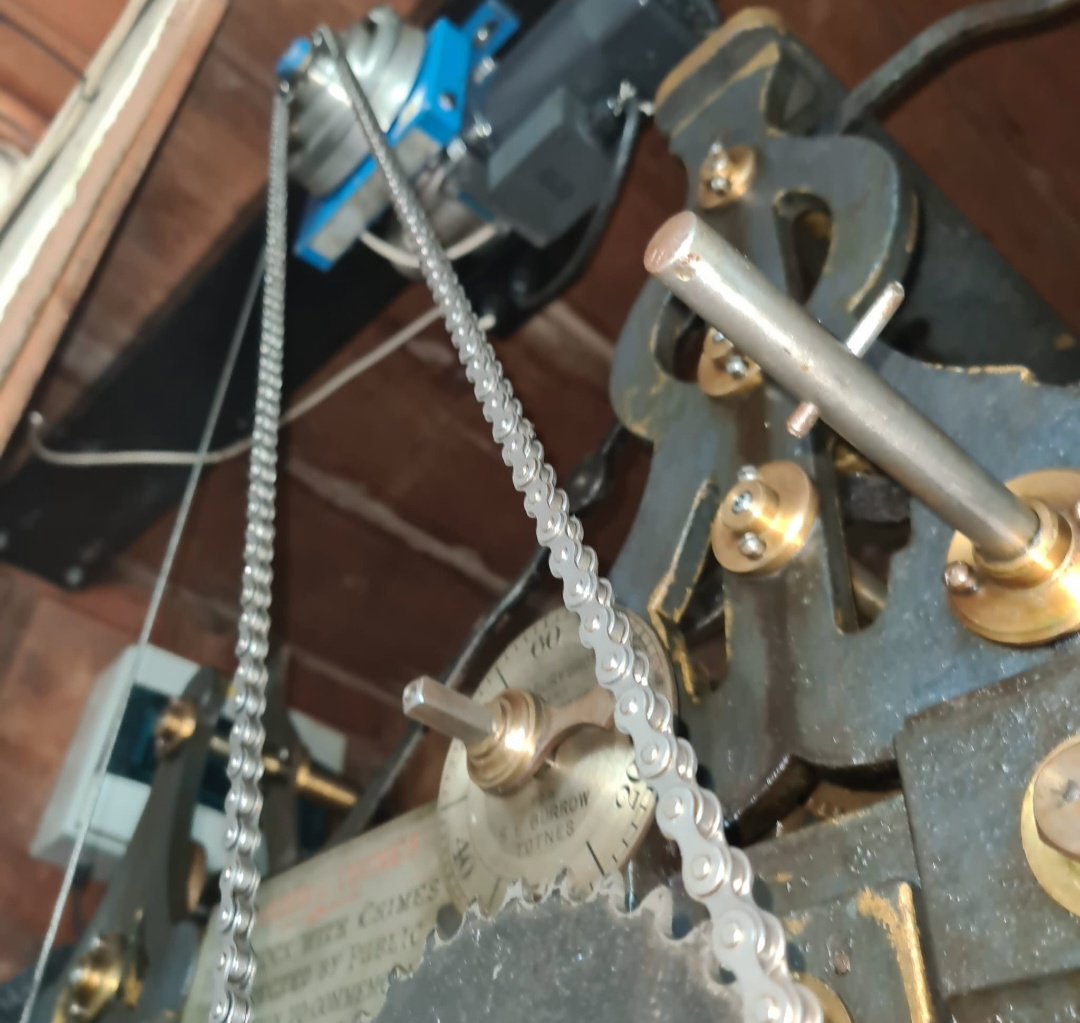
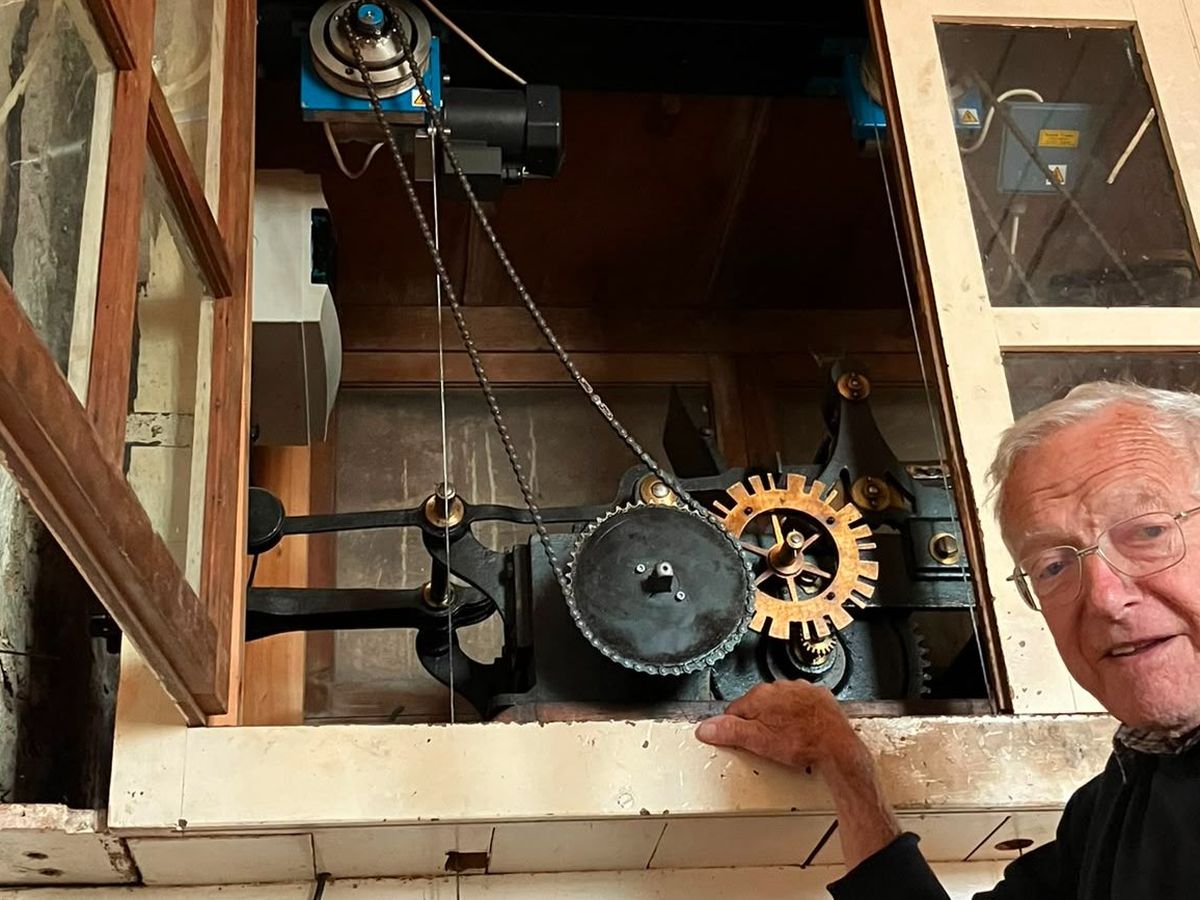
In the year 2000 the 3 large weights which were original equipment on the clock, and which required manual winding each week for the clock to keep going- were replaced with 3 automatic winding units electrically driven-Each unit fitted with a smaller weight and an epicyclic gearbox.
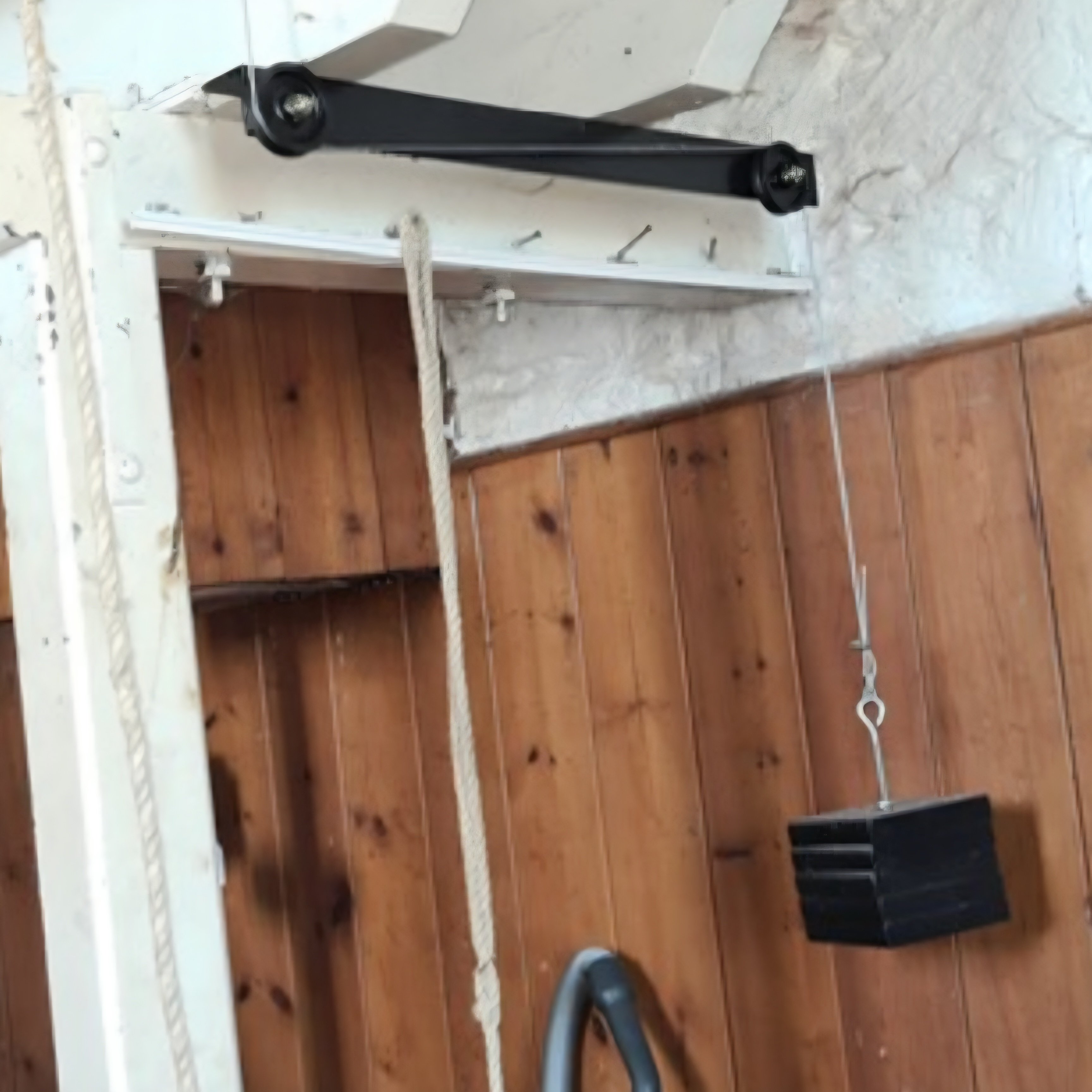
The weight is suspended by cable from a drum on the gearbox. This weight is far smaller and lighter than the original weights, but the epicyclic gearbox has a big mechanical advantage and (as when engaging a lower gear on a car),increases the power of the small weight so that the small weight transmits the same power to the original weight drums as the large weights used to, but they 'wind up' every few minutes (instead of once per week with heavy weights. )
It is very important that the epicyclic gearbox is in good condition because if worn it will lose its efficiency and supply an uneven torque to the clock.
This is what has happened to the 'going' section of the St.Mary's clock.
So once overhauled and refitted to the 'going 'section of the clock. And the Automatic winding unit refitted to the quarter chimes, the whole clock will start running properly again. (...)
On reflection, I feel that I should explain why I think that the ( St.Mary's) clock did actually run for a while when we first put the winder unit from the quarter chimes on to the 'going' ( pendulum) section.
This would be due to the warm atmosphere during the heat wave which would make everything run freer. When the atmosphere gets colder the oil on bearings and the contraction of different metals at different rates causes more friction and these factors could cause the clock to stop."
See pictures that Bob sent us below:
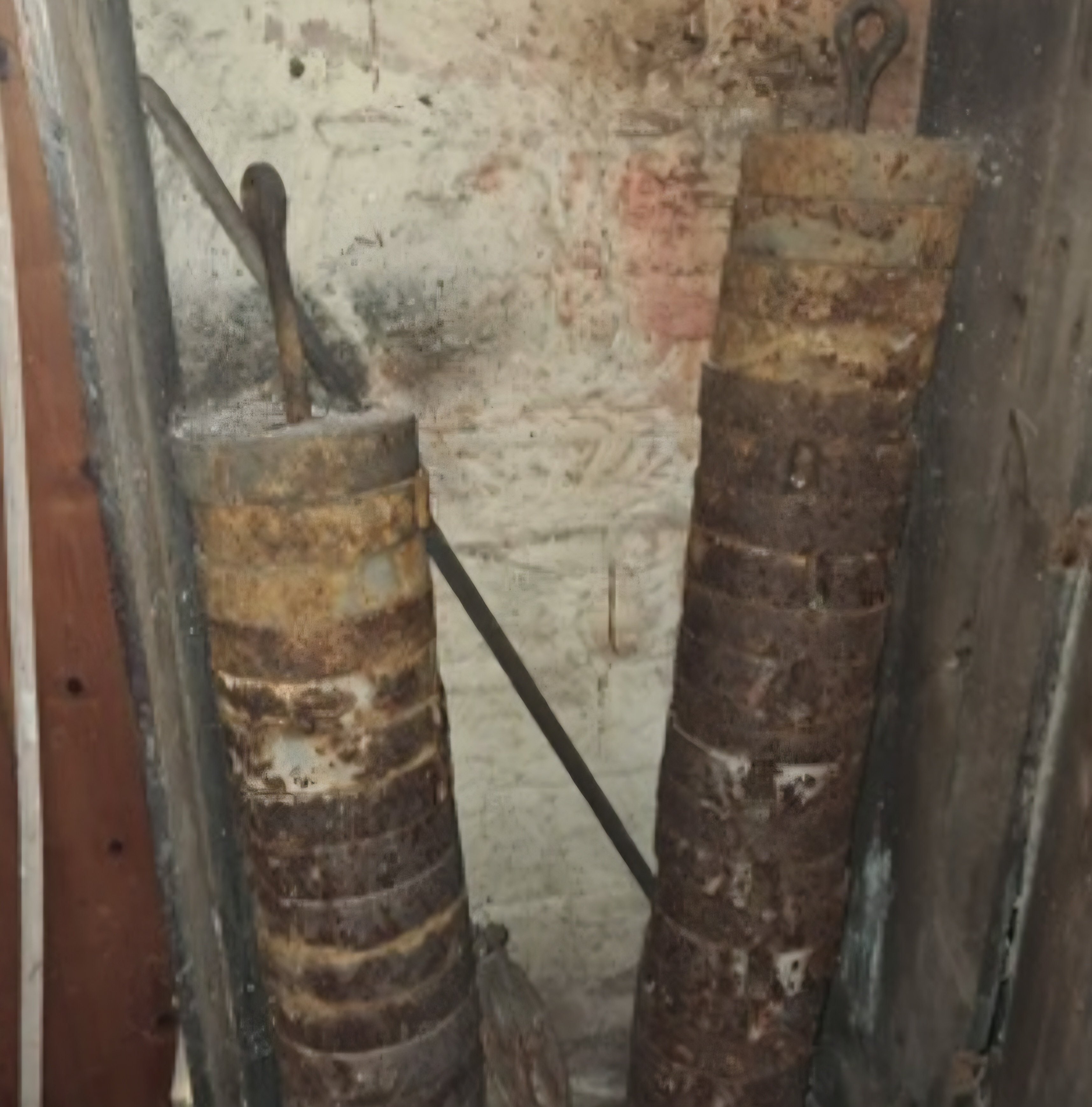
1/ Picture of 2 of the original weights.
2 /Picture of a winding motor and epicyclic unit fitted to the 'going ' train.
3/Picture of one of the lighter weights and cable which it operates.
About the Clock itself
Next year it will be the 140th anniversary of the installation of the church’s clock. The clock which was installed in the tower of St. Mary's Church to commemorate the Jubilee of Queen Victoria in 1887 was and is housed in the Bell Ringing Chamber. The Clock was originally set going by the ex Mayor Mr. H. Symons in the presence of the Vicar the Reverend J.W. Burrough and assembled dignitaries at 9pm on the 24th of December 1887. (The Jubilee clock replaced the original clock installed in 1802 by Phillip Brockendon).
The Clock, which does not have an external Dial on the Tower of the Church, chimes at each quarter hour in the Westminster manner on the 2nd, 3rd, 4th. And 7th bells. The hour is struck on the Tenor, No. 8 Bell. ( That is notes C#, B, A, E, and the Tenor D. )
The Clock is of the "flat bed" type 9' 6" wide (2.9 M) 3' Deep (0.9M) and 5' high (1.5M) including the pendulum of approximately 3′3′′” (1 M) in length (39.14 " the length for a 1 second beat and the pendulum weighs 1cwt (51kg). The clock has 3 "trains" side by side, each with its own weight.
Please see this link to read more about the clock written by Bob himself: