- E
- L
- E
Who are we?
We are a group of people that is tired of attending the funerals and going to the prison sentencing hearings of men and women who have recently returned from long term treatment for alcoholism and drug abuse. We are on the front lines, and all of our members are either actively engaged in or closely affiliated with the 12-step recovery community in the Charleston, South Carolina area. We have developed a program that significantly increases the number of people who attain a full year of sobriety after leaving long-term treatment or incarceration. This then translates into a much higher percentage of people who stay sober for life.
How are we doing that?
We have been combining a proven self-supporting Democratic Sober Living house model with apprenticeships, job training and business networking as well as integration with and mentoring by the 12 step recovery community for two and a half years. The model is working well, and the need for this demands that we expand it to the next level. This is a crucial need as there are no other such Sober Living facilities in the Mount Pleasant area of Charleston.
Why are we doing this?
We have seen scores of people leave long term treatment or jail with every intention of staying sober, but they end up living in a bad circumstance or unable to support themselves and soon give up in the face of adversity. Some make it back into treatment for another try; most end up in prison or dead. By our estimates, a dismal 6-8% make it sober their first year back in society. But a significant percentage of those that make this first crucial year go on to stay sober, develop careers and become contributing members of society. We want to attend more weddings, children's birthday parties and sober anniversary celebrations and less prison sentencing hearings and funerals. And in the last 2 years, out of 9 men we have worked with 4 have celebrated 1 year sober and 2 more are approaching that milestone.
What's next?
We have obtained a charter and set up a non-profit 501(c)3 Board of Directors in the State of South Carolina named "The Phoenix Project of South Carolina" to facilitate and oversee the effort's growth. (more information below in the section titled "The Board.")
Over two years we have outgrown the 4 person house we started with and have found a larger facility that will allow us to take this to the next level.
This house has ample living space for 12 men, adequate workshop space to teach skilled trades (The Enterprise) and a large common room that can be used for hosting 12-step meetings where sober members of our community can come and intermix with the men in the house.
What do we need?
$190.00- A One Hundred and Ninety Dollar donation from 350 people like you will create this self-supporting community center for people living in sobriety. The monies represent a what we need after our own contributions and will go toward the 20% down payment and closing costs. Please note - your contribution is helping to set up a fully self-supporting and autonomous organization.
Continue Reading if you would like more detailed information about why and how we are doing this, how the residents will support themselves and the project and a description of the house. To see our business plan, email [email redacted]. Remember - this isn't just a physical structure you are supporting. This is a well planned and organized community effort that will continue to grow and not only save many lives, but have a tremendous positive impact on many more over the years. Mothers, Fathers, Children, Brothers, Sisters and everyone else in each resident's social circles will realize a tremendous positive impact.
The Problem:
The majority of people leaving treatment or incarceration for drug and alcohol use reenter society armed with little more than hope. Often the only people happy to see their return is their bartender and their drug dealer. Beyond meaningful relationships they have lost material possessions and face mountains of unattended medical, legal and personal issues and debt. They are many years behind their peers in developing a skill or a profession capable of supporting themselves, let alone supporting their children and cleaning up debt.
The strongest among us would find this challenge daunting, but add in the Post Acute Withdrawal issue. For a full year or more after getting sober nerves are jangled and the mind still craves its drug of choice. This is magnified ten-fold when facing adversity. The individual has no coping skills - whenever life got tough in the past they used a drug to dull the pain. They find themselves thrust back into society and facing the full wrath of their unattended issues, now compounded with guilt, shame and boatloads of anxiety. Is it any wonder that over 90% of them ultimately seek relief in the drink or the drug? And once having tasted it, the allergy of addiction sets up the physical craving, demanding more of the drink and the drug. Thus the whole cycle is set in motion again until they either are locked up permanantly, go insane or die.
Complicating this is the fact that if a recovering alcoholic or addict is "coddled" they are sure to return to their drug of choice. "Enabling" doesn't - if circumstances are too comfortable the person soon tells themselves the lie that "it wasn't that bad" and we get the same result as above - jails, institutions or death. And with the potency of today's drugs death is more likely than ever.
It is well known that when a person begins relying on addictive substances to cope with life they stop maturing mentally, emotionally and spiritually. Thus there is a big gap between an alcoholic or addicts physical age and their ability to function in society in an "age appropriate" manner. The skills just have not been developed. So what is needed is an environment where those that are willing can address all of these issues by modeling their behavior on others who have faced the same challenges successfully.
Our approach is three-fold. There is the need to be self-supporting through meaningful work, named the Phoenix Enterprises. There is the residential and social need which we address with the Phoenix House. Then there is the need for mentoring, integration into the community and oversight which is The Phoenix Project - which is the Board of Directors. We started this project for men, as mixing sexes in early sobriety brings a whole different set of issues. But as this model expands we hope to be able to duplicate the entire structure to create a similar community for women.
The Phoenix Enterprises
On December 29th 2017 we founded The Phoenix Project LLC. with the core mission of teaching men in early recovery how to support themselves. Those who came to us without a trade have been matched up with apprenticeships and provided the tools and equipment necessary to succeed. Those who already had a skill or profession have been given the equipment and support to get themselves back on their feet. Those who came to us without any direction we have been able to provide jobs within the LLC. And they all have had the advantages of mentoring and business networking through those in the local 12-step recovery community. This LLC will now be changing its name to Phoenix Enterprises LLC so that the name isn't confused with the name of the non-profit, The Phoenix Project of South Carolina.
Over time there will be many affiliated business and educational opportunities for the men, but there are three solid core skills that we have already obtained the basic equipment to teach and perform. The first of these is a framing and sign business.
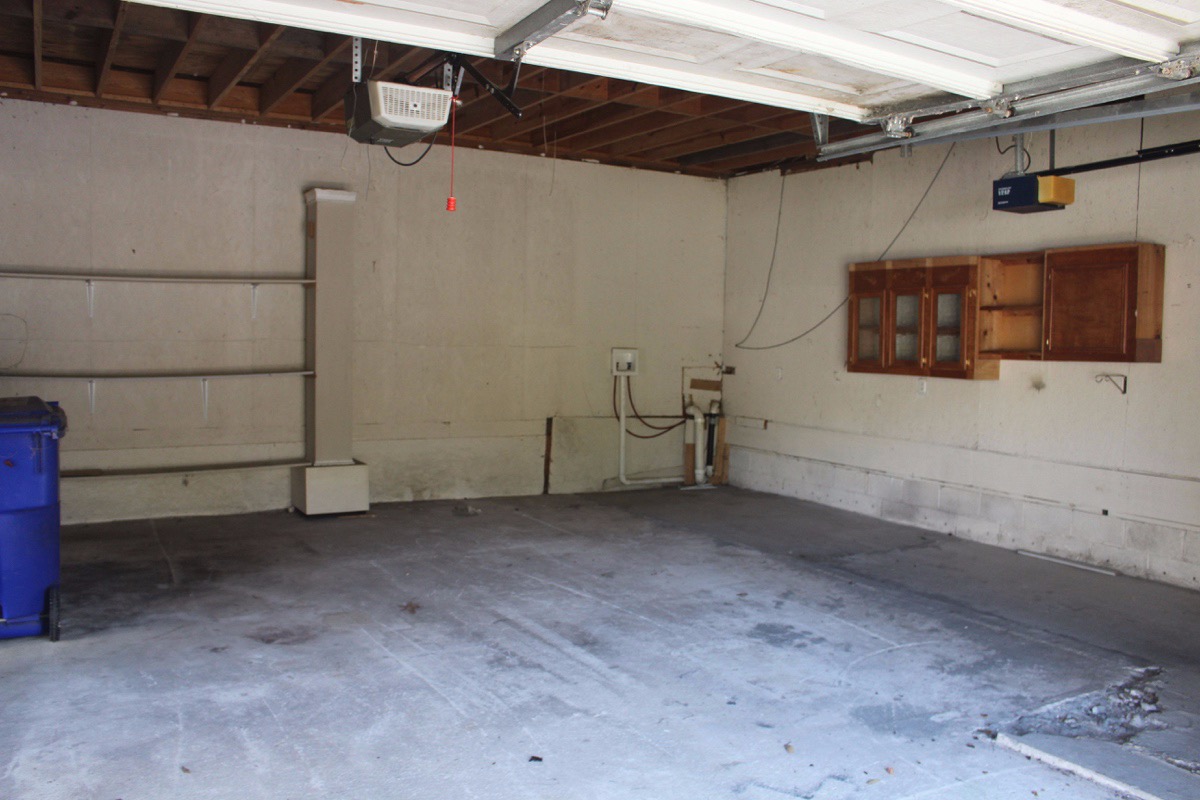
This facility we are purchasing has a large garage space, a large accessible backyard and a large downstairs bedroom that can all be utilized for The Enterprise. This space is to be converted into a shop that will teach the basic skills of picture framing, printing and basic sign making.
One of the core products we have been making in the last two years are large printed and framed copies of an old rendering of downtown Charleston in 1872.
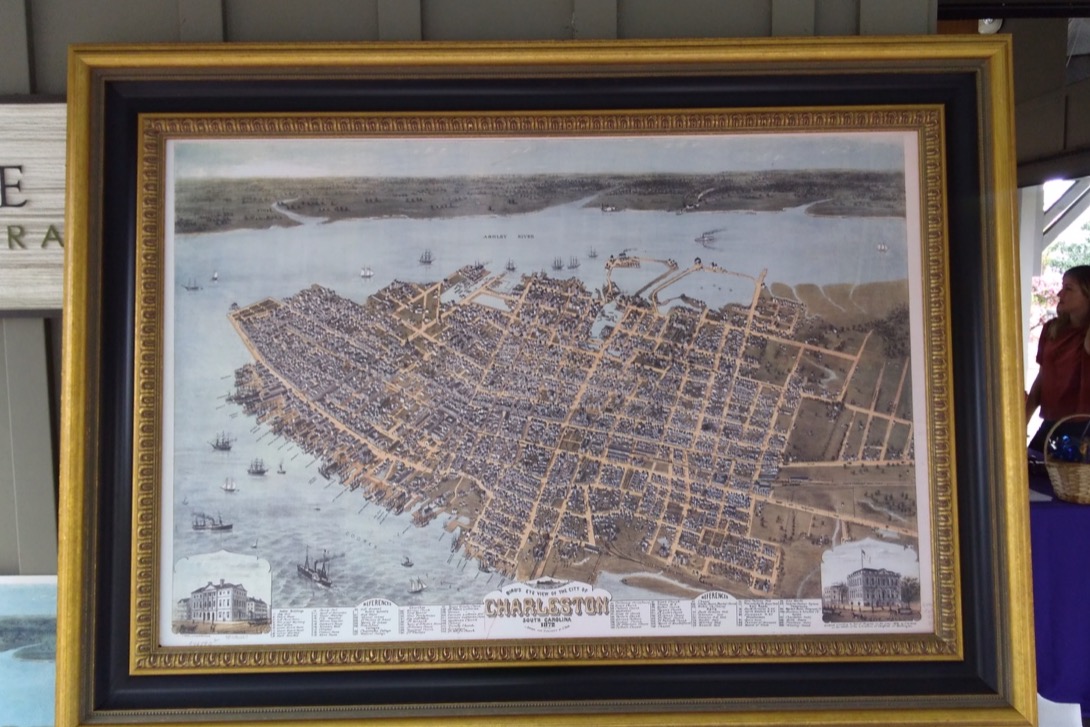
We have been finding donors for these to be placed in public institutions. One of them hangs in Charleston's City Hall in the City Council Chambers. Another hangs in the library of The Citadel. Still others hang in various churches and in 5 local schools. Making these incorporates skills in printing, framing and hanging of large artwork, so the men have been learning these skills.
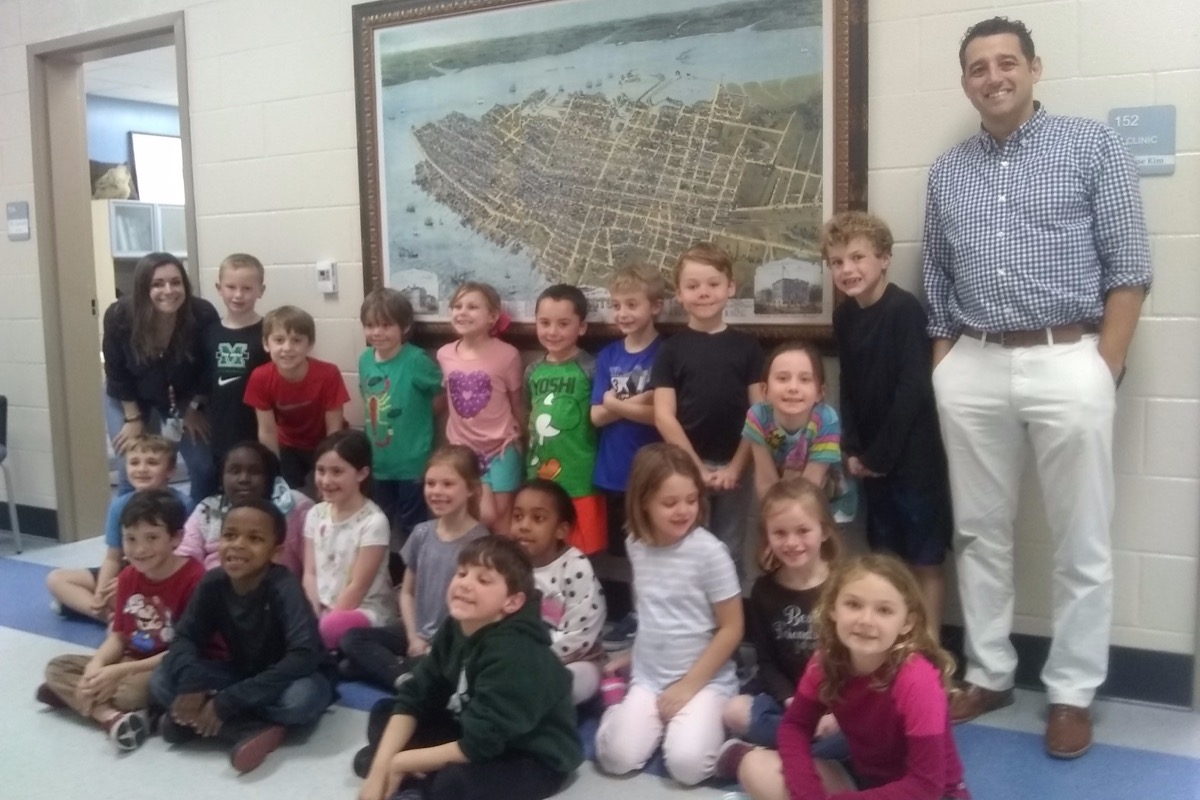 Carolina Park Elementary School, Mount Pleasant SC
This is exactly the type of project we hope to find more of. We are helping with the education of our young, we are keeping Charleston's history alive and we are learning skills and supporting ourselves in the process. So far we have placed them in 7 out of 72 schools in the Charleston area.
This garage space will be utilized to be quickly rearranged to serve many different functions.
The second of the initial areas is a HandyMan business. In the 12-step community we are lucky to be surrounded with people who excel in all manner of fields, and in this case we have several who are a great fit. We have a professional painter who already employs over 20 people, and who has helped mentor us with projects ranging from refinishing mahogany doors to interior and exterior painting jobs. We have the owner of a plumbing business that mentored and helped us with the installation of a new bathroom in an existing house. We have the kitchen remodeler who has taught men kitchen cabinet building and complete kitchen renovation. There are others in HVAC, concrete work, custom woodworking, electrical work and other trades who are not just willing but truly want to help people find meaningful sobriety. We have acquired tools and equipment enough to support several crews of men doing a wide variety of handyman work. We also have commitments for work from several local General Contractors. So we will be light on our feet and able to perform a wide variety of jobs as work presents itself.
The third area is automobile detailing, wrapping and repair. We have acquired detailing tools and a master mechanics set of automobile tools. We have relationships with local people in the printing business that are willing to teach men how to wrap cars. We will start this endeavor immediately by buying cars wholesale through the auction and fixing them up for use in taking men to meetings and appointments, for use as HandyMan and light construction vehicles and as personal vehicles that can be earned by those men who are doing the right things.
All three of these areas - Sign Making, HandyMan work and Automobile Refurbishing incorporate many smaller skill sets, each one of which can be a career for a man who wants to pursue it. And all the while those who are training and mentoring in the work arena will be providing support and direction in the men's sobriety. The Enterprises are set up to carry general liability insurance and Workmen's Compensation.
The Phoenix House
The Phoenix House is modeled on the successful path forged by Oxford House Inc . Since 1977 Oxford House has organically grown from 1 house to 2750 houses, each house an autonomous and self supporting duplicate of the ones that came before. But most notably, Oxford House averages a 40% success rate for members attaining 1 year plus of sobriety!! That is 6 or 7 times higher than the average!! Here are some of the keys to their success.
Each house is independent and with the exception of three basic rules, entirely governed democratically by the residents themselves, who are men or women in recovery. Those three rules are: 1) No drinking or drugging - zero tolerance. 2) No disruptive behavior. 3) All bills and expenses get paid on time. As long as those three rules are met the house can institute any rules for itself that it sees fit. This way every member - including the person who just came from treatment or jail - feels they have an equal say in house matters. And since the house is FULLY self-supporting from the weekly rent that each resident pays, each member feels they are a part of a "successful enterprise" - something many of them have never experienced. There is no more living off of hand-outs or theft - the individual is truly carrying their own weight and can hold their head up.
To get into a house you have to be voted in by an 80% affirmative vote by the current membership. This is the only vote in an Oxford House that isn't 51% to carry a motion. This invests the members of the house in the success of the individual coming in and it tends to give some humility to the incoming member. They fill out an application and are interviewed by the existing house members who know what it takes both financially and logistically to keep the house running. Most Oxford Houses have a list of applicants waiting to interview for an opening.
The House has its own government where officers rotate every 3 months. These offices include President, Vice President, Secretary, Treasurer, Comptroller, Chore Coordinator and Supply Manager. There is a mandatory weekly house meeting where the members go through the weekly rent that has been paid (or not paid) by house members, the bills that are due and coming due, whether the house has been cleaned that week and the chores have been done, any supplies needed or issues that need to be fixed and any personal grievances that need to be addressed. This is all done in an organized fashion, mirroring standard Roberts Rules for Board Meetings . Numerous skills are learned as house members are elected to and fulfill various positions within the house, from balancing a check-book to being a chairman of meetings, coordinating work tasks and keeping accurate records.
No member can be kicked out without just cause. A member who has stayed sober, is paying their rent and not being disruptive can stay in an Oxford House for life. However, when members become uncooperative or engage in disruptive behavior a 51% vote of the existing residents can evict them. These rules for sober houses have well established case-law and the normal requirements for an eviction do not apply to Sober Living Facilities . And to keep its protection under the laws, a Sober Living Facility must maintain Zero tolerance for drug or alcohol use.
"Veteran" house members are typically required to attend at least four outside AA, NA or other recovery program meetings per week. New members voted in often have to agree to attend an outside meeting every day for their first three months in the house. This provides structure and is enough time for a new resident to develop a new social circle as well as obtain a mentor within the local 12-step community. It encourages members of the 12-step community to be vested in the success of the members of the house.
A rotating weekly chore list is maintained, and ALL members rotate through the list. These chores include lawn care, cleaning common areas, cleaning bathrooms, cleaning the kitchen and taking out trash. The House in this case will be home to 12 men, significantly more than the average of 7 in Oxford Houses, in which each member is responsible for his or her own food. This larger membership allows for an expansion of chores to include cooking, budgeting and grocery shopping, all life skills that most of the men will not have experience with. New recipes can be developed, agreements on what kind of food is purchased, creativity in learning to buy foods in bulk and cook in large quantities - all of these are skills that the men will learn as they rotate through the various house office and chore responsibilities. And because the house can buy in bulk, the expense per person is significantly below what it would be normally.
Each month The House is required to give a status report to a member of the Board of Directors. Rent must be paid on time to the Board of Directors as the non-profit owns the house. The report will include number of new residents, the number of residents that have left and the reasons for the departures. The House will also be required to develop and maintain a savings account with a prudent reserve of two month's total house expenses.
There are many other facets of the template that Oxford House has developed over the years that have lead to their superb success rate in getting people past the 1 year hurdle in sobriety. As a footnote, our Board of Directors has an adviser to the board who has both opened and helped oversee many Oxford Houses right here in Charleston, South Carolina.
The Property
The home we are purchasing is a 12 bedroom house that is worth much more than what we are paying for it. There are several reasons we are able to purchase it so reasonably, one being that it is a foreclosure where the people who were evicted took many of the household fixtures. You have heard the expression that someone took everything but the kitchen sink? Well, these folks took the kitchen sink.
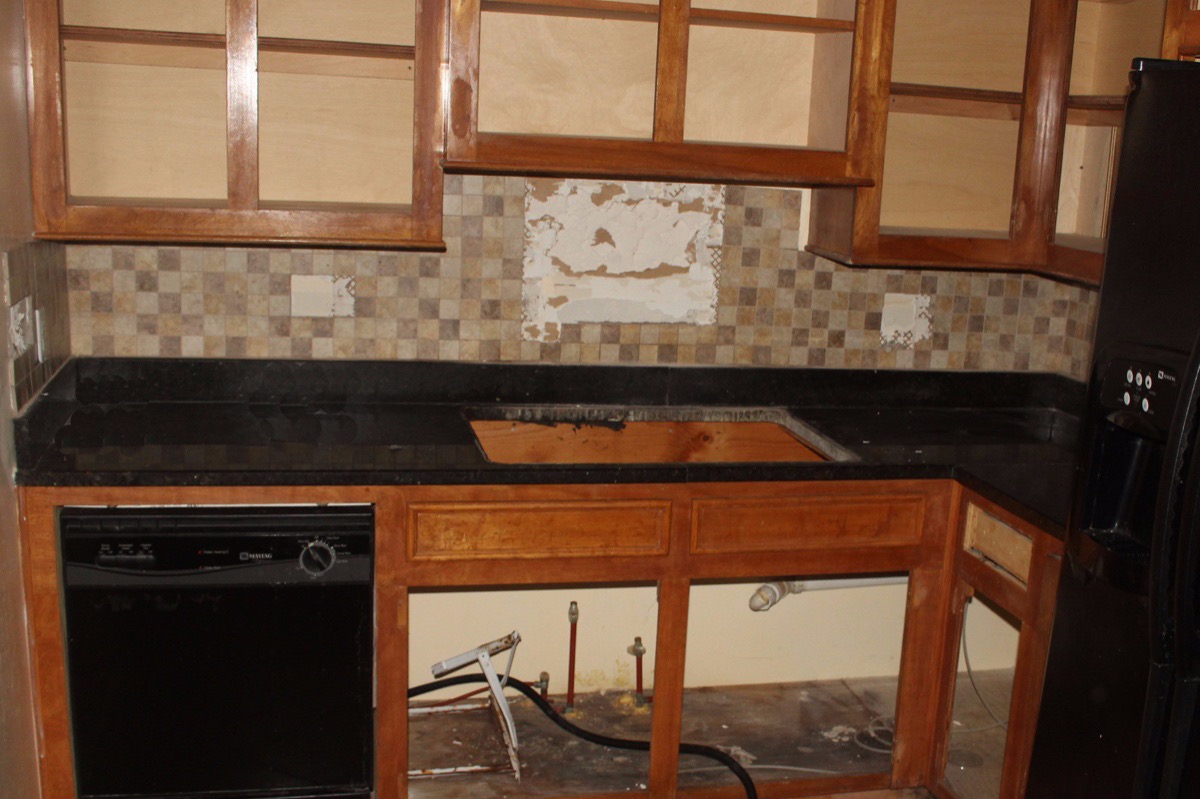
There are cabinets, sinks and drawers to replace. Fireplaces were torn out and bannisters were ruined. A whole section of hardwood floor was torn out. However these damages are all cosmetic, and numerous tradesmen in our circle have expressed willingness to help us make it right. Further, we have allowed in our house budget the monies for materials to fix these things.
Another reason this house is so reasonably priced is that it was built in a neighborhood of mobile homes and small houses - it does not fit the setting. But this actually works to our advantage as there is no homeowner's association issues to contend with.
Another great feature of the house is this room right beside the front door.
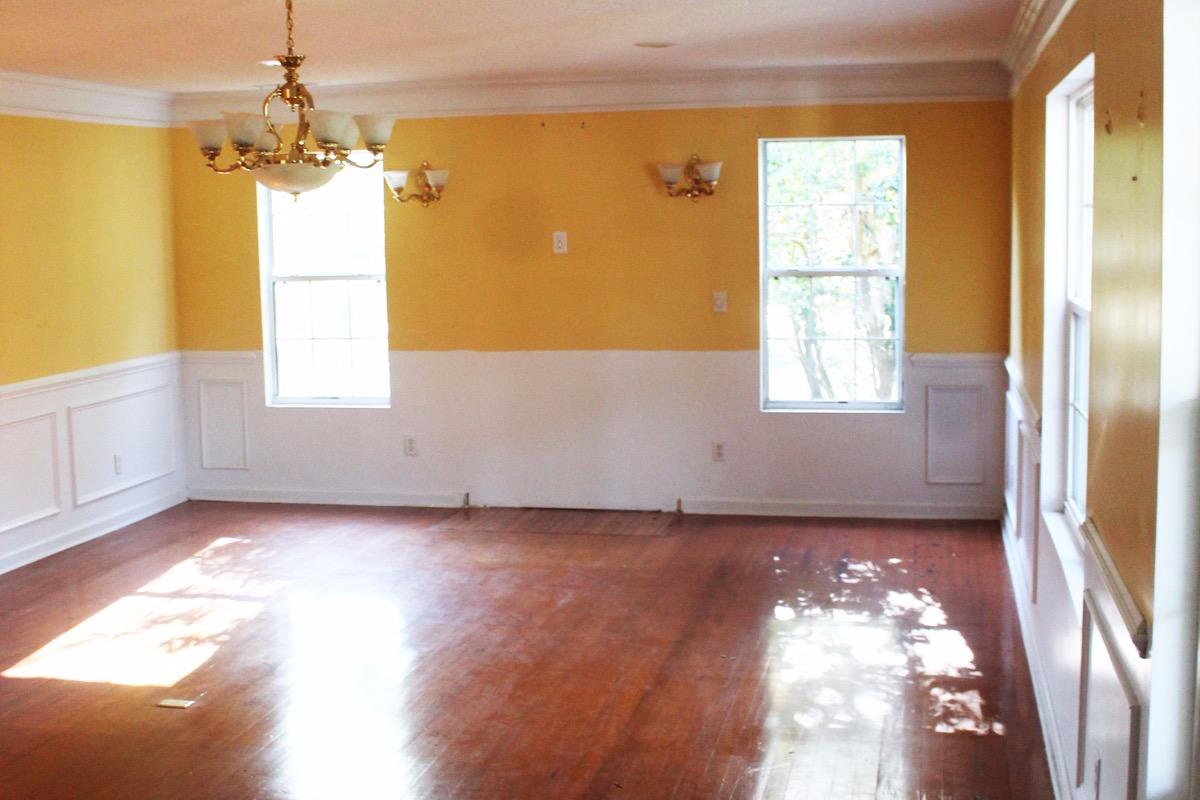
This space is perfect for open 12-step meetings that members of the community can attend. (At our current location we have regular open meetings that are well attended by the community.) We intend to open our regular 7am daily reflections meeting to the public - I wouldn't be surprised to see 20 or more people gather in this room for coffee and fellowship every morning. And the space will serve well for regular weekly business meetings and board meetings.
All in all, we cannot think of a better property to have come along to suit all of our purposes in this next growth stage of our service.
The Board of Directors and The Vision
Soon there will be a waiting list of men wanting to be a part of this. Although it is premature to discuss expansion beyond this house, it is not too early to set in place a structure that can handle it. This has been factored into our organizational plans.
The Board consists of men in and around the 12 step recovery community. The core includes men retired from commercial real estate, high level banking and local business ownership. Advisors to the board include a lawyer, an individual long involved in residential sober living arrangements and many others who openly share their expertise. We directly interact with people in the medical field and many other professions. The local police department has expressed their support and offered to purchase bicycles for any men who don't have transportation, and several local churches have offered to help us in any way that they can. This truly is a community endeavor.
Through the generosity of so many, there will be a positive monthly cash flow resulting from the rents paid both by The House and by The Enterprises. There will be monthly payments, taxes, property and homeowners insurances to be paid. The Board also needs its own prudent reserve and will need a reserve to offset unexpected repairs on the house. But we calculate that the positive cash flow to the board should be sufficient to obtain another location when the time comes to expand. The biggest inhibitor of expansion will most likely be qualified people that have matured within this organization to a point that they step up into new roles to open additional facilities.
The Board of Directors has obtained a charter and organized under the 501(c)3 laws of South Carolina with a Chairman, a Vice-Chairman and Secretary -Treasurer. A formal finding by the IRS and the other processes have been slowed down by the Corona-Virus outbreak, but at this time the non-profit is formed and able to engage in business as a non-profit in the State of South Carolina.
If you have any questions or suggestions, or would like to see our business plan, please email [email redacted]. Please remember - this is not a physical structure you are supporting. This is a carefully planned and well organized community effort that will continue to grow and have a positive impact on many lives for years to come. There are the Mothers and Fathers, the Children and the Brothers and Sisters and all the others in each resident's social circle that will benefit over the long run.
We are a group of people that is tired of attending the funerals and going to the prison sentencing hearings of men and women who have recently returned from long term treatment for alcoholism and drug abuse. We are on the front lines, and all of our members are either actively engaged in or closely affiliated with the 12-step recovery community in the Charleston, South Carolina area. We have developed a program that significantly increases the number of people who attain a full year of sobriety after leaving long-term treatment or incarceration. This then translates into a much higher percentage of people who stay sober for life.
How are we doing that?
We have been combining a proven self-supporting Democratic Sober Living house model with apprenticeships, job training and business networking as well as integration with and mentoring by the 12 step recovery community for two and a half years. The model is working well, and the need for this demands that we expand it to the next level. This is a crucial need as there are no other such Sober Living facilities in the Mount Pleasant area of Charleston.
Why are we doing this?
We have seen scores of people leave long term treatment or jail with every intention of staying sober, but they end up living in a bad circumstance or unable to support themselves and soon give up in the face of adversity. Some make it back into treatment for another try; most end up in prison or dead. By our estimates, a dismal 6-8% make it sober their first year back in society. But a significant percentage of those that make this first crucial year go on to stay sober, develop careers and become contributing members of society. We want to attend more weddings, children's birthday parties and sober anniversary celebrations and less prison sentencing hearings and funerals. And in the last 2 years, out of 9 men we have worked with 4 have celebrated 1 year sober and 2 more are approaching that milestone.
What's next?
We have obtained a charter and set up a non-profit 501(c)3 Board of Directors in the State of South Carolina named "The Phoenix Project of South Carolina" to facilitate and oversee the effort's growth. (more information below in the section titled "The Board.")
Over two years we have outgrown the 4 person house we started with and have found a larger facility that will allow us to take this to the next level.
This house has ample living space for 12 men, adequate workshop space to teach skilled trades (The Enterprise) and a large common room that can be used for hosting 12-step meetings where sober members of our community can come and intermix with the men in the house.
What do we need?
$190.00- A One Hundred and Ninety Dollar donation from 350 people like you will create this self-supporting community center for people living in sobriety. The monies represent a what we need after our own contributions and will go toward the 20% down payment and closing costs. Please note - your contribution is helping to set up a fully self-supporting and autonomous organization.
Continue Reading if you would like more detailed information about why and how we are doing this, how the residents will support themselves and the project and a description of the house. To see our business plan, email [email redacted]. Remember - this isn't just a physical structure you are supporting. This is a well planned and organized community effort that will continue to grow and not only save many lives, but have a tremendous positive impact on many more over the years. Mothers, Fathers, Children, Brothers, Sisters and everyone else in each resident's social circles will realize a tremendous positive impact.
The Problem:
The majority of people leaving treatment or incarceration for drug and alcohol use reenter society armed with little more than hope. Often the only people happy to see their return is their bartender and their drug dealer. Beyond meaningful relationships they have lost material possessions and face mountains of unattended medical, legal and personal issues and debt. They are many years behind their peers in developing a skill or a profession capable of supporting themselves, let alone supporting their children and cleaning up debt.
The strongest among us would find this challenge daunting, but add in the Post Acute Withdrawal issue. For a full year or more after getting sober nerves are jangled and the mind still craves its drug of choice. This is magnified ten-fold when facing adversity. The individual has no coping skills - whenever life got tough in the past they used a drug to dull the pain. They find themselves thrust back into society and facing the full wrath of their unattended issues, now compounded with guilt, shame and boatloads of anxiety. Is it any wonder that over 90% of them ultimately seek relief in the drink or the drug? And once having tasted it, the allergy of addiction sets up the physical craving, demanding more of the drink and the drug. Thus the whole cycle is set in motion again until they either are locked up permanantly, go insane or die.
Complicating this is the fact that if a recovering alcoholic or addict is "coddled" they are sure to return to their drug of choice. "Enabling" doesn't - if circumstances are too comfortable the person soon tells themselves the lie that "it wasn't that bad" and we get the same result as above - jails, institutions or death. And with the potency of today's drugs death is more likely than ever.
It is well known that when a person begins relying on addictive substances to cope with life they stop maturing mentally, emotionally and spiritually. Thus there is a big gap between an alcoholic or addicts physical age and their ability to function in society in an "age appropriate" manner. The skills just have not been developed. So what is needed is an environment where those that are willing can address all of these issues by modeling their behavior on others who have faced the same challenges successfully.
Our approach is three-fold. There is the need to be self-supporting through meaningful work, named the Phoenix Enterprises. There is the residential and social need which we address with the Phoenix House. Then there is the need for mentoring, integration into the community and oversight which is The Phoenix Project - which is the Board of Directors. We started this project for men, as mixing sexes in early sobriety brings a whole different set of issues. But as this model expands we hope to be able to duplicate the entire structure to create a similar community for women.
The Phoenix Enterprises
On December 29th 2017 we founded The Phoenix Project LLC. with the core mission of teaching men in early recovery how to support themselves. Those who came to us without a trade have been matched up with apprenticeships and provided the tools and equipment necessary to succeed. Those who already had a skill or profession have been given the equipment and support to get themselves back on their feet. Those who came to us without any direction we have been able to provide jobs within the LLC. And they all have had the advantages of mentoring and business networking through those in the local 12-step recovery community. This LLC will now be changing its name to Phoenix Enterprises LLC so that the name isn't confused with the name of the non-profit, The Phoenix Project of South Carolina.
Over time there will be many affiliated business and educational opportunities for the men, but there are three solid core skills that we have already obtained the basic equipment to teach and perform. The first of these is a framing and sign business.
This facility we are purchasing has a large garage space, a large accessible backyard and a large downstairs bedroom that can all be utilized for The Enterprise. This space is to be converted into a shop that will teach the basic skills of picture framing, printing and basic sign making.
One of the core products we have been making in the last two years are large printed and framed copies of an old rendering of downtown Charleston in 1872.
We have been finding donors for these to be placed in public institutions. One of them hangs in Charleston's City Hall in the City Council Chambers. Another hangs in the library of The Citadel. Still others hang in various churches and in 5 local schools. Making these incorporates skills in printing, framing and hanging of large artwork, so the men have been learning these skills.
Carolina Park Elementary School, Mount Pleasant SCThis is exactly the type of project we hope to find more of. We are helping with the education of our young, we are keeping Charleston's history alive and we are learning skills and supporting ourselves in the process. So far we have placed them in 7 out of 72 schools in the Charleston area.
This garage space will be utilized to be quickly rearranged to serve many different functions.
The second of the initial areas is a HandyMan business. In the 12-step community we are lucky to be surrounded with people who excel in all manner of fields, and in this case we have several who are a great fit. We have a professional painter who already employs over 20 people, and who has helped mentor us with projects ranging from refinishing mahogany doors to interior and exterior painting jobs. We have the owner of a plumbing business that mentored and helped us with the installation of a new bathroom in an existing house. We have the kitchen remodeler who has taught men kitchen cabinet building and complete kitchen renovation. There are others in HVAC, concrete work, custom woodworking, electrical work and other trades who are not just willing but truly want to help people find meaningful sobriety. We have acquired tools and equipment enough to support several crews of men doing a wide variety of handyman work. We also have commitments for work from several local General Contractors. So we will be light on our feet and able to perform a wide variety of jobs as work presents itself.
The third area is automobile detailing, wrapping and repair. We have acquired detailing tools and a master mechanics set of automobile tools. We have relationships with local people in the printing business that are willing to teach men how to wrap cars. We will start this endeavor immediately by buying cars wholesale through the auction and fixing them up for use in taking men to meetings and appointments, for use as HandyMan and light construction vehicles and as personal vehicles that can be earned by those men who are doing the right things.
All three of these areas - Sign Making, HandyMan work and Automobile Refurbishing incorporate many smaller skill sets, each one of which can be a career for a man who wants to pursue it. And all the while those who are training and mentoring in the work arena will be providing support and direction in the men's sobriety. The Enterprises are set up to carry general liability insurance and Workmen's Compensation.
The Phoenix House
The Phoenix House is modeled on the successful path forged by Oxford House Inc . Since 1977 Oxford House has organically grown from 1 house to 2750 houses, each house an autonomous and self supporting duplicate of the ones that came before. But most notably, Oxford House averages a 40% success rate for members attaining 1 year plus of sobriety!! That is 6 or 7 times higher than the average!! Here are some of the keys to their success.
Each house is independent and with the exception of three basic rules, entirely governed democratically by the residents themselves, who are men or women in recovery. Those three rules are: 1) No drinking or drugging - zero tolerance. 2) No disruptive behavior. 3) All bills and expenses get paid on time. As long as those three rules are met the house can institute any rules for itself that it sees fit. This way every member - including the person who just came from treatment or jail - feels they have an equal say in house matters. And since the house is FULLY self-supporting from the weekly rent that each resident pays, each member feels they are a part of a "successful enterprise" - something many of them have never experienced. There is no more living off of hand-outs or theft - the individual is truly carrying their own weight and can hold their head up.
To get into a house you have to be voted in by an 80% affirmative vote by the current membership. This is the only vote in an Oxford House that isn't 51% to carry a motion. This invests the members of the house in the success of the individual coming in and it tends to give some humility to the incoming member. They fill out an application and are interviewed by the existing house members who know what it takes both financially and logistically to keep the house running. Most Oxford Houses have a list of applicants waiting to interview for an opening.
The House has its own government where officers rotate every 3 months. These offices include President, Vice President, Secretary, Treasurer, Comptroller, Chore Coordinator and Supply Manager. There is a mandatory weekly house meeting where the members go through the weekly rent that has been paid (or not paid) by house members, the bills that are due and coming due, whether the house has been cleaned that week and the chores have been done, any supplies needed or issues that need to be fixed and any personal grievances that need to be addressed. This is all done in an organized fashion, mirroring standard Roberts Rules for Board Meetings . Numerous skills are learned as house members are elected to and fulfill various positions within the house, from balancing a check-book to being a chairman of meetings, coordinating work tasks and keeping accurate records.
No member can be kicked out without just cause. A member who has stayed sober, is paying their rent and not being disruptive can stay in an Oxford House for life. However, when members become uncooperative or engage in disruptive behavior a 51% vote of the existing residents can evict them. These rules for sober houses have well established case-law and the normal requirements for an eviction do not apply to Sober Living Facilities . And to keep its protection under the laws, a Sober Living Facility must maintain Zero tolerance for drug or alcohol use.
"Veteran" house members are typically required to attend at least four outside AA, NA or other recovery program meetings per week. New members voted in often have to agree to attend an outside meeting every day for their first three months in the house. This provides structure and is enough time for a new resident to develop a new social circle as well as obtain a mentor within the local 12-step community. It encourages members of the 12-step community to be vested in the success of the members of the house.
A rotating weekly chore list is maintained, and ALL members rotate through the list. These chores include lawn care, cleaning common areas, cleaning bathrooms, cleaning the kitchen and taking out trash. The House in this case will be home to 12 men, significantly more than the average of 7 in Oxford Houses, in which each member is responsible for his or her own food. This larger membership allows for an expansion of chores to include cooking, budgeting and grocery shopping, all life skills that most of the men will not have experience with. New recipes can be developed, agreements on what kind of food is purchased, creativity in learning to buy foods in bulk and cook in large quantities - all of these are skills that the men will learn as they rotate through the various house office and chore responsibilities. And because the house can buy in bulk, the expense per person is significantly below what it would be normally.
Each month The House is required to give a status report to a member of the Board of Directors. Rent must be paid on time to the Board of Directors as the non-profit owns the house. The report will include number of new residents, the number of residents that have left and the reasons for the departures. The House will also be required to develop and maintain a savings account with a prudent reserve of two month's total house expenses.
There are many other facets of the template that Oxford House has developed over the years that have lead to their superb success rate in getting people past the 1 year hurdle in sobriety. As a footnote, our Board of Directors has an adviser to the board who has both opened and helped oversee many Oxford Houses right here in Charleston, South Carolina.
The Property
The home we are purchasing is a 12 bedroom house that is worth much more than what we are paying for it. There are several reasons we are able to purchase it so reasonably, one being that it is a foreclosure where the people who were evicted took many of the household fixtures. You have heard the expression that someone took everything but the kitchen sink? Well, these folks took the kitchen sink.
There are cabinets, sinks and drawers to replace. Fireplaces were torn out and bannisters were ruined. A whole section of hardwood floor was torn out. However these damages are all cosmetic, and numerous tradesmen in our circle have expressed willingness to help us make it right. Further, we have allowed in our house budget the monies for materials to fix these things.
Another reason this house is so reasonably priced is that it was built in a neighborhood of mobile homes and small houses - it does not fit the setting. But this actually works to our advantage as there is no homeowner's association issues to contend with.
Another great feature of the house is this room right beside the front door.
This space is perfect for open 12-step meetings that members of the community can attend. (At our current location we have regular open meetings that are well attended by the community.) We intend to open our regular 7am daily reflections meeting to the public - I wouldn't be surprised to see 20 or more people gather in this room for coffee and fellowship every morning. And the space will serve well for regular weekly business meetings and board meetings.
All in all, we cannot think of a better property to have come along to suit all of our purposes in this next growth stage of our service.
The Board of Directors and The Vision
Soon there will be a waiting list of men wanting to be a part of this. Although it is premature to discuss expansion beyond this house, it is not too early to set in place a structure that can handle it. This has been factored into our organizational plans.
The Board consists of men in and around the 12 step recovery community. The core includes men retired from commercial real estate, high level banking and local business ownership. Advisors to the board include a lawyer, an individual long involved in residential sober living arrangements and many others who openly share their expertise. We directly interact with people in the medical field and many other professions. The local police department has expressed their support and offered to purchase bicycles for any men who don't have transportation, and several local churches have offered to help us in any way that they can. This truly is a community endeavor.
Through the generosity of so many, there will be a positive monthly cash flow resulting from the rents paid both by The House and by The Enterprises. There will be monthly payments, taxes, property and homeowners insurances to be paid. The Board also needs its own prudent reserve and will need a reserve to offset unexpected repairs on the house. But we calculate that the positive cash flow to the board should be sufficient to obtain another location when the time comes to expand. The biggest inhibitor of expansion will most likely be qualified people that have matured within this organization to a point that they step up into new roles to open additional facilities.
The Board of Directors has obtained a charter and organized under the 501(c)3 laws of South Carolina with a Chairman, a Vice-Chairman and Secretary -Treasurer. A formal finding by the IRS and the other processes have been slowed down by the Corona-Virus outbreak, but at this time the non-profit is formed and able to engage in business as a non-profit in the State of South Carolina.
If you have any questions or suggestions, or would like to see our business plan, please email [email redacted]. Please remember - this is not a physical structure you are supporting. This is a carefully planned and well organized community effort that will continue to grow and have a positive impact on many lives for years to come. There are the Mothers and Fathers, the Children and the Brothers and Sisters and all the others in each resident's social circle that will benefit over the long run.