- C
- N

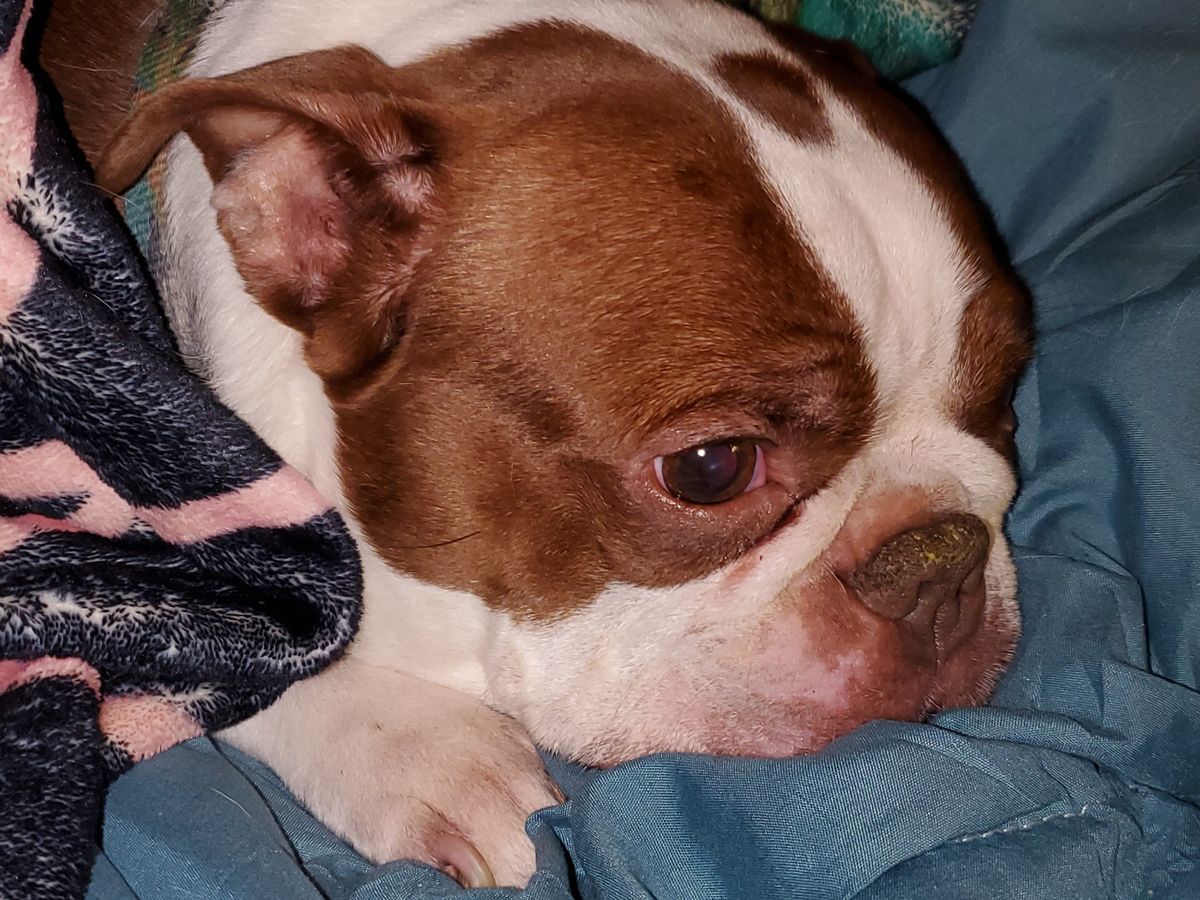
Hello my name is Cooper. I am a 7 year old chocolate Boston Terrier. Up until 2 weeks ago, I was a very energetic loving dog. I loved to play with my two Boston Terrier sisters. My mom went to let us out to potty one morning, I couldn't move off the sofa. My mom put me down on the floor, I just collapsed over. I was shaking and yelping in pain. My mom rushed me to an emergency vet clinic. For them to say everything look fine. Two days later I just got worse. So my mom took me to a different emergency vet hospital. There the vet told my mom I possibly had IVDD. Dr sent me home with a muscle relaxer and pain medication. It has been a week later. I am not getting any better. Dr told my mom that I do have IVDD. There are 5 stages of IVDD. I am near stage 3. The dr gave my mom a diagnosed plan to treat me. It is going to cost anywhere from $4000 to $8000 to get me running and playing again.
I am my mommy's shadow, she can't do anything without me being by her. My mom has been non stop taking care of me. She has to hand feed me, carry me out to potty. It's very hard on my momma, she is disabled. My momma isn't sleeping much, she cries alot, and prays over me. My momma loves me so much, I know she would be lost without me. With all that said my momma has already spent alot on my care. Could you please find it in your heart to help pay for my treatment. My family would greatly appreciate all that you can do. Much love from Cooper and my momma.
UPDATE: COOPER HAD A SECOND OPINION TODAY. The vet said that he will benefit from laser therapy. So Cooper starts his first treatment on Tuesday. There is a big difference in cost. The surgery was going to be $8000, the laser treatments will be $2250. This is a big relief. The vet also said that Cooper will benefit from taking CBD oil. He has had his first dose of that, my baby is able to stand on his own and walk some. We will have the break down of payments when we go to our first treatment. We are going to a sister vet clinic that is closer to us.
This is a video of Cooper having a Episode before we found out he has IVDD.
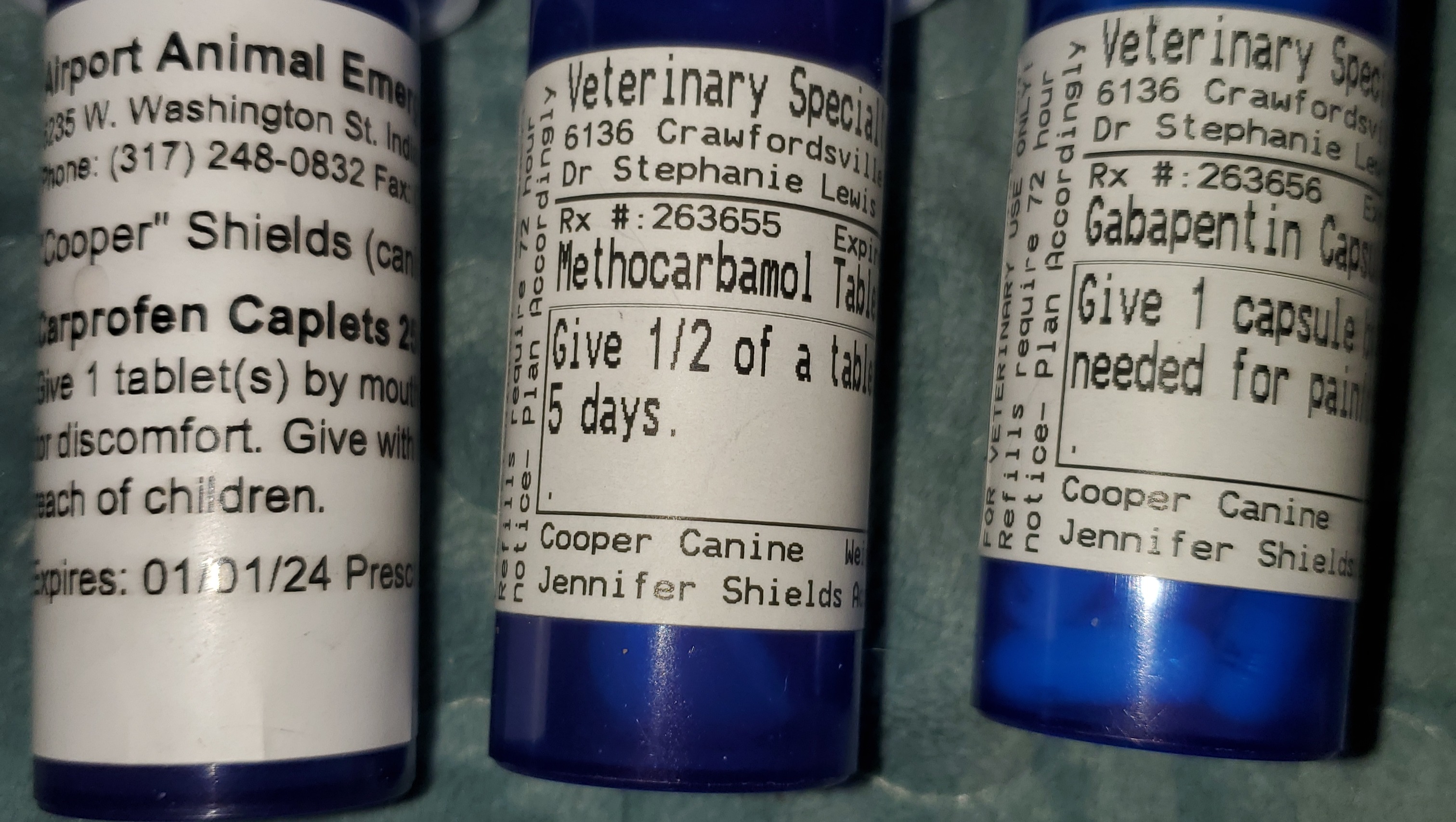
This are a few of the many medication Cooper has been on. Had to stop them due to breathing problems.
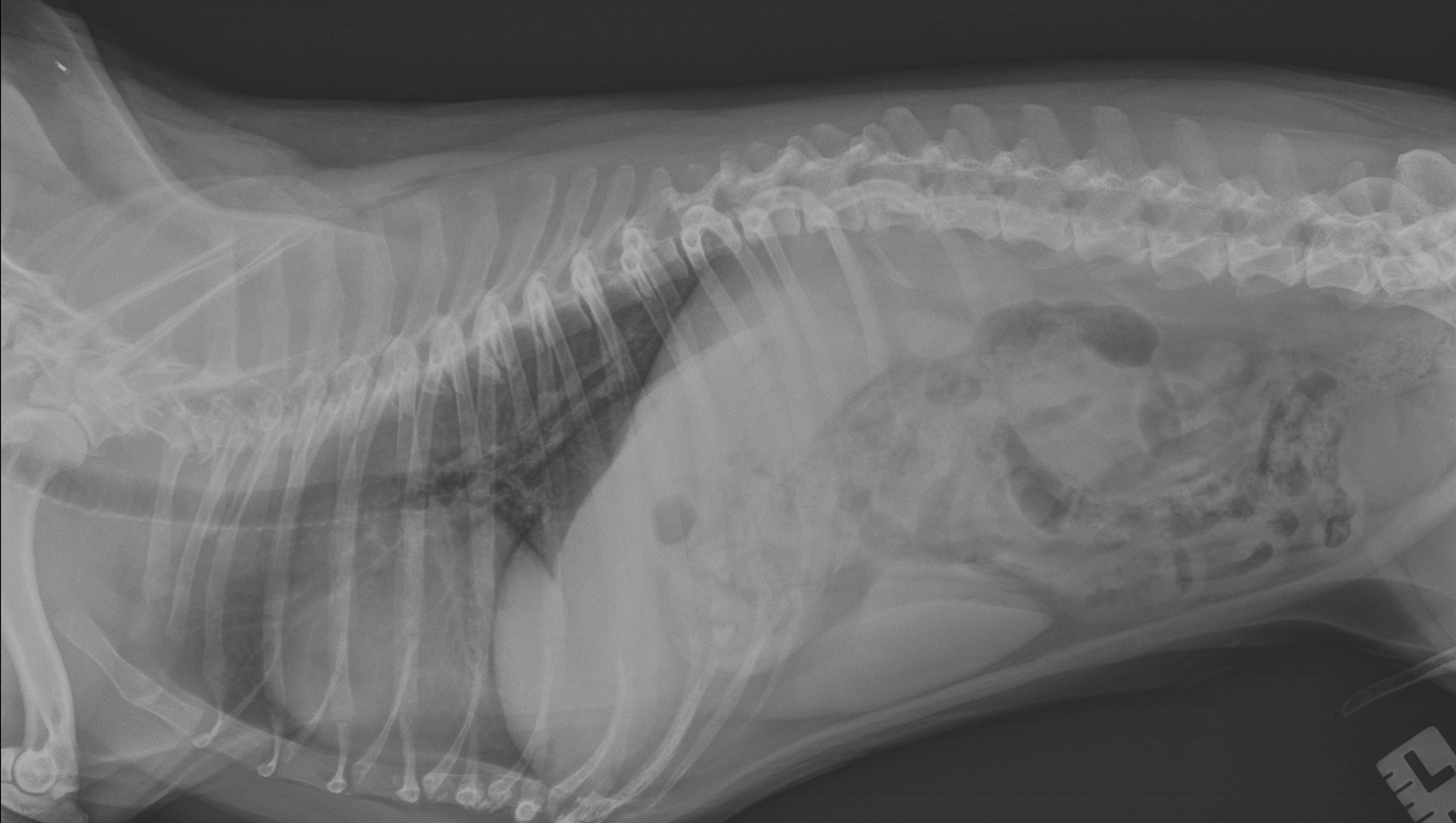
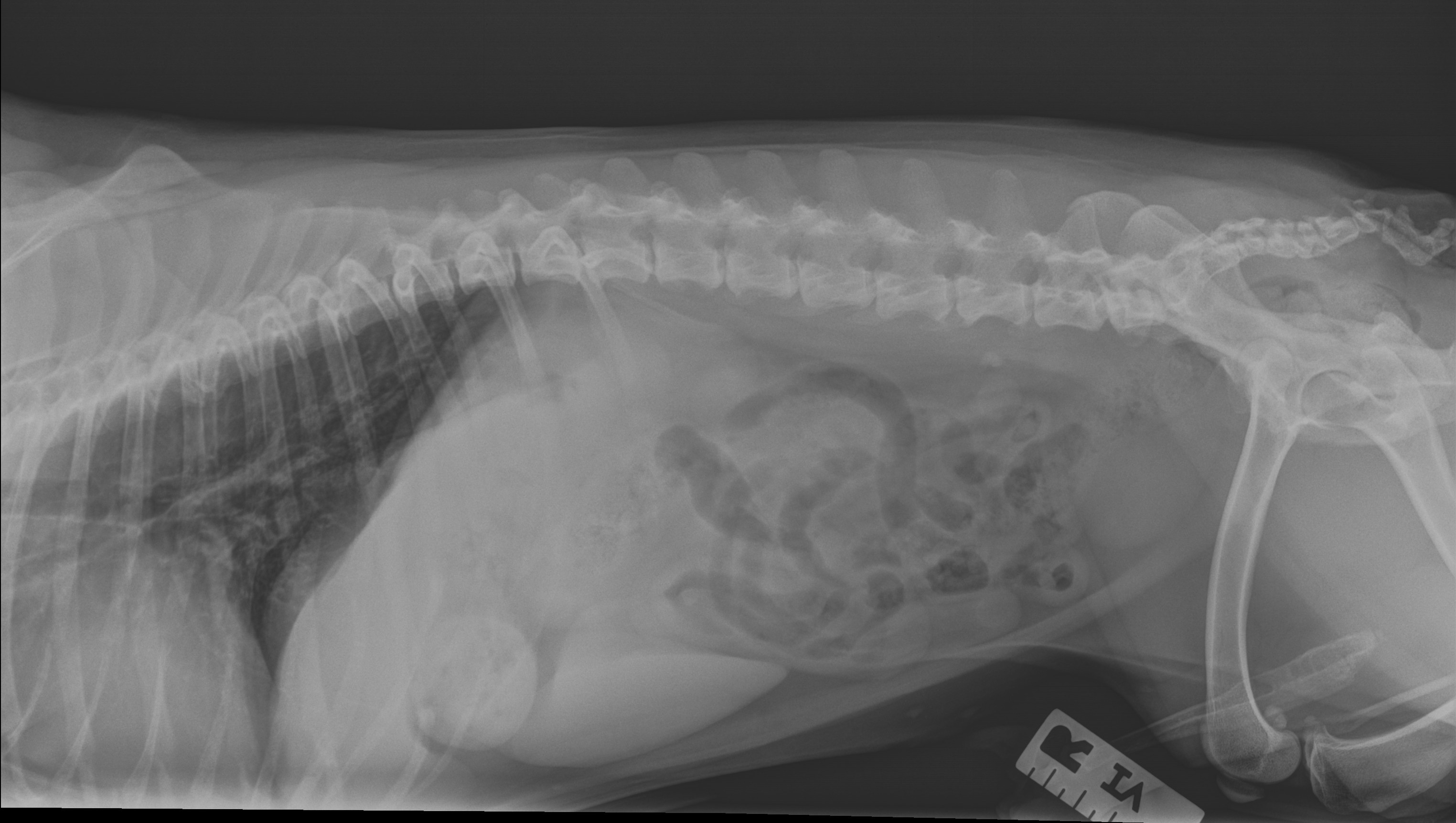
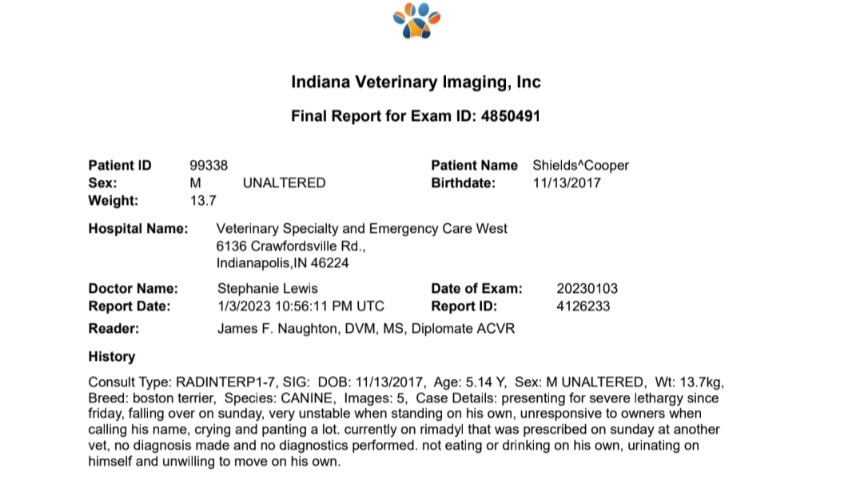
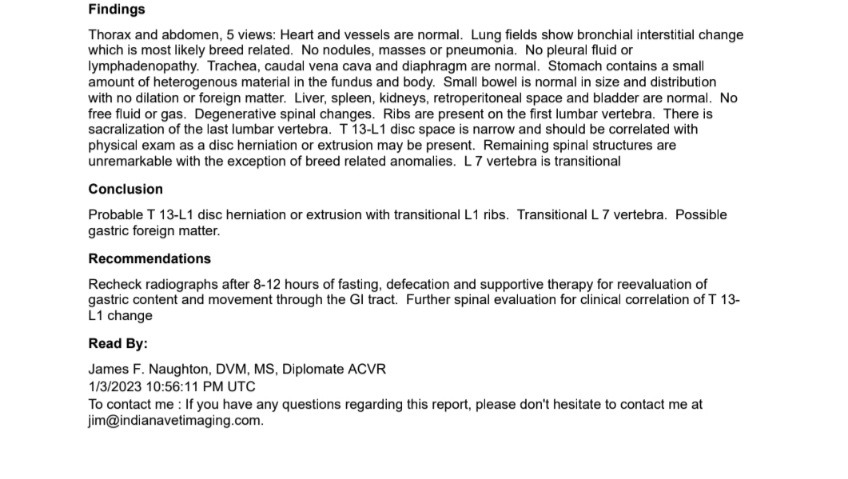
Alittle info about IVDD: Intervertebral disc disease in dogs is a medical condition that causes spinal compression and requires immediate attention. Compression of the discs within the spinal vertebrae causes severe spinal and nerve pain, and sometimes even paralysis.
An intervertebral disc is essentially the cushion between each of the bones within a dog’s spinal cord. The spine is made up of individual bones called vertebrae, and in between each vertebrae sits a disc shaped material that has a firm, fibrous covering on the outside with a gelatinous like substance on the inside of the disc. These discs help cushion and protect the bones of the spine. A dog’s spinal cord is comprised of the following bones:
7 neck (cervical) vertebrae
13 chest (thoracic) vertebrae
7 lower back (lumbar) vertebrae
3 fused sacral (below the lumbar area) vertebrae
Several tail vertebrae (the number of which can vary by dog)
There are two types of IVDD that can occur within dogs. Cooper has type 1.
Type I: This form of IVDD occurs when the intervertebral disc becomes calcified and then suddenly protrudes from within the spine, which causes very painful pressure along the spine and associated nerves. Also known as a herniated disc, often something as simple as a wrong movement can cause the calcified disc to protrude. Additionally, the disc can protrude in different directions, thus causing different types of pain. If the disc protrudes upward, it can cause bruising and compression of the spine. If it protrudes sideways, it will hit the nerves where they exit the spinal column. Either type of protrusion causes sharp pain and a reduction of nerve function.
There 5 stages Cooper is in between 2 and 3.
Stage II: Your dog will have moderate to severe pain within the neck or lower back areas.
Stage III: This stage is when a dog experiences partial paralysis, also known as paresis. This may result in difficulty walking, incoordination, or an inability to stand.