- A
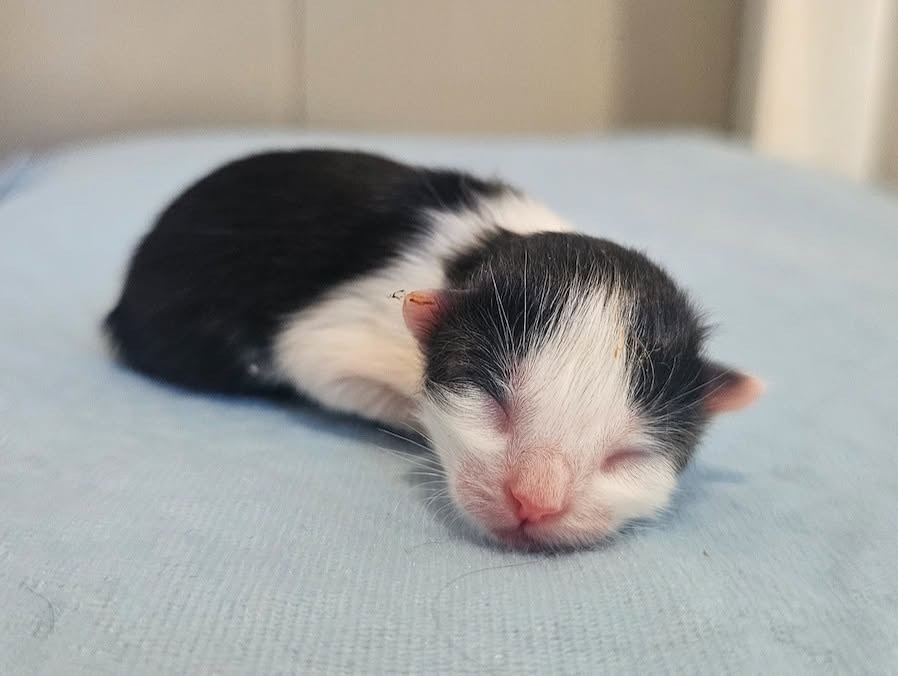
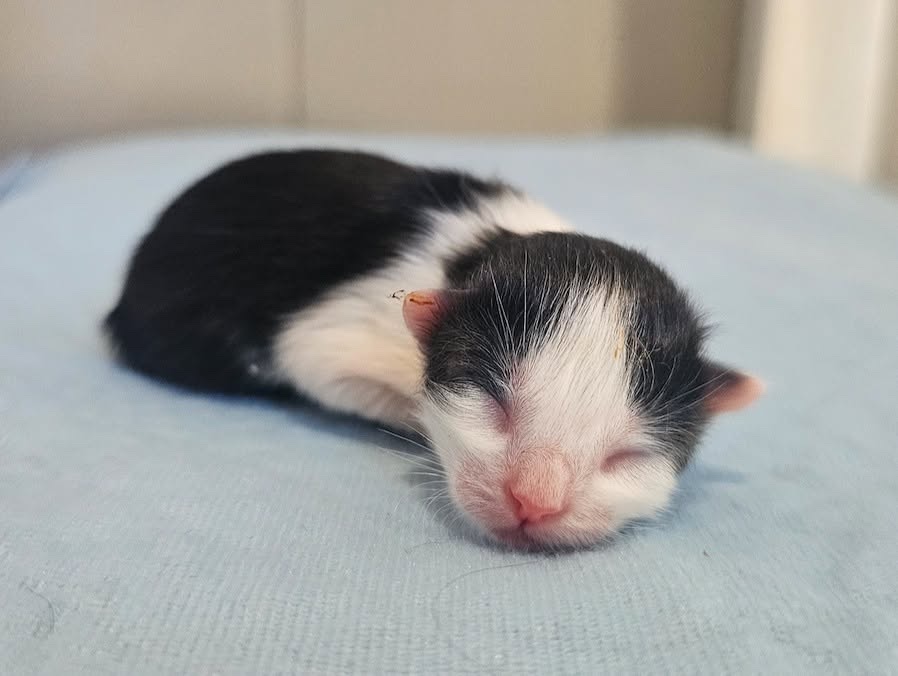
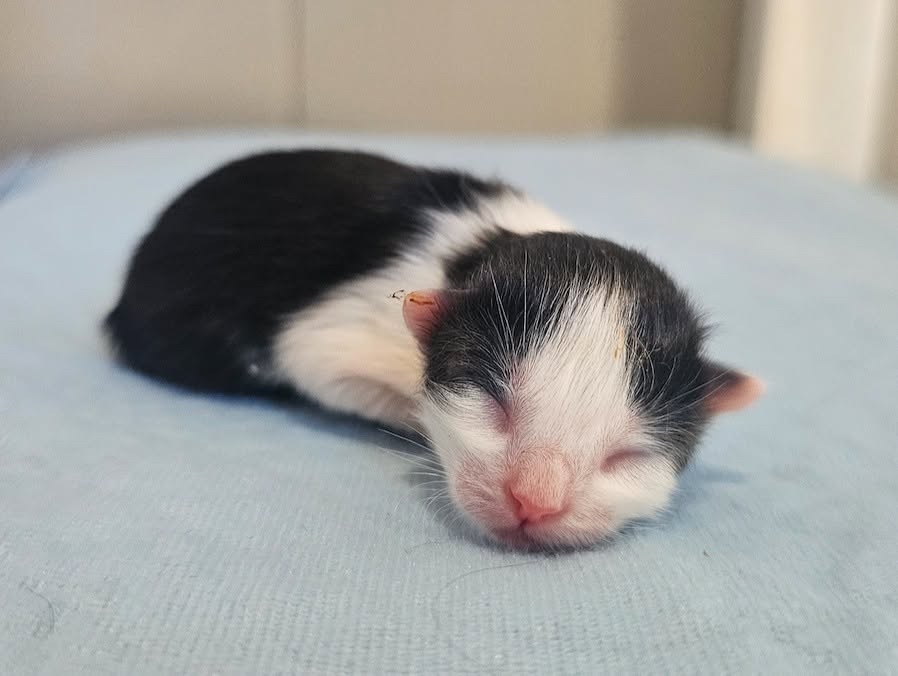
Save a tiny kitten and his family
0% complete
$365 raised of
10 donations
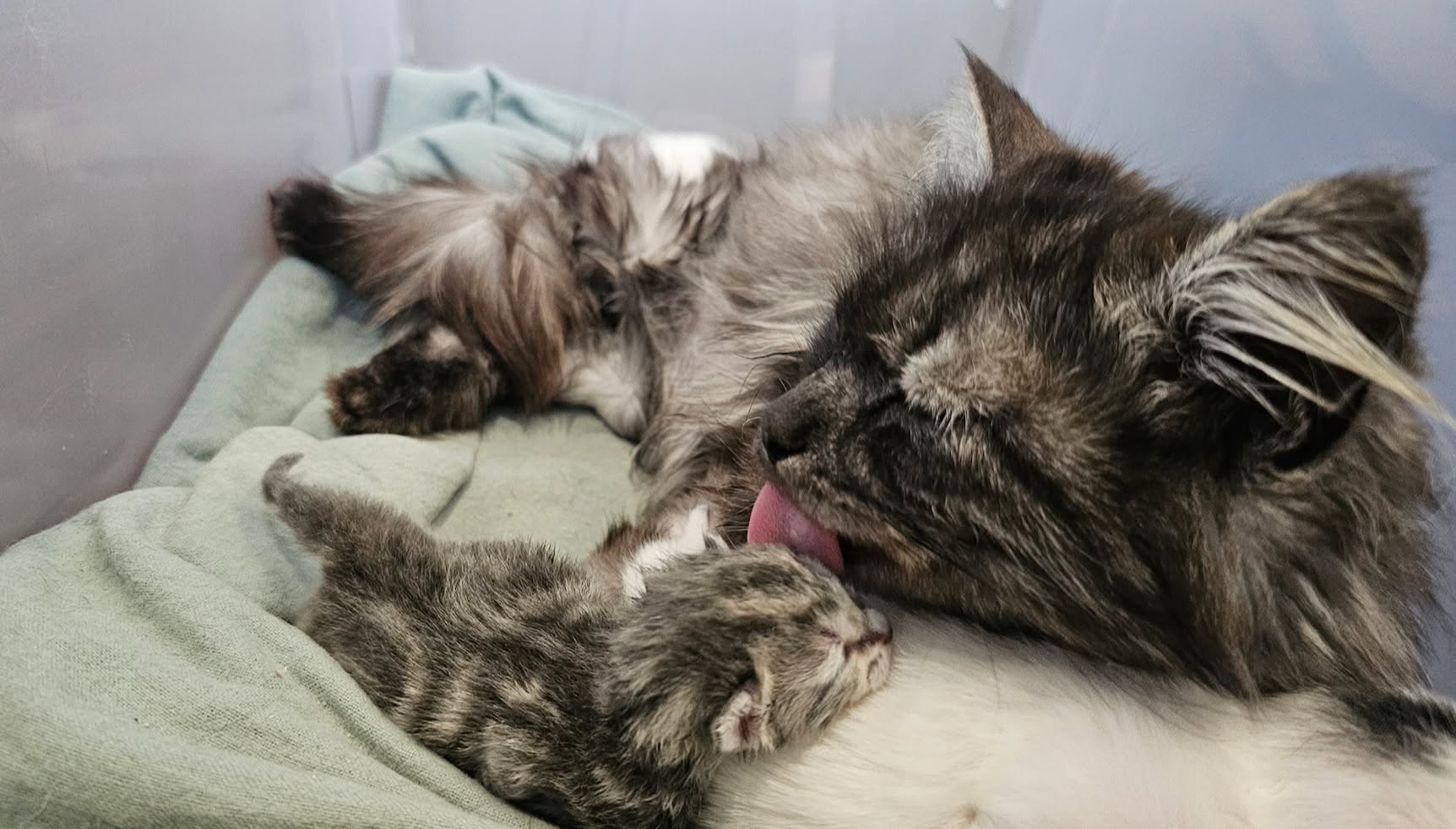
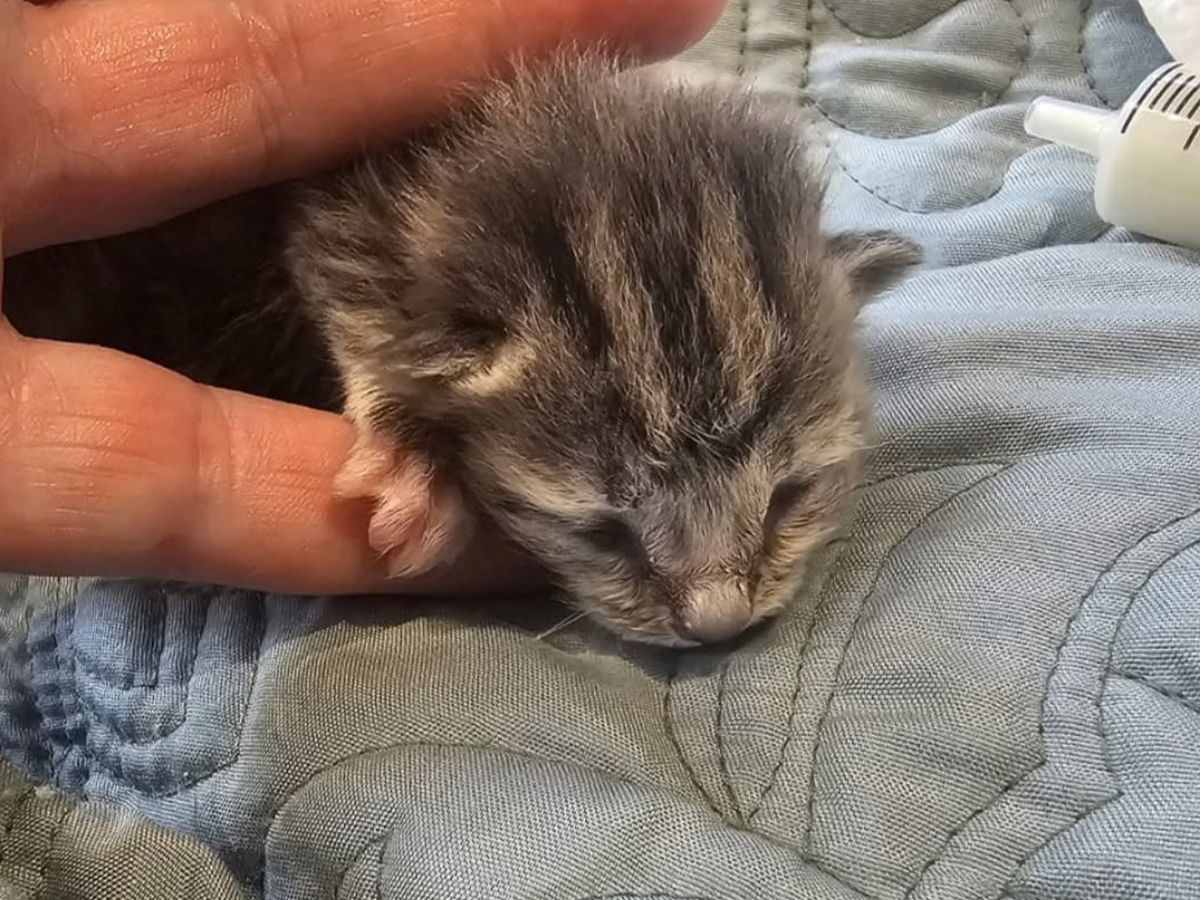
Tiny darling Ariel is unable to nurse properly, so he needs supplemental feeds around the clock with specialized milk. He fell ill when he was eight days old and he continues to be frail… although you wouldn’t know it from his meow!
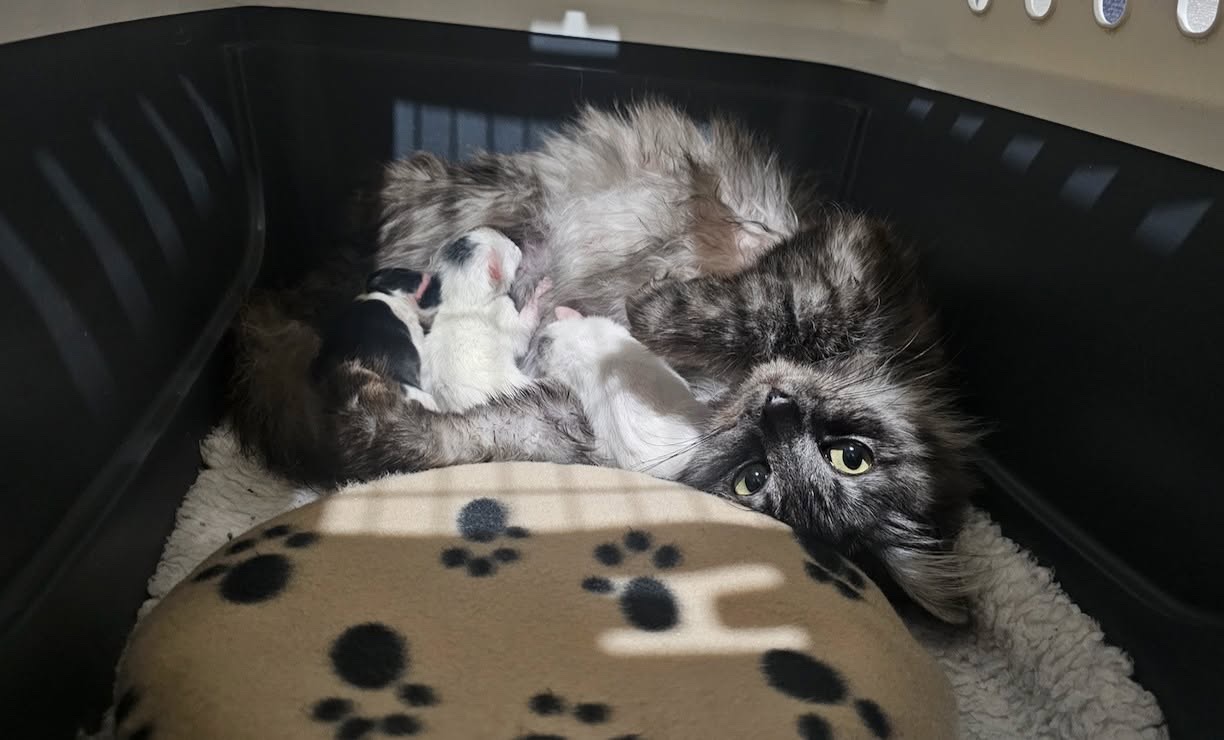
My name is Felicity, and I LOVE fostering kittens. I specialize in newborns and orphans, including those born to anti-human cats living wild or on the streets. Ariel’s mum Miranda is deeply opposed to humans (although she is also weirdly affectionate to the small number of humans she has chosen to trust, including me).
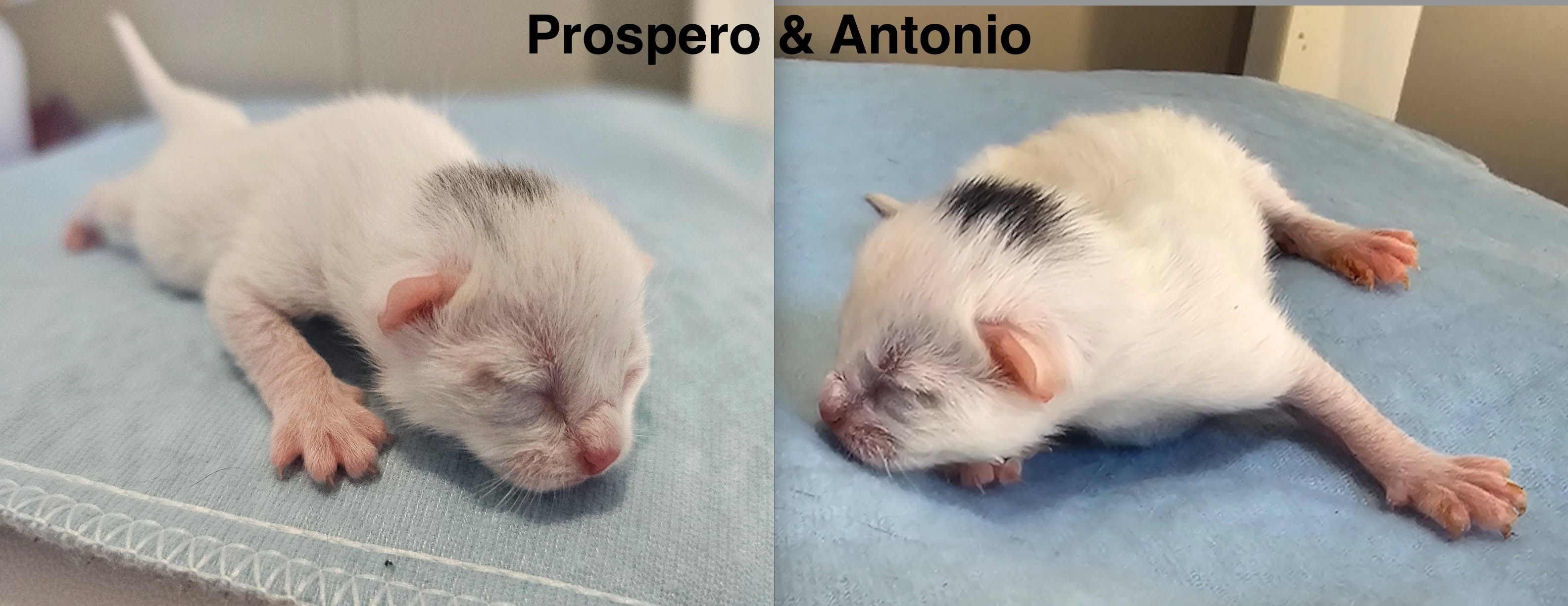
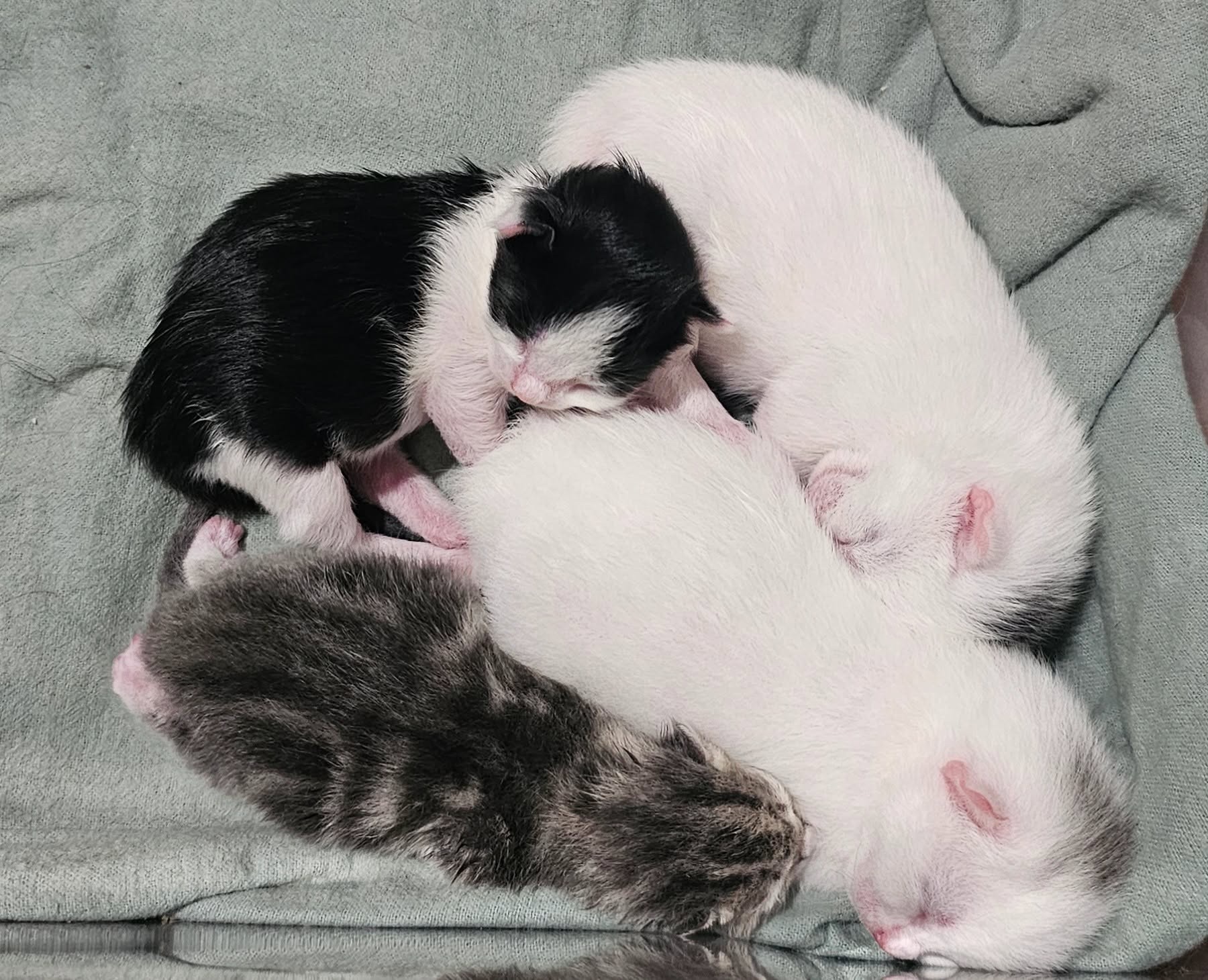
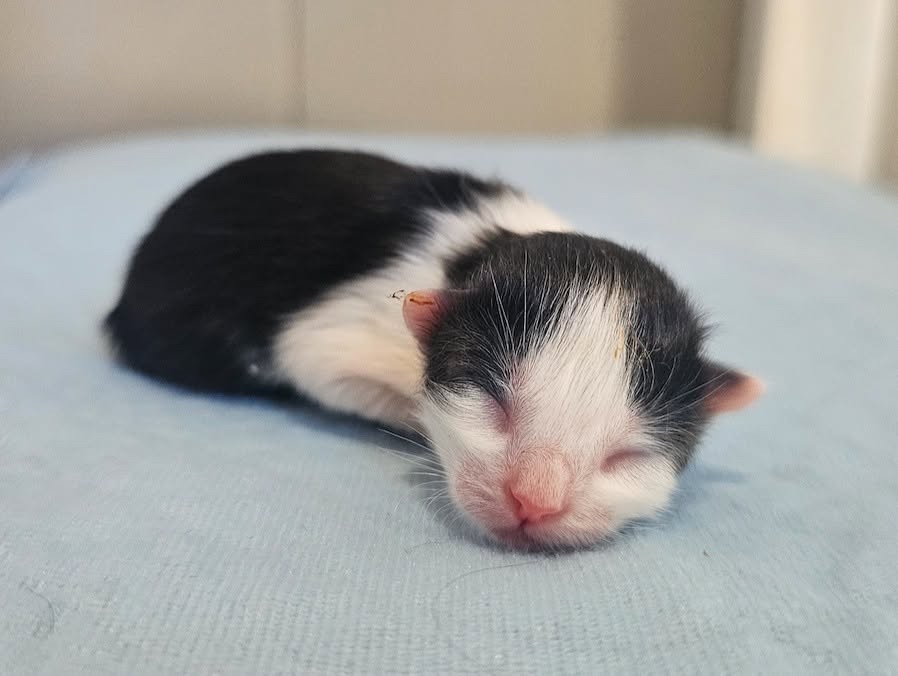
I run Magical Moggies Canberra Cat Fostering, and Ariel and his siblings Antonio, Prospero, and Stephano are all in my care until their vet work is complete (including desexing) and they move to their forever homes. They are all already reserved and will be adopted as two bonded pairs (yay).
Newborn kittens are always incredibly fragile, but Ariel has had two near-death experiences so far. The emergency vet and I discussed what could be causing his health issues and ultimately concluded that it’s better to wait and see if he grows out of them in time rather than putting him through tests or medications that could make him even weaker.
Ever since he was a few days old I’ve been giving him supplemental feeds, starting with two-hourly meals. I spend so much time with him that he will leave his mother to come to the sound of my voice, and now he purrs for me at every feed.
I can’t guarantee he’s going to survive his first fortnight, but I THINK he will have a long and happy life. He is slowly regaining the weight and energy he lost from being sick. I can usually get him to stay awake for a minute or two while feeding him, which is an improvement.
I like to rescue an anti-human female cat (or two) and raise any kittens they may have. When the kittens are weaned I get all the mum’s vet work done (especially desexing) and return her to her colony, overseen by a human carer. Trap-Neuter-Release is the most humane way to reduce the population of unowned cats, the vast majority of whom can’t be socialized (and are happiest in their home colony). But their kittens CAN be raised to trust humans, and foster organisations like Magical Moggies can find safe forever homes for them.
Sometimes the hardest part of kitten fostering is earning enough to pay for kitten fostering… while fostering kittens. Kittens deserve a minimum of two hours’ attention each day (not including cleaning or other tasks). My health is not good enough for me to work full-time, which is both a blessing (more kitten time) and a curse (less money).
In 2025 I had to close down Magical Moggies due to the cost of living (and my own expensive medical costs as a person disabled by a chronic illness). My family also had to take a tenant into our home or risk losing it altogether. At that stage, even if I had the funds I didn’t have anywhere safe to quarantine foster cats. My physical and mental health plummeted despite my best efforts. In May 2026 my partner and I decided that if I did more work shifts, half my income could go to kitten fostering.
I expected my pain levels to increase dramatically with the extra work. Instead I felt better than I’ve felt in a long time. But I’m still disabled, and the maximum amount of paid work I can do is about twenty hours on a good week. I also spend at least two hours on kitten fostering daily, not including cleaning or vet trips. But that’s not ‘work’ work. Apart from anything else, the kittens don’t get offended if I’m wearing my pyjamas all day. That actually makes a big difference to my back pain! The cleaning takes a physical toll but I still love making the space safe and beautiful for my foster cats. Fundamentally, my life rotates around fostering, and I’m so grateful. I love specializing in the vulnerable tiny-baby end of the fostering spectrum. But the more fragile foster babies are also the most expensive. Most of the equipment I’ve bought for this specific family was already on my wish list and will be useful for years to come. Some of it I owned previously but donated to other foster organisations when I thought I had to give up fostering forever.
I’ve found through experience that each feline family costs around $10,000 from pregnancy until the last kitten is adopted. Hypothetically it could be cheaper, but there’s always something I need to buy or some expensive medical issue to deal with. I’m lucky it’s never been much more than $10,000 (so far) but Ariel may well have complex medical issues that set a new record.
Here’s roughly what I’ve already spent or committed to spend on Ariel’s family so far:
Cost of Fostering Miranda (the mum):
-Top-quality food for approximately three months*: $500
-Top-quality litter for three months, fully changed often to minimize any chance of illness**: $300
-Vet-grade cleaning supplies (F10 wipes, spray, and hand sanitiser): $200
-Parasite treatment for three months: $60
-Standard Vet Bills (including the cost of diesel to drive to a NSW vet who is cheaper than Canberra): ultrasound, two vaccinations, desexing, microchip: $600 (or $2000 at my local vet if Miranda or I can’t travel for health/kitten reasons).
-Two larger nesting boxes so she spends more time closer to Ariel and the others***: $100
-Designated cat room rent for three months****: $2000
-Cat room installation and waterproof flooring: $1000
-A human bed that she can’t hide herself or her kittens underneath*****: $300
-Bedding including a waterproof mattress protector, a doona protector, and a pillow protector: $400
-Feliway diffuser and refill******: $200
-DIY detachable cat run/catio/airlock for the cat room front porch*******: $600
Approximate cost for fostering one anti-human mother cat: $6260-7660
Miranda’s Four Kittens:
-Heating the cat room 24/7 to as much as thirty-three degrees until the kittens grow old enough to regulate their own body temperature: $1000
-Two SnuggleSafe Pet Heating Pads: $100
-Top-quality food for approximately two months (once they’re on solids)********: $500
-Top-quality litter for approximately two months (once they’re toileting independently): $300
-Portable Insulation box*********: $260
-Standard Vet Bills for Stephano (female): $500
-Standard Vet Bills for the three boys: $900
-One emergency vet trip for Ariel (so far, poor baby): $300
-Specialised kitten formula milk for Ariel until he’s eating solids or nursing successfully: $400
-Time off work to care for Ariel so he never misses a meal**********: $1000 (so far)
Approximate cost for fostering one litter from birth to adoption: $5260 (minus $350 each in adoption fees = $4200)
Total cost for this family (assuming no more medical emergencies or disease): $10,460+
That is roughly what my other cat families have cost me. The details vary, but fostering a whole family is always extremely expensive—it works out to about half my annual fostering budget per litter. Without donations, I can only foster two newborn litters per year. Which means more kittens like Ariel are dying of starvation or exposure on the street. Or growing up to become pregnant as young as four months of age, and then having multiple litters every year.
I am already fostering another pregnant anti-human cat, Spare Parts, who is due to give birth any day now. She and Miranda are friendly—there is even a chance that Spare Parts will take over feeding Ariel, as she is an experienced mother (while Miranda gets annoyed and leaves the nesting box if her kittens don’t nurse efficiently). I chose to foster two pregnant cats at once because I know cats often support each other and/or adopt orphaned kittens in the wild. I’ve spend years fostering kittens and obsessively improving my skills, but any female cat who’s had kittens does a better job caring for a needy baby. And I don’t like leaving any of them alone. They’re much more social animals than we realise.
I have also put the word out to other fostering organisations that I currently have two mother cats that might be willing to assist with any orphaned kitten babies that need specialised care. Two nursing mothers are a top-notch resource in a neonatal kitten emergency. Although I have plenty to do already, I want to support other organisations too. Every single foster organisation I know is over-committed and under-funded.
In case this fundraiser is wildly successful, here are some stretch goals (in order of priority):
-Backup funds in case of more medical emergencies or treatment costs (for any foster cats now or in the future)******: $10,000+
-A professional end-of-lease style clean before the next group of cats: $1000
-Staff cats: Mayhem and Pandemonium are two older foster kittens that are unusually friendly AND unusually playful, and I think they are well suited to act as nanny cats to future babies. They also adore me, which is reassuring for new cats to see as it makes me less scary: $700 (aka their adoption fee… if I can convince my partner to keep them)
-Improving my backyard catio so Mayhem and Pandemonium can be fully integrated with my family’s cats, and to better protect my family’s cats from bird flu etc***********: $2000-$10,000
-Better baby monitors for monitoring pregnant cats, especially when they’re in labor************: $1000
-Larger portable insulation box, so I can keep kittens with their mum AND fully warm even if they are up to two hours away from Canberra: $1000
-Installing a sink in the portable room************: $2000
-Self-cleaning litter boxes for happier cats and for protecting my disabled back and knees*************: $1000
-Taking five weeks off work around the next cat’s birth date**********: $2200-$4400
-Disability ramp into the designated cat room (for disability access and for my very bad knees): $2000
-Tiny but full-strength fridge for cat milk/food in the Cat Room: $500
-A refurbished laptop with enough memory to handle the daily onslaught of kitten videos without having to delete them all as soon as they’re posted: $4000
Total: $27,400-$37,600
Extremely Unlikely Stretch Goals (because a girl can dream):
-Buying the portable room outright (and then I could modify it freely eg attaching a window box for cats to sit in): $20,000
-Hiring a second cat room and ensuite for a year**************: $10,000
-‘Buying’ that second cat room: $50,000
-Tertiary Certificate in Animal/Cat Care or Fostering: $3000
-Building more cat rooms onto our house without getting divorced: $200,000-$500,000
Total: $233,000-573,000
Now wouldn't THAT be nice!
Notes:
*Miranda’s food: I use Royal Canin Mother and Baby Mousse which is designed for pregnant and nursing mums and their children, plus the dry food equivalent.
Normally kittens would benefit from staying with Mum for a full twelve weeks, but because Miranda hates and fears most humans—I am a rare exception as she abruptly decided after having her kittens that I’m an excellent babysitter and badly-needed hair care specialist—her kittens will be separated from her once they are weaned (around six weeks of age).
Despite her stunning good looks, Miranda is not suitable to be a house cat. She will be returned to her home colony, where she was happy before being rescued and where she will continue to be cared for by a dedicated person who she loves (and who can even care for her fur). That person will feed her and continue to care for her. Thanks to them, Miranda can enjoy her freedom without having up to four litters every year for the rest of her reproductive life.
Trap-Neuter-Release is the most humane way to reduce the cat population over time. Miranda’s microchip has the carer’s details so if she is hurt and cannot return to her source of free food, anyone who finds her will know she has someone caring for her and does not need to be euthanized.
**Miranda’s Cat Litter: Miranda is sharing the designated cat room with another pregnant cat, who was rescued from a colony that has had ringworm in the past. I chose to keep the cats in the same room as I suspected new-mum Miranda might appreciate help from an experienced feline mum, and if she didn’t produce enough milk the other cat was likely to nurse her babies. (Cat care is always superior to human care; having two pregnant mums at once is an insurance policy despite the risks of disease or disagreement.) I use World’s Best Cat Litter, which is also safe for kittens. But I’ve been changing all three litter trays very often because of the possibility of ringworm. According to my vet, we’ll be in the clear from next week (as much as one ever can be with ringworm).
***Nesting Boxes: I prepared several nesting box options, none of which Miranda liked (she gave birth on a vinyl floor under a cardboard box, but I persuaded her to adopt a more comfortable box after they were born). She also tends to sit on the kittens (and they yell at her to move, which makes her leave the box), so she needs a larger nesting space. With two boxes, I can clean and sanitise one box while she and the kittens are in the other.
****Designated Cat Room: I used to hard-quarantine cats in my ensuite bathroom (hard quarantine is for known illness, eg all street cats definitely have worms which takes three days to treat IF I manage to get medicine on them on the first day), and use half of our converted garage for soft quarantine (for suspected or potential illness; for cats who are not toilet trained; or for cats who are difficult to catch when I need to take them to the vet). Obviously adult cats can’t be happy in a tiny ensuite bathroom for long, and kittens over about four weeks of age need to be able to run around (but ringworm quarantine often lasts months, eg if a cat is pregnant or the kittens are too young for the most effective form of treatment).
Also, due to the cost of living (and health-related costs) my family had to take a tenant into our home. That tenant has exclusive use of the master bedroom and ensuite. So I rented a portable room (it’s like a caravan but with insulation, windows, AC, power, and a water connection). It’s more financially sensible to keep the tenant and rent a portable room than to simply turf out the tenant. The portable room is fantastic for cats as it’s fully separate from the rest of the house (located in the driveway) and it’s relatively easy to do a full deep ringworm-oriented clean (ringworm can live in fabrics such as carpet for twenty months, and continue to infect both people and animals… go ahead and mention ringworm to any foster organization volunteer; they’ll definitely shudder and might burst into tears).
The portable room is my largest single weekly expense, but it’s brilliant for the cats’ health and happiness. There are windows on three sides so they get a lot of light and sunshine that they wouldn’t have gotten in my ensuite or in the converted garage.
*****Bed and bedding: Most foster carers don’t need a bed, but it’s useful for Magical Moggies because it means I open the outside door less frequently during night feeds. Drafts are terrible for little baby kittens even though it's helpful to have a fully separate building for cat care. Also, I often nap or stay overnight in the room. Napping near cats is incredibly reassuring to frightened anti-human cats and is a big part of my strategy to let them know I’m not dangerous. I often sleep in the portable room overnight just for fun with the cats/kittens, or when a pregnant cat is due to give birth. Originally I slept on a mattress on the floor, but three different foster cats including Miranda urinated on it (and getting up and down from a bare mattress was terrible for my knees), so I got a bed frame sooner than I’d planned. No one has urinated on it now that it is not on the floor (yay). Even though I carefully chose a bed without legs so the cats/kittens could never get underneath and thus be fully out of my reach, Miranda managed to get underneath it three times (she can open the drawers!) It is Miranda-proofed by Styrofoam and cardboard at the moment, but I’ll need to adapt it properly in the long term.
My family contributed half the cost of the bed, since it’s a legitimately useful object for humans that may end up in our house someday.
******Feliway: Miranda couldn't handle being a house cat in the long term, and stress can harm the babies or cause the mother to reject them. Feliway helps her to feel less stressed.
*******Detachable catio/cat run/airlock: Miranda has become interested in the outside door of the portable room, and cats are faster than humans so if she makes a break for it I won’t be able to catch her. A catio is not just fun, it is also an airlock that prevents cats from escaping. And it provides a way to gently introduce two groups of cats and see if they can be integrated (starting with seeing each other through glass while the new cats are in the catio, then letting them sniff each other or interact through a small gap in the door). The catio had to be detachable because the portable room is a rental.
********Royal Canin Mother and Baby Mousse: From when they start solids until they are eating confidently. Once they’re big enough, I gradually change their food to something more generic (to see if their stomachs can handle generic food or they need to stay on expensive food for life—so I can advise their owners before they are adopted).
*********A portable insulation box can be plugged into my car (or any outlet) so a sick kitten under four weeks of age can be safely taken to a vet if needed, or even to my work when they’re healthy enough to travel but still need frequent feeds. Annoying, the box I bought refuses to work in the car (we checked every possible flaw in the system and it's definitely the box at fault—not entirely surprising as I bought the cheapest safe box I could find). It's still very useful for going to different places, but in the car I need to rely on the car AC and heat pads for any trip longer than a few minutes.
**********Lost work income: Due to my health (and the fact I am known to cancel work when a kitten needs me or a cat goes into labor!) my paid work is all casual. I babysit mostly, plus some writing/editing work (I have several published novels and interactive fiction games).
In the future, I would like to stop working a week before a cat’s due date, and to keep away from paid work for the first four weeks of the kittens’ lives (approximately) while they’re extra vulnerable to illness and death. “Only” half my income goes to kitten fostering, so my kitten budget would only lose $2200 over five weeks (my family’s budget would also lose $2200). Anything donated to kitten fostering goes 100% to kitten fostering and NEVER to my family. If you want to donate to my family, you would need to say so specifically (although obviously having more cat spaces makes the entire family house bigger, so it’d ultimately benefit all of us).
***********Backup funds: Vet care is insanely expensive, and it’s easy for a minor illness to cost hundreds of dollars, especially since a single sick kitten usually infects everyone else. A major illness or surgery for a congenital condition would often cost several thousand dollars, and would probably need to be funded immediately. As a foster carer, I am not permitted to access emergency low-income vet services.
If I’m honest, it’s irresponsible of me NOT to have at least $10,000 in reserve at all times. But like every foster carer I’m doing my best. If I don’t have foster kittens in my life, I don’t have the positivity and health I need to work as much as I can. So taking a break from kittens just to raise money isn’t really an option for me, at least not at the moment.
***********Backyard catio: My family’s cats are both seniors (which is why they’re inside-outside cats), but also rather good at destroying their cat run, so it needs significant reinforcement. A catio is like a patio, but for cats. Catios are usually bigger than cat runs, but the definitions are fluid. Ours is about 10m x 3m, with a cat door and a human door each leading into the house.
***********Baby monitors: I acquired a second-hand baby camera in order to monitor Miranda’s birth without causing her stress (which can make mums reject the kittens or pause the labor) but it was definitely not sufficient; I couldn’t see contractions or the actual births without being in the room (although it WAS enough to tell me labor had started, and it will be useful as a second or third viewpoint for cats that move around during labor). They cost around $500 each and I’d need at least two since going into the room to adjust the angle would defeat the purpose.
My first monitor was already very useful as it was immediately clear through the monitor that Miranda was disturbed by her first kitten and refusing to care for it. I needed to intervene (cutting the cord and placing the baby at her chest) and then to keep watch to make sure she got into the swing of things after that (which she did).
************Sink: A sink in the cat room would be useful for so many reasons. At the moment I carry water in bottles back and forth, (and milk in open mugs usually) and use the dirt near the front door as an outlet sink for water only (eg when rinsing my hands after applying sanitiser, which I currently do twelve times per day, ie before each feed). It means I’m always overloaded with items coming in or out, which makes me more likely to accidentally step on a mischievous cat. Or drop things. Or trip over and injure myself.
I get very uncoordinated when I’m tired
*************Self-cleaning litter boxes: They remove poo almost instantly, which I don’t do unless I’m in the room, so they’re nicer for cats (especially recently-rescued cats, who are used to being able to toilet in a fresh location every day). My back and knees are badly messed up as I am disabled by fibromyalgia. I make it worse by constantly bending over to scoop litter. Once, in 2024, I was injured scooping litter and was unable to work for six weeks. For some of that time, the pain was like being in labor and I couldn’t sit, stand, or walk without screaming. The fibromyalgia (plus my Level 2 Autism) is the reason I’m unable to work full-time. Plus of course I have a lot of medical costs.
When I was forced to give up kitten fostering in late 2025, I did my best to simply accept my life and move on but my mental and physical health dropped sharply, and then kept dropping. My husband and I made a deal that if I worked more, half my income could go to kitten fostering. I expected my pain levels to dramatically increase. Instead, my health improved right away… and continued to improve! Kitten fostering for me is an Autistic “glimmer” (something that causes intense delight; the opposite of a trigger), and it turns out that extreme Autistic joy has a positive effect on every other aspect of my life. I do suspect that it’s like falling in love and the intense feelings will mellow in a year or two. Hopefully by then I will have lots of useful gear and space for kittens and it won’t be as expensive as it is now. Perhaps I’ll simply switch my focus to older, less-expensive kittens. Perhaps one of my published novels (yes I'm an author too) will be snapped up by Hollywood at great expense and I won’t have to do paid work any more, meaning I can spend all my ‘working’ energy exclusively on kittens.
I do enjoy my paid work, but sometimes I just want to focus on kittens (and my family, and my writing), at least for a while. But whatever happens in the future, cleaning litter boxes is physically painful and a bit hazardous for me. Where possible, I train cats to use litter boxes on a table so it’s easier for me to empty them. Not all cats can handle an elevated or a self-cleaning litter box, but many of them can.
**************Our human tenant has sole use of our front porch, front door, front entrance, master bedroom, and ensuite. She is wonderful and pays $300/week (my portable cat room costs $165/week). But our family is extremely squished. For example, the door we now use to enter our house leads into the converted garage, which is also my husband’s study AND my daughter’s bedroom. My husband and I now sleep in a bedroom in which we share a single kid-size cupboard which can’t be fully opened, and I need to partly close the door of the room to get to my side of the bed. We both get bruises from knocking our limbs on furniture.
The kids’ rooms are smaller still, and you don’t want to know what it’s like with one toilet and two slightly dodgy stomachs in the family. Our house is a townhouse, so everything is just a bit smaller than regular size (including the toilet, which is just a teensy bit smaller than a regular toilet, and it’s just a teensy bit awkward to close the toilet door, and a teensy bit smaller than adult humans can use comfortably). If I paid $200/week in rent, that would be excuse enough for me to rent the master bedroom and ensuite from the family instead of having a tenant… and we’d get our front door and front porch and front entrance back, and sometimes even our good toilet, which would be LOVELY. (Of course this also technically means the family would profit from my cat fostering… but in reality it just means they’d get a larger percentage of my income.)
I reckon $50,000 would justify me ‘keeping’ that room for cats forever (it even has a second sink in the bedroom, which would be SO useful. With that second sink I’d be better able to keep quarantined cats separate from the others AND to wash dishes in the cat room instead of constantly carrying them back and forth through the main house).
I’m not going to lie: Kitten fostering is a lot of work. But even during the 2:00am and 4:00am feeds, I could never willingly contemplate an existence that didn’t include precious tiny lives like Ariel.
Organizer