- S
- R
- M
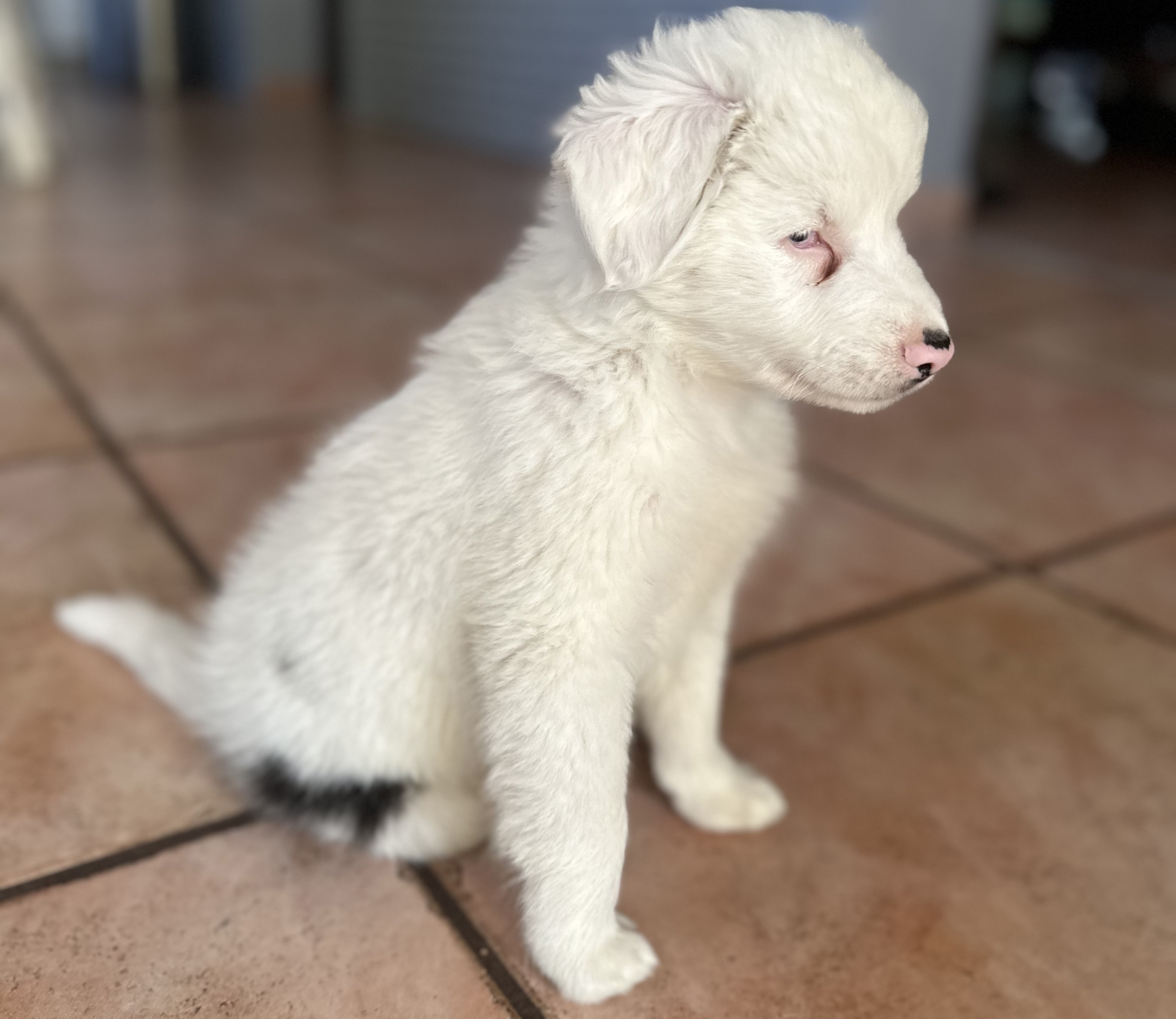
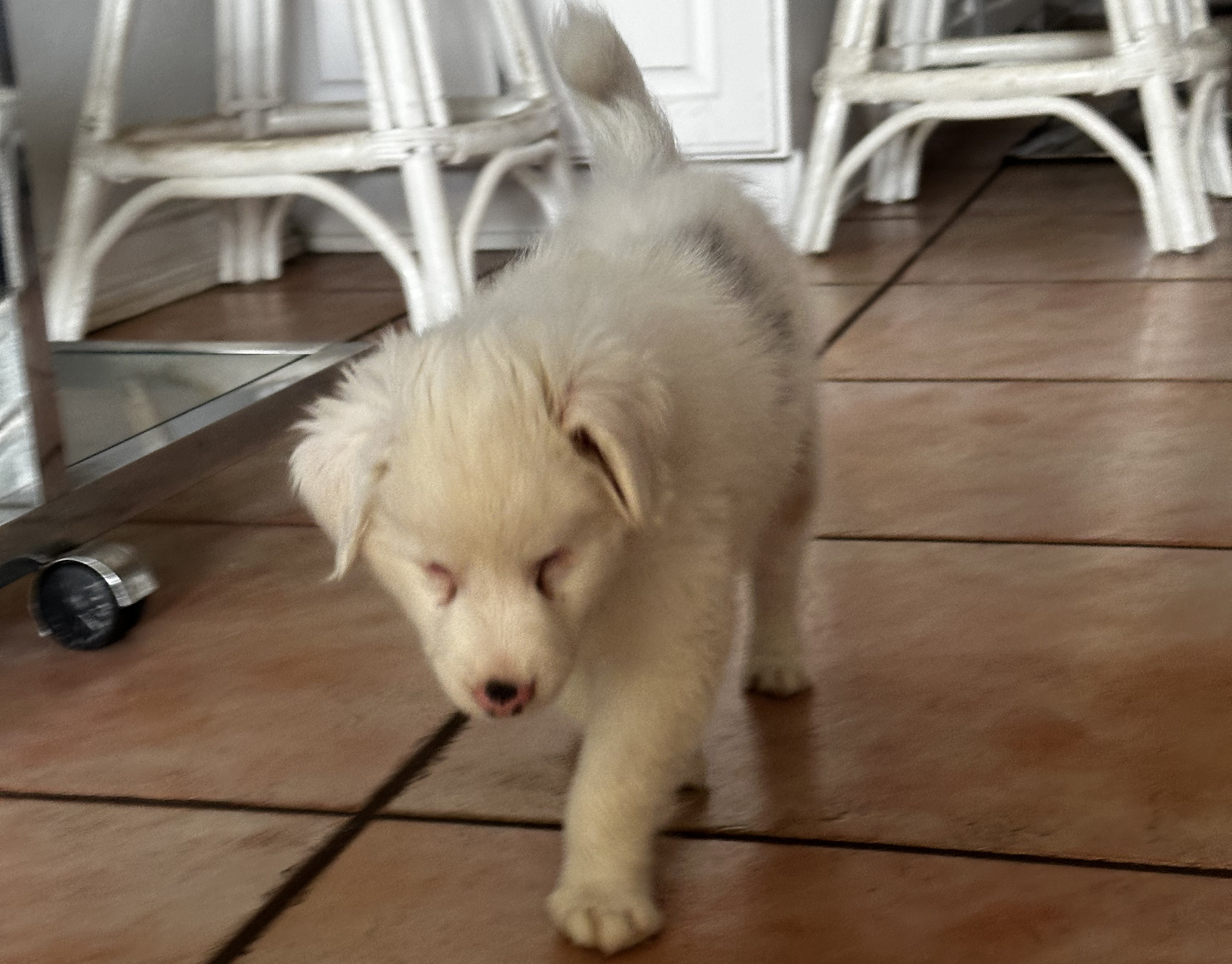
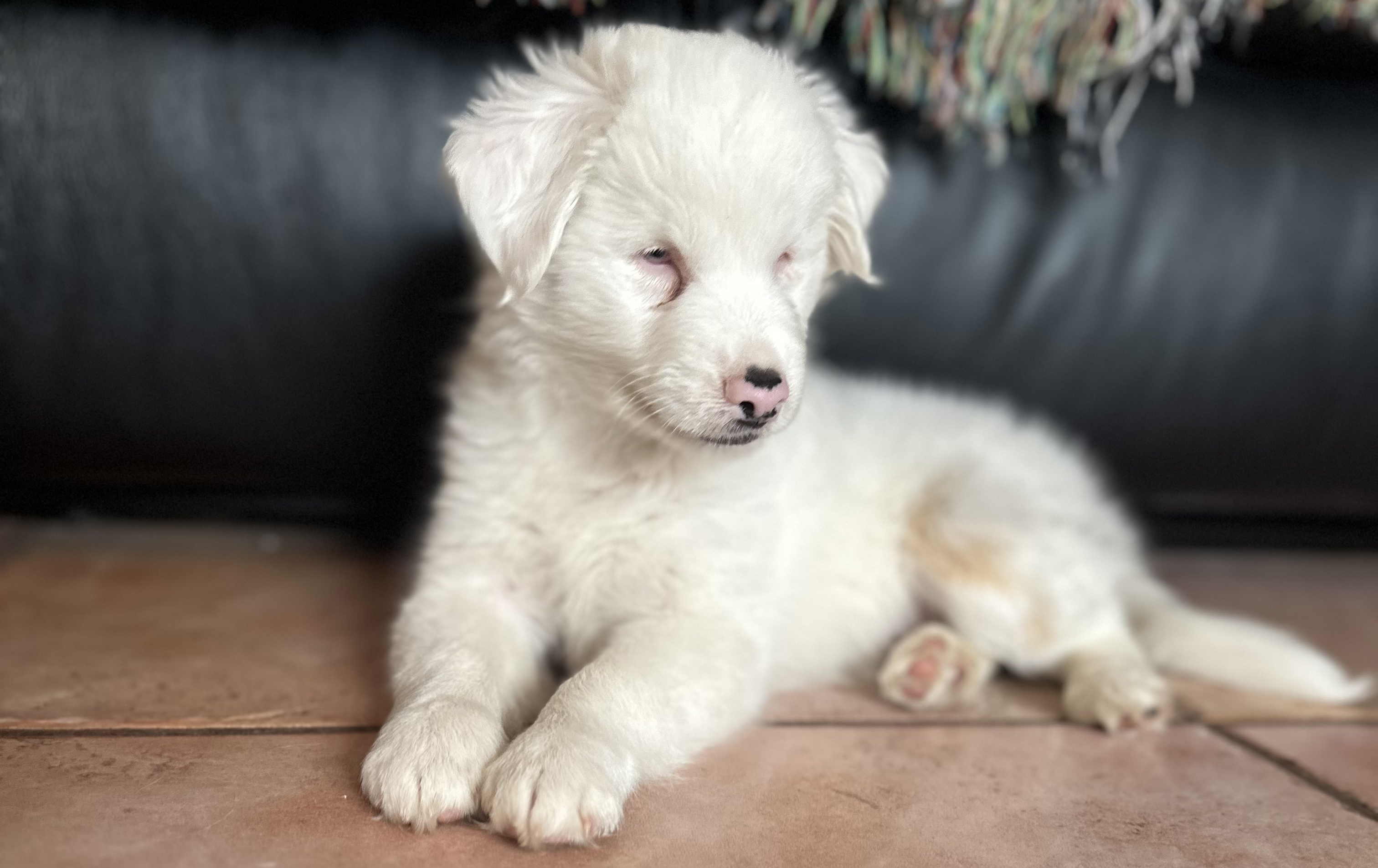
Boomerang is a 5 month Australian Sheperd puppy in need of a Lifesaving Surgery.
As if being born deaf and blind wasn't going to make her life difficult enough she was recently diagnosed with *Mega esophagus caused by *PRAA (Persistent Right Aortic Arch). This condition is corrected with a very invasive but fairly simple surgery called *ligation transection. Requiring first a CT Angiogram, followed by a radiologist report. Then the surgery can be performed by 3 specialists, A veterinary Cardiologist, A veterinary Internal Medicine specialist and a veterinary Surgeon. These procedures are expensive but show very positive results and will make eating on her own a very real possibility as well as enjoyable. She is currently on a liquid diet, fed to her on a platforn (see pisc) followed by being held upright for 15 - 20 minutes, 4 times a day. Basically gravity is doing the job that her esophogus cannot do. As she grows her esophagus will remain pinched off and will likely eventually starve her to death if the surgery is not done. She is also currently at very high risk of pneumonia. She regurgitates frequently and runs a good chance of fluid ending up in her lungs. She already seems to be underdeveloped due to malnutrition. She is only 10 pounds at 5 months old. More on her size below
A little about Boomerang, She is a feisty, playful, mischievous little girl who I am fostering on behalf of Aussie and Me Animal Rescue A 501C3 nonprofit organization. I was asked to foster as I have fostered for them in the past and have a special needs Australian sheperd that I adopted from the same rescue 7 years ago. I also have an able bodied mixed breed that I adopted from them 12 years ago. Boomerang is the product of irresponsible breeding. She is a *Double Merle. Boomerang was the only pup the breeder would give up so we assume she was the only one showing the telltale signs of breeding a merle to a merle.
I would like to thank Gloria Byer and Ken Solice for their contributions to this fundraiser which they handed me in person and their contributions have been subtracted from the amount we are attempting to raise.
If you are unable to contribute, please post or pass this on every little bit helps. Sincerely,Thanks in advance!
-Terry Byer
*Megaesophagus
Also known as esophageal dilatation, is a condition where the esophagus becomes abnormally enlarged, often due to a failure of the muscles to properly propel food and liquid into the stomach. This can lead to food buildup and regurgitation, potentially causing aspiration pneumonia.
*PRAA
Persistent right aortic arch is the most common vascular ring anomaly in dogs (German Shepherds in particular) and has also been reported in cattle, horses, and cats. The right aortic arch fails to regress normally, resulting in entrapment of the esophagus and trachea at the level of the heart base. The structures are encircled by the persistent arch on the right, by the ligamentum arteriosum on the left and dorsally, and by the base of the heart ventrally. The esophagus is typically compressed, leading to esophageal dilation cranial to the heart base and the most common clinical sign of regurgitation (often noted at weaning). Aspiration pneumonia is common in affected animals. Surgery is recommended to transect the ligamentum arteriosum to free the esophagus from entrapment. Radiographically, right-ward deviation of the trachea on dorsoventral or ventrodorsal view is highly sensitive and specific for the diagnosis of persistent right aortic arch. CT can confirm the diagnosis before surgery and assist surgical planning.
*Ligation Transection
In veterinary surgery, PRAA ligation/transection refers to a surgical procedure to correct a congenital vascular anomaly called Persistent Right Aortic Arch. This condition causes a vascular ring to form around the esophagus, constricting it and leading to difficulty swallowing, regurgitation, and potential aspiration pneumonia. The surgery involves identifying and dividing the constricting vascular ring to relieve pressure on the esophagus.
*Double Merle
A double merle dog is one that inherits two copies of the merle gene (one from each parent). This results in a high-white coat and is often associated with significant health issues, particularly hearing and vision problems. Breeding two merle dogs together has a 25% chance of producing a double merle puppy.