- S
- A
- T
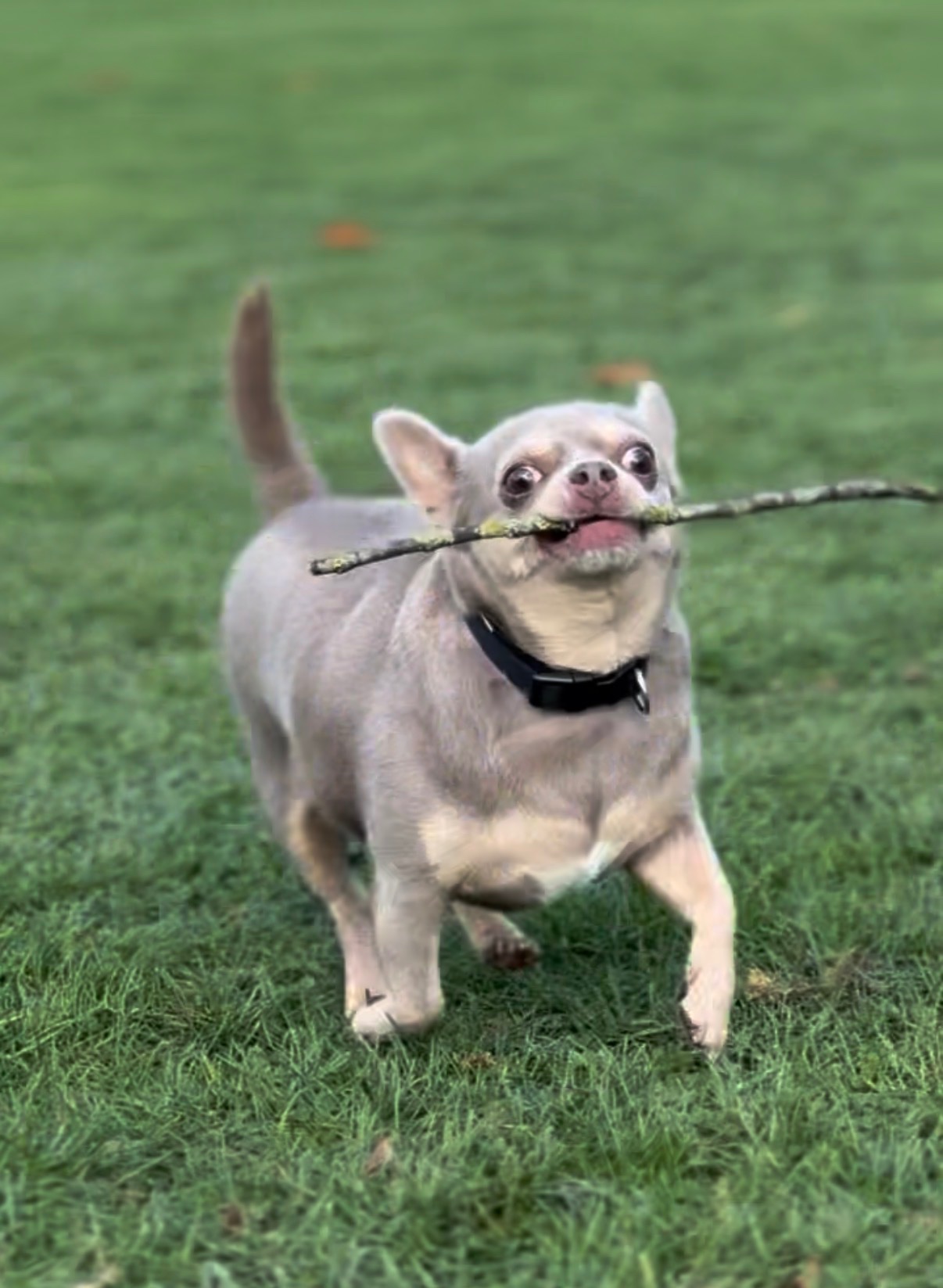
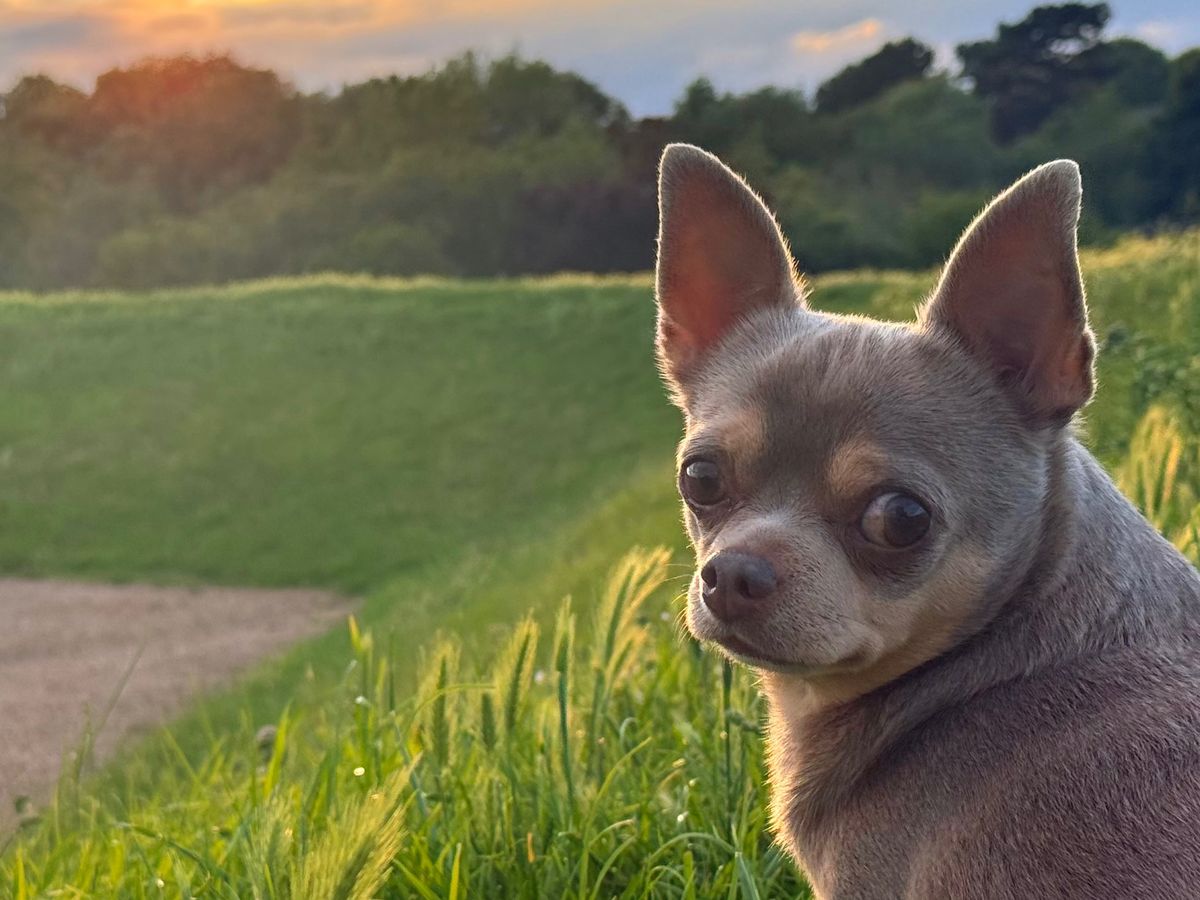
He Gave Us His Heart. Now We’re Trying to Save His. ❤️
0% complete
£267 raised of £12.5K
10 donations
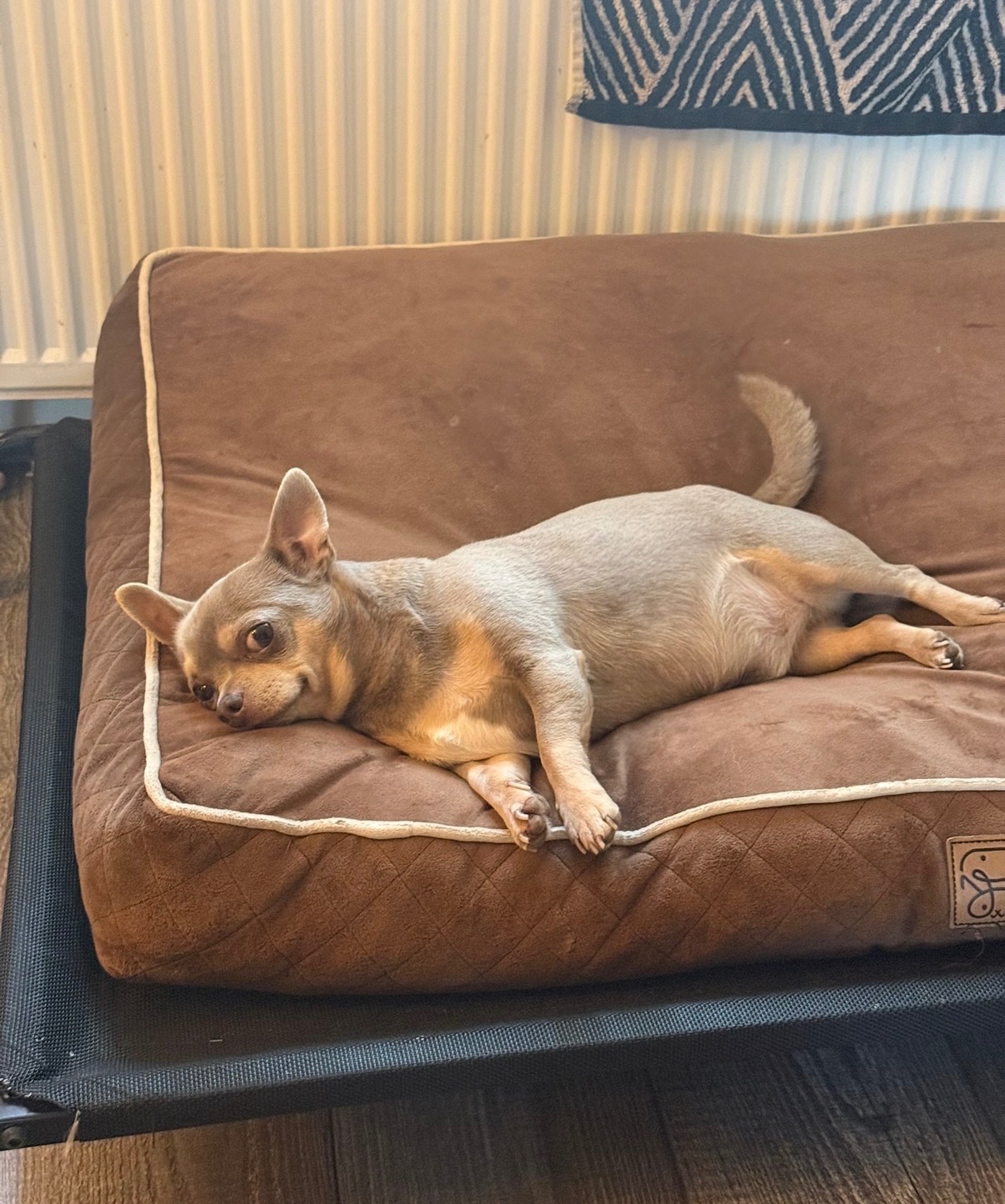
Help us give our beloved 8-year-old Chihuahua, Sage, more time.
Sage is not really like any dog I’ve ever known.
For eight years, he has given us his heart.
He’s calm, patient, deeply emotional and incredibly loving. He’s somehow always seemed more human than dog. He’s regal, dignified and, in the best possible way, a complete little snob.
He knows what he likes.
He loves the highest-quality things. The softest places. The nicest things. He somehow knows when something is good — and he absolutely expects it.
But underneath that little regal exterior is one of the most loving souls we’ve ever known.
Sage has been there for us through some of the hardest times in our lives. He has stayed beside us when things were falling apart. He has comforted us when we’ve been hurting.
And he has licked every tear that has ever rolled down my face.
He has given us so much love.
And now, at only eight years old, his heart is failing.
A few days ago, we came frighteningly close to losing him.
But Sage wasn’t ready.
And neither were we.
How we got here
Many people may remember Sage’s original fundraiser from December 2025.
At that time, we were trying to understand what was happening with his heart. Thanks to the people who donated, we raised £212, which allowed us to take Sage to the PDSA for an X-ray in February 2026.
That X-ray showed some enlargement of his heart and inflammation in his lungs, but importantly there was no fluid in his lungs at that time. His heart murmur was graded at 3/6.
The PDSA felt that Sage had some form of heart disease, but at that point his condition wasn’t considered severe enough to start heart medication. We were told to monitor his sleeping respiratory rate and keep a close eye on him.
Because the PDSA is a charity hospital, they don’t provide the specialist echocardiograms needed to fully assess the heart. We were advised that a private cardiac scan would cost around £700–£900.
Our plan was to save for this and have it done a few months later. We hoped to do it in October 2026 when we were expecting to have enough money available for the scan.
Unfortunately, neither the time nor the money worked out as planned.
But Sage remained stable.
His sleeping respiratory rate stayed good and, although he had a cough, he was otherwise himself.
Then everything changed.
At the beginning of September 2026, Sage’s coughing suddenly became much worse.
On 10 September we took him to the vet. His sleeping respiratory rate was still under 30, there were no obvious crackles suggesting fluid in his lungs and his murmur still sounded around a grade 3. However, there was significant wheezing.
Because of his previous X-ray, we were initially told that this could potentially be chronic bronchitis, something similar to COPD in humans.
We tried the treatment offered, but Sage did not improve.
Within days, his cough was getting dramatically worse and his breathing rate began to increase.
Then, one night, he began having coughing fits unlike anything we had ever seen from him.
We contacted the out-of-hours vet and sent videos of his breathing.
They were concerned about his breathing effort and the colour of his gums and told us to bring him in immediately.
What followed was one of the most frightening experiences we have ever been through.
Sage went into heart failure.
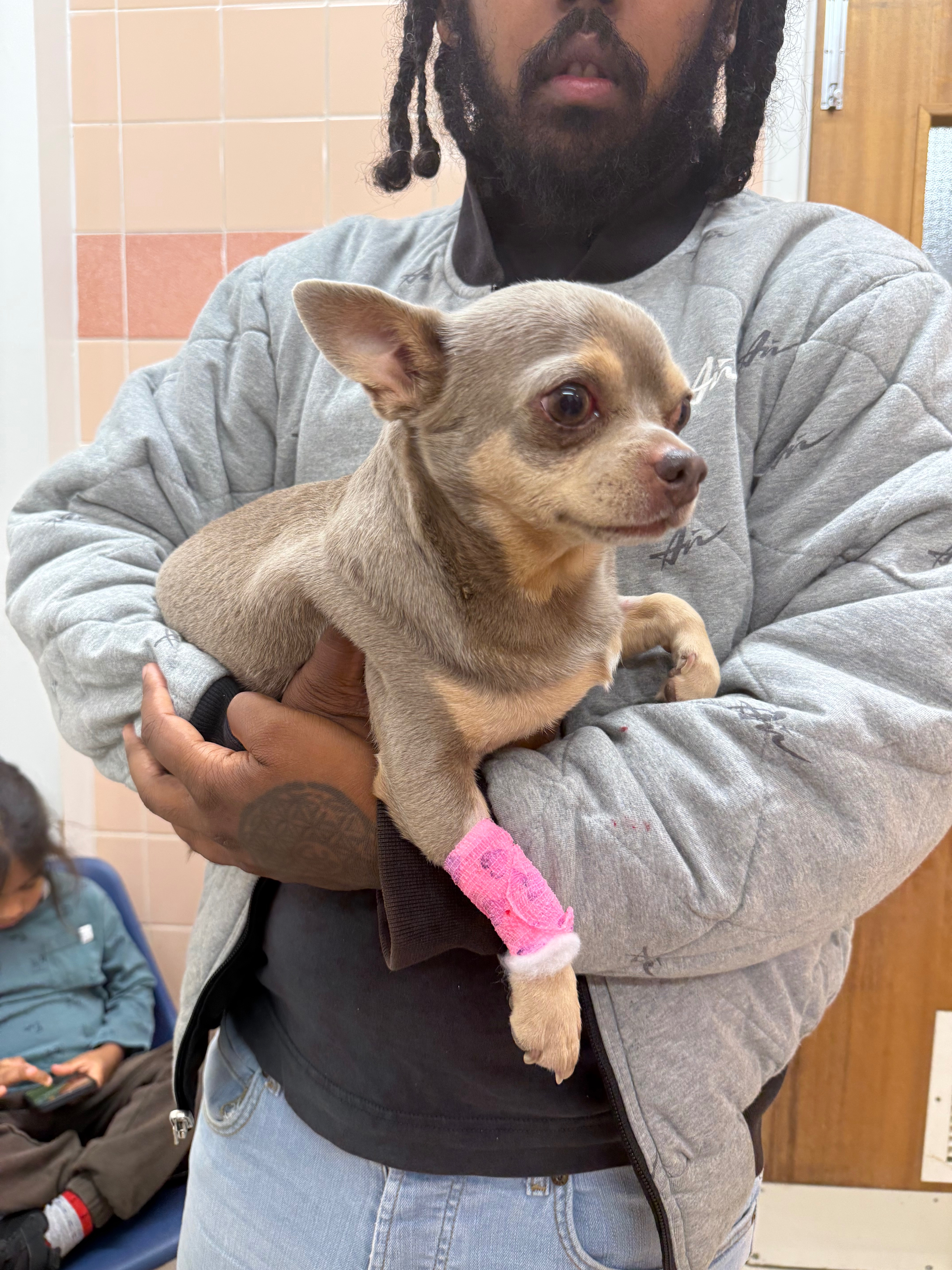
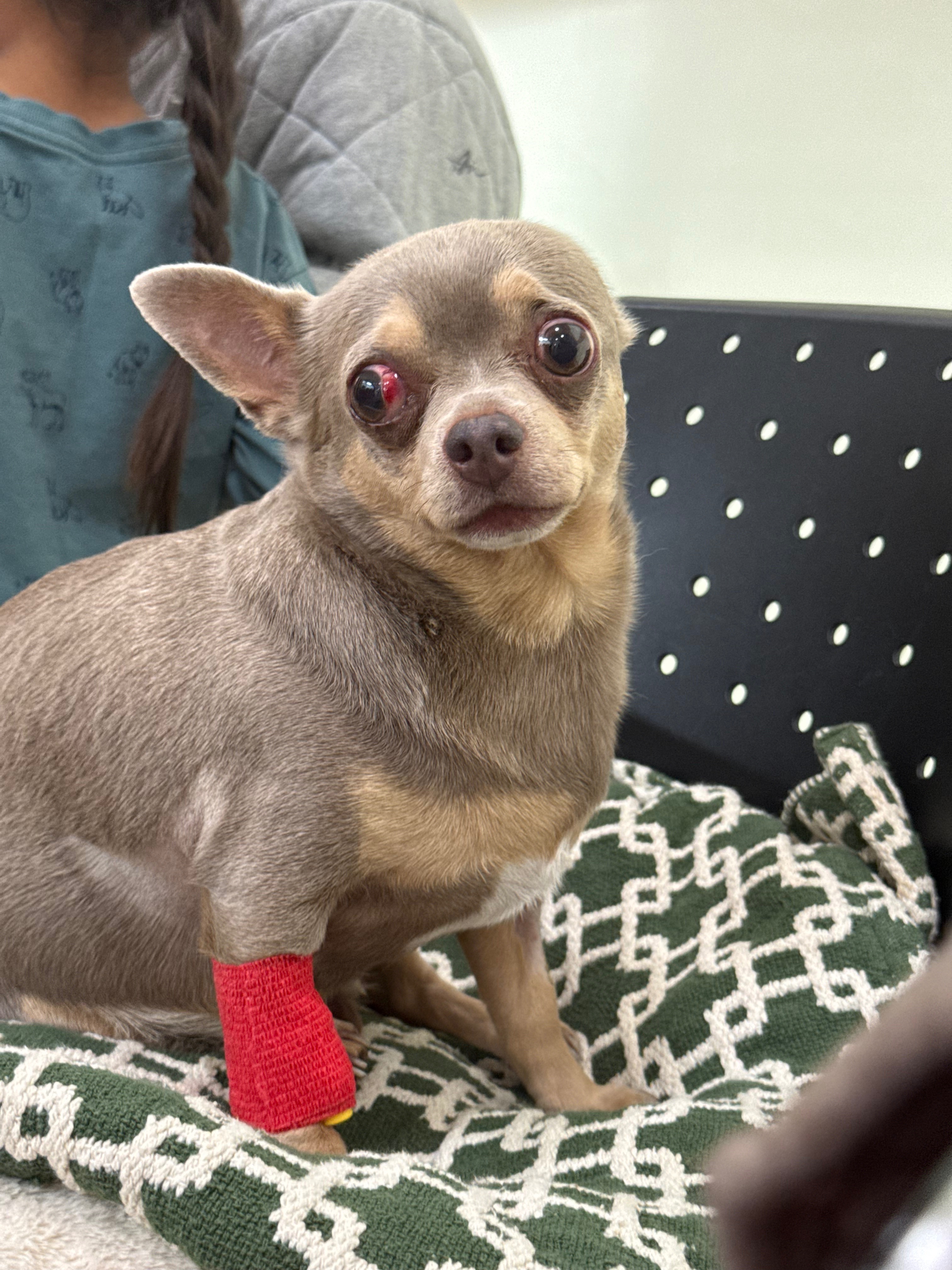
Sage spent around three to four days in veterinary care.
He needed oxygen and IV furosemide, a diuretic used to remove excess fluid. He was also treated with antibiotics because he developed a high temperature.
At times, even gently handling him caused him to become extremely distressed and his oxygen levels dropped. He became blue from the combination of stress and lack of oxygen.
The PDSA performed further investigations, including an X-ray and an attempted echocardiographic assessment.
This time, everything looked very different.
His heart was severely enlarged, his left atrium was very dilated and there was significant backflow through the mitral valve. There was also a large amount of fluid associated with his heart failure.
Unfortunately, Sage was not tolerating the procedure well enough for the full cardiac assessment to be completed safely.
We were then given devastating news.
We were told that his condition was extremely serious and that our choices were essentially to continue intensive treatment at the emergency hospital or consider saying goodbye.
We weren’t ready to give up on him.
And then Sage fought.
When we went to collect Sage, we asked whether he had been receiving Vetmedin (pimobendan) alongside the furosemide.
He had not been able to receive it successfully because the veterinary team had struggled to administer it while he was extremely frightened and distressed.
Once we were able to get the medication into him ourselves, alongside the furosemide and oxygen therapy, we saw a remarkable improvement.
Sage stabilised enough that he no longer needed oxygen.
He was able to come home.
He came home on 17 September 2026.
And the little man is still fighting.
He is eating.
He is drinking.
He is peeing.
He is pooing.
He is sleeping.
He is walking around the house.
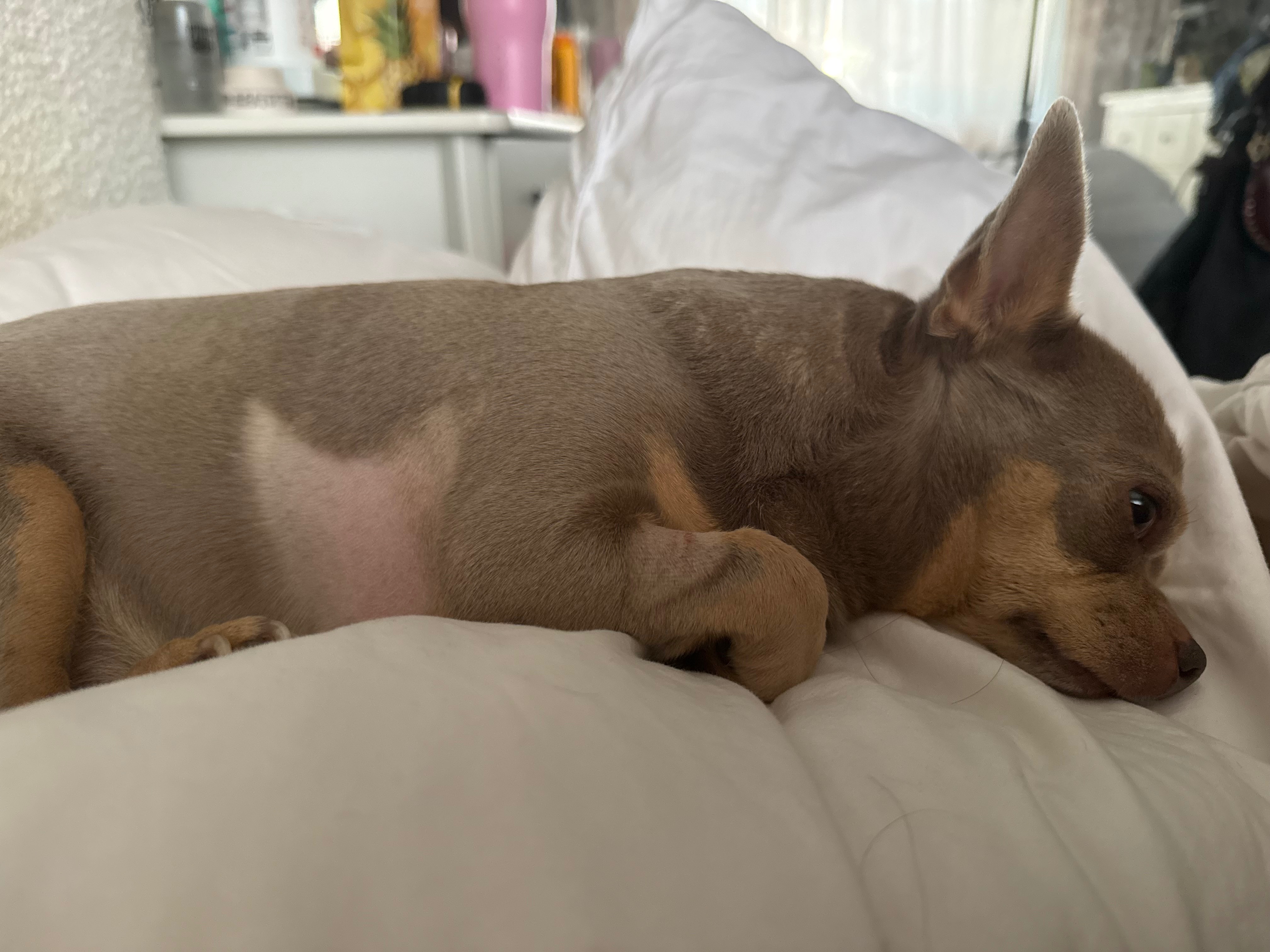
He’s going under the duvet to lick my feet like he always does, then climbing back out when he gets too warm and sleeping on his pillow above my head.
He’s being Sage again.
And we are so unbelievably grateful.
But we don’t want this to be the end of his story.
Sage has been diagnosed with advanced/end-stage heart failure, and he will need lifelong medication and very close monitoring.
However, there is a specialist procedure that may be able to give him considerably more time and improve his quality of life.
TEER — a minimally invasive mitral valve procedure
The Royal Veterinary College’s Queen Mother Hospital for Animals offers a procedure called transcatheter edge-to-edge repair (TEER) for suitable dogs with degenerative mitral valve disease.
Rather than open-heart surgery, TEER is performed using a catheter and a specialised clip to reduce the leakage through the mitral valve.
The RVC currently lists the procedure at £12,500, including the specialist assessment, advanced imaging, procedure, intensive care, post-operative medication and four-week follow-up.
The RVC’s published information says that around 95% of dogs recover well to discharge, and among dogs that had already developed heart failure, around 80% were still alive two years after TEER.
Whether Sage is suitable is something that can only be determined by the RVC’s specialist cardiology team after his full assessment.
But we want to give him that chance.
We have already been referred.
Sage has been referred to the Queen Mother Hospital at the Royal Veterinary College and we are now waiting to hear from them so that the specialist assessment process can begin.
The initial consultations and advanced diagnostic investigations will also cost money, and we expect that we may need more than one appointment before the team can determine whether TEER is appropriate for him.
We have also been lucky enough to hear from a neighbour whose own dog had this procedure recently and is doing extremely well. Seeing another dog come through something similar has given us even more hope.
We know £12,500 is a huge amount of money.
I am starting university on 28 September 2026 to study Geography and Environmental Science. I will do everything I possibly can to contribute towards Sage’s treatment and save as much as I can.
But I cannot do this alone.
We are therefore asking for help from anyone who is able to contribute — whether that’s £5, £10, £20 or more.
Every single donation brings us closer.
And if you can’t donate, sharing Sage’s story could be just as valuable.
We don’t know exactly what the future holds.
But we do know that Sage isn’t ready to give up.
A few days ago we were being told that we might have to say goodbye to him.
Today, he’s under my duvet licking my feet.
So we’re going to fight for him.
He has spent eight years giving us his heart.
Now we’re trying to save his. ❤️
Thank you to everyone who donated to Sage’s original fundraiser, shared his story, checked in on him or simply cared about what happened to him. The £212 raised previously genuinely helped us get the first X-ray that started this journey.
And thank you to anyone who helps us now.
We are incredibly grateful.
Please help us give our little man more time. ❤️
Organizer