- S
- K
- R
Preface
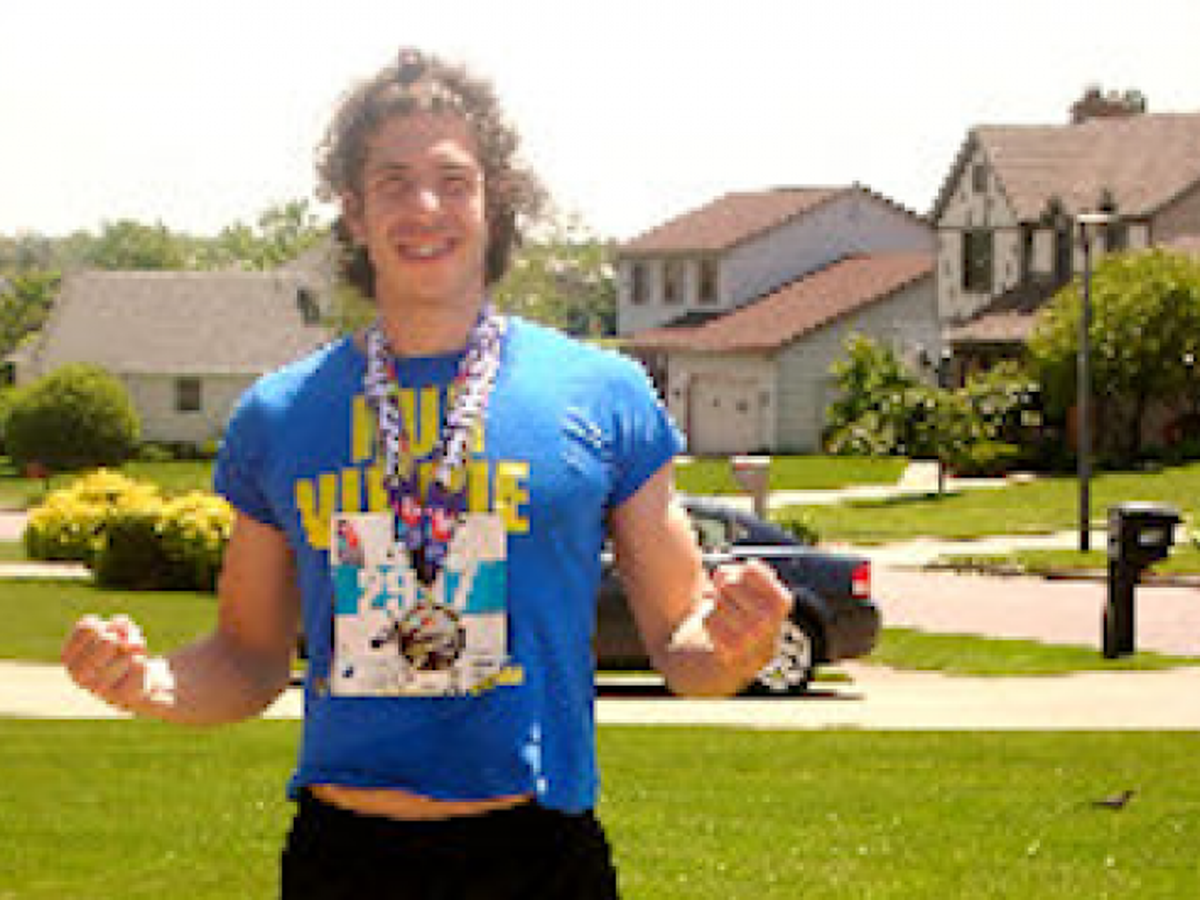
· I would not refer to myself as altruistic. Running in the New York City marathon is not solely to help my cause. Much of why I do it is for myself and personal satisfaction. However, I do entirely believe in the cause and believe every single person who reads this should be making some attempt in their lives to be a little healthier, through a variety of different mechanisms. That is why I have chosen to run for the charity 'Team for Kids.'
· I view exercise and diet as the arena by which that despite the awareness spewed in our faces from all angles, many individuals are relatively misinformed and could use an education. The money I raise for my cause provides funding for this education for inner city New Yorkers and also gives me the venue to accost you, my dear family and friends, with the miniscule bit of attempted philosophy, education, and thought provocation in the paragraphs to follow.
· I am not going to challenge anyone or say “this is what you need to do.” Because at the end of the day, your life is your life. But on some level, we all want to be better, for ourselves or for others, and perhaps this is one way to do so.
· If you’d like the skim beyond me on my soapbox regarding the philosophy of health; followed by my dissertation on the value of physical activity in the forum of public health; to simply learn of the cause of my run, scroll down to ‘The Cause’ below.
Philosophy of Health
· Our health is very complex… Very, very complex. Everyone has heard a story about some 40 year-old that did everything right… Their diet was immaculate; exercise was routine and consistent; never smoked; rarely drank and one day just dropped dead with a heart attack. For each tragic story of the healthy individual’s misfortune is its foil… The fella that lived well into his 90’s, eating eggs and red meat everyday, washing it down with beer after beer and enjoying pack after refreshing pack of cigarettes; where the words jog and calorie register nothing in his very content mind.
· We often cite these near fabled stories to justify our less virtuous sides… When we give in and don’t keep ourselves healthy, we love to champion the unpredictability of the universe. We use utter helplessness to our advantage because all that exercise didn’t help the 40 year-old who dropped dead. We follow yesterday’s cheeseburger, with today’s bacon, egg, and cheese biscuit, thinking of tomorrow’s steak frites in a world of fast food because it never hurt ‘that fella that lived into his 90’s.’ We need these tales and use them to our advantage, as they prove that it comes down to chance… All because our health is very, very complex. And the world is very, very complex. And so much of it is left to Providence…
· But as rational beings, we like to put the odds in our favor. Why do we wear seatbelts? To put the odds in our favor. We do not all leave off the seatbelt because we heard that horrible story on the 6 o’clock news of the girl killed immediately in a head on collision, where the seatbelt did nothing to protect her. We lock our doors and our cars… Fully aware that plenty of homes and automobiles are broken into, whether they are buttoned up or not… Maybe it’s a false sense of security. The vanity of our illusion of power to think we have even the slightest ability to control the uncontrollable… But as humans we try. We know less people die in crashes wearing seatbelts, we believe less things get broken into when locked, so we make the attempt… Fully conscious of the fact that there are no guarantees, just better chances.
· With that, we are fully aware that despite the complexities of our health and the universe as a whole, a healthy lifestyle puts the odds in our favor. This doesn’t mean to go off and live the life of an ascetic: avowing that you shall exercise 700 minutes a week, swearing off all meat. Never drinking, never partaking in any of the pleasures that make life worth living. It simply means balance, discipline, and putting the odds in your favor.
· A few paragraphs of philosophizing on health as a whole is enough…
On Physical Activity
· One thing that we can all agree on is that bad habits are difficult to break; whether it is that compulsion for a little snack somewhere in between lunch and dinner or finding any excuse to omit one of your workouts during the week. Establishing consistency, routine, and discipline is hard. For some who played sports, it might be a bit easier; but that does not make it easy.
· However, what does make things easier is when a particular way is all you know; essentially being socialized or conditioned into a particular mindset. Most people eat three meals a day and find it difficult to only eat two. Is that because the human needs three meals a day? No, it is because that is all most of us know. Same thing with sleep… Do you need 8 hours? Do you need 10 or 6 hours? No, you need what your body tells you (or what you tell your body), but much if this is determined by routine… So what about exercise? From a young age, we do not learn that 5 days per week we need at least 30 minutes of exercise (proper exercise that increases the heart rate appropriately)… We may be told this ambiguous process of ‘exercise’ is valued or to ‘go out and play,’ but no specific plan; no specific routine. But, at a young age, if exercise, proper exercise, is established as routine and a way of life… As important as meals… As important as sleep… That unbreakable, unshakeable, activity of daily living, could we establish a new generation of healthy kids that grow up to be healthy adults by maintaining that routine which is all they know?
· I hesitate because it sounds that I am hoping for this future new world order of fit individuals that will look back at the generations of people that consistently died from the complications of cardiovascular disease the way we now look at those that died of infectious diseases or infant mortality… But I am.
· In 1900, the top 3 causes of death were infectious diseases. Now, dying from an infection is very far from the radar for your average person. Seventy-five years ago, giving birth was a very scary ordeal. In 1935, 440.9 deaths per 100,000 births occurred, today that number has reduced 94% to 26.6 deaths per 100,000 births. This is just the tip of the ‘impact of medical advances on life expectancy’ iceberg, but the point is, with knowledge and advances in medicine, problems that were once huge problems become things of the past.
· Part of this comes with a paradigm shift… Or at least a broadening of one’s current way of thinking. A few decades ago, the shift came with smoking and we have all been subjected to anti-smoking campaigns. Smokers die, on average, ten years earlier than non-smokers. Smoking leads to almost 500,000 deaths per year in the US alone. For every 1 person that dies of a smoking-related illness, nearly 30 continue to live with a smoking-related illness. When the ads started, the concept of smoking’s detriment was not new. Read Dostoevsky and in the 1860’s you’d understand this was understood. Literature throughout the turn of the 20th century was well-aware as well and not just amongst the educated but even in fiction for the masses knew how harmful smoking is… But enough people dying and the time it takes to compile cute little statistics takes time… Until finally, the assault is poised. This information on smoking and the propagation of such knowledge has led to a decrease of adults who smoke from 43% fifty years ago to only 19% now. Amongst high school students (the CDC started keeping track in 1991), this number has decreased from as high as 36% in 1997 to only 18% now.
· It has essentially come down to if I do not smoke, I should live longer (10 years longer on average). The concept of not smoking is easier: if I do not do this demonized act, I will live longer.
· When we talk about preventable illness; smoking, drugs, and alcohol are central to the discussion, but so are diet and exercise. We are all taught early not to smoke or do drugs and to drink in moderation, but what about diet and exercise? Body weight or body mass index reflect (as best they can) diet and exercise (although in fairness, much more can come into play). We know this. Society knows this. Everyone feels it, just as smokers of the past knew it was harmful; but the media blunderbuss has not spread-shot the readymade statistics into the crowd yet; in a similar way they assaulted tobacco.
· Plenty of studies, good studies, validate the importance of maintaining a healthy body weight. Not to get overly technical, but the majority of what body weight reflects is a combination of input and output, or diet and exercise (again, in fairness, it is more complicated than this).
o So, what we eat puts on the weight… How we exercise takes off the weight… When we err with either side of the equation the way many people do; eat too much, exercise too little, we put on weight. We all know this. And we know that it is bad, but what does it mean?
· While many studies you read cite numbers like being overweight or obese can cost you anywhere between 2 to 4 years of life. You may also read that overweight or obese folks have 2 to 4 times more “healthy life years” lost compared to their normal weight counterparts. The National Cancer Institute states that obese individuals have a death rate that translates to 6.5 to 13.7 fewer years of life.
o Normal, overweight, obese are terms derived from your BMI (or body mass index). Google it if you know not of it and your relationship to it.
· Whatever the numbers may be, numbers are numbers. Some are high, some are low, and the truth probably lies somewhere in between. If you are smart, trust nothing of what you hear on TV or even what I say, look into it yourself… But the point is, we know there is an association between being overweight and living fewer years.
· So, let’s revisit weight again. Very simply speaking, weight is the product of diet and exercise. While diet is wildly important, I will only be focusing on exercise at this time. However, it is worth noting that a recent study from Stanford University found that between 1988 and 2010 obesity rates climbed significantly.
o From 20% to 35% in women.
o From 25% to 35% in men.
· Yet total calorie intake did not change significantly. What did change was amount of physical activity. This is correlation NOT causation, but it at least suggests the importance of physical activity and it’s relation to weight.
· So focusing on exercise and physical activity, the Department of Health has an extremely comprehensive guideline that assimilates many studies and expert opinions based off of quality evidenced-based medicine. I will only highlight a few key points, but it is made pretty bloody clear that physical activity makes you less likely to die early… I’d recommend anyone who knows they are not where they should be to have a look and download the guidelines for free here: http://www.health.gov/paguidelines/guidelines/
· The Guideline Highlights
o The risk of dying prematurely decreases as physical activity increases. The benefits start to be seen with as little as 60 minutes of activity per week, but that number for a significant decrease in premature death is 150 minutes of what is labeled moderately-intense physical activity. In order for substantial benefits, we need those 150 minutes.
o Premature death continues to decrease as activity increases so much so that those that get 420 minutes of moderately-intense physical activity per week have a 40% (yes 40%) lower risk of premature death than those active for less than 30 minutes per week.
o But the goal recommendation is 150 minutes of moderately-intense physical activity.
o Moderately intense activity includes:
§ Briskly walking (more than 3 miles per hour: so ‘all walking is not walking’)
§ Bicycling slower than 10 miles per hour
§ Tennis (doubles), ballroom dancing, and a few others
o Don’t have the time? Whatever the recommendation is for moderately-intense physical activity, cut it in half if doing what is labeled vigorous intensity activity.
o Vigorous intensity activity includes:
§ Running or jogging
§ Swimming laps
§ Jumping rope
§ Biking faster than 10 miles per hour
§ Aerobic dancing as well as a few other activities
o A few important points:
§ Activities of daily living are not physical activity… Going to the store, standing all day at your job; things like this don’t count. One of the key purposes of physical activity is to elevate your heart rate which is the firestarter, so to speak, in achieving the coinciding benefits
§ All walking is NOT walking. The reason why the guidelines specify ‘brisk’ walk, is because simply going on a stroll is not even moderately-intense physical activity, because it is about sustained elevation of that heart rate. They mention a minimum of 3 miles per hour, but this is really just sort of a guide. For some people that are really overweight or out of shape, that speed may actually be lower… For some people, walking 4 miles per hour may be useless in that it does not give you that sustained elevated heart rate. The appendices of the guidelines go into greater detail by discussing ‘relative intensity’ but it takes an objective analysis in adjudging how hard you are actually working.
§ I can continue to cite point after point, but I will leave that to each of you. Again, check out the guidelines for yourself… Check out as much literature as you can… I try to be objective as possible, but inevitably, some of my subjective tendencies may have played out in my analysis.
· But, as I said above, it may seem that I am hoping for this future new world order of fit boys and girls and men and women that will look back at the generations of people that consistently died from the complications of cardiovascular disease the way we now look at those that died of infectious diseases or infant mortality… And I most certainly am. I’m hoping for a world where the biggest problems involve joint and bone injuries, rather than bypasses and angioplasties… But it will certainly take a mass paradigm shift in order to happen.
· Which brings me to…
The Cause
· We want to live long… We want our family and friends to live long… We want our children to live long… And of course we that the non-specific entity the media and society simply refer to as ‘the children’ to live long, long lives… Parents and society are always telling ‘the children,’ “don’t drink or smoke or do drugs,” because we equate this to less life by earlier death.
· But parents and society must also start shouting, “eat better” and “exercise.” Perhaps this is a little more difficult from a credibility perspective… It is easy for the parent that is sober or drinks responsibility to tell Junior not to drink, or for the teacher who doesn’t smoke to tell Missy how bad it can be for her… But how well do you think they will listen if daddy’s a drunk or teacher is mowing down heater after heater in between classes? If you have never seen mom doing any physical activity or teacher is 50 pounds overweight, it is more difficult for children to listen. They lack role models and the educational tools to be able to exercise (and eat right) on their own.
· I am running for ‘Team for Kids:’
o This charity raises money to support school-based programs, free youth events, provide a collection of digital resources, and support New York Road Runner Youth Programs to deliver free running and fitness programs to students across New York City, as well as across the country.
o Nationally
§ The funding supports for more than 200,000 children in more than 400 schools and community centers
§ The funding provides training for teachers and coaches (most being volunteers) on how to educate these kids; funds programs and practice supplies; and incentives for the kids for motivation
o Locally
§ Mighty Milers: A group where in 2014-15 alone, over 150,000 members logged in more than 5 million miles running with classmates and teachers throughout the school day. Funds help pay for incentives to keep these kids motivated and get them into a ‘lifestyle of exercise.’
§ Young Runners: A group of kids in grades 3-12 that is over 3,000 members strong in 2014-15, that are coached by the New York Road Runners and educated on how to set goals and make fitness part of their daily routine.
o Team for Kids helps provide the essential tools: the education, the routine, the forum, and hence the power to enable ‘our youths’ to know how to exercise, become physically fit, and maintain this as a lifestyle.
· In the end, will this mean they will live longer, healthier lives? I do not know, our health is complex… Very, very complex… But I think it will make their odds a lot better.
Your Support
· I humbly request your support of my run for Team for Kids through a donation of $26 dollars. No more. No less.
· I believe it is my job to get this information out to as many people as possible. And I hate asking for money and the inevitable awkwardness of being ask for a donation, because you always have to lament over whether you are giving too much or too little or what’s right. So, $26 is set. I can’t prevent you from donating more or less, but that’s the suggestion. (If you do want to donate more, you can donate for say, yourself and your wife: $26 x 2 or your family of four: $26 x 4).
· My job is to get over 100 different people to get to this point in the dialogue, which may be difficult considering all of the laborious reading you may have subjected yourself too, but in the end, I hope to have posed a few questions.
-For more information on Team for Kids, feel free to browse their website at: https://www.runwithtfk.org/
· I would not refer to myself as altruistic. Running in the New York City marathon is not solely to help my cause. Much of why I do it is for myself and personal satisfaction. However, I do entirely believe in the cause and believe every single person who reads this should be making some attempt in their lives to be a little healthier, through a variety of different mechanisms. That is why I have chosen to run for the charity 'Team for Kids.'
· I view exercise and diet as the arena by which that despite the awareness spewed in our faces from all angles, many individuals are relatively misinformed and could use an education. The money I raise for my cause provides funding for this education for inner city New Yorkers and also gives me the venue to accost you, my dear family and friends, with the miniscule bit of attempted philosophy, education, and thought provocation in the paragraphs to follow.
· I am not going to challenge anyone or say “this is what you need to do.” Because at the end of the day, your life is your life. But on some level, we all want to be better, for ourselves or for others, and perhaps this is one way to do so.
· If you’d like the skim beyond me on my soapbox regarding the philosophy of health; followed by my dissertation on the value of physical activity in the forum of public health; to simply learn of the cause of my run, scroll down to ‘The Cause’ below.
Philosophy of Health
· Our health is very complex… Very, very complex. Everyone has heard a story about some 40 year-old that did everything right… Their diet was immaculate; exercise was routine and consistent; never smoked; rarely drank and one day just dropped dead with a heart attack. For each tragic story of the healthy individual’s misfortune is its foil… The fella that lived well into his 90’s, eating eggs and red meat everyday, washing it down with beer after beer and enjoying pack after refreshing pack of cigarettes; where the words jog and calorie register nothing in his very content mind.
· We often cite these near fabled stories to justify our less virtuous sides… When we give in and don’t keep ourselves healthy, we love to champion the unpredictability of the universe. We use utter helplessness to our advantage because all that exercise didn’t help the 40 year-old who dropped dead. We follow yesterday’s cheeseburger, with today’s bacon, egg, and cheese biscuit, thinking of tomorrow’s steak frites in a world of fast food because it never hurt ‘that fella that lived into his 90’s.’ We need these tales and use them to our advantage, as they prove that it comes down to chance… All because our health is very, very complex. And the world is very, very complex. And so much of it is left to Providence…
· But as rational beings, we like to put the odds in our favor. Why do we wear seatbelts? To put the odds in our favor. We do not all leave off the seatbelt because we heard that horrible story on the 6 o’clock news of the girl killed immediately in a head on collision, where the seatbelt did nothing to protect her. We lock our doors and our cars… Fully aware that plenty of homes and automobiles are broken into, whether they are buttoned up or not… Maybe it’s a false sense of security. The vanity of our illusion of power to think we have even the slightest ability to control the uncontrollable… But as humans we try. We know less people die in crashes wearing seatbelts, we believe less things get broken into when locked, so we make the attempt… Fully conscious of the fact that there are no guarantees, just better chances.
· With that, we are fully aware that despite the complexities of our health and the universe as a whole, a healthy lifestyle puts the odds in our favor. This doesn’t mean to go off and live the life of an ascetic: avowing that you shall exercise 700 minutes a week, swearing off all meat. Never drinking, never partaking in any of the pleasures that make life worth living. It simply means balance, discipline, and putting the odds in your favor.
· A few paragraphs of philosophizing on health as a whole is enough…
On Physical Activity
· One thing that we can all agree on is that bad habits are difficult to break; whether it is that compulsion for a little snack somewhere in between lunch and dinner or finding any excuse to omit one of your workouts during the week. Establishing consistency, routine, and discipline is hard. For some who played sports, it might be a bit easier; but that does not make it easy.
· However, what does make things easier is when a particular way is all you know; essentially being socialized or conditioned into a particular mindset. Most people eat three meals a day and find it difficult to only eat two. Is that because the human needs three meals a day? No, it is because that is all most of us know. Same thing with sleep… Do you need 8 hours? Do you need 10 or 6 hours? No, you need what your body tells you (or what you tell your body), but much if this is determined by routine… So what about exercise? From a young age, we do not learn that 5 days per week we need at least 30 minutes of exercise (proper exercise that increases the heart rate appropriately)… We may be told this ambiguous process of ‘exercise’ is valued or to ‘go out and play,’ but no specific plan; no specific routine. But, at a young age, if exercise, proper exercise, is established as routine and a way of life… As important as meals… As important as sleep… That unbreakable, unshakeable, activity of daily living, could we establish a new generation of healthy kids that grow up to be healthy adults by maintaining that routine which is all they know?
· I hesitate because it sounds that I am hoping for this future new world order of fit individuals that will look back at the generations of people that consistently died from the complications of cardiovascular disease the way we now look at those that died of infectious diseases or infant mortality… But I am.
· In 1900, the top 3 causes of death were infectious diseases. Now, dying from an infection is very far from the radar for your average person. Seventy-five years ago, giving birth was a very scary ordeal. In 1935, 440.9 deaths per 100,000 births occurred, today that number has reduced 94% to 26.6 deaths per 100,000 births. This is just the tip of the ‘impact of medical advances on life expectancy’ iceberg, but the point is, with knowledge and advances in medicine, problems that were once huge problems become things of the past.
· Part of this comes with a paradigm shift… Or at least a broadening of one’s current way of thinking. A few decades ago, the shift came with smoking and we have all been subjected to anti-smoking campaigns. Smokers die, on average, ten years earlier than non-smokers. Smoking leads to almost 500,000 deaths per year in the US alone. For every 1 person that dies of a smoking-related illness, nearly 30 continue to live with a smoking-related illness. When the ads started, the concept of smoking’s detriment was not new. Read Dostoevsky and in the 1860’s you’d understand this was understood. Literature throughout the turn of the 20th century was well-aware as well and not just amongst the educated but even in fiction for the masses knew how harmful smoking is… But enough people dying and the time it takes to compile cute little statistics takes time… Until finally, the assault is poised. This information on smoking and the propagation of such knowledge has led to a decrease of adults who smoke from 43% fifty years ago to only 19% now. Amongst high school students (the CDC started keeping track in 1991), this number has decreased from as high as 36% in 1997 to only 18% now.
· It has essentially come down to if I do not smoke, I should live longer (10 years longer on average). The concept of not smoking is easier: if I do not do this demonized act, I will live longer.
· When we talk about preventable illness; smoking, drugs, and alcohol are central to the discussion, but so are diet and exercise. We are all taught early not to smoke or do drugs and to drink in moderation, but what about diet and exercise? Body weight or body mass index reflect (as best they can) diet and exercise (although in fairness, much more can come into play). We know this. Society knows this. Everyone feels it, just as smokers of the past knew it was harmful; but the media blunderbuss has not spread-shot the readymade statistics into the crowd yet; in a similar way they assaulted tobacco.
· Plenty of studies, good studies, validate the importance of maintaining a healthy body weight. Not to get overly technical, but the majority of what body weight reflects is a combination of input and output, or diet and exercise (again, in fairness, it is more complicated than this).
o So, what we eat puts on the weight… How we exercise takes off the weight… When we err with either side of the equation the way many people do; eat too much, exercise too little, we put on weight. We all know this. And we know that it is bad, but what does it mean?
· While many studies you read cite numbers like being overweight or obese can cost you anywhere between 2 to 4 years of life. You may also read that overweight or obese folks have 2 to 4 times more “healthy life years” lost compared to their normal weight counterparts. The National Cancer Institute states that obese individuals have a death rate that translates to 6.5 to 13.7 fewer years of life.
o Normal, overweight, obese are terms derived from your BMI (or body mass index). Google it if you know not of it and your relationship to it.
· Whatever the numbers may be, numbers are numbers. Some are high, some are low, and the truth probably lies somewhere in between. If you are smart, trust nothing of what you hear on TV or even what I say, look into it yourself… But the point is, we know there is an association between being overweight and living fewer years.
· So, let’s revisit weight again. Very simply speaking, weight is the product of diet and exercise. While diet is wildly important, I will only be focusing on exercise at this time. However, it is worth noting that a recent study from Stanford University found that between 1988 and 2010 obesity rates climbed significantly.
o From 20% to 35% in women.
o From 25% to 35% in men.
· Yet total calorie intake did not change significantly. What did change was amount of physical activity. This is correlation NOT causation, but it at least suggests the importance of physical activity and it’s relation to weight.
· So focusing on exercise and physical activity, the Department of Health has an extremely comprehensive guideline that assimilates many studies and expert opinions based off of quality evidenced-based medicine. I will only highlight a few key points, but it is made pretty bloody clear that physical activity makes you less likely to die early… I’d recommend anyone who knows they are not where they should be to have a look and download the guidelines for free here: http://www.health.gov/paguidelines/guidelines/
· The Guideline Highlights
o The risk of dying prematurely decreases as physical activity increases. The benefits start to be seen with as little as 60 minutes of activity per week, but that number for a significant decrease in premature death is 150 minutes of what is labeled moderately-intense physical activity. In order for substantial benefits, we need those 150 minutes.
o Premature death continues to decrease as activity increases so much so that those that get 420 minutes of moderately-intense physical activity per week have a 40% (yes 40%) lower risk of premature death than those active for less than 30 minutes per week.
o But the goal recommendation is 150 minutes of moderately-intense physical activity.
o Moderately intense activity includes:
§ Briskly walking (more than 3 miles per hour: so ‘all walking is not walking’)
§ Bicycling slower than 10 miles per hour
§ Tennis (doubles), ballroom dancing, and a few others
o Don’t have the time? Whatever the recommendation is for moderately-intense physical activity, cut it in half if doing what is labeled vigorous intensity activity.
o Vigorous intensity activity includes:
§ Running or jogging
§ Swimming laps
§ Jumping rope
§ Biking faster than 10 miles per hour
§ Aerobic dancing as well as a few other activities
o A few important points:
§ Activities of daily living are not physical activity… Going to the store, standing all day at your job; things like this don’t count. One of the key purposes of physical activity is to elevate your heart rate which is the firestarter, so to speak, in achieving the coinciding benefits
§ All walking is NOT walking. The reason why the guidelines specify ‘brisk’ walk, is because simply going on a stroll is not even moderately-intense physical activity, because it is about sustained elevation of that heart rate. They mention a minimum of 3 miles per hour, but this is really just sort of a guide. For some people that are really overweight or out of shape, that speed may actually be lower… For some people, walking 4 miles per hour may be useless in that it does not give you that sustained elevated heart rate. The appendices of the guidelines go into greater detail by discussing ‘relative intensity’ but it takes an objective analysis in adjudging how hard you are actually working.
§ I can continue to cite point after point, but I will leave that to each of you. Again, check out the guidelines for yourself… Check out as much literature as you can… I try to be objective as possible, but inevitably, some of my subjective tendencies may have played out in my analysis.
· But, as I said above, it may seem that I am hoping for this future new world order of fit boys and girls and men and women that will look back at the generations of people that consistently died from the complications of cardiovascular disease the way we now look at those that died of infectious diseases or infant mortality… And I most certainly am. I’m hoping for a world where the biggest problems involve joint and bone injuries, rather than bypasses and angioplasties… But it will certainly take a mass paradigm shift in order to happen.
· Which brings me to…
The Cause
· We want to live long… We want our family and friends to live long… We want our children to live long… And of course we that the non-specific entity the media and society simply refer to as ‘the children’ to live long, long lives… Parents and society are always telling ‘the children,’ “don’t drink or smoke or do drugs,” because we equate this to less life by earlier death.
· But parents and society must also start shouting, “eat better” and “exercise.” Perhaps this is a little more difficult from a credibility perspective… It is easy for the parent that is sober or drinks responsibility to tell Junior not to drink, or for the teacher who doesn’t smoke to tell Missy how bad it can be for her… But how well do you think they will listen if daddy’s a drunk or teacher is mowing down heater after heater in between classes? If you have never seen mom doing any physical activity or teacher is 50 pounds overweight, it is more difficult for children to listen. They lack role models and the educational tools to be able to exercise (and eat right) on their own.
· I am running for ‘Team for Kids:’
o This charity raises money to support school-based programs, free youth events, provide a collection of digital resources, and support New York Road Runner Youth Programs to deliver free running and fitness programs to students across New York City, as well as across the country.
o Nationally
§ The funding supports for more than 200,000 children in more than 400 schools and community centers
§ The funding provides training for teachers and coaches (most being volunteers) on how to educate these kids; funds programs and practice supplies; and incentives for the kids for motivation
o Locally
§ Mighty Milers: A group where in 2014-15 alone, over 150,000 members logged in more than 5 million miles running with classmates and teachers throughout the school day. Funds help pay for incentives to keep these kids motivated and get them into a ‘lifestyle of exercise.’
§ Young Runners: A group of kids in grades 3-12 that is over 3,000 members strong in 2014-15, that are coached by the New York Road Runners and educated on how to set goals and make fitness part of their daily routine.
o Team for Kids helps provide the essential tools: the education, the routine, the forum, and hence the power to enable ‘our youths’ to know how to exercise, become physically fit, and maintain this as a lifestyle.
· In the end, will this mean they will live longer, healthier lives? I do not know, our health is complex… Very, very complex… But I think it will make their odds a lot better.
Your Support
· I humbly request your support of my run for Team for Kids through a donation of $26 dollars. No more. No less.
· I believe it is my job to get this information out to as many people as possible. And I hate asking for money and the inevitable awkwardness of being ask for a donation, because you always have to lament over whether you are giving too much or too little or what’s right. So, $26 is set. I can’t prevent you from donating more or less, but that’s the suggestion. (If you do want to donate more, you can donate for say, yourself and your wife: $26 x 2 or your family of four: $26 x 4).
· My job is to get over 100 different people to get to this point in the dialogue, which may be difficult considering all of the laborious reading you may have subjected yourself too, but in the end, I hope to have posed a few questions.
-For more information on Team for Kids, feel free to browse their website at: https://www.runwithtfk.org/