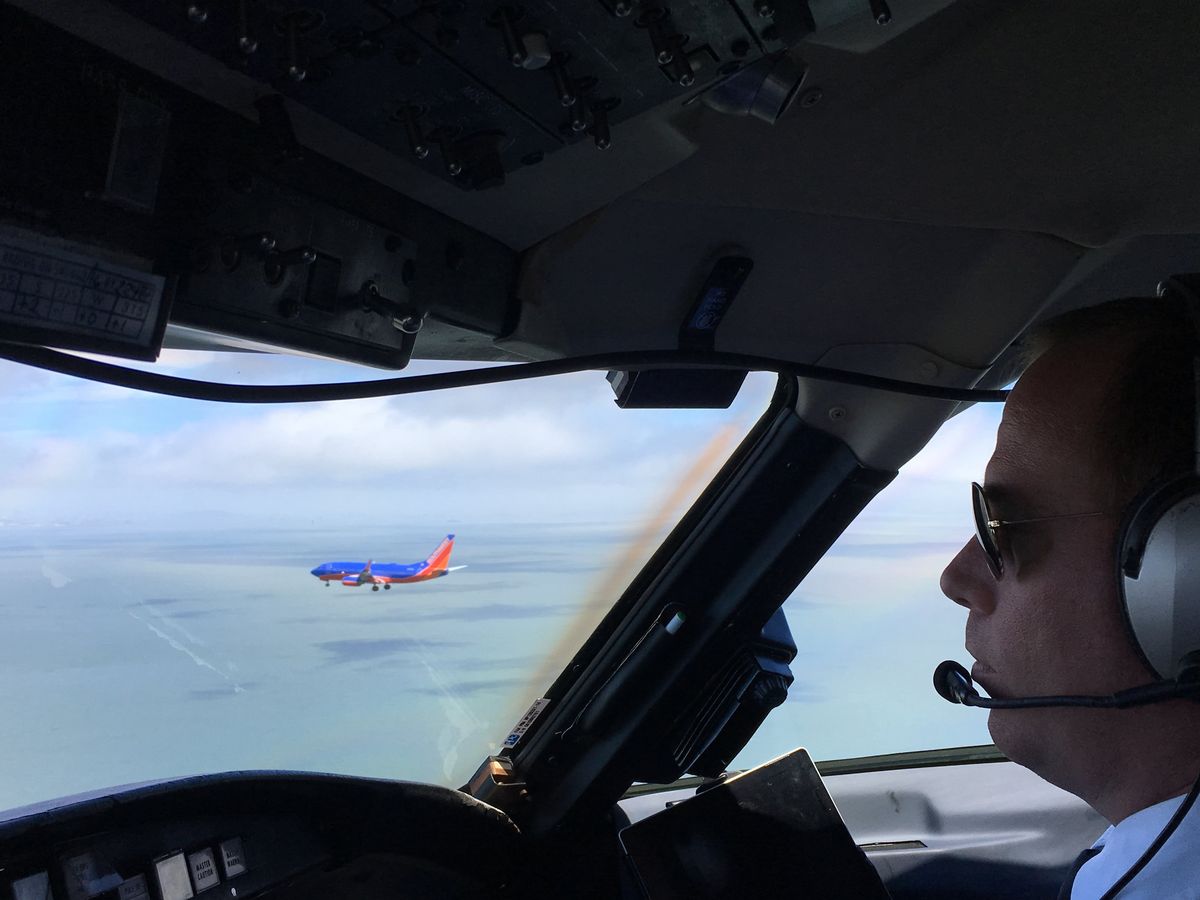
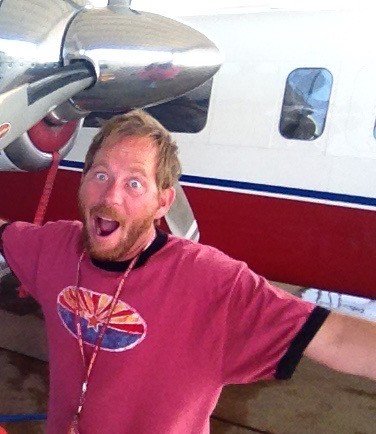
For as long as I can remember, I've wanted to be a pilot. According to my mom, one of my first words — if not the first — was "airplane." I took my first flight on my third birthday. When I was 12 or 13, I joined Civil Air Patrol and managed to get a few flying lessons in before life pulled me in other directions. Through all of it, I never fully let go: I always kept a flight simulator running somewhere, on whatever computer I had.
By 27, I'd been working as a cabinet maker and installer for several years. I would come home every day after work, load up my sim and fly the virtual world. My plan, if you could call it that, was to be a woodworker for a living and a pilot if I could ever afford it. Then something shifted. I made the decision to go to flight school, and with that decision, a new plan: become a pilot for a living, and be a woodworker in my garage when I could afford to. I applied myself. I worked hard. I made connections.
It didn't happen overnight. After flight school, I started with an aerial survey company as a photographer before working my way into the pilot seat. From there I flew fire operations for a couple of seasons, and skydivers in the off-season. Every step was a rung on a ladder I was determined to climb. In 2015, at age 35, I was hired at a regional airline and eventually upgraded to Captain on the CRJ.
The kid who said "airplane" before almost anything else had finally achieved a career getting paid to fly one.
Somewhere in my early twenties, I started to realize that I had a problem with alcohol. It would take another twenty years before I truly understood it for what it was: I am an alcoholic.
In my mind, alcoholics were people who lost their jobs and waited outside the liquor store before it opened. I had several friends who clearly fit that picture and I could see it in them and didn’t judge them for it, but I only ever saw it in myself when things went too far—when I got too drunk. Most of the time I would stick to beer so that I could control how quickly the alcohol hit me and pace myself, except that more often than not I didn't actually stop. Instead, I would drink until I fell asleep, generally without incident. Still, the image I had of what an alcoholic looked like made it easy to look at my own drinking compared to that of others, the real alcoholics, and see something else entirely.
Sure, I recognized that my drinking was problematic. Over the years I had broken relationships, lost friends, a wrecked car, and other messiness to show for it. But it was easy to ignore, because I kept showing up at work, kept advancing in my career, and never seemed to suffer the physical effects other people described. More than anything, I had found in alcohol something that felt like a solution: it quieted the social awkwardness I'd carried my whole life and made the world feel more navigable.
Like so many people who struggle with alcohol, I could see that my drinking was a problem, I just couldn't acknowledge the full weight of it. I told myself I was functional. In reality, I was maintaining the appearance of being functional, and there were plenty of mornings I woke up regretting things I'd said or done the night before. But I had an active social life and a career that kept moving forward, so it was easy to keep choosing my preferred narrative: I was just someone who liked to drink, not an alcoholic.
The airline years passed in a blur. I met and married my wife, we had our daughter, along with her two older children as well. We were looking at buying a house. I was learning how to settle into married life and everything seemed fine. I kept my drinking away from the airport, but it had progressed to the point of being my only hobby. On days off, my wife and I would just drink. We'd do things with the kids during the day, but every night was a repetition of the last: drink until sleep. Increasingly there were arguments, and I had developed a habit of projectile vomiting after excessive drinking that was becoming more and more frequent.
By that point I was no longer bidding my schedule around family trips or sightseeing or any of the things I'd dreamed about doing as an airline pilot. I was bidding around overnights long enough to find a bar or bring beer back to the hotel room, unwind, and sleep.
It was around that time that a house we were trying to buy fell through at the last minute because of something I had failed to clear up on my credit, which predictably turned into the biggest fight my wife and I had had up to that point. The stress of it all seemed enormous. I drank. I wasn't even trying to pace myself anymore — I had one goal: drink until I could sleep into tomorrow, then wake up and either go to work or do it all over again. I had lost all illusion of controlling my drinking once I started. If I had to work, I'd wait until the overnight, but that's about as far as my "control" went, and I knew it.
I've never been sure if they sent them to all pilots or if someone had said something, but periodically I would receive pamphlets for the HIMS program (Human Intervention Motivational Study) in the mail. It meant a year away from work, but it was non-punitive. Just help. With everything else that was going on and with the realization that nobody deserves to have a drunk dad, I decided to self-report and enter the program.
The HIMS program began with 30 days of residential treatment, followed by an Intensive Outpatient Program and a lot of AA meetings when I got home. My wife continued to drink, though never as much as I had, and I didn't mind — but we no longer had that in common. Around the same time, COVID arrived, and our daughter was diagnosed as moderately to severely autistic. Our marriage struggled. In a misguided but well-intentioned effort to focus on my family, I withdrew from the HIMS program rather than returning to work and the frequent time away from home that came with it.
After withdrawing from HIMS, my wife and I decided I would start a cabinetry and woodworking business. Unfortunately, it was underfunded and never managed to pick up enough momentum despite completing several really exciting projects. Ultimately the business and the marriage failed.
After that, I took to whatever odd jobs and gig work I could find. For a little more than a year, I drove Uber and Lyft at night. This was intentional — I viewed it as something akin to community service, helping intoxicated people get to their destinations safely. It was eye opening, putting the full spectrum between casual drinking and full-blown alcoholism on display for me to reflect upon night after night. I appreciated the humility and the humanity of it.
After a while, a prospective client reached out about a woodworking project. I still had my machinery in storage and decided it was worth another try. Again, between periods of moderate success there were long lulls, and the business stalled after about 18 months without ever gaining real momentum. Around that time I found a job posting at an aeronautical university that matched my skills well, applied, and was hired. It was genuinely rewarding to be back in aviation, even in a non-flying role, helping students begin their careers. Sadly, after a stretch of particularly lousy weather hurt the school financially, I was laid off.
That brings the story to today. I'm currently unemployed, doing what I can to stay afloat. The bills are paid, but savings are gone and job prospects have been discouraging. I keep going.
In sobriety, despite a failed marriage, a failed business twice over, the challenges of raising a child with special needs, and the loss of a job I genuinely loved, I've remained committed. The reasons are simple: no matter how hard life gets, drinking will never improve anything for me, and as I mentioned before and believe to my core: nobody deserves a drunk dad. These commitments haven’t wavered, and my path forward is clear.
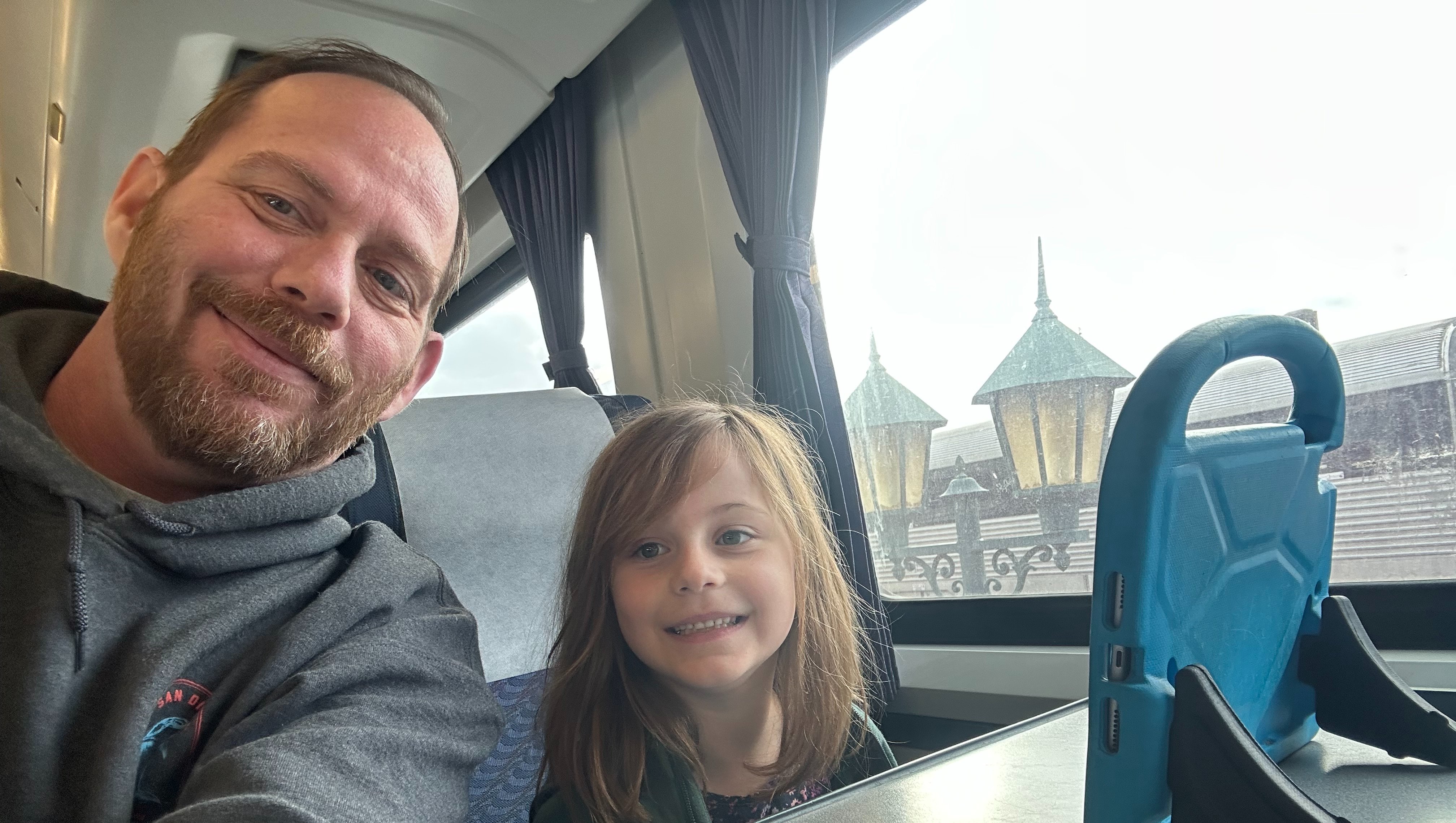
Scout and Dad go for a train ride!
Obtaining a 1st class medical and returning to the flight deck still runs through the FAA's HIMS process — a specialized medical reinstatement program for pilots with a history of alcohol dependence. I've done the work to understand exactly what it will require, and I've confirmed that my case is viable. What's standing between me and a return to flying is straightforward: money.
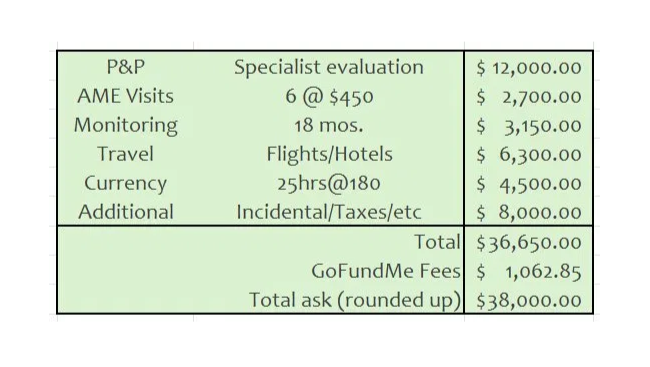
The process involves a comprehensive psychiatric and psychological evaluation, a series of Aviation Medical Examiner visits, and 12 to 18 months of monitoring through regular testing and lab work. There is also travel involved — the specialists who handle these evaluations aren't local — as well as the flight hours needed to rebuild currency once the medical is reinstated. None of it is optional, and none of it is cheap.
Here is exactly where every dollar goes:
Any funds raised beyond what's needed for the reinstatement process will be donated to an organization involved in pilot advocacy for either mental health or substance abuse, although I haven’t chosen which one yet. I intend to research this carefully in the coming months and will post an update when one has been chosen.
If you've read this far, you know this isn't just a story about a pilot who wants his job back. It's a story about someone who has been dedicated to aviation safety and excellence for decades, who struggled with alcohol like so many do, and who has spent the last seven years doing the hard, unglamorous work of becoming someone with more to offer in aviation than I ever was before.
I'm not asking for a handout. I'm asking for a bridge. The career is there, the sobriety is proven, the path is clear, and $38,000 is the only significant barrier I cannot feasibly overcome without help. That seems like a lot — and it is. The sobering reality (I’m not sorry for that pun) is that I've already missed out on upwards of a million dollars in lost career earnings, and every year I wait is another year absent from a career that I love and have valuable experience to bring back to. In that context, the price tag seems more justified.
Whatever you're able to give moves me forward. If you can't give, sharing this campaign costs nothing and means everything.
Far from being that kid staring upwards, I've grown into a middle-aged man with a complicated past, seven years of sobriety, and a career worth finishing. I know who I am today and I know what I'm capable of. I still look up at everything flying overhead and I'm not asking for sympathy, just a chance to spend the next twenty years finishing the career I started.