- Z
- D
- V
 Our Plea:
With the fall of the Afghan Government to the Taliban, almost all our former Afghan Instructors and Interpreters were left behind in Kabul, Afghanistan. They are living day by day under the most severe conditions, not knowing if the next knock on the door will bring the Taliban, who are actively looking for them due to their service to our country while working at the U.S. Joint Afghan Training Center (JATC), in Kabul. Every one of our loyal Afghan counterparts is on the Taliban’s Most Wanted List. We are in touch with them on a daily basis, and they desperately need our help. Most have not been paid in 4-5 months.
Our mission - To help protect, provide humanitarian support, and recovery efforts for those left to fend for themselves. We have a belief, a creed, and a promise to “never leave our brothers and sisters behind." Those who worked alongside us at the Joint Afghan Training Center (JATC), including the instructor cadre, interpreters, and others, earned that trust and belief.
NOW IS THE TIME TO KEEP THAT PROMISE.
Check out our new website: https://rafiq-friendsofafghans.org/
Our mission - To help protect, provide humanitarian support, and recovery efforts for those left to fend for themselves. We have a belief, a creed, and a promise to “never leave our brothers and sisters behind." Those who worked alongside us at the Joint Afghan Training Center (JATC), including the instructor cadre, interpreters, and others, earned that trust and belief.
NOW IS THE TIME TO KEEP THAT PROMISE.
Check out our new website: https://rafiq-friendsofafghans.org/
About Us and Our Afghan Staff:
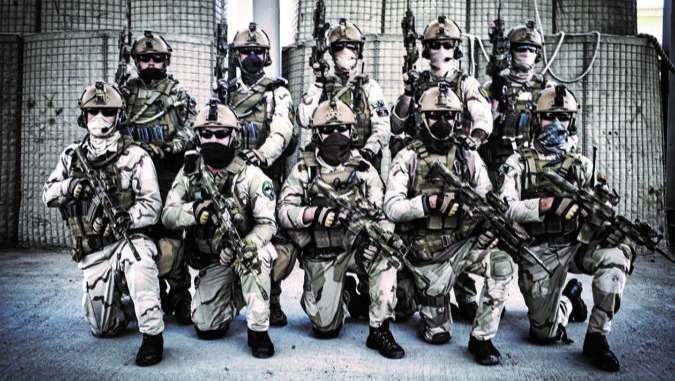
We are the U.S. Mentors previously assigned to the JATC. Most are retired military special forces operators, or federal, state, and local law enforcement who worked side by side with our Afghan counterparts training Afghan national security personnel in support of the war on terror. The Mentors had extensive war zone experience, were well versed in Afghan religious, cultural, and tribal issues, and sensitive to the integration of all these issues with JATC mission requirements.
Our Afghan interpreters worked with Mentors on a daily basis, and were critical to our mission success. Given their higher education, understanding of various tribal practices, and common American habits, they were often in a position to help Mentors avoid situations that had the potential of having life threatening consequences.
Our instructor cadre came from several different Afghan national security forces. These security forces had high public visibility due to the nature of their missions, and it made them most vulnerable to attack or assassination. members of the Taliban, al Qaeda, or the Haqqani Network. The success of their highly dangerous missions were representative of the high level of knowledge, skills, and abilities developed at JATC, and applied in combat and security assignments. U.S. Mentors often trusted them with our lives.
Our Afghan interpreters worked with Mentors on a daily basis, and were critical to our mission success. Given their higher education, understanding of various tribal practices, and common American habits, they were often in a position to help Mentors avoid situations that had the potential of having life threatening consequences.
Our instructor cadre came from several different Afghan national security forces. These security forces had high public visibility due to the nature of their missions, and it made them most vulnerable to attack or assassination. members of the Taliban, al Qaeda, or the Haqqani Network. The success of their highly dangerous missions were representative of the high level of knowledge, skills, and abilities developed at JATC, and applied in combat and security assignments. U.S. Mentors often trusted them with our lives.
JATC Mission:
The U.S. Department of State, Antiterrorism Assistance Program (ATA) was established in Kabul in 2003. It served as a U.S. counterterrorism training facility for various Afghan police and security personnel. With the creation of JATC in 2015, ATA included new Afghan training partners, and the training evolved to include critical tactical and investigative skills.
Throughout the history of the Afghan ATA Program, U.S. instructors and mentors worked very closely with Afghan colleagues. With the transition to JATC, ATA initiated a process of greater inclusion of the Afghan instructor cadre into all aspects of training delivery, with the eventual transition from a US-led JATC to an Afghan-led JATC (with U.S. mentors serving an oversight role), and ultimately taking sole possession of the facility. This evolution continued until the Taliban takeover.
JATC Operational Environment:
Memorandum's of Understanding (MOUs) between the U.S. and Afghanistan governed administrative and operational elements of JATC'S mission. While at JATC, the Afghan instructor cadre were trained, directed, housed, fed, and managed by JATC leadership and mentors. Additional MOUs provided for a performance and tenure-based stipend, paid by JATC.
Though not formally “employed” by the U.S. Embassy, ATA, or JATC, the MOUs called for long term assignments, and JATC operational and administrative authority over the Afghan staff. Command and control mechanisms included a formal chain of command, time and attendance requirements, code of conduct, performance appraisals, leadership training, results-based accountability, gender recognition, a security screening program, and the Professional Development Stipend Program.
Up until the Taliban takeover, the Afghan instructor cadre conducted virtually all phases of ATA training delivery to the standards of the global ATA Program. With only a small U.S. staff, JATC would have been unable to complete its mission without the support of a dedicated, loyal, and technically proficient Afghan instructor cadre. Daily, they worked together with mentors to deliver arguably among the best national security training in Afghanistan.
Up until the Taliban takeover, the Afghan instructor cadre conducted virtually all phases of ATA training delivery to the standards of the global ATA Program. With only a small U.S. staff, JATC would have been unable to complete its mission without the support of a dedicated, loyal, and technically proficient Afghan instructor cadre. Daily, they worked together with mentors to deliver arguably among the best national security training in Afghanistan.
Security/Threat Issues:
The Afghan staff were confronted with threats on a daily basis. They daily commutes were “public,” in that there was public visibility to their daily arrivals and departures onto Afghan government facilities. They always traveled incognito, with no identifying information as to their employment and JATC. Due to fear of disclosure, friends and neighbors were unaware of their profession, and even among families, typically only the wife was aware of their employment.
Over the years, these Afghan instructors helped train tens of thousands of Afghan personnel from various agencies and regions, and were known as critical partners in the fulfillment of the JATC Mission. In addition, JATC gender-inclusion initiatives, including both integrated female staff and students, were considered an anathema to Taliban gender practices.
Over the years, these Afghan instructors helped train tens of thousands of Afghan personnel from various agencies and regions, and were known as critical partners in the fulfillment of the JATC Mission. In addition, JATC gender-inclusion initiatives, including both integrated female staff and students, were considered an anathema to Taliban gender practices.
Over the course of their assignments to JATC, a number of Afghan instructors, interpreters, and staff were identified and threatened by various terrorist groups. Many of them were forced to change their residences, often more than once, and in a few instances, were attacked more than once. Similarly, there were many instances of their children being identified and harassed in school, forcing their parents to remove them from school, change residences, attempt to place them in a new school where they were not previously known, or simply home school them. In many of these occurrences, the children were permanently traumatized, with no hope of mental health support.
Since the Taliban takeover August 15, the personnel files for all Afghan instructors (and other staff) assigned to JATC have been compromised, including personal and professional identifiers, residences, phones, relatives, and in some cases, biometric information. This has led to an increasing number of phone calls and visits by the Taliban to their residences, identifying them as government employees who are required to report to the Taliban. More threatening, they have been identified by the Taliban as security personnel who served in security or combat positions against the Taliban, or as trainers of national security personnel whose mission was to identify, locate, and destroy the Taliban and other terrorist organizations. Consequently, many have sold all their possessions, abandoned their residences, and are moving their families to different locations on a night-to-night basis. More ominously, our group has confirmed that some of our “safe houses” have been compromised and searched by the Taliban, and that neighbors and relatives are being threatened, assaulted, or bribed in an effort to locate our Afghan colleagues. A developing pattern of deception is the Taliban claiming the identities of others, professing friendship or forgiveness, seeking their "return to work," but has been met with public executions.
Their capture, public humiliation, torture, and killing are among the highest of priorities for the Taliban. Our network has confirmed that this priority is ongoing and increasing, and has already resulted in a number of public torture and killings of Afghan students and security personnel connected to JATC, and security forces charged with the defense of Afghanistan.
Their capture, public humiliation, torture, and killing are among the highest of priorities for the Taliban. Our network has confirmed that this priority is ongoing and increasing, and has already resulted in a number of public torture and killings of Afghan students and security personnel connected to JATC, and security forces charged with the defense of Afghanistan.
Next Steps:
1. Help safeguard those team members and families (over 400) left behind until viable exit strategies can be realized.
2. Continue to identify and pursue opportunities for effective collaboration with other organizations with similar interests, leveraging our strengths and assets with theirs.
3. Maintain a disciplined but relentless pursuit of awareness and understanding of the 1) ever-changing Special Immigrant Visa Program requirements to help our interpreters, and 2) the complex U.S. Refugee Admissions Program requirements to effectively promote our instructor cadre qualifications as "at risk" candidates "by virtue of their circumstances," and nature and scope of their job and contractual relationship with JATC as a "government funded (USDS/ATA) project or cooperative agreement," with an apparent "need for resettlement." A successful argument for their refugee program qualifications is critical due to the uniqueness of this ATA Program which handicaps easy categorization.
4. Upon successful exit from Afghanistan, support ongoing travel to help ensure their safe arrival in the U.S.
Rafik - Friends of Afghans welcomes the opportunity to discuss the above information and provide additional information to support our assertion that these loyal and dedicated group of Afghan national security partners deserve our full support in their rescue, recovery, and resettlement.