- G
- S
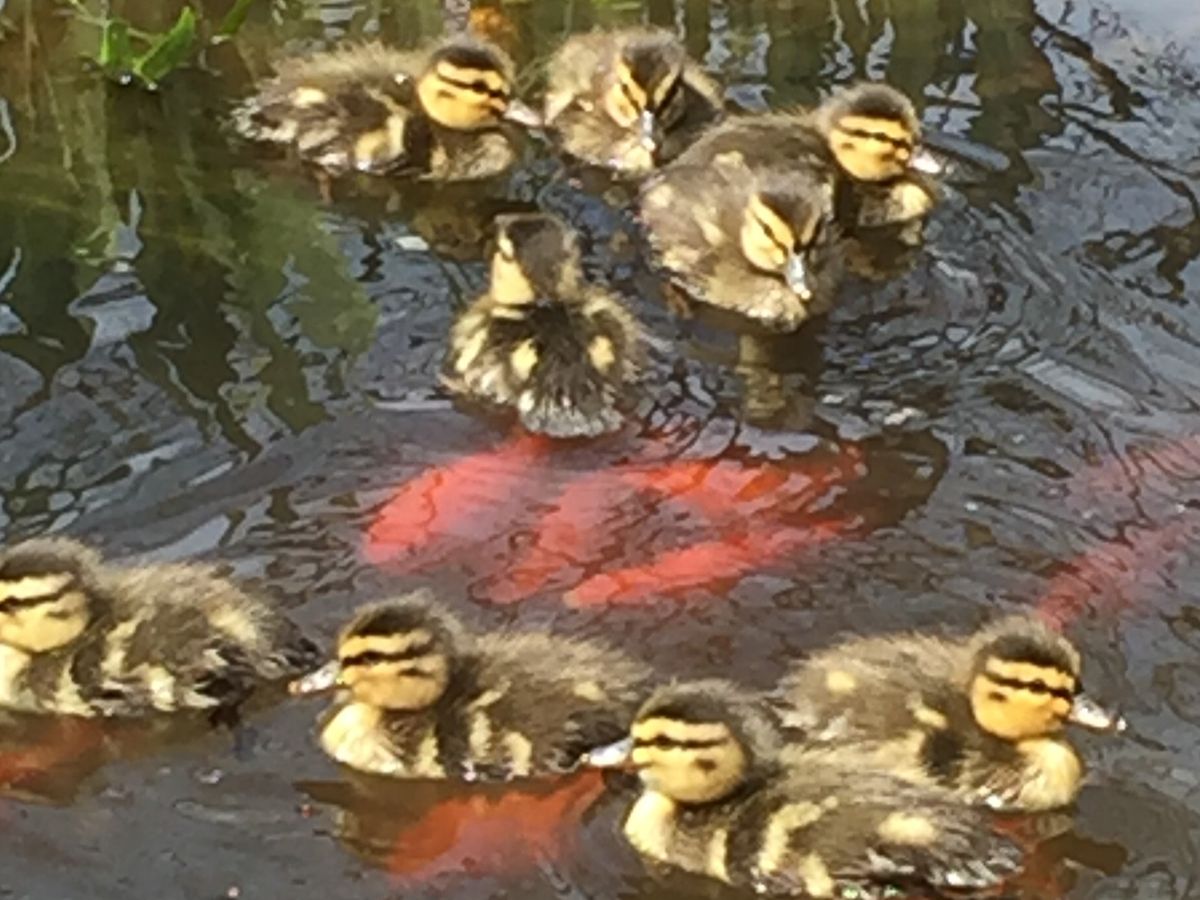
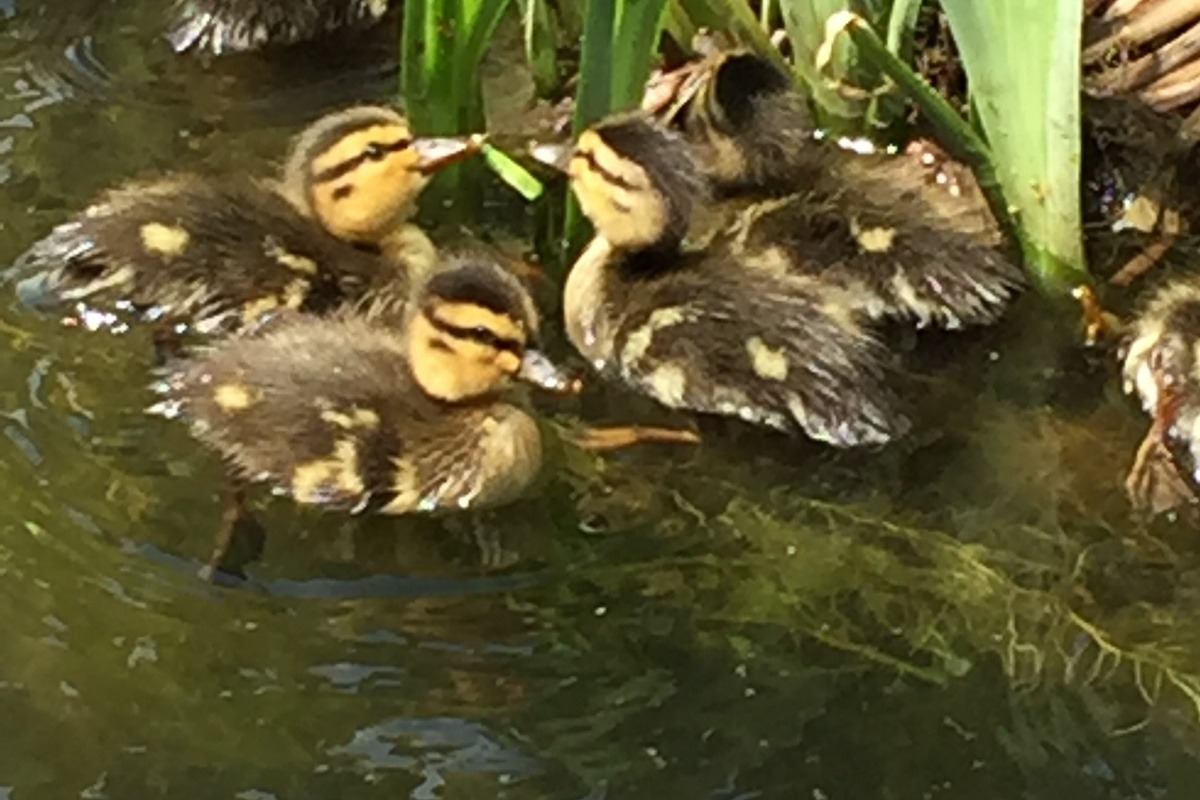
Who Doesn't Love Mallard Ducklings? Each spring these little wild balls of downy fluff delight us all. But the ducklings at Lily Pond in Battery Park City need our help or they will not survive. When these babies hatched four weeks ago, we stepped up to help. Now we need your help to complete the job. Your contribution will help us to purchase the nutritionally balanced food these ducklings need as they grow over the next four weeks, a crucial part of their development. It will also provide much needed funds for our public education campaign, and ensure that we are stocked for the next brood of ducklings that is likely to arrive in early July. The ducklings that hatch at Lily Pond deserve a fighting chance. It is an unusual situation, as we describe below, but the solution is easy. We hope you will support our cause and help us to protect the wild ducklings at Lily Pond.
The Back Story
Wetlands are the natural habitat for mallard ducks. But in most of Manhattan we have eliminated wetlands as we built up our city. Even so, these smart and resilient animals have found ways to adapt to our city landscape by building their nests in gardens, on rooftops, and of course, Lily Pond. This man-made pond offers them fresh water, a variety of nesting spots, raised mounds for the ducklings to rest and sleep, in essence, everything a pair of mating ducks would look for when they choose a place to raise their young. But there is one big problem.
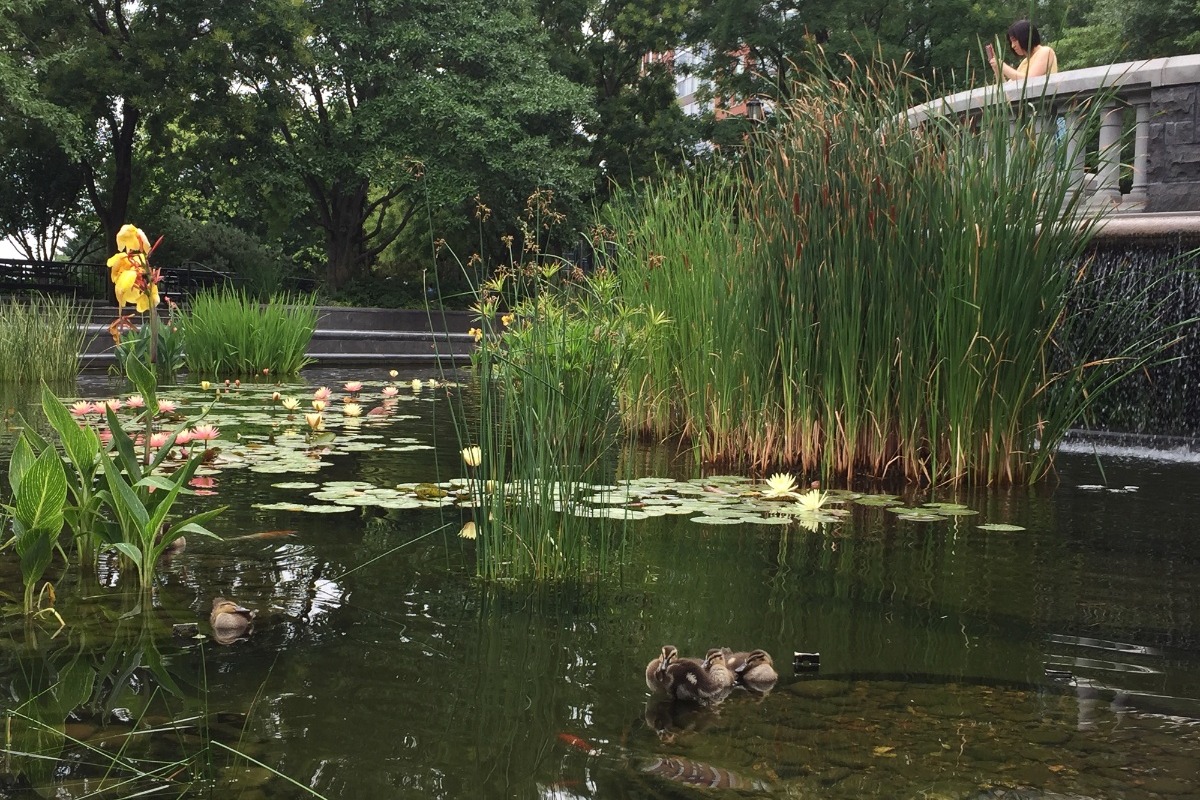
The Battery Park City Authority created this beautiful man-made pond withlovely water plants and a delightful water fall which attracts humans and wildlife alike.
That problem is that once the eggs hatch, this enclosed little paradise does not have enough food for a brood of growing ducklings, and so they need a little from us humans until they are able to fly off on their own - eight weeks to be exact. For years we have been trying to work with the Battery Park City Authority (BPCA) to help us create a viable and sustainable long-term solution to protect the ducklings that hatch in Lily Pond each spring, but they are unwilling to help.
Instead, they built the ramp shown below - bad news for the ducklings - because if they leave the safety of their pond habitat they will face life-threatening dangers. The Hudson River, which lies about 30 feet away, is a deathtrap for these little ducklings and BPCA knows this because we have had many discussions with them about these dangers. Despite this understanding, they went ahead and did it anyway.
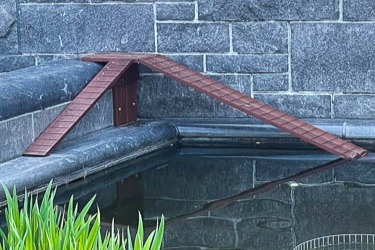
THE BPCA RAMP:This ramp leads the ducklings to many dangers, including the Hudson River and a busy
promenade with bicycles, skateboarders, runners, and many dogs.
Why is the Hudson River so Deadly?
You might be wondering why the Hudson is so dangerous to young ducklings. It is quite simple really. A normal river has a river bank, and mallard ducklings or other wildlife can easily get in and out, find food in the shallow areas, and seek much needed shelter on dry land. But in this part of the Hudson River there is no river bank, no wetlands, no place for tiny ducklings to rest, sleep, dry off, or get warm, and little to no available food. Here, as you cans see from the picture below, the river is held back by a huge retaining wall. On one side of that wall is Battery Park City, the promenade, and Lily Pond. On the other side of that wall is an open expanse of deep, tidal water. If young ducklings enter the river they will either die from hypothermia or drown, because their downy feathers are not
waterproof and provide NO insulation.
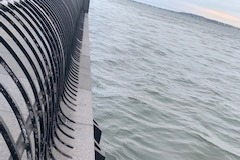
The deep open water of the Hudson River that awaits them on the other side of the pond.There is no river bank, nothing for the ducklings to roost on, nowhere for them to get dry , warm,no shallow areas for them to get get
dry and war, or to rest and sleep.
Your Contribution Supports The Life Saving Work of Our Group: BPC Duckling Watch
With your support we can continue to purchase food, monitor their health, and expand our free pubic education campaign. Not just for these little guys, but for future broods - usually there are two 'sets' of ducklings that grace our pond each season and they come back to nest every single year!
We have printed and distributed hundreds of colorful, information-packed pamphlets to the pond's visitors, many of whom live in the surrounding areas, but also many tourists and visitors from other parts of Manhattan and the outer boroughs. By educating the public we can ensure that these and future ducklings will thrive, safely, year after year, while providing ourselves and our children with joy, delight, and wonder.
Ducks, like sea turtles, come back to the areas where they first hatched. That is why it is so important that the duck-loving community in BPC learn how they can be the stewards of these beautiful animals. But we cannot do it without your help. Please support our ongoing work.
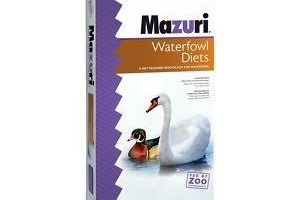
This is the food we buy: Mazuri Water Fowl Starter food is made of tiny pellets .At about 4 weeks of age we transition them to the adult maintenance food. Like puppiesand kittens, duckling's nutritional needs change as they grow. We also supplement with fresh (unsalted) or defrosted peas which they love!
Your Support Matters!
We are reaching out to you, the animal loving community, to help us bear these costs as we will not stop until BPCA agrees to a plan that makes sense both ecologically and ethically. We have proposed a number of viable solutions, but have been met with nothing but resistance despite the promise of collaboration. The reality is that there is no collaboration, and so we do what we must to ensure the safety and well-being of our mallard ducklings until they are able to take flight in eight weeks.
We Will Not Give Up: Our Voice is Their Voice
Our relentless effort to protect and save these little animals from death requires the expenditure of hundreds of dollars, the investment of hundreds of man-ours, and a whole lot of emotional wear and tear. We purchase large quantities of special duckling food, train an entire corps of volunteers, coordinate busy schedules so that we can continually monitor the pond to ensure the safety of the ducklings, maintain a feeding schedule based on the ducklings changing nutritional needs, design, print and distribute hundreds of informational fliers to pond visitors, and educate the public about these beautiful and delightful animals. We have also reached out to other urban wildlife specialists to learn what effective protocols they are implementing in their cities, and we continue to pressure BPCA to act ethically and responsibly. The bottom line is this: If we do not take this upon ourselves, these vulnerable animals will die. It is just that simple. And it is inexcusable.
What Does BPCA Refuse to Remove the Ramp?
BPCA insists that they love the ducklings and want them to survive, but their actions are contrary to their words. Despite many emails and phone calls, detailed explanation about the biology and ecology of duckings, the dangers these ducklings face if they leave prematurely, and the death of ducklings that ended up in the river due to human intervention in past years, they simply refuse to remove the ramp. "We understand what you are saying," they say, "but we just cannot get our heads around interfering with wildlife". In other words, if the ducklings leave the pond using the ramp (it is the only way young duckling can get out because the lip of the pond is too high for them to jump) and if they inadvertently end up in the river where they will die, so be it. The Department of Environmental Conservation policy, they say, is to not interfere. This, to their way of thinking, does not qualify as interfering.
We Do Not Agree
BPCA has already interfered with the natural movement of the ducks by destroying their habitat, building a beautiful, lush, artificial pond that is a perfect nesting place for mallard ducks, and then refusing to take ownership or responsibility for the wildlife they displaced to begin with.
In other areas of the city that face these same issues, authorities act responsibly. The mallard ducks who nest in NYC are very good at finding safe sites to lay and incubate their eggs: green rooftops, landscaped swimming pools, gardens, terrace planters, and the list goes on. But while these sites may be great for a nest, they prove less than ideal when the duckling hatch. The mother needs to get her babies to a source of fresh water in about 10 hours. Unless she is in a park or other environment with a suitable water source she must navigate taxis, busses, trucks, bikes, pedestrians, dogs, road construction, and a million other things, just to lead her ducklings to water!
Heartwarming feel-good stories about park rangers or NYPD leading ducklings out of danger almost always make the local news. Why is that? Because it is heartbreaking to see wildlife caught in the chaos of our city life. No wonder we breathe a sigh of relief when we see officers step up to help them. It makes us feel good, and it should, because we have taken so much away from them to live our city lives. Here is one of those recent stories:
Our story is a feed good story too. The only difference is that we don't have to lead them to safety...we just have to keep them where they already are, with everything they need, until they are old enough to fly off on their own. A mere eight weeks.
So why does BPCA insist that keeping our ducklings within the confines of the pond constitutes 'interference'? We can only speculate. To us, the ramp that leads these young and vulnerable animals to danger is the real interference. They don't see it that way, but we do.
How Long Do We Need to Supplement Their Food in the Pond?
While the pond does have everything these ducklings need, including vegetation, there is not enough to sustain them in this enclosure as they grow. As a result, we need to supplement their food source, but just until they can fly, in about eight weeks. At that point, the river no longer poses any danger to them and they can fly off as they please to explore other food sources. We wean them off the food by reducing the number of feedings, and soon they become self sufficient.
During mild winters when the waters do not freeze they may not migrate. But they are never at the pond in the winter. It completely freezes over and all the vegetation dies. It is not until the spring, usually at the end of March, that a lucky pair of mated mallards claims the pond for their new nest and the cycle begins again. Sometimes, there is a second female who makes a nest in July after the first group is gone. But by the end of September, or when they reach their eighth week, we say goodbye.
Is Feeding the Ducklings A Problem?
The ducks, like any animal, take advantage of easy meals, but they are perfectly capable of foraging on their own, and do so naturally in the pond. The concern that the ducks will become dependent on humans does not seem to be an issue here. In our experience over the past four years that has never become a problem. The real issue is that people feed ducks bread, crackers, popcorn, chips, and they do it all day long. This is dangerous for ducklings as it fills them up and is loaded with sugar. It's like feeding kids snacks all day, and then they are not hungry for nutritious meals. When we talk to people and explain to them that bread and other human snack food can actually cause ducklings to have nutritional problems they are very grateful for the information. Education works, and it would be better, in our view, to put up informative signs that tell people what NOT not to feed, rather than a blanket 'Do Not Feed' message. Here is one we found with a quick internet search created by a Parks and Recreation Department. It doesn't encourage feeding, but at least it provides useful information.
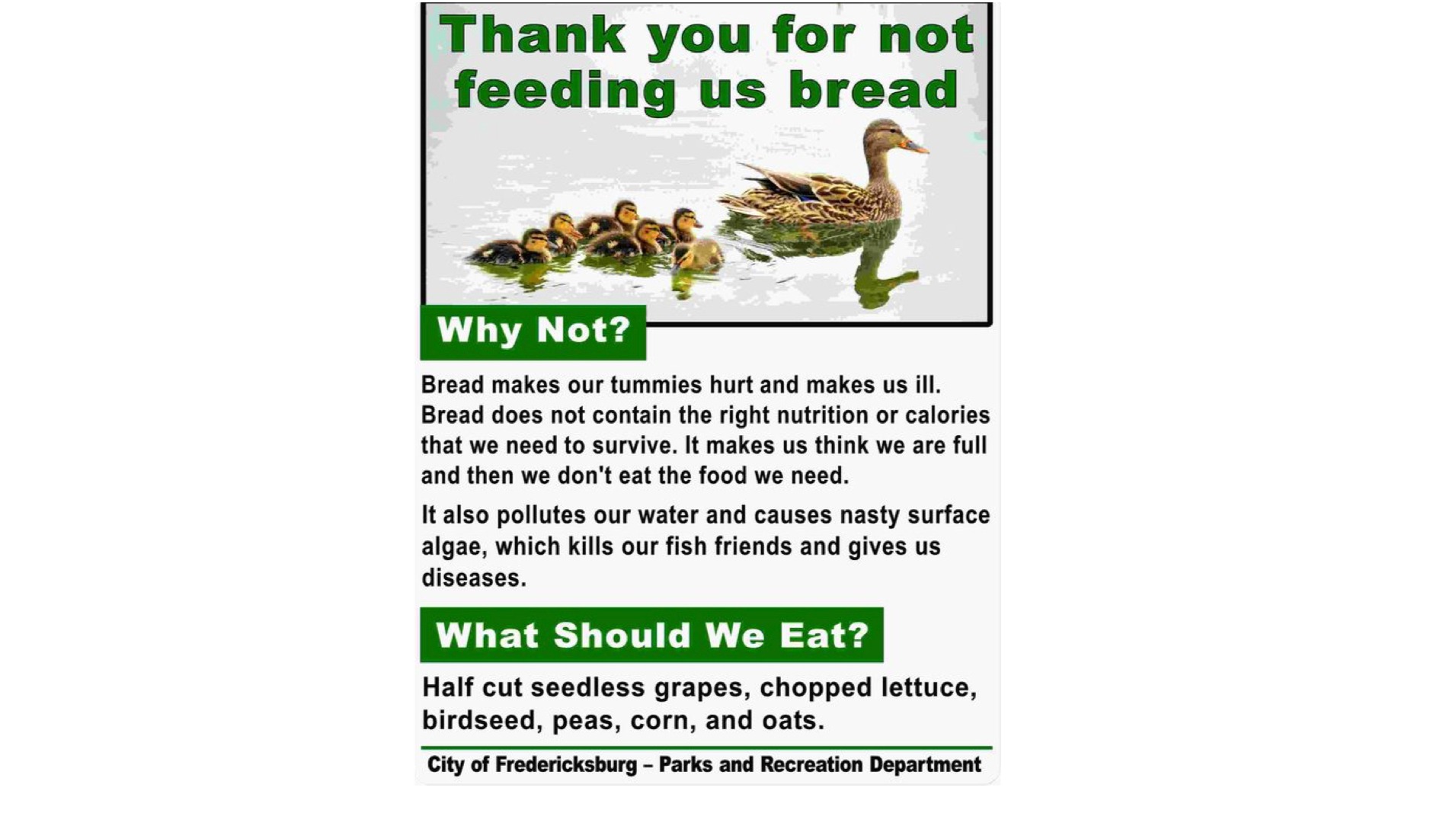
But if BPCA feels that strongly about not feeding wildlife, then they need to to come up with a plan. Facilitating their premature departure into dangerous waters is not ethical, and completely inhumane.
Our Duckling Education Campaign is very successful and there is no reason to think that the public cannot or will not oblige. Proper signage would help, and we are trying to work with BPCA to modify the signs. But they are resistant to any and all of our suggestions and options, and will not consider anything other than what they have already done: the installation of a ramp that can only lead these ducklings to harm.
How Do We Know All This? What Credentials Do We Have?
Our group's founder who is herself a NYS Licensed Wildlife Rehabber with an advanced degree in Conservation Biology, has been in the forefront of wildlife education for over 30 years. She understands, and agrees, as do all the members of our group, that in most situations it is best to leave wildlife alone, unless, of course, they are in trouble. Therefore this situation calls for a different approach. Duck experts with whom she has spoken, including professors, researchers, and those who work in wildlife organizations, confirm that the conditions as described in this part of the Hudson are not survivable for such young ducklings. Even the DEC does not dispute that fact.
We Will Do What is Right for Our Ducklings
As with most community advocacy work, this is volunteer-run, and it is an exhausting endeavor due to the nature of the work and the resistance we face by BPCA. But we will not give up. Someone has to stand up and speak out for our urban wildlife. Big NGO's do this on a national or global scale. But if we, the local community residents don't speak up and be the voices for the wildlife in our neighborhoods and in our city, who else is going to do it? They deserve a fighting chance.
We hope that you will support our work and that you too will act on behalf of the ducks and ducklings that still call NYC home.
Please visit us on facebook at
https://www.facebook.com/BPCwidlife
Thanks so much!