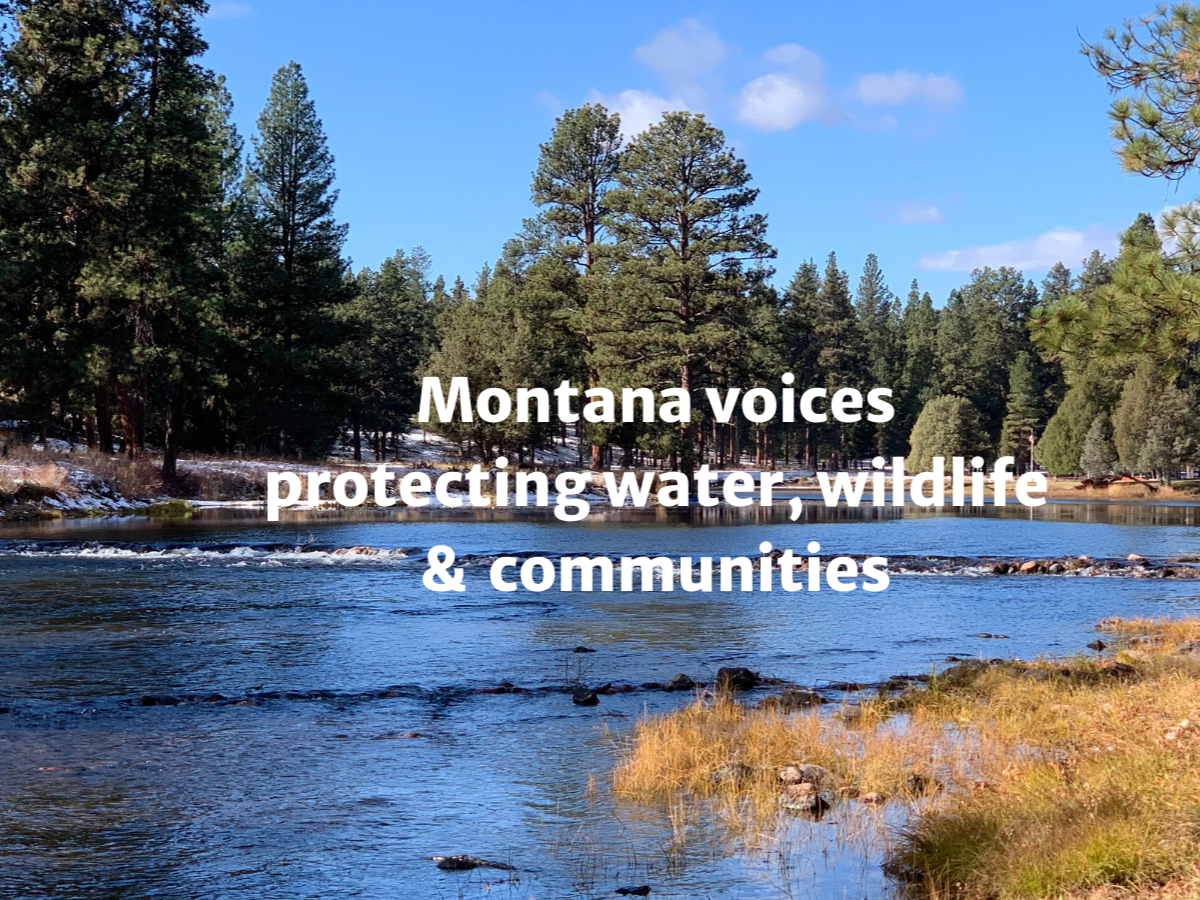
Help protect Montana's water, wildlife & communities
0% complete
$173,955 raised of $230K
16 donations


Protecting What Makes Montana Home
Protect the Clearwater is dedicated to protecting Montana’s people, waterways, wildlife, and ecosystems from the growing environmental risks of expedited opencut gravel mining. We work to ensure that permitting decisions are transparent, grounded in sound science, and accountable to the people and places affected.
Across Montana, gravel mining permits are being approved at alarming speed, often without adequate review of long-term environmental and community impacts. The result is increased risk to groundwater and surface water, fragmented wildlife habitat, and permanent changes to rural landscapes—while neighboring landowners and downstream communities shoulder the consequences.
A Case That Reveals the Risks
Protect the Clearwater is currently challenging an opencut permit approved in Missoula County that exemplifies these concerns. In April 2023, the Montana Department of Environmental Quality (DEQ) approved a 21-acre opencut gravel mine and asphalt plant in a critical wildlife migration corridor, approximately 1,300 feet uphill from the Clearwater River and directly bordering the Blackfoot Clearwater Wildlife Management Area.
The site is located three miles north of Clearwater Junction on public land managed by the Department of Natural Resources and Conservation (DNRC). It lies within an area designated Resource Protection 1 under the Seeley Lake Regional Plan adopted by the Missoula County Board of County Commissioners in 2010. Despite these protections, Clearwater-State opencut permit #3473 authorizes gravel mining 24 hours a day, 365 days a year, through 2040.
What the Permitting Process Missed
This permit was approved in just 35 days. Montana’s opencut mining laws do not require analysis of groundwater quality or quantity, nor do they allow DEQ to consider impacts to property values, zoning conflicts, noise, visual impacts, or hours of operation.
In this case, DEQ relied largely on assurances from the mining company that water resources would not be affected. No stormwater management plan was submitted. The agency did not evaluate the implications of storing 5,000 cubic yards of asphalt on site. No public meetings were held, even after neighboring landowners requested them.
DEQ’s Environmental Assessment stated that no impacts to surface water or groundwater were anticipated, based on certifications from the applicant. However, during court proceedings, the applicant acknowledged that no groundwater analysis had been conducted prior to submitting the permit application. Only three 14-foot test holes were dug for an excavation approved to reach 20 feet.
Why We Advocate
This experience highlights systemic gaps that place Montana’s waters, wildlife corridors, and communities at risk. Protect the Clearwater exists to close those gaps—by elevating public voices, demanding rigorous scientific review, and holding government agencies accountable to their responsibility to protect the public interest.
Support the Work
Protecting Montana’s waters and wildlife takes persistence—and resources. Your donation directly supports our efforts to challenge flawed permits, demand rigorous scientific review, and hold government agencies accountable. With your help, we can defend clean water, intact wildlife corridors, and the communities that depend on them.
Be the Change – Donate Now: Please consider making a donation to our cause through one of the options below. Every dollar counts, and your support will enable us to continue the fight against environmentally destructive practices in Montana.
Additionally, sharing this message with your friends, family, and anyone who shares our commitment to safeguarding the future of Montana will amplify our collective impact.
Organizer
Protect the Clearwater
Beneficiary