-English and Spanish below-
Hey Ihr :)
--------------------------------------------
Vorerst ein Link zu nem Album voller Pico-content:
Ganz unten habe ich einen Link mit den Befunden
-------------------------
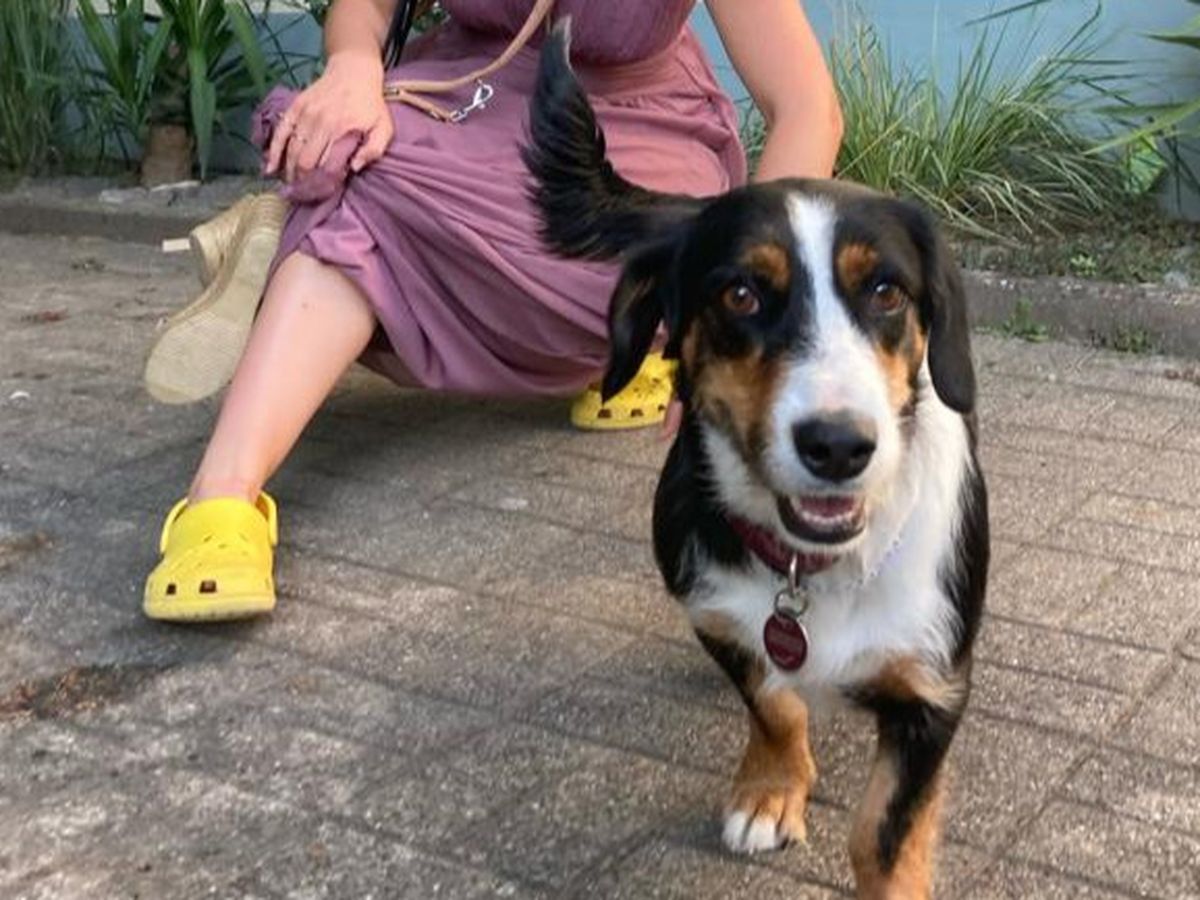
Ich bin Anna, die "Besitzerin" von Pico.
Mir fällt das hier ehrlich gesagt gar nicht leicht, da ich sehr ungern um Geld anderer Menschen bitte. Aber ich freue mich wirklich zutiefst über jeden gespendeten Beitrag, da es jetzt um meine Wursti geht.
Ich habe Pico aus Spanien, als ich dort ERASMUS gemacht habe. Ab und zu war ich dort mit den Tierheimhunden Gassi und hab ihn da im November 22 gesehen und wusste direkt, dass das nur ein Dreamteam werden kann.
Er hat schon so einige tolle Erfahrungen gehabt, angefangen mit der Reise nach Deutschland: er war Beifahrer bei einem unglaublich netten und tierlieben LKW-Fahrer. Angekommen in meiner Heimat, musste er erstmal die Furcht vor so fast allem ablegen. Er taute aber sehr schnell auf und so wurde er schon bald ein richtiger Studentenhund. Sein Motto lautet: Je mehr Menschen desto besser, er liebt sie einfach :)
Wir waren immer viel wandern, und er machte nie den Anschein, als hätte er Schmerzen. Aber er wurde zunehmend schmerzempfindlicher, sobald Gewicht auf seiner Hüfte lastete (Sprung, Raufen mit anderen Hunden). Daraufhin ging ich im November 2023 zur Tierklinik, um das doch mal abklären zu lassen. Bis dahin war alles fein, die Hunde OP und Krankenversicherung zahlte alle Rechnungen. Dann wurde ein Röntgen unter Narkose gemacht, da er bei jeglichen Tests (Schubladentest etc) deutliche und starke Schmerzen zeigte.
Beim Auswerten der Röntgenbilder traf die Ärztin und mich der Schlag.
Ein knapp zweijähriger Hund mit HD und Arthrose, ED, Radius curvus, Carpus valgus und als Nebenbefund eine Patellaluxation nach lateral.
Ich ging davon aus, dass die Versicherung alles übernehmen würde, schließlich zahlt man auch einen ordentlichen Beitrag. Leider sind nur die HD, ED im ersten Versicherungsjahr ausgeschlossen, und dieses hätte im März 2024 geendet (ich bekam Pico im März 2023 und habe direkt eine Kranken-, als auch OP-Versicherung abgeschlossen). Somit muss ich nun enttäuschenderweise alle Kosten selbst tragen, da alle bis dato diagnostizierten Erkrankungen in Zukunft in der Versicherung ausgeschlossen sind, und ein Versicherungswechsel mit Vorerkrankungen natürlich auch nichts bringt. Da ich Tiermedizin studiere, bekomme ich netterweise ein Rabatt, trotzdem belaufen sich die Kosten, die in den nächsten 2-3 Jahren anstehen (Hüfte und Ellbogen) auf mindestens 13.000 Euro (wenn ich einen vergünstigten Tarif berechnet bekomme). Leider endet die Reise noch nicht mit der OP, da das wichtigste für eine gute Ausheilung und Besserung die OP-Nachsorge ist. Dementsprechend werde ich noch einiges an Physiokosten bezahlen müssen und die Gesamtkosten belaufen sich auf mindestens 15.000 Euro.
Ich arbeite nebenbei und bekomme den Höchstsatz an BAFÖG, aber trotzdem kann ich monatlich leider nur 500 EUR beiseitelegen. Ich würde gerne mehr Arbeiten, aber ungünstigerweise ist dies wegen des BAFÖGs nicht möglich (Einkommensgrenze monatlich bei 520EUR). Ich versuche natürlich trotzdem so viel Geld wie möglich selbst anzuscheffeln aber ich bin leider trotzdem auf externe Hilfe angewiesen und freue mich wirklich riesig über jeden Euro der ankommt. :)
Nun einmal zu den Diagnosen für die nicht Tiermedizin-Studierende :)
HD: ausgeschrieben heißt es Hüftdysplasie, also sozusagen, dass die Gelenkpfanne zu klein oder zu wenig tief ist, sodass der Oberschenkelknochenkopf darin keinen Halt findet. Manche Hunde können super damit leben ohne Schmerzen - andere wie Pico nicht.
ED: Ellbogendysplasie genau das gleiche mit anderen Knochenpunkten nur am Ellbogen
Radius curvus: Durch Traumata oder Fehlernährung kommt es zu einem verfrühten Schluss der Wachstumsfuge von der Elle. Da beide Unterarmknochen auf ein paralleles Wachstum angewiesen sind, kommt es durch den Schluss einer Wachstumsfuge zu einer Störung: Der Radius (Speiche) wächst weiter, wird jedoch von der stagnierenden Ulna (Elle) in einen Bogen gezogen (Radius curvus). Als eine Folge dieser Achsenabweichung folgt auch die Vorderfußwurzel (Carpus) der Wachstumsbewegung und dreht sich sowie die Pfote nach außen (Carpus valgus). Auch das zusammengesetzte Ellbogengelenk kann negativ beeinflusst werden, wodurch eine Subluxation des Ellbogengelenks und eine Stufenbildung im Gelenk entstehen kann. Ursächlich für den Radius curvus ist bei Pico beides denkbar, ich bezweifle, dass er im Tierheim adäquates Welpenfutter bekommen hat (soll natürlich kein Vorwurf sein) oder eben der Unfall, da er neben einer Bundesstraße in Spanien irgendwo im Nirgendwo gefunden wurde. Der Radius curvus bedingt bei ihm die ED sowie den Carpus valgus.
Carpus valgus: Wird auch Dackelsyndrom genannt, das sind wie beim Menschen X-Beine. Durch die OP an den Vorderbeinen könnte man dies eventuell wieder beheben, genauso wie die ED und den Radius curvus (steht aber erst in 1 1/2 Jahren an)
Von klinischer Bedeutung ist seine Hüfte, da er hier einen Leidensdruck durch die Schmerzen hat. Hierzu habe ich einen Link eingestellt, bei der Klinik, wo ich es operieren lasse:
Nun fragt ihr euch bestimmt, ob eine OP sein muss. Ich habe mir genau dieselbe Frage gestellt, hab deshalb jegliche Kommiliton*innen (Mitstudierende) gefragt, bekannte Tierärzt*innen und 3 verschiedene Tierkliniken und Praxen konsultiert. Pico lahmt zwar nicht, hat aber solche Schmerzen mit nur knapp 2 Jahren, dass durch konservative Arbeit wie Physiotherapie und Akupunktur eine rasche Verschlechterung der Arthrose zwar verhindert werden kann, man ihn aber früher oder später operieren muss.
Durch die Kunsthüfte wird dies eine lebenslange Lösung für Pico sein und ihm ein Hüft-schmerzfreies Leben langfristig ermöglichen.
Die Befunde sowie Röntgenbilder kann ich auf dieser Website leider nicht anhängen, aber ich habe einen Link zu Google Drive erstellt:
Sobald der Kostenvoranschlag ankommt, werde ich diesen auch noch beifügen :)
Da die OP auch an meinen Kräften zehren wird- mental als auch zeitlich- werde ich die OP Anfang April angehen, wenn ich wirklich intensiv Zeit für Pico habe. Davor habe ich eine relativ intensive Lernphase, sodass ich mich nicht adäquat um die OP Nachversorgung kümmern könnte.
Danke euch allen, ich bin total überwältigt!
English version
Hey you :)
----------
For now a link to an album full of pico-content:
At the bottom I have a link with the findings
-------------------------
I am Anna, the owner of Pico.
To be honest, this is not easy for me because I don't like asking for other people's money.
But now it's about my Wursti. I got Pico from Spain when I was doing ERASMUS there. I used to walk the shelter dogs there from time to time and saw him there and knew that they could only be a dream team - which turned out to be true.
He has already had some great experiences, starting with the journey to Germany - he was a passenger with an incredibly nice and animal-loving truck driver. When he arrived, he first had to overcome his fear of almost everything. However, he thawed out very quickly and soon became a real student dog. His motto is: the more people the better, he just loves the two-footed ones :)
Well, the months went by and I noticed more and more sensitivity to pain in his hip. We always went hiking a lot and he never seemed to be in pain. Nevertheless, I went to the vet clinic in November 2023 to have it checked out. Until then, everything was fine, the dog's surgery and health insurance paid all the bills. Then an X-ray was taken under anesthesia, as he showed clear and severe pain in all tests (drawer test, etc.).
When the x-rays were analyzed, the doctor and I were shocked.
An almost two-year-old dog with HD and osteoarthritis, ED, radius curvus, carpus valgus and, as a secondary finding, a lateral luxation of the patella.
I assumed that the insurance would cover everything, after all, you pay a decent premium. Unfortunately, only HD and ED are excluded in the first insurance year, which would have ended in March 2024 (I got Pico in March 2023 and took out health and surgery insurance straight away). Disappointingly, I now have to bear all the costs myself, as all illnesses diagnosed to date will be excluded from the insurance in future, and of course changing insurance with pre-existing conditions won't help either. As I'm studying veterinary medicine, I'm kindly getting a discount, but the costs that will be incurred over the next 2-3 years (hip and elbow) still amount to at least 13,000 euros (if I'm charged a reduced rate). Unfortunately, the journey doesn't end with the operation, as the most important thing for good healing and recovery is the post-operative care. Accordingly, I will still have to pay some physiotherapy costs and the total costs will amount to at least 15,000 euros.
I work part-time and receive the maximum of financial help by the government, but unfortunately I can only put aside EUR 500 per month. I would like to work more, but unfortunately this is not possible because of the BAFÖG (monthly income limit of EUR 520). Of course, I'm still trying to raise as much money as possible myself, but unfortunately I'm still dependent on external help and I'm really happy about every euro that arrives. :)
Now to the diagnoses for the non-veterinary students :)
HD: the full name is hip dysplasia, which means that the socket is too small or too shallow, so that the head of the femur cannot find support in it. Some dogs can live with this without pain - others like Pico cannot.
ED: Elbow dysplasia exactly the same with other bone points only at the elbow
Radius curvus: Trauma or malnutrition leads to premature closure of the growth plate of the ulna. As both forearm bones are dependent on parallel growth, the closure of a growth plate leads to a disruption: the radius (radius) continues to grow, but is pulled into an arc by the stagnant ulna (ulna) (radius curvus). As a result of this axial deviation, the carpus also follows the growth movement and turns outwards, as does the paw (carpus valgus). The compound elbow joint can also be negatively affected, resulting in a subluxation of the elbow joint and a step formation in the joint. In Pico's case, both are possible causes for the radius curvus, I doubt that he was given adequate puppy food at the shelter (not to be blamed, of course) or the accident could also be because he was found somewhere in the middle of nowhere next to a main road in Spain. The radius curvus causes his ED and carpus valgus.
Carpus valgus: Also called dachshund syndrome, these are knock-knees like in humans. Surgery on the front legs could possibly correct this, as well as the ED and the radius curvus (but this is not due for another 1 1/2 years)
His hip is of clinical importance, as he is suffering from pain here. I have posted a link to the clinic where I am having the operation:
Now you're probably wondering whether an operation is necessary. I asked myself exactly the same question, so I asked all my fellow students, consulted well-known vets and 3 different veterinary clinics and practices. Although Pico is not lame, he is in so much pain at only 2 years old that conservative treatment such as physiotherapy and acupuncture can prevent a rapid worsening of the osteoarthritis, but sooner or later he will have to be operated on. The artificial hip will be a lifelong solution for Pico and will enable him to live a hip-pain-free life in the long term.
Unfortunately, I can't attach the findings and x-rays on this website, but I have created a link to Google Drive:
As soon as the cost estimate arrives, I will also attach it :)
As the operation will also drain my strength - both mentally and in terms of time - I will tackle the operation at the beginning of April, when I really have a lot of time for Pico. Before that, I have a relatively intensive learning phase, so I won't be able to adequately take care of the post-op care.
Versión española
Hola :)
----------
De momento un enlace a un álbum lleno de pico-contenidos:
Al final tengo un enlace con las conclusiones
-------------------------
Soy Anna, la propietaria de Pico.
Para ser honesta, esto no es fácil para mí, ya que no me gusta pedir el dinero de otras personas.
Pero ahora se trata de mi Wursti. Me trajeron a Pico de España cuando estaba haciendo Erasmus allí. Solía pasear a los perros del refugio de vez en cuando y le vi allí y supe que sólo podían ser un equipo de ensueño, lo que resultó ser cierto.
Ya ha vivido grandes experiencias, empezando por el viaje a Alemania: iba de pasajero con un camionero increíblemente amable y amante de los animales. Cuando llegó, primero tuvo que superar su miedo a casi todo. Sin embargo, se descongeló rápidamente y pronto se convirtió en un auténtico perro estudiante. Su lema es: cuanta más gente mejor, le encantan los bípedos :)
Pues bien, pasaron los meses y cada vez noté más sensibilidad al dolor en su cadera. Solíamos ir mucho de excursión y nunca parecía tener dolor. No obstante, en noviembre de 2023 fui a la clínica veterinaria para que lo revisaran. Hasta entonces todo iba bien, el seguro médico y quirúrgico del perro pagaba todas las facturas. Entonces se le hizo una radiografía bajo anestesia, ya que mostraba un dolor claro y severo en todas las pruebas (prueba del cajón, etc.).
Cuando se analizaron las radiografías, el médico y yo nos quedamos de piedra.
Un perro de casi dos años con EH y artrosis, DE, radio curvo, carpo valgo y, como hallazgo secundario, una luxación lateral de la rótula.
Supuse que el seguro lo cubriría todo, al fin y al cabo, se paga una prima decente. Desgraciadamente, sólo la EH y la DE están excluidas en el primer año de seguro, que habría terminado en marzo de 2024 (me dieron a Pico en marzo de 2023 y contraté el seguro médico y quirúrgico enseguida). Lamentablemente, ahora tengo que correr yo con todos los gastos, ya que todas las enfermedades diagnosticadas hasta la fecha quedarán excluidas del seguro en el futuro y, por supuesto, cambiar de seguro con enfermedades preexistentes tampoco ayudará. Como estoy estudiando veterinaria, amablemente me hacen un descuento, pero los gastos que se producirán en los próximos 2-3 años (cadera y codo) siguen ascendiendo a 13.000 euros como mínimo (si me hacen un descuento). Por desgracia, el viaje no termina con la operación, ya que lo más importante para una buena curación y recuperación son los cuidados postoperatorios. Por consiguiente, aún tendré que pagar algunos gastos de fisioterapia y los gastos totales ascenderán al menos a 15.000 euros.
Trabajo a tiempo parcial y recibo la prestación máxima de un ayudo del gobierne para estudiantes (BAFÖG), pero por desgracia solo puedo ahorrar 500 euros al mes. Me gustaría trabajar más, pero desgraciadamente no es posible debido a la BAFÖG (límite de ingresos mensuales de 520 EUR). Por supuesto, sigo intentando reunir todo el dinero posible por mi cuenta, pero por desgracia sigo dependiendo de la ayuda externa y me alegro mucho de cada euro que llega. :)
Pasemos ahora a los diagnósticos para los no estudiantes de veterinaria :)
EH: el nombre completo es displasia de cadera, lo que significa que la cavidad es demasiado pequeña o poco profunda, de modo que la cabeza del fémur no puede encontrar apoyo en ella. Algunos perros pueden vivir con esto sin dolor - otros como Pico no pueden.
ED: Displasia de codo exactamente igual con diferentes puntos óseos sólo en el codo.
Curvatura del radio: Un traumatismo o malnutrición provoca el cierre prematuro del cartílago de crecimiento del cúbito. Como ambos huesos del antebrazo dependen de un crecimiento paralelo, el cierre de un cartílago de crecimiento provoca una alteración: el radio (radius) sigue creciendo, pero es arrastrado en arco por el cúbito (ulna) estancado (radio curvus). Como consecuencia de esta desviación axial, el carpo también sigue el movimiento de crecimiento y gira hacia fuera, al igual que la pata (carpo valgo). La articulación compuesta del codo también puede verse afectada negativamente, dando lugar a una subluxación de la articulación del codo y a la formación de un escalón en la articulación. En el caso de Pico, ambas son causas concebibles para la curvatura del radio; dudo que le dieran comida adecuada para cachorros en el refugio de animales (no se le puede culpar, por supuesto) o el accidente también podría deberse a que lo encontraron en medio de la nada junto a una carretera principal en España. El radio curvus causa su DE y el carpo valgo. Fuente: https://fuerdeintier.de/krankheitslexikon/radius-curvus-short-ulna-syndrom-carpus-valgus
Carpus valgus: También llamado síndrome del perro salchicha, son rodillas valgas como en los humanos. La cirugía en las patas delanteras podría corregir esto, así como el ED y la curvatura del radio (pero esto no es debido a otro año y medio).
Su cadera es de importancia clínica, ya que está sufriendo de dolor aquí. He publicado un enlace a la clínica donde estoy teniendo la operación:
Ahora te estarás preguntando si es necesaria una operación. Yo me hice exactamente la misma pregunta, así que pregunté a todos mis compañeros, consulté a veterinarios conocidos y a 3 clínicas y consultas veterinarias diferentes. Aunque Pico no está cojo, tiene tanto dolor con sólo 2 años que el tratamiento conservador como la fisioterapia y la acupuntura pueden evitar un rápido empeoramiento de la artrosis, pero tarde o temprano tendrá que ser operado.
La cadera artificial será una solución de por vida para Pico y le permitirá llevar una vida sin dolor de cadera a largo plazo.
Lamentablemente, no puedo adjuntar los resultados y las radiografías en este sitio web, pero he creado un enlace en Google Drive:
En cuanto llegue la estimación de costes, también la adjuntaré :)
Como la operación también mermará mis fuerzas -tanto mentales como de tiempo-, abordaré la operación a principios de abril, cuando realmente disponga de mucho tiempo para Pico. Antes de eso, tengo una fase de aprendizaje relativamente intensa, por lo que no podré ocuparme adecuadamente de los cuidados postoperatorios.
Organizer