- E
- E
- L
Young Lady Needs YOUR Help to Gain More Independence
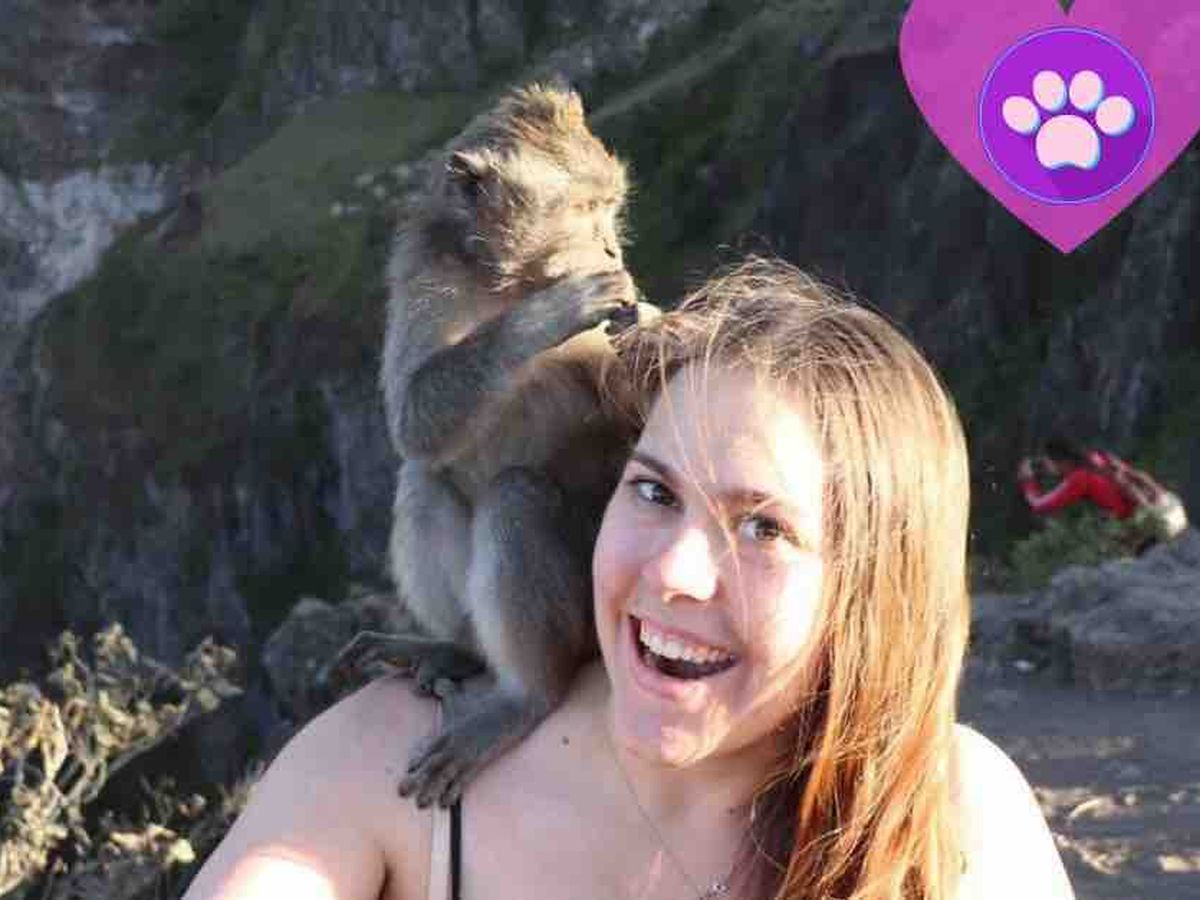
Hello, my name is Georgia, I am currently 21 years old and I am committed to gaining more independence and raising some much-needed funds for Paws 4 Georgia.
The money from this GoFundMe will enabled me to acquire a puppy and to cover the expenses, training and equipment necessary to train it into an Assistance Dog. I will be training this puppy with the help of a professional trainer from The Canine Perspective, and am currently also enquiring into joining up with the organisation ProActive Dog Australia who will assist me to train up to the level and beyond that of what is required in Australian Federal Law.

My Story:
The first time I visited a clinical psychologist was when I was 5 years old, and I have been seen by a range of school counsellors, clinical psychologists and psychiatrists since that time. For the majority of my life I have struggled with a lot of everyday “normal” activities that a lot of people take for granted to be able to just do, like going shopping alone, or socialising in school/work environments.
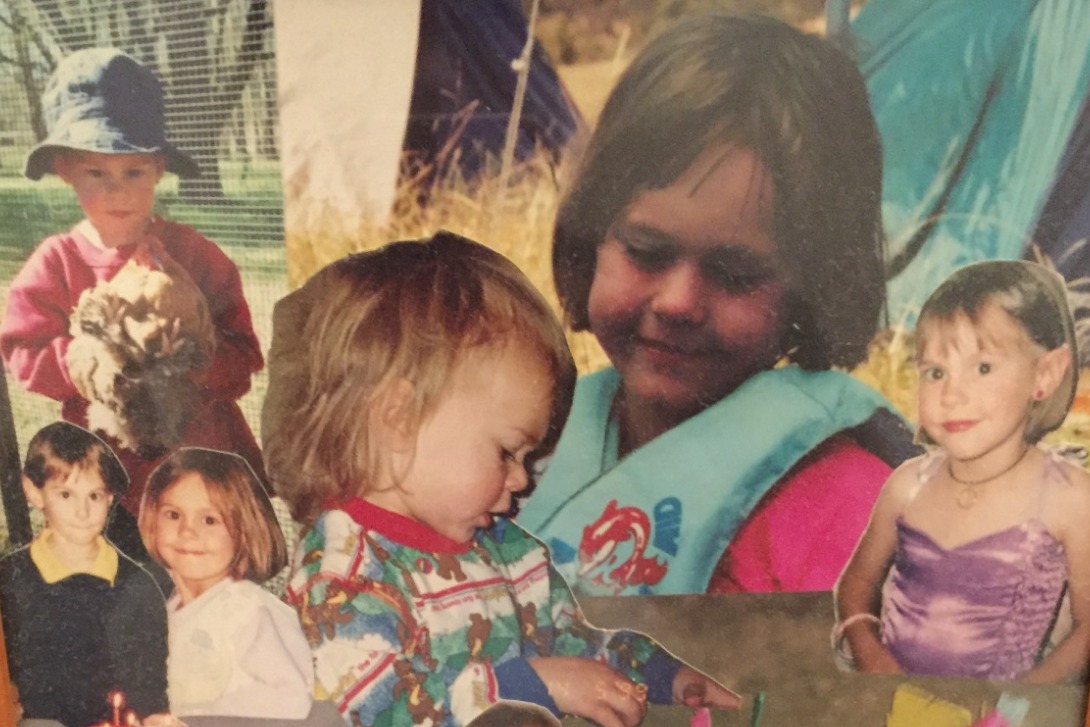
When I was first properly diagnosed with clinical depression, I had just turned 16 and was in hospital after I had attempted to take my life due to a prolonged exposure to intense physical and emotional abuse at multiple different times over the course of my life.
This was the point at which I was prescribed medication to try to help my mental health. After being released from hospital I began seeing a new clinical psychologist (who is my current psychologist today).
My most recent diagnoses are Autism Spectrum Disorder (ASD), Complex Post Traumatic Stress Disorder (C-PTSD), an Anxiety Disorder and Major Depressive Disorder.
I am currently not working as my C-PTSD is at the point where it is disabling, and I am often in a state of disassociation. I struggle with panic attacks on a daily basis, and the only place I can currently go alone is to my psychologist’s office as we have built an immense amount of trust between us over the years to the point where I feel safe to attend by myself.
Health Direct Australia explains C-PTSD in easy to understand way.
https://www.healthdirect.gov.au/complex-ptsd
My clinical psychologist at 8 suspected that I was autistic, it is only recently that I've been able to organise an appointment with a psychiatrist who has confirmed that I do have Autism Spectrum Disorder and we will be proceeding with thorough testing to have a clear understanding of how much it impacts my life in the new year.
The major struggles that I face due to ASD are communication, social interaction, and sensory sensitivities.
You can find out more information about autism here.
https://www.healthdirect.gov.au/autism
Why I Need an Assistance Dog:
Now at 21 I want to gain some more independence. Both myself, my family and my doctors believe that an Assistance Dog will be essential in my medical treatment plan to help mitigate my disabilities enough for me to become a more independent person and assist me in being able to function better in society.
Those very few people who know me well, you know that I have never been able to live alone, and those who have seen me around town probably don’t realise that I am always accompanied by my Mum, my Step Dad, my Sister or my (now ex) partner, Jay, (who I’m very thankful is still a very good friend to me).
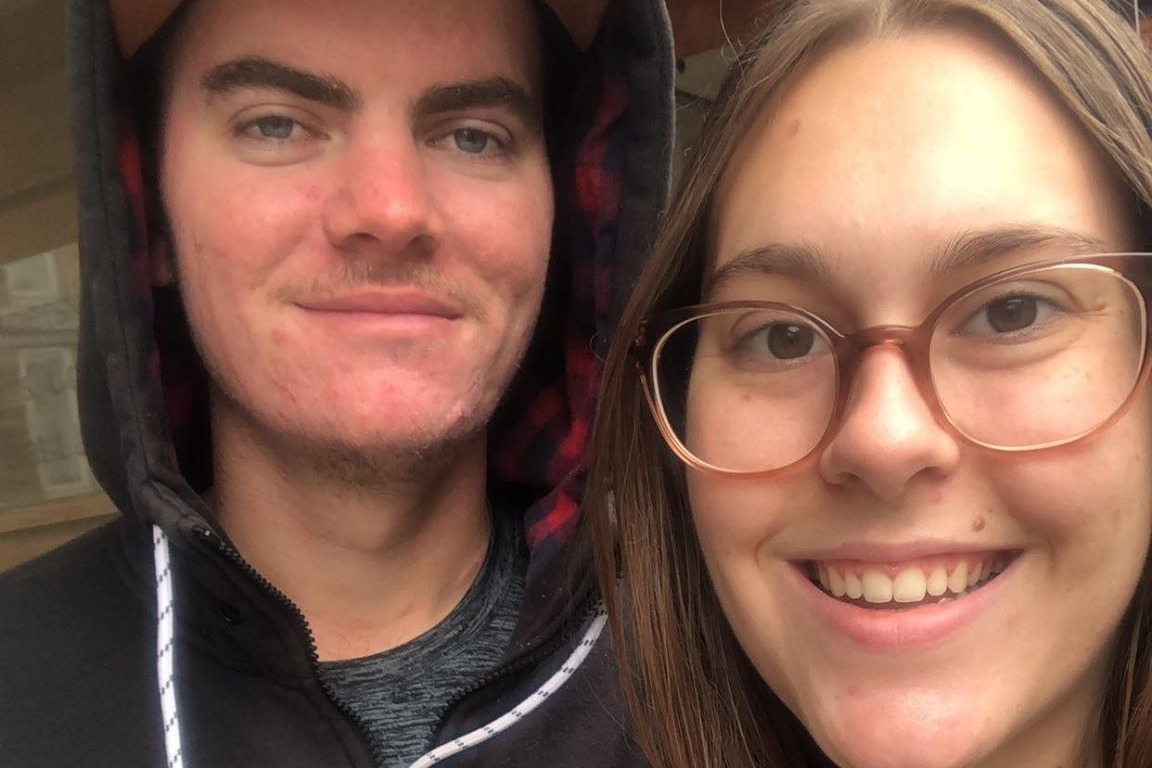
When I turned 19 I moved out with Jay who knew everything about me and the daily struggles that I faced. He was there for me 24/7 to constantly support and guide me, but unfortunately, we could not find a way for him to be supported enough while he was supporting me, so I am now back living with family with the deep desire to have more independence, which an Assistance Dog can give me the chance to have.
Not only will an Assistance Dog aid me with the symptoms of my C-PTSD, it will allow me to feel safe and secure when alone, and will also help me perform every day activities similar to anyone else, such as going shopping by myself.
Along with the tasks I plan to train, which I will list below, an Assistance Dog would provide me with some of the basic human needs that I struggle to have in my life such as Certainty, Significance, Love & Connection, Growth and Contribution.
Tasks I intend to train:
- Alert to Increased Medical Levels in the Body (Heart Rate, Cortisol)
- Alert to Person Approaching from Behind
- Assist with Grounding
- Block
- Cover/Watch My Back
- Crowd Control
- Crying/Panic Attack Interruption/Response
- DPT (Deep Pressure Therapy)
- Find the Car (During Disassociation/Disorientation)
- Guide to a Safe Place
- Interrupt Disassociation
- Interrupt Panic/Anxiety Attack
- Interrupt Negative Repetitive Behaviours/Self Harm Behaviours
- Lick Face/Hands to Distract/Ground
- Medication Reminders
- Nightmare Interruption
- Panic/Anxiety Alert
- Provide Distraction
- Respond to Anxious Behaviours
- Retrieve Emergency Medication
- Retrieve Water/Juice/Etc to Take Medication
- Routine Reminders
- Tactile Stimulation
Breed & Breeder:
I am currently arranging to meet with a breeder than lives an hour and a half north of Ballina at the end of November and I am very excited to meet her poodle family.
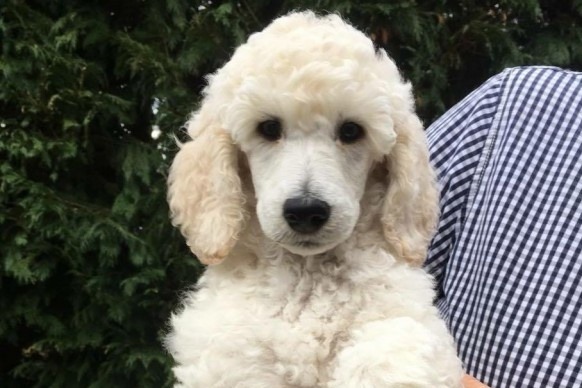
There are a few reasons I have chosen a standard poodle as the ideal breed for me to train, not only because they are one of the smartest and easiest breeds to train, but they also don't produce excessive saliva or drop their hair when shedding.
Important Questions Answered!
What is an Assistance Dog?
An Assistance Dog is a dog that is specifically task trained to aid someone with disabilities. Many are trained by organisations, but there are also ones that are trained by their handler with the help of professional trainers, which is what I intend to do.
An Assistance Dog under Australian Federal Law is as stated in the Disability Discrimination Act 1992 section 9(2):
For the purposes of this Act, an assistance animal is a dog or other animal:
(c) trained:
(i) to assist a person with a disability to alleviate the effect of the disability; and
(ii) to meet standards of hygiene and behaviour that are appropriate for an animal in a public place.
What do Assistance Dogs do?
When people think of assistance dogs they are more than likely going to firstly think of guide and hearing dogs, but just like these dogs assistance dogs are vitally important to their handlers too to navigate through everyday life!
Here is a great example:
“Here’s Rapunzel with Complex PTSD. Her assistance dog is helping her snap out of a very strong dissociative state, then providing tactile stimulation for comfort and grounding! C-PTSD is a type of response to prolonged trauma (frequently in childhood).”
 Credit
When am I trying to reach my goal by?
In an ideal situation I would have a puppy ready for me to pick up by the time I turn 22 in May, but I also understand that sometimes Mother Nature likes things her way. I intend to keep this fundraiser going until I can cover the total costs associated with raising and training an Assistance Dog.
What am I actively doing to fundraise?
Alongside GoFundMe I am also currently in contact with Krispy Kreme Doughnuts and am running a fundraising donut drive. I will be delivering order forms to businesses in Lennox Head, Ballina, Lismore and Casino with the help from either my Mum or Jay (or both), and I have also been tirelessly posting to Facebook on my local community information pages to generate as much interest as possible.
Additionally, I will be approaching my local organisations, businesses and churches for donations with the help of Jay.
I would also like to hold an information night for my local area to provide some education around Assistance Dogs and include a raffle/lucky door prizes while also requesting donations from the attending public.
What is the money going toward?
Every contribution made will be going directly toward the purchase and training of a puppy to become my Assistance Dog.
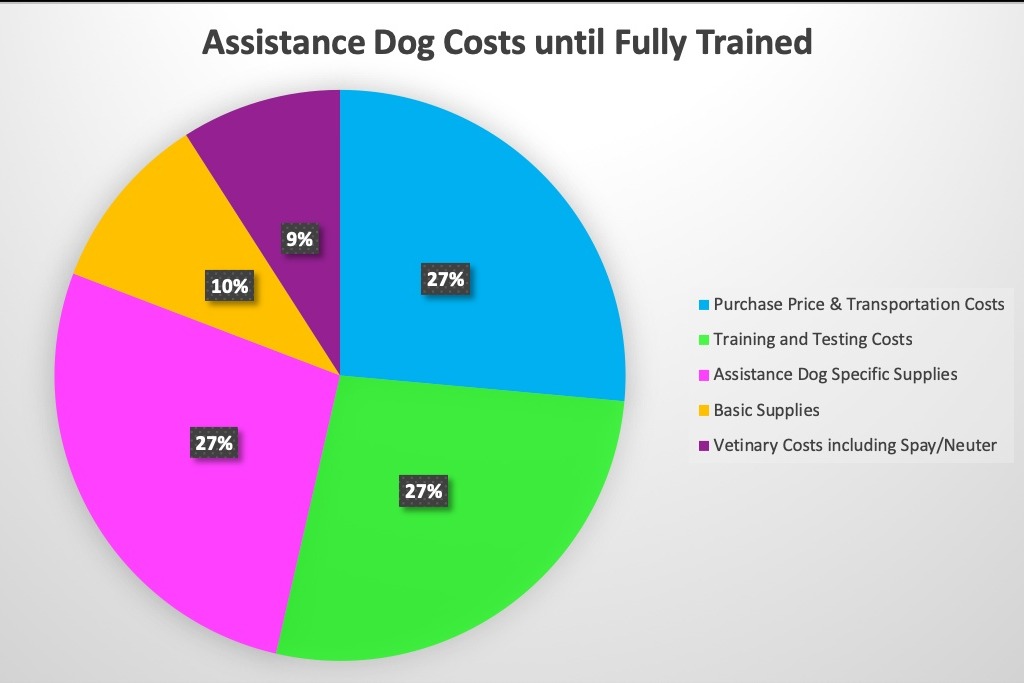
I have done extensive research since the beginning of January 2018 and have been in contact with many other Owner Trainers both in Australia and overseas to ensure I am estimating the correct amounts as closely as possible. A breakdown of the costs of owning an Assistance Dog from initial purchase to fully trained is included in the graphic below.
Other ways YOU can help
1. Help spread the word! This is one of the biggest contributions you can make on top of a donation to ensure I can reach my goal of becoming more independent.
Please use this link to share on social media, through text message and email: www.gofundme.com/paws4georgia
2. I am currently running the Krispy Kreme drive and doughnuts are available for order in Lennox Head, Ballina, Alstonville, Lismore and Casino. If you are interested in ordering donuts or helping me in distributing order forms please get in touch with me via the contact link or through the #Paws4Georgia Facebook Page or through Facebook Messenger.
3. If you are a business, church or an organisation and want to offer extra assistance or resources as well as a donation please get in touch on the email address above, as I would love to work with you to achieve my goal.
Hello, my name is Georgia, I am currently 21 years old and I am committed to gaining more independence and raising some much-needed funds for Paws 4 Georgia.
The money from this GoFundMe will enabled me to acquire a puppy and to cover the expenses, training and equipment necessary to train it into an Assistance Dog. I will be training this puppy with the help of a professional trainer from The Canine Perspective, and am currently also enquiring into joining up with the organisation ProActive Dog Australia who will assist me to train up to the level and beyond that of what is required in Australian Federal Law.

My Story:
The first time I visited a clinical psychologist was when I was 5 years old, and I have been seen by a range of school counsellors, clinical psychologists and psychiatrists since that time. For the majority of my life I have struggled with a lot of everyday “normal” activities that a lot of people take for granted to be able to just do, like going shopping alone, or socialising in school/work environments.
When I was first properly diagnosed with clinical depression, I had just turned 16 and was in hospital after I had attempted to take my life due to a prolonged exposure to intense physical and emotional abuse at multiple different times over the course of my life.
This was the point at which I was prescribed medication to try to help my mental health. After being released from hospital I began seeing a new clinical psychologist (who is my current psychologist today).
My most recent diagnoses are Autism Spectrum Disorder (ASD), Complex Post Traumatic Stress Disorder (C-PTSD), an Anxiety Disorder and Major Depressive Disorder.
I am currently not working as my C-PTSD is at the point where it is disabling, and I am often in a state of disassociation. I struggle with panic attacks on a daily basis, and the only place I can currently go alone is to my psychologist’s office as we have built an immense amount of trust between us over the years to the point where I feel safe to attend by myself.
Health Direct Australia explains C-PTSD in easy to understand way.
https://www.healthdirect.gov.au/complex-ptsd
My clinical psychologist at 8 suspected that I was autistic, it is only recently that I've been able to organise an appointment with a psychiatrist who has confirmed that I do have Autism Spectrum Disorder and we will be proceeding with thorough testing to have a clear understanding of how much it impacts my life in the new year.
The major struggles that I face due to ASD are communication, social interaction, and sensory sensitivities.
You can find out more information about autism here.
https://www.healthdirect.gov.au/autism
Why I Need an Assistance Dog:
Now at 21 I want to gain some more independence. Both myself, my family and my doctors believe that an Assistance Dog will be essential in my medical treatment plan to help mitigate my disabilities enough for me to become a more independent person and assist me in being able to function better in society.
Those very few people who know me well, you know that I have never been able to live alone, and those who have seen me around town probably don’t realise that I am always accompanied by my Mum, my Step Dad, my Sister or my (now ex) partner, Jay, (who I’m very thankful is still a very good friend to me).
When I turned 19 I moved out with Jay who knew everything about me and the daily struggles that I faced. He was there for me 24/7 to constantly support and guide me, but unfortunately, we could not find a way for him to be supported enough while he was supporting me, so I am now back living with family with the deep desire to have more independence, which an Assistance Dog can give me the chance to have.
Not only will an Assistance Dog aid me with the symptoms of my C-PTSD, it will allow me to feel safe and secure when alone, and will also help me perform every day activities similar to anyone else, such as going shopping by myself.
Along with the tasks I plan to train, which I will list below, an Assistance Dog would provide me with some of the basic human needs that I struggle to have in my life such as Certainty, Significance, Love & Connection, Growth and Contribution.
Tasks I intend to train:
- Alert to Increased Medical Levels in the Body (Heart Rate, Cortisol)
- Alert to Person Approaching from Behind
- Assist with Grounding
- Block
- Cover/Watch My Back
- Crowd Control
- Crying/Panic Attack Interruption/Response
- DPT (Deep Pressure Therapy)
- Find the Car (During Disassociation/Disorientation)
- Guide to a Safe Place
- Interrupt Disassociation
- Interrupt Panic/Anxiety Attack
- Interrupt Negative Repetitive Behaviours/Self Harm Behaviours
- Lick Face/Hands to Distract/Ground
- Medication Reminders
- Nightmare Interruption
- Panic/Anxiety Alert
- Provide Distraction
- Respond to Anxious Behaviours
- Retrieve Emergency Medication
- Retrieve Water/Juice/Etc to Take Medication
- Routine Reminders
- Tactile Stimulation
Breed & Breeder:
I am currently arranging to meet with a breeder than lives an hour and a half north of Ballina at the end of November and I am very excited to meet her poodle family.
There are a few reasons I have chosen a standard poodle as the ideal breed for me to train, not only because they are one of the smartest and easiest breeds to train, but they also don't produce excessive saliva or drop their hair when shedding.
Important Questions Answered!
What is an Assistance Dog?
An Assistance Dog is a dog that is specifically task trained to aid someone with disabilities. Many are trained by organisations, but there are also ones that are trained by their handler with the help of professional trainers, which is what I intend to do.
An Assistance Dog under Australian Federal Law is as stated in the Disability Discrimination Act 1992 section 9(2):
For the purposes of this Act, an assistance animal is a dog or other animal:
(c) trained:
(i) to assist a person with a disability to alleviate the effect of the disability; and
(ii) to meet standards of hygiene and behaviour that are appropriate for an animal in a public place.
What do Assistance Dogs do?
When people think of assistance dogs they are more than likely going to firstly think of guide and hearing dogs, but just like these dogs assistance dogs are vitally important to their handlers too to navigate through everyday life!
Here is a great example:
“Here’s Rapunzel with Complex PTSD. Her assistance dog is helping her snap out of a very strong dissociative state, then providing tactile stimulation for comfort and grounding! C-PTSD is a type of response to prolonged trauma (frequently in childhood).”
Credit When am I trying to reach my goal by?
In an ideal situation I would have a puppy ready for me to pick up by the time I turn 22 in May, but I also understand that sometimes Mother Nature likes things her way. I intend to keep this fundraiser going until I can cover the total costs associated with raising and training an Assistance Dog.
What am I actively doing to fundraise?
Alongside GoFundMe I am also currently in contact with Krispy Kreme Doughnuts and am running a fundraising donut drive. I will be delivering order forms to businesses in Lennox Head, Ballina, Lismore and Casino with the help from either my Mum or Jay (or both), and I have also been tirelessly posting to Facebook on my local community information pages to generate as much interest as possible.
Additionally, I will be approaching my local organisations, businesses and churches for donations with the help of Jay.
I would also like to hold an information night for my local area to provide some education around Assistance Dogs and include a raffle/lucky door prizes while also requesting donations from the attending public.
What is the money going toward?
Every contribution made will be going directly toward the purchase and training of a puppy to become my Assistance Dog.
I have done extensive research since the beginning of January 2018 and have been in contact with many other Owner Trainers both in Australia and overseas to ensure I am estimating the correct amounts as closely as possible. A breakdown of the costs of owning an Assistance Dog from initial purchase to fully trained is included in the graphic below.
Other ways YOU can help
1. Help spread the word! This is one of the biggest contributions you can make on top of a donation to ensure I can reach my goal of becoming more independent.
Please use this link to share on social media, through text message and email: www.gofundme.com/paws4georgia
2. I am currently running the Krispy Kreme drive and doughnuts are available for order in Lennox Head, Ballina, Alstonville, Lismore and Casino. If you are interested in ordering donuts or helping me in distributing order forms please get in touch with me via the contact link or through the #Paws4Georgia Facebook Page or through Facebook Messenger.
3. If you are a business, church or an organisation and want to offer extra assistance or resources as well as a donation please get in touch on the email address above, as I would love to work with you to achieve my goal.
Organizer
Georgia Taylor
Organizer