- D

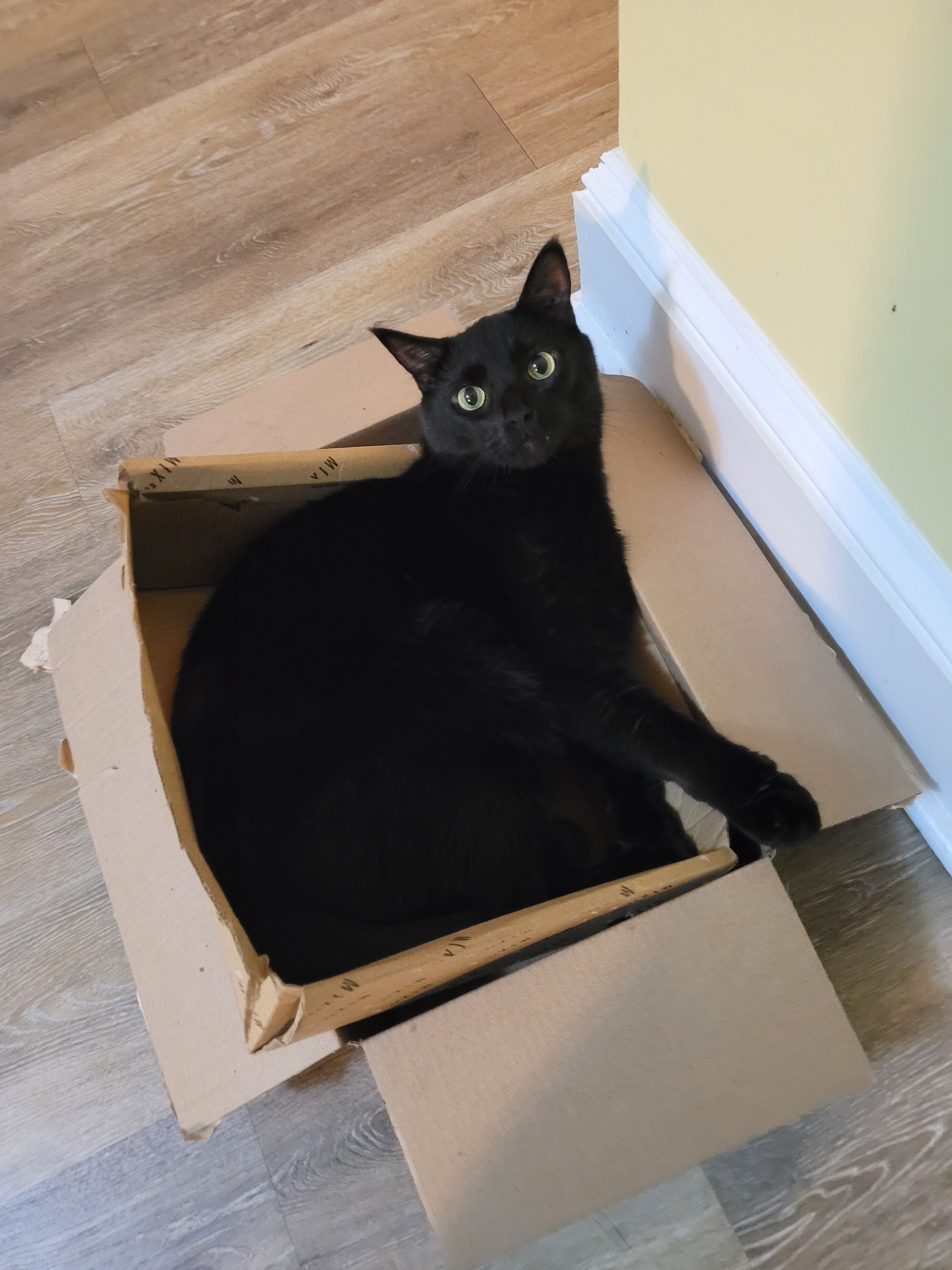
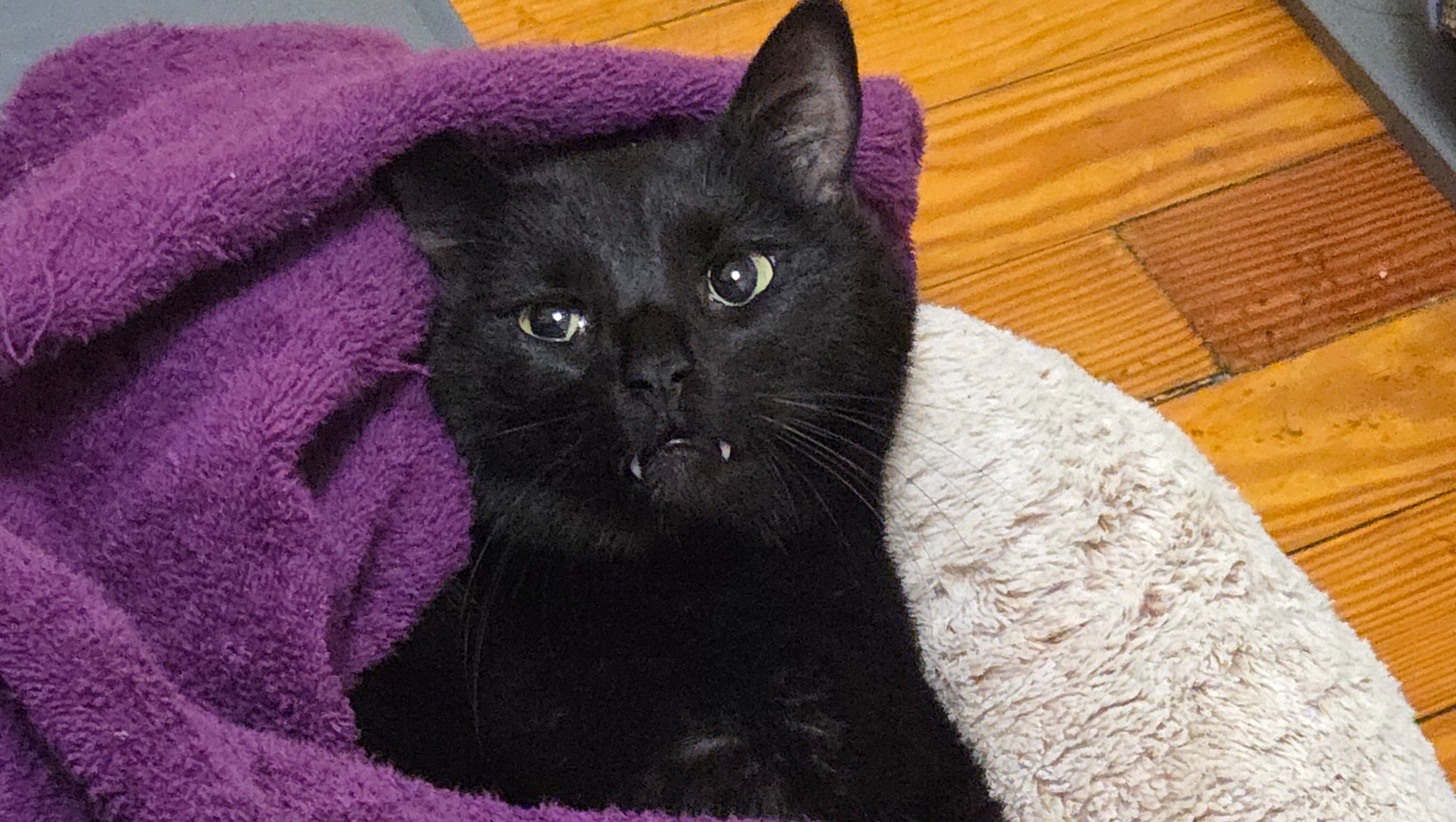
Our Little Void Has Left a Big Void
On February 13th, our sweet Stevie suddenly went into heart failure and we rushed him to the ER. We wanted to do anything we could to help him and refused to give up on him. After enduring overnight ER stays, ICU care, a cardiologist visit, oxygen support, imaging, medication, and constant monitoring, doctors were able to stabilize him and we were allowed to bring him home. For a week, he made real progress and we managed his care and medication closely. Stevie was eating, grooming, exploring, and acting like himself again, so we truly believed he was getting better.
Despite this, Stevie’s condition suddenly turned and we ultimately had to say goodbye. We’re beyond devastated and are still trying to process the shock of how quickly everything happened. The cost of his treatment added up just as fast, and we are now left with both grief and significant vet bills. We’re creating this GoFundMe to help cover Stevie’s outstanding vet bills and ease the financial strain during an already heartbreaking time. This only includes the ER visit, cardiologist visit, and the euthanasia cost. If you’re able to donate or share, we would be deeply grateful. Your support, in any form, helps us carry a little bit of this weight.
For anyone who wants to know what Stevie went through and how hard we fought for him, the full story is below.
On Friday, February 13th, George and I were sitting on the couch watching TV when Stevie came into the room and sat on my foot. Less than 2 minutes later, I felt his breathing pattern change. He was gasping, his heart began beating rapidly, and then suddenly he started limping on his right paw. This all occurred within 5 minutes.
We got on our shoes and ran out of the house to the nearest animal ER. Although it was only a short 10‑minute drive away, by the time we ran into the ER, Stevie’s tongue was dangling out of his mouth and he was foaming. The incredible doctors and techs all dropped what they were doing and immediately assisted at the trauma bay. When I say there were no fewer than 5 people attending to him, either holding him down, putting an oxygen mask on his face, or trying to stabilize him, that is no exaggeration.
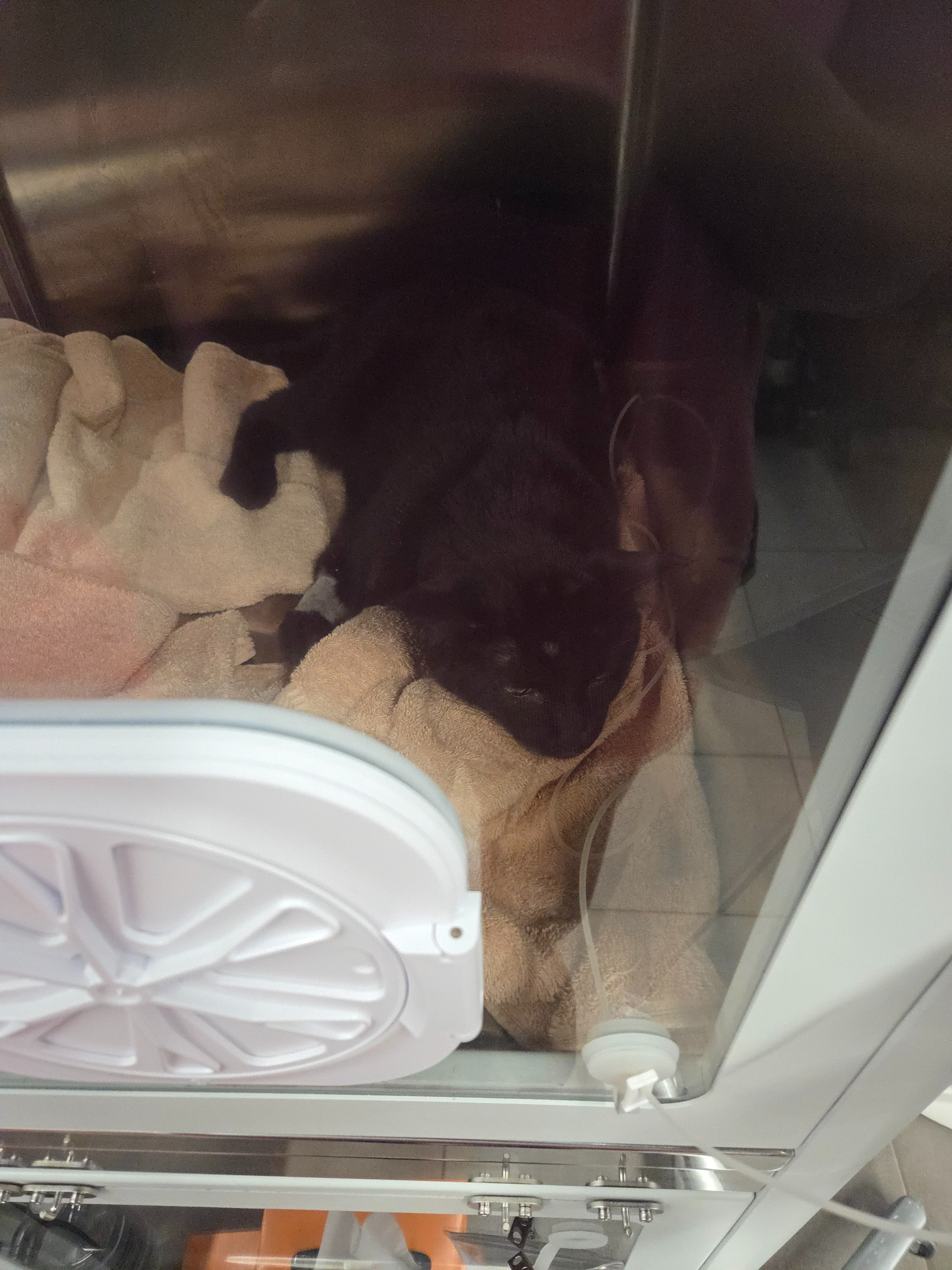
It was such a scary, horrific thing for us to witness and overhear the doctors shouting, “HE’S TURNING PURPLE! ALL HANDS!” After they managed to stabilize him and run ultrasounds and x‑rays, the doctor came over to us with a box of tissues. She explained that Stevie was in congestive heart failure and had pulmonary edema (fluid in his lungs), and that if he were to have any chance, he would need to receive diuretics and be kept in an oxygen tank for 24–48 hours. She also explained that Stevie was limping on his paw because he “threw a clot in it,” which led to the saddle thrombus (sudden limb paralysis).
We spent our Valentine’s weekend in the 24‑hour ER crying and sitting with Stevie as he received care. The doctor explained that if we could stabilize Stevie past that critical stage, he would need to be on medication for the rest of his life to keep the fluids from rebuilding. She also said that a typical case of saddle thrombus usually affects both of a cat’s hind legs and thus their immediate quality of life. Stevie getting it in his right front leg was different, and that with attentive nursing and medication, he could have a decent quality of life or possibly regain mobility.
We wanted to do whatever we could to help him, so we agreed that we would continue the course of treatment and see if they could stabilize him. The morning shift doctor tried to push us to put him to sleep. It was aggressive and she was not very compassionate. When we explained we wanted him to be home since we have 2 other cats who had been looking for him, she got on her phone and called a “friend/former employee of the ER” to see if she was available. She came to us at our chairs beside the oxygen tank and said, “My friend said she could come to your house in 20 minutes and do it.” WTF.
The night doctor said he would need at least 24–48 hours of nonstop oxygen and diuretic meds to even see how he would fare, and this one pushed for us to put him to sleep within an hour of starting her shift at 7 a.m. So literally within 12 hours of us bringing him there for care.
The diuretics were meant to drain the fluid from his lungs, but they also dehydrated him and raised his kidney values. We were doing a balancing act to save his life. Since Stevie wasn’t seemingly drinking his water, at one point the vet suggested putting a tube down Stevie’s nose that would feed to his stomach to get him fluids that way. I simply opened the oxygen tank and put his water bowl closer to him, and he began drinking. (They had it behind his head, and he was partially paralyzed and heavily sedated, making it difficult for him to reach.)
The day shift vet did more blood work to check his kidney values and another ultrasound. She said Stevie had fluid around his heart and since the diuretics weren’t working “fast enough,” she gave us two options: she could tap his heart to release the fluids, which would be risky since he was not stable, or we could put him down. Again, at this point, he had not even been in the oxygen tank for the recommended 24–48 hours.
Sometimes people present you with options and make it seem like they are your only choices. We didn't like the vibes this vet was giving us, unlike the night shift vet, and we no longer felt comfortable leaving Stevie in her care. I asked for a referral to a cardiologist. She resisted, saying, “Well, it’s the weekend, we don’t know who is open or if any of them are available.” I insisted. That’s what Google and phones are for. Luckily, we were able to get an appointment with a cardiologist about an hour away first thing in the morning, someone who actually specialized in the kind of treatment Stevie would need.
We drove him down with portable oxygen tanks and masks, and he stayed overnight at another animal hospital. The doctors were compassionate and caring. They understood the scales tipped against Stevie but said they would do everything in their power to try and help him.
The cardiologist performed the much‑needed echocardiogram, more ultrasounds, and x‑rays. I asked about the fluid around his heart and said the other vet told us she would need to tap it since it was such a problem. The cardiologist cut me off mid sentence and said, “No.” Fluid around the heart is normal in congestive heart failure. I told her about the vet’s idea to run a tube through his nose to get fluid into his stomach, and she again said, “No! That would have killed him.”
We thank God we got him to the specialist. They stabilized him and said that although they noticed an arrhythmia (irregular heartbeat), Stevie’s breathing rate was good and he was able to be out of the oxygen tank on his own, so we could bring him home.
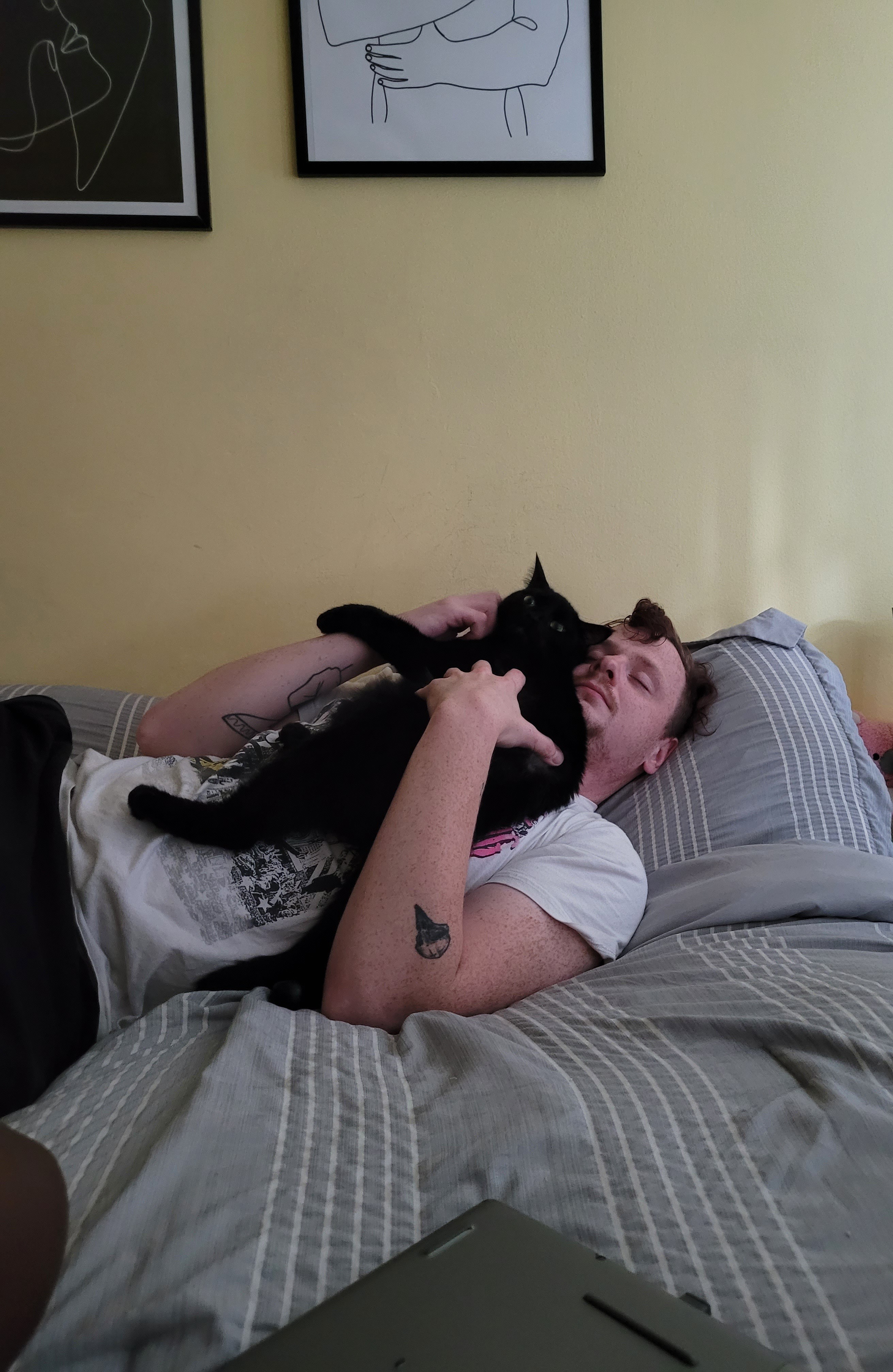
When we went to pick him up from the hospital, the nurse kept saying how perfect he was and that he was such a sweetheart and cuddler. She described how she had been petting him, and when she went to move her arm, Stevie used his good paw to pull her back. This is the Stevie we knew and loved, the Stevie who made anyone fall in love with him and any cat‑naysayers change their minds. The doctor gave us care instructions for Stevie and said he would need to be on medication for the rest of his life. She did warn us that recurrence of blood clots is common and could cause further cases of saddle thrombus, but we received anticoagulants and a diuretic for him and scheduled a tentative follow‑up appointment for March.
Our sweet boy purred all the way on the ride back home, very curious to see everything out the windows on the drive. He was in much better shape than when we rushed him to the ER, and we were so happy. He was happy.
Upon returning home, we got ramp steps, security cameras, and a playpen to keep him safe and contained. We spoke to Stevie’s cardiologist every day and watched him be as lively as always, insistent on using his regular litter box even though we’d gotten a new low‑entry one. We watched him completely ignore the pet ramp steps and use his good arm to pull himself up to his cat trees to look out the windows. We saw him escape his playpen one night to hang out with his 2 sisters in another room.
We also watched him briefly shun us after we gave him his daily medicine. (One afternoon, I gave Stevie a pill and he turned his head all the way to the side and refused to look at me for a few minutes. So stubborn, but I just kissed his little head and said I loved him.) He was doing well, he enjoyed being pampered and carried around all the time, he was consistently using his litter box, grooming himself, and slowly getting his appetite back.
On Saturday night into early Sunday morning, just before the big blizzard, we noticed that he was making a lot of noise in his playpen. When I took him out, George saw that Stevie wasn't moving his back legs at all. We knew then that he had thrown another clot and had back limb paralysis. We were absolutely devastated and heartbroken. Stevie had been doing well and improving, and the turn was sudden and shocking. We could tell Stevie was now in noticeable pain and he could not walk or use the box anymore, despite trying to reach it. I called some vets to try and make arrangements for at‑home euthanasia so that he could be in a safe, comfortable place surrounded by his family.
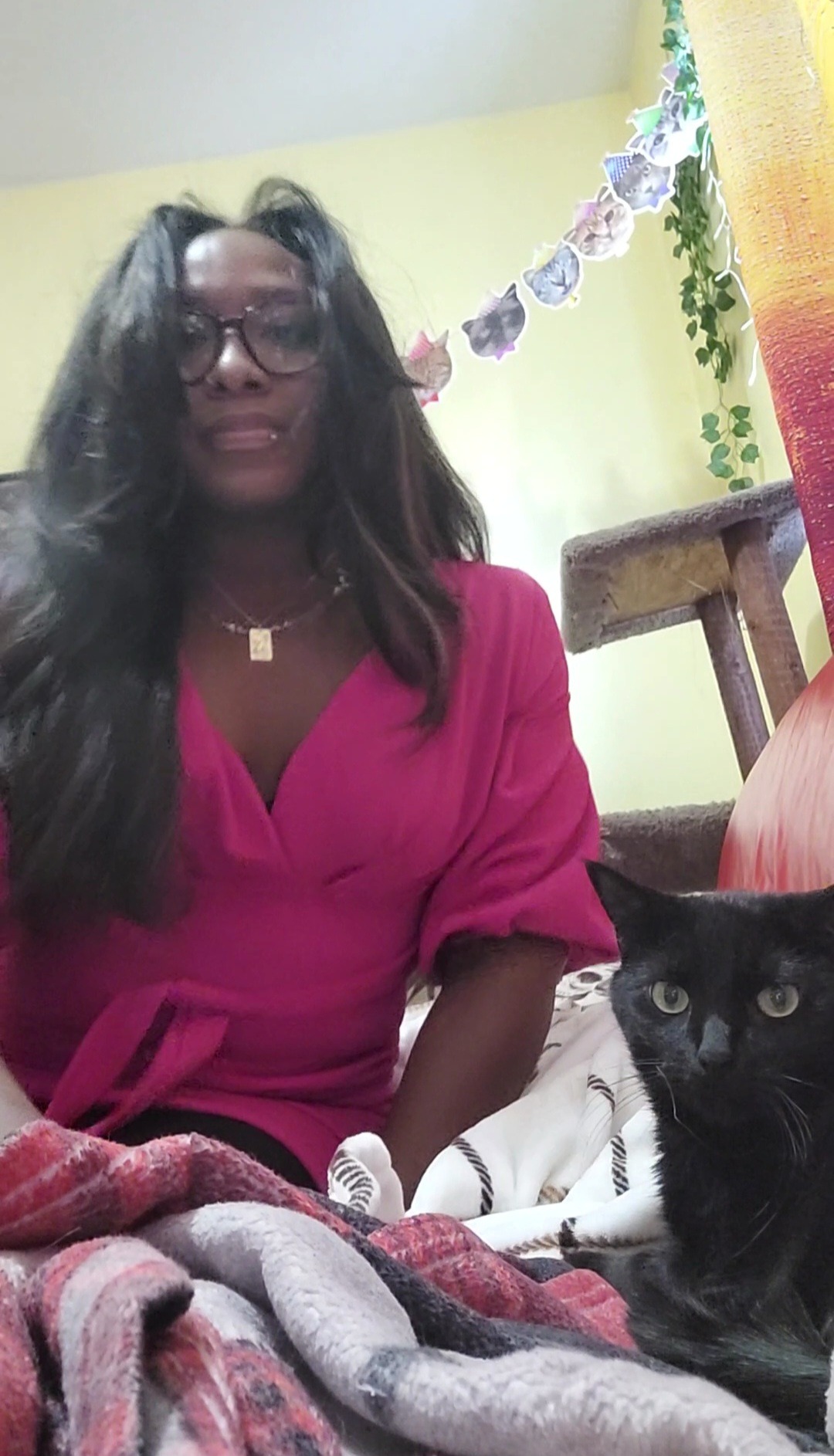
We really tried to help Stevie get the best care he could up until the very end. Stevie was such an absolutely vital part of our family and daily routines. There are so many little things that remind us of him and bring us to tears. The chewed up plastic plants, the fact that he knew when bedtime was and came to sleep when we would, the fact that he would immediately run to the bathroom when George exited the shower so he could dig through the garbage bin and find one of George's Q‑tips to lick. He was our little security cat. Any strange noise that occurred outside would have Stevie patrolling the rooms to check it out while his 2 sisters ran and hid. We loved him so much and are so devastated that he is gone. Still, we are grateful that we got a little bit more time with him, and it brings us some peace to know he is not in pain anymore.
I'm creating this GoFundMe because animal ERs, overnight ICU stays, and kitty heart specialists cost a lot, and we are left with grief and outstanding vet bills. For transparency, we're sharing the invoices from Stevie's ER and hospital visits to show how your donations will be used.
Thank you for taking the time to read Stevie’s story and for any support or kind words you’re able to give.
Organizer