- M
Operation Wrecktemporal Lobe
0% complete
$4,081 raised of $4K
39 donations
http://fightingthisalways.blogspot.com/
Hi Friends, Family and Derby Fans/Community!!
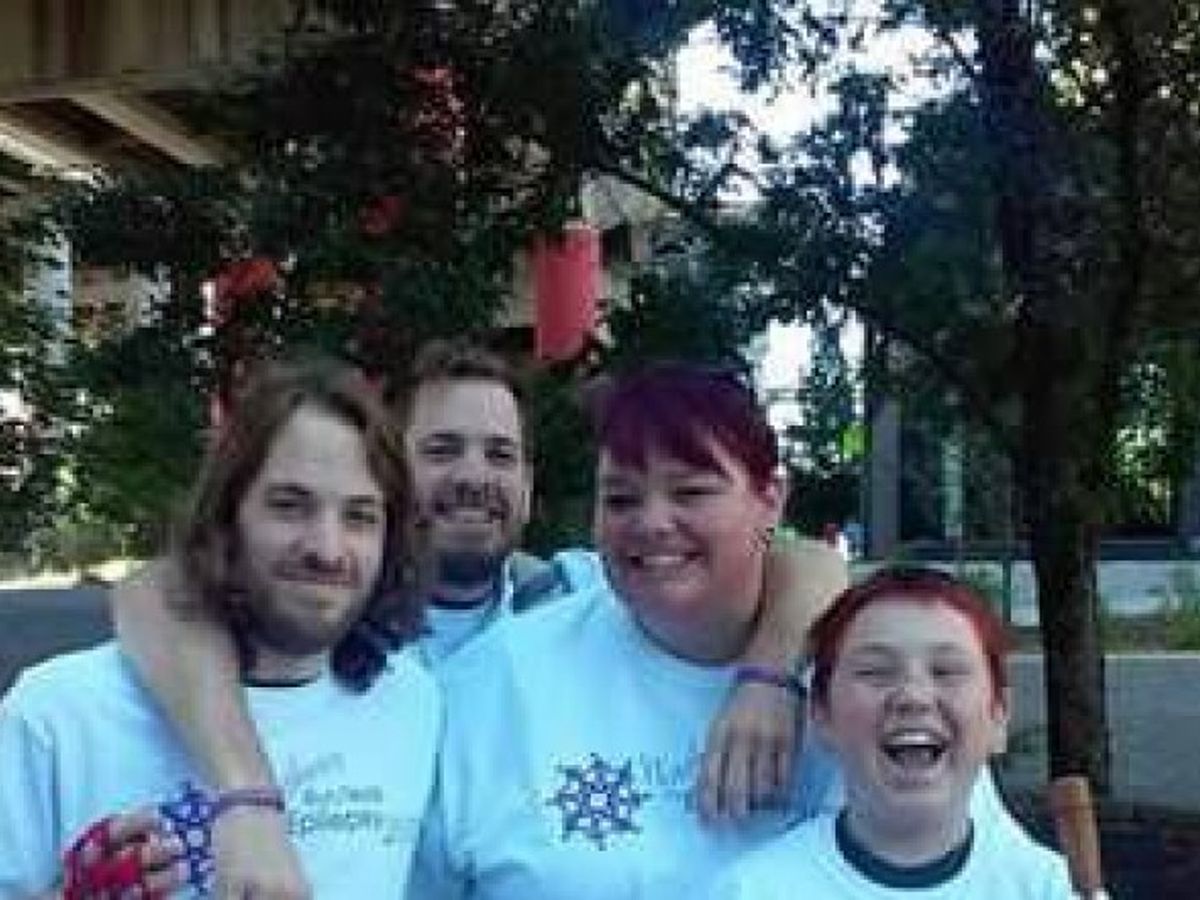
Our friend and very own Rose City Roller MiMi (PunchRocker) has Left Temporal Lobe Epilepsy.
Mimi started having seizures a little over 18 years ago. After all of these years of trying different things, she now has the option to have a lobectomy. In order to do this, she will need to have a SPECT Scan and fly to San Francisco for an MEG which will help pinpoint where her seizures begin. This could be life changing.
I have included more detail for those interested at the bottom of this and also the link to Mimi's blog for more detailed info but her friends have decided to come together to help put funds in place for her and her family while she is having these tests. The scheduling of these should happen very soon so in order to make that happen we have created this go fund me to assist her family with transportation, hotels, and medical expenses.
Honestly I can not think of a better more deserving person than our very own "Punch". She has given so much to everyone else! Thank you so much for your help!
***********************************************************
The features of seizures beginning in the temporal lobe can be extremely varied, but certain patterns are common. There may be a mixture of different feelings, emotions, thoughts, and experiences, which may be familiar or completely foreign. In some cases, a series of old memories resurfaces. In others, the person may feel as if everything—including home and family—appears strange. Hallucinations of voices, music, people, smells, or tastes may occur. These features are called “auras” or “warnings.” They may last for just a few seconds, or may continue as long as a minute or two.
Experiences during temporal lobe seizures vary in intensity and quality. Sometimes the seizures are so mild that the person barely notices. In other cases, the person may be consumed with fright, intellectual fascination, or even pleasure.
The experiences and sensations that accompany these seizures are often impossible to describe, even for the most eloquent adult. And of course it is even more difficult to get an accurate picture of what people are feeling.
http://www.epilepsy.com/learn/types-epilepsy-syndromes/temporal-lobe-epilepsy
70% of the people with epilepsy have no known cause. Mimi started having seizures a little over 18 years ago. Throughout the years, Mimi has sought many different treatments. She has attempted over 15 different types of medications, some together, to obtain control over her seizures. However, most AED medications have a plethora of side effects that affect cognitive function. Mimi has shown a very high sensitivity to a majority of these side effects including, but not limited to: memory loss, loss of balance, fogginess, dizziness, nausea, trouble sleeping, mood swings, etc. Mimi has also expanded into a ketogenic diet. This diet is a high fat, high protein, low carbohydrate diet that assists in reducing the seizures. She can only eat 20 grams of carbs a day. An apple alone has 19 grams.
There are over 40 different types of seizures. Many people with epilepsy can experience changes in the pattern, frequency and might have various causes and various consequences for each person. While most patients will experience 1 or 2 types, Mimi experiences 5. These are tonic clonic, absence, simple partial, complex partial and a rare body type seizures where she will experience no cognitive symptoms but her left hand will spasm uncontrollably, sometimes up to an hour. This will leave her body incredibly fatigued and sore.
Mimi’s neurologist, Dr. Matthew Evans at Providence Portland, began exploring the option of a left temporal lobectomy for Mimi. Brain surgery requires some preparation.
The next steps for Mimi are obtaining a SPECT scan. A SPECT scan is a type of nuclear imaging test, which means it uses a radioactive substance and a special camera to create 3-D pictures. While imaging tests like X-rays can show what the structures inside your body look like, a SPECT scan produces images that show how your organs work. This will be done will hooked up to EEG electrodes. The dye is then injected at the beginning of the seizure and then it will latch on to the active neurons. After the seizure, the patient is taken for an MRI. The neurons that have been “dyed” will be prominent on the scan, showing the patients seizure focal point (what part of the brain the seizures begin.)
After this, Mimi will need to fly to UCSF to have a MEG (magnetoencephalography)
This will:
provide a noninvasive tool to study epilepsy and brain function. When it is combined with structural imaging, it is known as magnetic source imaging (MSI).
MEG measures small electrical currents arising inside the neurons of the brain. These currents produce small magnetic fields. MEG generates a remarkably accurate representation of the magnetic fields produced by the neurons.
To some ways, MEG is similar to EEG (electroencephalography).
An important difference is that the skull and the tissue surrounding the brain affect the magnetic fields measured by MEG much less than they affect the electrical impulses measured by EEG. This makes the MEG more accurate than an EEG in some ways. The test can give more usable and reliable information about the location of brain function.
When MEG is added to magnetic resonance imaging (MRI) (which shows brain structure) the combination of the images is extremely helpful. Areas of the brain that could generate seizures as well as normal electrical activity in the brain can be located more easily.
(http://www.epilepsy.com/learn/diagnosis/looking-brian/meg-magnetoencephalography)
And lastly, Mimi will be having an EEG with implanted electrodes. This will require brain surgery, placing the electrodes on the brain and tracking abnormal brain activity caused by the seizures.
If after these tests it is determined that the seizure focal point is too close to a part of Mimi’s brain that can be affected by the temporal lobectomy, the next option is The RNS Neurostimulator. In 2013, the FDA approve Neuropace RNS (Responsive Neurostimulation) system. The RNS Neurostimulator is placed under the scalp and within the skull by a surgeon. One or two leads are then placed at the seizure target and connected to the neurostimulator. After the scalp heals, the neurostimulator should not be noticeable to others. The neurostimulator continuously monitors the brain’s activity and is programmed by the epilepsy doctor to detect and record specific patterns that could lead to a seizure. When these patterns are detected, the neurostimulator responds with brief pulses of stimulation intended to disrupt the abnormal brain activity before a seizure occurs (http://www.epilepsy.com/learn/treating-seizures-and-epilepsy/devices/responsive-neurostimulation)
Now your question is: why is all of this necessary?
In order to have a successful placement of the RNS System, the neurologist and neurosurgeon will need to ensure they have the exact location of where the seizures are originating pinpointed. This will lead to a successful placement of the RNS System and a successful reduction, if not full control over her seizures.
What will control of the seizures due for Mimi?
No more medications that feel debilitating. No more restricted diets. The elimination of the looming thought “will I have a seizure today?” A freedom to experience day to day life without restrictions. A day to day life we so often take for granted…
Organizer and beneficiary
Amy Collins
Beneficiary