- A
- H
- D
Happy New Year! I hope this e-mail finds you abounding in happiness and peace. I am embarking on a new endeavor and would love for you to join me.
It is estimated that 1.8 billion women world-wide get their periods. One of the strongest bonds that women share is their monthly period. Despite this common bond, our experiences with our periods vary greatly. For many women in developed countries, their first period is celebrated. On the contrary, for many women in developing countries, this is a time of worry coupled with fear and anxiety.
Last October (2018), I read an article on cnn.com reporting on what a luxury item a sanitary pad is for many women in Tanzania. A luxury? I was stunned. I would have never paired these two words together. But the reality is, for many women and girls in Tanzania, sanitary pads are indeed seen as financial luxuries and they cannot afford to purchase them. According to the article, “affordability is one reason for not using pads.” Not only do these women/girls grapple with the agony of not having money to purchase sanitary pads but a woman’s period is still viewed as taboo and they endure shame and anxiety for experiencing this natural process. As stated in the article, “there is still a lot of shame in caring for your period.” For the many Tanzanian women/girls unable to afford sanitary pads, they are left with no choice but to use fabric, rags or other items found around the house all of which serve as poor substitutes. For these women, not being able to purchase sanitary pads is not an individual problem, it is a burden on their entire households. The inability to purchase sanitary pads force many women to miss work which results in missed income which in turn places a bigger financial strain on their households which are already struggling to make ends meet. For the students, they are forced to miss school and they end up missing valuable lessons. As stated by the author of the article, “periods come with the highest cost in terms of dignity, money and time.”
This problem is not confined to our sisters in Tanzania. Not being able to afford sanitary pads, and the shame and taboo surrounding menstruation is a problem that rears its ugly head from Africa across the Pacific into India and beyond. This, my friends, is a global problem. A few weeks ago, my niece recommended that I watch the movie “Pad Man.” This movie, based in India, was another eye opener into the issues of unaffordability and shame, and the taboo of menstruation faced by so many women in developing countries. The movie seemed utterly unbelievable. But the movie was in fact based on true events. My heart was heavy at the plight of these women. How could this be? Something, that was so affordable for me was such a burden to my sisters in other parts of the world. My zeal to act was amplified.
Recently, a friend called to tell me that her 13-year old daughter had finally gotten her period. I responded with excitement and congratulations. But knowing what I had learned about the women/girls in Tanzania and India, I could not help but contrast their experiences. For many of them, this would not be an occasion to celebrate. Instead, their minds would be weighed down with fear, anxiety, worry and shame. These women/girls would not get into their cars, drive to the store to purchase their favorite period product. Instead, they would search their homes for cloths, rags or other items to use during their periods.
A few weeks ago, the New York Post published a tragic article about a 35-year old mother from Nepal who, along with her two sons, died as she was exiled from her home and forced to sleep in a freezing hut because she was on her period. Is this 2019?! The sadness of this story pierced me to the very core. What sorrow! I know for some of you this is unimaginable but being exiled while on their period is the unfortunate reality for many women in developing countries.
The articles and the movie fueled the idea to join the fight and help put an end to period poverty, one girl at a time, by supplying sanitary pads to women and girls who cannot afford to buy them.
My Call to Action
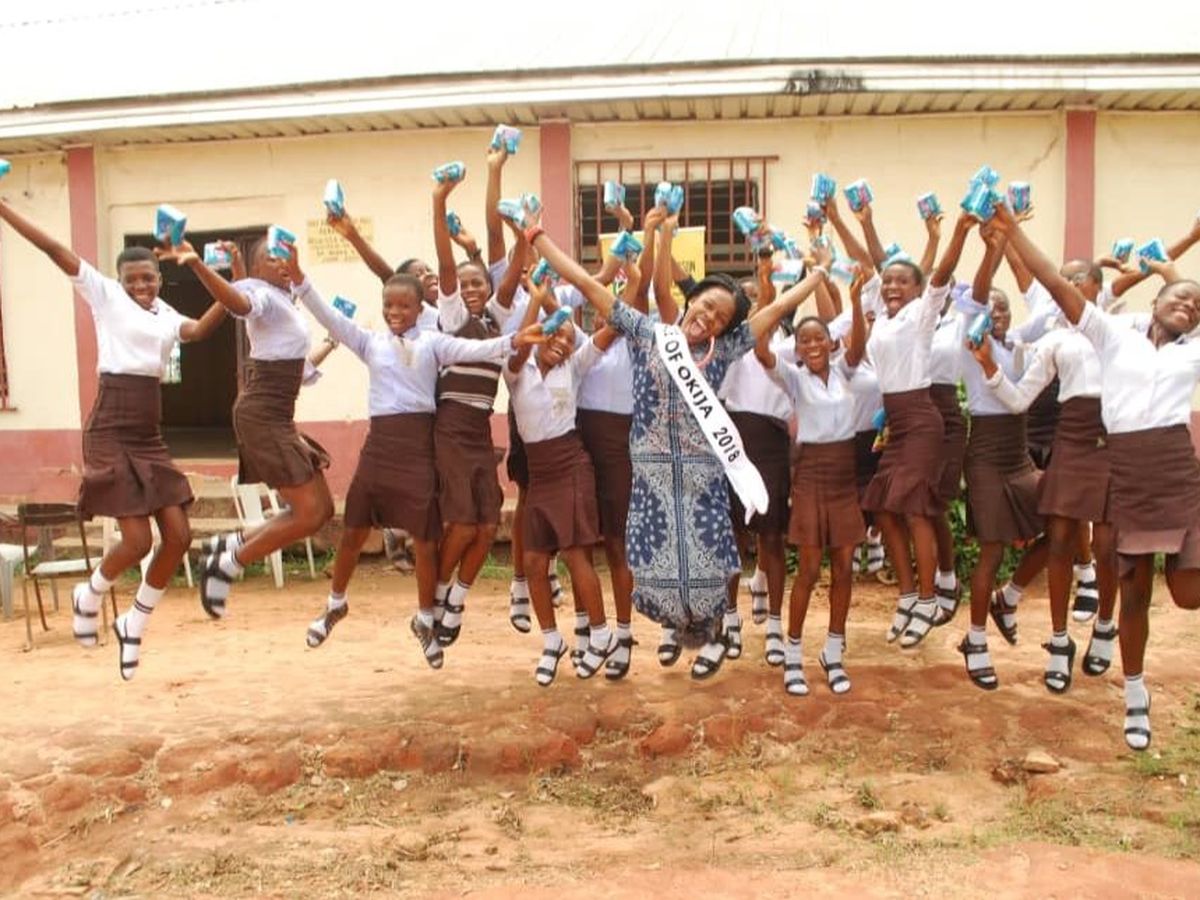
To kick start this endeavor, I am organizing a sanitary pad drive in celebration of my 42nd birthday. My goal is to provide sanitary pads to at least 650 underprivileged adolescent girls in Okija, Nigeria. I am excited, optimistic and ready to act. I hope that I can count on you. For this endeavor, I have chosen to partner with the Obijackson Foundation.
In selecting the organization to partner with, I reached out to my friend Orhue who lives in Nigeria. She responded with equal enthusiasm and I knew without a doubt that she was the appointed person to help me see it through. She knew of the perfect Non-Governmental Organization (NGO) that could benefit from this endeavor – The Obijackson Foundation. In fact, the medical unit of the Obijackson Foundation had previously organized a One girl, One pad campaign. One of the main goals of the campaign had been to reduce the dropout rate and school absenteeism among school aged girls due to their periods. Unfortunately, that campaign was not a success. With your help, I hope to revive this campaign and turn it into a success.
We can do this! A pack of sanitary pads costs 400 neira (N400) which is the equivalent of $1.08. The monthly cost to provide sanitary pads to 650 girls is $702.70 a month. The yearly cost to supply sanitary pads to 650 girls is $8,432.43.
How do you fit in? I’m glad you asked. I am seeking to raise $8,432.43 to provide sanitary pads to 650 girls for an entire year! Any amount you can donate is greatly appreciated. No amount is too small, and no amount is too big. All donated funds will be sent to my trusted friend Orhue. Orhue will oversee the purchasing and distribution of the sanitary pads.
It is time to act. It is time to help. It is time to do something. I implore you to join me on this selfless endeavor in helping to end this global problem of period poverty ensuring that every woman and every girl will have access to period products; that no woman will have to miss work; and that no girl will have to miss school because she cannot afford to purchase period products. I understand that this takes time. Afterall, a journey of a thousand miles begins with a single step. For now, let’s tackle a small piece of the pie and start with meeting the needs of 650 underprivileged, adolescent girls in Okija, Nigeria.
In the words of Helen Keller, “alone we can do so little, together we can do so much.”
I look forward to your support!
To learn more about the Obijackson Foundation please visit www.obijackson-foundation.com.
My sister’s keeper,
Verna
It is estimated that 1.8 billion women world-wide get their periods. One of the strongest bonds that women share is their monthly period. Despite this common bond, our experiences with our periods vary greatly. For many women in developed countries, their first period is celebrated. On the contrary, for many women in developing countries, this is a time of worry coupled with fear and anxiety.
Last October (2018), I read an article on cnn.com reporting on what a luxury item a sanitary pad is for many women in Tanzania. A luxury? I was stunned. I would have never paired these two words together. But the reality is, for many women and girls in Tanzania, sanitary pads are indeed seen as financial luxuries and they cannot afford to purchase them. According to the article, “affordability is one reason for not using pads.” Not only do these women/girls grapple with the agony of not having money to purchase sanitary pads but a woman’s period is still viewed as taboo and they endure shame and anxiety for experiencing this natural process. As stated in the article, “there is still a lot of shame in caring for your period.” For the many Tanzanian women/girls unable to afford sanitary pads, they are left with no choice but to use fabric, rags or other items found around the house all of which serve as poor substitutes. For these women, not being able to purchase sanitary pads is not an individual problem, it is a burden on their entire households. The inability to purchase sanitary pads force many women to miss work which results in missed income which in turn places a bigger financial strain on their households which are already struggling to make ends meet. For the students, they are forced to miss school and they end up missing valuable lessons. As stated by the author of the article, “periods come with the highest cost in terms of dignity, money and time.”
This problem is not confined to our sisters in Tanzania. Not being able to afford sanitary pads, and the shame and taboo surrounding menstruation is a problem that rears its ugly head from Africa across the Pacific into India and beyond. This, my friends, is a global problem. A few weeks ago, my niece recommended that I watch the movie “Pad Man.” This movie, based in India, was another eye opener into the issues of unaffordability and shame, and the taboo of menstruation faced by so many women in developing countries. The movie seemed utterly unbelievable. But the movie was in fact based on true events. My heart was heavy at the plight of these women. How could this be? Something, that was so affordable for me was such a burden to my sisters in other parts of the world. My zeal to act was amplified.
Recently, a friend called to tell me that her 13-year old daughter had finally gotten her period. I responded with excitement and congratulations. But knowing what I had learned about the women/girls in Tanzania and India, I could not help but contrast their experiences. For many of them, this would not be an occasion to celebrate. Instead, their minds would be weighed down with fear, anxiety, worry and shame. These women/girls would not get into their cars, drive to the store to purchase their favorite period product. Instead, they would search their homes for cloths, rags or other items to use during their periods.
A few weeks ago, the New York Post published a tragic article about a 35-year old mother from Nepal who, along with her two sons, died as she was exiled from her home and forced to sleep in a freezing hut because she was on her period. Is this 2019?! The sadness of this story pierced me to the very core. What sorrow! I know for some of you this is unimaginable but being exiled while on their period is the unfortunate reality for many women in developing countries.
The articles and the movie fueled the idea to join the fight and help put an end to period poverty, one girl at a time, by supplying sanitary pads to women and girls who cannot afford to buy them.
My Call to Action
To kick start this endeavor, I am organizing a sanitary pad drive in celebration of my 42nd birthday. My goal is to provide sanitary pads to at least 650 underprivileged adolescent girls in Okija, Nigeria. I am excited, optimistic and ready to act. I hope that I can count on you. For this endeavor, I have chosen to partner with the Obijackson Foundation.
In selecting the organization to partner with, I reached out to my friend Orhue who lives in Nigeria. She responded with equal enthusiasm and I knew without a doubt that she was the appointed person to help me see it through. She knew of the perfect Non-Governmental Organization (NGO) that could benefit from this endeavor – The Obijackson Foundation. In fact, the medical unit of the Obijackson Foundation had previously organized a One girl, One pad campaign. One of the main goals of the campaign had been to reduce the dropout rate and school absenteeism among school aged girls due to their periods. Unfortunately, that campaign was not a success. With your help, I hope to revive this campaign and turn it into a success.
We can do this! A pack of sanitary pads costs 400 neira (N400) which is the equivalent of $1.08. The monthly cost to provide sanitary pads to 650 girls is $702.70 a month. The yearly cost to supply sanitary pads to 650 girls is $8,432.43.
How do you fit in? I’m glad you asked. I am seeking to raise $8,432.43 to provide sanitary pads to 650 girls for an entire year! Any amount you can donate is greatly appreciated. No amount is too small, and no amount is too big. All donated funds will be sent to my trusted friend Orhue. Orhue will oversee the purchasing and distribution of the sanitary pads.
It is time to act. It is time to help. It is time to do something. I implore you to join me on this selfless endeavor in helping to end this global problem of period poverty ensuring that every woman and every girl will have access to period products; that no woman will have to miss work; and that no girl will have to miss school because she cannot afford to purchase period products. I understand that this takes time. Afterall, a journey of a thousand miles begins with a single step. For now, let’s tackle a small piece of the pie and start with meeting the needs of 650 underprivileged, adolescent girls in Okija, Nigeria.
In the words of Helen Keller, “alone we can do so little, together we can do so much.”
I look forward to your support!
To learn more about the Obijackson Foundation please visit www.obijackson-foundation.com.
My sister’s keeper,
Verna