Montana’s Rivers Need Protections Rebuilt from the Ground Up
Be the first to donate
Inspire others and help James build momentum.
1st donor
The goal: a draft bill to strengthen Montana’s stream, wetland, and riparian protections, built on real records and legal review, ready to bring to the Legislature.
For more than fifty years, the federal Clean Water Act protected our streams, rivers, and wetlands. Its Section 404 requires a federal permit before anyone fills or dredges them. That protection is being taken apart. A 2023 Supreme Court decision, Sackett v. EPA, removed federal protection from millions of acres of wetlands nationwide, and current federal policy is pushing further.
When protection is pulled back at the top, the gap has to be filled from the bottom up. In Montana, that means state law. Right now, state law isn’t built to fill it.
The gap in Montana
Montana’s stream permitting law, the 310 law, has been on the books since 1975. It’s administered by local conservation districts, and the process has serious gaps:
No scientific qualifications are required to decide permits.
Site inspections happen only if Fish, Wildlife & Parks asks for one.
No one checks whether approved projects protected the stream.
Montana also has no wetland permitting program of its own. Its main state-level wetland review only happens when a federal permit is required, so as federal protection shrinks, state review shrinks with it. Riparian zones beyond a stream’s immediate banks have no comprehensive state protection.
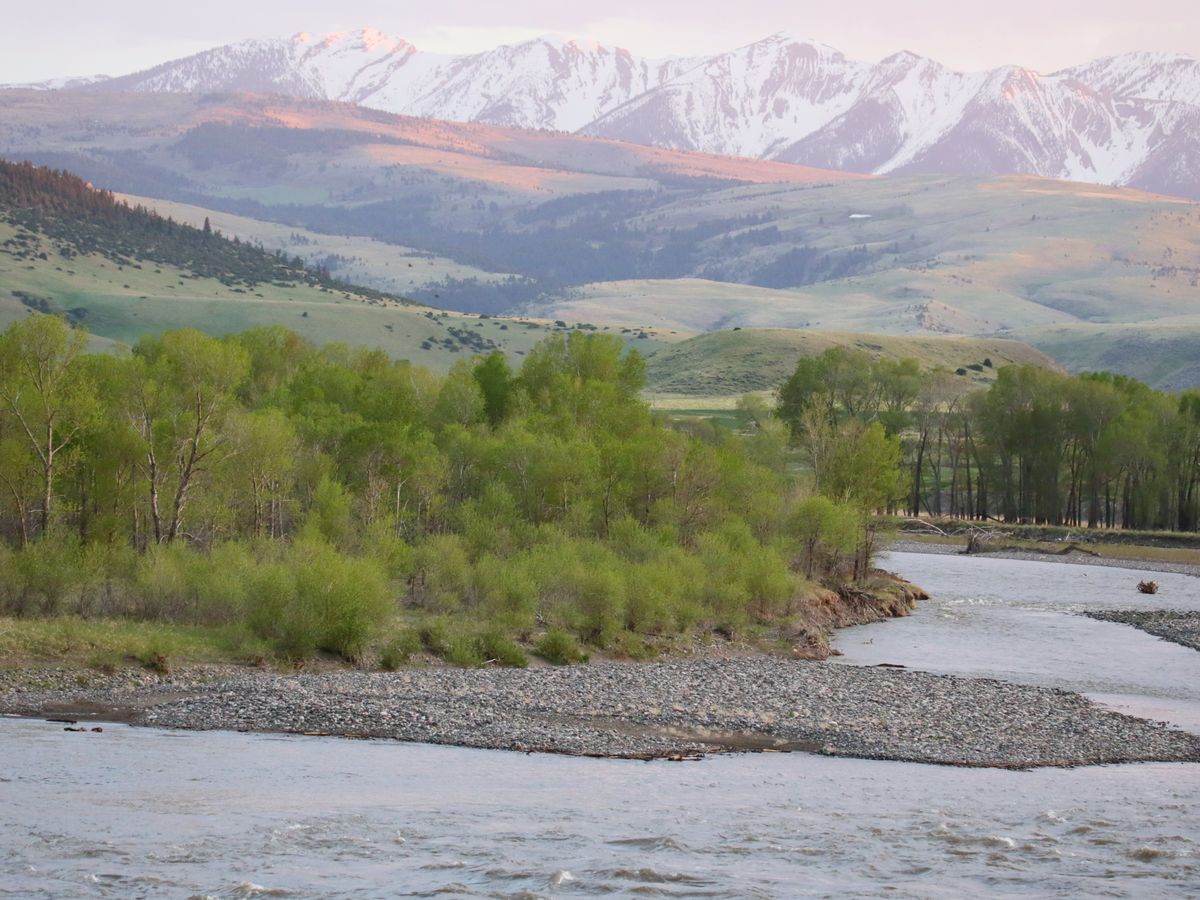
Over the years, the 310 law has drifted toward protecting land use from rivers. It should protect rivers from land use. That protection should also extend to the wetlands, floodplains, and riparian zones that keep a river healthy, and to the water quality the river itself depends on.
Who I am
I’m James W. Goos, M.S., a restoration ecologist with 30 years of field experience on Northern Rockies rivers, and owner of Woody Creek Resources, LLC, in Big Timber.
What this campaign funds
I’m forming a working group as the first step toward a nonprofit. Before asking anyone to build an organization, I want to answer a basic question: is there a real path to stronger state law, and what would it take?
This first phase covers:
Researching permit records, project records, legislation, and hydrological studies through public records requests
A legal feasibility review: whether new state protections are achievable, and how to bring them to lawmakers
Three written products: a white paper, a feasibility report, and a master plan for the nonprofit
Convening the working group to decide whether to form the nonprofit
Where this stands
This work is already underway. I’ve put about 50 hours in, written a first draft of the white paper, and filed public records requests. Part of what’s raised covers that time.
Where the money goes
The goal is $30,000.
Hard costs: $7,650
Records requests: $5,000
Legal review and contingency: $1,500
Filing fees, if the nonprofit is formed: $650
Working group: $500
My time: research and writing at my standard professional rate
How it’s split: after GoFundMe’s processing fees, every dollar is divided evenly between hard costs and my time until the hard costs are fully covered. After that, funds go to my research and writing time. Any unused hard-cost funds go to the nonprofit’s startup.
Please know:
Funds go to me directly until the nonprofit is formed.
Gifts are not tax-deductible.
I’ll post updates on how the money is spent.
If the working group decides a nonprofit isn’t the right vehicle, the research and reports will be made public.
Get involved
If you’re a scientist, attorney, conservationist, river advocate, or engaged citizen who wants to help build this, message me.
Sources
- Sackett v. EPA wetland impacts (Environmental Defense Fund / Science): edf.org/media/new-edf-preliminary-analysis-estimates-millions-acres-wetlands-could-now-be-risk-wake-2023
- Federal WOTUS rule changes (Harvard Environmental & Energy Law Program): eelp.law.harvard.edu/tracker/defining-waters-of-the-united-states-wotus/
- Montana 310 law history (Montana Legislative Services): archive.legmt.gov/content/Bills/Primers/2020-21-Primers/Water/StreambedProtectionAct-20.pdf
- 310 permit process and inspections (Montana DNRC): dnrc.mt.gov/_docs/conservation/CDBureau/cd-resource-documents/310-Permitting-Workflow.pdf
- Montana wetland program (Environmental Law Institute): aghsandbox.eli.org/sites/default/files/docs/core_states/Montana.pdf
Organizer