- S
- P
- A
UPDATE:
Millie has had a rough few months. At the end of July Millie's seizure activity increased and her diet had to change once again. There is no cure for GLUT1 at the present time but diet can help control the symptoms. We are believing for a supernatural healing,however, in the waiting diet is the key. This new ratio of keto diet is helping but there was one especially hard day where Millie experienced 14 seizures in 24 hours and it was rough. Monty is more important than ever.
Monty is in his final stages of training and he and Millie are visiting more often. She is learning how to handle him and he is learning her scents both when she is not having a flare-up of GLUT1 and when she is having one.
We are continuing to raise money to help fund Monty's training. We are grateful for all the support we have been given from our community. We have about $6000 more to go. Please consider a donation of you are able.
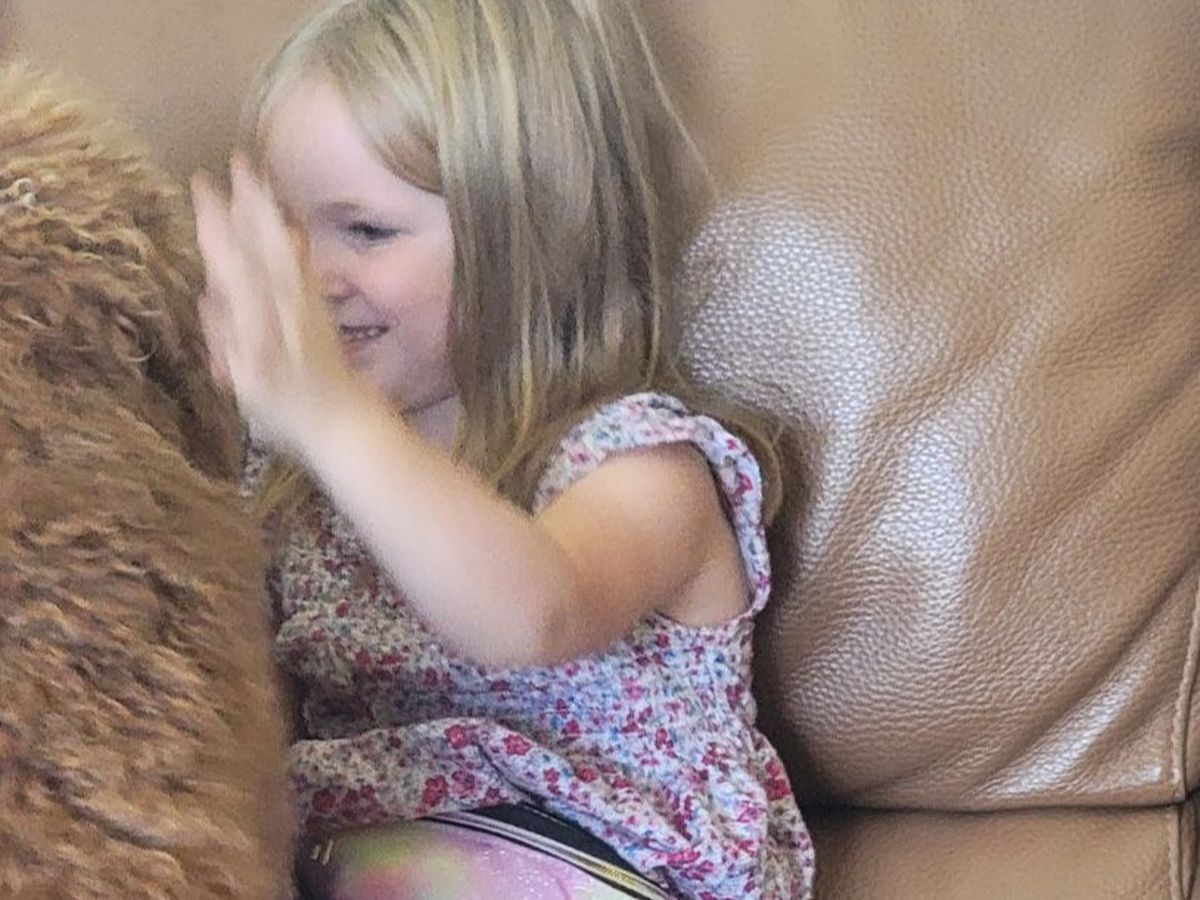
Meet Millie my sassy, mischievous, book-loving, glorious (one of her favorite words) 5 -year- old granddaughter who was diagnosed with GLUT1 Deficiency Syndrome in November 2022. GLUT1 is a very rare disease and there is no cure or medicine to treat her condition. GLUT 1 has many symptoms but Millie's are seizures (several types) and movement disorders. Seizure medicine is not effective and the only option is for her to be on a strict medical KETO diet, eating only 20 carbs a day. This helps curb symptoms but is not a cure and symptoms often still occur.
Millie was born on time, began walking at 11 months and met all her milestones until about the age of 2. At two her parents noticed that she was walking with an unusual gait and she fell more than they remembered her older sister falling. They discussed the issue with her pediatrician but there were no obvious issues so they chalked it up to a toddler toddling and with the pandemic just starting doctors had other things to focus on.
Millie's symptoms continued to progress. She began falling more often and would sometimes just drop to the floor from a standing position. We now know these are drop seizures and part of the movement disorder or as Millie has named them 'the wobblies'.
Millie was getting tired easily and could not jump or run like other children,(although she tried and still does) her stubborn streak serves her well. Over the next 2 years, Millie had MRIs, CT scans, too many blood tests and genetic tests to count and still, there was no diagnosis. It was a very scary time for her family as there were some days she could do nothing but lay down for safety reasons. Finally, after ruling out all other options the specialist concluded that she had GLUT1. She started on the KETO diet right away and her symptoms have improved although there are still episodes lasting up to 10 days.
Millie has two beautiful siblings who love her very much, a 2-year-old brother and an 8-year-old big sister. It is hardest on Millie but it affects her entire family in many ways. Millie's epileptic seizures usually come in the middle of the night with no warning and her big sister runs to get her parents. Millie has heard other kids talk about their service dogs and how much they help them and has been asking if she too can get a service dog (a service dog trained specifically for Millie to detect an upcoming seizure and to provide protection in the event of a drop seizure).
Her parents, Jason and Aubri, searched all over the country trying to find a dog for Millie. There are many non-profit organizations and also private trainers that help families like ours. All the non-profits we reached out to that could provide the specialty training that a dog for Millie would need have a minimum of a 2-year waiting list. They also discovered that whether the dog is from a non-profit group or a private trainer the cost for the parents was about the same. Parents are required to raise at least half the cost of the dog in advance before the dog training begins. Once the funds are raised it takes anywhere from 12 to 24 months for the training, depending on the child's needs. There are so many people on the waitlist that some of the organizations have closed their lists to new families. A true service dog is not just a companion, but a medical device and it takes a trainer with special skills.
Aubri and Jason were able to find a private trainer right here in Florida whose daughter also has seizures who can help them for the same cost as the non-profits without the extensive wait list enabling Millie to get her dog in 18-24 months instead of 3-4 years.
Millie's family knows a dog will help Millie-not just physically but emotionally as well-and provide her siblings and family with security. When you ask Millie what she wants most it is for the ‘wobblies’ to go away but second, she wants a service dog to go with her everywhere to make her feel safe when her family is not around. If you can help in any way to get Millie the dog she desperately wants and needs we would be extremely grateful.
Organizer and beneficiary
Jason Duncklee
Beneficiary