- S
- L
- L
Bridge the Language Gap--Support for Gaza Healthcare Now
0% complete
$950 raised of $18K
18 donations
Support vitally needed training tools for physicians and patients
Reference for Essential Clinical Terms for Primary Care
--an Arabic and English community-based training for healthcare workers treating Gaza patients and patients speaking to their providers
ENDORSED by the Peace and Justice Center of Sonoma County
and the Peace and Life Center of Modesto and San Joaquin
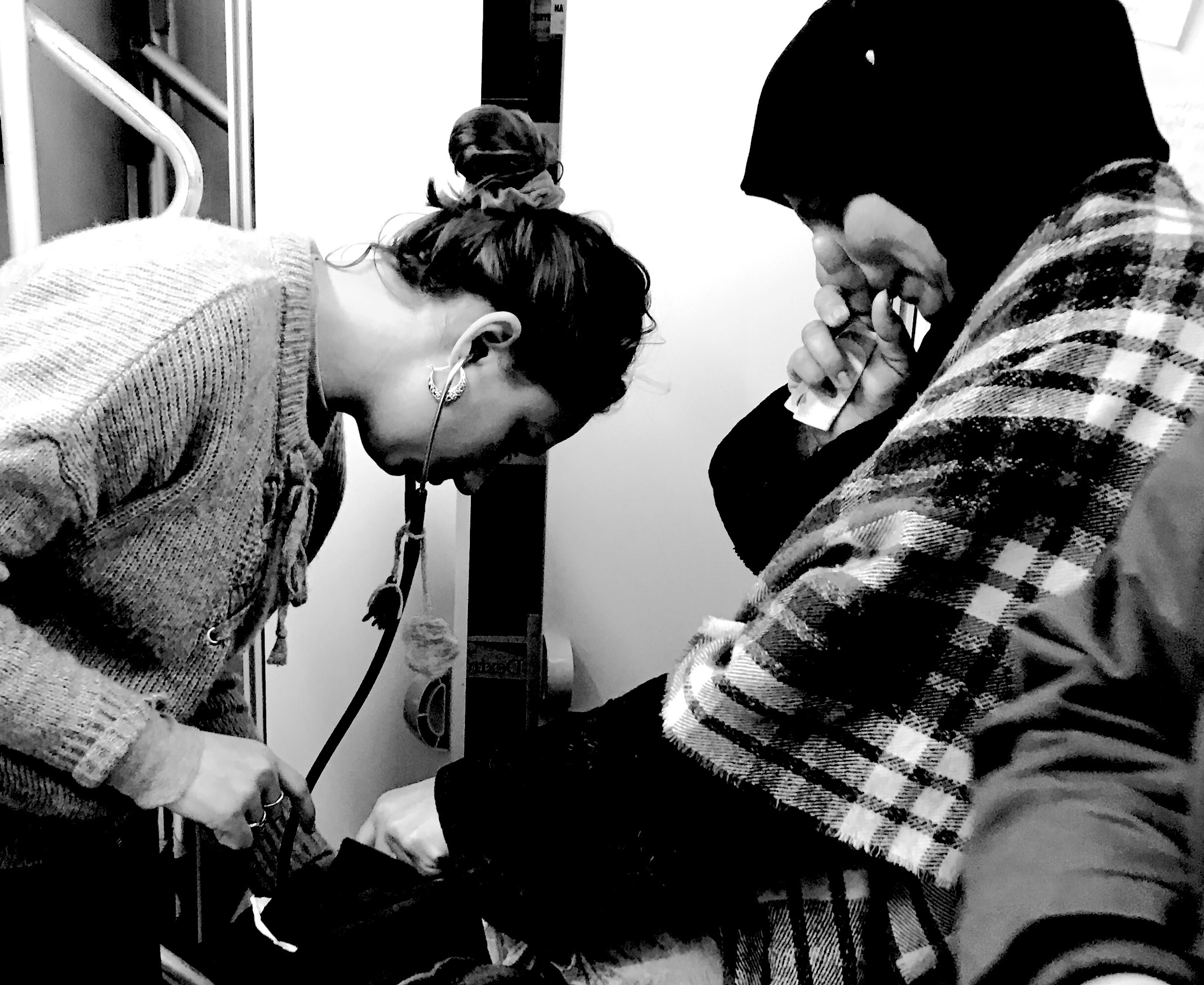
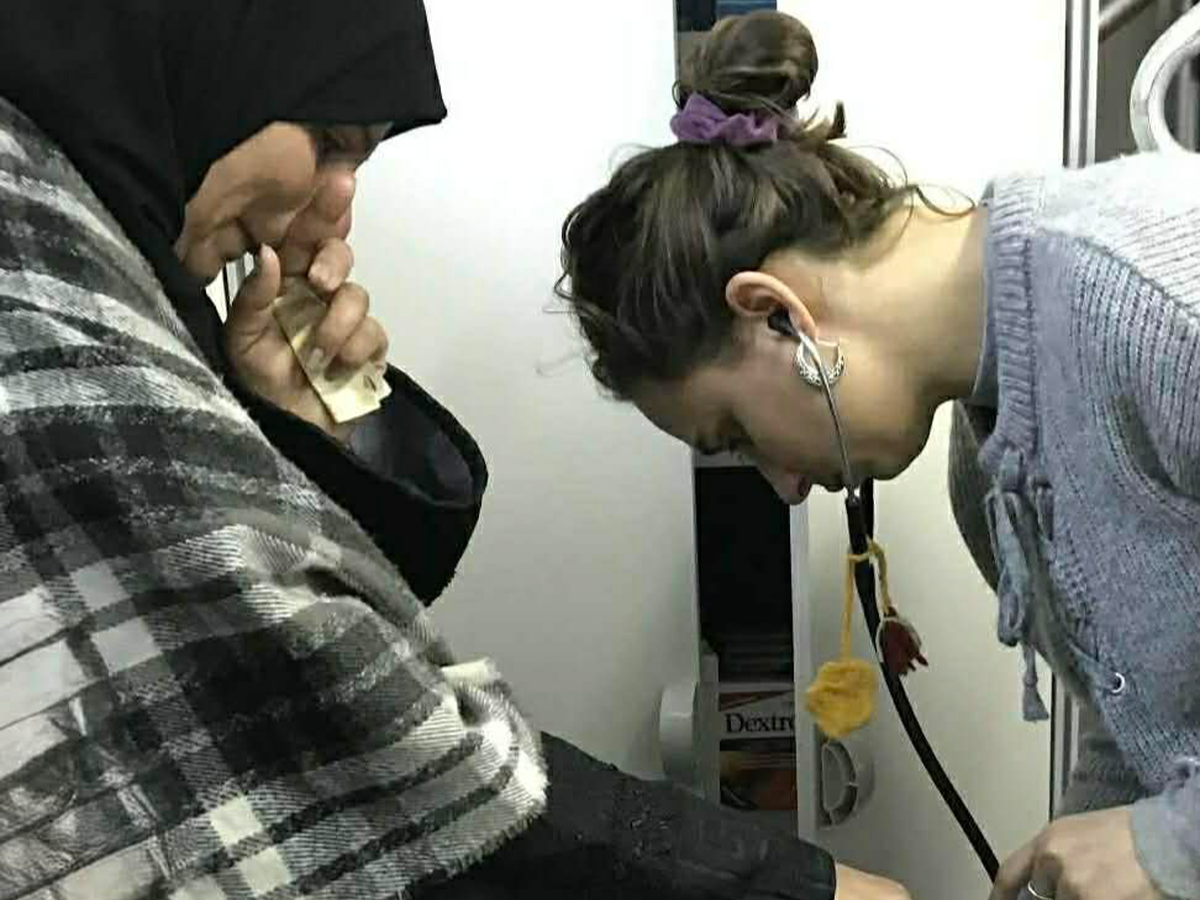
Medics working in remote, low-resource refugee and community clinics know the importance of having core clinical care terms at hand to communicate with patients in their own language.
In best of circumstances, an interpreter or internet is available. Often, none are—and patients and their providers must find a way to get across to each other key facts about injuries and medical conditions.
In November of 2023, at the onset of the humanitarian catastrophe in Gaza, we began to assemble 800+ high yeild terms for primary medical care in English and Arabic for work Gaza field clinics. We knew that outside medical teams would soon arrive there—many with physicians, nurses and other practitioners who do not speak or understand Arabic.
The Reference we've developed is a tool for immediate use by primary care practitoners serving civilians effected by war . Reviewed and field tested by physicians and associates experienced in refugee health, we’ve selected 800+ essential, high-yield terms for patient care, with the goal of impacting and improving healthcare immediately.
Who will use the Reference?
--Primary Care doctors, nurses and other medics serving patients in field clinics, refugee and displacement camps.
--Gazan Patients--using the Reference in reverse (left to right, Arabic to English)--patients can point to terms that indicate their symptoms
--Interpreters assisting medics and patients to communicate
--As preparation and training for foreign doctors and nurses and other clinic in their home countries before joining medical teams.
--At low-resource and remote primary care clinics and refugee camps elsewhere in the Middle East
--At community clinics in third countries --including the US and Europe, where refugees have settled.
We are distributing the Clinical Terms Reference in two forms:
A durable laminated version, that fits in a backpack (for use when electricity or internet are not available).
A digital version and app, for when internet is accessible
-------------------------------
We're aware that medics in the field have little time for language learning—and yet use of basic clinical terms can greatly impact quality of patient care. So with input from colleagues internationally, we have selected 800 + key clinical terms in Arabic, possible to memorize in bunk at night, with coworkers after shift, or in preparation for the job.
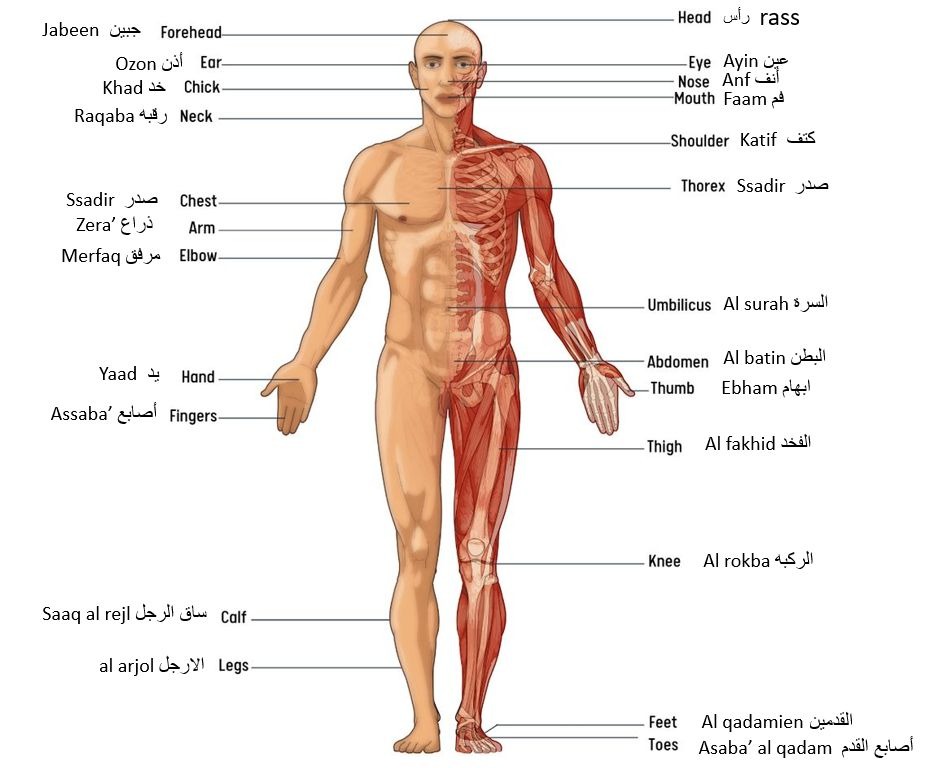
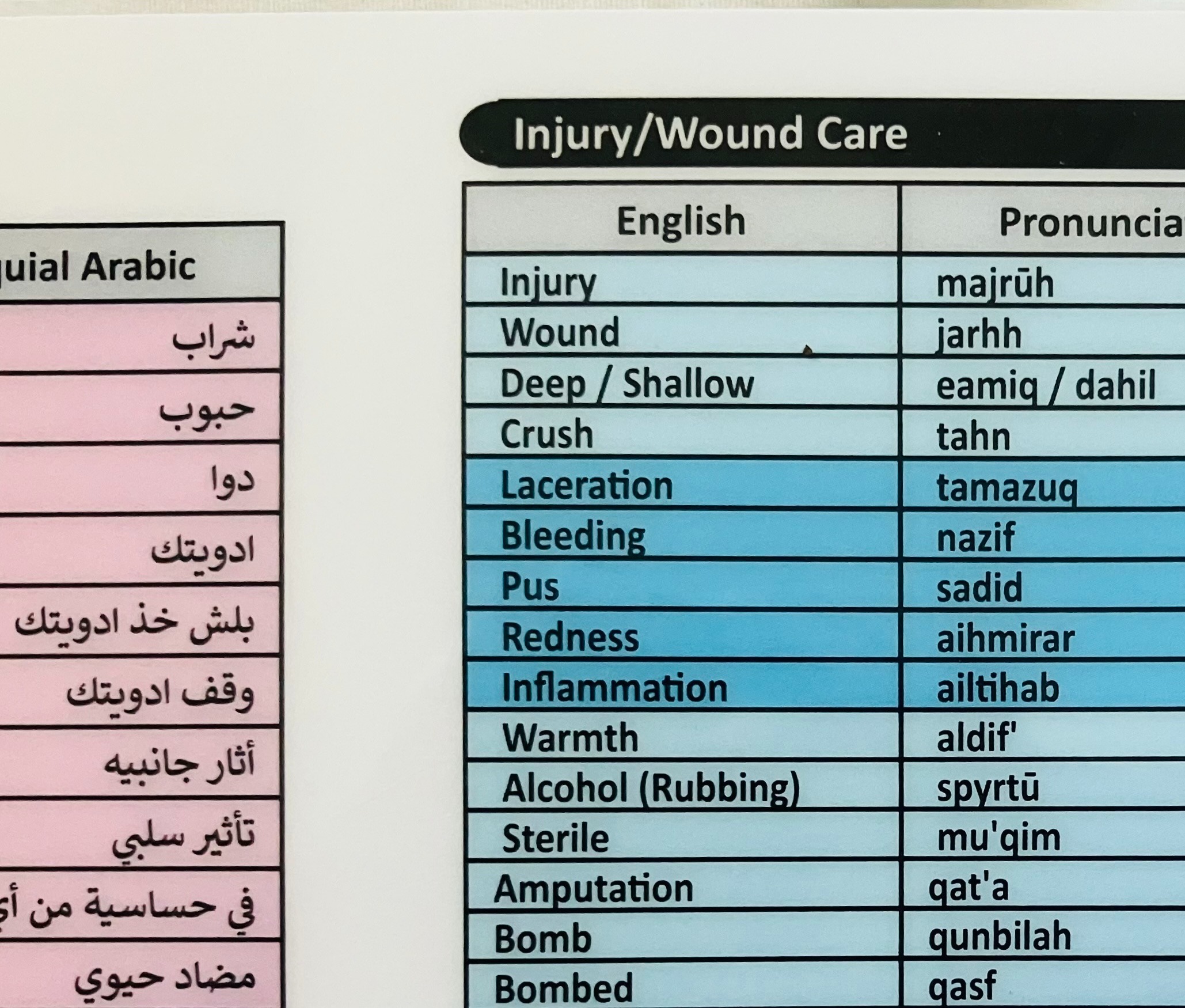
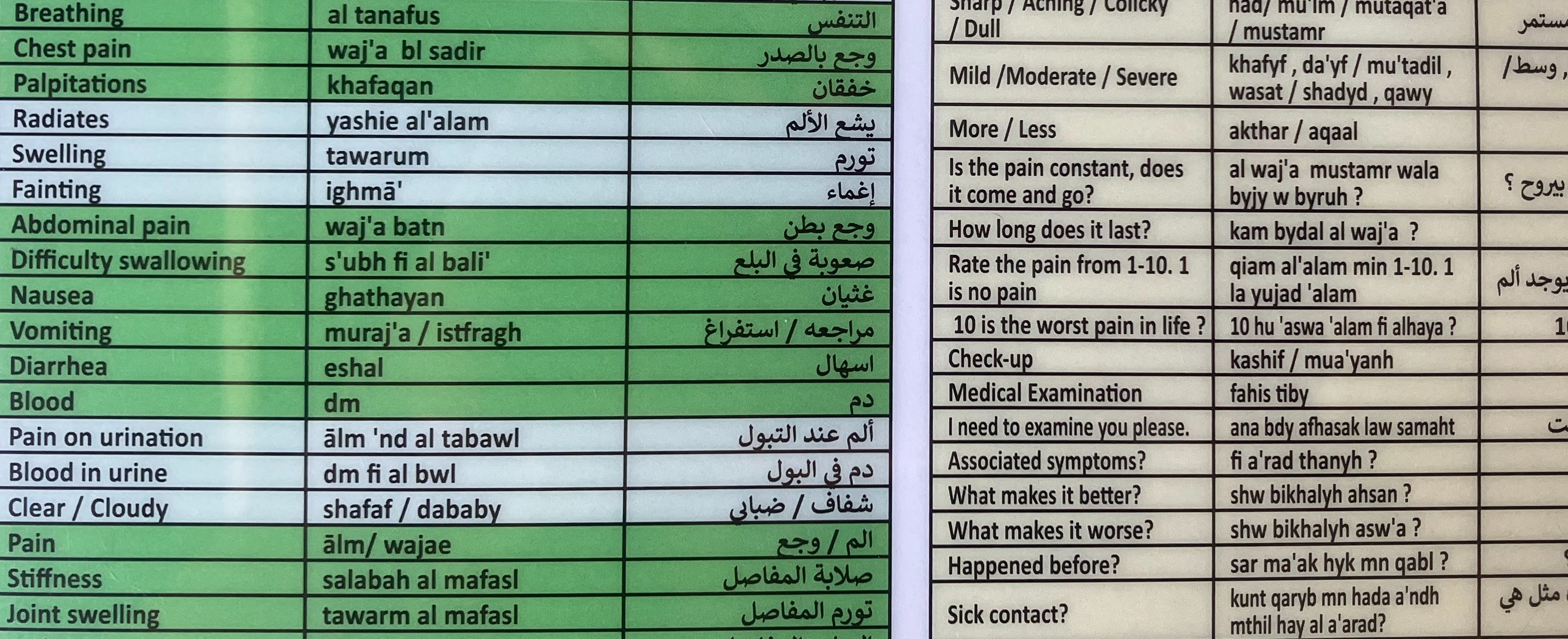
With Gaza the focus of this first edition, the Reference is being written in colloquial (informal) Arabic in the Gazan Levantine dialect. Terms appear in English, Arabic, and transliterated Arabic (for pronunciation). We have included special sections on women's and men's health, pediatrics, pharmacy, nutrition and malnutrition, basic human anatomy illustrations, as well as basic greetings—key to respectful patient/provider contact in the region.
With English currently accepted as primary language of communication for international medical and humanitarian workers, it use here will enable medical teams coming from a variety of countries.
________________________________
Distribution of the laminated Reference will be done via NGO teams with current, direct access to Gaza (such as the International Committe of the Red Cross), who can hand-carry the Reference to medics there.
------------------------------------------
Who put it together:
--Diana is a working PA (physician associate) in California migrant clinics. She has contributed to health manuals, including “Where Women Have No Doctor” for low-literacy patients, and worked in Agean refugee camps.
--Yousef is a Palestinian engineer working with NGOs in inspection/supply of food medical shipments for refugee camps in the Middle East region, including Gaza.
--Abdulrahim is a Syrian refugee from Aleppo area who recently settled with family in the US..
--Noha is a Palestinian autism/special education and first aid worker with internally displaced people in the West Bank
--Rania is a humanitarian aid worker and graduate student from Khan Younis with years experience in the field.
Our Reference of Essential Clinical Terms is an independent, community-based initiative by physicians and healthcare providers from California and Texas, together with longtime associates (friends and coworkers) in healthcare and humanitarian aid internationally--in the West Bank, Syria Mozambique, France, England, and the US.
This is a not-for-profit project with a Creative Commons copyright. All funds will be spent in the United States for design and production of the Reference, plus shipment and distribution by our colleagues--medical team members with establised international NGOs such as the ICRC, going into Gaza.
We plan to provide References free of charge to clinics that need it.
Major NGOs will be required to cover the cost of production and shipping to their clinics.
Improving healthcare for civilians caught in zones of conflict was our initial goal in creating this reference tool. In field testing, it became clear that it can also benefit quality of care in community clinics serving Arabic-speaking patients in the US and other countries where refugees have settled.
The reference is a strictly humanitarian, medically neutral initiative.
The Reference of Essential Clinical Terms is formally endorsed by the Peace and Justice Center of Sonoma County, California. in keeping with its principles of peace, non-violence, conflict resolution. equity and medical neutrality.
--------------------------------
To date, our team has put in > 2300 volunteer hours researching, writing, collating, printing, editing and field testing the Reference.
Beyond this, the Reference has growing costs associated with finalizing the work, and carrying outthe production and distribution.
Expenses include:
Designer for draft and revisions
Review of manuscript by professional translator
Professional-grade editor
Dialect review
Printing and binding costs
Copying and post
Shipping costs
Associated costs for delivery and dissemination to clinics in the region.
Web site and recording of Reference - electronic version
This is our first fundraising effort.
There are considerable expenses, and would be very grateful for your gift toward a practical tool to improve quality of care for patients.
Note: GoFundMe automatically sets it's own recommendation for donation amount (this is not editable by our team).
We are however grateful for donations of $10, $25 or any amount - we know that smaller donations together provide very important support.
If you would be willing and are able to make a larger donation, or if you have more questions, please feel free to contact us.
THANK YOU for considering being a part of our Reference project