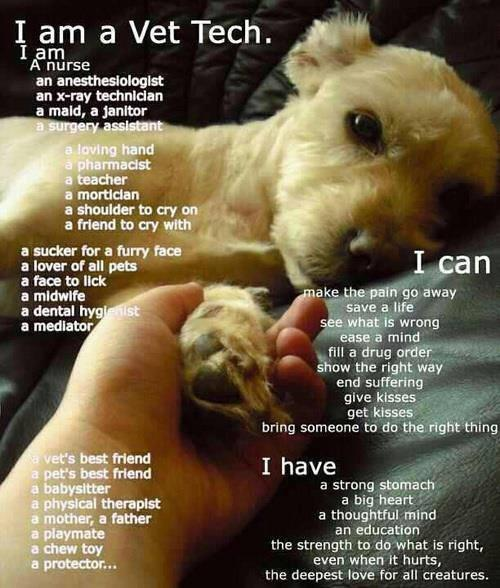
Hello. My name is Chris, and I am an emergency Veterinary Technician who has been practicing in facilities in both California and Texas for about 11 years now. Over the years, I have always strived to honor the Veterinary Technician’s Oath, which is as follows:
“I solemnly dedicate myself to aiding animals and society by providing excellent care and services for animals, by alleviating animal suffering, and by promoting public health. I accept my obligations to practice my profession conscientiously and with sensitivity, adhering to the profession’s Code of Ethics, and furthering my knowledge and competence through a commitment to lifelong learning.”
In my early years of my profession, and before COVID times, I often ran into many clients and patients who came from different backgrounds — seniors living off of Social Security, low-income families, disabled individuals, and even some without a place to call home. A lot of the time, these people want nothing but the best possible care for their pets, but some are just financially unable to keep up with the continually rising costs of medications, services, and procedures. I previously had an account dedicated specifically to setting aside my own personal funds that I would earn working for the clinic, and whenever I had a situation where I could step in and help some of these families out, I would. Then the COVID-19 era happened, and suddenly, I found myself unable to continue to do that, as everything across the world started to inflate heavily — I would barely break even with my own expenses. My own continuing education skyrocketed, to where even with aid, my schooling costs could not always be met.
Veterinary bills are expensive. We do not have the same luxury of billing (most) insurances directly for services rendered on pets. Not all insurance plans are created equal, and not everyone is eligible to purchase insurance plans, qualify for CareCredit or ScratchPay, or take out loans of that nature to help offset costs. There are even clinics out there that don’t accept any of these options, as they can’t afford to pay the hefty fees charged by these companies for the processing of these services and keep the costs low and the doors open. As a result, there are only a handful of true emergency 24-hour hospitals remaining in Texas.
I am trying to find ways to advocate for families, because sometimes emergencies come at the worst possible times, and especially these days, not everyone can sustain emergency costs and keep control of their everyday life. I hate seeing the difference between life and death of a patient being money. Unfortunately, unless the clinic is a federal one, there is no federal support to keep things stocked or keep the clinic bills paid — it’s all dependent on services done day in and day out. This results in the higher fees that pay for the doctors, technicians, assistants, and other staff, medications, surgical supplies, anesthesias, and even the basics such as water and electricity.
The purpose of this is to help create an “Angel Fund” of sorts, which not a lot of options out there exist like that. I want to be able to save as many lives as possible, and keep as many families and pets together as possible, or if it is beyond help, provide a way to say goodbye humanely, and with proper afterlife care. But it is something that one person cannot do alone. I am not looking to gain from this at all. I am just trying to be more involved and take patient advocacy to even higher levels, even if just a little.
The goal is set at $10,000 but this is a continual fundraiser, and can exceed this goal.
Help me, and others like me, make a REAL difference.
***For the purposes of this fundraiser, there will be a few requirements.
The Angel Fund is meant for the purpose of assisting pet owners with extra support when all other options have been exhausted. This is a means to help provide coverage for people that truly need the help - as such, there are certain requirements for appropriation of funds.
- The prognosis must be at least guarded - This means, the prognosis can go either way, but has to have about 50/50 shot of success. The vet is the one that usually determines this. Poor prognoses to grave prognoses are not eligible for the purpose of treatment costs.
- The owner must have (or will have) exhausted all other financial options. - This means applying for CareCredit, Scratchpay, self-pay etc.
- The owner must contribute majority payment of the cost of treatment, or demonstrate their inability to pay. - This means if they have an estimate of $3000, they must contribute at least 50% (or the majority of the estimate, if able), or show that they cannot afford at least bare minimum care. This does not include preventive care costs, but the pet must have at least basic preventive care on record. A crisis that is a direct result of lack of preventive care and negligence will not qualify. Example: Heartworm positive because owner will not use heartworm preventives, parvo positive because the owner failed to get the pet vaccinated, etc. The owner will be expected to provide a majority payment at the time service is rendered. If financially unable to afford care, I will elect for an alternative treatment plan, if there is one available. The owner will still be expected to put something toward the cost, if able.
- Elderly and military families are generally given priority, but not exclusively. - As these types of pet owners already have a ton of expenses, and are usually limited on income, I prefer to help them out first. But the owner has to demonstrate effort and compassion for care. There must still be provable basic preventive care required.
- This will also be used in the event that pet owners cannot afford end of life care. - Most practices will euthanize if a patient is truly suffering at no cost, if a client demonstrates a strong inability to pay. The same rules will apply - all financial options must be exhausted. The funds will be used to help reunite the family with their lost pet via cremation or Ever After Art.
Please understand, that while I would love to help anybody and everybody, it is unrealistic to maintain financially. As such, regulation of funds to certain financial situations would be the only way to make this fund useful in the most effective way possible. These funds will also only be applicable to true, Priority 1 or 2 emergencies. Priority 3 visits will not be eligible. Examples include:
Priority 1 - Any condition that can be immediately life threatening, and requires immediate stabilization. This includes things like rattlesnake envenomation, toxin ingestion, trauma that includes active profuse bleeding, choking or difficulty breathing, seizures* hit by car accidents or broken bones. These are usually taken back immediately for triage, stabilization, and kept in the treatment area for observation after stabilizing.
*if due to a secondary medical cause, like shock.
Priority 2 - conditions that require immediate attention but are not immediately life-threatening, such as diarrhea or vomiting*, severe ear infections or eye issues**, lethargy or loss of appetite*, minor lacerations etc. These are usually taken back for triage, and then returned to the owner after confirming that the pet isn't in immediate danger - generally, wait times may apply over Priority 1 patients.
*For conditions like pancreatitis, parvovirus (not caused by negligence), or diabetic ketoacidosis, etc.
**severe ear infections causing vestibular signs, and severe eye issues, like proptosis or trauma that could compromise vision.
Priority 3 - includes conditions treatable by general practices, and are largely not life-threatening. This includes things like skin allergies, minor ear infections, a torn nail, limping, osteoarthritis etc. These kinds of visits are generally not triaged, and extended wait times would apply in an ER.