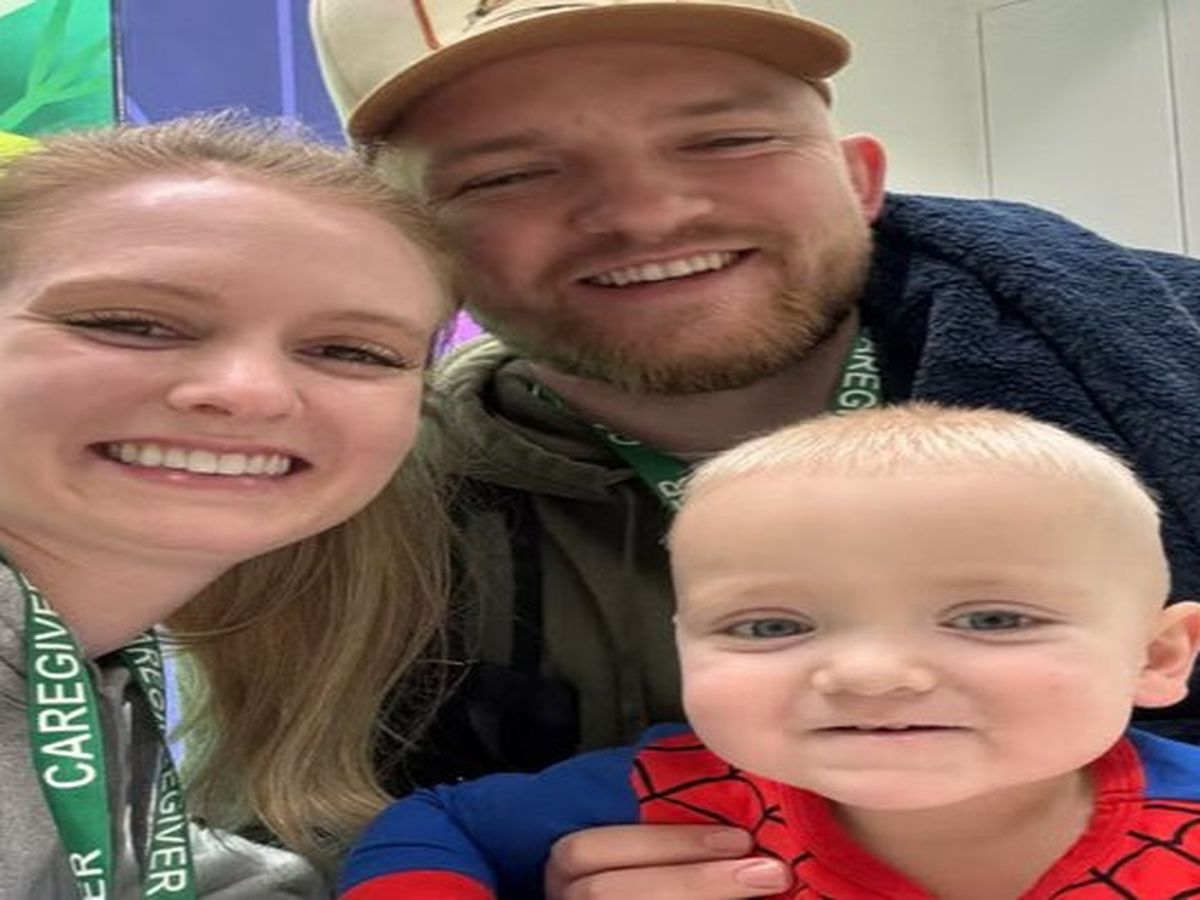
The Ransome Family: Kidney Hero of The Year Nominee
Be the first to donate
Inspire others and help Kidney Hero build momentum.
1st donor
Tayler and Billy Ransome never imagined that the 20-week ultrasound for their first child would be anything but normal. Instead, they learned their baby had a rare condition called posterior urethral valves (PUV), a blockage in the urethra that can cause childhood kidney disease even before birth.
Bio:
Tayler and Billy weren't expecting to learn about complications. They were hours into a road trip when the results of the ultrasound came in.
"It mentioned a keyhole bladder shape and PUV," Tayler said. "It felt like looking at another language. We had to Google it."
A keyhole bladder is a sign of PUV, a rare condition that only happens in individuals assigned male at birth. Tissue blocks the urethra, the small tube that carries urine out of the body. The blockage prevents the bladder from emptying properly. This, in turn, causes the bladder and urethra to swell into a keyhole shape.
"Babies normally pee into the amniotic sac. That urine becomes amniotic fluid,” said Tayler. "This blockage could stop him from urinating as much as he needed.”
The rest of the pregnancy became a waiting game. Doctors monitored fluid levels often. If the amniotic fluid dropped too low, delivery would need to happen right away.
"I delivered Sullivan (Sully) Ransome at 34 weeks in December 2022," Tayler said. "That's still early, but many babies with this condition come even sooner."
The Ransomes' biggest concern for Sully was whether his lungs would work on their own. Babies with PUV often struggle because low amniotic fluid can keep lungs from developing fully.
"We were so thankful he could breathe right away," Tayler said. "That was a miracle."
But the relief didn't last long. Testing showed his kidneys were already failing.
"They told us he was in kidney failure," said Tayler. "He didn't need dialysis that day, but it was coming. We learned about the home dialysis options as we waited."
Sully spent the next 30 days in the hospital before going home. His parents maintained his kidney function for nine months with medications before he had to start dialysis.
Sully’s parents chose peritoneal dialysis, a type of dialysis done at home using a machine that cleans the blood through the lining of the belly.
"It was 10 hours every single night," said Tayler. "We thought he'd sleep through treatment, but he pulled on his tubes frequently. The machine's beeping woke all of us up frequently."
Sully needed to grow and pass a heart, lung, artery, and vein test before he could receive a kidney transplant. While they waited, Sully's parents began the living donor evaluation.
Unfortunately, they were both ruled out to donate.
"He was listed for a deceased transplant in January 2025," said Tayler. "He got almost 500 days of dialysis backdated on his record."
Thankfully, the Ransomes didn't have to wait much longer and Sully received a new kidney a few weeks later.
"The surgery went perfectly," said Tayler. "They predicted he'd be down for five days, but Sully tried to sit up the next morning."
After 2½ days in the ICU and a week in a step-down unit, Sully went home.
"It was overwhelming to know our miracle came from another family's loss," Billy said. "But we are so grateful for their gift and will live every day to the fullest to pay it back. We watched him blossom. His energy soared. He looks healthier, and he's growing taller."
Once quarantine ended, Sully could finally do things that were off-limits on dialysis, like playing in sprinklers, taking baths, and traveling.
"He's like a new toddler. He inspires us every day," Billy said. "He's been through more than most adults ever will, and yet he's the happiest kid we know."
Now, the Ransomes are sharing their story on social media to give hope to other parents.
"The journey is full of ups and downs, but there can be a good ending for your child," Tayler said. "Surround yourself with people who will cheer you on, and don't be afraid to connect with other families."
Organizer
National Kidney Foundation
Beneficiary