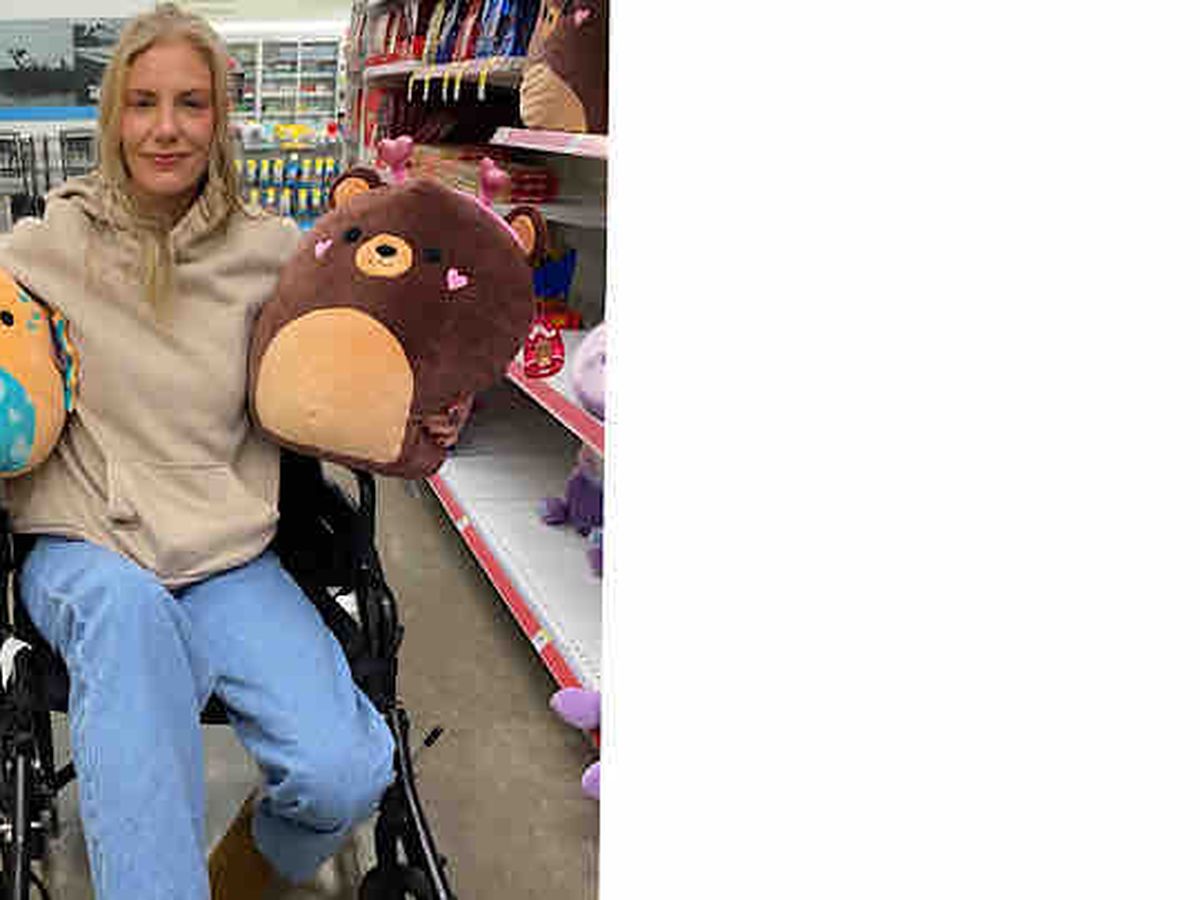


Never in my wildest dreams did I ever think I would be in a position to start a GoFundMe, but then again never did I think I’d be diagnosed with what’s been given the nickname ‘the suicide disease’. I despise the nickname, but I admit I’ve had some of my darkest days since being diagnosed. Here’s my story:
It all began in April when I started experiencing excruciating pain in the back of my right thigh. Some days were manageable, but others were pure agony, leading me to numerous visits to the emergency room. Despite these visits, the doctors seemed unable to pinpoint the cause of my pain, leaving me feeling increasingly hopeless and frustrated with each passing day.
As the months went on, the pain escalated, and I found myself unable to bear weight on my right foot and knee. This marked the beginning of a series of tests, including multiple MRI scans, nerve conduction tests, X-rays, ultrasounds, blood tests, and even a bone scan. Each time, the results came back normal, leaving me and the doctors baffled. I became bed bound, but hoped one morning I’d wake up and be able to walk.
It wasn't until November that a doctor finally provided a diagnosis—Complex Regional Pain Syndrome (CRPS), also known as Reflex Sympathetic Dystrophy (RSD). CRPS ranks at the top of the McGill Pain Index, making it currently the most painful disease to mankind. At first, I struggled to accept it. How could I, an active and healthy individual, be afflicted by such a rare and debilitating condition? But as I delved into the research, it became clear that this was indeed my reality.
The pain I experience on a daily basis is beyond description. Most days, it feels like my foot is being sliced between each toe, while my leg feels like it's being put through a meat grinder. Imagine walking on Leggo after Leggo, and it never stops. I could go on but the amount of tears I’ve shed could fill up craters on the moon I’m convinced.
The doctors prescribed me Gabapentin, an anti-seizure medication often used to alleviate nerve pain, but unfortunately, it provided no relief. Since October, my pain levels have consistently ranged from 7 to 9, and I've become entirely reliant on a wheelchair for mobility. Despite undergoing physical therapy and trying various medications, including low-dose Naltrexone, the pain persists, and my ability to function as I once did feels like a distant memory.
The impact of this condition extends beyond the physical realm. As a result of my inability to work, my partner, Amber, has shouldered the financial burden almost single-handedly. Our monthly rent has become a constant struggle, and the weight of our financial obligations looms large. But even more distressing than the financial strain is the feeling that my life has been abruptly upended. I went from being someone who thrived on an active lifestyle—hiking, camping, swimming, exercising—to being confined to a bed, unable to perform even the simplest of tasks due to the relentless pain in my leg.
As if the pain from CRPS wasn't enough, I've also started experiencing discomfort in other areas of my body, particularly in my chest wall. Despite undergoing various tests, including CT scans and EMGs, the results have been inconclusive. The prospect of even a simple hug now fills me with apprehension, as I fear the potential spread of this agonizing affliction.
After extensive research, both Amber and I have discovered a treatment known as Scrambler Therapy, which has offered a glimmer of hope. This non-invasive therapy has the potential to rewire the way my brain processes pain, offering the possibility of relief from the unyielding torment I experience daily. However, this treatment is not covered by insurance, and the costs associated with it are substantial. Scrambler Therapy boasts an 80-90% success rate, far surpassing the efficacy of nerve blocks, which are covered by insurance but yield a mere 57% success rate. Moreover, many CRPS patients have reported that nerve blocks have actually exacerbated their pain, making Scrambler Therapy all the more appealing.
The treatment I seek is offered at the CRPS Treatment Center in Chandler, Arizona, under the care of a chiropractor named Ryan Wade. Countless individuals have attested to the remarkable improvement in their quality of life following this therapy, with some even experiencing a near-complete elimination of pain. My aspiration is to, at the very least, achieve a reduction in my pain levels that would enable me to stand up and walk without the aid of a wheelchair. While the ideal scenario would be to be free from pain altogether, the prospect of regaining a semblance of mobility is a dream I hold dear. Unfortunately, such treatment is not available in Hawaii, and the limited healthcare options on the island have left me with no viable alternatives.
The Scrambler Therapy treatment spans 10 days, with each session costing $250 upwards. While the cost of residing in Arizona is relatively more affordable than in other parts of the West Coast, it remains an insurmountable expense for us. Your donations would not only cover the cost of the treatment,travel and lodging, but also serve as a beacon of hope in my arduous battle against this debilitating condition. I grappled with the decision to share my story and seek assistance, as my reluctance to ask for help runs deep. However, as my condition shows no signs of abating, I find myself compelled to take proactive steps in pursuit of relief. If you have the means to contribute, no matter how small, it would be an immeasurable gift, one that would carry profound significance in my journey toward recovery.
From the depths of my heart, I extend my deepest gratitude for any support you can offer. Your generosity would not only alleviate the financial strain but also provide a ray of hope in what has been a harrowing and disheartening ordeal. With your help, I can work towards reclaiming a semblance of the life I once knew, free from the unrelenting grip of pain and immobility.
Thank you for taking the time to read my story and for considering a contribution. Your kindness and compassion mean more than words can express.
From the bottom of my heart thank you,
Kelsey
Treatment Center in Chandler,Arizona https://www.crpstreatmentcenter.com
About CRPS
https://rsds.org/living-with-crps/definition-of-crps/
About Scrambler Therapy
It all began in April when I started experiencing excruciating pain in the back of my right thigh. Some days were manageable, but others were pure agony, leading me to numerous visits to the emergency room. Despite these visits, the doctors seemed unable to pinpoint the cause of my pain, leaving me feeling increasingly hopeless and frustrated with each passing day.
As the months went on, the pain escalated, and I found myself unable to bear weight on my right foot and knee. This marked the beginning of a series of tests, including multiple MRI scans, nerve conduction tests, X-rays, ultrasounds, blood tests, and even a bone scan. Each time, the results came back normal, leaving me and the doctors baffled. I became bed bound, but hoped one morning I’d wake up and be able to walk.
It wasn't until November that a doctor finally provided a diagnosis—Complex Regional Pain Syndrome (CRPS), also known as Reflex Sympathetic Dystrophy (RSD). CRPS ranks at the top of the McGill Pain Index, making it currently the most painful disease to mankind. At first, I struggled to accept it. How could I, an active and healthy individual, be afflicted by such a rare and debilitating condition? But as I delved into the research, it became clear that this was indeed my reality.
The pain I experience on a daily basis is beyond description. Most days, it feels like my foot is being sliced between each toe, while my leg feels like it's being put through a meat grinder. Imagine walking on Leggo after Leggo, and it never stops. I could go on but the amount of tears I’ve shed could fill up craters on the moon I’m convinced.
The doctors prescribed me Gabapentin, an anti-seizure medication often used to alleviate nerve pain, but unfortunately, it provided no relief. Since October, my pain levels have consistently ranged from 7 to 9, and I've become entirely reliant on a wheelchair for mobility. Despite undergoing physical therapy and trying various medications, including low-dose Naltrexone, the pain persists, and my ability to function as I once did feels like a distant memory.
The impact of this condition extends beyond the physical realm. As a result of my inability to work, my partner, Amber, has shouldered the financial burden almost single-handedly. Our monthly rent has become a constant struggle, and the weight of our financial obligations looms large. But even more distressing than the financial strain is the feeling that my life has been abruptly upended. I went from being someone who thrived on an active lifestyle—hiking, camping, swimming, exercising—to being confined to a bed, unable to perform even the simplest of tasks due to the relentless pain in my leg.
As if the pain from CRPS wasn't enough, I've also started experiencing discomfort in other areas of my body, particularly in my chest wall. Despite undergoing various tests, including CT scans and EMGs, the results have been inconclusive. The prospect of even a simple hug now fills me with apprehension, as I fear the potential spread of this agonizing affliction.
After extensive research, both Amber and I have discovered a treatment known as Scrambler Therapy, which has offered a glimmer of hope. This non-invasive therapy has the potential to rewire the way my brain processes pain, offering the possibility of relief from the unyielding torment I experience daily. However, this treatment is not covered by insurance, and the costs associated with it are substantial. Scrambler Therapy boasts an 80-90% success rate, far surpassing the efficacy of nerve blocks, which are covered by insurance but yield a mere 57% success rate. Moreover, many CRPS patients have reported that nerve blocks have actually exacerbated their pain, making Scrambler Therapy all the more appealing.
The treatment I seek is offered at the CRPS Treatment Center in Chandler, Arizona, under the care of a chiropractor named Ryan Wade. Countless individuals have attested to the remarkable improvement in their quality of life following this therapy, with some even experiencing a near-complete elimination of pain. My aspiration is to, at the very least, achieve a reduction in my pain levels that would enable me to stand up and walk without the aid of a wheelchair. While the ideal scenario would be to be free from pain altogether, the prospect of regaining a semblance of mobility is a dream I hold dear. Unfortunately, such treatment is not available in Hawaii, and the limited healthcare options on the island have left me with no viable alternatives.
The Scrambler Therapy treatment spans 10 days, with each session costing $250 upwards. While the cost of residing in Arizona is relatively more affordable than in other parts of the West Coast, it remains an insurmountable expense for us. Your donations would not only cover the cost of the treatment,travel and lodging, but also serve as a beacon of hope in my arduous battle against this debilitating condition. I grappled with the decision to share my story and seek assistance, as my reluctance to ask for help runs deep. However, as my condition shows no signs of abating, I find myself compelled to take proactive steps in pursuit of relief. If you have the means to contribute, no matter how small, it would be an immeasurable gift, one that would carry profound significance in my journey toward recovery.
From the depths of my heart, I extend my deepest gratitude for any support you can offer. Your generosity would not only alleviate the financial strain but also provide a ray of hope in what has been a harrowing and disheartening ordeal. With your help, I can work towards reclaiming a semblance of the life I once knew, free from the unrelenting grip of pain and immobility.
Thank you for taking the time to read my story and for considering a contribution. Your kindness and compassion mean more than words can express.
From the bottom of my heart thank you,
Kelsey
Treatment Center in Chandler,Arizona https://www.crpstreatmentcenter.com
About CRPS
https://rsds.org/living-with-crps/definition-of-crps/
About Scrambler Therapy