- L
Kasama Farm
0% complete
$15,723 raised of $15K
228 donations
About Kasama Farm
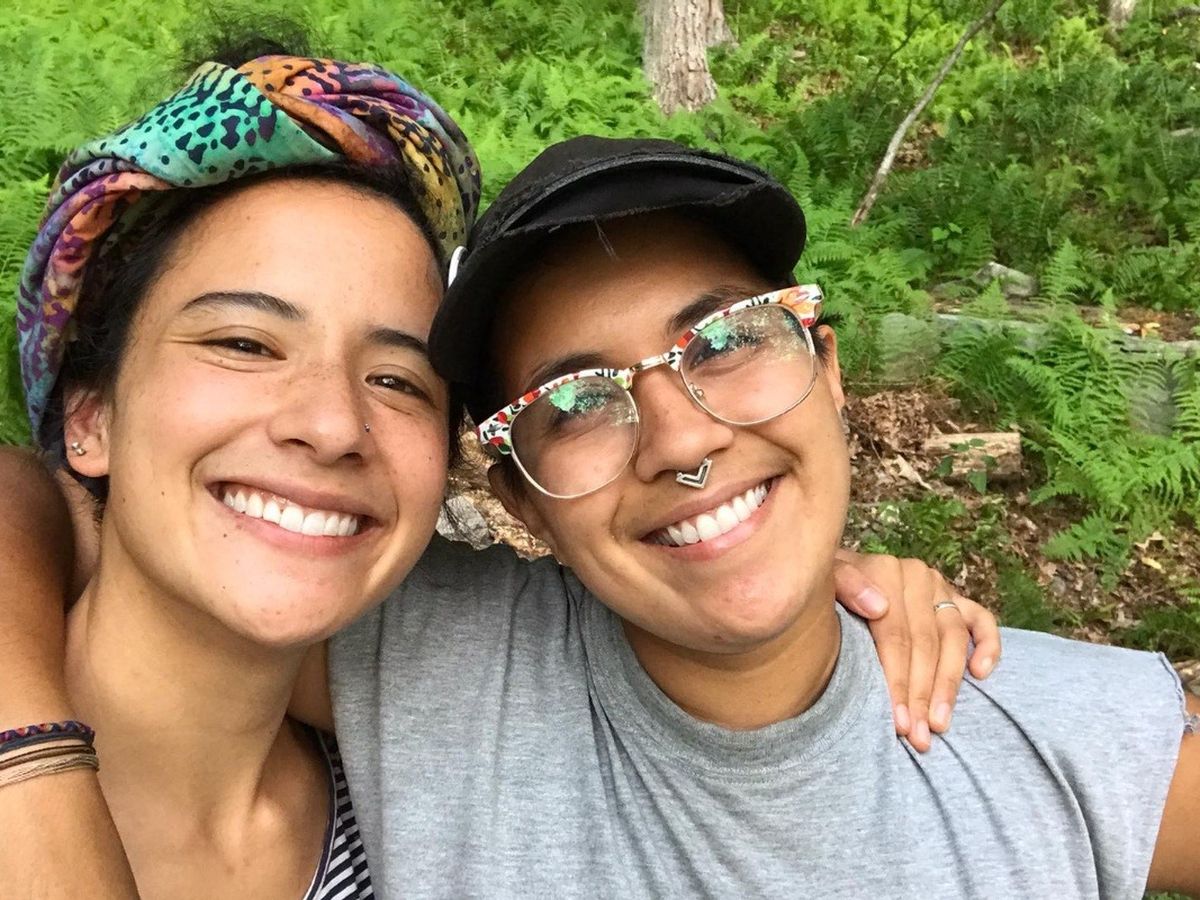
Kasama Farm is a queer, Pilipinx-American led land, healing, and love project by Jihelah Greenwald and Leilani Mroczkowski. After years of community organizing and earth work in the Boston-area, we have decided to move to Oregon to be close to family and to start this project. The COVID19 pandemic has shown us that there is a need for many kinds of resilience in our movements and we are called to be cultivators of food, land, and healing spaces.
The future home of Kasama Farm is nestled in a valley between Wyest and Klickitat mountains in Hood River, Oregon. We acknowledge our privilege to be able to farm on land that Jihelah’s family has called home for the past 30 years. Their impact on the land can be seen through bee hives, vegetable and flower gardens, a chicken coop, maturing trees throughout the property, yard sale finds and DIY projects.
This land holds decades of sweet family memories and joy, however, there is undeniably years of grief and violence. We name the genocide of Native people, exclusion of Black people, removal of Japanese people, and exploitation of immigrant labor on the land of what is now called Hood River County. State violence continues in this place through exploitation of immigrant labor, anti-Black racism, and erasure of Native people.
It is with humility and deep gratitude that we are called to return to and nurture this land. We acknowledge the great responsibility that we hold to invite healing to this land and to the people who have been harmed. As organizers we know that we cannot do this work alone. We must be in community.
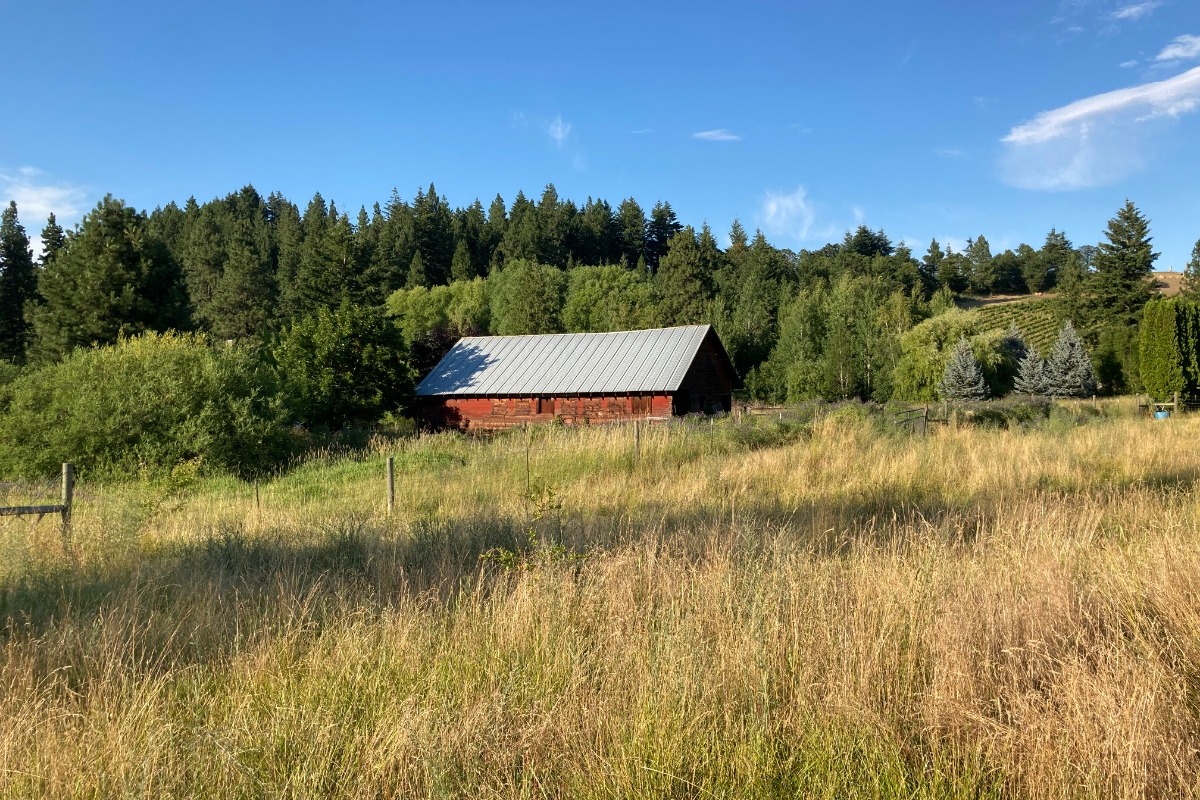 Image description: A photo of the land where we will farm. A field of grass with a red barn and trees on a hill in the background.
We Envision
*A space where queer, trans, BIPOC people can find nourishment and show up in their wholeness. In many cultures, queer and trans deities have been the keepers of fertility and agriculture. We are moved by the spirit of Lakapati to do this work reclaiming our relationship to land.
*A space to reclaim cultural relationships our ancestors had with plants and plant medicines. Those relationships have been stolen from us through colonization, assimilation and the ways capitalism manifests within our food system. We hope to cultivate an intergenerational community of learning and pride for the cultures we have come from so we can pass down our wisdom to future generations.
*A healthy work environment that is energizing to the soul and not dominated by white supremacy culture. We prioritize rest so that we may develop a deep connection to our bodies’ needs. We value collective decision-making and transparency. We honor ritual, creativity and joy.
*A community-based and community-supported project. We will be accountable to our friends, family, and community and not philanthropic interests.
*A space filled with the laughter of children, songs and prayers of our elders, and the many colors, patterns, and sounds of our people.
Community-Funded
Your donation will be used to directly support our dream. We are starting small and using our savings, but start-up costs for beginning a new farm as new farmers is high. We need your support. With our friends, family, and movement partners with us, we know we can challenge industrial farming and bring dignity, justice, and intimacy into this work.
Fall:
Funds will be used to pay for equipment and tools to cultivate the pasture into field, purchase cover crop and garlic seeds to plant, to establish access to water, to buy materials to construct chairs and benches for community to rest in and to construct and install hoop houses and irrigation.
Winter:
We’ll use funds to buy notebooks for our crop plans and computer programs for our accounting. We will be purchasing materials for our CSA and market so that we can get bundles, bags, and boxes of produce to our community members. We’ll be building and deepening community connections and relationships. We will be buying locally sourced seeds and quails (!).
Spring:
We’ll use these funds to rent greenhouse space, to build wash stations to clean produce, and purchase refrigeration and coolers to keep produce fresh and crisp. We’ll also purchase materials so that we can make and share plant medicines with our community near and far.
Summer:
Our hope is to be fully planted in, going to market, distributing CSA boxes, hosting community gatherings and on our way to becoming a sustainable community farm.
Jihelah & Leilani
Jihelah and Leilani met in November 2018 at a Boston PEAR (Pilipinx Education Advocacy and Resources) Kamayan dinner. In our first conversation together, we shared a love of being connected to the earth and our dreams of being farmers. We are excited to sow the seeds with each other and to nurture them with our community.
Jihelah
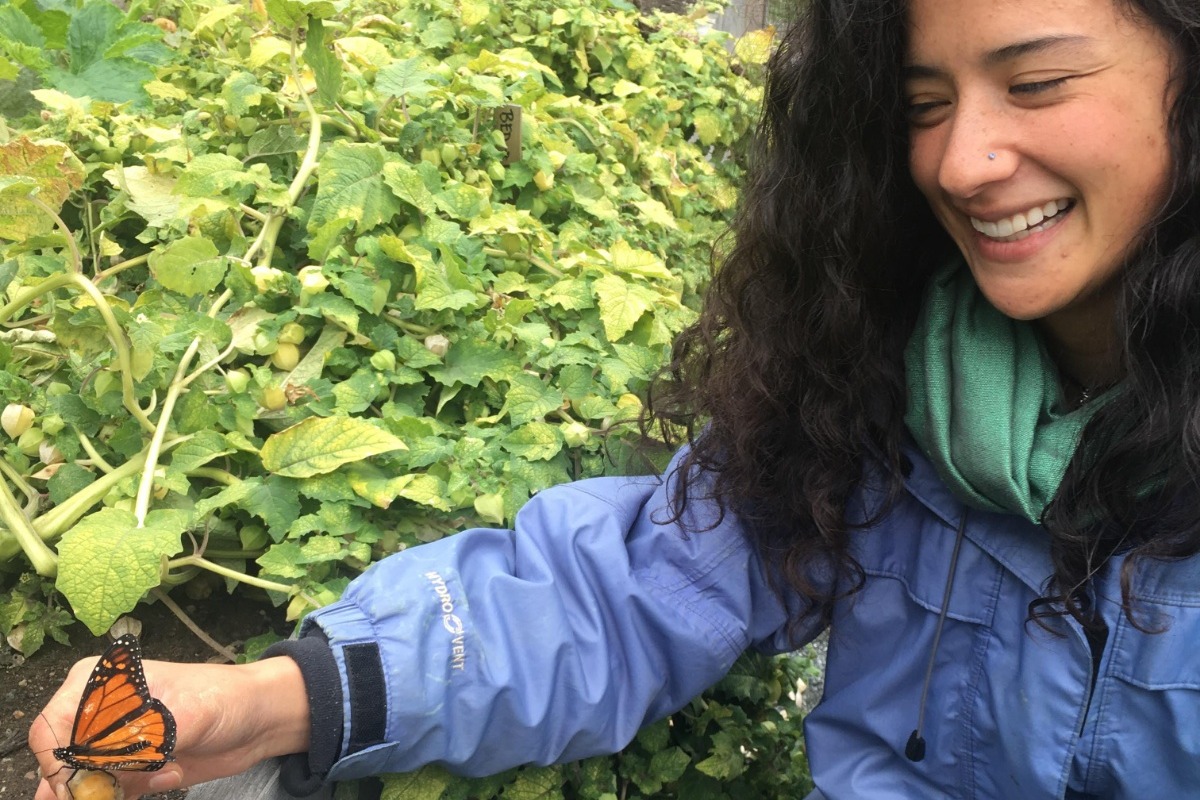 Image description: Jihelah on the farm in front of ground cherries with a monarch butterfly that landed on her outstretched hand.
I think my journey to growing began with picking dandelion seed puff balls and blowing my wishes into the world. A fun game! A challenge to blow every last seed! A magic wish! I didn’t know then that I was literally and metaphorically planting seeds that would grow into my current dreams. I could never have imagined that my journey would lead back to the land where I was raised for 18 years. But here I go, returning back to where I unknowingly planted my first flowers.
I hope this return will lead to remembering. In my family lineage, we’ve forgotten a lot. We’ve survived colonization, genocide, immigration, and assimilation, but in the process we’ve forgotten a lot of who we are. We’ve forgotten our people’s names, their plants, their practices. We forgot their language, wisdom and rituals. We have forgotten that our ancestors were farmers and healers and queers. I hope this project will lead to more collective remembering.
Remembering can be painful. But it is also healing and empowering. When we remember, we can tell that we are not alone, that we have our ancestors and friends with us who have done this before. On Massachusetts and Wampanog land I remembered that my people are the ones who choose life and love and joy in spite of being given a million and one reasons to give up and be consumed by hopelessness. My people are the fighters, the ones who do not give up, because we are fighting for our lives and our freedom. I found those people here.
I’m grateful to everyone I’ve encountered on my journey here. I’ll particularly name my teachers, healers, adventurers, organizers, and friends from Boston PEAR , my JOC family at Kavod and Selah , AARW , Seed , UFI , my JOIN cohort, Survival Arts , RC , disability justice elders, my housing coop, and Movement Ground Farm . Thank you all! Thank you for supporting my remembering.
Leilani
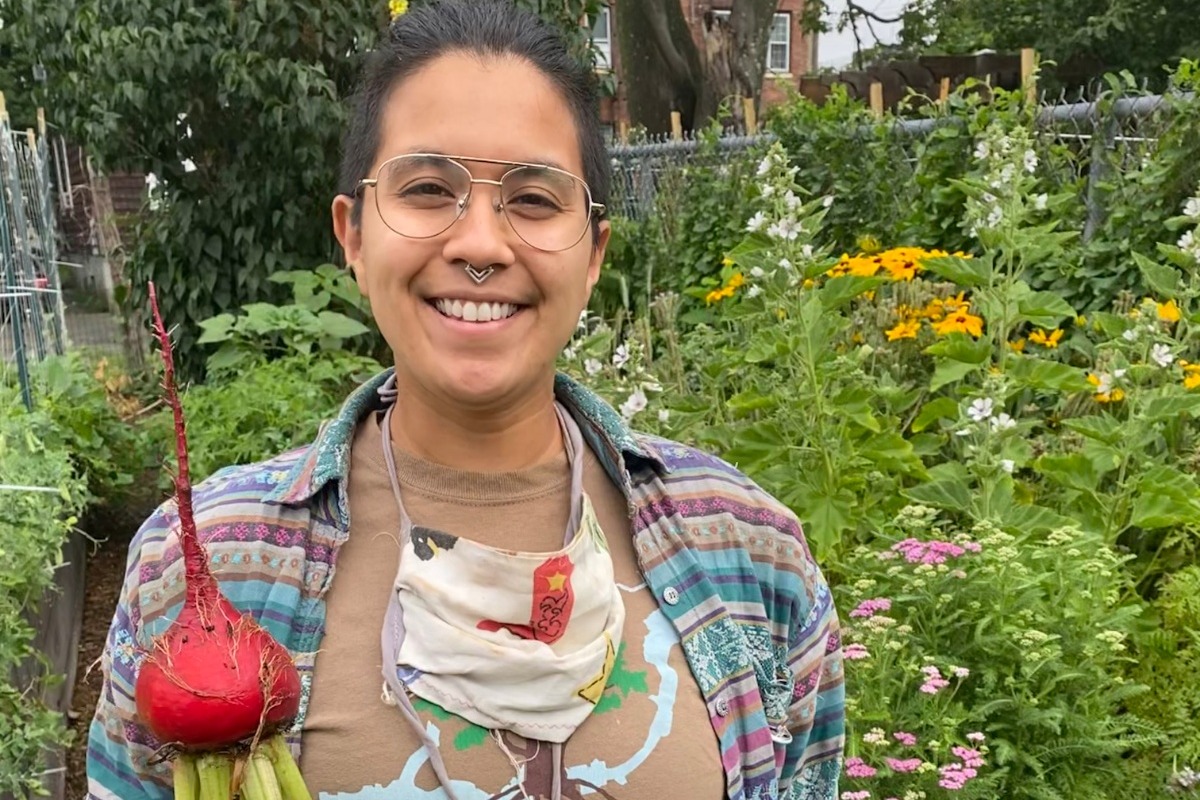 Image description: Leilani standing at the Chelsea Community Urban Farm holding a large beet in front of a flower patch.
I am an earthworker from a long lineage of earthworkers in the Philippines and in Poland. My family stories are complicated, ugly, and beautiful. Some are stories of loss and suffering. Some are stories of courage and resistance. My ancestors have been both the victims and perpetrators of harm. I am writing my own story and proud to have emerged from my cocoon in my power as a queer, trans, mixed-race, Pilipinx-American earthworker.
This dream is not a dream of financial gain, but a dream of spiritual fulfillment and of resilience. I know that we can change our relationship with nature, with ourselves and with one another. That change is necessary for our survival and wellbeing. I am proud of the work that I have done as an environmental justice community organizer fighting alongside Black, brown, immigrant, disabled, elderly, and youth community members for our collective liberation. This work has taught me so much about what it means to be in community.
I am grateful for the many spaces, people, and communities that have held me, nurtured me, and put me in my place. Shout outs to the kasamas at Boston PEAR , Asian American Resource Workshop , NQAPIA , GreenRoots , the many iterations of 866Lyfe, Survival Arts , Climate Justice Alliance , Ruckus Society , Ayni Institute , Linke Fligl Farm , El Departamento de La Comida , the Northeast Farmers of Color network , the In Living Color BIPOC space at the International Herb Symposium, Needham Community Farm , Movement Ground Farm , Haley House , the Pocket Farms crew that was birthed out of the Grist retreat, Center for Whole Communities , the beautiful community at Seed , the community elders and the community babies. Y’all give me life, hope, and truth and for that I cannot thank you enough.
Thank you for believing in us and supporting us with a meaningful donation.
 Image Description: Kasama Farm black and white logo. Text reads "Kasama Farm" with the silhouette of a moringa plant growing between the words.
Kasama Farm is a queer, Pilipinx-American led land, healing, and love project by Jihelah Greenwald and Leilani Mroczkowski. After years of community organizing and earth work in the Boston-area, we have decided to move to Oregon to be close to family and to start this project. The COVID19 pandemic has shown us that there is a need for many kinds of resilience in our movements and we are called to be cultivators of food, land, and healing spaces.
The future home of Kasama Farm is nestled in a valley between Wyest and Klickitat mountains in Hood River, Oregon. We acknowledge our privilege to be able to farm on land that Jihelah’s family has called home for the past 30 years. Their impact on the land can be seen through bee hives, vegetable and flower gardens, a chicken coop, maturing trees throughout the property, yard sale finds and DIY projects.
This land holds decades of sweet family memories and joy, however, there is undeniably years of grief and violence. We name the genocide of Native people, exclusion of Black people, removal of Japanese people, and exploitation of immigrant labor on the land of what is now called Hood River County. State violence continues in this place through exploitation of immigrant labor, anti-Black racism, and erasure of Native people.
It is with humility and deep gratitude that we are called to return to and nurture this land. We acknowledge the great responsibility that we hold to invite healing to this land and to the people who have been harmed. As organizers we know that we cannot do this work alone. We must be in community.
Image description: A photo of the land where we will farm. A field of grass with a red barn and trees on a hill in the background.We Envision
*A space where queer, trans, BIPOC people can find nourishment and show up in their wholeness. In many cultures, queer and trans deities have been the keepers of fertility and agriculture. We are moved by the spirit of Lakapati to do this work reclaiming our relationship to land.
*A space to reclaim cultural relationships our ancestors had with plants and plant medicines. Those relationships have been stolen from us through colonization, assimilation and the ways capitalism manifests within our food system. We hope to cultivate an intergenerational community of learning and pride for the cultures we have come from so we can pass down our wisdom to future generations.
*A healthy work environment that is energizing to the soul and not dominated by white supremacy culture. We prioritize rest so that we may develop a deep connection to our bodies’ needs. We value collective decision-making and transparency. We honor ritual, creativity and joy.
*A community-based and community-supported project. We will be accountable to our friends, family, and community and not philanthropic interests.
*A space filled with the laughter of children, songs and prayers of our elders, and the many colors, patterns, and sounds of our people.
Community-Funded
Your donation will be used to directly support our dream. We are starting small and using our savings, but start-up costs for beginning a new farm as new farmers is high. We need your support. With our friends, family, and movement partners with us, we know we can challenge industrial farming and bring dignity, justice, and intimacy into this work.
Fall:
Funds will be used to pay for equipment and tools to cultivate the pasture into field, purchase cover crop and garlic seeds to plant, to establish access to water, to buy materials to construct chairs and benches for community to rest in and to construct and install hoop houses and irrigation.
Winter:
We’ll use funds to buy notebooks for our crop plans and computer programs for our accounting. We will be purchasing materials for our CSA and market so that we can get bundles, bags, and boxes of produce to our community members. We’ll be building and deepening community connections and relationships. We will be buying locally sourced seeds and quails (!).
Spring:
We’ll use these funds to rent greenhouse space, to build wash stations to clean produce, and purchase refrigeration and coolers to keep produce fresh and crisp. We’ll also purchase materials so that we can make and share plant medicines with our community near and far.
Summer:
Our hope is to be fully planted in, going to market, distributing CSA boxes, hosting community gatherings and on our way to becoming a sustainable community farm.
Jihelah & Leilani
Jihelah and Leilani met in November 2018 at a Boston PEAR (Pilipinx Education Advocacy and Resources) Kamayan dinner. In our first conversation together, we shared a love of being connected to the earth and our dreams of being farmers. We are excited to sow the seeds with each other and to nurture them with our community.
Jihelah
Image description: Jihelah on the farm in front of ground cherries with a monarch butterfly that landed on her outstretched hand.I think my journey to growing began with picking dandelion seed puff balls and blowing my wishes into the world. A fun game! A challenge to blow every last seed! A magic wish! I didn’t know then that I was literally and metaphorically planting seeds that would grow into my current dreams. I could never have imagined that my journey would lead back to the land where I was raised for 18 years. But here I go, returning back to where I unknowingly planted my first flowers.
I hope this return will lead to remembering. In my family lineage, we’ve forgotten a lot. We’ve survived colonization, genocide, immigration, and assimilation, but in the process we’ve forgotten a lot of who we are. We’ve forgotten our people’s names, their plants, their practices. We forgot their language, wisdom and rituals. We have forgotten that our ancestors were farmers and healers and queers. I hope this project will lead to more collective remembering.
Remembering can be painful. But it is also healing and empowering. When we remember, we can tell that we are not alone, that we have our ancestors and friends with us who have done this before. On Massachusetts and Wampanog land I remembered that my people are the ones who choose life and love and joy in spite of being given a million and one reasons to give up and be consumed by hopelessness. My people are the fighters, the ones who do not give up, because we are fighting for our lives and our freedom. I found those people here.
I’m grateful to everyone I’ve encountered on my journey here. I’ll particularly name my teachers, healers, adventurers, organizers, and friends from Boston PEAR , my JOC family at Kavod and Selah , AARW , Seed , UFI , my JOIN cohort, Survival Arts , RC , disability justice elders, my housing coop, and Movement Ground Farm . Thank you all! Thank you for supporting my remembering.
Leilani
Image description: Leilani standing at the Chelsea Community Urban Farm holding a large beet in front of a flower patch.I am an earthworker from a long lineage of earthworkers in the Philippines and in Poland. My family stories are complicated, ugly, and beautiful. Some are stories of loss and suffering. Some are stories of courage and resistance. My ancestors have been both the victims and perpetrators of harm. I am writing my own story and proud to have emerged from my cocoon in my power as a queer, trans, mixed-race, Pilipinx-American earthworker.
This dream is not a dream of financial gain, but a dream of spiritual fulfillment and of resilience. I know that we can change our relationship with nature, with ourselves and with one another. That change is necessary for our survival and wellbeing. I am proud of the work that I have done as an environmental justice community organizer fighting alongside Black, brown, immigrant, disabled, elderly, and youth community members for our collective liberation. This work has taught me so much about what it means to be in community.
I am grateful for the many spaces, people, and communities that have held me, nurtured me, and put me in my place. Shout outs to the kasamas at Boston PEAR , Asian American Resource Workshop , NQAPIA , GreenRoots , the many iterations of 866Lyfe, Survival Arts , Climate Justice Alliance , Ruckus Society , Ayni Institute , Linke Fligl Farm , El Departamento de La Comida , the Northeast Farmers of Color network , the In Living Color BIPOC space at the International Herb Symposium, Needham Community Farm , Movement Ground Farm , Haley House , the Pocket Farms crew that was birthed out of the Grist retreat, Center for Whole Communities , the beautiful community at Seed , the community elders and the community babies. Y’all give me life, hope, and truth and for that I cannot thank you enough.
Thank you for believing in us and supporting us with a meaningful donation.
Image Description: Kasama Farm black and white logo. Text reads "Kasama Farm" with the silhouette of a moringa plant growing between the words.Organizer and beneficiary
Jihelah Greenwald
Beneficiary