
- M
- J
- B
My name is Joel Angel Juárez and I am a photojournalism student from Oxnard, California currently studying at San Francisco State University.
I have been doing reportage at the Standing Rock Indian Reservation in North Dakota throughout November and December of this year. The first time, I drove nearly 3,000 miles round-trip with three journalism colleagues to cover the story. Second time around, I flew out with a medical team from the Do Not Harm Coalition at UCSF. I even slept in a tent during a -10F degree blizzard, woke up with my tent 6-8 inches deep in snow and almost got frostbite on my left ear during my last day at the Oceti Sakowin Camp.
I have been freelancing my trips out to Standing Rock Indian Reservation, with a lot of these expenses coming out of my own pocket. I am currently back in California because of final exams at my university. I am saving up funds to travel back out to North Dakota to continue my reporting on the Dakota Access Pipeline story.
I have uploaded a soundslide of the work that I have done while at the Standing Rock Indian Reservation located on the banner of this campaign.
More of my work can be seen on my website: http://www.joelangeljuarez.com/.
-----------------------------------------------------------------------
I am reaching out to you because I need help in raising these funds to help me continue my reporting on the issue. The funds will cover travel, housing, food, print and production costs. Any leftover funding will be strictly allocated toward future photojournalism projects.
I plan on flying out to North Dakota for two weeks through January 2 - January 15, 2017. I would need to have funds ready to purchase my flight at least a week or two ahead of time so that I can avoid price surges and reserve a flight on the plane. Holidays are around the corner and reserving flights can become hectic around this time.
The purpose of this third trip is to gather more perspectives and voices on the reservation and in nearby cities and towns. I plan to meet with tribal elders and leaders; residents around the area who are for and are against the pipeline's construction; farmers around the area; Dakota Access Pipeline construction workers, Energy Transfer Partners, Dakota Access, LLC and Morton County sheriffs, if possible; and others that may not be listed. It is crucial to gather as many perspectives all around to tell this story in its entirety. It would be a fault line in journalism to choose to silence voices.
-----------------------------------------------------------------------
You can support my project by donating any amount that you can afford. Packages will be sent from my San Francisco, California, USA address. GoFundMe does not have a shipping cost option, so postage will be charged separately and payable via PayPal: [email redacted].
***Estimated postage cost(s) will be invoiced separately to the email that you provided during the donation process.***
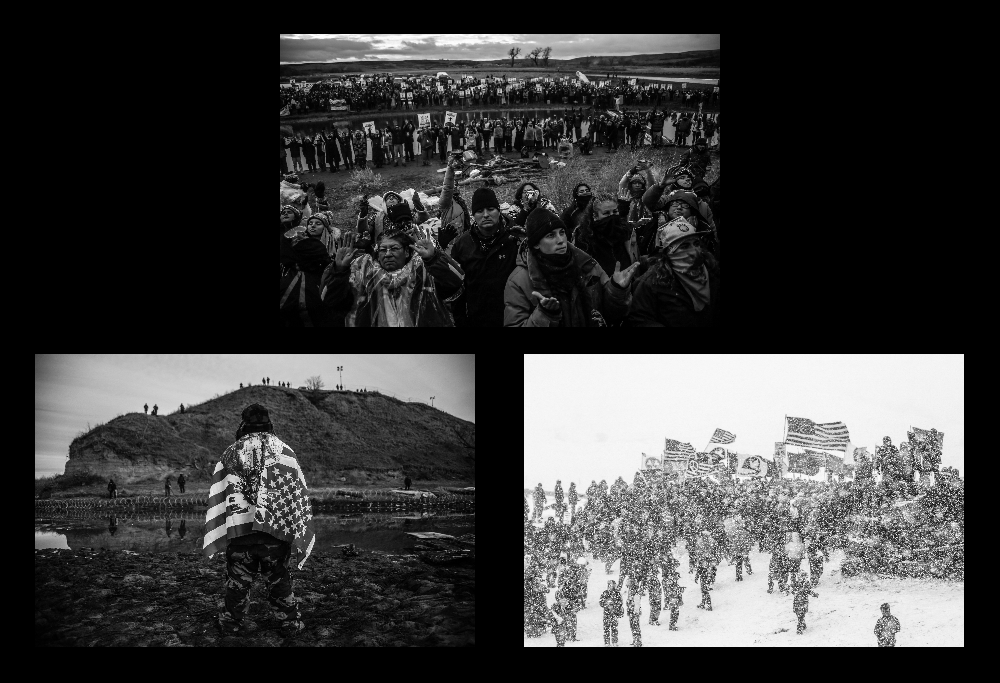
If you pledge $25 and postage you will receive three 4X6-inch prints, pictured above, from my project as a reward.
If you pledge $50 and postage you will receive three signed 4X6-inch prints, pictured above, from my project and a signed thank you letter as a reward.
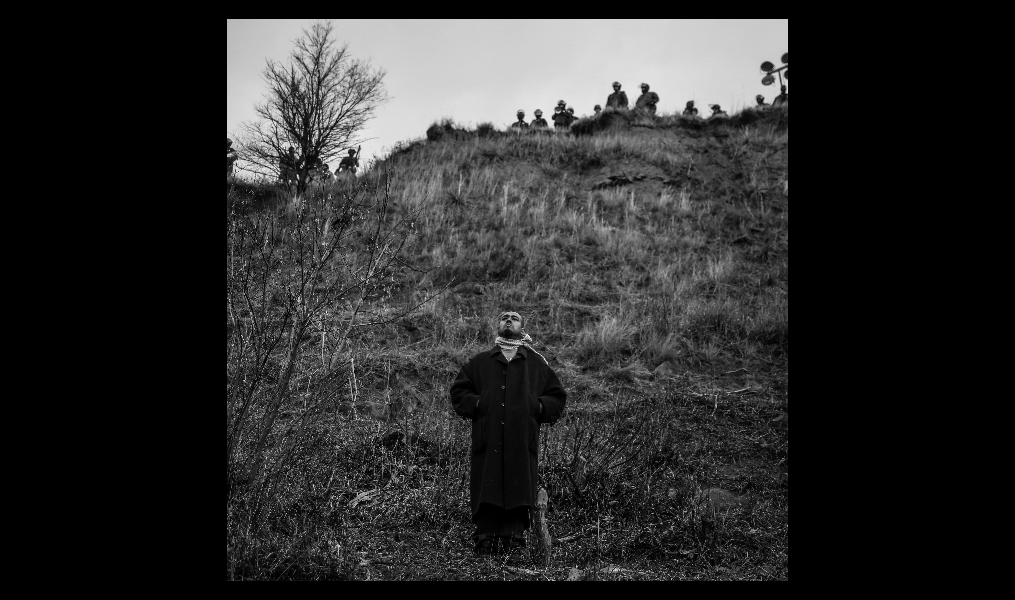
If you pledge $100 and postage you will receive three signed 4X6-inch prints, pictured above, from my project; a signed and hand-numbered 5x5-inch square print, pictured below (limited to a first run of 25); and a signed thank you letter as a reward.
If you pledge $300 you will receive a presentation of my project to your class or organization within the San Francisco Bay Area as a reward.
If you pledge $400 you will receive a presentation of my project to your class or organization within Ventura County in California as a reward.
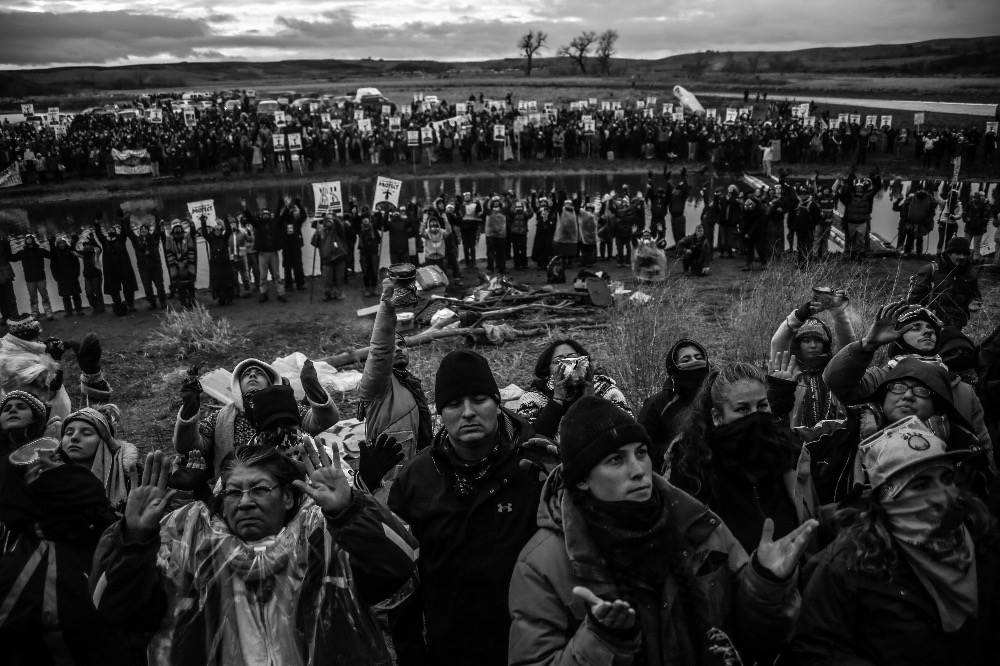
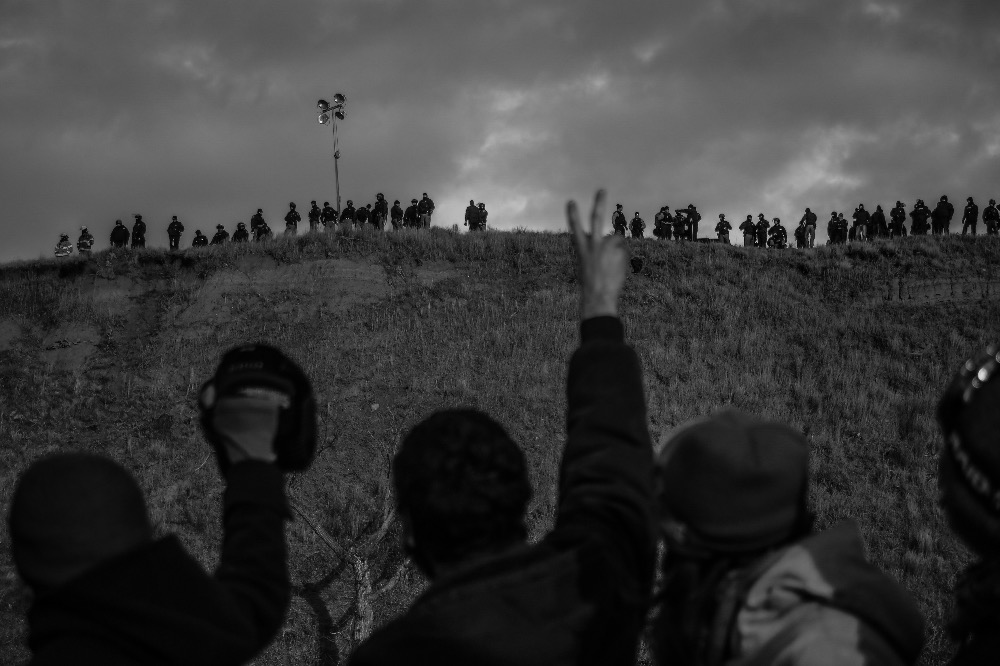
If you pledge $500 and postage you will receive a signed, matted and framed 13x19-inch print as a reward. Choose ONE from the six pictured below.
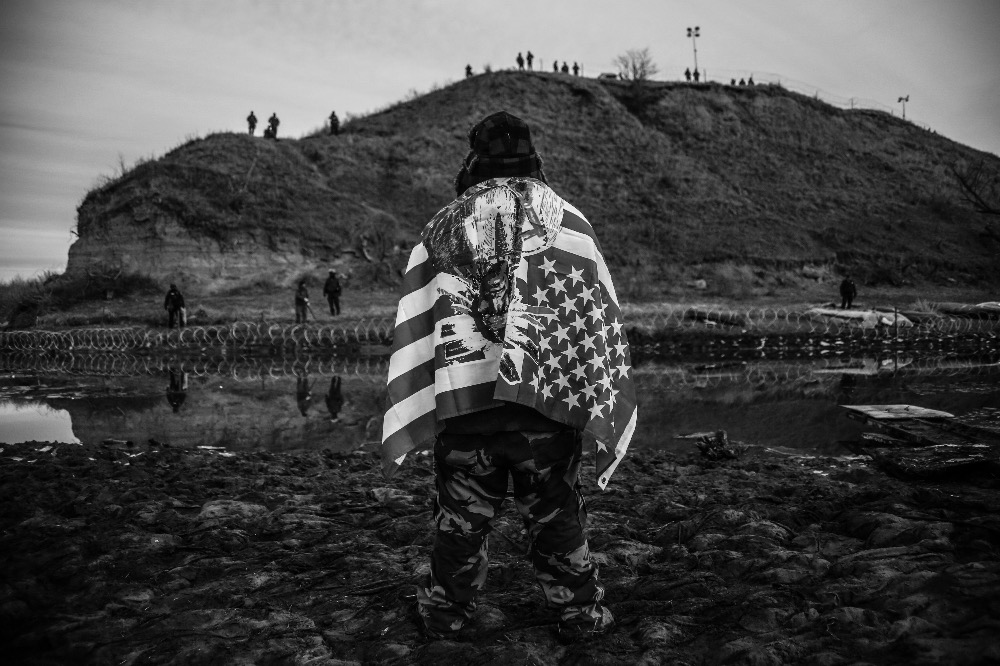
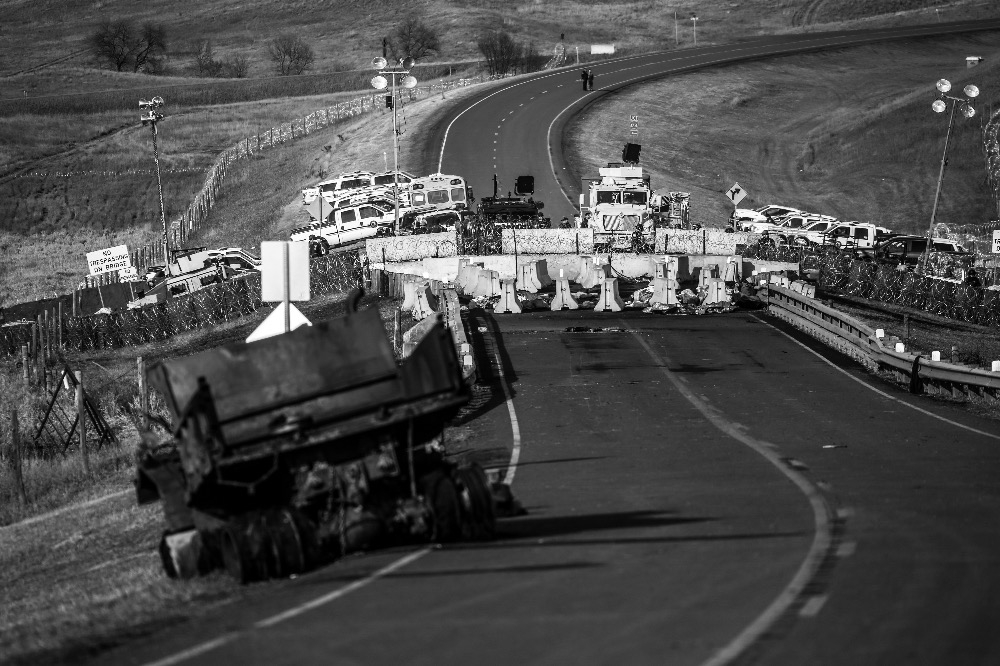
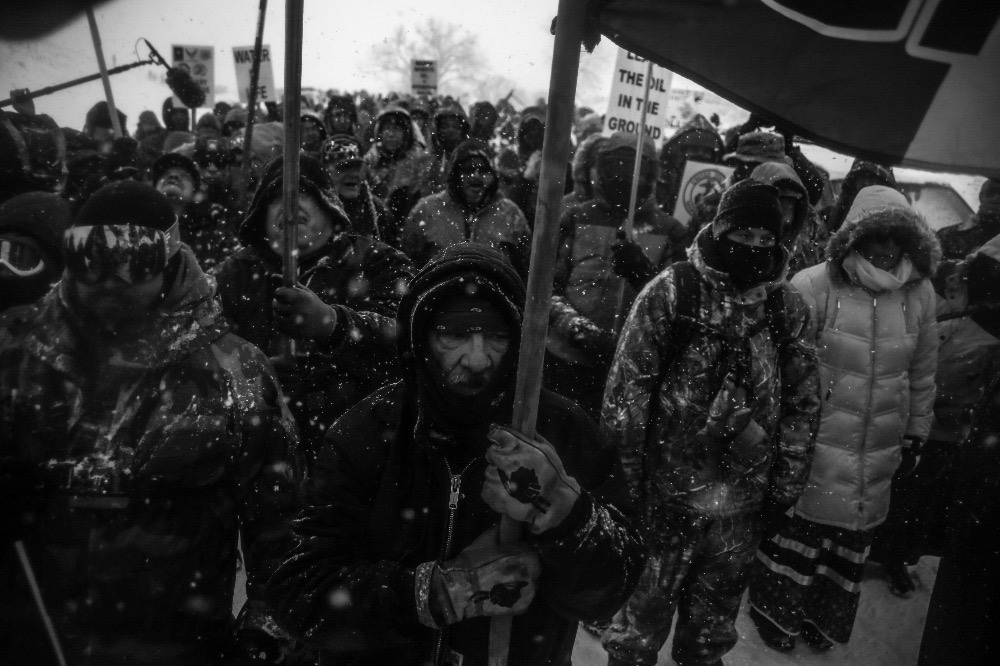
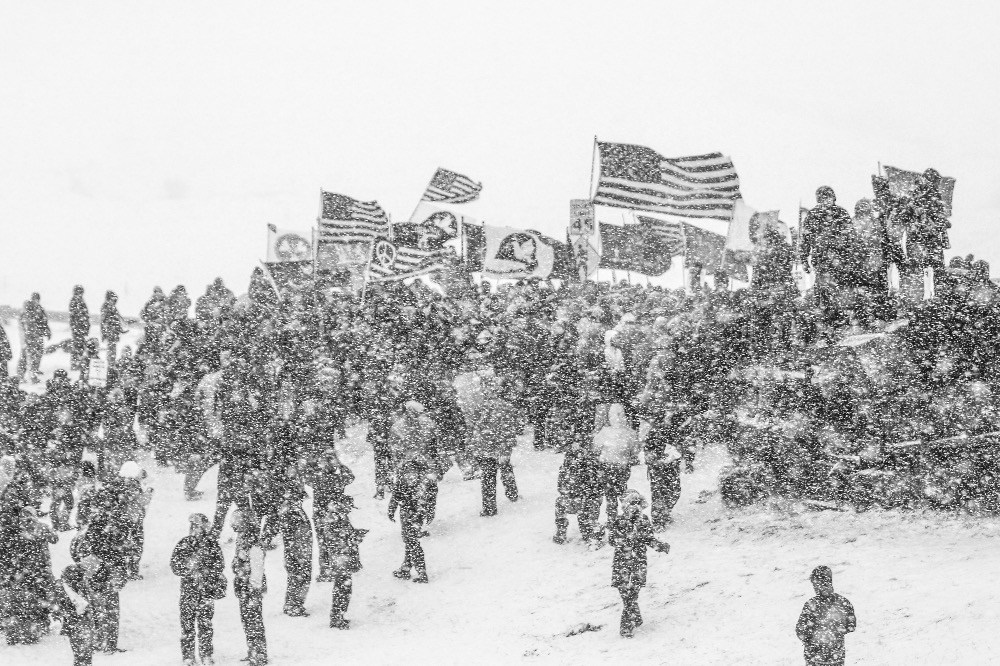
-----------------------------------------------------------------------
STORY BACKGROUND:
In January 2016, Dakota Access, LLC announced that it received permit approval by the North Dakota Public Service Commission to route and build a 1,172-mile-long oil pipeline through the state. The pipeline would transport crude oil from the North Dakota Bakken region down into South Dakota and Iowa, ending in Illinois.
On July 27th, the Standing Rioux Tribe filed a complaint against the U.S. Army Corps of Engineers in US District Court over its process for granting Dakota Access, LLC permits to build the pipeline. Since the lawsuit, tribal nations from across the world and environmental activists have gathered together as "water protectors" at the Standing Rock Sioux Tribe's reservation in thousands to battle the Dakota Access Pipeline.
Originally routed for construction north of Bismarck, a mostly-white municipality, DAPL's route was moved south into former Sioux land. A key segment of the proposed pipeline construction route located at Lake Oahe, an Army Corps of Engineers project on the Missouri River, is also the center of disputed Sioux tribal land ownership resulting from the 1851 Treaty of Fort Laramie.
On December 4th, the U.S. Army Corps of Engineers announced that it would not grant Dakota Access, LLC an easement needed to drill under Lake Oahe crossing the Missouri River and that it would seek an environmental impact statement to look at possible alternative routes. The easement would have been the final one needed to complete construction of the pipeline. The decision came on the same day that thousands of U.S. veterans from several military branches self-deployed to the camp to act as human shields for the water protectors at the Indian reservation.
On December 5th, U.S. military veterans marched onto Highway 1806 toward fortified barricades blocking road access to the Dakota Access Pipeline construction site near the Oceti Sakowin Camp. The march came in response to North Dakota Governor Jack Dalrymple's order a few days prior to evacuate the camp was to take effect that day. Water protectors defied the order and remained grounded in camp. The evacuation did not take place.
On December 6, Standing Rock Sioux Chairman called for water protectors to return home as harsh winter approached with blizzards in sub-zero temperatures. The chairman's decision came after the easement to drill was denied to Dakota Access, LLC. Despite some leaving camp, many have chosen to stay to continue the battle against the pipeline.
I have been doing reportage at the Standing Rock Indian Reservation in North Dakota throughout November and December of this year. The first time, I drove nearly 3,000 miles round-trip with three journalism colleagues to cover the story. Second time around, I flew out with a medical team from the Do Not Harm Coalition at UCSF. I even slept in a tent during a -10F degree blizzard, woke up with my tent 6-8 inches deep in snow and almost got frostbite on my left ear during my last day at the Oceti Sakowin Camp.
I have been freelancing my trips out to Standing Rock Indian Reservation, with a lot of these expenses coming out of my own pocket. I am currently back in California because of final exams at my university. I am saving up funds to travel back out to North Dakota to continue my reporting on the Dakota Access Pipeline story.
I have uploaded a soundslide of the work that I have done while at the Standing Rock Indian Reservation located on the banner of this campaign.
More of my work can be seen on my website: http://www.joelangeljuarez.com/.
-----------------------------------------------------------------------
I am reaching out to you because I need help in raising these funds to help me continue my reporting on the issue. The funds will cover travel, housing, food, print and production costs. Any leftover funding will be strictly allocated toward future photojournalism projects.
I plan on flying out to North Dakota for two weeks through January 2 - January 15, 2017. I would need to have funds ready to purchase my flight at least a week or two ahead of time so that I can avoid price surges and reserve a flight on the plane. Holidays are around the corner and reserving flights can become hectic around this time.
The purpose of this third trip is to gather more perspectives and voices on the reservation and in nearby cities and towns. I plan to meet with tribal elders and leaders; residents around the area who are for and are against the pipeline's construction; farmers around the area; Dakota Access Pipeline construction workers, Energy Transfer Partners, Dakota Access, LLC and Morton County sheriffs, if possible; and others that may not be listed. It is crucial to gather as many perspectives all around to tell this story in its entirety. It would be a fault line in journalism to choose to silence voices.
-----------------------------------------------------------------------
You can support my project by donating any amount that you can afford. Packages will be sent from my San Francisco, California, USA address. GoFundMe does not have a shipping cost option, so postage will be charged separately and payable via PayPal: [email redacted].
***Estimated postage cost(s) will be invoiced separately to the email that you provided during the donation process.***
If you pledge $25 and postage you will receive three 4X6-inch prints, pictured above, from my project as a reward.
If you pledge $50 and postage you will receive three signed 4X6-inch prints, pictured above, from my project and a signed thank you letter as a reward.
If you pledge $100 and postage you will receive three signed 4X6-inch prints, pictured above, from my project; a signed and hand-numbered 5x5-inch square print, pictured below (limited to a first run of 25); and a signed thank you letter as a reward.
If you pledge $300 you will receive a presentation of my project to your class or organization within the San Francisco Bay Area as a reward.
If you pledge $400 you will receive a presentation of my project to your class or organization within Ventura County in California as a reward.
If you pledge $500 and postage you will receive a signed, matted and framed 13x19-inch print as a reward. Choose ONE from the six pictured below.
-----------------------------------------------------------------------
STORY BACKGROUND:
In January 2016, Dakota Access, LLC announced that it received permit approval by the North Dakota Public Service Commission to route and build a 1,172-mile-long oil pipeline through the state. The pipeline would transport crude oil from the North Dakota Bakken region down into South Dakota and Iowa, ending in Illinois.
On July 27th, the Standing Rioux Tribe filed a complaint against the U.S. Army Corps of Engineers in US District Court over its process for granting Dakota Access, LLC permits to build the pipeline. Since the lawsuit, tribal nations from across the world and environmental activists have gathered together as "water protectors" at the Standing Rock Sioux Tribe's reservation in thousands to battle the Dakota Access Pipeline.
Originally routed for construction north of Bismarck, a mostly-white municipality, DAPL's route was moved south into former Sioux land. A key segment of the proposed pipeline construction route located at Lake Oahe, an Army Corps of Engineers project on the Missouri River, is also the center of disputed Sioux tribal land ownership resulting from the 1851 Treaty of Fort Laramie.
On December 4th, the U.S. Army Corps of Engineers announced that it would not grant Dakota Access, LLC an easement needed to drill under Lake Oahe crossing the Missouri River and that it would seek an environmental impact statement to look at possible alternative routes. The easement would have been the final one needed to complete construction of the pipeline. The decision came on the same day that thousands of U.S. veterans from several military branches self-deployed to the camp to act as human shields for the water protectors at the Indian reservation.
On December 5th, U.S. military veterans marched onto Highway 1806 toward fortified barricades blocking road access to the Dakota Access Pipeline construction site near the Oceti Sakowin Camp. The march came in response to North Dakota Governor Jack Dalrymple's order a few days prior to evacuate the camp was to take effect that day. Water protectors defied the order and remained grounded in camp. The evacuation did not take place.
On December 6, Standing Rock Sioux Chairman called for water protectors to return home as harsh winter approached with blizzards in sub-zero temperatures. The chairman's decision came after the easement to drill was denied to Dakota Access, LLC. Despite some leaving camp, many have chosen to stay to continue the battle against the pipeline.