- L
- T
- J
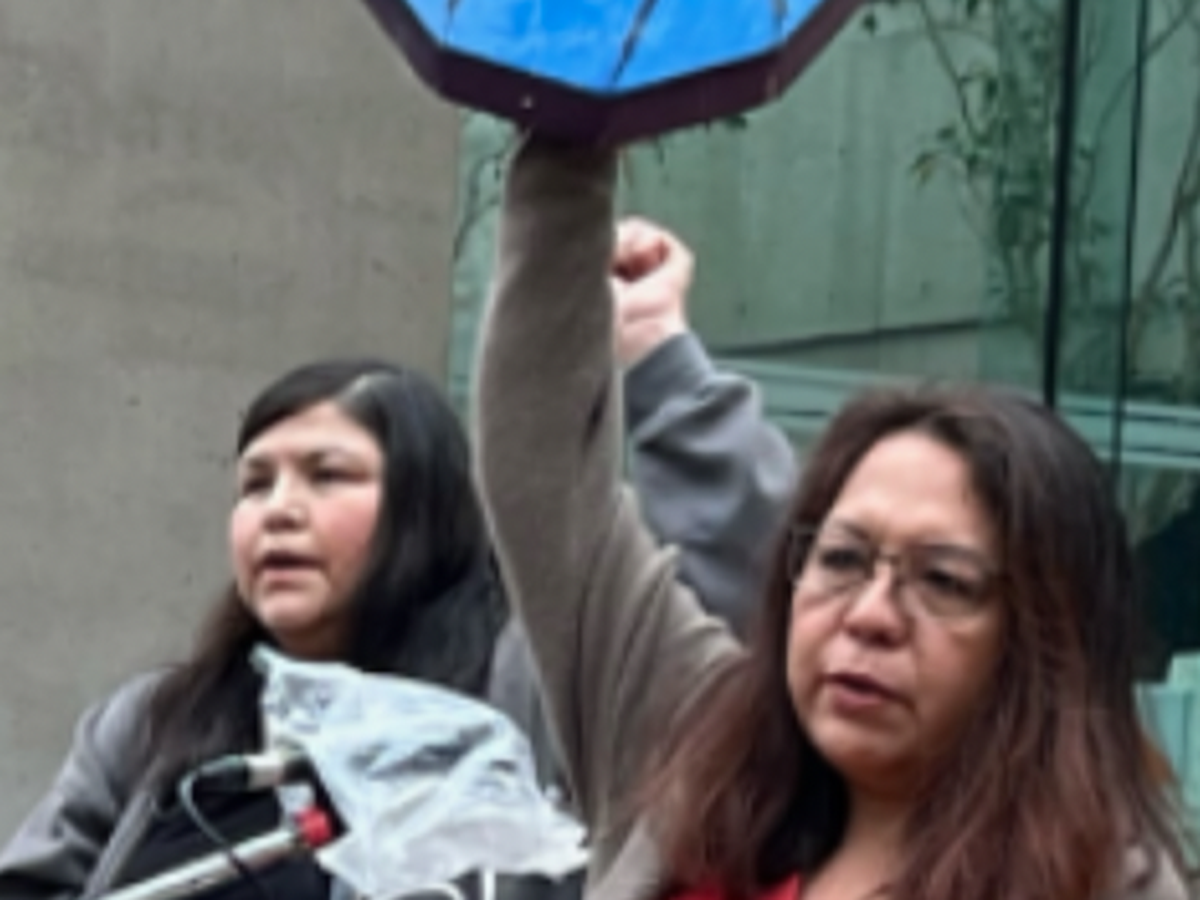
Indigenous Matriarchs' Fundraiser for Legal Fees
0% complete
$5,500 raised of $25K CAD
37 donations
Convictions for criminal contempt of court related to opposition to the Trans Mountain Pipeline expansion (TMX) are being appealed to the Supreme Court of Canada (SCC) in Ottawa. This follows the British Columbia Court of Appeal's (BCCA) dismissal of appeals by Secwépemc Matriarch, April Thomas, Nlaka’pamux Matriarch, Billie Pierre, and land defender, Romilly Cavanaugh, on July 18, 2025.
In its reasons, the BCCA asserted that it is the highest court in the province and that provincial law overrides Indigenous law. Their reasoning is both legally incorrect and morally wrong, given that most territories in BC remain unceded and under ongoing dispute as Indigenous lands have never been surrendered or extinguished. The Matriarchs are fighting not only to uphold Indigenous sovereignty as the rightful titleholders, but also to defend all land and water protectors who uphold Indigenous law and are being criminalized under colonial legal systems in so-called Canada.
The Supreme Court Appeal
Our SCC appeal challenges the Court to reconsider whether the “colour of right” defence can apply when Indigenous people act under their own laws and traditional authority on unceded lands—even when this conflicts with colonial injunctions.
We argue that the lower courts erred in refusing to recognize Indigenous law as a valid legal basis for action. This error does not align with:
• Section 35 of the Constitution Act, 1982, which recognizes and affirms Aboriginal rights and title.
• Supreme Court jurisprudence affirming Indigenous rights.
• The United Nations Declaration on the Rights of Indigenous Peoples (UNDRIP), which Canada has committed to implement.
• The Truth and Reconciliation Commission’s Calls to Action that require recognition of Indigenous legal traditions.
This case is of national importance. It speaks to the heart of who holds rightful authority over unceded lands and whether Indigenous law has force in Canadian courts.
BC Court of Appeal Proceedings
After trial Judge Shelley Fitzpatrick sentenced April Thomas to 28 days in jail and Billie Pierre to 42 days of house arrest, both appealed to the BCCA. They argued that the trial judge erred by:
• Failing to consider Indigenous laws, including the duty to protect Mother Earth.
• Refusing to hear arguments regarding Indigenous rights and title, despite the arrests occurring on unceded Secwépemc’ulecw territory.
• Not fully assessing the mens rea element of criminal contempt (whether the Protectors intended to breach a colonial injunction).
• Quashing subpoenas for Elected Chiefs, who had knowledge of secret agreements between TMX and certain Secwépemc Bands, to show proof of Consent from all Secéwpemc who hold Collective Title over Secwépemc’ulecw for TMX to be built on our territory
• Failing to provide adequate assistance to self-represented litigants.
Despite these apparent errors, Justice Lauri Ann Fenlon of the BCCA ruled that the trial judge “did not err” and dismissed the argument that Indigenous law could provide a defence, stating there was “no air of reality” to such a claim.
According to Thomas, "this decision is yet another example of our Charter argument that all levels of government and their representatives who were involved in the Trans Mountain Pipeline project are in a conflict of interest, including: the RCMP, RCMP-CIRG, CSIS, TMX and its affiliates, all colonial courts, government leadership and departments including First Nations elected band representatives. The government has a fiduciary obligation to act in the best interests of First Nations people. So where is the justice when they conspire to destroy everything we hold sacred while criminalizing us for taking action?! We asked for 3rd party adjudication for this very reason and were blatantly denied.”
Furthermore, April Thomas’ application for legal aide was denied by the BC Legal Aide Society, which stated that they believe “the Supreme Court of Canada will not grant leave on this issue….as it will depreciate the courts authority.” Numerous recent court cases “assert Crown’s authority over Indigenous territories" as though Indigenous people are ‘trespassers’ on their own lands, and even going so far as to compare territorial land and water defenders to ‘anarchists’ on others ‘property’, when in fact title for Indigenous land in so-called Canada is still very much in question as we are all still here!
Why This Case Matters
• Unceded Lands: Most of BC remains unceded. The assertion that provincial or federal law is “above” Indigenous law is contested both legally and morally.
• Legal Pluralism: A ruling recognizing Indigenous law as a basis for the “colour of right” defence would mark a major step toward legal pluralism within the provincial and federal court systems in Canada.
• Reconciliation in Practice: This case tests whether reconciliation is substantive or symbolic—whether Indigenous law can actually limit Crown authority in practice.
• Precedent: A favourable ruling could reshape how courts handle land defence cases across Canada, affirming that Indigenous law is not merely “custom” but binding law within Indigenous territories.
Trial Backgrounder
The trial process itself was deeply flawed. Among the most troubling incidents:
• A closed-door meeting between the judge, lawyers, and elected chiefs (who had been subpoenaed) excluded the accused. The judge later quashed the subpoenas, shielding chiefs from testifying about lack of consent for TMX and secret financial agreements.
• The judge repeatedly dismissed references to Secwépemc law and ceremony, even referring to sacred sites as “Trans Mountain pipeline sites.”
• This echoes past injustices, such as the 1995 Gustafsen Lake standoff, where Indigenous ceremonies were criminalized, land defenders were treated as ‘terrorists’ using military force and land title arguments ignored.
As April Thomas has stated:
“We are the true title holders of Secwépemc’ulecw; yet we are treated as though we are trespassers or criminals for exercising our inherent rights and responsibilities as caretakers and protectors. Meanwhile, governments enact meaningless laws like UNDRIP and make empty promises of reconciliation while jailing title holders for upholding Indigenous law. This must stop.”
And according to Billie Pierre:
“ We were acting on our moral duties rooted in Secwépemc and Nlaka’pamux law to protect water, salmon, and land, and were under the direction and guidance of our elders and our people.”
Calls to Action
We will continue to fight to uphold Indigenous laws and decision making authority, taking this case to the Supreme Court of Canada. To get there we need your help!!!
The following is what is needed to continue our fight against TMX at the SCC in Ottawa:
Budget:
• Legal Fees: $20,000
• Travel Expenses (airfare and hotels): $5,000
• Total: $25,500
If funds remain after the SCC hearing, they will be used to present these injustices to the United Nations through the Special Rapporteur on the Rights of Indigenous Peoples. On April 30, 2025, April Thomas made a submission to the UN Special Rapporteur who seek to examine the important role played by human rights defenders highlighting the challenges they face, including forms of retaliation or repression. April put in a submission as a human rights defender with regards to this case with TMX, as well as other cases she is directly involved. She will hear back soon if her submission was accepted.
Kukstetsemc – thank you all in advance for your support. Your witness, prayers, art, and time are seen, appreciated and keep us strong. We have defeated projects like TMX before. Together we can do it again!!!
SUMMARY OF ARRESTS AND TRIAL
A complete summary to the arrests and trial can be found on our previous GoFundMe page: