- J
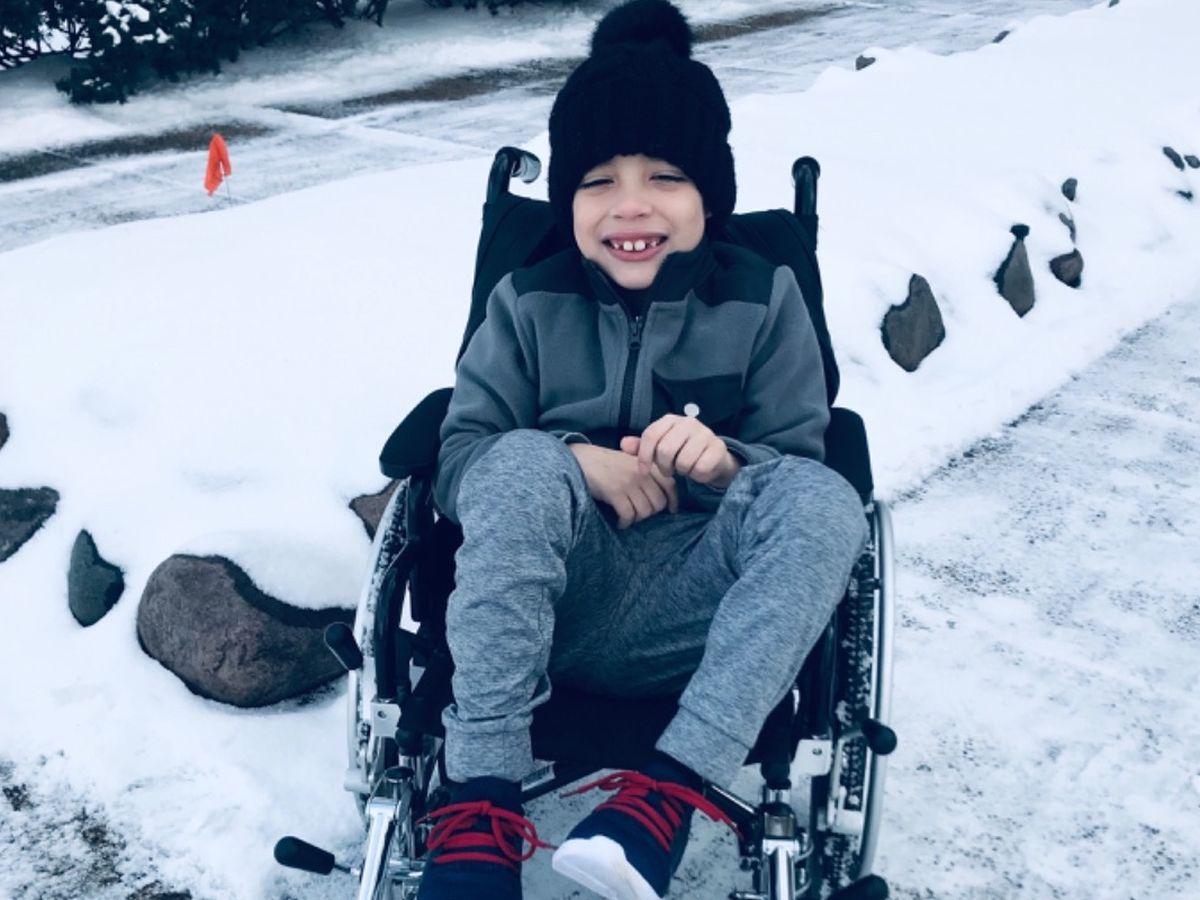
Hello. My name is Zury Escobar and I am the mom of a wonderful boy named Humberto. After one year and five months of medical studies, Humberto was finally diagnosed with a disease called Niemann Pick Type C. Sounds strange, right? To me it did; it was a name that did not mean anything until it became everything in our lives.
Humberto was born in October of 2011 and welcomed with much love. He developed normally and attended a day care center while I worked; as a single mom, I could not afford to stay home with him. When he turned eight months, he started having very high fevers. His pediatrician (an extraordinary human being) could not find anything wrong with him in any of the many studies he ordered. The only suspicious thing was the large size of his liver and spleen when he was examined, later confirmed by an ultrasound.
After several months of medical checkups and paperwork, I was able to get Humberto moved to Hospital Siglo XXI, the best health care facility in Mexico City. He saw specialists in the areas of infectious diseases, gastroenterology, inborn errors of metabolism, genetics, and ophthalmology, until he finally went to the liver clinic. This ordeal took almost a whole year of trips to the hospital in the middle of the night and I ended up losing my job. It wasn’t until September of 2013, after all of the studies done came out negative, that the liver specialist told us it was necessary to open Humberto’s body in order to do a liver biopsy. I didn’t have a choice: I was desperate for information and that desperation was much greater than the fear to subject my one-year, eleven-month old baby to surgery.
Finally the results came. Those were the most terrifying two months of my life. I begged God a thousand times asking that Humberto wouldn’t have cancer, and God heard me: the results were negative. However, that also meant that we did not have yet a diagnosis for Humberto.
After one year of studies in the area of inborn errors of metabolism, I was simply told that Humberto had HEPATOSPLENOMEGALY (enlarged liver and spleen), that he would be catalogued as child “in a study protocol” and that they would wait until they could obtain more information, since at the moment there was nothing with which to work.
In this way, Humberto spent his first years of life: having routine studies and ultrasounds to ensure his measurements and blood levels remained normal, and observation at home to make sure everything was “normal.” Humberto was growing and developing like the other children. He went to school, played soccer, learned how to ride a bike, sang, danced, swam, played, and his generous and kind heart filled up everyone with love.
One day, when Humberto was seven years old, we were at a family gathering and he started to laugh and fall to the floor. At the beginning we thought it was child’s play and that we has just being goofy. Days later, we realized that something was wrong, as Humberto kept doing this in repeated occasions during the day without apparent reason. His neurologist told me to take him to be seen immediately. One more time, Humberto was subjected to a series of studies. This time they were three-hour electroencephalograms, CT scans, MRIs, more specific lab studies, as a tumor in the hypothalamus was suspected. Weeks went by before we knew the diagnosis was negative. Nevertheless, the sudden falls (sudden loss of muscle tone) came accompanied by motor difficulty and weakness: Humberto did walk normally; he did not want to go up or down the stairs and stopped doing his usual activities. Humberto ended up seeing 10 neurologists, whose only commonality was to ask for the same tests but in the labs they trusted and the diagnosis of “difficult to treat epilepsy.” At that time, Humberto had already been withdrawn from school, as they could not be held responsible for any fall and could not administer any medicines. I went to the educational authorities in Mexico City in order to ask for a special permit in order to, making a effort, bring a “shadow teacher” (a person who would be with him at school and could take care of him and give him his medicines), but it was denied to me, as private schools have the prerogative to deny access to anyone who is not their staff. Humberto had to stay at home, so he missed a school year, and he had to be supervised 24 hours a day in order to avoid hurting himself falling. In addition, he needed physical assistance at all times. This was a very difficult time period, because while I worked in order to cover all of our medical, food, and home care expenses, he started to change. Humberto deteriorated on a daily basis, his body changed, and he started having neurological changes: he stopped writing, talking normally, and he stopped playing. In simple words, my boy was no longer himself. I could safely assume that, besides all of the physical and neurological changes that took place, Humberto was depressed.
Finally, the day came when I heard the name “Niemann Pick” for the first time. It was through a physician who told me: “Ms. Escobar, we have analyzed Humberto’s symptoms and based on the hepatosplenomegaly at birth and the difficult to treat epilepsy, added to the motor clumsiness and the neurological impairment that he presents, we have diagnosed him with one of these two genetic diseases: one is called Niemann Pick, and the other, Tay-Sachs. Neither of them has a cure and Humberto will die. I cannot tell you which of the two he has, or when will everything will be over, but I can tell you that he will lose all of his basic bodily functions until eventually death comes. This can happen in three or six months, or maybe years; it will all depend on his body.” Without paying attention to the word “death,” I immediately asked: “How did you determine that? What genetic tests did you do? Is there any part in the world where there is a treatment?” To this, they coldly replied: “There aren’t any tests to do because there is no cure for these diseases; we diagnoses them based on the symptoms and the information on the medical books. And don’t worry: we’ll all die eventually, so just go home and spend time with your son. When he starts choking with food, come to us so he can get a gastric tube. That’s when we’ll know the end is near.” I was devastated because inside those four walls I was told my son was hopelessly ill and there was nothing else to do.
I spent several days crying like I never imagined I could and I felt the most profound pain I had ever felt, until I told myself: “I cannot accept this diagnosis,” and started looking up information about both diseases. Tay-Sachs had a specialized clinic in Spain, so I called and told them Humberto’s story and sent them his studies. As soon as they knew his age, they told me that Humberto did not have one of the main elements of the disease: the age. “No are no worldwide records of any child with that age that is still alive,” said the person from the clinic. My heart immediately breathed again. However, I still had to research Niemann Pick, which, according to what I had investigated, had many types and required very specific tests to be diagnosed, as it can be easily confused with other diseases. I researched clinics, hospitals, physicians, etc., and the only common variable I found was that the United States was the only place in the world where such tests were available.
The decision to move with Humberto to the United States was not easy. We had a life in Mexico, we counted with the love and support of my family and, above all, I had a job that allowed me to provide Humberto with everything he needed.
Suddenly, Humberto started having motor seizures. I had never seen my son’s body contort like that. One day, he seized two times in the lapse of two hours, for two minutes each time. Humberto was hospitalized, placed on medication, and had blood studies and encephalograms done. My son was with sedative medication for five days until he was finally stabilized from the seizures; however, the laugh and the falls did not stop.
That was the moment when it became clear to me that I had to close the door of my home, leave our memories away, take two suitcases, and travel to the United States.
We arrived on November 29th. On December 5th, after a medical appointment with a neurologist, Humberto was sent to the Phoenix Children’s Hospital’s ER. And that was how, after infinite amounts of new tests, studies, labs, and medical consultations, I heard the word CATAPLEXY (sudden, transitory periods of muscle weakness). We realized that Humberto’s falls were not due to epilepsy and that was the reason no medication he was given before worked. The neurologist gave him medication to control cataplexy, as the results for all the tests ordered arrived. Many results arrived, but we were waiting for the most important one: a genetic test done with a blood sample that was sent to San Francisco. On December 27 of 2019, the results arrived and the diagnosis of Niemann Pick Type C was confirmed.
Right away I was contacted by a group of doctors who would be in charge of Humberto. The group was integrated by specialist in Genetics, Neurology, Pediatrics, Rehabilitation, Paliative Care, and Social Work. I have to confess that the diagnosis was not the best, as I had already heard it before, but this time it was explained to me in a very different way. Another difference was the amount of resources available for its treatment, starting with a group of specialists who would monitor Humberto the whole time and give him all the medical and personal tools he would need to have a life as nice as possible.
The specialists in genetics told me there was a medical treatment with evidence of being effective delaying symptoms and helping children attain a better quality of life. They told me the treatment had some secondary effects and was still under investigation by the FDA, but that the decision to give it or not to Humberto was mine. I read the documents and without a doubt I said YES, as I will never doubt to give my child any chance to get better or to be by my side for the longest time possible.
Humberto and I celebrated our Christmas and New Year at the hospital with my mom, who came to visit us. Humberto spent more than a month in the hospital. We left on January 13, 2020, two days after he got a gastric tube because his muscle weakness was so severe that he could no longer swallow and he could choke. I could still remember the words I had heard some months ago: “When he gets the gastric tube we’ll know the end is near.” But it wasn’t like that, the swallowing specialist explained to me. Humberto would get therapy to get stronger and recover his ability to swallow on his own, but first they needed to ensure his safety and his nutritional intake.
The group of geneticists in Phoenix told us that it could take up to nine months for Humberto to get his first treatment, but that in Chicago he could receive it immediately. On February 11, Humberto received his first treatment here, which is administered through a spinal tap and goes straight to his brain. In addition to this treatment, Humberto receives physical, occupational, and speech-language therapy, so that he does not forget what he knows and his body can recover the strength he needs to begin walking again (he has not been walking for three months).
Chicago is the place where we ended up and here we are, one more time starting from scratch, but we are very grateful to God because there is a possibility for Humberto to have a better quality of life, to go to school, and to receive therapies, even with this strange disease that is part of ourselves today.
Humberto and I currently live in temporary housing for families of hospital patients. The rent is a high expense for us and is only temporary. We are in a difficult financial situation as I don't have a job since my son requires my full time care. We are hoping for help to cover our basic rent and life expenses
while I look for a way to make an income. We plan to stay in Chicago so Humberto can receive his ongoing treatment to prolong his life as his country doesn't offer it. We would appreciate your with all of our heart and know that god will help us and bless all of you for helping us.
Greetings and Thank You
-----------------------------------------------------------------------------------------------------
Hola. Mi nombre es Zury Escobar y soy mama de un niño maravilloso de 8 años que se llama Humberto. Después de un año y cinco meses de estudios médicos, Humberto ha sido diagnosticado con una enfermedad llamada Niemann Pick Tipo C. Suena extraño, ¿verdad? Para mí también lo fue: era un nombre que no significaba nada hasta que se volvió todo en nuestras vidas.
Humberto nació el 22 de octubre del 2011 y fue recibido con todo el amor del mundo.
Humberto se desarrollaba de manera normal y asistía a una guardería mientras yo trabajaba; como mamá soltera, no podía permitirme el lujo de quedarme con él en casa. Cuando Humberto cumplió ocho meses, comenzó a tener fiebres muy altas. Su pediatra (un ser extraordinario) no pudo encontrar nada malo en ninguno de los estudios que ordenó que le hicieran. Lo único sospechoso era que el gran tamaño del bazo y del hígado cuando el doctor lo examinó (esto fue confirmado después con un ultrasonido).
Después de algunos meses de revisiones médicas y trámites burocráticos, logré que fuera trasladado al Hospital Siglo XXI, la mejor institución de salud en la Ciudad de México. Humberto vio a especialistas en infectopediatría, gastroenterología, errores innatos, genética, oftalmologia, hasta llegar a la clínica del hígado. Todo esto nos llevó casi un año durante el cual perdí mi empleo y e hice interminables viajes de madrugada al hospital. Fue hasta el 17 de septiembre del 2013, cuando después de todos los estudios y resultados negativos, la especialista del hígado nos dice que debíamos abrir el cuerpo de Humberto para hacer una biopsia de hígado. No tenía opción: estaba desesperada por información y esa desesperación era mucho más grande que el miedo de someter a mi bebé de un año y once meses a una cirugía.
Por fin llegó la fecha del resultado. Fueron los dos meses más aterradores de mi vida. Rogué a Dios mil veces para que Humberto no tuviera cáncer, y Dios me escuchó: el resultado fue negativo. Sin embargo, eso también significaba aún que no teníamos un diagnóstico para Humberto.
Después un año de estudios en el área de errores innatos, simplemente me dijeron que Humberto tenía una HEPATOESPLENOMEGALIA (hígado y bazo más grandes de lo normal), y que sería catalogado como un niño “en protocolo de estudio,” y que esperarían a que su cuerpo arrojara información ya que por el momento no se tenía nada.
Así transcurrieron los primeros años de la vida de Humberto, haciendo estudios de rutina, de ultrasonidos para asegurarse que las medidas y los niveles de sangre se mantuvieran normales y observación en casa para saber que todo estaba “normal”. Humberto crecía y se desarrollaba como todos los niños: acudía a la escuela, jugaba fútbol, aprendió a andar en bicicleta, cantaba, bailaba, nadaba, jugaba y su generoso y bondadoso corazón llenaba de amor a todos.
Un día, cuando Humberto tenía siete años, estábamos en una reunión familiar y Humberto comenzó a reírse y a caer al suelo. Al principio creíamos que era un juego de niños y que se hacía el gracioso. Días después, nos dimos cuenta de que algo no estaba bien, ya que lo hacía en repetidas ocasiones durante el día y sin razón aparente. Su neurólogo me dijo que era urgente llevarlo a que lo revisaran de inmediato. Una vez más, Humberto fue sometido a una serie de estudios. Esta vez fueron electroencefalogramas de tres horas, tomografías, resonancias magnéticas y estudios de laboratorio más específicos, pues sospechaban de un tumor en el hipotálamo. Pasaron semanas antes de saber que el diagnóstico era negativo. Sin embargo, las caídas súbitas (pérdidas súbitas de tono muscular) ya estaban siendo acompañados por dificultad motora y debilidad: Humberto ya no caminaba con normalidad, ya no quería bajar y subir escaleras y además comenzó a dejar de hacer sus actividades. Humberto llegó a ver en total a 10 neurólogos, quienes lo único que tenían en común era pedir nuevamente los mismos estudios pero en sus laboratorios de confianza y el diagnóstico de “epilepsia de difícil control”. Para esos momentos, Humberto ya había sido retirado del colegio, ya que ellos no podían responsabilizarse por alguna caída y tampoco podían suministrar medicamentos. Acudí a las autoridades escolares de la Ciudad de México para pedir un permiso especial para, con mucho esfuerzo económico, poder llevar a una “maestra sombra” (una persona que estuviera con él en la escuela y pudiera cuidarlo y darle sus medicamentos), pero me fue negada, ya que los colegios particulares podían negarse a tener personal extraño en sus instalaciones. Humberto tuvo que quedarse en casa, por lo que perdió un año escolar, y tenía que estar supervisado las 24 horas del día para evitar que se lastimara con alguna caída; además, necesitaba asistencia física con todas sus actividades. Esta fue una época muy difícil, porque mientras yo trabaja para suministrar los gastos de medicamentos, estudios médicos, comida y cuidado en casa, él comenzó a cambiar. Humberto cada día se deterioraba más, su cuerpo cambió, y comenzó a tener cambios neurológicos: dejó de escribir, dejó de hablar con normalidad, dejó de jugar. Simplemente, mi niño ya no era él. Podría asumir que además de todos los cambios físicos y neurológicos, Humberto estaba deprimido.
Llegó el día cuando conocí por primera vez el nombre de Niemann Pick. Fue a través de un médico que me dijo: “Señora, hemos analizado los síntomas de Humberto y por la hepatoesplenomegalia de nacimiento y las epilepsias de difícil control que tiene, sumando la torpeza motora y la discapacidad neurológica que presenta, hemos diagnosticado que tiene una de estas dos enfermedades genéticas: una llamada Niemann Pick, y la otra Tay-Sachs. Ninguna de las dos tiene cura y Humberto morirá. No puedo decirle cuál de las dos es la que tiene Humberto, ni tampoco en cuánto tiempo acabará todo, pero puedo decirle que perderá todas sus funciones básicas hasta llegar a la muerte, esto puede ser en tres o seis meses o quizás años, dependerá de su cuerpo”. Sin escuchar la palabra muerte, inmediatamente pregunté: “¿Cómo lo determinaron? ¿Qué prueba genéticas realizaron? ¿Existe alguna parte del mundo donde se tenga algún tratamiento?” A lo que fríamente me dijeron: “No existe ninguna prueba que se pueda realizar porque no tienen cura, solo se diagnostican por síntomas y por lo que se tiene en los libros. Y no se preocupe, todos moriremos en algún momento, así que vaya a su casa y esté con él, cuando Humberto comience a ahogarse con los alimentos, acuda con nosotros para colocarle una sonda gástrica de ayuda y será ahí donde sabremos que todo se terminó”. Estaba deshecha, porque dentro de esas cuatro paredes habían desahuciado a mi hijo y me habían dicho que simplemente no había nada más que hacer.
Pasé varios días llorando como nunca lo imaginé y sentí el dolor más grande que jamás había sentido, hasta que me dije “No puedo quedarme con este diagnóstico”, y comencé a buscar información sobre ambas enfermedades. Tay-Sachs tenía una clínica especializada en España, así que llamé y les conté la historia de Humberto y les envié sus estudios. Al saber su edad, de inmediato me dijeron que Humberto no tenía uno de los elementos principales: la edad. “No se tiene registro mundial de ningún niño de esa edad con dicha enfermad que esté vivo”, me dijo la persona de la clínica. Mi corazón respiró de inmediato, pero aún nos quedaba Niemman Pick, la que según lo que había investigado tenía diferentes tipos y se tenían que realizar pruebas muy específicas para diagnosticarla, ya que se podía confundir con otras enfermedades. Investigué clínicas, hospitales, médicos, etc. y el único común denominador entre todo ello era que los Estados Unidos era el único lugar en el mundo donde se realizaban dichas pruebas específicas.
La decisión de trasladarnos a los Estados Unidos no fue fácil, pues teníamos una vida en México, contábamos con el amor y el apoyo de mi familia y, sobre todo, yo tenía un trabajo con el cual podía proveer todo lo que Humberto necesitaba médicamente.
De repente, Humberto comenzó a tener epilepsias motoras. Nunca había visto a mi hijo convulsionarse de esa manera. Un día convulsionó dos veces en un lapso de dos horas por dos minutos cada vez. Humberto fue hospitalizado, le colocaron medicamentos, le hicieron análisis de sangre, electroencefalogramas, etc. Mi hijo estuvo con medicamentos sedantes por cinco días hasta que lograron “estabilizarlo” de las convulsiones, pero las risas y caídas no cedían.
Ese fue el momento en donde se me hizo claro que debía cerrar la puerta de nuestra casa, dejar nuestros recuerdos, nuestra familia, tomar dos maletas y viajar a los Estados Unidos.
Llegamos un 29 de noviembre. El 05 de diciembre, después de una cita médica con un neurólogo, Humberto fue trasladado a emergencias del Phoenix Children’s Hospital. Y así fue que, después de una infinidad de nuevas pruebas, estudios, laboratorios, visitas de muchos muchos médicos, escuché por primera vez la palabra “CATAPLEXIA” (episodios transitorios de debilidad muscular súbita). Nos dimos cuenta de que las caídas de Humberto no eran por epilepsia y que por eso ningún medicamento que le dieron antes funcionaba. El neurólogo comenzó a darle un medicamento para controlar la cataplexia, mientras llegaban los resultados de todos los otros estudios realizados. Llegaron muchos resultados negativos, pero esperábamos el más importante: una prueba genética realizada con una muestra de sangre y enviada a San Francisco. El 27 de diciembre del 2019 llegaron los resultados de la prueba donde se confirmó el diagnóstico de Niemann Pick Tipo C.
Inmediatamente después se puso en contacto conmigo un grupo de médicos que estarían a cargo de Humberto, integrado por Genética, Neurología, Pediatría, Rehabilitación, Cuidados Paliativos y Trabajo Social. Debo confesar que no fue el mejor diagnóstico porque ya lo había escuchado, lo que sí fue diferente fue la forma de explicarlo y los recursos con los que se contaban para su tratamiento. En primer lugar, había un grupo de especialistas que se encargaría de monitorear a Humberto todo el tiempo y darle todas las herramientas médicas y personales que necesitaría para poder tener una vida agradable dentro de lo posible.
El equipo de especialistas genéticos me dijo que existía un tratamiento médico del que se tenía evidencia de ser efectivo retrasando los síntomas y ayudando a niños a tener una mejor calidad de vida. Me dijeron que el tratamiento tenía algunos efectos secundarios y que estaba aún en investigación por la FDA, pero que era mi decisión si aceptaba colocar a Humberto en él. Leí los documentos y sin dudar dije SÍ, porque jamás dudaré en darle a mi hijo cualquier posibilidad de que esté bien o de que esté a mi lado el mayor tiempo posible.
Humberto y yo pasamos nuestra Navidad y Año Nuevo en el hospital junto con mi mamá, quien vino a visitarnos. Humbertó pasó más de un mes en el hospital: salimos el 13 de enero del 2020, dos días después de que le colocaron un tubo gástrico porque su debilidad muscular era tan severa que ya no podía tragar con la fuerza suficiente y podía ahogarse. Aún recordaba las palabras que había escuchado unos meses atrás: “Cuando se le coloque un tubo gástrico será el final de todo”. Pero esto no era así, me explicó la especialista en deglución. Humberto recibiría terapia de estimulación para fortalecerse y ayudarle a que nuevamente pudiera tragar por sí mismo, pero primero debían garantizar su seguridad y que él recibiera los nutrientes necesarios.
El grupo de genetistas de Phoenix nos indicó que podía tardar hasta nueve meses para que Humberto pudiera recibir el primer tratamiento, pero que en Chicago podía recibirlo de inmediato. El 11 de febrero Humberto recibió su primer tratamiento aquí, el cual es suministrado cada dos semanas mediante una punción lumbar por donde se ingresa y corre de manera directa a su cerebro. En adición al medicamento, Humberto recibe terapia física, ocupacional y de lenguaje para lograr que no olvide lo que sabe y que su cuerpo pueda obtener nuevamente la fuerza que necesita para volver a caminar (lleva tres meses sin hacerlo).
Chicago es el lugar adonde tuvimos que mudarnos y nuevamente nos encontramos iniciando de la nada, pero agradecidos con Dios, porque existe una posibilidad de que Humberto tenga una mejor calidad de vida, acuda a la escuela y tome terapias, aún con esta extraña enfermedad que hoy es parte de nosotros.
Humberto y yo actualmente vivimos en un lugar temporal que nos fue proporcionado por ser pacientes del hospital (solo puedes permanecer por un corto tiempo) pero que requiere de un pago mensual el cual es alto y nuestra situación económica esta siendo mermada ya que actualmente no tengo ingresos y no puedo trabajar ya que mi hijo requiere cuidados y atención permanentemente.
Deseamos poder contar con su ayuda para poder cubrir la renta de un lugar donde vivir y amueblar con lo esencial mientras buscamos la manera de poder tener un ingreso económico, ya que deberemos establecernos de manera definitiva en esta ciudad para que Humberto pueda recibir su tratamiento y alargar su vida. Ya que desafortunadamente en nuestro país de origen no se cuenta con este tratamiento y ninguna opción médica para su condición.
Saludos y mil gracias
Humberto was born in October of 2011 and welcomed with much love. He developed normally and attended a day care center while I worked; as a single mom, I could not afford to stay home with him. When he turned eight months, he started having very high fevers. His pediatrician (an extraordinary human being) could not find anything wrong with him in any of the many studies he ordered. The only suspicious thing was the large size of his liver and spleen when he was examined, later confirmed by an ultrasound.
After several months of medical checkups and paperwork, I was able to get Humberto moved to Hospital Siglo XXI, the best health care facility in Mexico City. He saw specialists in the areas of infectious diseases, gastroenterology, inborn errors of metabolism, genetics, and ophthalmology, until he finally went to the liver clinic. This ordeal took almost a whole year of trips to the hospital in the middle of the night and I ended up losing my job. It wasn’t until September of 2013, after all of the studies done came out negative, that the liver specialist told us it was necessary to open Humberto’s body in order to do a liver biopsy. I didn’t have a choice: I was desperate for information and that desperation was much greater than the fear to subject my one-year, eleven-month old baby to surgery.
Finally the results came. Those were the most terrifying two months of my life. I begged God a thousand times asking that Humberto wouldn’t have cancer, and God heard me: the results were negative. However, that also meant that we did not have yet a diagnosis for Humberto.
After one year of studies in the area of inborn errors of metabolism, I was simply told that Humberto had HEPATOSPLENOMEGALY (enlarged liver and spleen), that he would be catalogued as child “in a study protocol” and that they would wait until they could obtain more information, since at the moment there was nothing with which to work.
In this way, Humberto spent his first years of life: having routine studies and ultrasounds to ensure his measurements and blood levels remained normal, and observation at home to make sure everything was “normal.” Humberto was growing and developing like the other children. He went to school, played soccer, learned how to ride a bike, sang, danced, swam, played, and his generous and kind heart filled up everyone with love.
One day, when Humberto was seven years old, we were at a family gathering and he started to laugh and fall to the floor. At the beginning we thought it was child’s play and that we has just being goofy. Days later, we realized that something was wrong, as Humberto kept doing this in repeated occasions during the day without apparent reason. His neurologist told me to take him to be seen immediately. One more time, Humberto was subjected to a series of studies. This time they were three-hour electroencephalograms, CT scans, MRIs, more specific lab studies, as a tumor in the hypothalamus was suspected. Weeks went by before we knew the diagnosis was negative. Nevertheless, the sudden falls (sudden loss of muscle tone) came accompanied by motor difficulty and weakness: Humberto did walk normally; he did not want to go up or down the stairs and stopped doing his usual activities. Humberto ended up seeing 10 neurologists, whose only commonality was to ask for the same tests but in the labs they trusted and the diagnosis of “difficult to treat epilepsy.” At that time, Humberto had already been withdrawn from school, as they could not be held responsible for any fall and could not administer any medicines. I went to the educational authorities in Mexico City in order to ask for a special permit in order to, making a effort, bring a “shadow teacher” (a person who would be with him at school and could take care of him and give him his medicines), but it was denied to me, as private schools have the prerogative to deny access to anyone who is not their staff. Humberto had to stay at home, so he missed a school year, and he had to be supervised 24 hours a day in order to avoid hurting himself falling. In addition, he needed physical assistance at all times. This was a very difficult time period, because while I worked in order to cover all of our medical, food, and home care expenses, he started to change. Humberto deteriorated on a daily basis, his body changed, and he started having neurological changes: he stopped writing, talking normally, and he stopped playing. In simple words, my boy was no longer himself. I could safely assume that, besides all of the physical and neurological changes that took place, Humberto was depressed.
Finally, the day came when I heard the name “Niemann Pick” for the first time. It was through a physician who told me: “Ms. Escobar, we have analyzed Humberto’s symptoms and based on the hepatosplenomegaly at birth and the difficult to treat epilepsy, added to the motor clumsiness and the neurological impairment that he presents, we have diagnosed him with one of these two genetic diseases: one is called Niemann Pick, and the other, Tay-Sachs. Neither of them has a cure and Humberto will die. I cannot tell you which of the two he has, or when will everything will be over, but I can tell you that he will lose all of his basic bodily functions until eventually death comes. This can happen in three or six months, or maybe years; it will all depend on his body.” Without paying attention to the word “death,” I immediately asked: “How did you determine that? What genetic tests did you do? Is there any part in the world where there is a treatment?” To this, they coldly replied: “There aren’t any tests to do because there is no cure for these diseases; we diagnoses them based on the symptoms and the information on the medical books. And don’t worry: we’ll all die eventually, so just go home and spend time with your son. When he starts choking with food, come to us so he can get a gastric tube. That’s when we’ll know the end is near.” I was devastated because inside those four walls I was told my son was hopelessly ill and there was nothing else to do.
I spent several days crying like I never imagined I could and I felt the most profound pain I had ever felt, until I told myself: “I cannot accept this diagnosis,” and started looking up information about both diseases. Tay-Sachs had a specialized clinic in Spain, so I called and told them Humberto’s story and sent them his studies. As soon as they knew his age, they told me that Humberto did not have one of the main elements of the disease: the age. “No are no worldwide records of any child with that age that is still alive,” said the person from the clinic. My heart immediately breathed again. However, I still had to research Niemann Pick, which, according to what I had investigated, had many types and required very specific tests to be diagnosed, as it can be easily confused with other diseases. I researched clinics, hospitals, physicians, etc., and the only common variable I found was that the United States was the only place in the world where such tests were available.
The decision to move with Humberto to the United States was not easy. We had a life in Mexico, we counted with the love and support of my family and, above all, I had a job that allowed me to provide Humberto with everything he needed.
Suddenly, Humberto started having motor seizures. I had never seen my son’s body contort like that. One day, he seized two times in the lapse of two hours, for two minutes each time. Humberto was hospitalized, placed on medication, and had blood studies and encephalograms done. My son was with sedative medication for five days until he was finally stabilized from the seizures; however, the laugh and the falls did not stop.
That was the moment when it became clear to me that I had to close the door of my home, leave our memories away, take two suitcases, and travel to the United States.
We arrived on November 29th. On December 5th, after a medical appointment with a neurologist, Humberto was sent to the Phoenix Children’s Hospital’s ER. And that was how, after infinite amounts of new tests, studies, labs, and medical consultations, I heard the word CATAPLEXY (sudden, transitory periods of muscle weakness). We realized that Humberto’s falls were not due to epilepsy and that was the reason no medication he was given before worked. The neurologist gave him medication to control cataplexy, as the results for all the tests ordered arrived. Many results arrived, but we were waiting for the most important one: a genetic test done with a blood sample that was sent to San Francisco. On December 27 of 2019, the results arrived and the diagnosis of Niemann Pick Type C was confirmed.
Right away I was contacted by a group of doctors who would be in charge of Humberto. The group was integrated by specialist in Genetics, Neurology, Pediatrics, Rehabilitation, Paliative Care, and Social Work. I have to confess that the diagnosis was not the best, as I had already heard it before, but this time it was explained to me in a very different way. Another difference was the amount of resources available for its treatment, starting with a group of specialists who would monitor Humberto the whole time and give him all the medical and personal tools he would need to have a life as nice as possible.
The specialists in genetics told me there was a medical treatment with evidence of being effective delaying symptoms and helping children attain a better quality of life. They told me the treatment had some secondary effects and was still under investigation by the FDA, but that the decision to give it or not to Humberto was mine. I read the documents and without a doubt I said YES, as I will never doubt to give my child any chance to get better or to be by my side for the longest time possible.
Humberto and I celebrated our Christmas and New Year at the hospital with my mom, who came to visit us. Humberto spent more than a month in the hospital. We left on January 13, 2020, two days after he got a gastric tube because his muscle weakness was so severe that he could no longer swallow and he could choke. I could still remember the words I had heard some months ago: “When he gets the gastric tube we’ll know the end is near.” But it wasn’t like that, the swallowing specialist explained to me. Humberto would get therapy to get stronger and recover his ability to swallow on his own, but first they needed to ensure his safety and his nutritional intake.
The group of geneticists in Phoenix told us that it could take up to nine months for Humberto to get his first treatment, but that in Chicago he could receive it immediately. On February 11, Humberto received his first treatment here, which is administered through a spinal tap and goes straight to his brain. In addition to this treatment, Humberto receives physical, occupational, and speech-language therapy, so that he does not forget what he knows and his body can recover the strength he needs to begin walking again (he has not been walking for three months).
Chicago is the place where we ended up and here we are, one more time starting from scratch, but we are very grateful to God because there is a possibility for Humberto to have a better quality of life, to go to school, and to receive therapies, even with this strange disease that is part of ourselves today.
Humberto and I currently live in temporary housing for families of hospital patients. The rent is a high expense for us and is only temporary. We are in a difficult financial situation as I don't have a job since my son requires my full time care. We are hoping for help to cover our basic rent and life expenses
while I look for a way to make an income. We plan to stay in Chicago so Humberto can receive his ongoing treatment to prolong his life as his country doesn't offer it. We would appreciate your with all of our heart and know that god will help us and bless all of you for helping us.
Greetings and Thank You
-----------------------------------------------------------------------------------------------------
Hola. Mi nombre es Zury Escobar y soy mama de un niño maravilloso de 8 años que se llama Humberto. Después de un año y cinco meses de estudios médicos, Humberto ha sido diagnosticado con una enfermedad llamada Niemann Pick Tipo C. Suena extraño, ¿verdad? Para mí también lo fue: era un nombre que no significaba nada hasta que se volvió todo en nuestras vidas.
Humberto nació el 22 de octubre del 2011 y fue recibido con todo el amor del mundo.
Humberto se desarrollaba de manera normal y asistía a una guardería mientras yo trabajaba; como mamá soltera, no podía permitirme el lujo de quedarme con él en casa. Cuando Humberto cumplió ocho meses, comenzó a tener fiebres muy altas. Su pediatra (un ser extraordinario) no pudo encontrar nada malo en ninguno de los estudios que ordenó que le hicieran. Lo único sospechoso era que el gran tamaño del bazo y del hígado cuando el doctor lo examinó (esto fue confirmado después con un ultrasonido).
Después de algunos meses de revisiones médicas y trámites burocráticos, logré que fuera trasladado al Hospital Siglo XXI, la mejor institución de salud en la Ciudad de México. Humberto vio a especialistas en infectopediatría, gastroenterología, errores innatos, genética, oftalmologia, hasta llegar a la clínica del hígado. Todo esto nos llevó casi un año durante el cual perdí mi empleo y e hice interminables viajes de madrugada al hospital. Fue hasta el 17 de septiembre del 2013, cuando después de todos los estudios y resultados negativos, la especialista del hígado nos dice que debíamos abrir el cuerpo de Humberto para hacer una biopsia de hígado. No tenía opción: estaba desesperada por información y esa desesperación era mucho más grande que el miedo de someter a mi bebé de un año y once meses a una cirugía.
Por fin llegó la fecha del resultado. Fueron los dos meses más aterradores de mi vida. Rogué a Dios mil veces para que Humberto no tuviera cáncer, y Dios me escuchó: el resultado fue negativo. Sin embargo, eso también significaba aún que no teníamos un diagnóstico para Humberto.
Después un año de estudios en el área de errores innatos, simplemente me dijeron que Humberto tenía una HEPATOESPLENOMEGALIA (hígado y bazo más grandes de lo normal), y que sería catalogado como un niño “en protocolo de estudio,” y que esperarían a que su cuerpo arrojara información ya que por el momento no se tenía nada.
Así transcurrieron los primeros años de la vida de Humberto, haciendo estudios de rutina, de ultrasonidos para asegurarse que las medidas y los niveles de sangre se mantuvieran normales y observación en casa para saber que todo estaba “normal”. Humberto crecía y se desarrollaba como todos los niños: acudía a la escuela, jugaba fútbol, aprendió a andar en bicicleta, cantaba, bailaba, nadaba, jugaba y su generoso y bondadoso corazón llenaba de amor a todos.
Un día, cuando Humberto tenía siete años, estábamos en una reunión familiar y Humberto comenzó a reírse y a caer al suelo. Al principio creíamos que era un juego de niños y que se hacía el gracioso. Días después, nos dimos cuenta de que algo no estaba bien, ya que lo hacía en repetidas ocasiones durante el día y sin razón aparente. Su neurólogo me dijo que era urgente llevarlo a que lo revisaran de inmediato. Una vez más, Humberto fue sometido a una serie de estudios. Esta vez fueron electroencefalogramas de tres horas, tomografías, resonancias magnéticas y estudios de laboratorio más específicos, pues sospechaban de un tumor en el hipotálamo. Pasaron semanas antes de saber que el diagnóstico era negativo. Sin embargo, las caídas súbitas (pérdidas súbitas de tono muscular) ya estaban siendo acompañados por dificultad motora y debilidad: Humberto ya no caminaba con normalidad, ya no quería bajar y subir escaleras y además comenzó a dejar de hacer sus actividades. Humberto llegó a ver en total a 10 neurólogos, quienes lo único que tenían en común era pedir nuevamente los mismos estudios pero en sus laboratorios de confianza y el diagnóstico de “epilepsia de difícil control”. Para esos momentos, Humberto ya había sido retirado del colegio, ya que ellos no podían responsabilizarse por alguna caída y tampoco podían suministrar medicamentos. Acudí a las autoridades escolares de la Ciudad de México para pedir un permiso especial para, con mucho esfuerzo económico, poder llevar a una “maestra sombra” (una persona que estuviera con él en la escuela y pudiera cuidarlo y darle sus medicamentos), pero me fue negada, ya que los colegios particulares podían negarse a tener personal extraño en sus instalaciones. Humberto tuvo que quedarse en casa, por lo que perdió un año escolar, y tenía que estar supervisado las 24 horas del día para evitar que se lastimara con alguna caída; además, necesitaba asistencia física con todas sus actividades. Esta fue una época muy difícil, porque mientras yo trabaja para suministrar los gastos de medicamentos, estudios médicos, comida y cuidado en casa, él comenzó a cambiar. Humberto cada día se deterioraba más, su cuerpo cambió, y comenzó a tener cambios neurológicos: dejó de escribir, dejó de hablar con normalidad, dejó de jugar. Simplemente, mi niño ya no era él. Podría asumir que además de todos los cambios físicos y neurológicos, Humberto estaba deprimido.
Llegó el día cuando conocí por primera vez el nombre de Niemann Pick. Fue a través de un médico que me dijo: “Señora, hemos analizado los síntomas de Humberto y por la hepatoesplenomegalia de nacimiento y las epilepsias de difícil control que tiene, sumando la torpeza motora y la discapacidad neurológica que presenta, hemos diagnosticado que tiene una de estas dos enfermedades genéticas: una llamada Niemann Pick, y la otra Tay-Sachs. Ninguna de las dos tiene cura y Humberto morirá. No puedo decirle cuál de las dos es la que tiene Humberto, ni tampoco en cuánto tiempo acabará todo, pero puedo decirle que perderá todas sus funciones básicas hasta llegar a la muerte, esto puede ser en tres o seis meses o quizás años, dependerá de su cuerpo”. Sin escuchar la palabra muerte, inmediatamente pregunté: “¿Cómo lo determinaron? ¿Qué prueba genéticas realizaron? ¿Existe alguna parte del mundo donde se tenga algún tratamiento?” A lo que fríamente me dijeron: “No existe ninguna prueba que se pueda realizar porque no tienen cura, solo se diagnostican por síntomas y por lo que se tiene en los libros. Y no se preocupe, todos moriremos en algún momento, así que vaya a su casa y esté con él, cuando Humberto comience a ahogarse con los alimentos, acuda con nosotros para colocarle una sonda gástrica de ayuda y será ahí donde sabremos que todo se terminó”. Estaba deshecha, porque dentro de esas cuatro paredes habían desahuciado a mi hijo y me habían dicho que simplemente no había nada más que hacer.
Pasé varios días llorando como nunca lo imaginé y sentí el dolor más grande que jamás había sentido, hasta que me dije “No puedo quedarme con este diagnóstico”, y comencé a buscar información sobre ambas enfermedades. Tay-Sachs tenía una clínica especializada en España, así que llamé y les conté la historia de Humberto y les envié sus estudios. Al saber su edad, de inmediato me dijeron que Humberto no tenía uno de los elementos principales: la edad. “No se tiene registro mundial de ningún niño de esa edad con dicha enfermad que esté vivo”, me dijo la persona de la clínica. Mi corazón respiró de inmediato, pero aún nos quedaba Niemman Pick, la que según lo que había investigado tenía diferentes tipos y se tenían que realizar pruebas muy específicas para diagnosticarla, ya que se podía confundir con otras enfermedades. Investigué clínicas, hospitales, médicos, etc. y el único común denominador entre todo ello era que los Estados Unidos era el único lugar en el mundo donde se realizaban dichas pruebas específicas.
La decisión de trasladarnos a los Estados Unidos no fue fácil, pues teníamos una vida en México, contábamos con el amor y el apoyo de mi familia y, sobre todo, yo tenía un trabajo con el cual podía proveer todo lo que Humberto necesitaba médicamente.
De repente, Humberto comenzó a tener epilepsias motoras. Nunca había visto a mi hijo convulsionarse de esa manera. Un día convulsionó dos veces en un lapso de dos horas por dos minutos cada vez. Humberto fue hospitalizado, le colocaron medicamentos, le hicieron análisis de sangre, electroencefalogramas, etc. Mi hijo estuvo con medicamentos sedantes por cinco días hasta que lograron “estabilizarlo” de las convulsiones, pero las risas y caídas no cedían.
Ese fue el momento en donde se me hizo claro que debía cerrar la puerta de nuestra casa, dejar nuestros recuerdos, nuestra familia, tomar dos maletas y viajar a los Estados Unidos.
Llegamos un 29 de noviembre. El 05 de diciembre, después de una cita médica con un neurólogo, Humberto fue trasladado a emergencias del Phoenix Children’s Hospital. Y así fue que, después de una infinidad de nuevas pruebas, estudios, laboratorios, visitas de muchos muchos médicos, escuché por primera vez la palabra “CATAPLEXIA” (episodios transitorios de debilidad muscular súbita). Nos dimos cuenta de que las caídas de Humberto no eran por epilepsia y que por eso ningún medicamento que le dieron antes funcionaba. El neurólogo comenzó a darle un medicamento para controlar la cataplexia, mientras llegaban los resultados de todos los otros estudios realizados. Llegaron muchos resultados negativos, pero esperábamos el más importante: una prueba genética realizada con una muestra de sangre y enviada a San Francisco. El 27 de diciembre del 2019 llegaron los resultados de la prueba donde se confirmó el diagnóstico de Niemann Pick Tipo C.
Inmediatamente después se puso en contacto conmigo un grupo de médicos que estarían a cargo de Humberto, integrado por Genética, Neurología, Pediatría, Rehabilitación, Cuidados Paliativos y Trabajo Social. Debo confesar que no fue el mejor diagnóstico porque ya lo había escuchado, lo que sí fue diferente fue la forma de explicarlo y los recursos con los que se contaban para su tratamiento. En primer lugar, había un grupo de especialistas que se encargaría de monitorear a Humberto todo el tiempo y darle todas las herramientas médicas y personales que necesitaría para poder tener una vida agradable dentro de lo posible.
El equipo de especialistas genéticos me dijo que existía un tratamiento médico del que se tenía evidencia de ser efectivo retrasando los síntomas y ayudando a niños a tener una mejor calidad de vida. Me dijeron que el tratamiento tenía algunos efectos secundarios y que estaba aún en investigación por la FDA, pero que era mi decisión si aceptaba colocar a Humberto en él. Leí los documentos y sin dudar dije SÍ, porque jamás dudaré en darle a mi hijo cualquier posibilidad de que esté bien o de que esté a mi lado el mayor tiempo posible.
Humberto y yo pasamos nuestra Navidad y Año Nuevo en el hospital junto con mi mamá, quien vino a visitarnos. Humbertó pasó más de un mes en el hospital: salimos el 13 de enero del 2020, dos días después de que le colocaron un tubo gástrico porque su debilidad muscular era tan severa que ya no podía tragar con la fuerza suficiente y podía ahogarse. Aún recordaba las palabras que había escuchado unos meses atrás: “Cuando se le coloque un tubo gástrico será el final de todo”. Pero esto no era así, me explicó la especialista en deglución. Humberto recibiría terapia de estimulación para fortalecerse y ayudarle a que nuevamente pudiera tragar por sí mismo, pero primero debían garantizar su seguridad y que él recibiera los nutrientes necesarios.
El grupo de genetistas de Phoenix nos indicó que podía tardar hasta nueve meses para que Humberto pudiera recibir el primer tratamiento, pero que en Chicago podía recibirlo de inmediato. El 11 de febrero Humberto recibió su primer tratamiento aquí, el cual es suministrado cada dos semanas mediante una punción lumbar por donde se ingresa y corre de manera directa a su cerebro. En adición al medicamento, Humberto recibe terapia física, ocupacional y de lenguaje para lograr que no olvide lo que sabe y que su cuerpo pueda obtener nuevamente la fuerza que necesita para volver a caminar (lleva tres meses sin hacerlo).
Chicago es el lugar adonde tuvimos que mudarnos y nuevamente nos encontramos iniciando de la nada, pero agradecidos con Dios, porque existe una posibilidad de que Humberto tenga una mejor calidad de vida, acuda a la escuela y tome terapias, aún con esta extraña enfermedad que hoy es parte de nosotros.
Humberto y yo actualmente vivimos en un lugar temporal que nos fue proporcionado por ser pacientes del hospital (solo puedes permanecer por un corto tiempo) pero que requiere de un pago mensual el cual es alto y nuestra situación económica esta siendo mermada ya que actualmente no tengo ingresos y no puedo trabajar ya que mi hijo requiere cuidados y atención permanentemente.
Deseamos poder contar con su ayuda para poder cubrir la renta de un lugar donde vivir y amueblar con lo esencial mientras buscamos la manera de poder tener un ingreso económico, ya que deberemos establecernos de manera definitiva en esta ciudad para que Humberto pueda recibir su tratamiento y alargar su vida. Ya que desafortunadamente en nuestro país de origen no se cuenta con este tratamiento y ninguna opción médica para su condición.
Saludos y mil gracias