- C
- J
Hiroshima Love Story
0% complete
$1,980 raised of $10K
28 donations
Hiroshima Love Story
The Face Of Jizo
A play
By Hisashi Inoue
Tell Your Story
My name is David Rothauser. I'm a professional theatre/film director and founder of Memory Productions, an independent film and theatre company. I am devoted to telling the stories of people worldwide who should forever be remembered. Last year at a special Hiroshima-Nagasaki commemorative ceremony, I directed a staged reading of the Japanese play, The Face of Jizo, by Hisashi Inoue in Brookline, Massachusetts. One of the play's producers, Ryoko Hirano, asked me to direct a full production of the play in New York City this August 2023.
Ryoko Hirano, is the moving force behind this project, both spiritually and physically. She is working with a small non-profit committee, including the playwright’s widow to raise a full budget for the NY production.
The money I raise ($10,000) through GoFundMe campaign, will help to supplement the overall budget, including airfare, travel and lodging for the cast from Japan, production costs and my expenses as director.
Ryoko is passionately devoted to this play and to the cause of world peace. She lives in Japan, a once war-like country whose post-war constitution has enabled Japan to live in peace for more than 76 years.
When asked the following question, What is the importance of "The Face of Jizo" and why do you want it to be performed in New York? Ryoko responded,
“The Face of Jizo" is a play by Hisashi Inoue that depicts the reality of the atomic bombing and the bond between a parent and child.
This August in New York, this play will be performed by actors from the U.S. and Japan, the two countries involved in the atomic bombing.
This is a groundbreaking effort to convey the horrors of the atomic bombings to the people of the United States, the world's largest nuclear power, through the excellent theatrical work of one of Japan's leading postwar playwrights. At the same time, by presenting the play at the United Nations Organization (negotiations underway), we will convey our wish for nuclear abolition and peace to the world.
The performance will take place during the second part of the "30th Interfaith Peace Gathering" (sponsored by the New York Peace Foundation).
This gathering, led by Kenjitsu Nakagaki, has been held for many years on the days of the atomic bombings of Hiroshima and Nagasaki (August 5 and 8, U.S. time) to honor and mourn the many lives lost and to pray for world peace in New York City, the site of the Manhattan Project, so that such a tragedy will never happen again.”
Years ago I read New York Times journalist John Hersey's award-winning non-fiction book, Hiroshima. I knew about the atomic bombing of Hiroshima and Nagasaki. What I didn't know was the brutal trauma and life-long effects of radiation poisoning on the survivors of the nuclear attack. I remember my first reaction to the book which has lasted to this day, "My God, radiation poisoning from nuclear bombs could happen to anyone and everyone, not only to the survivors of Hiroshima.” I felt that there was a great invisible death cloud hanging over all of humankind and I couldn't stand by and let it happen.
A dear Japanese-American friend introduced me to two survivors of the Hiroshima-Nagasaki bombings in Princeton, New Jersey. I interviewed them in a hotel room. One man, Eiji Nakanishi, was a musician, a guitarist, who sang Japanese and American folk songs. A year later I traveled to Japan with a small crew to film Eiji's story and how he takes a young student to Hiroshima to learn about the bombing.
Eiji Nakanishi and his student, Yoko
Eiji spoke of his own experience as an A-bomb survivor, “After the birth of my first son, I counted his fingers and toes to be sure they were all there. If one or more were missing, it was a sign of radiation poisoning.”
The film, Hibakusha, Our Life To Live, narrated by the famous talk show host, Phil Donahue, premiered at the United Nations in 2010. Secretary General, Ban ki-Moon, requested copies for the UN Disarmament Educational Department.
What Your Support Will Mean
The psychological threat of nuclear war is thousands of times more urgent today than it was in 1945. Today there are nine nations who belong to the nuclear club, with thousands of missiles on hair-trigger alert.
USA…RUSSIA…GREAT BRITAIN…FRANCE…CHINA…PAKISTAN…
INDIA…ISRAEL…NORTH KOREA
The war in Ukraine and the back-and-forth bantering between nuclear adversaries make the possibility of nuclear annihilation a brutal reality.
Official estimates of nuclear bomb damage according to the Federation of American Scientists, draw comparisons between Hiroshima and today’s perceived levels of destruction. The Atomic bomb dropped on Hiroshima was 15 kilotons in size and claimed approximately 78,000 vaporized civilians. By 2023 standards two 500-kiloton bombs dropped on New York City would claim 1,539, 870 fatalities and another one-and-a-half million injuries, including radiation poisoning.
Ryoko Hirano, her small entourage and myself feel deep within our souls that this little play can make a meaningful difference in a way that cynicism, grid-locked politics and the compelling obsession for national security, never can. Hisashi Inoue saw very clearly in 1948, that tears and laughter can be a more powerful tool for peace on earth than all of the nuclear weapons combined. In his own words playwright Inoue says, “I believe that theater can be a tremendously powerful force. In theater, you have a man and a woman on the stage and when they smile at each other, that is all that is needed to communicate the meaning. And, because of this physical use of the human body, the theater also has the power to transcend national borders easily and become a borderless form of communication.
Because I work with artists with such power to move people, I feel a responsibility to give plays that I believe are truly good. People are constantly the prisoners of time, right up until the moment they die. The one time when we can be free from the chains of time is when we lose ourselves in the theater. That is when we can stand boldly and look time in the face.
That is the kind of special place I believe the theater is.”
The Face of Jizo is not meant to eradicate the evil that humans do to each other. In some small way, it will be there to light a candle of compassion and love. So when you see your neighbor and even your enemy break a smile, you will know that you’ve taken a step towards embracing the beauty in humankind.
What The Face Of Jizo Is About
It is 1948 in Hiroshima, Japan. Three years after the atomic bombing of Hiroshima and Nagasaki. MITSUE, a young librarian, lives alone in a tiny shack in the war-torn city. She lives in total despair, guilt-ridden over the loss of her friends, including, Akiko Fukumura. “She was prettier than me and more clever and more popular and she saved me from the bomb,” Mitsue laments to her father, TAKEZO, who is a frequent visitor.
Takezo is a doting, worrywart of a father who never tires of pushing Mitsue to allow herself to fall in love with Kinoshita, the young university professor, who gave her a sweet bean jam bun at the library. “There’s no harm in fancying that Kinoshita fellow. You’re keen on him and he’s keen on you. Get yourselves together and live happily ever after. That’s what’s really at the bottom of that bun he gave you.” Mitsue wants none of it. “Is that why you’ve been hanging around, to get me to fall in love? Love is out of the question, so keep your nose out of my business, will you Daddy?”
“If you don’t stop suppressing your feelings, Mitsue, you’ll end up living a life dull as ditchwater.”
Little by little Mitsue reveals that Kinoshita asks her to store artifacts that he’s been saving from the atomic bomb: scores of beer bottles in weird shapes, a Sake bottle, warped into the shape of a horn, a standing stone lantern where the surface is foamy bubbles from the heat and a grandfather clock with the shadow of its hands burnt into its face.
Takezo’s light-hearted banter helps to keep Mitsue distracted from the agony of her atomic bomb guilt. But the seriousness of Mitsue’s condition cannot be held in check. Takezo is eventually drawn into her reality. Father and daughter face off in a game-saving argument to determine Mitsue’s future; continue as an emotionally trapped A-bomb victim or break her cycle of eternal guilt to live a more peaceful and love-affirming life?
By acknowledging the fact that Takezo had perished in the A-bomb attack three years before the play actually begins, the audience comes to realize that the dialogue between Mitsue and Takezo, is entirely in her head. It is a means of coping with her tragedy and ultimately freeing her to live a future beyond the bomb.
Hisashi Inoue, Playwright
World War II ended when Inoue was just 11 years old. The experience of war helped shape Inoue’s writing style and fostered an anti-war perspective.[2]
Literary career
He first gained literary recognition for his satirical comic plays in the tradition of the Edo period gesaku genre. Inoue has won a very large number of literary awards in the course of his career, including the 67th Naoki Prize in 1972 for his novel Tegusari Shinju ("Handcuffed Double Suicide"). In 1981 he was awarded both the Yomiuri Literary Prize and the 2nd Japan Science Fiction Award.[3] In 2004, he was designated a Person of Cultural Merit by the Japanese government.
Reasons to Support My Goal
Supporting my goal will bring the work of a world-class Japanese writer to American audiences. Hisashi Inoue also produced and wrote anime as a writer and lyricist. He is also known for writing the lyrics and screenplay for The Wonderful World of Puss 'n Boots (1969).
• Supporting my goal will remind audiences of the continuing threat of nuclear annihilation and of the lasting effects of the first atomic bombing on survivors. Most of the survivors I interviewed looked to be the picture of health. Their reality was that each and everyone was slowly dying of radiation poisoning. They struggled with and overcame their personal anger and motivation for revenge. They refused to be beaten by the atomic bomb. Instead, they embraced the beauty of the world around them. America was not their enemy.
• Supporting my goal will contribute to the creation of a more just and peaceful world. Admittedly, no superpowers exist with no military, yet many have found a way to create a more peaceful world. For example, Japan has had no offensive military since 1945. They have a huge defense force, but their constitution forbids them to wage war. Noam Chomsky, quoted in my film, Article 9 Comes to America, said that Article 9 should serve as a role model for the rest of the world.
• The main reason though to support this play, is the survival of the human spirit. That lesson didn’t come easy to me.
As a child growing up during World War II the war was my fantasy battleground. I learned it all through Hollywood movies, radio plays, newsreels, victory gardens, gas coupons, margarine, air raid drills and bringing cooking grease to the butcher and metal to the community wire basket.
Sometime before the atomic bombs were dropped there were rumors that either England or the U.S. was making a bomb that would destroy a whole city. The idea was intriguing to our impressionable minds. Vaporize everything in one blazing instant. We celebrated like mad when the bombs were dropped on Hiroshima and Nagasaki.
My political consciousness went from fantasy to reality during two years in the army when I learned to question authority. My world had changed. A psychological terror hung over our heads. The invention of nuclear weapons meant that our survival was at stake. What kind of future would our children have and their children? Would there be a future at all, or were we doomed to nuclear annihilation? These questions haunted me until I was introduced to the survivors themselves.
Two questions begged for an answer. One for the survivors and one for myself. “Why do you agree to have your atomic bomb stories told to the public?” They appeared grateful and forthcoming. Each in their own way said, “I don’t want the younger generation to suffer what we suffered.”
These are stories and people that should never be forgotten. To keep their memories alive is to make an active contribution to a world in which people embrace life as a precious gift. In so doing may we set an example for our children and their children for generations to come that, by embracing life as a precious gift, we embrace each other, in the delicate balance and harmony of survival.
It was then I knew the answer to my own question, “Why do I want to tell their story through this play, The Face of Jizo?” Very simply I said to myself, “Their story is also my story, the survival of the human spirit.”
Other Ways to Support My Campaign
• Besides making a cash donation, please consider posting a link to my campaign on your Facebook timeline, or any other social media you use, such as Instagram or Twitter.
• Letting your friends know about my campaign via email or in person will also get the word out and increase the likelihood of donations.
I will greatly appreciate whatever measure, or type of support you can contribute to my campaign.
Thanks so much for your interest in helping me.
David Rothauser
Key Personnel actively working on The Face of Jizo:
Ryoko Hirano
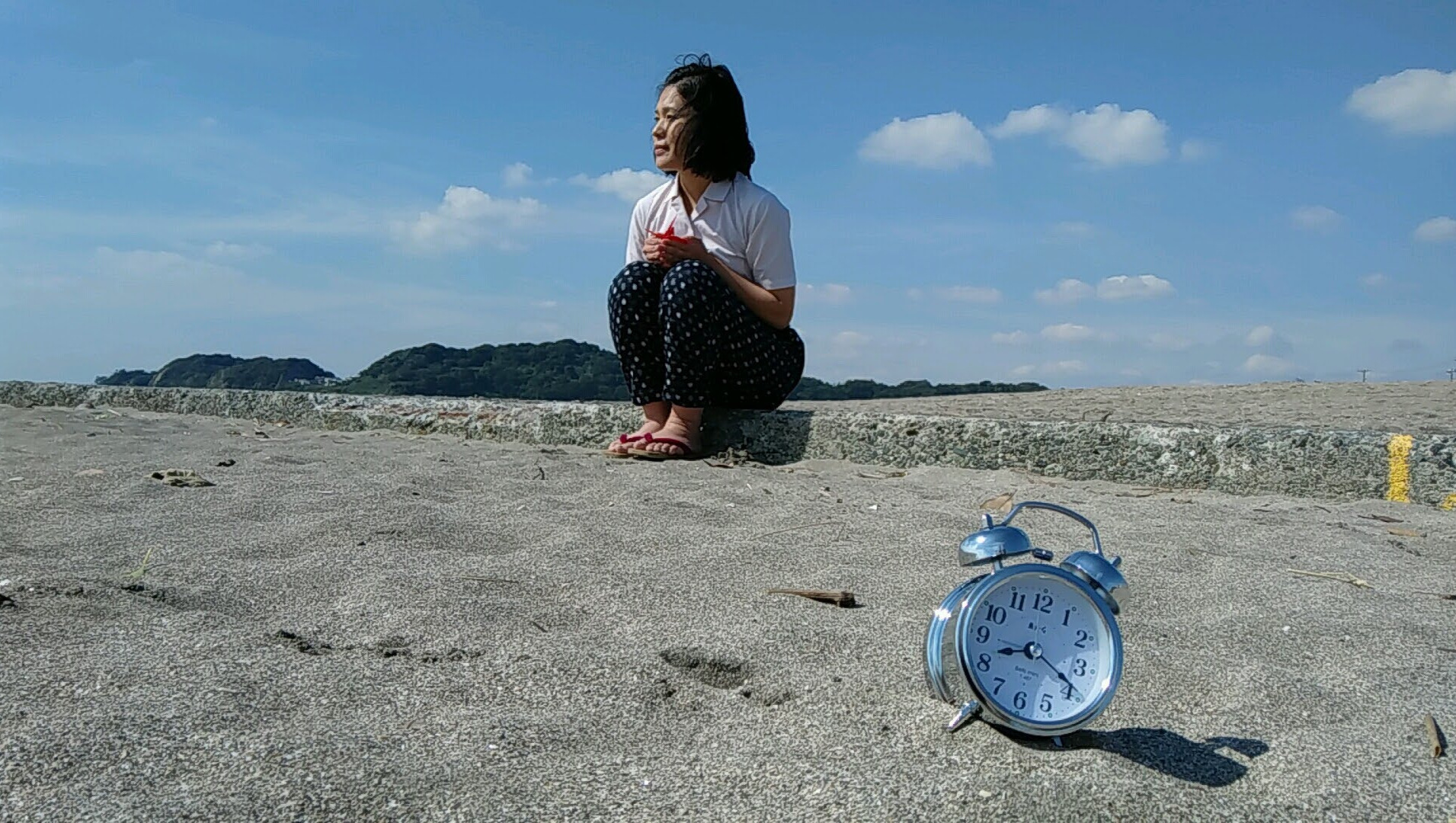
Ryoko as MITSUE
Actress, director, writer, producer.
She has been working as an actor since 2002. Trained in Japanese dance, modern dance, action, sword fighting, and voice training.
In 2014, she founded the theater unit Unfruitful and translated, wrote, and directed John Patrick Shanley's "Danny and the Deep Blue Sea," which was highly acclaimed, and in 2016, performed in "The Face of Jizo," produced by Eiji Naiki.
In 2017 she launched a project with the backup of printmaker and stage designer Hiroshi Wakitani to perform "The Face of Jizo" in the US with the American people.
She has also appeared on stage in many other organizations.
She is a staff member of the Tokyo Kanda Jimbocho Film Festival.
August 2020: A film she produced, "The Face of Jizo" by Hisashi Inoue, will be screened at peace ceremonies in New York and Boston.
December 2020. "The Face of Jizo" receives the Peace Action Selection at the joint screening BEYOND.
August 2022: "The Face of Jizo" was performed at the Hiroshima Nagasaki Peace Memorial Ceremony in Boston. Directed by David Rothauser.
Hiro Kunado, Executive Producer
Hiro Kunado is a film, video and music producer. He has been working on the "tumugu project," a joint project with Senshu University School of Commerce in Kanda Jimbocho, Chiyoda Ward, to address the SDGs, and has conducted a "media literacy workshop" for children attending school in the ward. The Tokyo Independent Film Festival is held in collaboration with filmmaker *Michihito Fujii to promote the film arts and visual culture in Japan.
Since the 1990s, he has been traveling back and forth to New York, USA, and also works as a professional DJ. Producer of the Tokyo Kanda Jimbocho Film Festival.
*Michihito Fujii
His film "THE JOURNALIST" released in 2019, won six Japan Academy Awards, including three for best picture, as well as many other film awards.
Rino Aise, Actor
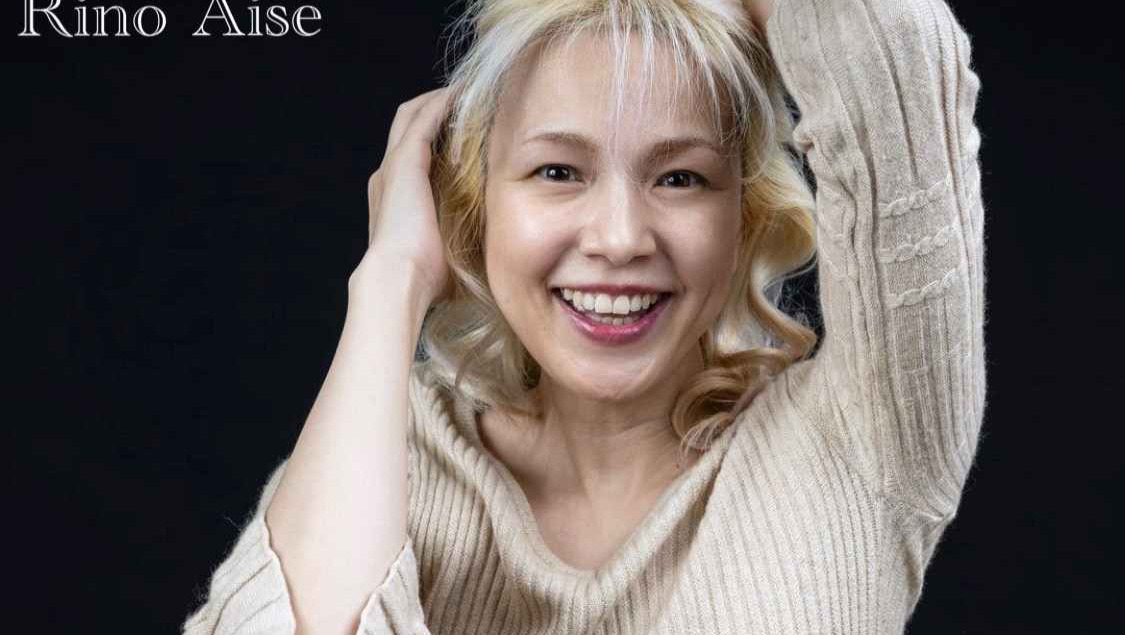
Rino Aise, a native of Japan, is a performer of drama and music, particularly for peace.
Rino initially studied Minyo (folk songs) with Ryushu Kubota, the highest teacher of the Hokkaido Folk Song Federation and, then, started playing sanshin, a traditional Okinawa instrument, to pursue her music career, singing folk songs, anime songs and original songs in the U.S. and Japan.
Duo: PinkLagoon, Yuzuri no Hana
Band: Rinosaurs: Vocal & Sanshin, HPB
David Rothauser, Director
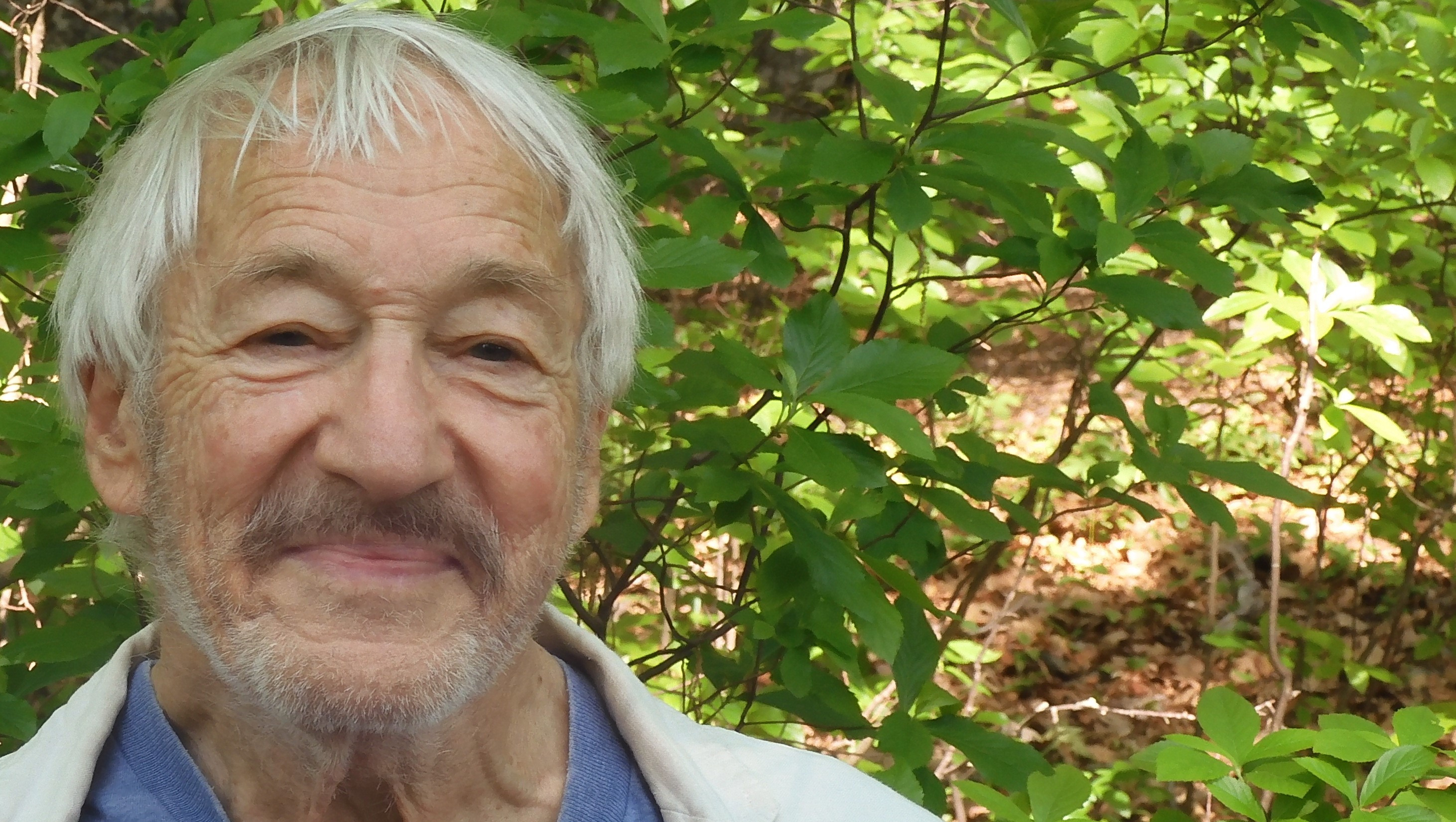
Selected Theatre and Film Work
• Producer/Director, In The Matter of J. Robert Oppenheimer, Boston, about the Manhattan Project.
• Producer/Director of numerous Broadway Musical Comedies with all-Japanese casts, including The King and I, My Fair Lady, West Side Story, etc. at Showa Boston Institute For Language and Culture.
• Co-producer for, A Good Example, Bertolt Brecht and HUAC. Blue Ribbon Award, American Film Festival, NYC.
• Writer, Producer, and Director, of film, The Diary of Sacco and Vanzetti about two Italian immigrants executed in Boston in 1927 for their radical activities. Broadcast on WGBH-TV in Boston.
• Writer, producer, director, film, Article 9 Comes to America, shown at the UN in 2015.
• 1st Place Playwriting Award for, The First All-American President, about an American Indian who becomes President of the USA.
• Recipient of the Sacco-Vanzetti Social Justice Award by the Community Church of Boston.
• Assisted Professor Alfonso Pinkney in the development of a new course, Violence In American Society at Hunter College in 1969.
• Active as a Veteran For Peace and Gun Control in America with VFP and Women’s International League for Peace and Freedom.
Suggested Donation Levels
$30
$50
$75
$100
$150
$300
$500
$1,000