
- M
- A

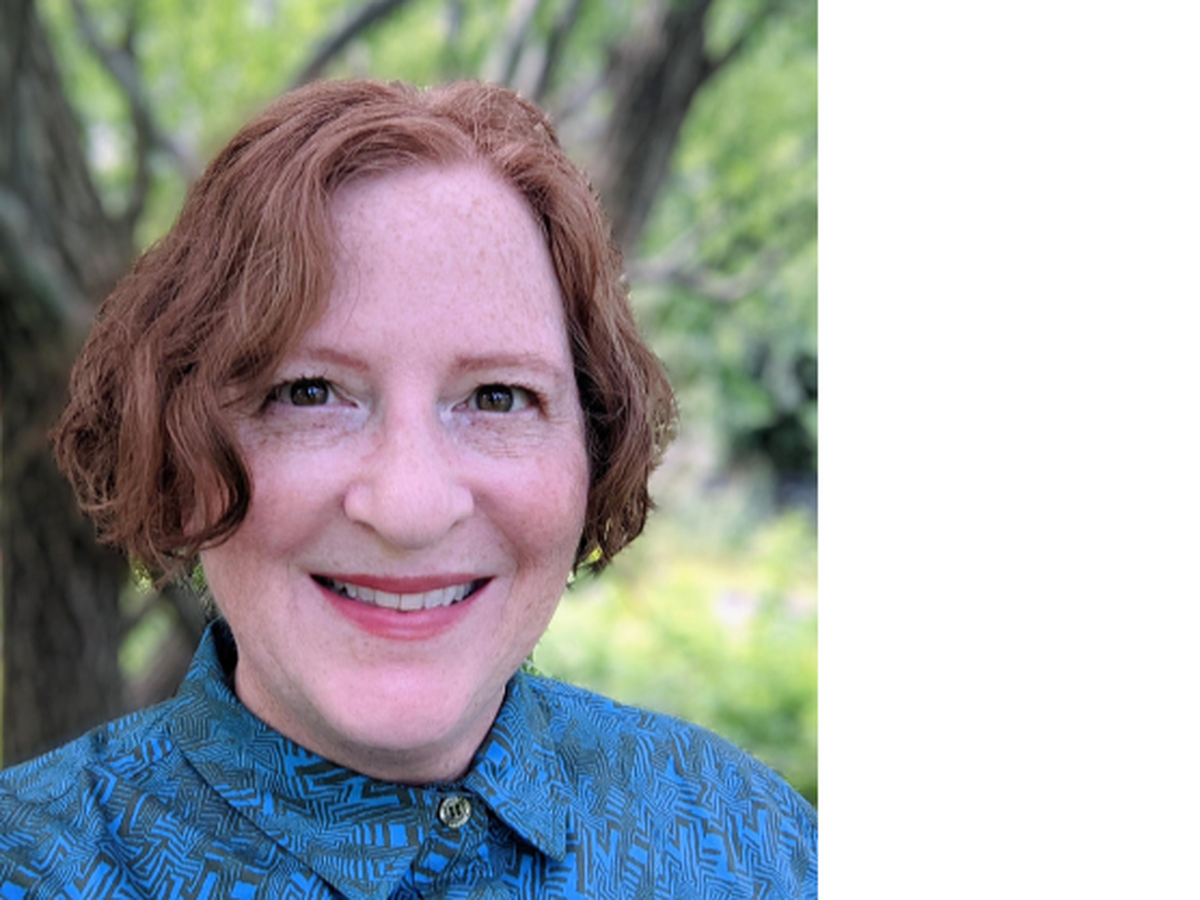
My dear friend Tay and I met in graduate school in 2009. We were a small cohort — the kind where you really know each other — and she stood out from the start. She graduated at the top of our class, was one of the first of us to be hired, and landed at one of the best private schools on the West Coast. She was sharp, deeply caring, and completely committed to the students she served. None of us were surprised- that was exactly who she was; an educator with a big heart who wanted to make a difference.
I'm a School Counselor in public school. I have been for all the years Tay was doing this work, and I am still doing it now. I say that because when I tell you what this career costs — what it takes from the people who do it with their whole hearts in systems that don't adequately support them — I am not speaking theoretically. I know what Tay gave. I watched her give it. And I am writing this because she can't write it about herself, and because what she has been living through deserves to be witnessed and named by someone who loves her and understands.
What Happened
After her years at OES — years she treasured, with students she adored — Tay spent the bulk of her counseling career in under-resourced public schools. She was often the only consistent support available to students navigating crisis, trauma, and the ordinary difficulty of growing up without enough adults in their corner. She showed up every single day. She gave those students everything she had, including, it turned out, more than she could afford to give. The cumulative weight of that work, in systems that couldn't support the people doing it, contributed to PTSD and to a health decline that became impossible to outpace.
In June 2024, her body made the decision her sense of duty kept delaying. She had to stop working entirely.
What She's Been Living With
Tay is 59. She is queer, late-diagnosed with ADHD, and lives with sensory processing differences that make an already brutal situation significantly harder to navigate. Her medical picture is serious and still coming into focus: Autoimmune Arthritis, Ehlers-Danlos Syndrome, cervical spine instability, degenerative disc disease, and vestibular migraines — which means she lives with constant struggles with balance, and that bright lights and loud sounds cause her physical pain and nausea. She is in constant pain.
I want to be specific about what that means, because "chronic illness" can sound abstract. Tay struggles with bathing, feeding herself, grocery shopping, sleeping, walking, and driving. She cannot sit or stand for long. Screen time is limited by how her body responds to it. She cannot participate in public life in person. Her fatigue does not respond to rest. The person her former colleagues and students knew — present, capable, luminously competent — is not who she is able to be right now. Tay carries enormous grief from losing a life and career she loved. That gap is one of the harder things for her to sit with, and one of the harder things for those of us who love her to witness.
She moved to a new city specifically to access the medical care her conditions require. She knows no one there. She is socially isolated in the most literal sense — navigating complex medical advocacy alone, with no in-home support for daily needs she cannot always meet herself. She has dear friends who love her and support her as fully as they can from a distance. But the daily reality — the appointment she needs a ride to, the meal she cannot make, the task that requires more than her body can give that day — she handles alone.
Most of us, in a crisis like this, can imagine falling back on family of origin in some way — a place to land, someone who can show up with long term financial and caregiving support. Tay does not have that available to her. She navigates this without that net.
The current political climate adds its own weight. As a queer person who depends on Medicaid, SNAP, and a federal disability process whose future feels uncertain, the anxiety is not abstract. Stress is not incidental to her conditions — it is physiologically connected to them. She carries this as gracefully as she can. But it is real, and it is part of the picture.
What She Has Already Tried
I want you to know this, because Tay would never tell you herself.
When she could no longer work, she looked for anything she could do. She searched for jobs — anything manageable, anything possible — and found nothing her body could sustain. She reopened her Etsy shop and sold the remaining inventory from years she spent as an artisan jeweler. She took on piecework — sewing soft sculpture birds for an artist friend — until the constant pain made that impossible too. She sold furniture. She sold what she could sell.
Seventeen months ago she reached out to her community directly. People responded with about $9,500 in donations and Etsy purchases, and she is grateful for every single one of them. She used that time to apply for SSDI disability benefits and to keep herself afloat while she waited for something to shift.
She sold her house to avoid foreclosure. The modest profit paid off the credit card debt accumulated over fourteen months of not working, with a small amount set aside as a cushion — savings that are now rapidly depleting, replaced by new debt, because the situation has not resolved the way any of us hoped.
She has had family financial support since August — her rent covered through the kindness of people who love her and hoped she would be back on her feet by now. That support ends with her lease in July. The gap between what she has and what she needs will then be entirely hers to close, in a body that cannot work, while waiting on a federal process that moves at its own pace.
There is nothing left to liquidate. She has done everything right, in the right order, for as long as she possibly could. She is asking now — and I want you to know that asking is genuinely, deeply hard for her — because July is coming and she has run out of road.
Wren and Clover
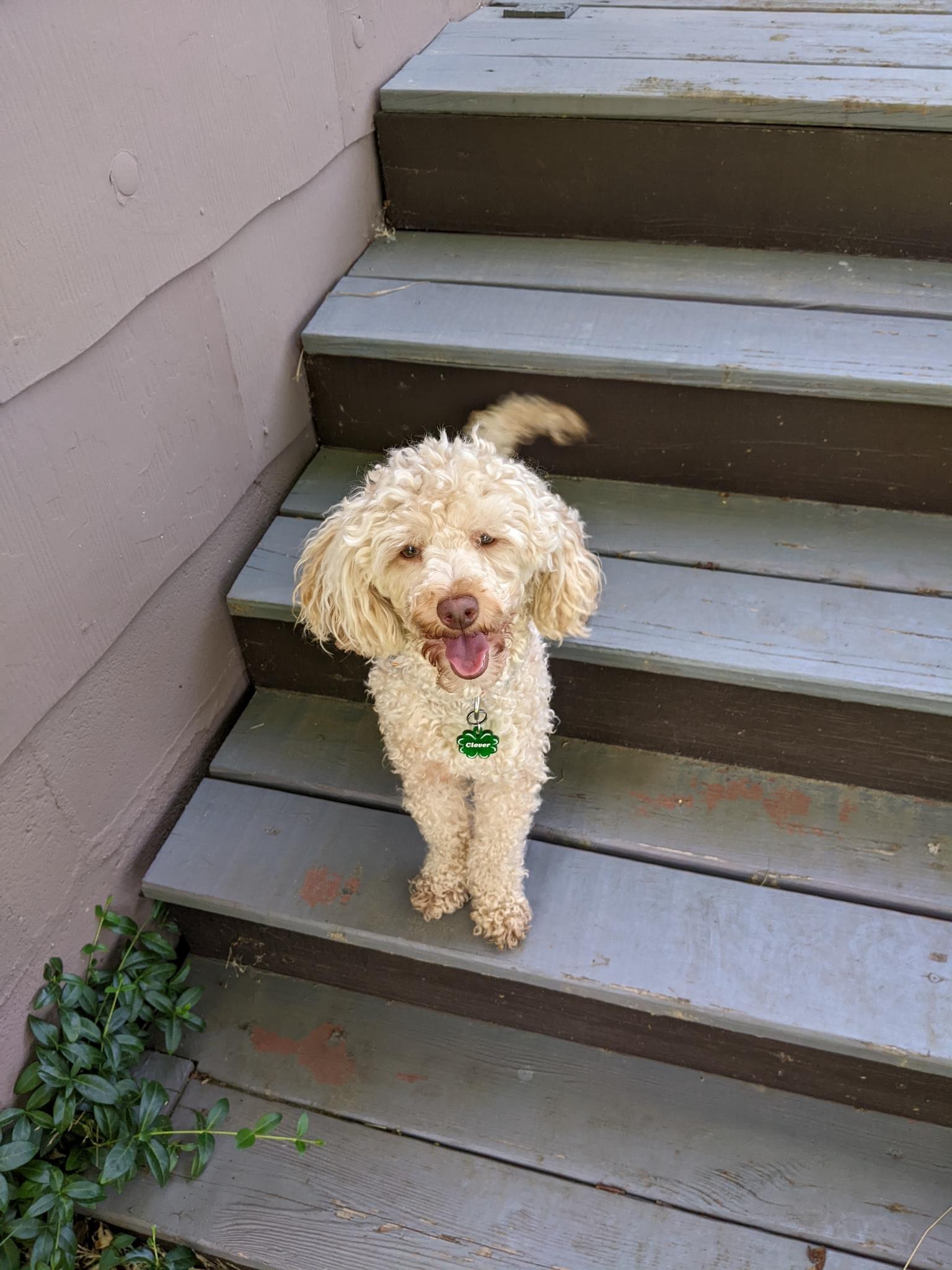
Tay has two dogs. She desperately wants to keep her little family together. Clover is an emotional support dog -small and easy — and generally a calm, steady presence in a hard time. Wren, while super loving, is something else entirely.
Wren has severe separation anxiety, shaped by three years of living somewhere that wasn't safe. A group of neighbors targeted Tay repeatedly — vandalism, harassment, fear that became constant and ambient. Wren absorbed all of it. They both did. They're in a safer place now, a small apartment, but the transition has brought its own challenges: bright hallways, too many neighbors, no private outdoor space, no garden, no room to breathe for either of them. For five months after moving, Tay didn't leave — because she couldn't put Wren through it.
When she has medical appointments she can't leave him in the apartment, so he needs daycare. That is not a luxury. That is the thing that makes it possible for her to get to the doctor at all.
What the Money Covers
With family support ending in July, Tay's basic monthly expenses become entirely her responsibility:
Rent: $1,071 (current low-income unit — she needs to find somewhere less difficult for her and Wren, which may cost more)
Medications not covered by Medicaid: $180
Utilities, phone, and internet: $260
Household necessities not covered by SNAP: $75
Car expenses (gas and insurance): $150
Wren's daycare on medical appointment days (twice a week): ~$352
Dog food, treats, and anxiety medication: $100
Veterinary care (averaged monthly): $50
Storage unit: $145
Music and streaming (Spotify and Netflix): $30
Monthly total: approximately $2,413
There is also $650 in outstanding car repairs needed to keep the car that gets her to those appointments.
Her SSDI application is currently in the medical determination stage. A decision could come as soon as this summer — but it could also bring a denial that restarts the process by a year or more. We are setting this goal at $15,000 to give her real runway through that uncertainty. In the meantime she is covering these basics on credit cards, adding debt to an already precarious situation, while she waits for a federal process to catch up to her reality.
July is not far away. That is why we are asking now.
What She's Working Toward
SSDI approval. Enough stability for her body to have a real chance at responding to treatment. And eventually — when her health allows — some small way of contributing again, on her own terms, within her limitations rather than against them. She spent twenty years in service to young people. She is not done wanting to matter in the world. She just cannot get there from here without help bridging the gap.
A note to her former students — especially those from OES
If you knew Tay — and especially if she was your counselor at Oregon Episcopal School between 2011 and 2014 — I want you to hear this directly.
Those years mattered to her. You mattered to her. She has asked me to make sure you know: it has been the honor of her life to support you as teenagers, and she is so proud of the people you have grown into being.
She does not want you to feel guilty. The years she spent with you were among the best of her career — she was doing work she loved, with students she adored & believed in, in a place that supported her ability to do it well. What wore her down came later, in harder circumstances. What she carries from her time with you is gratitude, not burden.
But some of you are grown now, established, making your way in the world — and you are still in her heart. If you're in a position to give, or simply to share this with someone who might, that would mean more than you know.
How to Help
Give what you can. Share this with someone who knew Tay, or someone who simply recognizes this kind of story — someone who gave and gave and is now, for only the second time in this crisis of nearly 24 months and only because she has no other choice, asking. We know so many people are struggling right now and may need support in different ways. If you’re not in a place to give financially, we completely understand—sharing this with someone who might be able to help can make a big difference.
Tay has poured so much into her students, and the impact of her work continues to live on through them. Now is an opportunity for us to come together and support her in return.
Thank you for seeing her.
— Randi Messer
Organiser and beneficiary

Tay MacIntyre
Beneficiary