- A
- M
- n
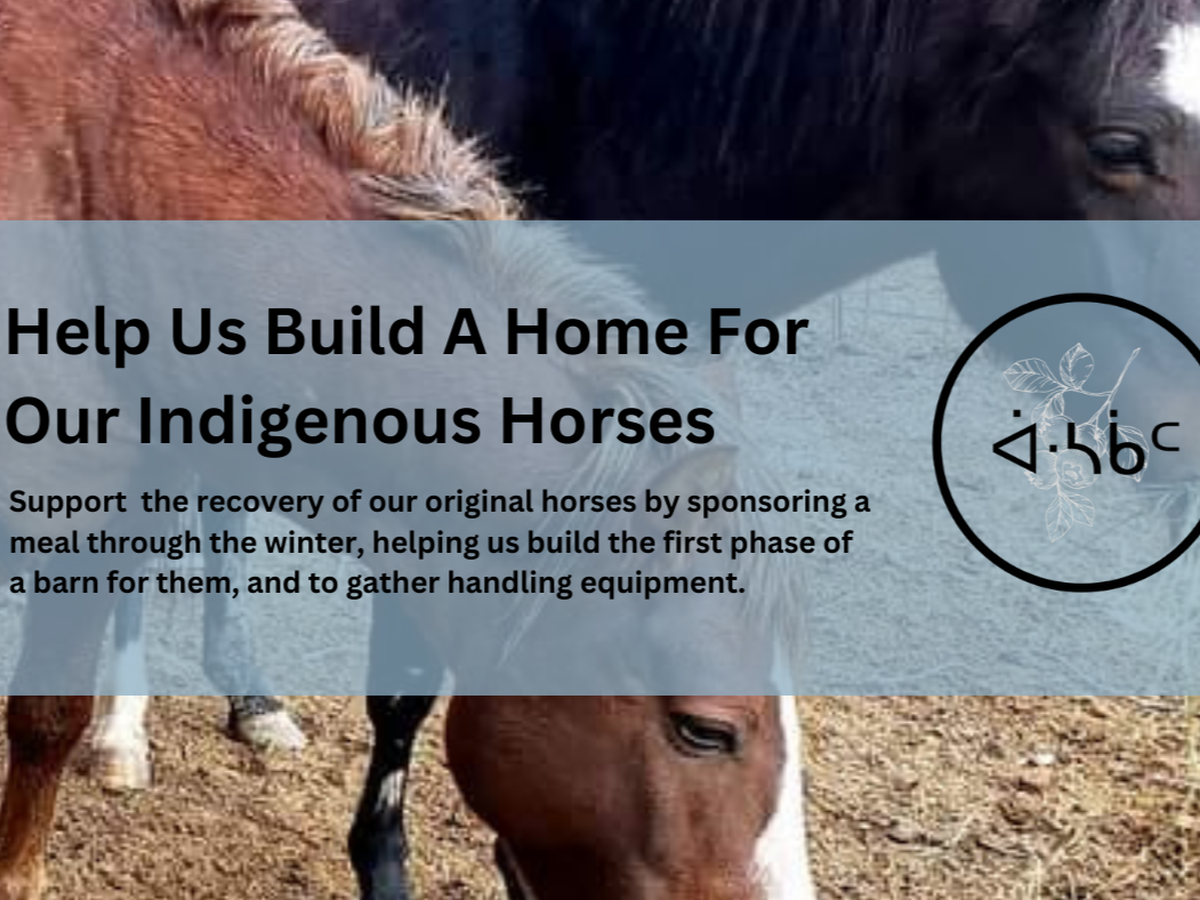
Help Us Keep Indigenous Horses Fed and Dry This Winter
0% complete
$3,594 raised of $5K CAD
78 donations
The common story we hear about horses in North America is that they arrived with the Spanish. That story is a fiction. Horses were written about at the time of first contact with Europeans, and our horses, often called ponies, have lived here for as long as we have, if not longer.
These horses nearly disappeared. For hundreds of years there was a purposeful effort to eradicate them. In 1977 there were only four left, and they were ordered destroyed. They were smuggled across the border to safety and, decades later, there are over 250 of them, cared for by caretakers across Ministik (what is now Alberta, Saskatchewan, Manitoba, Ontario, and beyond). We tend to avoid the word owner. For us at Wâsakâm, caring for these horses is an act of reclamation for our family, our nation, and all Indigenous peoples. We are reclaiming kinship with these horses and with the land.
Why this matters to my family
One of my Chapans, my great great great grandfather Onesime Falcon, was a horse trainer. Horses were part of my family’s identity, vital on our buffalo hunts and as we travelled across the plains. Colonization interrupted that lineage, and Onesime was murdered in Winnipeg in the early 1900s, likely after trading horses. Reclaiming this relationship is reconnection, and it is healing for ancestral wounds.
How they came to us
I first learned of the survivors of our original horses about 15 years ago and felt certain they would find me someday. After our home burned down in April 2022, a voice said it was time. A caretaker near me had been looking for us too, and she wanted to help return these Indigenous horses to Indigenous peoples. With two weeks’ notice we cleaned up a winter pen, fixed fences, and welcomed the horses. Their presence is a healing blessing.
What we need this winter: Another $5,150 (which takes us to our $8,654 goal)
Wâsakâm runs without public funding. We care for our herd with the support of community, and this winter we need:
$2,400 for hay to feed the herd through the winter
$1,500 for roof metal to finish the horse shelter. We already have the materials. We lost a foal to a late spring snowstorm, and Pisim is expecting a foal in late winter. We are determined to keep her and her baby safe and dry.
$800 to rent a skid steer for a day to move the bales into the pen
$450 for tarps and straps to protect the bales
For the past two years we’ve been fencing, and the 10-acre pen is finished. Now we need to keep the herd fed and sheltered through winter.
Ways to give
$10 feeds the horses for a day
$60 buys a bale of straw to keep them warm and dry
Any amount helps, and sharing this page helps as well
Thank you for being part of this story. Pisim, Crane, and the whole herd are home, and we’re grateful you’re helping keep them safe.
Beyond this winter: building the camp
Once the horses are safe through winter, we have a bigger dream for the land at Wâsakâm: a place where people can come to learn, heal, and spend time with the horses. We’re raising $40,000 for the materials (lumber, roofing, and hardware) for three gathering places. Volunteers will do the building, so every dollar goes into materials. We’re fundraising now through March and building in the spring, so camps can begin next summer.
A camp kitchen: a place to cook and feed people during our events, and to teach food sovereignty skills
A covered shelter: a place to learn land-based skills and tan hides, and where the horses can spend time with participants
A healing lodge: a warm indoor space to learn, take part in ceremony, and find support in healing, which will let us hold camps in every season
If you’re able to give toward the winter needs first, thank you. Anything beyond that helps us get closer to the camp, and we’ll share our progress as it grows.