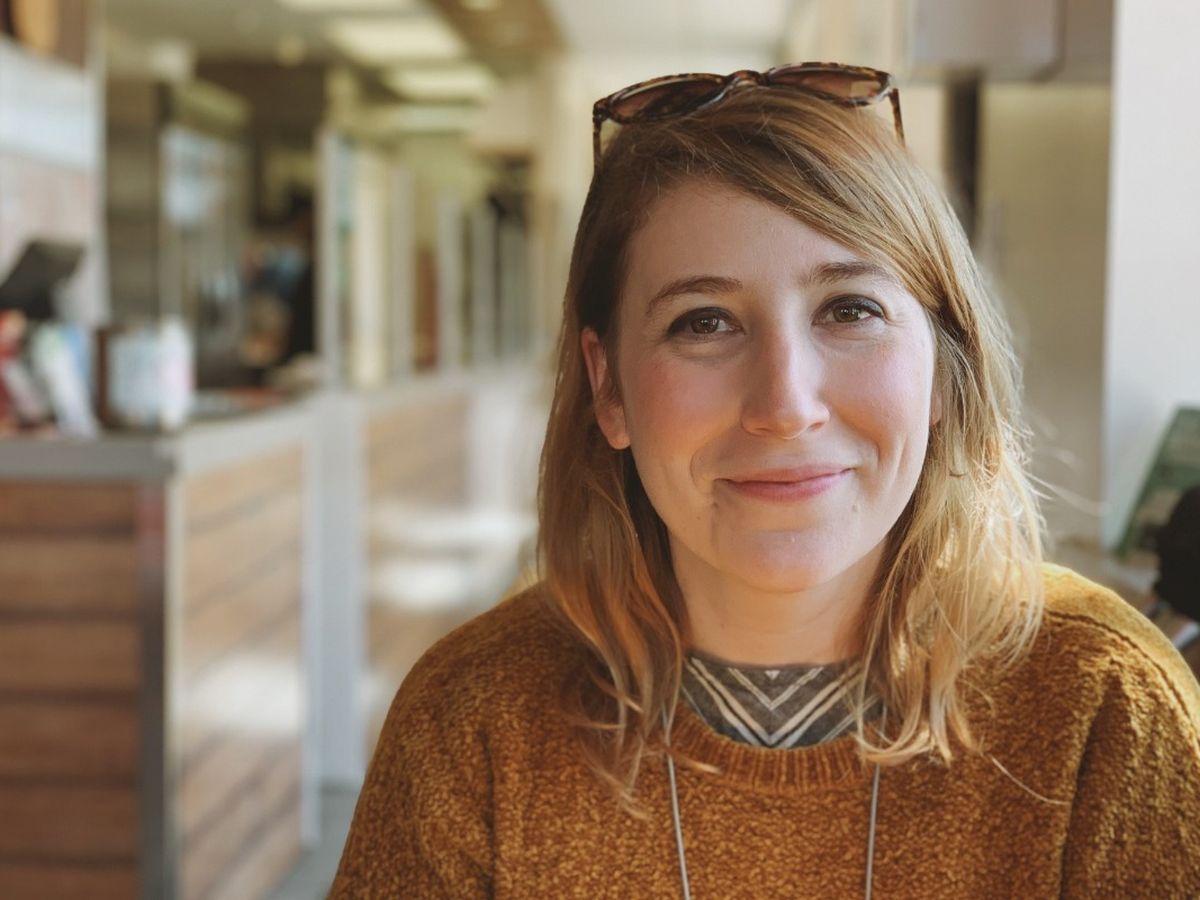
This is my girlfriend, Allison. She is the sweetest and kindest human I have ever met. A professional musician, she has incredible talent. Her voice can make me melt. She loves to bake. She has a passion for herbalism and its healing properties. She loves her dog. And she is compassionate to a fault, willing to put anyone ahead of her and help those in need.
I met Allison at the beginning of 2018, though it seems so much longer. I remember being surprised when she told me that she had spent most of the prior four years unable to walk without crutches or a cane.
In April of 2014, she slipped in water at her baking job. The resulting fall injured her foot, ankle, and knee with sprains and tears; but the damage was more severe than she could ever have predicted, and would change her life forever.
Alli developed Chronic Regional Pain Syndrome, or CRPS, as a result of the injury. CRPS is a rare and devastating nerve disease that most commonly affects the limbs after traumatic injury. Once onset, it causes severe and debilitating nerve pain in the afflicted area. On the McGill Pain Scale, the pain from CRPS is ranked higher than childbirth.
Feelings of burning, crushing tightness, and electric shock are a daily reality in the afflicted area of the body. There are moments where the pain is mildly abated, but it always comes back, sometimes stronger. And there is no pain killer in the world that makes it bearable.
Pain is only one aspect, too. Sensitivity to touch, swelling, stiffness, heaviness, weakness, numbness, drastic temperature differences in limbs, skin changes, extreme fatigue, coordination/balance issues, brain fog, digestive issues, and much more are daily symptoms of Allison’s CRPS.
And it can spread to other parts of the body, making the use of limbs impossible. The fear of this happening keeps many people with CRPS inside, inactive, and unable to live their lives. It takes little parts of you away from yourself, little by little until all you have left is your pain. Without a known cure, life with CRPS gets harder and harder as the years go by, and victims often reach the point where it is simply too much. Doctors have nicknamed it the suicide disease.
There is hope, however. Some are more receptive to treatment than others. With years of physical therapy, multiple nerve blocks, medications, and no additional injuries, it can get better, little by little. Remission is possible and Allison was coming close. She was off the cane. She got a dog. She met me. Life was good.
And then, last November, while walking into the living room, she stubbed her little toe on the foot with CRPS, causing a slight fracture. In an instant, all of her years of struggling in physical therapy, progress, and suffering to be able to walk again crumbled like a house of cards, and she was back to square one. Only this time, the pain and sensitivity were worse.
I moved in with her to take care of her and the pup. We do everything we can to help her live well and recover, as slow as recovery is with CRPS. I hardly slept, as the moment I would get home, I would be taking care of her. Very slowly, she was making improvements, and even started to use a cane instead of crutches. We really thought we were almost there...
One month ago, the worst case scenario happened. For no reason at all, the CRPS spread to her left hand. Now it is possibly spreading to the right. Fundamental things like typing a text message, opening a can of seltzer, and brushing her teeth, are now excruciating trials. I am no longer just her feet, I am now her hands, too. This was more than one person could handle, but now it has become more than both of us can handle.
But, there is hope.
Enter the Spero Clinic, located in Fayetteville, Arkansas. It is the only clinic in the world that treats patients with CRPS with an immersive and fully integrated program. For three months, patients work with doctors and therapists every single day to reset the nervous system. We have been following it and connecting with patients who, after attending the clinic and completing the program, are in remission. Patients who never thought they would get out of a wheelchair are walking. They have an 84% success rate of patients remaining pain free even 8 years after finishing treatment. Success rates that high are almost unheard of.
There is nothing else like the Spero Clinic in the world. Because it exists, Allison has hope that she can one day live her life again without searing pain and the fear of it progressing. We have just returned from there, where Allison completed a two day evaluation and was able to meet many of the patients and practitioners. They were very clear that time is of the essence, and that further spread of CRPS is likely. It can affect the entire body. We cannot let that happen.
This is the only chance she has of being able to do the things that make her who she is. Because of this program, there is hope that she can walk her dog, play her guitar, bake something in the kitchen, and be, as she says, "a human" again.
Treatments vary per patient, with multiple appointments every day, for 12 weeks. She will be living in a new state, paying rent, and needing to pay for food and possibly a caretaker. Treatments are estimated to be $2,700 to $3,000 a week. So the total cost won’t be known right away, but $36,000 is possibly a conservative estimate.
And we are asking for anything you can spare, however small, even if all you can spare is a smile, so that my sweet Alli can have her life back.
Thank you from the bottom of our hearts.
I met Allison at the beginning of 2018, though it seems so much longer. I remember being surprised when she told me that she had spent most of the prior four years unable to walk without crutches or a cane.
In April of 2014, she slipped in water at her baking job. The resulting fall injured her foot, ankle, and knee with sprains and tears; but the damage was more severe than she could ever have predicted, and would change her life forever.
Alli developed Chronic Regional Pain Syndrome, or CRPS, as a result of the injury. CRPS is a rare and devastating nerve disease that most commonly affects the limbs after traumatic injury. Once onset, it causes severe and debilitating nerve pain in the afflicted area. On the McGill Pain Scale, the pain from CRPS is ranked higher than childbirth.
Feelings of burning, crushing tightness, and electric shock are a daily reality in the afflicted area of the body. There are moments where the pain is mildly abated, but it always comes back, sometimes stronger. And there is no pain killer in the world that makes it bearable.
Pain is only one aspect, too. Sensitivity to touch, swelling, stiffness, heaviness, weakness, numbness, drastic temperature differences in limbs, skin changes, extreme fatigue, coordination/balance issues, brain fog, digestive issues, and much more are daily symptoms of Allison’s CRPS.
And it can spread to other parts of the body, making the use of limbs impossible. The fear of this happening keeps many people with CRPS inside, inactive, and unable to live their lives. It takes little parts of you away from yourself, little by little until all you have left is your pain. Without a known cure, life with CRPS gets harder and harder as the years go by, and victims often reach the point where it is simply too much. Doctors have nicknamed it the suicide disease.
There is hope, however. Some are more receptive to treatment than others. With years of physical therapy, multiple nerve blocks, medications, and no additional injuries, it can get better, little by little. Remission is possible and Allison was coming close. She was off the cane. She got a dog. She met me. Life was good.
And then, last November, while walking into the living room, she stubbed her little toe on the foot with CRPS, causing a slight fracture. In an instant, all of her years of struggling in physical therapy, progress, and suffering to be able to walk again crumbled like a house of cards, and she was back to square one. Only this time, the pain and sensitivity were worse.
I moved in with her to take care of her and the pup. We do everything we can to help her live well and recover, as slow as recovery is with CRPS. I hardly slept, as the moment I would get home, I would be taking care of her. Very slowly, she was making improvements, and even started to use a cane instead of crutches. We really thought we were almost there...
One month ago, the worst case scenario happened. For no reason at all, the CRPS spread to her left hand. Now it is possibly spreading to the right. Fundamental things like typing a text message, opening a can of seltzer, and brushing her teeth, are now excruciating trials. I am no longer just her feet, I am now her hands, too. This was more than one person could handle, but now it has become more than both of us can handle.
But, there is hope.
Enter the Spero Clinic, located in Fayetteville, Arkansas. It is the only clinic in the world that treats patients with CRPS with an immersive and fully integrated program. For three months, patients work with doctors and therapists every single day to reset the nervous system. We have been following it and connecting with patients who, after attending the clinic and completing the program, are in remission. Patients who never thought they would get out of a wheelchair are walking. They have an 84% success rate of patients remaining pain free even 8 years after finishing treatment. Success rates that high are almost unheard of.
There is nothing else like the Spero Clinic in the world. Because it exists, Allison has hope that she can one day live her life again without searing pain and the fear of it progressing. We have just returned from there, where Allison completed a two day evaluation and was able to meet many of the patients and practitioners. They were very clear that time is of the essence, and that further spread of CRPS is likely. It can affect the entire body. We cannot let that happen.
This is the only chance she has of being able to do the things that make her who she is. Because of this program, there is hope that she can walk her dog, play her guitar, bake something in the kitchen, and be, as she says, "a human" again.
Treatments vary per patient, with multiple appointments every day, for 12 weeks. She will be living in a new state, paying rent, and needing to pay for food and possibly a caretaker. Treatments are estimated to be $2,700 to $3,000 a week. So the total cost won’t be known right away, but $36,000 is possibly a conservative estimate.
And we are asking for anything you can spare, however small, even if all you can spare is a smile, so that my sweet Alli can have her life back.
Thank you from the bottom of our hearts.
Organizer and beneficiary
Allison L Polans
Beneficiary