- G
- E
Update:
Most importantly, I want to thank everyone who has supported this campaign. I am truly overwhelmed by your support.
Ziggy Stardust was put to sleep and his heart stopped beating on Saturday October 12, 2024 at 16:14 CDT. He lived a dishearteningly short, yet incredibly fulfilling life of only 4.33 years. He is Loved by all who had the chance to know him. Every vet who has cared for him since I adopted him has shed a tear over his premature departure.
Ziggy was taken to the hospital on Friday October 11, 2024 for an MRI intended to provide the veterinary neurosurgeon with a roadmap for resolving his IVDD. Unfortunately, the MRI revealed a fully metastasized lymphoma in his spinal cord. Those can be treated with chemotherapy, but it rarely improves the quality of life for the animal. It is strictly a means of buying more time with your beloved pet. There are also no surgical interventions available once lymphoma enters the spinal cord. The doctors were able to give him enough pain-killers to keep him comfortable while we spent one last night together at home.
I have updated the GoFundMe goal to reflect only what is needed to cover the MRI and end of life care. I humbly ask again that you consider donating and/or sharing the link to this campaign.
Original post:
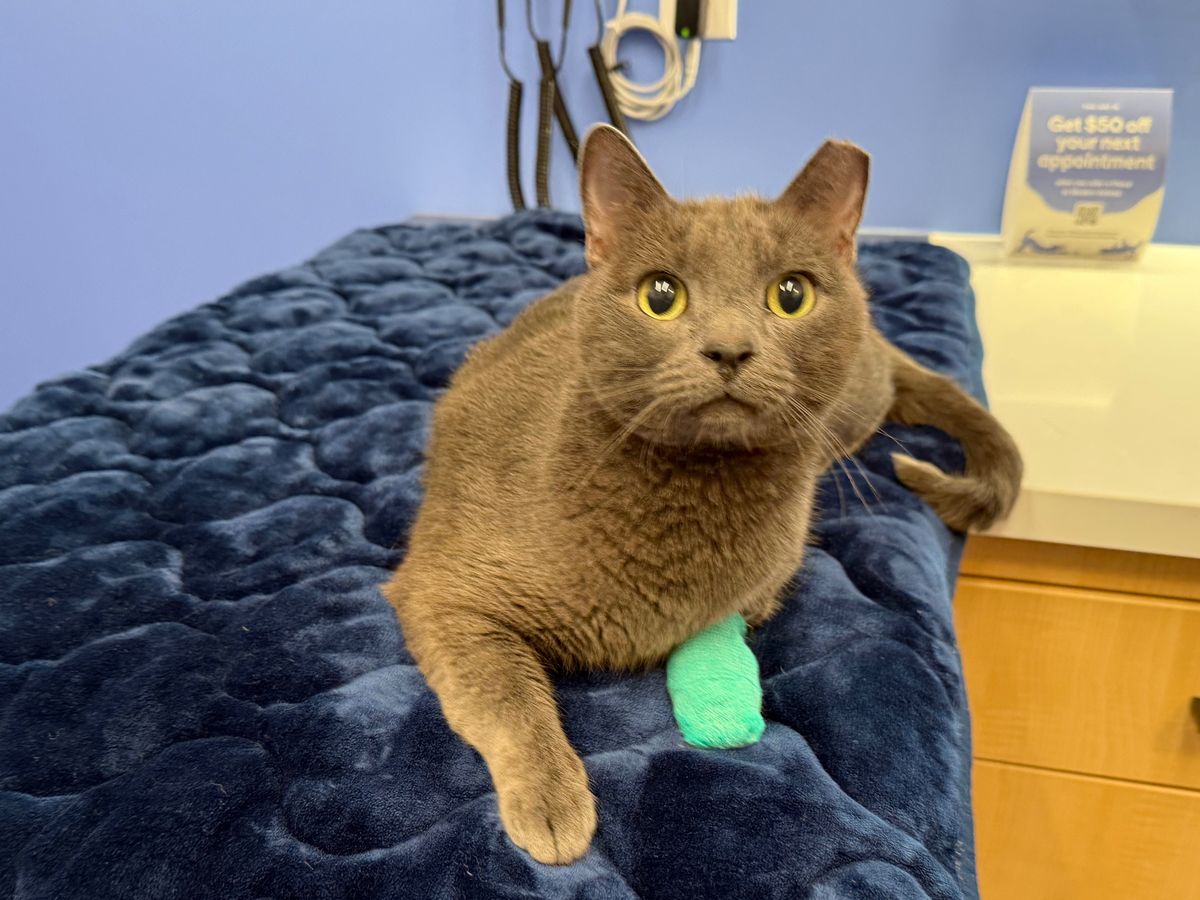
My name is John and my cat is a gorgeous male Russian Blue named Ziggy Stardust. He came into my life right when I separated from my ex-wife and has been my emotional support animal throughout the difficult readjustment to single life.
On Saturday September 28, I noticed he had become uncharacteristically withdrawn including not cuddling with me which is his favorite activity. By early that evening, I knew something was wrong and found him curled-up on the floor of the closet where he never hides. I fed him some treats, but he was weak on his feet so I took him to the emergency vet. They performed an x-ray of his spine which appeared unremarkable, so they gave him an anti-inflammatory injection and oral sedative to relax him.
On Monday September 30, I had to take him back to the regular vet because he was complaining of pain when I touched him abdomen. X-rays showed his stomach and GI-tract were full of unmoved feces. The doctor sent us home with instructions to put him on a water-only diet that evening to see if he would pass any of the stool on his own.
On Tuesday October 1, I woke to find he had passed all the stool throughout the night. I took him back to the vet for a follow-up x-ray which confirmed him stomach and GI-tract were clear. He was acting like he was on the mend, so I was told to keep an eye on him.
He had some ups and downs for the rest of the week; however, Saturday October 5 was a major setback. I noticed he was having difficulty using his hind-quarters. Every time he would start to walk, his back legs would drag behind him. I took him back to the regular vet and they immediately indicated he needed to be seen in a veterinary emergency room with a neurological surgeon on staff.
I took him to the closest of the two places available in the area with a neurological surgeon and they said his condition likely required an MRI, but to save money we could try an oral steroid first to gauge improvement.
On Monday October 8, his condition had deteriorated to the point where he was only bearing weight on his hind-quarters if I stood him on them and he was clearly in some amount of pain. I took him to his regular vet to help me decide if we should continue waiting or consider euthanasia.
This is when the vet was able to definitively diagnose him with a condition called Intervertebral disc disease (IVDD). This condition is a rare but serious condition in cats that occurs when the discs between the vertebrae of the spinal column bulge or burst into the spinal cord.
IVDD can only be corrected surgically; however, the surgery has an extremely high success rate and most cats go back to living completely normal lives after recovery. The cost of the surgery itself can range from $1,500 to $4,000, but the total cost of surgical treatment can be as high as $10,000 when including imaging and other preparation.
I am disabled and rely solely on government assistance to meet my financial and medical needs. It is because of that I am humbling asking you to consider donating so Ziggy can have the necessary surgery and I can continue living with my best friend. He is my entire world and I don’t know what I would do without him. Thank you in advance for any help you can offer.