- M
- S
- S
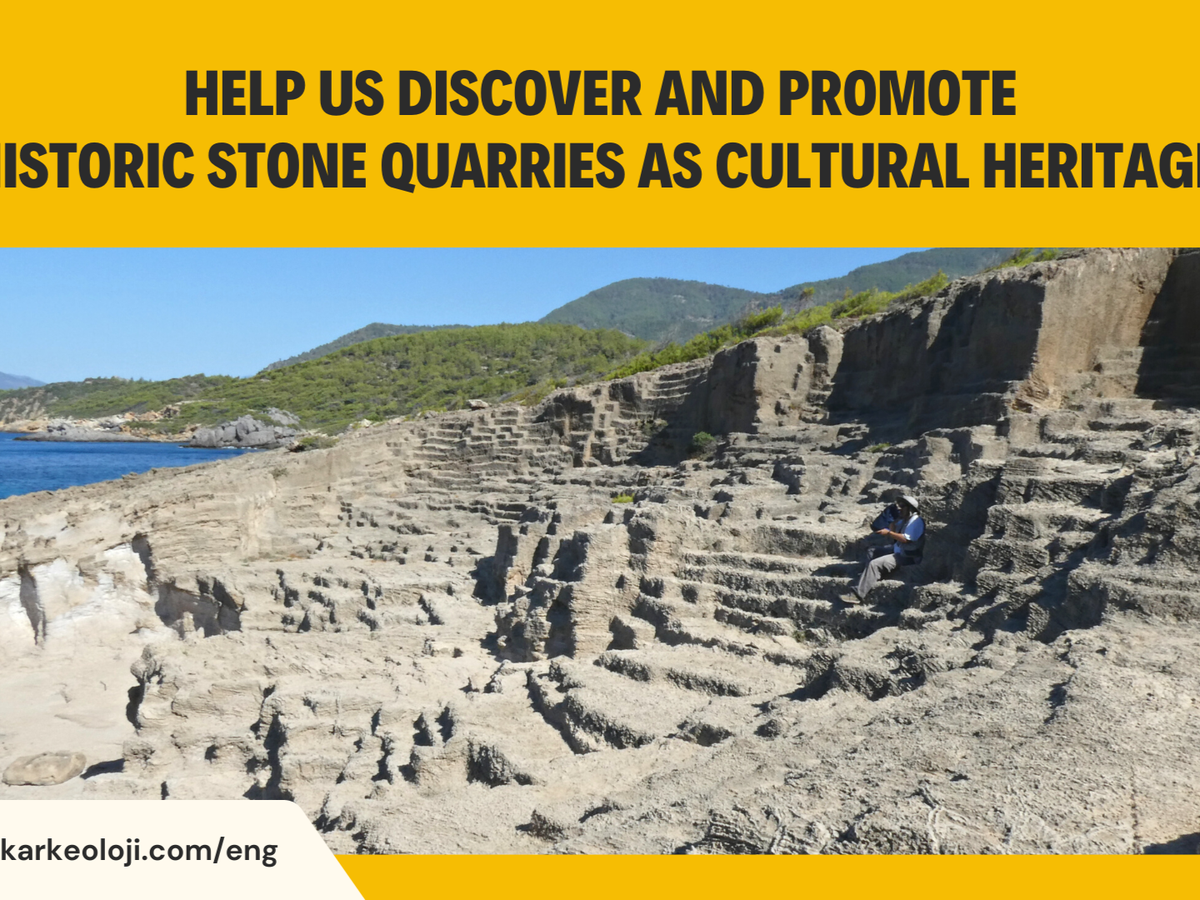
HELP US PROMOTE HISTORIC STONE QUARRIES
0% complete
$1,770 raised of $15K
19 donations
Who are we? We are a team of archaeologists, art historians, architects, engineers, and geologists working on historic stone quarries in South Turkey. We have twelve years of archaeological fieldwork experience in ancient Rough Cilicia. Our former Project, The Boğsak Archaeological Survey (BOGA) investigated two islands, Boğsak and Dana, both with Christian settlements which served marine travelers and pilgrims. The big island Dana was a major limestone quarry supplying the local building industry in the Late Roman and Early Byzantine periods. Drawing and measuring ancient quarry cuts Archaeology and Cultural Heritage We recently started a new survey project that combines archaeology and cultural heritage, namely Building Archaeology in Stony Cilicia, aka TAKA, an acronym based on the Turkish name. We explore the building industry holistically through time and geography. We start with the production of the building material at the quarries. We look for traces of stone transport and trade in the landscape. We finally study the creation of buildings and architectural spaces. Historic quarries at Taşkesiği In the past twelve years, living and talking with the locals, we observed how local cultural heritage was unknown and underappreciated. In fact, if promoted and managed properly, ancient landscapes can contribute to the economic well-being of the villagers and to the education of the young generation. In our new project, while doing archaeological fieldwork, we will promote historic quarries as cultural heritage. For this, our fieldwork should include data that can be used to create 3D Augmented and Virtual Reality products for the general public. We want to plan archaeological parks that can be visited in person and digitally. Our first digital exhibition: bogsakarkeoloji.com/eng The Boğsak Center for Archaeology and Heritage With this in mind, we have recently founded the Boğsak Center for Archaeology and Heritage in the abandoned elementary school in the small village of Boğsak. We have all physically worked to rehabilitate the buildings and the schoolyard. The Boğsak Center now serves as the headquarters of our archaeological project. It also functions as a public venue where we share our work via presentations and exhibitions, and hold meetings with the locals, administrators, and NGOs. We also plan to organize educational activities, art installations, and heritage projects. Laying gravel in the schoolyard with our own hands Why do we need your help? Although we have accomplished a lot in the past twelve years, our new project is severely underfunded. We manage to raise the necessary funds to cover our travel and living expenses. However, we do not have any support whatsoever to purchase the equipment that we desperately need to document and promote historic quarries. In Turkey, archaeological surveys are not adequately understood. National and local heritage authorities, local NGOs, and potential sponsors do not take archaeological projects seriously unless they include an excavation. In fact, surveying in Rough Cilicia is very difficult. The terrain is rugged, the climate is hot and humid (we do not have AC), the vegetation is thick and thorny, the rocks are sharp, and the snakes are venomous. Stuck in foliage In such difficult geography, the most efficient documentation method is photogrammetry from the air using a drone and from the land using high-resolution digital cameras. But we also need a high-end portable computer to process the data immediately during the field season. Planning the 3D documentation of the quarries using a camera raised on a monopod When do we need the funding? Our fieldwork starts in July 2024. We would like to have all the equipment ready by that time. How will we spend the money? To document and promote historic quarries, we need basic equipment: 1) A portable high-end computer with the necessary software that can process 3D data 2) A portable drone to document historic quarries and buildings in 3D from the air 3) A portable high-resolution digital camera to document historic quarries and buildings in 3D from the land Final words: • The Project is based on voluntary work. • We train students and young professionals. • We are passionate and dedicated. • The land is rugged but we are resilient (and stubborn). • We truly appreciate your contribution. • No amount is too small.