- J
- B
It is that time of the year again. Macaws are getting ready to welcome their new chicks and we, The Macaw Society, are getting ready to continue the nest monitoring work that has been so important in expanding the knowledge of macaw conservation and helping governments and local people understand and conserve these valuable resources.
But this time, we need a little bit of your help.
Last breeding season we started off on the wrong foot. Back in November 2021, Peru was being hammered by a huge first wave of COVID 19, but we decided it was important to get a crew upriver to do some early season next checks and nest repairs. However, our hopes for a smooth start to the season were quickly lost. Just after departing the Malinowski check post our boat hit a large log and in just seconds it was upside down . . . and SANK. Thankfully, everybody swam safely to the shore, but we lost LOTS of equipment. Ropes, climbing gear, tents, and field equipment all flowed away in the murky waters of the Tambopata River.
The accident left us in a very difficult position because climbing trees to check on macaw nests requires expensive climbing equipment that we bring from the USA and pandemic travel restrictions didn’t allow us to travel. Besides, the COVID 19 situation in Peru was extremely challenging and restrictions meant we couldn’t do our regular nest maintenance. As a result, we missed the start of the macaw breeding season.
By February, we somehow pulled together what was left of our gear and with a small team of dedicated assistants, we made it back up the Tambopata River! It was a whole new experience working in the hot and humid tropical rainforest climbing trees with face masks on and doing our best to follow the strict government health protocols. However, our fearless team was extremely motivated. It was a success and it felt good to be back!
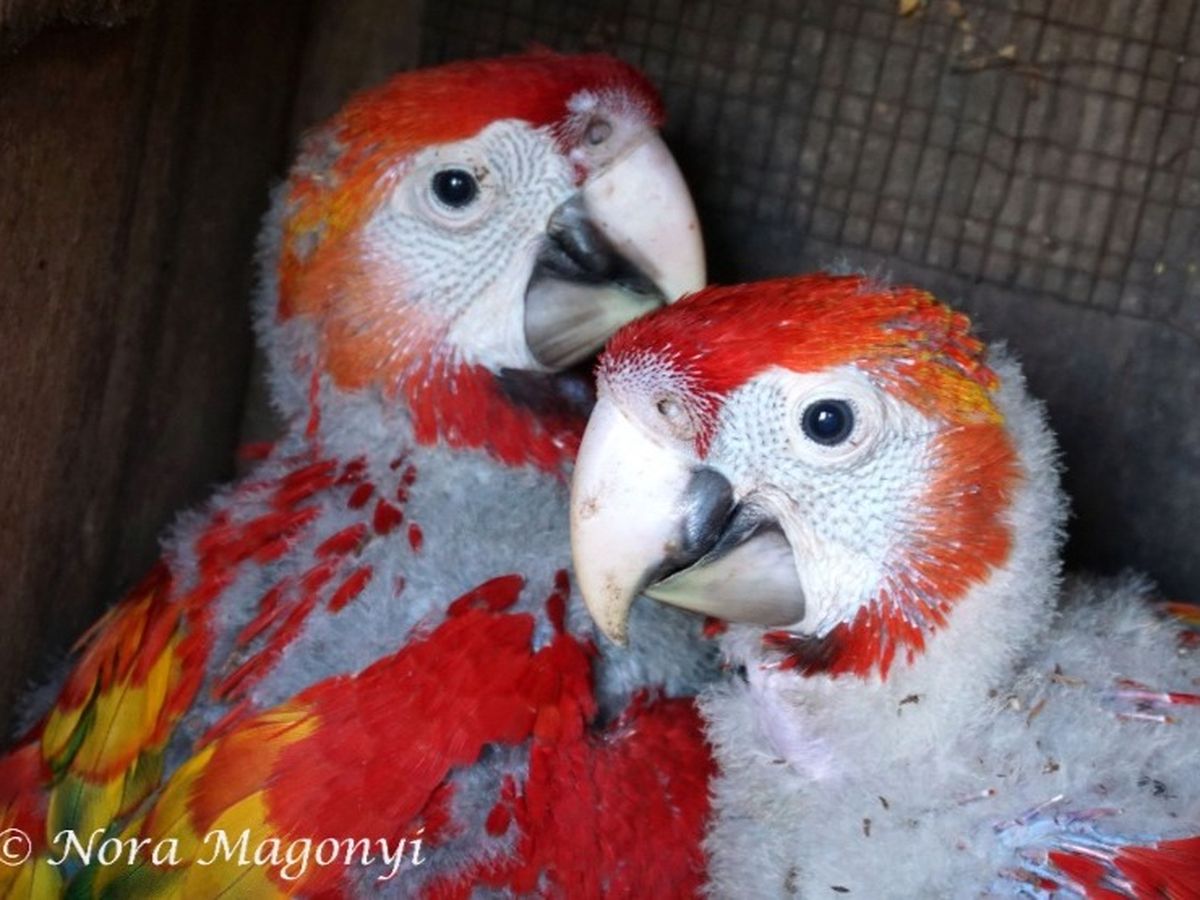
However, we found only nine macaw chicks in a total of four nests and our nest boxes were in bad shape. Only two of our fifteen nest boxes had chicks. A much lower occupancy compared to all our previous 20 years of monitoring nests in Tambopata. This showed us the importance of getting artificial and natural nests ready early in the season in order to ensure high nest use and good chick production. This is a lesson we are sharing with our teams and colleagues throughout the Neotropics.
In April, we went back upriver with new nest boxes and started to get everything ready for the coming breeding season. On our last visit in September, we left every single natural nest and nest box with new ropes and all ready for the macaws to use.
Today, as we prepare for the new season, we are still recovering from the boat accident and trying to restock our climbing equipment and other gear. We still have some old gear to start the season, but it needs to be replaced ASAP.
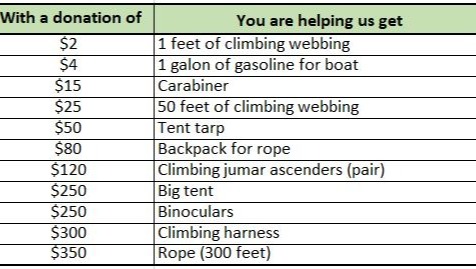
Our campaign goal is to reach $3000 to replace our lost climbing equipment (ropes, harnesses, jumars, webbings, carabiners, etc), basic camping gear (waterproof tents, camping chairs, and camping mattresses), a GPS, and a laptop computer for data entry. Equipment will be purchased and brought by The Macaw Society directors from the USA in January 2022.
Any extra funds we raise will support our next expedition to check on macaw hatchlings in December 2021. Gasoline prices are sky rocking in Peru due to economic instability making our costs higher than anticipated.
We are facing hard times but with your support, we are sure this season will provide new surprises and new lessons.
No donation is too small, every bit helps.
Help us make it happen!
Thank you for your support!
The Macaw Society team
http://vetmed.tamu.edu/themacawsociety/
We are facing hard times but with your support, we are sure this season will provide new surprises and new lessons.
No donation is too small, every bit helps.
Help us make it happen!
Thank you for your support!
The Macaw Society team
http://vetmed.tamu.edu/themacawsociety/
Organizer