- Y
- W
*** ENGLISH ***
URGENT APPEAL
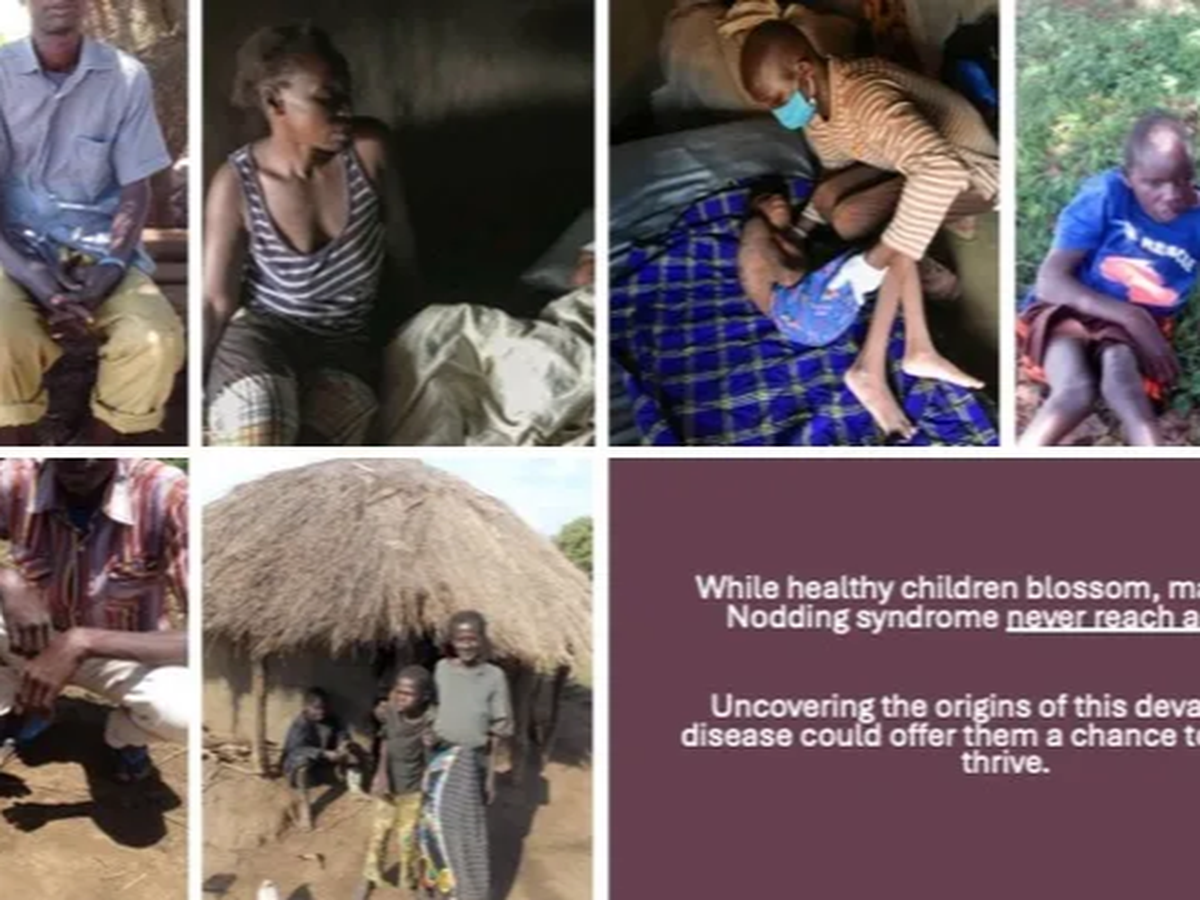
- Join our mission: Thousands of children in East Africa suffer from Nodding Syndrome (NS), a devastating neurological disease with no known cause or cure. Tragically, many of these children do not live past 25. Help us prevent NS and improve the quality of life for affected children. Your contribution will fund critical studies that may unlock insights into the disease’s origins. Read our novel hypothesis here: https://www.jns-journal.com/article/S0022-510X(24)00212-0/fulltext
- Target goal: $25,000. Any surplus will fund ongoing NS research and outreach efforts in northern Uganda.PLEASE, IGNORE THE SUGGESTED DONATION AMOUNTS.. THEY ARE AUTOMATED AND HIGHER THAN INTENDED. ANY AMOUNT HELPS!
- Fund management: The Third World Medical Research Foundation (TWMRF), a 501(c)(3) nonprofit focused on neglected neurological disorders in underserved communities, will manage all contributions.
NODDING SYNDROME: EAST AFRICA’S NEGLECTED CRISIS
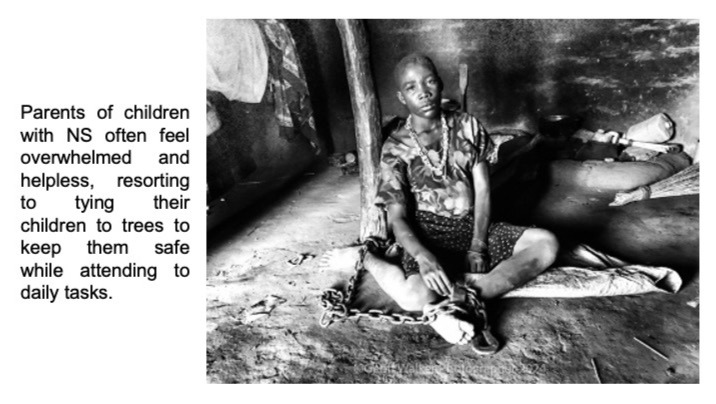
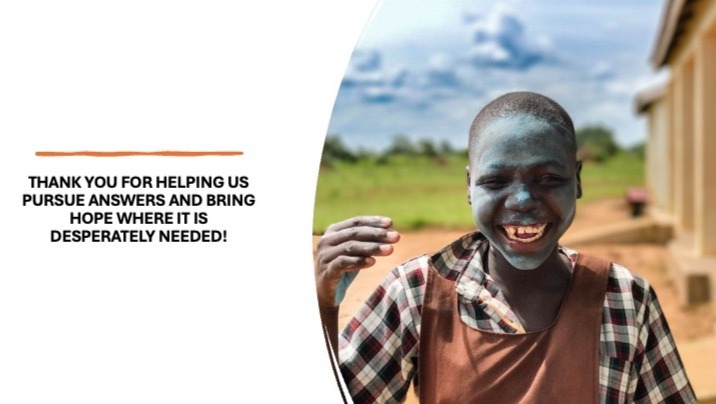
- About the disease: NS is an epileptic encephalopathy that has devastated impoverished communities in East Africa, often in the context of civil conflict and displacement. Primarily affecting infants and children, NS is named for its most distinctive sign: an involuntary and repetitive forward dropping of the head, which occurs alongside (or just before) convulsive seizures and loss of awareness. This makes children highly vulnerable to accidents such as falls and drowning, as well as sexual violence.
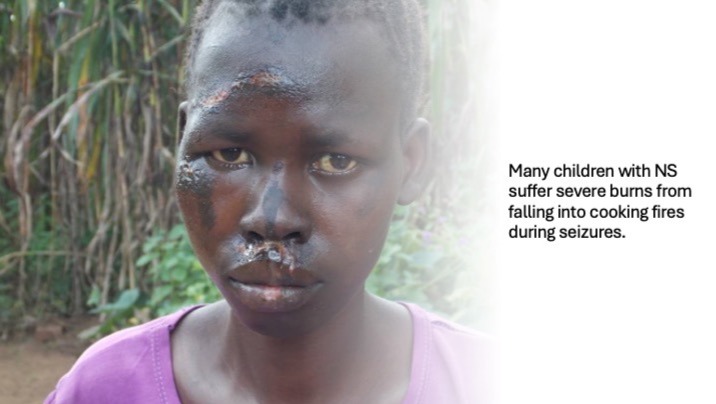
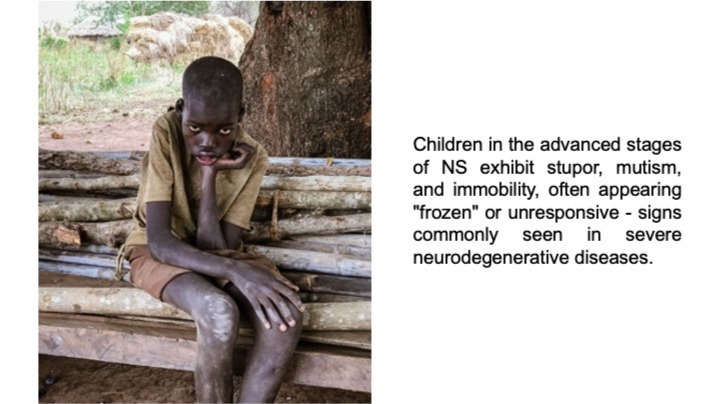
- Disease progression: Over time, NS leads to severe disabilities, including stunted growth, physical deformities, delayed puberty, cognitive decline, and behavioral changes. In its later stages, affected children may enter a catatonic state marked by profound muscle rigidity, motor loss and diminished responsiveness to external stimuli.
A PATH TO PREVENTING NS AND GLOBAL NEURODEGENERATION?
- A surprising link: NS mirrors mechanisms seen in age-related neurodegenerative diseases, including a hallmark of Alzheimer’s disease - the abnormal buildup of tau protein in brain cells (tauopathy). Advanced cases of NS also display signs resembling those of Parkinson’s disease, another condition tied to tau pathology. This pattern suggests that, in NS, factors beyond aging drive tau accumulation.
- Benefits beyond helping children with NS: Studying NS offers a unique opportunity to uncover the early mechanisms of neurodegeneration and identify its environmental triggers, potentially advancing brain health and prevention for millions worldwide.
ABOUT US
Our committed Portland Oregon-based research team has over 45+ years of combined expertise. We seek to uncover the underlying causes of neurological diseases, then develop primary prevention strategies. We feel called to investigate an underfunded area: neglected disorders that impact low-income populations around the globe.
ACKNOWLEDGEMENTS
We extend our heartfelt gratitude to Caesar Okot, our dedicated collaborator in northern Uganda; Geoff Walker, a New Zealand photographer that has lived with NS sufferers in Odek, northern Uganda; and the Acoli community for their generous donation of samples and photographs. Special thanks also go to Laura Valdes Angues, Ayollo Otika, Jennifer Scheflen, and Holly Zapf for their invaluable feedback and support.
ANOTHER WAY TO DONATE
By check: Third World Medical Research Foundation. 2309 SW 1st Ave, #1942, Portland, OR 97201. Include "Nodding syndrome" in the memo.
*** BREVE RESUMEN EN CASTELLANO***
LLAMADO URGENTE
Miles de niños en África Oriental sufren del Síndrome de Cabeceo (Nodding syndrome o NS), una enfermedad neurológica devastadora sin causa ni cura conocida. Con tu apoyo, podemos financiar estudios para entender su origen y mejorar las vidas de los afectados. Lee nuestra hipótesis aquí: https://www.jns-journal.com/article/S0022-510X(24)00212-0/fulltext
Meta: $25,000. El excedente se destinará a investigaciones sobre NS y a programas de apoyo en el norte de Uganda.
Gestión de fondos: TWMRF, una organización sin fines de lucro enfocada en trastornos neurológicos desatendidos, gestionará las contribuciones.
SÍNDROME DE CABECEO: LA CRISIS OLVIDADA DE ÁFRICA ORIENTAL
El síndrome de cabeceo (NS) es una encefalopatía epiléptica que ha devastado comunidades empobrecidas en África Oriental. La enfermedad afecta a lactantes y niños, quienes presentan una inclinación involuntaria y repetitiva de la cabeza hacia adelante, convulsiones y pérdida de conciencia. Con el tiempo, NS produce discapacidades graves como retraso en el crecimiento y deterioro cognitivo, y en etapas avanzadas, un estado catatónico.
¿UNA OPORTUNIDAD PARA PREVENIR LA NEURODEGENERACIÓN?
El NS comparte mecanismos con enfermedades neurodegenerativas como Alzheimer y Parkinson. Estudiarlo podría ayudarnos a comprender los factores ambientales que impulsan la neurodegeneración y prevenir enfermedades cerebrales a nivel global.
Organizer
T
The Third World Medical Research Foundation INC
Beneficiary