- A
- S
Help Tomas Heal: Life-Changing Rehab for a rare disease
0% complete
$4,294 raised of $150K CAD
18 donations
My name is Tomas, and I live with Ehlers-Danlos Syndrome (EDS) and Hypermobility Spectrum Disorder (HSD). These are connective tissue disorders that affect the parts of the body that hold everything together, including joints, ligaments, and the spine.
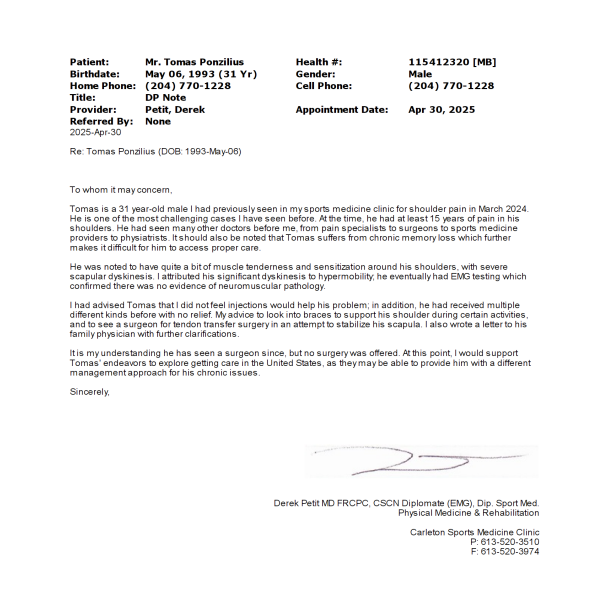
I have been living with pain since I was 11 years old. I am now 33.
For more than 20 years, pain has been part of my everyday life. My joints are unstable and can partially or fully dislocate without warning. I regularly experience rib and shoulder dislocations, and I have significant damage throughout my spine. The pain and instability affect nearly everything I do.
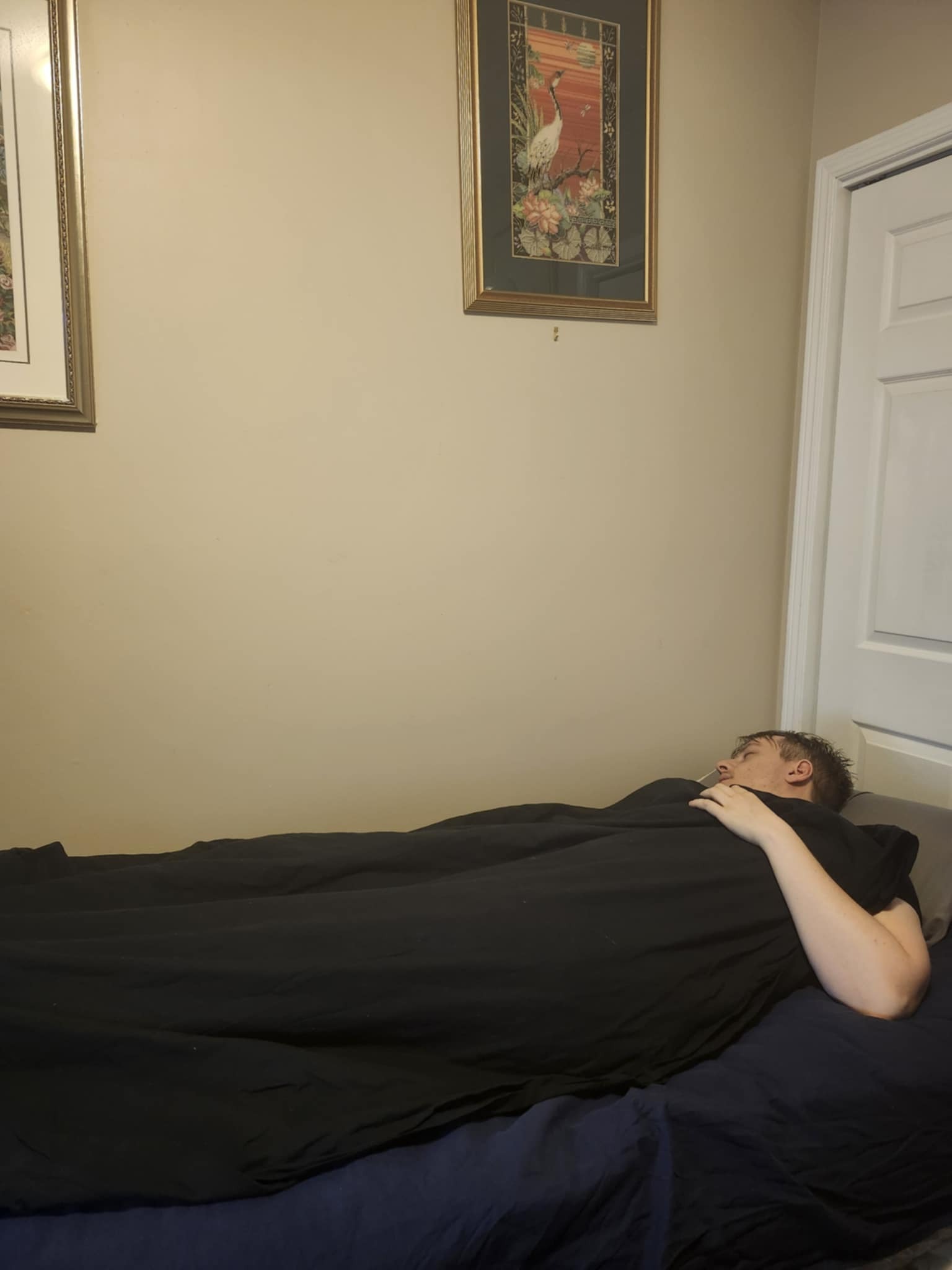
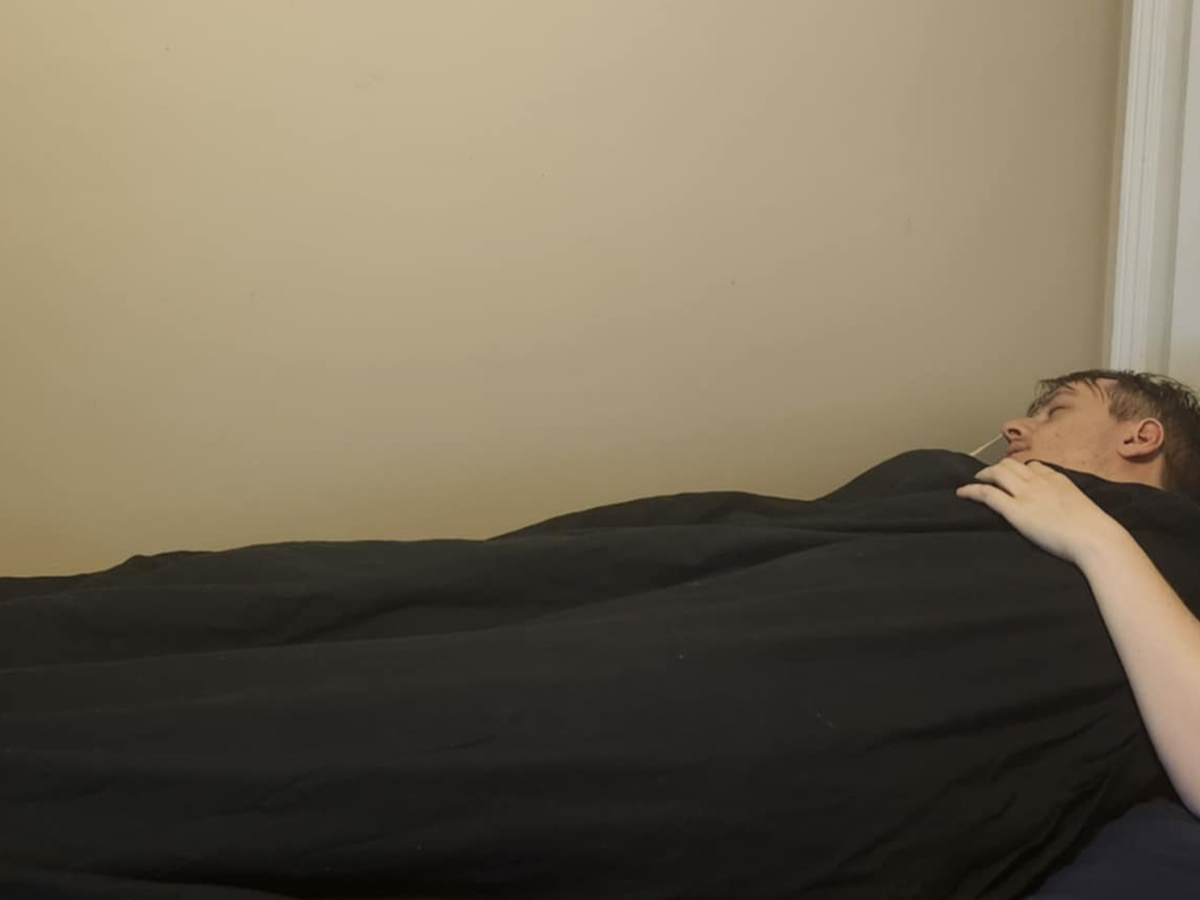
Simple things that many people do without thinking, such as taking a shower, making a meal, carrying groceries, or cleaning my home, can leave me exhausted and in severe pain. Some days, even getting out of bed feels impossible. Most days, I spend much of my time resting because the pain is so intense.
Because of my health, I cannot work and I am unable to attend school full time. I also live with Nonverbal Learning Disorder (NVLD), ADHD, and Auditory Processing Disorder, which create additional challenges with learning, communication, and daily life.
Despite these challenges, I am currently a student at the University of Manitoba and continue working toward my goals.
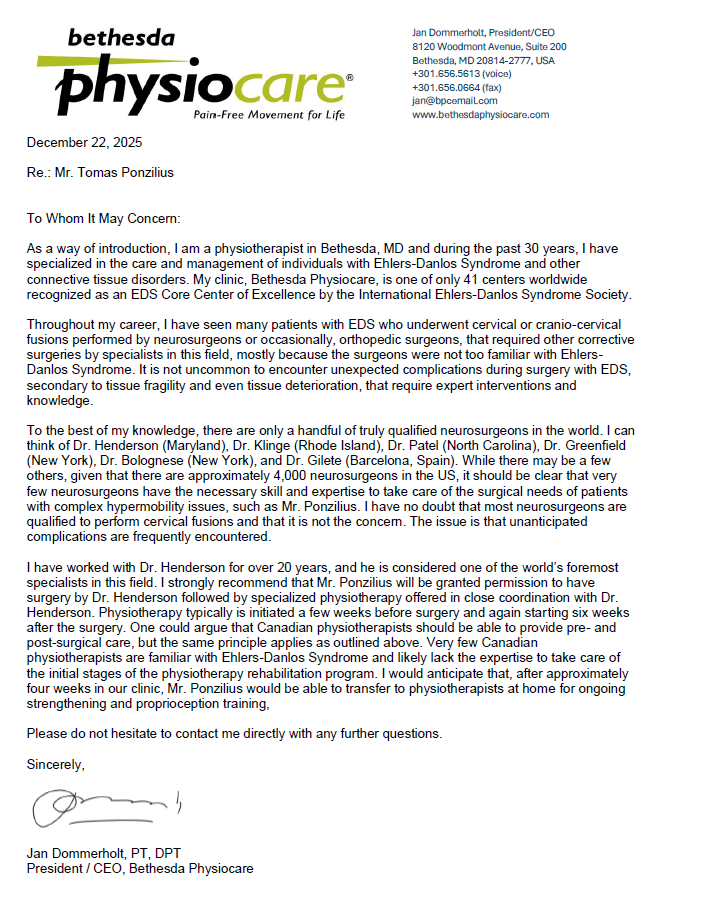
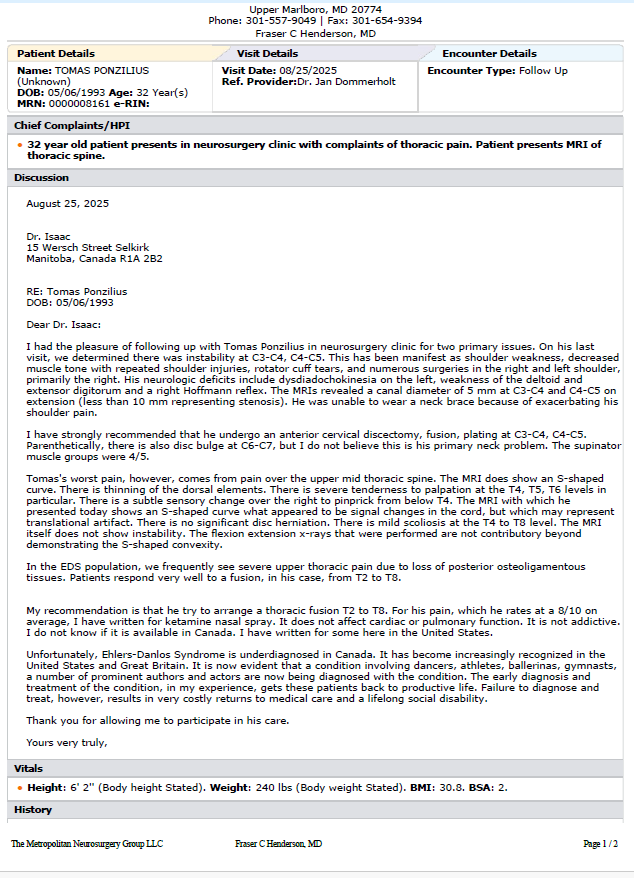
I now have the opportunity to receive treatment at the Bethesda Clinic in Maryland, a clinic that specializes in complex connective tissue disorders such as EDS and HSD. Their team believes they may be able to reduce my pain, improve my stability, and help me regain some of the independence I have lost.
The biggest medical concern is my spine. Years of instability and damage have left me facing the possibility of major spinal surgery. Specialists believe I may eventually need my entire spine fused. This would be a life changing surgery and is expected to be the largest cost of my treatment. Without proper assessment and care, my pain, mobility, and quality of life are likely to continue getting worse.
In addition to my spine, I need further assessments of many other joints throughout my body. Doctors have recommended more testing and possible surgeries involving my shoulders, knees, hands, feet, and other affected areas. Because EDS affects connective tissue throughout the body, multiple joints may require treatment over time.
The total cost of medical care, testing, specialist assessments, travel, housing, and possible surgeries is expected to exceed $100,000. Unfortunately, this specialized care is not covered by Manitoba Health.
My home situation is also not safe or stable, and I need a secure place where I can focus on treatment, healing, and recovery.
Receiving this care would give me the chance to regain more independence, continue my education, and build a better future. It would also allow me to continue my disability and neurodiversity advocacy work. I want to use my experiences to help other people living with disabilities feel understood, supported, and less alone.
Every donation, no matter the amount, brings me one step closer to getting the care I need. If you are unable to donate, sharing my story would mean just as much.
Thank you for taking the time to read my story and for any support you can provide.
You can follow my journey on Instagram:
instagram.com/tom_ponzilius
Organizer