- E
- E
Help Shireen aan een kans op leven!
0% complete
€38,454 raised of €80K
650 donations
Een kans op leven na 10 jaar overleven!
Shireen haar leven wordt al 10 jaar bepaald door grenzen waar ze nooit voor heeft gekozen. Ze leeft met ME/CVS en POTS. Hierdoor is haar kwaliteit van leven laag. Nu er een nieuwe veelbelovende behandeling is in Amerika die andere lotgenoten al heeft geholpen, is er weer hoop voor haar! Ze hoopt met uw hulp haar leven weer terug te krijgen, omdat de behandeling niet door de zorgverzekeraars wordt vergoed.
Over Shireen
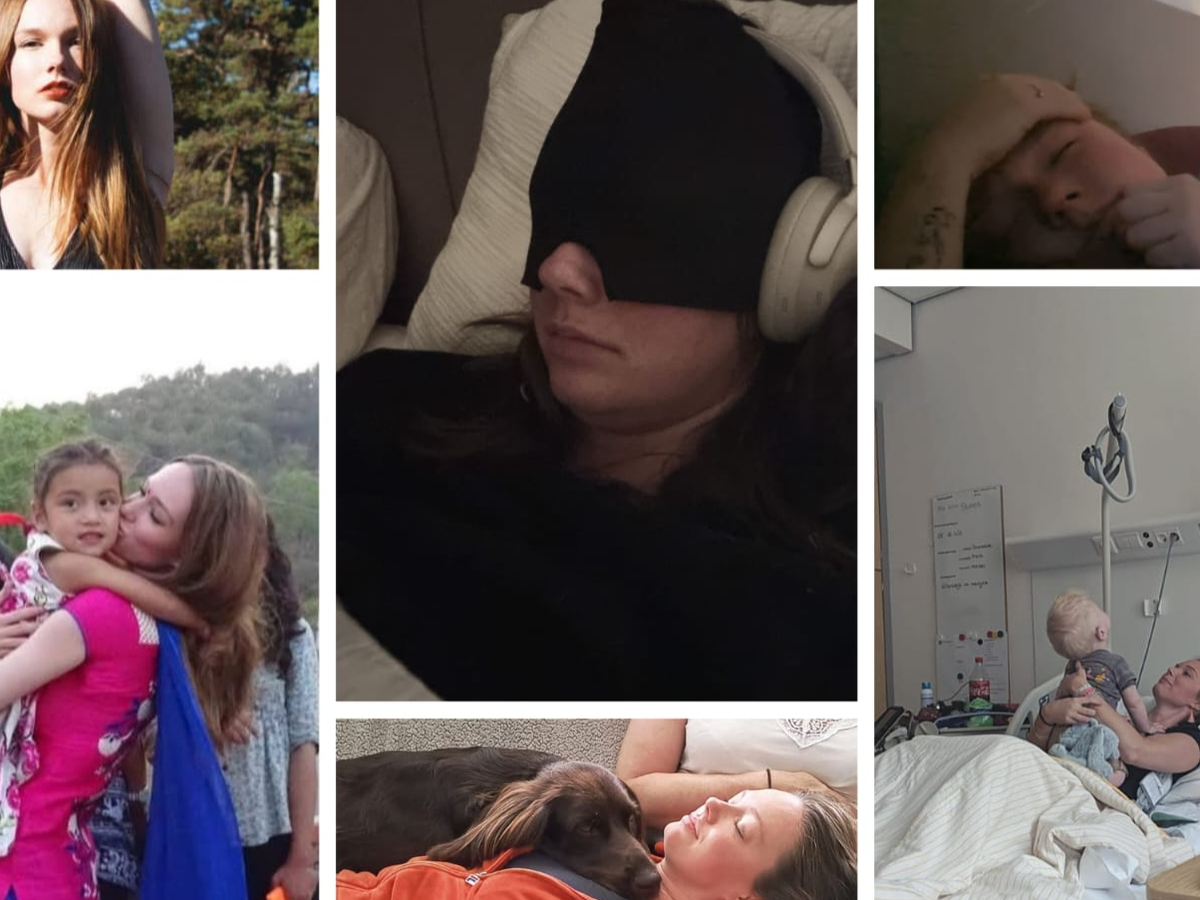
Shireen is 31 jaar en was voor haar ziekteperiode een actieve, ondernemende, vrolijke jonge vrouw. Ze studeerde, werkte, was model en maakte wereldreizen om te helpen op medische projecten in het buitenland. Ze genoot volop van het leven. Ze zat vol met doelen en dromen voor de toekomst.
Alles veranderde
Van de een op andere dag viel ze letterlijk neer tijdens haar stage in het ziekenhuis. Haar benen konden haar niet meer dragen. Haar hoofd kon geen prikkels meer aan en alles kostte ontzettend veel energie. Haar lichaam was op. "Een burnout", dachten ze. Maar Shireen voelde dat dit iets veel ernstiger was.
Trauma's kwamen naar boven
Doordat Shireen stil werd gezet, kwamen er verschillende trauma's uit haar jeugd naar boven. Hulp werd ingezet. Verschillende medicijnen werden voorgeschreven, die maakten dat Shireen alleen maar verder achteruit ging. Daardoor werd de medicatie alleen maar opgevoerd. Op een punt heeft Shireen gezegd te willen stoppen met deze medicijnen, omdat ze wist dat dit haar dood zou gaan worden. Ze is 7 keer op de spoedpost beland, waarbij ouders vreesden voor haar leven. Het heeft haar jaren gekost om van alle medicatie af te bouwen. Tegelijkertijd werkte ze aan haar trauma's. "Ik heb zo hard gestreden voor waar ik nu sta. Alleen mijn lichaam volgt nog niet."
Zo veel mogelijk liggen
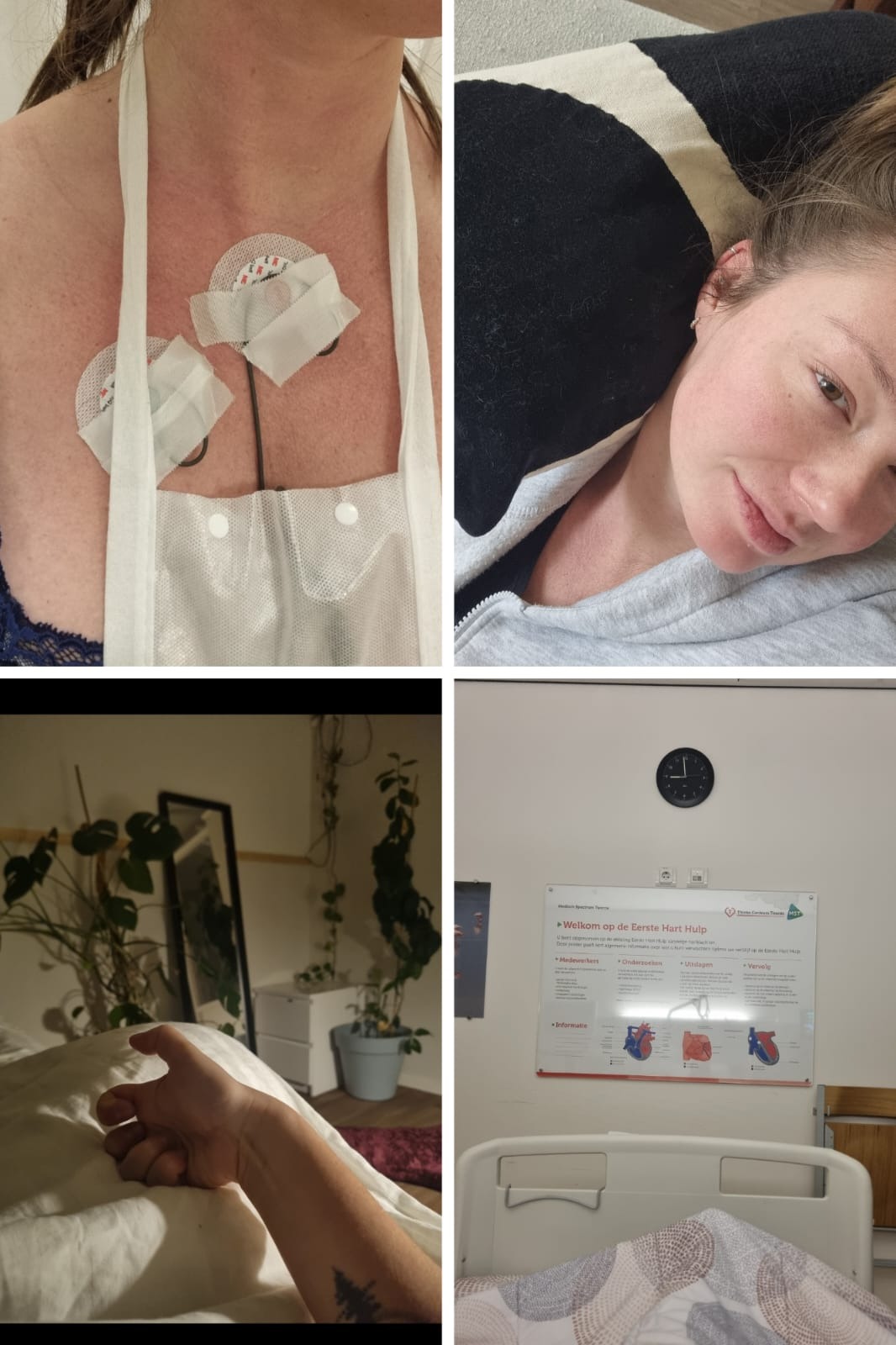
Na veel onderzoek blijkt Shireen te lijden aan ME (Myalgic Encephalomyelitis) en POTS (Posturaal orthostatische tachycardiesyndroom). “Door POTS lig ik voornamelijk plat gedurende de dag. Alles wat staand gebeuren moet, kost ontzettend veel energie”. Zo heeft Shireen een douchekruk nodig, omdat staand douchen te zwaar is.
Alles afwegen
Alles wat Shireen op een dag doet, moet gepland worden. Het is kiezen tussen douchen of koken. Het huis opruimen of even een vriendin zien. “Alle activiteiten die ik doe brengen angst met zich mee. Als ik over de grenzen van mijn lichaam ga, weet ik dat ik de komende dagen, weken of zelfs maanden ziek ben". (PEM: post exsertional malaise).
Shireen krijgt hulp met het doen van boodschappen en schoonmaken wanneer het haar niet lukt. Toch probeert ze zoveel mogelijk zelf te doen omdat het hebben van autonomie belangrijk voor haar is. ''Ik wil mij zo normaal mogelijk voelen. Het is zo pijnlijk steeds weer geconfronteerd te worden met de limieten van mijn lichaam. Leeftijdsgenoten bouwen hun levens op. Ze gaan samenwonen, kopen huizen en krijgen kinderen. Het leven gaat aan me voorbij.''
Impact op sociale kring
Als ouders zien we haar dagelijkse strijd. Ze doet erg haar best om in kleine dingen mee te doen, maar het lukt gewoon niet. Een etentje, een verjaardag of samen kerst vieren is al teveel. Moeder en Shireen zijn samen begin december naar Gambia geweest, omdat we als ouders vonden dat ze recht heeft op dat plezier. In de praktijk zorgde dat echter voor een flinke terugval van haar gezondheid, waar ze nu in februari nog steeds van bij moet komen. Familie bijeenkomsten kan ze hooguit uur één volhouden, wetende dat het haar dagen kost om weer bij te komen. We maken ons grote zorgen voor haar toekomst. Wat nu als ze de moed een keer opgeeft?
Klachten die Shireen dagelijks ervaart zijn: hartkloppingen, inspannings-intolerantie, spierzwakte, spiersamentrekkingen en dystonie, concentratieproblemen/niet kunnen focussen, verstoring van de prikkelverwerking, uitgeputheid, duizeligheid en nog veel meer.
Geen kans op genezing in Nederland
Specialistische zorg in Nederland voor mensen met ME en POTS is vooral gericht op symptoombestrijding. Ondanks vele behandelingen en bezoeken aan specialisten lijkt de kans op genezing binnen Nederland niet te bestaan. ''Ik weiger te accepteren dat de rest van mijn leven er zo uit moet zien. Ook al zeggen artsen in Nederland dat ik moet leren leven met hoe het nu is - dat past niet bij wie ik ben. Ik blijf vechten. Tot het uiterste. Voor mijn leven. Voor mijn toekomst”.
Behandeling in Amerika
Maar er is plotseling nieuwe hoop: een behandeling in Amerika! Uit een wetenschappelijke onderbouwde studie blijkt dat deze behandeling zeer succesvol is bij meerdere aandoeningen zoals o.a. Long COVID en CFS (Chronic Fatigue Syndrome zoals ME in de VS wordt genoemd). Op dit moment hebben we contact met Gert-Jan van Duren, een ME-CVS en POTS patiënt die volledig hersteld is na de behandeling en zijn leven weer terug heeft. Dit geeft natuurlijk hoop! Na Gert-Jan zijn verhaal zijn we ons gaan verdiepen in de behandeling en hebben we contact gehad met de kliniek. Het idee begon te ontstaan dat Shireen hiervan zou kunnen herstellen! Iets waar bij deze ziekte helemaal geen zicht op was. De resultaten van de behandeling zijn heel goed en de aanpak met uitgebreid medisch onderzoek vooraf is helaas in Europa niet te vinden. Als ouders hebben we gezegd dat we hier hoe dan ook voor gaan. Dit is haar (enige?) kans!
Traject van vier maanden in Amerika
Tijdens de eerste 2 weken zal Shireen volledig worden onderzocht door onder meer MRI- en SPECT-scans van de hersenen. Op basis van die onderzoeken wordt een individueel programma samengesteld waarna er een traject van 12 weken hyperbare zuurstoftherapie (HBOT) zal starten. In totaal duurt het traject 4 maanden. Bij deze behandeling worden de hersenen gestimuleerd om uitgevallen functies te herstellen. Daarnaast worden er nieuwe bloedvaten aangemaakt, zodat het zuurstoftekort in beschadigd weefsel wordt opgeheven. Het doel is om de ontregelde systemen in het brein te herstellen en te stimuleren. Daarnaast wordt er tijdens de behandeling ook een persoonlijk neuro-revalidatietraject gestart. Meer informatie over de behandeling is te vinden op de website van Aviv-clinics. Het protocol is nagenoeg gelijk aan die van de LongCovid, en wordt op de persoon afgestemd. https://aviv-clinics.com/disease/long-covid-syndrome/
Totale kosten: 80.000 euro
De kosten van de behandeling zijn hoog. Inclusief verblijfskosten gedurende vier maanden in Florida (nabij Orlando) komen we uit op totaal 80.000 euro. Aangepast vliegen omdat Shireen vooral door POTS een zittende vlucht van 12 uur niet vol houdt. Er moet een huurwoning worden gezocht in de buurt van de kliniek. De prijzen van huurwoningen in Florida liggen in de periode november t/m maart hoger vanwege het hoogseizoen. In het oosten wordt veelal overwinterd door de Amerikanen, waar de verhuurders op inspelen. Daarnaast moet er een begeleider ter ondersteuning van Shireen mee.
Hulp heel hard nodig!
Het leven van Shireen heeft al 10 jaar stil gestaan. Voornamelijk huisgebonden zijn is geen leven! Wij willen deze kans met beide handen aangrijpen. Daarvoor hebben we jullie hulp heel hard nodig. Help jij ons mee om ervoor te zorgen dat Shireen naar Amerika kan? Elke donatie en het delen van dit bericht wordt ontzettend gewaardeerd. Elke bijdrage, groot of klein, brengt ons dichter bij ons doel. We hopen dat ze dankzij jullie bijdrages snel aan haar revalidatietraject in Amerika kan beginnen.
Al vast ontzettend bedankt!
Er is een Instagram account @Shireenwilleven aangemaakt om updates rondom de crowdfunding te delen. Updates hiervan zullen worden gedeeld op het account.
BIJLAGE: MEER DETAILS OVER DE BEHANDELING IN VS en achtergrond informatie: Wat hebben we reeds geprobeerd: Een opsomming van wat we geprobeerd hebben zonder resultaat. Alles met één doel, beter worden!
-Fysiotherapie
-Compressiekousen/water+zout inname -Ademhalingsoefeningen
-Medische hypnose
-Bioresonantie
-Kinesioloog
-SOLK Poli
- Neuroloog
-Cardioloog
-Specialist ME/CVS/POTS
-Diëtist
-Orthomoleculair therapie (supplementen)
Wat is POTS:
POTS staat voor Postural Orthostatic Tachycardie Syndrome en is simpelweg uit te leggen als een verstoring van de hersenstamfuncties. Hierdoor zijn alle automatische processen en functies van organen ontregeld. Denk hierbij aan ademhaling, hartslag, bloeddruk, temperatuur regulatie, stofwisseling, immuunreactie, prikkelverwerking etc. Normaal gesproken neemt de hersenstam een verandering van jouw lichaamspositie waar en daar wordt de hartslag en bloeddruk vervolgens op aangepast. Door beide componenten hierop aan te passen blijft er voldoende bloed en zuurstof in je lichaam en hersenen. Hier hoef je niks voor te doen en gaat volledig automatisch. Bloed blijft in benen en voeten hangen. Bij Shireen is deze aansturing volledig ontregeld. Dat betekent dat als ze gaat staan, haar bloed vooral in haar benen en voeten blijft hangen en er dus minder bloed naar haar hersenen stroomt dan zou moeten. Daardoor gaat het hart compenseren door heel hard te kloppen. Dit zorgt ervoor dat je constant op adrenaline leeft, wat je natuurlijk totaal uitput.
Altijd die actiestand
En laten het nou juist de hersenen zijn die alles in ons bestaan regelen. Van nadenken, concentreren, balans houden tot het reguleren van je bloeddruk en hartslag bij inspanning. Maar ook het weer kunnen ‘uit’ staan na een activiteit. Het welbekende ‘voldane’ gevoel na een sportsessie of een project dat is afgerond. Ook dit systeem is bij Shireen ontregeld, waardoor zijn lichaam sneller in de actiestand komt of blijft staan.
Te weinig zuurstofrijk bloed
Voordat de diagnoses waren gesteld, leefde Shireen op pure adrenaline en wilskracht. Nadat ze van school naar huis was gefietst praatte ze thuis met een stijve, dubbele tong. Van binnen was ze continu onrustig. Ze was erg mager, sliep slecht en haar lichaam stond permanent in de overlevingsstand. Haar hart maakte overuren om voldoende bloed naar haar brein te krijgen. Na drukke periodes of inspanning werd ze altijd ziek. Dit heet PEM: Post-eExertionele Malaise. Een verergering van klachten na fysieke, coginitieve of emotionele inspanning. Haar grens ligt bij rechtop bewegen al extreem laag. En als ze daar toch overheen gaat, volgt de rekening later: dagen of weken een terugval.
Adviezen opgevolgd zonder resultaat
Zodra je gaat googelen of in gesprek gaat met artsen over de behandelmogelijkheden bij POTS, stuit je al vrij snel op adviezen als; ga meer water drinken, verhoog zoutinname en gebruik compressiekousen. Uiteraard volgt ze de adviezen op. Maar zonder blijvend resultaat en verbetering van kwaliteit van leven.
Opgeven is geen optie!
Maar wat doe je als je maar zo weinig kunt, alle beschikbare adviezen hebt opgevolgd, alle informatie over de aandoeningen hebt opgezocht en er alles aan doet om beter te worden. Maar het eindresultaat is dat stil blijft staan en niet meer vooruit gaat? Vooral niet opgeven en hoop houden! Dat sprankje hoop bracht het verhaal van Gert-Jan die na zijn behandeling volledig hersteld is. Het zou toch geweldig zijn je leven weer terug te krijgen? Weer terug kunnen leven in plaats van overleven! Shireen heeft maar 1 doel, beter worden.
Hoe ziet de behandeling in Amerika eruit?
Zuivere zuurstof in een drukcabine Hyperbare zuurstoftherapie (HBOT) is een behandeling waarbij aan een patiënt via een masker of kap 100% zuurstof wordt gegeven in een ruimte met verhoogde druk. Als de patiënt in de drukcabine zuurstof onder druk inademt, zal er meer zuurstof in het bloed oplossen Bovendien worden nieuwe bloedvaten aangemaakt, zodat het zuurstoftekort in beschadigd weefsel wordt opgeheven. Door de luchtdruk in de cabine te variëren in combinatie met zuivere zuurstof, wordt aanmaak van nieuwe stamcellen geactiveerd. De hersenen worden op deze manier gestimuleerd om uitgevallen functies te herstellen. Tijdens deze sessie wordt tegelijkertijd het brein gestimuleerd met een op maat gemaakt neuroprogramma in de vorm van braingames op een Ipad. Alles wordt gebaseerd op de metingen die bij aanvang van het programma worden afgenomen.
Deze volledige therapie omvat:
*Vooronderzoeken
*Medische beoordeling door artsen, neuropsycholoog, fysiotherapeut, fysioloog.
*Cognitieve testen
*Uitgebreid bloedonderzoek
*Hart- en longprestatietest (CPET);
*MRI scan en SPECT scan.
*Hyperbare zuurstoftherapie (HBOT); 60 sessies verdeeld over 12 weken, twee uur per dag.
*Neuroplasticiteit training, dit is een cognitieve training via een tablet tijdens de HBOT-sessies. Hierdoor worden er nieuwe verbindingen in het brein aangemaakt en wordt het geheugen, concentratievermogen en verwerkingssnelheid getraind. Na de laatste behandeling zullen er weer uitgebreide onderzoeken worden gedaan om de resultaten te bespreken. Na 6 maanden volgt er een na-meting in de kliniek.
A chance at life after 10 years of survival!
For the past 10 years, Shireen her life has been defined by limits she never chose. She lives with ME/CFS and POTS, which have severely reduced her quality of life. Like others who have gone before her, a new and promising treatment in the United States is giving her hope for recovery again.
Because this treatment is not covered by health insurance, she hopes—with your help—to reclaim her life.
About Shireen
Shireen is 31 years old and, before becoming ill, was an active, driven, and cheerful young woman. She studied, worked, modelled, and travelled the world to help with medical projects abroad. She truly enjoyed life and was full of goals and dreams for the future.
Everything Changed
From one day to the next, she literally collapsed during her internship at the hospital. Her legs could no longer support her. Her head could no longer handle stimuli, and everything required an enormous amount of energy. Her body was exhausted. “A burnout,” they thought. But Shireen knew this was something far more serious.
Traumas Resurfaced
When Shireen’s life came to a standstill, several traumas from her childhood resurfaced. She sought help. Various medications were prescribed, but they only caused her condition to deteriorate further. As a result, her medication was increased even more.
At one point, Shireen said she wanted to stop taking the medication because she knew it was going to cost her her life. She was admitted to the emergency room seven times, with her parents fearing for her life. It took her years to come off all the medication. At the same time, she worked through her traumas.
“I have fought so hard to get to where I am now. Only my body hasn’t caught up yet.”
Lying Down as Much as Possible
After extensive testing, Shireen was diagnosed with ME (Myalgic Encephalomyelitis) and POTS (Postural Orthostatic Tachycardia Syndrome).
“Because of POTS, I spend most of the day lying down. Anything that has to be done standing up costs an enormous amount of energy.” For example, Shireen needs a shower chair because standing while showering is too exhausting.
Weighing Everything
Everything Shireen does in a day has to be carefully planned. It often comes down to choosing between taking a shower or cooking a meal. Cleaning the house or seeing a friend.
“Every activity I do comes with fear. If I push beyond my body’s limits, I know I will be ill for the coming days, weeks, or even months” (PEM: post-exertional malaise).
Shireen receives help with grocery shopping and cleaning when she is unable to manage on her own. Still, she tries to do as much as possible herself, because having autonomy is very important to her.
“I want to feel as normal as possible. It is so painful to be constantly confronted with the limits of my body. My peers are building their lives. They move in together, buy homes, and have children. Life is passing me by.”
Impact on Her Social Circle
As parents, we witness her daily struggle. She tries very hard to take part in small things, but it simply isn’t possible. A dinner out, a birthday, or celebrating Christmas together is already too much. In early December, Shireen and her mother travelled to Gambia, because as parents we felt she deserved that joy. In practice, however, this caused a significant setback in her health—one she is still recovering from now, in February.
She can manage family gatherings for no more than an hour at most, knowing it will take her days to recover afterward. We are deeply worried about her future. What if, one day, she loses hope? As parents, it is heart breaking to have conversations with Shireen about voluntary end-of-life choices.
The symptoms Shireen experiences on a daily basis include: heart palpitations, exercise intolerance, muscle weakness, muscle contractions and dystonia, concentration problems/inability to focus, impaired sensory processing, extreme exhaustion, dizziness, and many more.
No Chance of Recovery in the Netherlands
Specialist care in the Netherlands for people with ME and POTS is primarily focused on symptom management. Despite many treatments and visits to specialists, the prospect of recovery within the Netherlands appears non-existent.
“I refuse to accept that the rest of my life has to look like this. Even if doctors in the Netherlands say I must learn to live with the way things are now—that doesn’t fit who I am. I will keep fighting. To the very end. For my life. For my future.”
Treatment in the United States
But there is new hope: a treatment in the United States. A scientifically supported study shows that this treatment has been highly successful for several conditions, including Long COVID and CFS (Chronic Fatigue Syndrome, as ME is referred to in the U.S.).
At the moment, we are in contact with Gert-Jan van Duren, an ME/CFS and POTS patient who has fully recovered after undergoing this treatment and has regained his life. This naturally gives us hope. After hearing Gert-Jan’s story, we began researching the treatment more thoroughly and got in touch with the clinic. The idea began to take shape that Shireen might be able to recover from this—something that previously seemed completely out of reach with this illness.
The treatment results are very promising. Unfortunately, a comparable treatment with extensive medical screening beforehand is not available in Europe. As parents, we have said that we will pursue this no matter what. This is her (only?) chance.
Four-Month Treatment Program in the United States
During the first two weeks, Shireen will undergo extensive diagnostic testing, including MRI and SPECT scans of the brain. Based on the results of these examinations, an individualized program will be developed, followed by a 12-week course of hyperbaric oxygen therapy (HBOT). In total, the program lasts four months.
This treatment aims to stimulate the brain to restore impaired functions. In addition, new blood vessels are formed, helping to resolve oxygen deprivation in damaged tissue. The goal is to repair and rebalance the dysregulated systems in the brain and to stimulate recovery. Alongside this treatment, a personalized neuro-rehabilitation program will also be initiated.
More information about the treatment can be found on the website of Aviv Clinics. The diagnostic process is tailored to the individual, and the treatment protocol is largely comparable to that used for Long COVID.
Total Costs: €80,000
The costs of the treatment are high. Including accommodation expenses for four months in Florida (near Orlando), the total amount comes to €80,000. This includes a specially adapted flight, as Shireen—mainly due to POTS—is unable to tolerate a 12-hour seated flight.
In addition, a rental home will need to be found near the clinic. The rental prices of housing in Florida are higher during the period from November through March due to the high season. Many Americans spend the winter months in the eastern part of the country, which drives up rental prices as landlords respond to this demand. Additionally, a support companion must accompany Shireen.
Help Is Urgently Needed!
Shireen’s life has been on hold for 10 years. Being largely confined to her home is no life at all. We want to seize this opportunity with both hands—but we urgently need your help to do so.
Will you help us make it possible for Shireen to go to the United States? Every donation and every share of this message is deeply appreciated. Every contribution, big or small, brings us one step closer to our goal. We hope that, thanks to your support, she can soon begin her rehabilitation program in the U.S.
Thank you so much in advance!
An Instagram account, @Shireenwilleven, has been created to share updates about the crowdfunding campaign. Updates will be posted on this account.
APPENDIX: MORE DETAILS ABOUT THE TREATMENT IN THE U.S. AND BACKGROUND INFORMATION
What Have We Already Tried?
Below is an overview of the treatments and interventions we have pursued—without success. All with one goal: to get better.
• Physiotherapy
• Compression stockings / increased water and salt intake
• Breathing exercises
• Medical hypnosis
• Bio resonance therapy
• Kinesiology
• SOLK outpatient clinic (for persistent physical symptoms)
• Neurologist
• Cardiologist
• ME/CFS/POTS specialist
• Dietitian
• Orthomolecular therapy (supplements)
What Is POTS?
POTS stands for Postural Orthostatic Tachycardia Syndrome and can be simply explained as a disruption of brainstem function. As a result, many automatic bodily processes and organ functions become dysregulated. These include breathing, heart rate, blood pressure, temperature regulation, metabolism, immune responses, sensory processing, and more. Under normal circumstances, the brainstem detects changes in body position and automatically adjusts heart rate and blood pressure accordingly. By regulating both components, sufficient blood and oxygen continue to reach the body and brain—without any conscious effort. This all happens fully automatically. In POTS, however, blood tends to pool in the legs and feet. In Shireen’s case, this regulation is completely disrupted. This means that when she stands up, much of her blood remains in her legs and feet, resulting in reduced blood flow to the brain. The heart then compensates by beating very rapidly. This causes the body to function in a constant state of adrenaline, which is naturally extremely exhausting.
Always in Action Mode
And it is precisely the brain that regulates everything in our existence—from thinking, concentrating, and maintaining balance to controlling blood pressure and heart rate during exertion. It also allows us to “switch off” again after an activity: the familiar feeling of satisfaction after a workout or after completing a project. This system is also dysregulated in Shireen, causing her body to enter—or remain in—action mode much more quickly.
Too Little Oxygen-Rich Blood
Before the diagnoses were made, Shireen lived on pure adrenaline and willpower. After cycling home from school, she would speak with a stiff, double tongue. Internally, she was constantly restless. She was very underweight, slept poorly, and her body was permanently in survival mode. Her heart was working overtime to get enough blood to her brain.
After busy periods or physical exertion, she would always become ill. This is called PEM: Post-Exertional Malaise—a worsening of symptoms following physical, cognitive, or emotional exertion. Her tolerance for upright activity is extremely low, and when she does push beyond that limit, the consequences come later: days or even weeks of relapse.
Following Advice Without Results
As soon as you start searching online or speaking with doctors about treatment options for POTS, you quickly come across advice such as: drink more water, increase salt intake, and wear compression stockings. Of course, she follows these recommendations—but without lasting results or any meaningful improvement in her quality of life.
Giving Up Is Not an Option!
But what do you do when you can do so little, have followed all available advice, researched everything about the conditions, and are doing everything possible to get better—yet the end result is that you remain stuck and make no progress?
Above all: don’t give up, and hold on to hope. That small spark of hope came from the story of Gert-Jan, who fully recovered after his treatment. Wouldn’t it be incredible to get your life back? To truly live again instead of merely survive?
Shireen has one goal: to get better.
What Does the Treatment in the United States Look Like?
Pure Oxygen in a Hyperbaric Chamber
Hyperbaric oxygen therapy (HBOT) is a treatment in which a patient breathes 100% oxygen through a mask or hood inside a pressurized chamber. When oxygen is inhaled under increased pressure, a higher amount of oxygen dissolves into the bloodstream. In addition, new blood vessels are formed, helping to resolve oxygen shortages in damaged tissue.
By varying the air pressure in the chamber in combination with pure oxygen, the production of new stem cells is stimulated. In this way, the brain is encouraged to restore impaired functions. During each session, the brain is simultaneously stimulated with a personalized neuro-program in the form of brain-training games on an iPad. Everything is tailored to the measurements taken at the start of the program.
This comprehensive therapy is offered by Aviv Clinics and includes:
Preliminary Assessments
• Medical evaluation by physicians, a neuropsychologist, physiotherapist, and physiologist
• Cognitive testing
• Extensive bloodwork
• Cardiopulmonary exercise test (CPET)
• MRI scan and SPECT scan
Hyperbaric Oxygen Therapy (HBOT)
• 60 sessions over 12 weeks
• Two hours per day
Neuroplasticity Training
Cognitive training via a tablet during the HBOT sessions. This aims to create new neural connections in the brain and to improve memory, concentration, and processing speed.
After the final treatment, extensive follow-up testing is conducted to evaluate the results. A follow-up assessment at the clinic takes place again after six months.
Organizer
Arjan en Angelique Kobus
Organizer