- S
- C
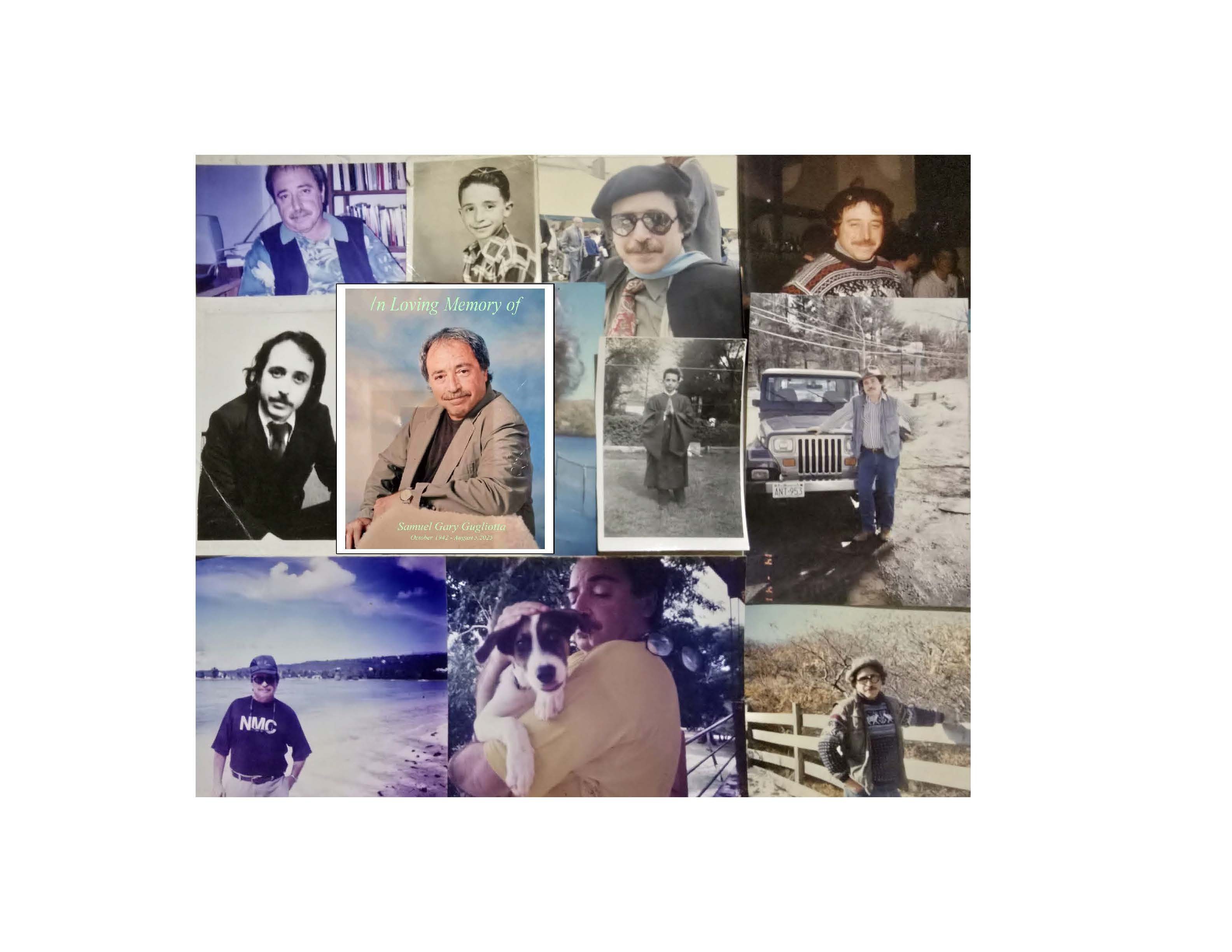
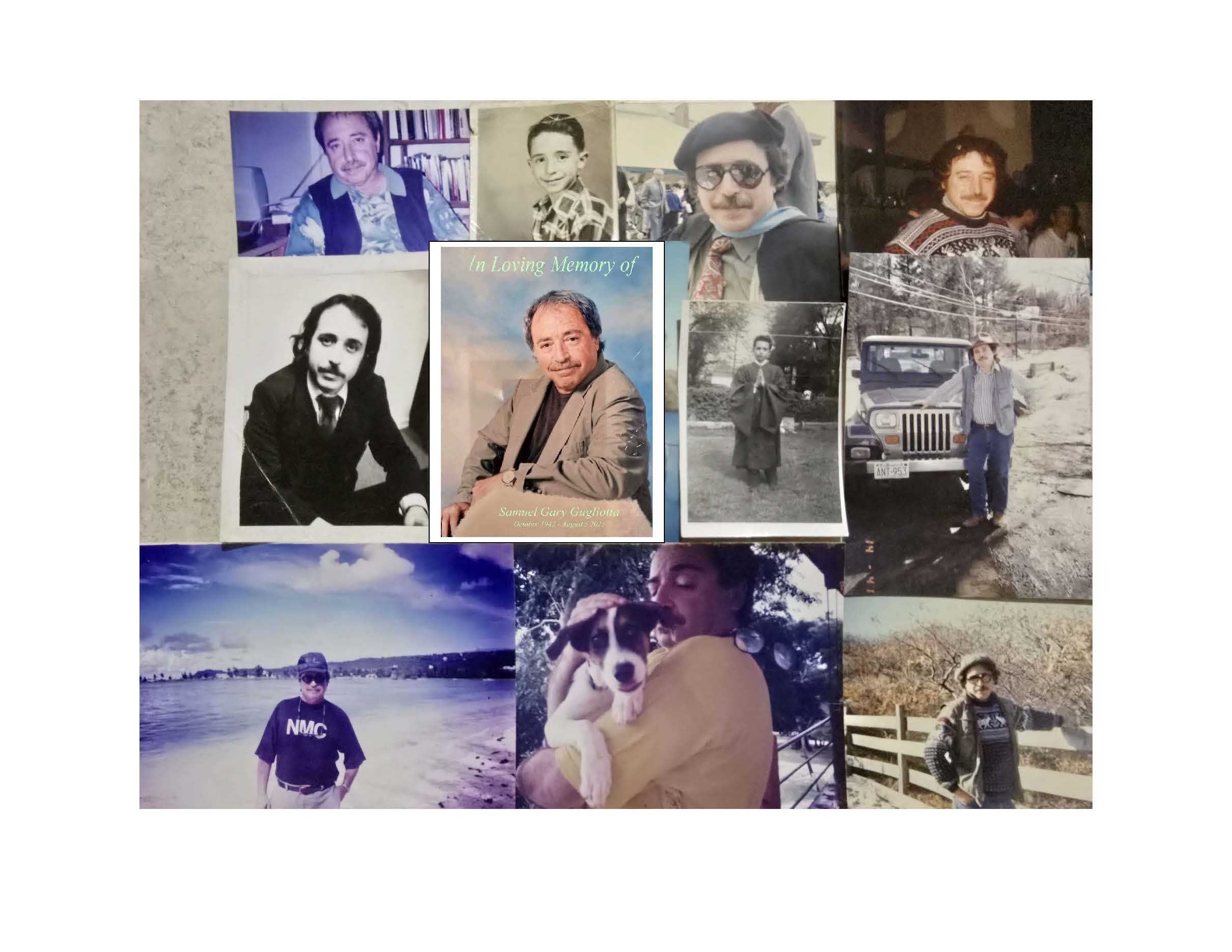
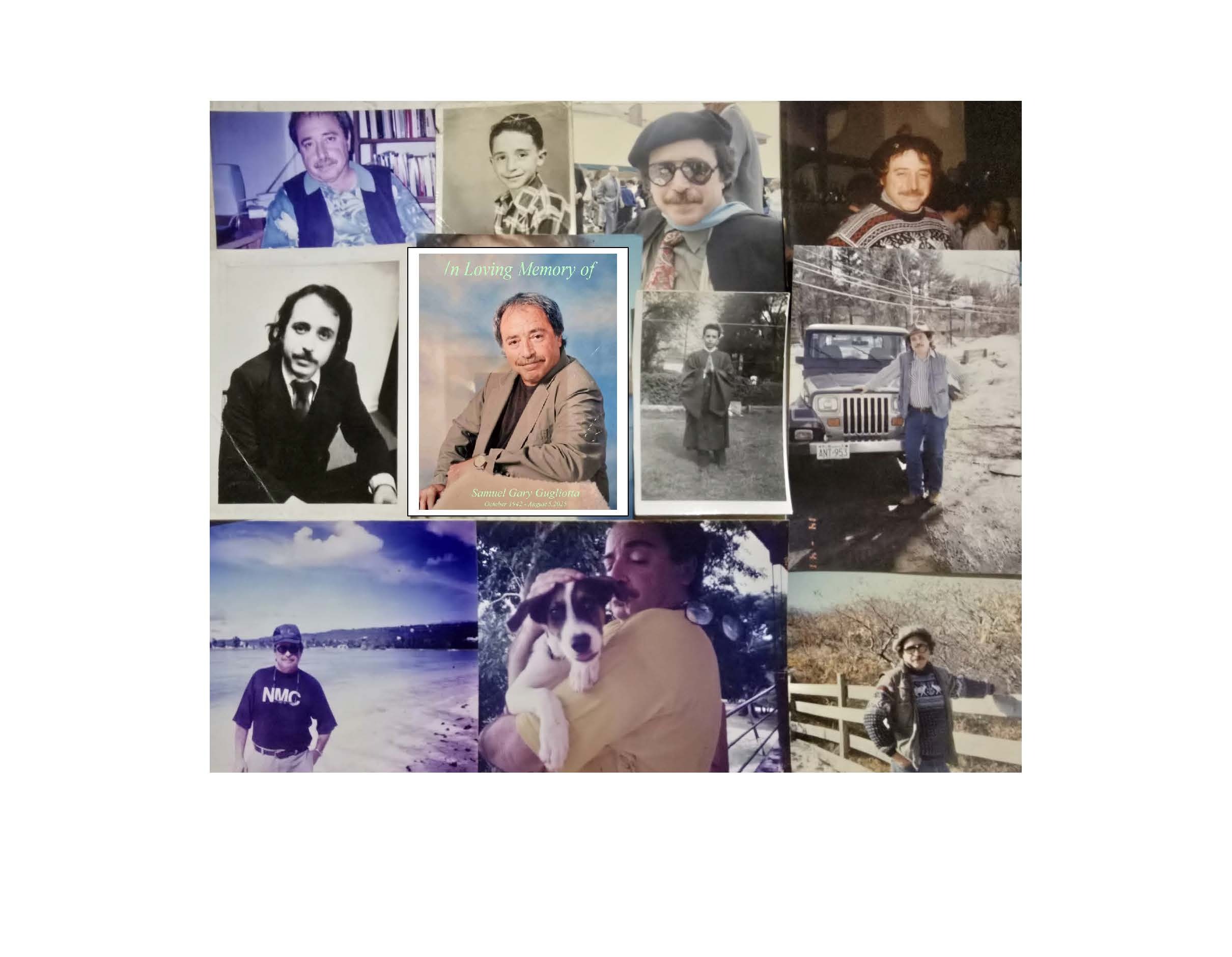
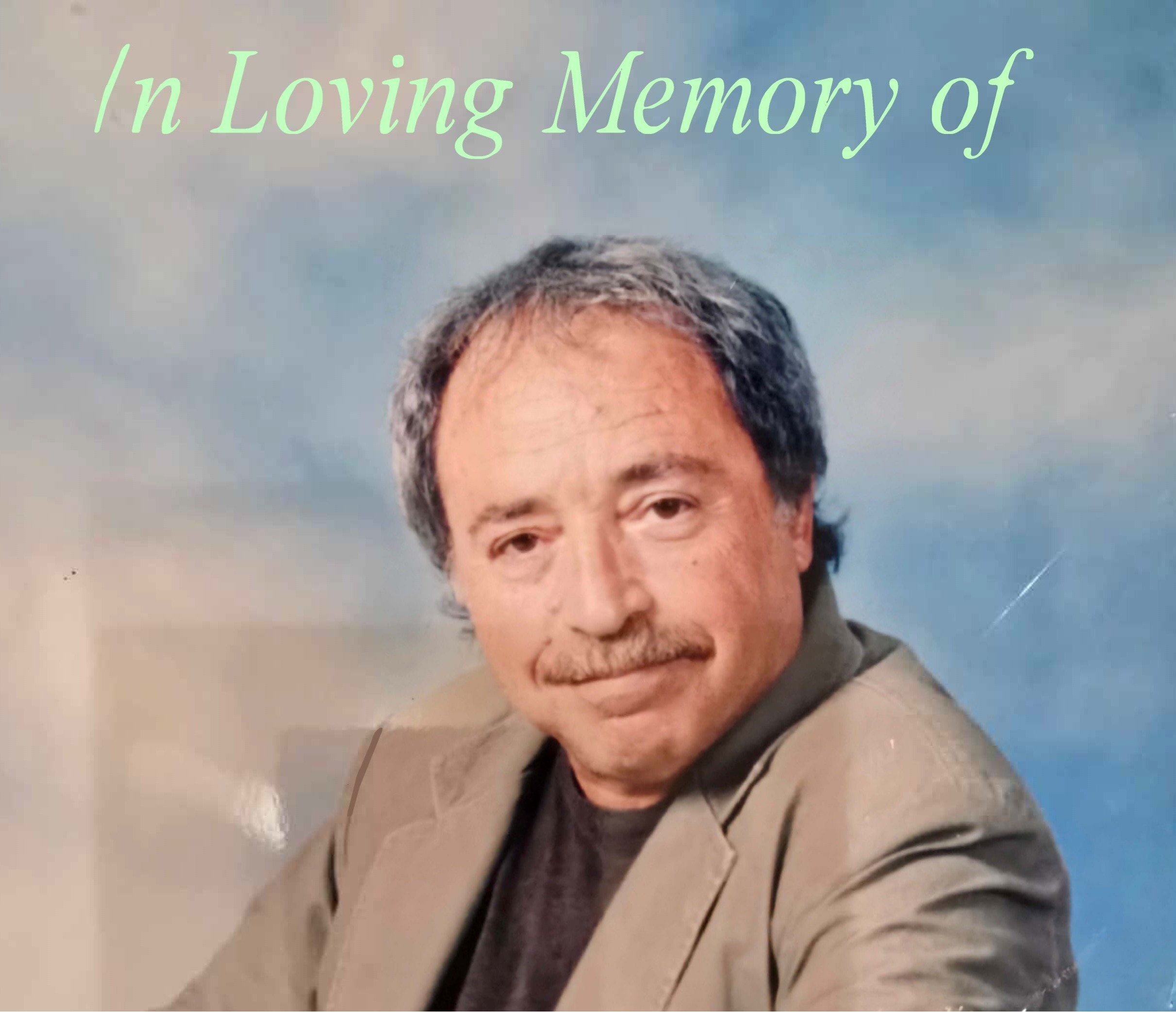
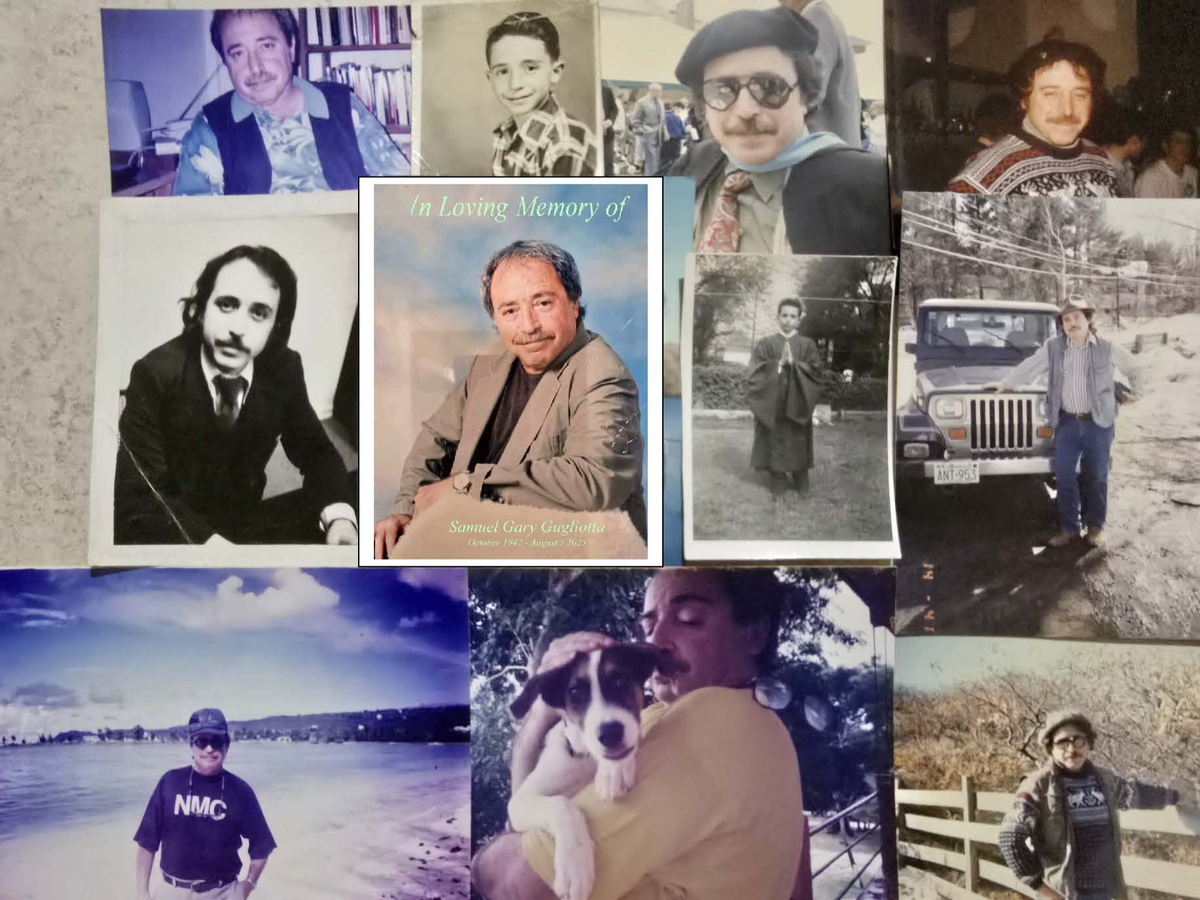
Loneliness dominated Sam's life. Majoring in Philosophy & Mathematics, Pen & Paper were his best friends. An inquisitive yearning soul longed to tell his life story. I am raising fund to help publish his life story, including his autobiography and numerous unpublished poems and essays.
"WHAT LIES BEHIND US and WHAT LIES BEFORE US are TINY MATTERS COMPARED to WHAT LIES WITHIN US." - Ralph Waldo Emerson
“LIFE, FOR ME, HAS ALWAYS BEEN A SEARCH FOR DISCOVERY, TO KNOW, AND TO GROW.” - Samuel G. Gugliotta, 12/19/1974
“LOVE, LIKE THE MOON, ALWAYS RETURNS.” - Samuel G. Gugliotta
I am raising money (even $1 at a time) for my friend, Sam, who had wished to live but died defenselessly on Hospice Care recently to (1) fund the compiling and publishing of his life's work, and (2) to end and raise awareness of hospice malpractice, including the unethical practices surrounding enrollment and care delivery.
If you are close to your sunset years, it is CRUCIAL that you file an ADVANCE DIRECTIVE and properly execute a MEDICAL OR DUAL POWER OF ATTORNEY ("MPOA", "DPOA"). It is CRUCIAL that you only designate a TRUSTWORTHY individual for this role, who you trust that would faithfully fulfill your wishes and desires and not against them in making healthcare decisions on your behalf, such as someone who knows you well, understands you well, understands your values and wishes, and would advocate fiercely to ensure that your wishes, desires and preferences are followed, EVEN IF HE/SHE PERSONALLY DISAGREE.
Finally, I wish I had known and read this book sooner, titled, "The One-Minute Cure: The Secret to Healing Virtually All Diseases, 2nd Ed.," by Madison Cavanaugh, which could have reversed Sam's condition and turned his life around.
Samuel G. Gugliotta (October 1942-August, 5, 2025), M.Ed., a Montclair, New Jersey native, and a second Italian American generation, was a longtime mentor, partner and friend to me. He died on Tuesday, August 5, 2025, at Medical City Lewisville, Texas, leaving behind his life's story and numerous manuscripts of essays and poetry.
Sam did not want to die or be placed under hospice care. He was conscious and able to express his wishes. His condition may be reversible.
When Sam was in hospital, hospice essentially turned him overnight from a lively person with clear mind and high alerts to motionless unconscious vegetation. I asked the nurse what had transpired during my absence. She said he was a bit uneasy yesterday and so they gave him morphine. Sam remained unconscious till his last breath. I was deeply saddened that Sam was left defenseless. The sentence, "Evil is Live Read Backwards," popped up in my mind instantly.
Sam was not vocal about his feelings or thoughts. But he was very good at recording them in words on paper. You can get a glimpse of Sam's mind in his own words at the end, and a snapshot of his final hours in life as depicted in the ‘goodbye’ poem that I wrote for Sam on the day he died, titled "Evil is Live Read Backwards," which was intended to give a voice to the voiceless Sam in his final few hours on Earth.
When Sam was in hospital, I asked if he would like me to read a book for him, he repeatedly said, 'the name of the plot' and he said, 'hurry'. It turned out the book was "The Prophet" by Kahlil Gibran (1883- 1931). So, the same night, I spent two hours reading the book to him. After that, I got his teenage sweetheart, Susan, on the phone. The two hadn’t spoken with each other for decades, but they instantly connected and recognized each other's voices. Sam even invited Susan to come to visit him.
A day passed, and I went to see Sam the following day. There, he was, lying in bed, unconscious. Sam was, ever since, given higher and higher continuous morphine dosages till his passing. My heart just shattered. “Evil is Live Read Backwards.” Nobody should suffer what Sam had suffered during his final two weeks of life. They knocked him out in one day and didn't give him any chance to defend himself or a moment to bid farewell.
I wish to raise money (even $1 at a time) to fund the compilation and the eventual publishing of Sam’s lifetime work and to raise awareness of hospice malpractice, including the unethical practices surrounding enrollment and care delivery. No one should ever suffer what Sam suffered in his final two weeks on Earth no matter how they sugarcoat it.
In his last few poems, Sam wrote, "No one will miss me, No one will mourn." Sam was wrong. I miss him already, and I believe many who came across his path would, as well.
Please read and share Sam’s story to increase awareness of hospice malpractice, and the ‘goodbye’ poem, titled “Evil is Live Read Backwards,” which attempted to give voice to voiceless Sam in his final days of life.
Please DONATE (even $1 a time) to the good course!!! Every dollar is a strike on the lies no matter how hard they hide them. Your kindness and generosity will shine over Sam's afterlife! May god bless us all!!!
----------------
Here are some extracts from Sam's old correspondences and manuscripts, which give you a peek at Sam's mind:
“. . . I first got married, 10 years ago, then there was NYC (New York City), graduate school, 5ht street, then down south, Florida, New Orleans, then up to Canada, then back to the big apple and jobs and bars and learning and growing, and learning on the streets, alone and with people in the high nights… and, now back to Jersey on this little farm making a mess of trying to settle down, longing for some new adventure . . . If any of this makes any sense, that I have a very difficult time relating to my past, that past in the hometown, but my best memories, the memories I love were those of you and us . . .” - Samuel G. Gugliotta, 12/19/1974
“After fifty years of living, rising and falling, making moves correct and incorrect, suffering the ups and downs, the twists and turns, the irony and reversals of chance and necessity, I return to that impressionable youth in his twenties, only this time, tempered by the hard knocks of experience, I am not so overawed by the magnificence of one person’s thought. A good book is what I see and read. And I measure a good book by how many times you may reread it, at different times and seasons of one’s life, and still find something new, something exciting, or to be reminded of forgotten truths or insights.” - Samuel G. Gugliotta
“About 50 years ago, in those halcyon days of youth, intensity, and sea change, I was enthralled by a particular philosopher; an Englishman, turned American, with rather grand sounding highfalutin name of “Alfred North Whitehead,” and I was especially enamored to his great work, “Process and Reality: An Essay in Cosmology.” Well, I will call him “Al.” Regardless, here was philosophy in the grand style. A way to explain everything and anything, in one coherent picture. Each sentence stuck me as a magnificent, noble statue, ringing the grand bells of profundity in my yearning brain. Here was a way to see the world, where everything has its place and reason for being.” - Samuel G. Gugliotta
--------------
Here is a Bio of Sam that I wrote for him.
A math educator, lifelong reader, writer, thinker, poet, and by virtue of his life-long passion and interest, a philosopher, Samuel Gary Gugliotta was hailed from Montclair, New Jersey. He was born in October 1942 to a modest Italian family. His father was Francisco G. Gugliotta, and his mother was Maria A. Autorino.
Growing up in a small Italian neighborhood, he spent most of his earlier years in his hometown, attending schools, going to a Catholic church and having fun with friends and families. In his younger age, his dream was to become a Catholic priest. In his youth, he went to study at Rutgers University and earned an undergraduate degree in Philosophy and a Master of Education degree in Mathematics. He was an ABD (all but dissertation) in Mathematics from Rutgers University.
In his prime years on Earth, he spent most of his time in New York City and the northeastern region of the U.S. He enjoyed reading, drawing, and collecting books on philosophy and civilization, playing harmonica, visiting museums and art shows, and, more especially, exchanging ideas with inspirational and aspiring authors and artists at the time.
His love for knowledge and culture led him to the pacific islands in the 1990’s, where he spent nearly 10 years as a math educator at a local college and a contributing author for a prominent local newspaper.
He published numerous articles for the Newspaper’s weekly column, “Gecko Corner”, where he shared his insights and vast knowledge that he learned throughout his lifetime, more specifically, on philosophy, nature, culture, civilization, religion, science and mathematics. His articles opened the eyes and expanded the views of many.
In his life, Sam had touched and made positive impacts on many lives in the U.S., from the east to the west, and around the world, from the pacific islands to China and South Korea. His insights, wits, humors, gentleness, kindness and generosity were memories of many that came across his path.
--------------
Here is the ‘Goodbye’ poem that I wrote for Sam on the day that he died to give a voice to him.
EVIL IS LIVE READ BACKWARDS
(by KCGC, August 5, 2025, 5:30 am – 7 am)
Evil is Live read backwards
They come in all sizes,
Colors and shapes,
Younger or older,
Richer or poorer,
In black gown,
White gown, or blue gown,
In suits or slacks
With smiles
Real or superficial
With words
Sweet or sharp
God knows,
They have one thing in common.
They are heartless.
They have blood on their hands.
They took away my sweet, gentle,
Harmless Sam.
They say, He is better dead than alive.
They took hopes from him and me.
They knock him out in
Shots and cartridges of
Morphine…
They said, He cannot know for sure
What’s good for him,
What he wants.
They want to play God, but
Our mighty God is watching.
He is silent, so,
Evil fears not him.
“Let’s stop the oxygen so as to not to prolong his dying,” said
A nurse named ‘Aylin’.
1 o’clock
2 o’clock
3 o’clock
4 o’clock
5 o’clock
6 o’clock
7 o’clock …
The clock is ticking
July 29th,
July 30th,
July 31st,
August 1st,
August 2nd,
August 3rd,
August 4th,
August 5th
The doctor named ‘Mamidi’ is counting
Bit by bit
His blood pressure is dropping
90
80
70
60
50
40
30
…
------------
When the time comes, return to your source
Your reward is being freed of
All these evils, running in
Silence, or actions
Evil is Live read backwards.
Live, baby, live happily ever after, but
Not in this world of dirty and greedy, rather,
In the Kingdom of God.
--------
The heaven will open for you when you arrive
The flowers will bloom as you pass
The birds will gather and give you the loudest trumpet,
‘Free at last’…
‘Free at last’…
---------
My dear Sam, you’ll be
Forever missed, in this world, and
The next, and
The next …
Live, baby, Live!
------------
Here is a peek at Sam's heart as revealed in poems that he wrote in the last few years:
LINES FROM LETTERS
- Samuel G. Gugliotta
LINES
FROM LETTERS
LOVE
LIKE THE MOON
ALWAYS RETURNS.
TODAY
SILENCE OF SHADOWS
LOUDER THAN CRICKETS
HUSH, HOT SUN BURNING
HARDLY A CLOUD . . .
WHAT IS IT, IN VENUS TIME?
THE BIRDS GONE, TAKING
THE LEAVES AND LEAVING
THE SILENCE BEHIND THEM.
MORNING
A CHILL BREEZE WAKES
THE DRIZZLE OF DAY.
A PERFECT DAY
- Samuel G. Gugliotta
A PERFECT DAY
IF DAYS WERE NUMBERS
SPRING CHILLL CHUMS THE
LEAPED AIR
IN THE COWTOWN OF
NOTHING
I WALK BACKWARDS
CHASING HIGHWAYS
INTERTWINE
THE TV SHOWS DEATH AND
SUFFERING
NON STOP, 24-7
EVERYWHERE
THE INFINITE SAME
IF ONLY I COULD BE
HOPELESSNESS
HOLDS ME
I WANT FREEDOM
TO RUN WITH THE WIND
MOONLESS NIGHT
- Samuel G. Gugliotta
TWO DIM STARS
LIGHTS FALSHING,
YELLOW, GREEN,
RED, BLUE.
NOT A SOUL AVAILABLE.
TALKING, WAITING.
TIRED MIND, FILING
TRASH BASKETS WITH BUTS
REMINDING ME OF BEAUTY I
DID NOT CREATE
COME OLE MOON
THE SKY BEHOLDS YOU.
AH, THE MOON IS RISING
GREAT SUN OF NIGHT,
ELECTRIC LIGHTS
ON ITS JOURNEY
ACROSS SKY
BACKYARD BONGOS
- Samuel G. Gugliotta
BACKYARD BONGES IN THE FALLIN RAIN
TAP TAP TAPPING ON MY WINDOWPANE
BACKYARD BONGOS IN THE FALLIN RAIN.
FOUND MYSELF WITHOUT A PLACE TO GO
RUN OUT OF ROADS IN NEW MEXICO
STUCK FOREVER ON A GREAT PLATEAU
STUCK FOREVER IN NEW MEXICO.
RAINDROPS HANGGIN FROM THE LEAVES OF TREES
GLISTEN LIKE CHRYSTALS IN WINTER BREEZE
JANUARY IN JANUS TOWN
ONE FACE SMILES AND THE OTHER FROWNS
SITTEN HOME ALONE
NO ONE AT THE DOOR OR ON THE PHONE
GUESS I’LL JUST BIDE MY TIME
SINGING SINGS AND SIPPIN WINE
THE BACKYARD BONGOS IN THE WINTERTIME.
MOONMAKER
- Samuel G. Gugliotta
LAST NIGHT THE MOON WAS BIT
LIKE A COOKIE ON A PLATTER
SOME ONE HAD TASTED QUICKLY
BEFORE REPLACING AS IF
NOTHING HAPENNED NOTHING
GAINED AND A WANDERING STAR
STOOD BY GAZING AT THE ENTIRE
EPISODE TAKING NOTES.
IF YOU DON’T BELIEVE ME I DON’T
BLAME YOU BUT I DO BLAME
YOUR PARENTS OR PERHAPS THE WAY
MOONLIGHT MISSED YOUR WINDOW
THAT ONE NIGHT YOU DREAMT YOUR EYES
WERE OPEN AS THOSE SHADOWS DANCED
AND PUT YOU IN HYPNOTIC TRANCE FOREVER.
MOONLIGHT WAS HERE ABOVE THE BAY
THE SURFACE LIKE A VELVET PLATTER
WHICH HELD THE SILVER SPOONS OF MOON
LIGHT AND THE SURFACE SHONE AN ERRIE
GLOW TO GUIDE THE SAILORS HOME.
PEN
- Samuel G. Gugliotta
THE PEN IS A TOOL
I USE
TO FORM WORDS ON
THE PAPER
THE WORDS ARE TOKENS
OF WORDS MADE UP
OF COLLECTIONS OF
INK MARKS
THE TOKENS INDICATE
THE THOUGHTS
GUIDING THE MOVEMENTS OF
THE PEN
------------------
Here is a peek at Sam's mind as revealed in his article titled "Now and Then", written about 17 years ago.
Abstract:
Since we humans are intrinsically sensitive creatures, it appears probable that there is some truth to the statement that we are somehow shaped by the complex interaction of an environment of which we are but a part and parcel, at least as we go from the “tomb of the womb to the womb of the tomb.” The exact nature of this interaction of course is another matter. Perhaps someday a theory of everything will explain it all, if we could understand it. (Note: Scroll to the end to find out if Sam found one.)
--------------
NOW and THEN
- Samuel Gary Gugliotta
Since we humans are intrinsically sensitive creatures, it appears probable, if not certain, that there is some truth to the statement that we are somehow shaped by the complex interaction of an environment of which we are, after all, but part and parcel, at least, as one scholar says, we journey from the “tomb of the womb to the womb of the tomb.”
The exact nature of the interaction between organism and environment is a momentous question. Perhaps someday a “theory of everything” will explain it all, if we could understand it.
The environment is multidimensional, not only in space but also with respect to time. If you think of time horizontally, sort to speak, imagine everything that is presently existing at this very moment in your “now” or present. That is called the “synchronic” dimension of the “now.” That is the spread of time as encompassing all that is “contemporary” with your present state of consciousness.
On the other hand, if you think of time vertically, sort to speak, from the distant beginning of time in the faraway fog of the past, moving upward to the present, into expectations of the future, you will be thinking of time “diachronically.” We see the synchronic present before us in our contemporary world, and we remember the diachronic past and the way it influenced us.
A related distinction, in psychology and the neurosciences, is that between “short” and “long” term memory. If you think of the “present” or “now” not as in infinitesimal “instant” separating the future from the past (a point without dimensions and so a timeless time), but rather as a duration with some temporal spread or “thickness” that would leave the “present” with rather fuzzy boundaries, spreading into the recent past and the expected future. Hence, we have a “present” which consists of your lived consciousness fading off to your short term memory of yesterdays and future expectations of today or tomorrows away. Thinkers have called this the “specious present” and I would say it includes our short-term memory – thoughts and perceptions immediately assessable to consciousness.
Long-term memory relates to the diachronic dimension of time. Much of what we learned “way back then” has become habit and well ensconced in what we are: our personality. You may not remember how and when you learned how to tie your shoes or eat with a fork, but the knowledge has become part of you. The past is dead and gone, but somehow it lives on, absorbed by the present in what one philosopher called “the creative advance” of nature.
People relate to memory in a diversity of ways, and differently at different stages of life. A youth may remember the immediate past in detail, and in old age we may be challenged to remember what transpired a week ago, but have no difficulty remembering childhood days in a distant past. A writer may be able to recall and recreate the facts and emotions of the past, and others may be too busy to think about it. But in either case, whether we remember consciously or not, the past has been absorbed into our present, like the rings of a tree as we branch out towards the sun of our days.
Of the six or seven billion human beings living and dying on the crust of this obscure, remote mote of a hunk of stardust, a good percentage of them, I would surmise, are adamant “believers” in some particular ancient religious doctrine. It is not my intention to point out the extreme atrocities and intolerance manifested throughout history perpetrated by those “holy ones” of the faith. This is too obvious a matter of act, and so is denial.
Nor do I wish to cast doubt on anyone’s faith. I do not dream of depriving anyone of the consolation or compassion derived from belief. It would be like pulling a hungry baby away from the nipple.
If the idea of the monotheistic Almighty is a human invention, a glimpse at the ideal possibility of human civilization, then …….so what?
May words alter no landscape or mindscape. The world is what it is, with or without my wonder. Sadness lurks in the shadows and the poetry of Earth is not written in words, but appears in the Spring display reborn.
A slight alteration of Dewey’s title may be called for, namely “A Common Fate” for all the evidence, all that is known points in the same sad direction: Human Beings are but temporal, mortal creatures, and last for but a finite duration. Every one of us, me included, will reach that tragic denouement, even the name we give to that unavoidable tragedy we would rather not mention. The name, of course, is “Death.”
“Death” at least is a word, a noun. We immediately look for its meaning, or what the sign refers to, or signifies. A modern thinker notes, “’Death’ is not an event in life.” An ancient philosopher avers, “When death is, I am not, and when I am not death is.” There are fuzzy boundary cases along the borderlines between life and death, but in the majority of cases, it seems we have no trouble in describing humans as “alive” or “dead”. We cannot “know” death, as the words we bandy about no longer have application. Strange as it seems, to what I imagine is modern point of view, Aristotle, in the “Nicomachean Ethics, Book xi”, wonders if the fortunes of those living will have an effect on those who are dead. He concludes that probably there is an effect, but not as much as we may think.
I take it personally, from what philosophers may call “the subjective point of view,” that, in the face of overwhelming evidence, I must die. “Me, myself, and I,” will no longer be. As an event in the universe, from the “objective point of view,” it perhaps means nothing at all. But to me, personally, it means, well, everything. Another philosopher says that we “are the guardians of our own importance.” I think, pace Plato, of being on guard duty, manning the post, and in dying, the post is overrun.
There is nothing novel in my observations, since a very many acute thinkers have considered such opinions since the Ancient of Days. And here comes the magical part: the marvelous creative capacity of human beings to delude themselves: for many acute thinkers have faced the inevitability of death only to deny it: so we have the great invention of the immortal “soul,” the saving God, the entire fantasy land in regard to which a person may rest easy as the species evolves. One need only “believe” in the whole nine yards, a belief bolstered by something called “faith.”
A belief in the immense delusion of personal immorality of course interlocks with the other absurdity of belief in that almighty all good guy called “God.” He is the recipient of worship and prayer. Yet what kind of “God” would create human life and take it back with death? How cruel, sarcastic, and downright inhuman may a “God” be. What masochistic self worships the destroyer of that self? Our searching ancestors combine absurdity to absurdity to absurdity… until it “shapes” itself into an aggregate absurdities. Absurd circles, like round squares, are defective; their major problem is that they don’t exist.
Absurd circles, immense fantasies, ideals, may have practical consequences. (For example, the evolution of civilization.)
As a child, I “believed” in the Catholic God. That of which my Elders told me: The Father, Almighty, who always was and always will be. I also believed, I surmise, in Saint Nick, the Tooth Fairy, Peter Rabbit, and my Guardian Angel.
I said my prayers at night, went to church and Sunday school. Read the Bible, read the Gospels and the Catechism. Thought about the vocation of priesthood. I was Baptized at birth, and later “made” my First Communion, and later still, Confirmation.
In time, living and striving through the hard bumps of life, the old beliefs fade away like withered flowers. Or perhaps they are relegated to some vague realm of absurdity and nonsense, or just forgotten. New beliefs, new concerns, perhaps sit where the former beliefs once held sway.
Now, old and broken, I wonder why and how so many for so long still maintain a ‘belief’ in the God mythology. I am, I think, totally baffled by this question.
(A kind of “mood” or “condition” seems to overwhelm me in my sunset years; a kind of estrangement from what is: when the familiar becomes incomprehensible or absurd. Alienated from my species, I see nothing but insanity layered upon insanity, and I wonder where to locate the pathology, within or without.)
In a bizarre bedazzled “mood” or “condition,” (a ludicrous place somewhere near lunacy with a faint hope of luminescence) I take note in my reading whenever I encounter thoughts that may speak to my mood. For example, I am readying Richards Rorty, a contemporary, an esteemed and distinguished philosopher, and I run across the words, “Those who, like me, were raised atheist and now find it merely confusing to talk about God,…” Then I wonder, perhaps I am not alone in my incredulity. He calls talk about God, “confusing.” Is that perhaps an understatement?
Next I come across a passing phrase of John Dewey’s in his classic monograph, “A Common Faith,” (By the way, we share a common birthday, although he died when I was but the tender age of 10.) He mentioned a thought regarding a possible criticism that may be leveled against his thesis: “It is regarded as a view entertained from mere tendermindedness, as an emotional hangover from childhood indoctrination, or even as a manifestation of a desire to avoid disapproval and curry favor.”
He mentions the thought only to discard it, or refute it: to ward off a possible attack or misunderstanding of this point of view. But I catch the thought as if it were a bird in flight, because it seems to relate to my premise, that is the juxtaposition of religion and fairy tales.
I say this because it seems to me that the detailed doctrines of any particular religion were borne upon fairy tales appropriate to the childhood of humanity or even of each individual.
It seems to me, at least with respect to my particular development, which may be relevant to others, that three major stages may be discerned as one zigzags along life’s painful and transforming journey. I denominate these “stages” as (1) Childhood; (2) Youth (or “The Donkey Years”); and (3) Adulthood. Very few people, I think, ever make it to the epitome of Stage (3), Adulthood. (It has taken me, for example, over sixty-five to catch glimpses of it.)
This time is not that time. Yet changes appear to be radical, discrete, and non-continuous, the intensity, the color, where has it gone? I recall a song, from a long-running Off-Broadway play: The Fantasticks: “Try to remember the kind of September/When life was slow and oh, so mellow…”
One memory leads to others. The mist of memory fades into the horizon with the words of the philosopher. Conjoin the opposites: The past is dead and gone now, but at the same time it lives on; As a moment dies, it is objectified and becomes immortal as it becomes part of the becoming of the next actuality. So it follows, that every experience of which an individual was a part has made its contribution to the becoming of the present moment, whether we remember or not: “Try to remember the kind of September/When grass was green and grain was yellow…”
Yet the times have changed so (many); values reversed; the good is bad now; the streets have emptied of those seekers; finding love divine in each other. Was it ever there? “Deep in December, it’s nice to remember/ Altho’ you know that snow will follow/ Deep in December, it’s nice to remember/ Without a hurt the heart is hallow…”
Do we sleep the night and awake with new memory chips in our brain? A different person with different memories? That scenario would be quite fantastic; outlandish. Each individual is unique and remembers the past in a different way. One world but so many minds; each with a point-of-view. So many stories on a single stone.
(End)
---------------------
Subsequent Addendum that might tie to the last sentence in the Abstract above:
About 50 years ago, in those halcyon days of youth, intensity, and sea change, I was enthralled by a particular philosopher; an Englishman, turned American, with rather grand sounding highfalutin name of “Alfred North Whitehead,” and I was especially enamored to his great work, “Process and Reality: An Essay in Cosmology.” Well, I will call him “Al.” Regardless, here was philosophy in the grand style. A way to explain everything and anything, in one coherent picture. Each sentence stuck me as a magnificent, noble statue, ringing the grand bells of profundity in my yearning brain. Here was a way to see the world, where everything has its place and reason for being.
KCGC Note: In my humble opinion, Sam has made a home run in his life. In the endgame, he embraced a point of view of compassion and forgiveness, despite of the evil things that happened to him in his final two weeks that hastened his death and left him defenseless.
Please SHARE Sam's story and DONATE (even $1 at a time) to the good course. Thank you very much for your kindness and generosity! May God bless you all!
Organizer