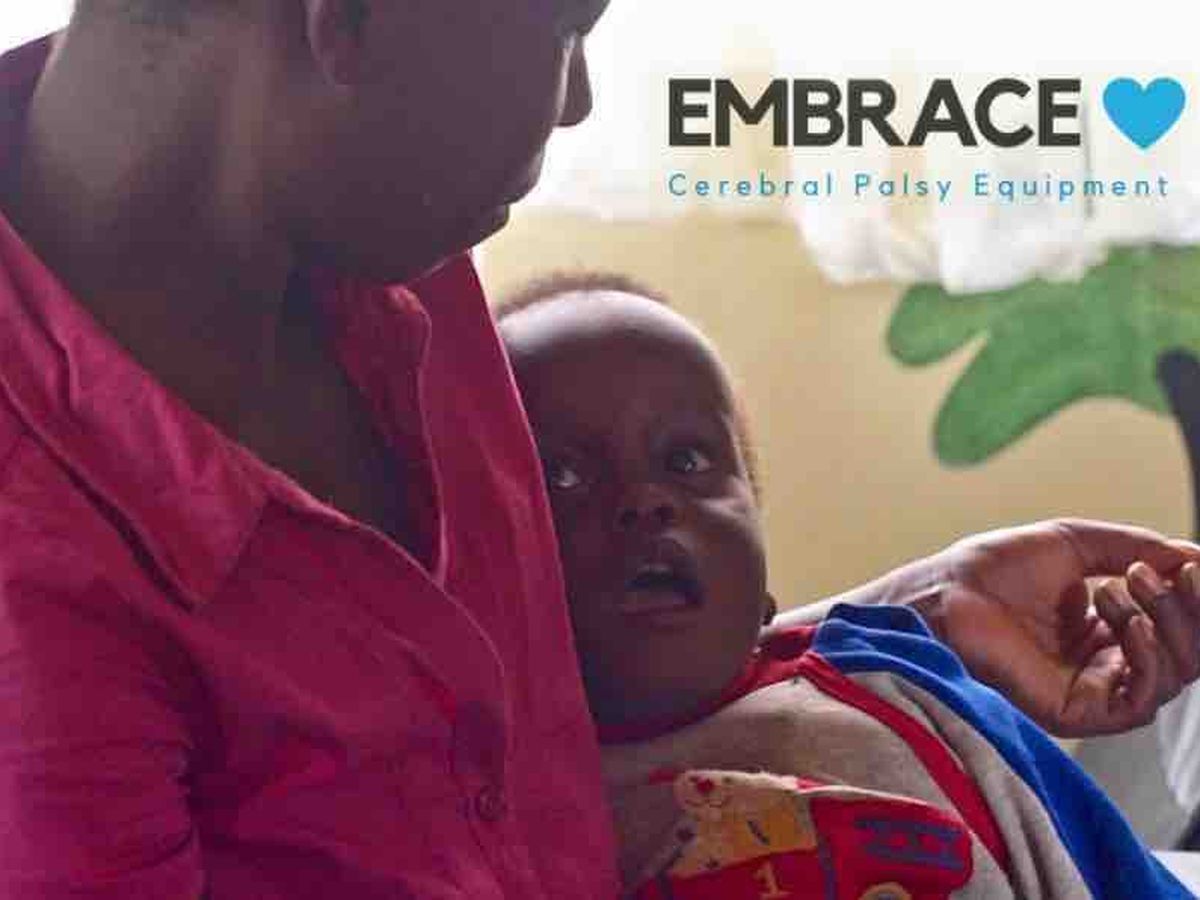
- M
- C
 
https://www.youtube.com/watch?v=rEw7GwCmn1A
We designed a low-cost chair that has removable and additive parts. This essential to a child with cerebral palsy, since the effects of CP, vary on a case to case basis.
Meaning one child might be able to hold his head up, while the next might not be able to, therefore, having an additive headpiece is crucial. (this is only one example of the adaptive features)
The effects of Cp for children are exaggerated reflexes, floppy or rigid limbs, and involuntary motions, making it hard to keep their bodies up.
Therefore keeping them snug in a chair that cares about their individual needs, and promotes the right example of body positioning is essential.
The chair might not seem like novel product, but in Limbe Malawi it is.
Being the 5th poorest country in Africa, Malawi remains one of the least developed countries in the world.
On $0.20 USD a day, mothers can't afford to provide for their families and their child's lifelong disability. This usually leads to the abandonment of the child.
This can be avoided if the child can gain independence through affordable care.
This is why we have created EMBRACE.
A project that tackles the child needs, the caregiver budget, and the communities perception of CP.
By funding EMBRACE you are not only funding equipment but allowing the CP children to have a chance at a better life.
Please Consider Donating.
If you would like a more in-depth look at EMBRACE please keep reading:
INTRODUCTION:
EMBRACE is a project that will provide therapeutic chairs for children living with Cerebral Palsy in Malawi. By providing thought out chair designs made of low-cost accessible materials, a big impact can be made in the lives of these kids.
Cerebral Palsy (CP) -- a condition that damages the part of the brain that enables movement and body control -- is the leading childhood disability in Malawi, affecting nearly 1 in 300 children. Yet, only 3% of the population has access to proper equipment and care.
The EMBRACE project is developing adaptable and affordable CP chairs for this population.
These chairs use a template and cardboard to build low-cost alternative to medical equipment. The chairs will enable children with CP to move around more independently, while the design will support proper body alignment and help muscle rehabilitation.
THE EMBRACE TEAM:
Hello, our names are Katie Herman and Juliette Schmidli and we are Industrial/ Product Design students at Otis College of Art and Design in Los Angeles, California. We are here asking for your help to get us to Malawi within the upcoming month to implement EMBRACE, a socially impactful design solution to CP.
HOW WE GOT HERE:
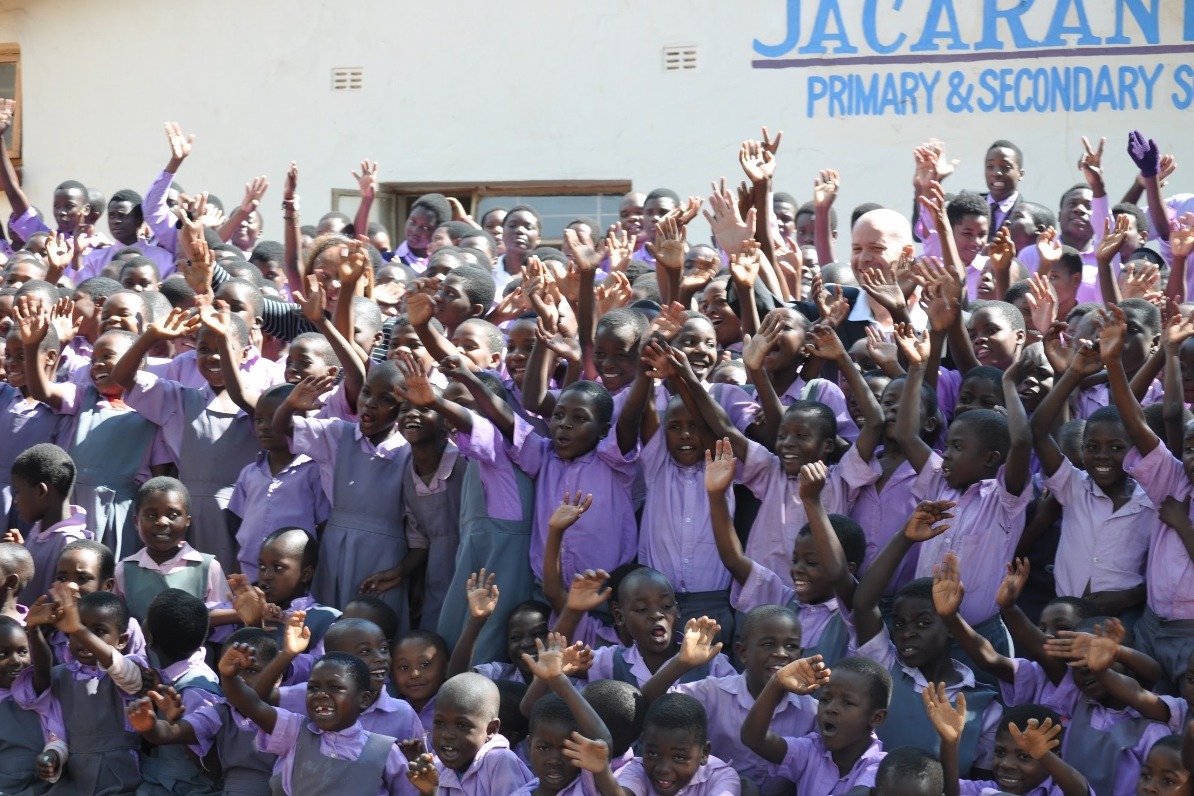 (Students at Jacaranda Foundation )
In May 2018, we volunteered at the Jacaranda Foundation, a primary and secondary school in Limbe, Malawi for kids orphaned by HIV/AIDS. The school provides education, nutrition, and medical care for orphaned children, many of whom are also living with HIV.
While visiting the school, we toured its new Physiotherapy Clinic that opened just a month before our arrival. Edward Kondowe, the head doctor at the clinic, explained that its core mission is to treat kids with CP, the leading physical impairment for children in Malawi. The clinic offers free care to over 100 kids outside and around Limbe.
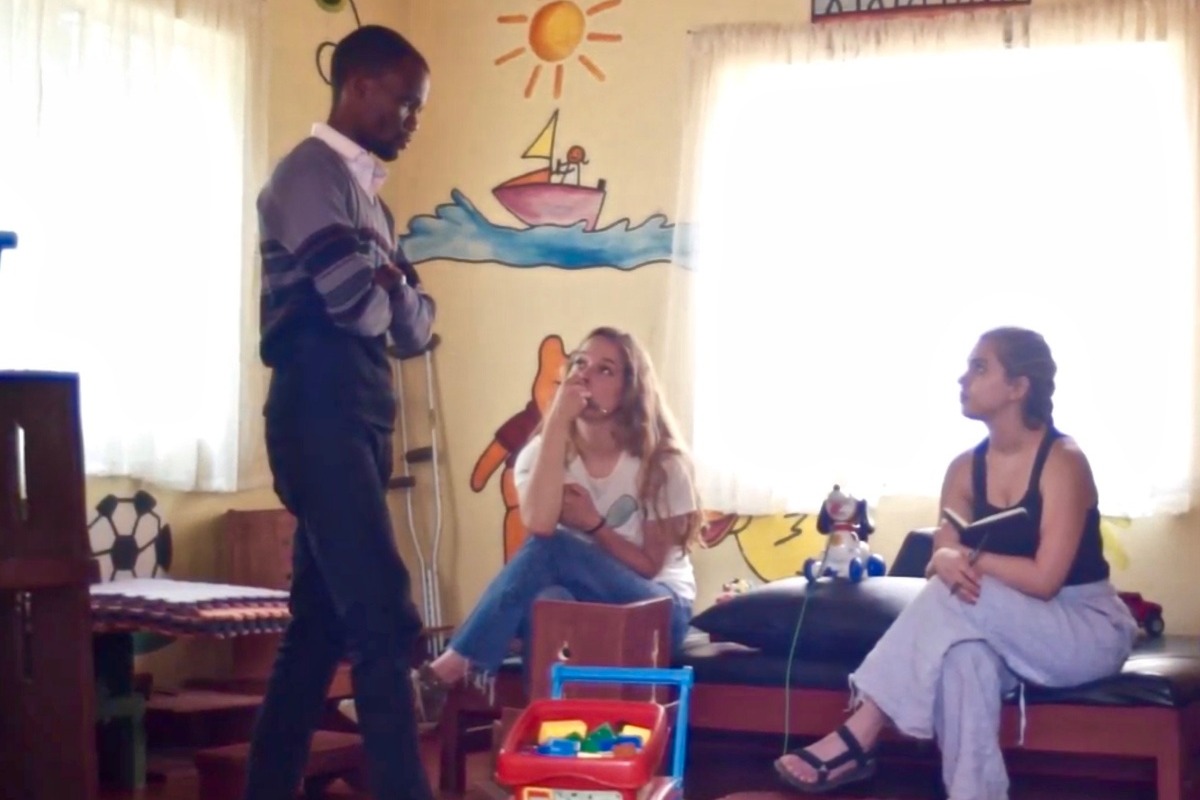 (Edward Kondowe the Head physiotherapist talking to Juliette & Katie )
COMMUNITY CHALLENGES:
According to the country’s National Institute of Health statistics , 60% of the population living with this disability are not currently receiving any services or medical care. Only 17% have received physical therapy, and only 3% of the population has access to medical equipment appropriate for the condition.
In addition, there are cultural issues which pose obstacles for these kids. Many of the young patients are raised by single mothers, as fathers often leave the family, blaming mothers for the onset of CP. These mothers are left to provide for their families on an average daily income of $0.20 USD cents per day, making it extremely difficult for them to afford equipment for their disabled child.
WHAT EMBRACE DOES:
When Dr. Kondowe learned that we were Product Design students, he asked us to consider working on developing and designing low-cost CP equipment for both in-home and in-clinic use. He explained that many young patients return home, where they often have no access to beneficial care required by their condition. With limited means at their disposal, mothers are forced to turn to counterproductive methods: propping these children in corners of their homes giving them no proper support or mobility.
EMBRACE aims specifically to alleviate this particular problem by providing patients with modular chairs made from low-cost reinforced cardboard which are explicitly designed to help patients coping with CP.
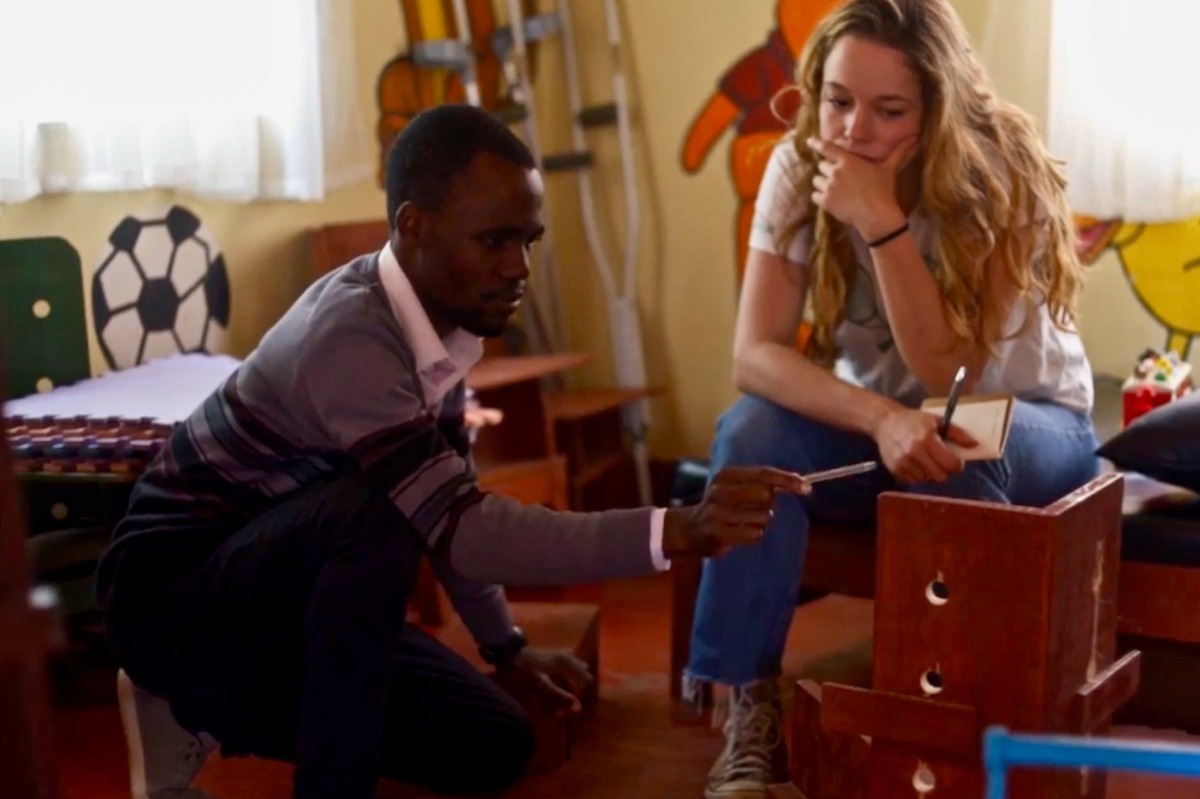 (Edward Kondowe explaining some of the complaints of the current chair)
WHY EMBRACE IS IMPORTANT:
Providing an appropriate chair for CP patients increases their chances of developing or recovering some ability to move without aid since maintaining proper alignment helps the rehabilitation of muscles. Correctly designed devices would make a difference for their daily lives since the mother would be able to feel confident leaving her child in a chair that comfortably sustains correct body posture.
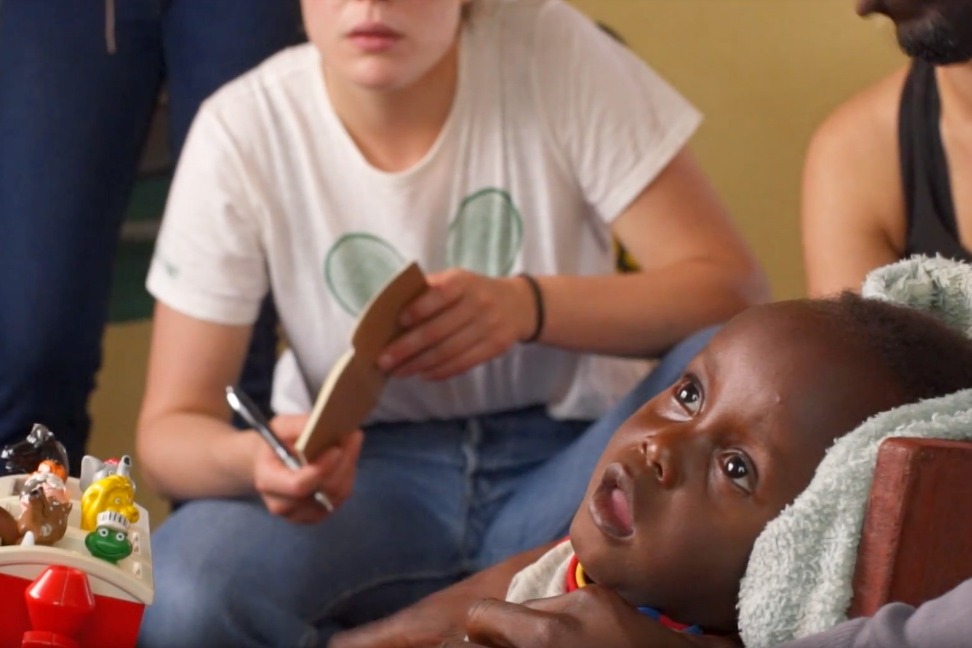 (Kelvin ( 2 years and 6 months old) sitting in one of the current $20 USD wooden chairs. The chair is not fostering proper neck position)
EMBRACE DESIGN BENEFITS:
→The design uses a technique called Appropriate Paper-based Technology (APT). The product of APT is a material comparable to wood made by gluing sheets of cardboard and wrapping/sealing it in newspaper.
→ APT Chair costs less than $5 USD, where as the current wooden chair costs $20 USD.
→ The chair can be assembled using a template, a set of instruction, and provided tools, making it easy for mothers to put assemble the chair.
→The design focuses on providing personalized support that can be modified depending on the impairment.
→The design will help improve proper spinal alignment, muscle spasticity and tone, motor functions, and will maximize comfort for the child.
→The seat of the chair is interchangeable, allowing the caretaker to modify it, in case the child has complications, such as bowel control.
→Rather than providing only a limited number of chairs ourselves, our plan is to teach parents and medical officials in Malawi how to build the chair according to our template to ensure that the project will continue to meet future needs.
→EMBRACE workshops will help mothers not only with assembly, but also education on how and why the chair will help them better manage their children’s CP.
Expansion/ broaden spread of EMBRACE
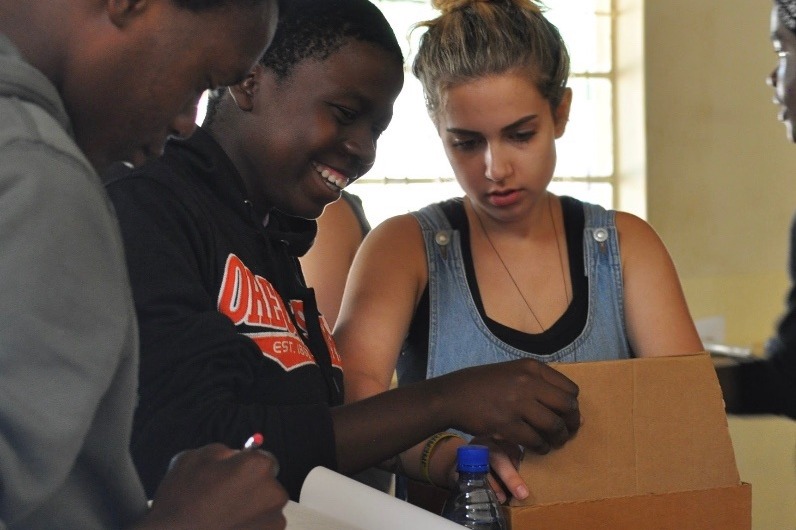 (Katie working with Jacaranda students on cardboard designs)
IMPACT BEYOND EMBRACE:
In addition to making the chairs, EMBRACE will work to bring awareness of CP, its causes, symptoms, and milestones in order to further care for children with CP. Direct engagement with both doctors and patients will enable the EMBRACE team to gather more precise data on the children’s specific needs and refine the chair design to better suit their bodies and needs. EMBRACE plans to engage mothers and other caregivers in this process in order to empower them and their community and ensure better outcomes.
The larger goal is to break barriers to care for disabled children, destigmatize their disability, and incorporate them better into their families and communities. The name of the project reflects this aim of getting children with CP to be embraced by their society.
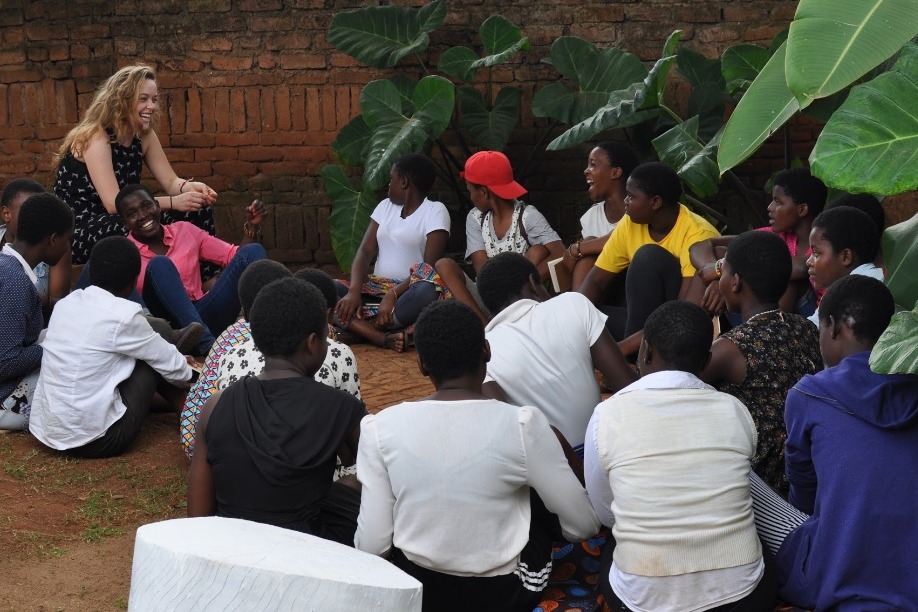 (Juliette working with Jacaranda girl/ women's group)
DISCLAIMER:
EMBRACE is aware of the social and historical complexities involved in working in Malawi and is sensitive to challenges of trying to affect change in a foreign culture. EMBRACE acknowledges its position as an outsider in local communities and will work closely with local doctors and care providers on the implementation of this project in order to ensure the best outcomes for patients and their families. The project’s intention is to help children with CP in the most seamless way.
The proceeds of this campaign will go toward the development and implementation of this first phase of EMBRACE, which will make no profit from the project.
EMBRACE seeks to raise $8000 USD. Go fund me does take a percentage on donations. If you are worried about the 10% that is going to the go fund me charges please feel free to send donations to our Venmo account (@EmbraceCP) or contact us privately.
Costs of specific materials are subject to change due to vendor prices and fluctuations in Malawian Kwacha. Allocation of the funds will depend on the amount raised through this campaign.
BUDGET:
Travel Expenses: ($4500)
-Transportation in country for participant working with embrace (doctors, nurses , translator, etc…)
-Personal Transportation for handicapped patients unable to get to the doctors, clinic, and community EMBRACE meetings.
-Transportation of materials both to and throughout the country.
-Air travel (2 plane tickets into Blantyre)
Research Expenses: ($1000)
-Hire translator (bilingual in English, Chichewa and local dialects) and local personnel to help assist in meetings.
-Fee for research assistant who will collect data during home visits, preferably an engaged and committed physiotherapy student(s) from the College of Malawi who will work with the EMBRACE team. This person(s) will continue to collect data on the ground and serve as a direct line of communication with the EMBRACE team, helping it grow further and serve more CP children.
Production Expenses ($1500)
-Tools: cutting knives and sharpeners for workshop use, rulers, drills.
-Materials: Year-long supply of cardboard and glue, sealant, paint for children to decorate chairs with, fabric for cushioning of chairs.
Training/ Education Expenses: ($1000)
-EMBRACE meetings: folding tables, chairs for elders, water and food for caretakers, first aid kit.
-Graphic designer who will create and print educational pamphlets in the native language Chichewa.
- Local videographer who will create an educational video in Chichewa for workshops and in-clinic use.
THANK YOU FOR READING WE APPRECIATE IT!
Every donation helps! Please spread the word about EMBRACE to help it grow and serve more people in need. Contact us if you can donate old cardboard, tools, and materials.
To stay updated on the development of EMBRACE, feel free to connect with us at:
Email: [email redacted]
Website: https://embracecp.wixsite.com/embracecp
Facebook: @EmbraceCP
Instagram: @embrace_cp
