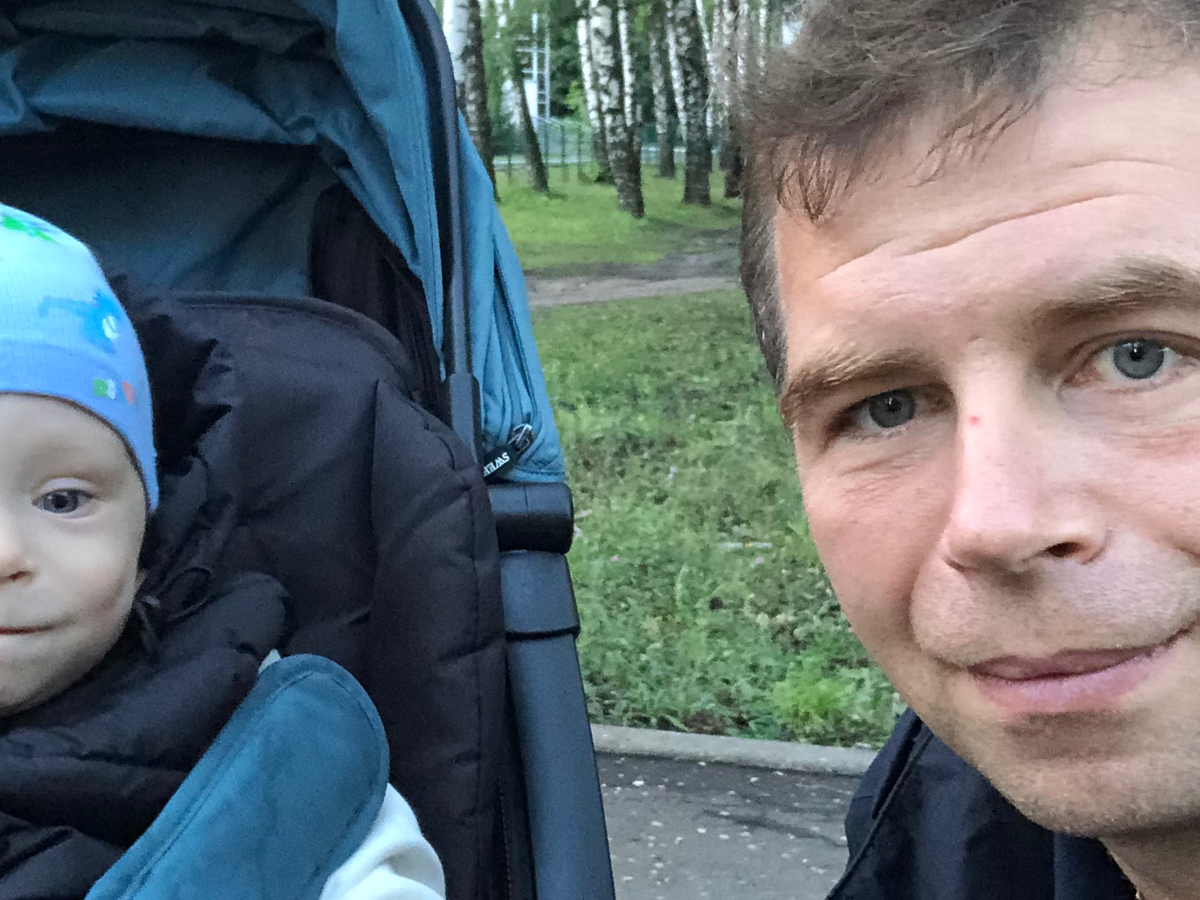
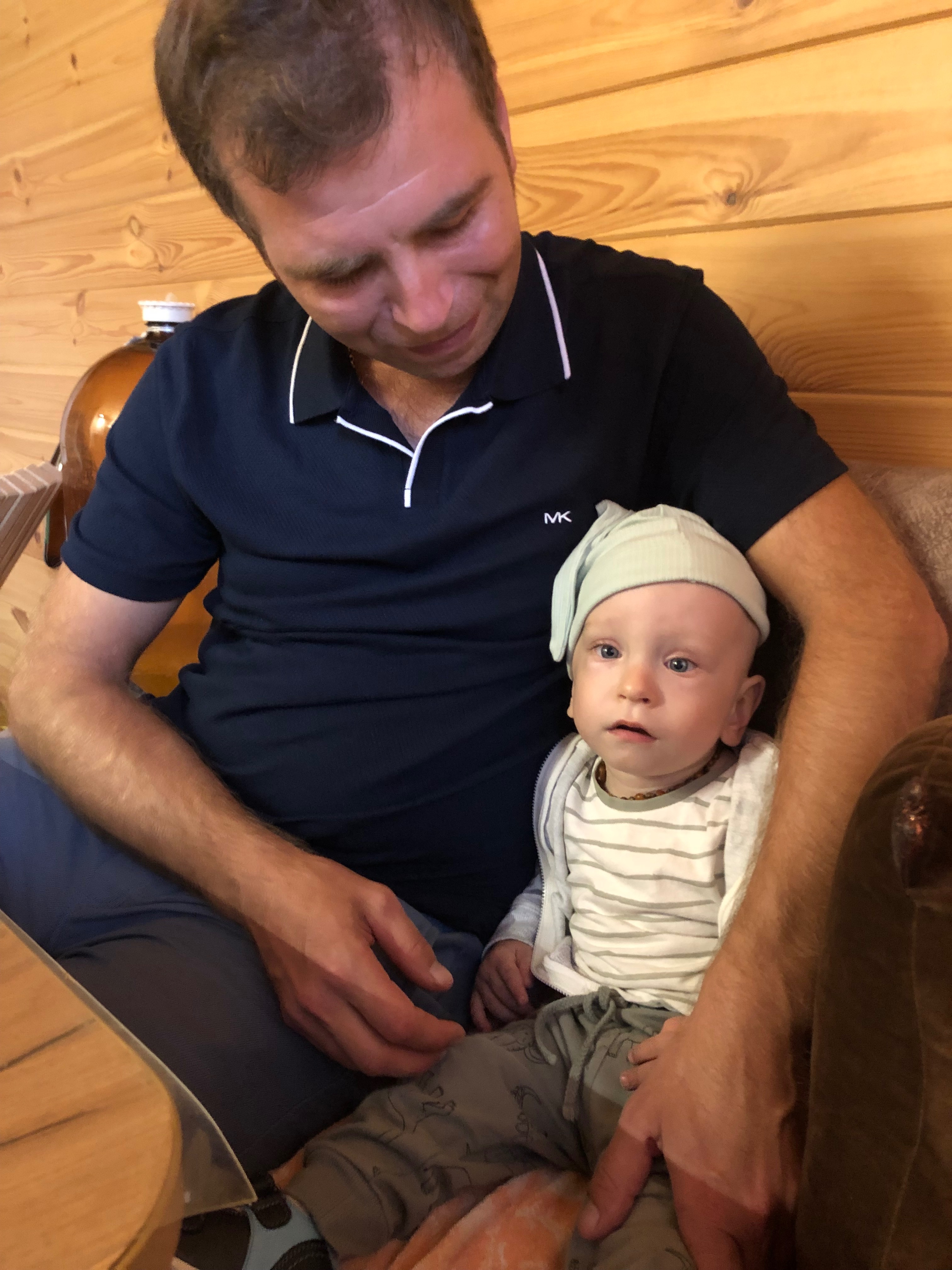
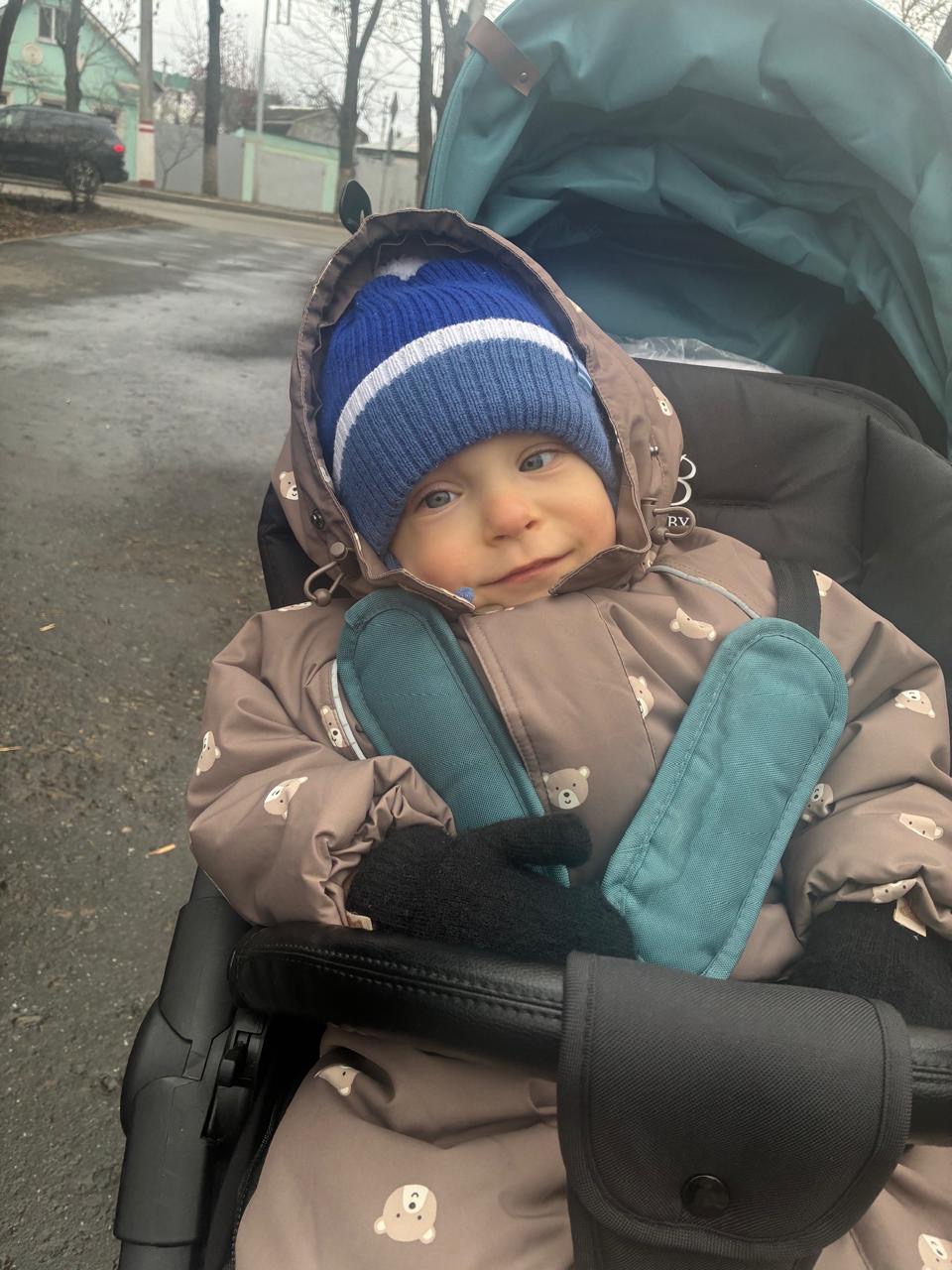
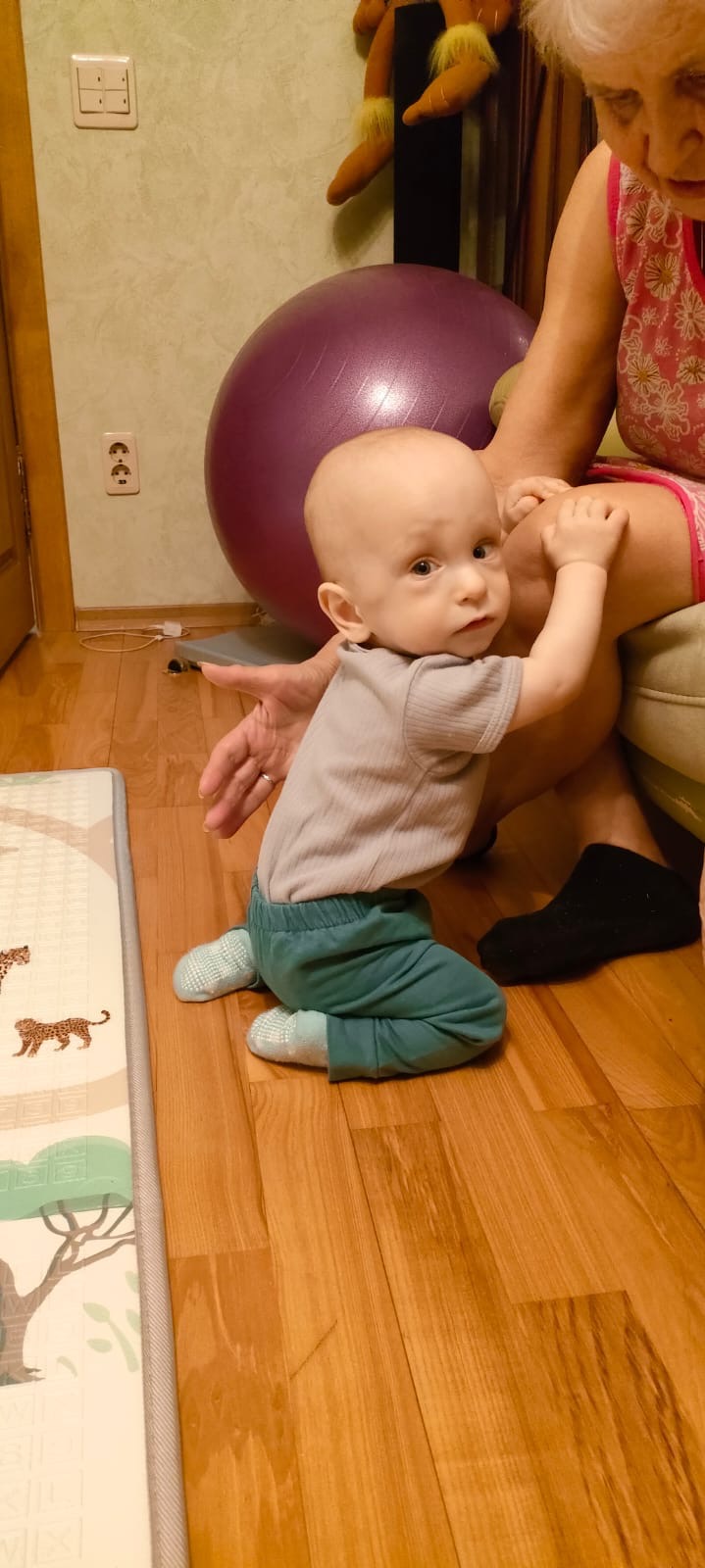
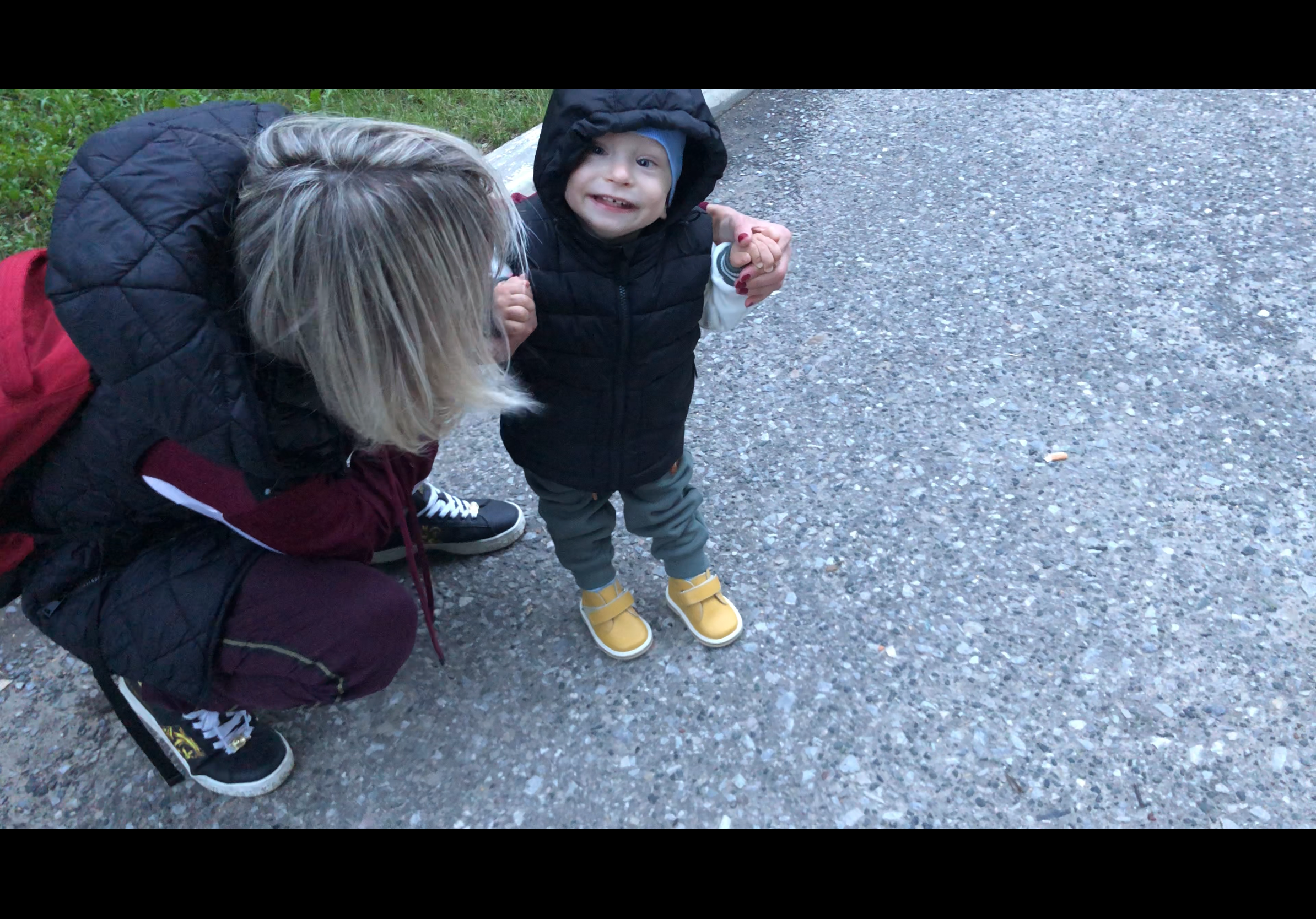
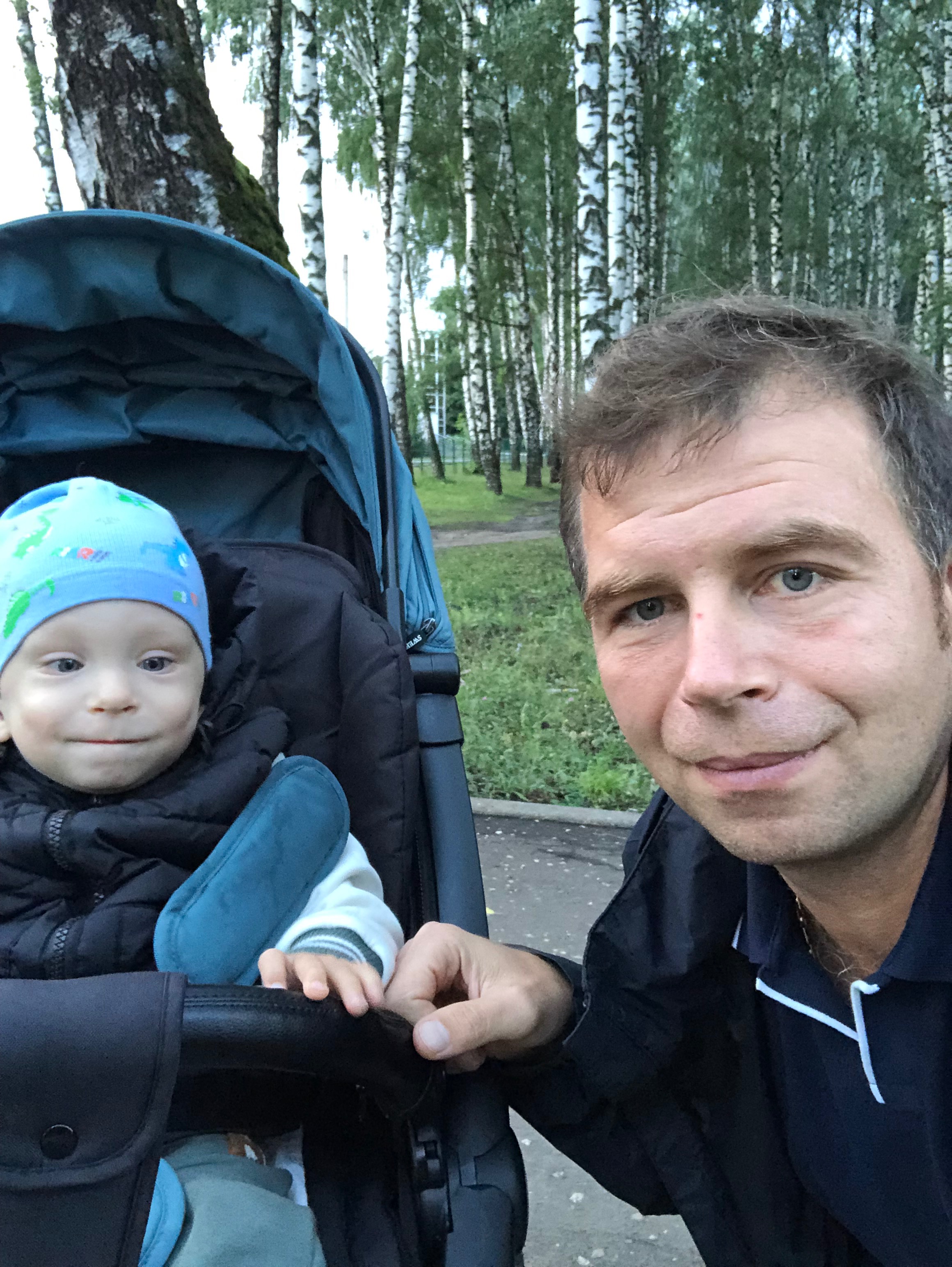
My son Michael is a joyful and determined 2-year-old who was born prematurely at just 27 weeks, on November 20, 2023. From the very beginning, he has faced challenges with infantile cerebral palsy, spastic diplegia, and a delay in psychomotor development. He can’t walk on his own, but when I hold him, he makes those uneven steps on his toes and smiles. Michael wants to walk and you can see how much he enjoys trying. He attempts to stand up, but recently he stopped after he lost his balance and fell. He’s learned that standing and walking can be dangerous. Now, he crawls, and that’s how he interacts with the world. Inside our apartment, he gives people his toys, smiles, and babbles in his own special way. But outside, he’s a passive observer. While other children play at the playground, he watches them, babbles, and stretches his hand toward them, wanting so much to join in.
Michael has been going to physical therapy and swimming since he was five months old, but these have brought only modest improvements. The spasticity prevents him from sitting in a correct posture or even standing upright when holding on to something. Eventually, his limbs will start to deform. The reality is that only a specialized surgery can give him the chance to walk and avoid being confined to a wheelchair. There’s an experimental procedure pioneered by Dr. Roy Nuzzo called SMPL, performed in Springfield, NJ, that can help children like Michael by eliminating spasticity and helping them relearn proper posture and movement. Time is critical—the sooner the surgery is performed, the better the chances before deformities and growth changes set in. We contacted Dr. Nuzzo, and after reviewing Michael’s records, he invited us for the procedure. The cost is not covered by insurance because it is considered experimental. We already spend thousands each month on therapies, medications, and supplements, making it impossible to save for the surgery in time.
We are reaching out to anyone who can help. I never thought in my life that I would be the one asking for help, or that my only child would have cerebral palsy. I have seen those children before, but thought it would never be me—and wondered why, with all the medical innovations, a child still suffers in a wheelchair. Here I am, in a situation I thought could never be mine. But Michael is just as person as anyone else. Yes, he is different, but it is absolutely possible to let him walk normally. He will become a valuable and productive member of our society. I’m sure he will repay his debts one way or another , and we will always thank you for your kindness.
Organizer