- G
- a
This is the story of my nine-year-old Moroccan friend Malak, who has never been able to walk because she was born with a disability. In America, she would have received surgery at birth and learned to walk just like every other child. But she lives in Morocco and this surgery wasn't available to her family. Now, after much searching, we found a well-known Moroccan surgeon who will correct her birth defect and let her walk for the first time, but at a cost of over $4500. This is an impossible amount for Malak's family, but life has put me in her path and I am hoping that with the help of family and friends, we can make this surgery possible. Please donate so that Malak can have the surgery in the next three months and walk for the first time. Read on for more about Malak and her story.
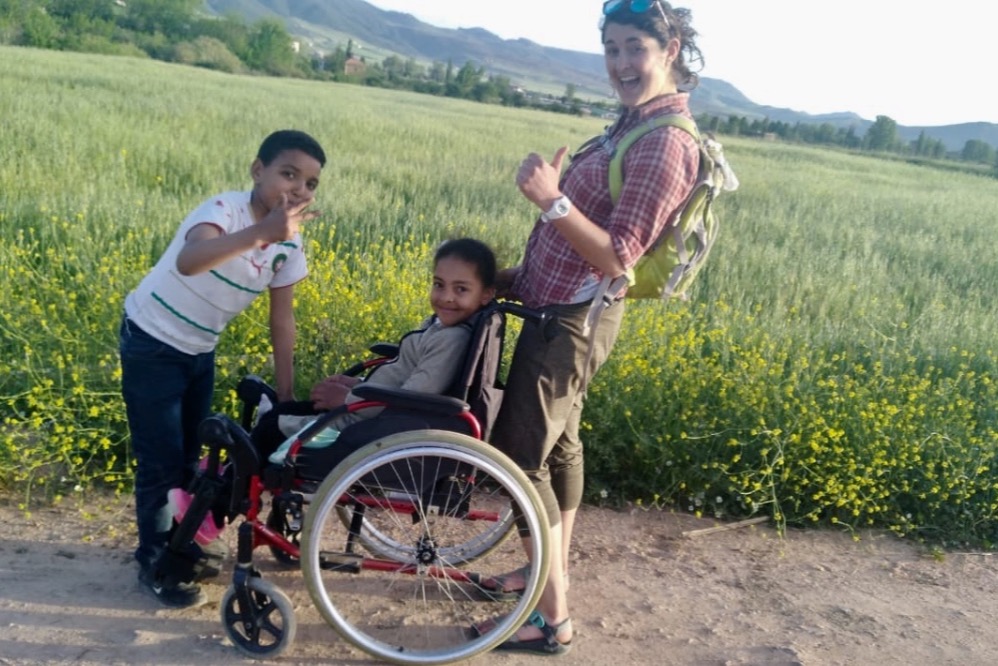
I first met Malak two years ago when I arrived to a small village nestled in the Mid-Atlas Mountains of Morocco, where I was going to live and work. My time here is ending in November. Life here is very basic; most people are farm laborers with very little extra income. People scrape by barely making ends meet for basic needs, trying to support their families. Access to adequate basic health care is very limited, let alone more complicated health needs.
Upon arriving to Morocco, Malak’s family quickly took me in as if I was their own. They fed me, they made me feel accepted, they made me feel at ease, and they were patient when I was still getting the hang of Arabic language skills. Most importantly, they made me feel loved, always telling me their house is my house, their family is my family. Because of their unconditional love they made this village feel like home even though I was thousands of miles away from my family and friends and what was familiar to me. Throughout my time here my relationship with them continues to grow strong and rich.
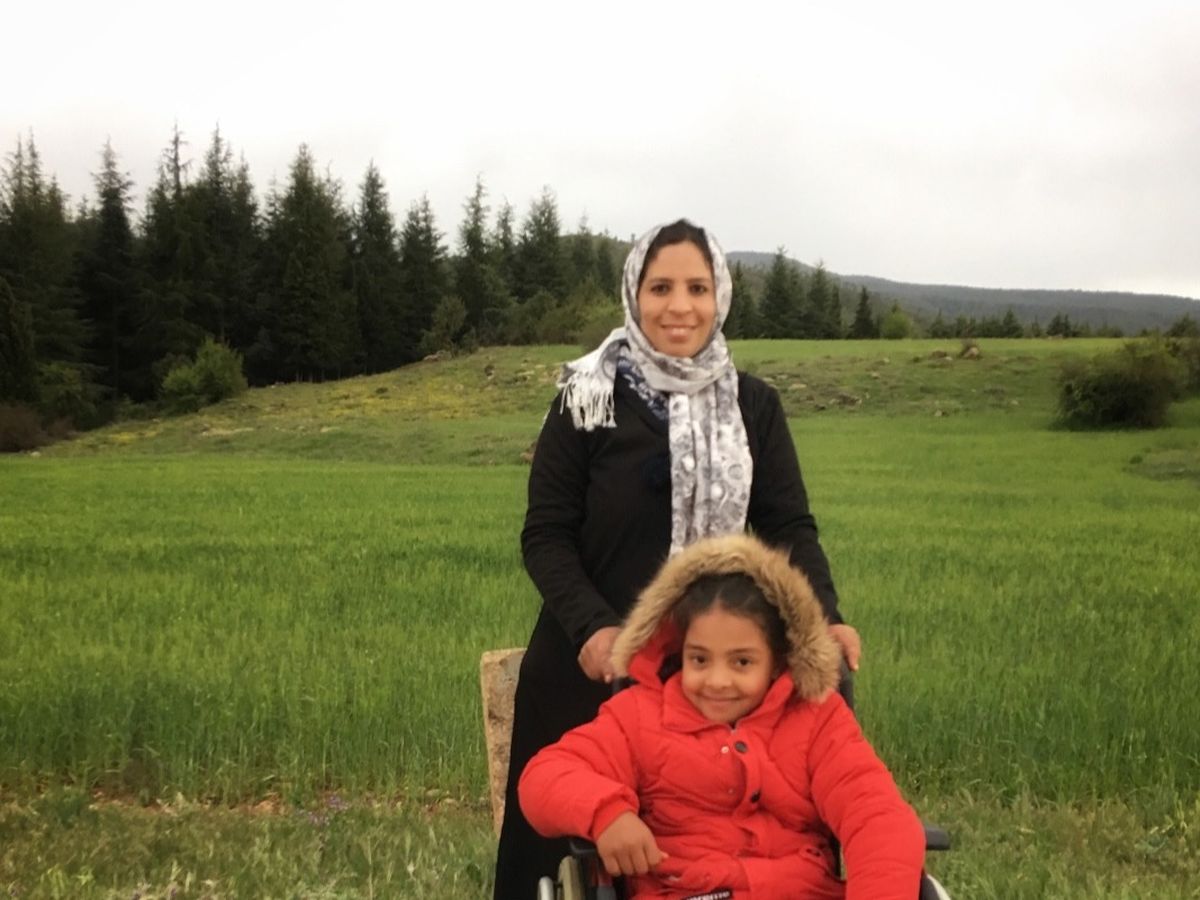
I witnessed in Morocco the everyday struggle that Malak and her family have to go through to help accommodate her. Malak was born with Bilateral Vertical Talus feet. Ever since birth she could not walk on her own. She has to rely on other people to take her around town, to school, up and down flights of stairs, to visit family and friends. Her mother, Fatiha, pushes her around in a wheelchair every day as a means of transportation, which may not seem like a big deal, but since the roads and paths are only partly paved, uneven, rocky, filled with cracks and potholes, and with no wheelchair ramps, this task is very hard work, especially as Malak grows bigger. When winter arrives Fatiha can no longer rely on Malak's wheelchair and has to strap Malak to her back. Malak weighs at least 55 pounds at this point. Due to the years of having to carry and push Malak around our village, Fatiha’s body is really feeling the physical impact too; Fatiha experiences back and shoulder pains more and more from transporting Malak.
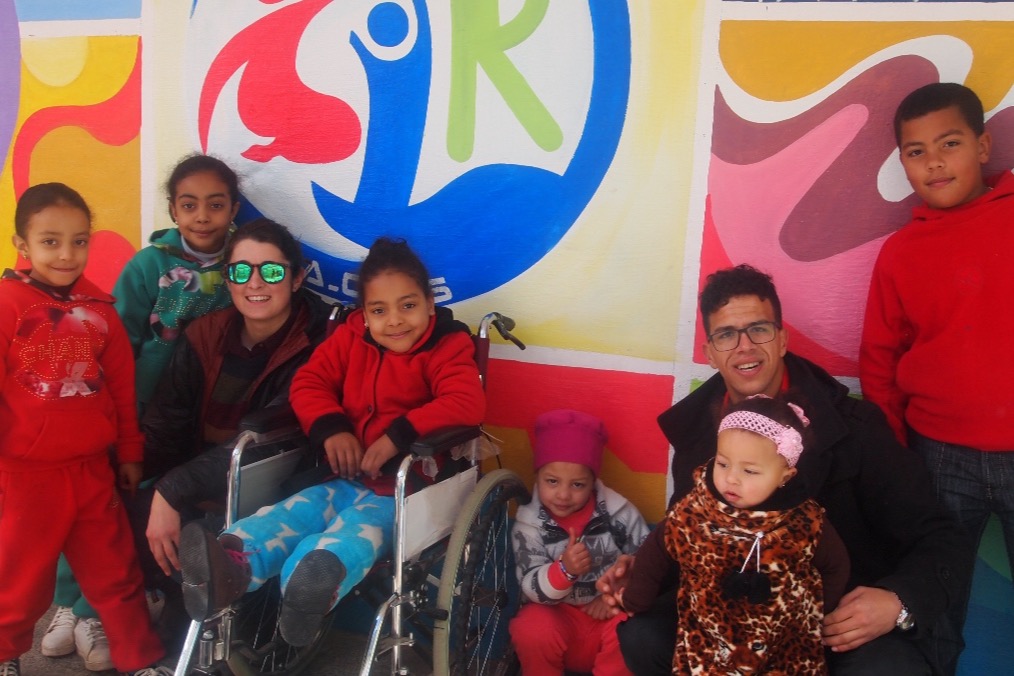
The only way Malak can get around on her own is by crawling on her hands and knees and that leads to cuts and bruises on her knees which causes her much pain. She has tried crutches, but because she can’t stretch out her legs completely it is extremely difficult for her. Malak can only make it a couple of feet before she becomes extremely tired and starts to lose her balance. Even though she can move around a little on her own, it is not a sustainable, healthy way for Malak to get around.
School is the one place where Malak gets to interact with the kids in her village, where she can be emotionally and mentally stimulated. School is the place where Malak gets to feel like all the other kids in her village. Unfortunately, the older that Malak gets and the bigger she becomes, there is coming the point where her mother, Fatiha, will no longer be able to take her to school and other places around the village. The Middle School and High School are much harder for Malak to access. The Middle School is in the village, but it is not wheelchair accessible. It is up a hill and the building consists of two flights of stairs. The High School is in the nearest main town a couple miles away and the only means of transportation is either to walk, or to ride in a small crowded school bus that is also not wheelchair accessible.
Although Malak’s family has been able to get by with her situation so far, the older she gets the harder it will be. They fear that she will no longer be able to go to school and no longer be able to socialize with the local kids. She’ll have to live the rest of her life confined to the house.
Surgery would give Malak and her family the possibility of a much better life. Malak would be able to continue her education and become an independent girl. She will finally have the chance to run around with her friends instead of just watching from the sidelines. The surgery would be giving her mother the ability to start taking care of her own health, no longer having to deal with the physical pains from taking care of Malak. This surgery would give their whole family the life that they deserve, a life full of health and possibilities.
I first met Malak two years ago when I arrived to a small village nestled in the Mid-Atlas Mountains of Morocco, where I was going to live and work. My time here is ending in November. Life here is very basic; most people are farm laborers with very little extra income. People scrape by barely making ends meet for basic needs, trying to support their families. Access to adequate basic health care is very limited, let alone more complicated health needs.
Upon arriving to Morocco, Malak’s family quickly took me in as if I was their own. They fed me, they made me feel accepted, they made me feel at ease, and they were patient when I was still getting the hang of Arabic language skills. Most importantly, they made me feel loved, always telling me their house is my house, their family is my family. Because of their unconditional love they made this village feel like home even though I was thousands of miles away from my family and friends and what was familiar to me. Throughout my time here my relationship with them continues to grow strong and rich.
I witnessed in Morocco the everyday struggle that Malak and her family have to go through to help accommodate her. Malak was born with Bilateral Vertical Talus feet. Ever since birth she could not walk on her own. She has to rely on other people to take her around town, to school, up and down flights of stairs, to visit family and friends. Her mother, Fatiha, pushes her around in a wheelchair every day as a means of transportation, which may not seem like a big deal, but since the roads and paths are only partly paved, uneven, rocky, filled with cracks and potholes, and with no wheelchair ramps, this task is very hard work, especially as Malak grows bigger. When winter arrives Fatiha can no longer rely on Malak's wheelchair and has to strap Malak to her back. Malak weighs at least 55 pounds at this point. Due to the years of having to carry and push Malak around our village, Fatiha’s body is really feeling the physical impact too; Fatiha experiences back and shoulder pains more and more from transporting Malak.
The only way Malak can get around on her own is by crawling on her hands and knees and that leads to cuts and bruises on her knees which causes her much pain. She has tried crutches, but because she can’t stretch out her legs completely it is extremely difficult for her. Malak can only make it a couple of feet before she becomes extremely tired and starts to lose her balance. Even though she can move around a little on her own, it is not a sustainable, healthy way for Malak to get around.
School is the one place where Malak gets to interact with the kids in her village, where she can be emotionally and mentally stimulated. School is the place where Malak gets to feel like all the other kids in her village. Unfortunately, the older that Malak gets and the bigger she becomes, there is coming the point where her mother, Fatiha, will no longer be able to take her to school and other places around the village. The Middle School and High School are much harder for Malak to access. The Middle School is in the village, but it is not wheelchair accessible. It is up a hill and the building consists of two flights of stairs. The High School is in the nearest main town a couple miles away and the only means of transportation is either to walk, or to ride in a small crowded school bus that is also not wheelchair accessible.
Although Malak’s family has been able to get by with her situation so far, the older she gets the harder it will be. They fear that she will no longer be able to go to school and no longer be able to socialize with the local kids. She’ll have to live the rest of her life confined to the house.
Surgery would give Malak and her family the possibility of a much better life. Malak would be able to continue her education and become an independent girl. She will finally have the chance to run around with her friends instead of just watching from the sidelines. The surgery would be giving her mother the ability to start taking care of her own health, no longer having to deal with the physical pains from taking care of Malak. This surgery would give their whole family the life that they deserve, a life full of health and possibilities.