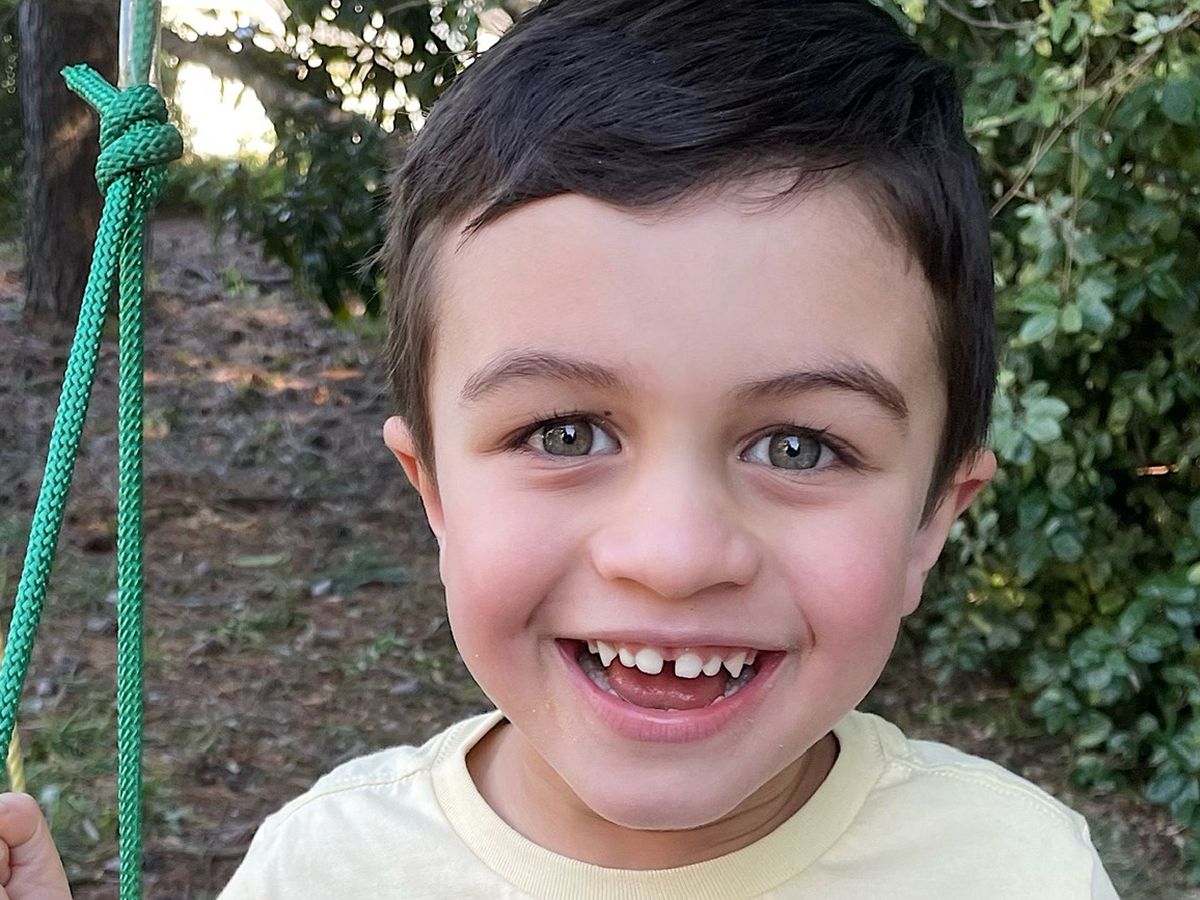

Hi, my name is Sarah. I am currently raising money for my son, Liam, who is 5 and autistic. Liam struggles mostly with communication and safety issues. He does not recognize danger and will run away (also known as elopement) This poses a greater issue combined with his lack of communication- if he elopes he does not have the tools to tell someone he is lost and needs help. Liam also struggles with transitions and in public situations and has sensory difficulties.
We are currently going through the process of getting Liam an autism assistance dog. This process is very lengthy and very expensive ($20,000+), but it has been recommended by his doctors and therapists as something that will help him immensely as he continues to navigate challenges in his future. The process has to be vetted by a doctor and cleared for medical necessity, and Liam has already been cleared for the health screening. Now we are in fundraising mode!
The autism assistance dogs are trained extensively. They are trained to track their owner. Children with autism may display wandering or impulsive behavior which results in them becoming lost. When time is of the essence, having a service dog trained to recognize the child’s scent and lead a parent to the missing child is critical. A service dog can be trained to provide tethering in which the dog wears a harness and a second leash from the harness can be attached to a belt or backpack the child is wearing. The connection creates a physical boundary that allows the child to walk but prevents the child from leaving due to service dog providing an anchor. Meltdowns and sensory needs are common challenges for children with autism. An Autism Assistance Dog can be trained to provide task trained assistance with calming, comforting and redirecting commands. Commands include redirection such as the dog placing their paw on the child’s leg, sensory input from deep pressure or kisses, calming comfort by the service dog snuggling or laying their head in the child’s lap. These skills are task trained and meet the definition of a service dog which allows public access. This differs from an Emotional Support Animal whose simple presence provides comfort and does not have general public access. Many parents report that their child sleeps better at night because the service dog is sleeping with them and providing that constant comfort. Parents may also choose to use some of the service dog’s task trained skills to provide comfort to help the child to fall asleep. If the child wakes up at night, they are able to snuggle with their best friend and buddy and fall back asleep. Other children may not understand or know how to relate to a child who is displaying meltdowns and repetitive behaviors. When the child with autism has a service dog, suddenly they are the most popular person on the playground or in public and everyone wants to interact with them. For children who struggle with verbal skills, asking the dog to perform a trick or other command can be an incentive to communicate. In public, the child has the opportunity to talk about their service dog with other people. The Autism Assistance dog has the public access rights to provide a source of comfort and consistency when environments change and anxiety might be high. Many families are able to go more places because they have the service dog. The dog is not only able to provide the task trained skills in public, but also their presence helps to deescalate a situation.
Any help towards Liam’s goal is appreciated- the money goes straight into his fee and if his goal is not met, the money is non refundable and is reallocated to another fundraising child. We are hoping in the next few months we can get Liam there! Thanks everyone!
Organizer and beneficiary
Sarah King
Beneficiary