

Help Kate Beat Lyme
0% complete
$29,386 raised of $120K
95 donations

Hello! I’m Kate Violette and I’m asking for community help in finishing beating an illness that took me well over a decade to receive an accurate diagnosis for.
The good news is, I’m finally on my way to getting well. But the bad news is that surviving the past five and a half years of severe illness consumed my entire nest egg. While I’ve made early gains in recovery, I am not yet able to work full-time, and it will likely be about a year before I can work enough again to meet my ongoing out-of-pocket medical costs.
I’m looking for funding to support me through this “last mile” of severe illness recovery, to the point where—although I won’t be fully recovered just yet—I’ll be able to work enough again to financially sustain the remainder of my recovery on my own.
For those who haven’t heard much about my illness since its earlier days in 2021, you may be surprised to hear this punchline: turns out the root problem of my overall illness picture was Lyme this whole time. (Even my weird spine stuff.) I’m about one year into Lyme treatment, and my first year of treatment has only further confirmed this diagnosis. For example, my MCAS — likely caused by my Lyme infections to begin with — has been slowly improving this past year.
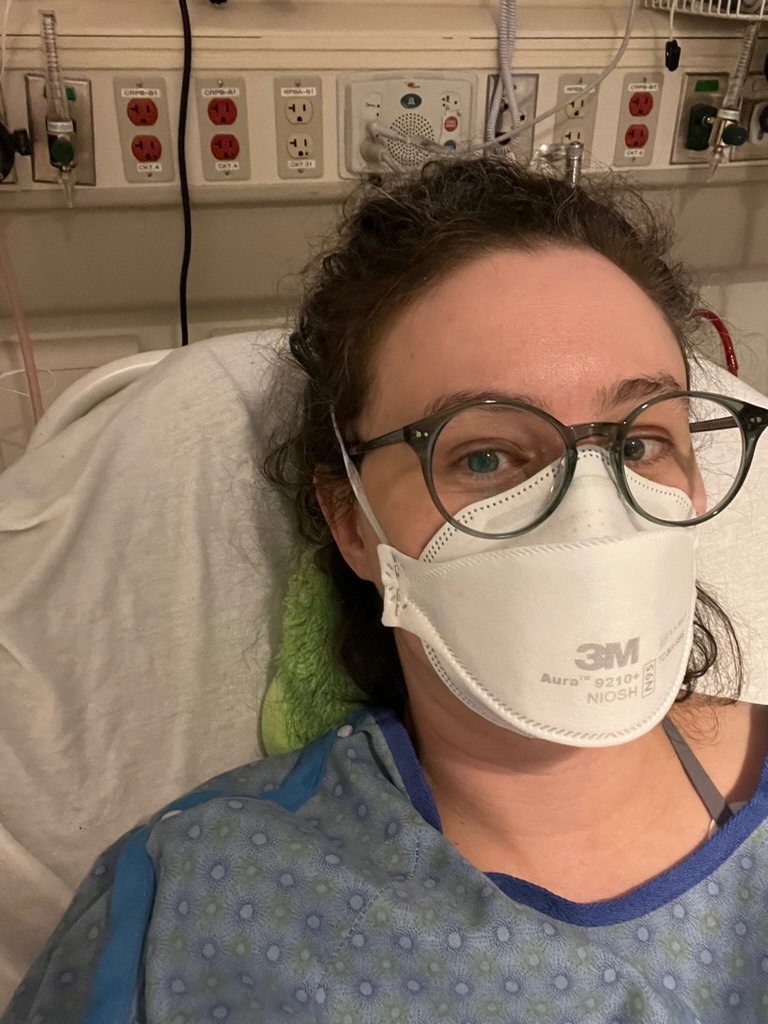
My illness has been severely energy-limiting, and at its worst points I have been unable to speak or to turn myself over in bed. Even when not quite that bad, I still spent most hours of most days lying down in bed, unable to independently fully care for myself, and very limited in what I could do to pass the time. I went almost an entire year without even being able to listen to music—it would have taken too much energy to do so and would have landed me in a metabolic crash. My illness has also landed me in the ER multiple times per year with anaphylactoid crises, thanks to an autoimmune condition (mast cell activation syndrome, or MCAS for short) that I developed while my Lyme went undiagnosed.
I began treatment for my Lyme infections in June 2025, and in the past year I’ve made some significant gains. If you’d like to know more about that, I’ve put more details in the FAQs! However, even though my energy baseline has been improving as we treat Lyme, I’ve still only got a couple to a few hours of cognitive work in me per day. I do a very small amount of consulting and coaching; I’m not able to work anywhere near full-time yet. Also, I’m sometimes knocked down pretty hard for a few days or a couple weeks when I start new treatments or increase doses. But given my current rate of improvement, I’m hoping that by this time next year, or thereabouts, I’ll be able to work enough again to fully support my continued recovery. It’s the gap between now and then that I’m hoping to find help for covering financially.
Your donation helps me maintain and afford my treatment regimen, including regular visits with my core care team, none of which is covered by insurance: a Lyme-literate doctor, neurological physical therapy, and essential chiropractic care for my spine which has developed hypermobility issues due to Lyme. I also take prescription medications, herbal antimicrobials, and a range of critical supplements that are targeted to specific nutritional needs, immune system regulation, and energy production support. And until I’m able to work full-time, your money helps ensure I can afford food, rent, and transportation to necessary appointments. Continuous care is vital at this stage in my recovery: If I pause any of these treatments or supplements even briefly, my condition can collapse quickly into dangerous crashes that take weeks of hard-to-arrange, round-the-clock care to recover from, as I've learned through painful experience. My treatment costs have increased in recent months as my marketplace insurance plan covers less and less, and providers continue to charge more and more. On the other hand, my treatment costs should hopefully begin to decrease at some point in my recovery as I’m able to remove various nutritional and anti-inflammatory supports, as we progressively clear infections. I detail my current monthly burn rate in the FAQs section.
I’d like to end by sharing what my illness has cost me so far, since I know what I’m asking for is a lot of money. I come from modest means but was fortunate enough to earn a sizable nest egg from equity events from previous employers shortly after becoming too sick to work. It was a life-changing amount of money that I had hoped to use to buy a house and/or to start my own company. That money instead carried me through my illness, but it is now entirely gone. I don’t have any given family that I could ask for support, whether financial or assistance at home. Paying for homecare help over the past few years has in particular been very expensive. In total, since becoming too ill to work in early 2021, I have had to spend around $665,000 on medical costs and home care. (That’s not including what I’ve had to pay for my own housing, usual bills, etc while being too ill to work.) For those curious and perhaps understandably aghast at this figure, I break it down in detail in the FAQs section.
I realize there are many people in need and many worthy GoFundMes out there that you might contribute to. I appreciate you taking the time to read and consider my ask for help. There were points in my illness, before I had an accurate diagnosis, where I wondered if the ethically sound thing to do would be to seek medical assistance in dying, and leave behind what was left of my nest egg to people who had a more straightforward shot at life. Now that it seems I have my own medically realistic shot at life after all, I want nothing more than to 1. take advantage of that shot and 2. dedicate the rest of my life to dismantling the institutions that harm, deride, and discard people who happen to fall through the cracks of our society. I am filled with anger that I have been too physically weak to process for years, and I would appreciate any help in getting me to a place where I can transmute that energy into fighting for a world where no one has to lose everything simply because they were sick and the medical system failed them. I didn’t even have to get as sick as I ended up getting, had I received an accurate diagnosis and appropriate treatment sooner.
Whether you've helped me in the past or are considering chipping in now, thank you so much for your time and solidarity. And please—listen to and care for your body. It’s the only one you’ve got, and you know it better than anyone else.
——————————
FAQs:
——————————
Q1: What exactly is Lyme disease?
A: Lyme disease is a complex, multi-system illness caused by infection with borrelia species bacteria and often various “co-infections”, meaning other pathogens frequently transmitted in the same bite from a tick or other insect. It’s named after the town in Connecticut where a cluster of such illness was noted in 1975. This is when awareness of the illness began to increase, but borrelia has in fact been with us for a long time: the oldest documented case is in a 5,300 year old ice mummy [link] and we even have 15 million year old fossilized ticks confirmed as borrelia carriers [link]. It’s been hypothesized that borrelia could have even infected the dinosaurs. (Sometimes when I get discouraged about my illness, I think about how truly metal it is that I possibly share an illness with the freakin dinosaurs.) As my mast cell specialist likes to say, “There are (almost) no new illnesses, just newly identified ones.”
An estimated 476,000 Americans contract a borrelia infection each year. (That’s a CDC estimate, so, likely an undercount. You may see the outdated 300,000 Americans per year figure around the internet, but this was updated in 2021 to the current number.) Many of those infections will unfortunately go undiagnosed and therefore be allowed to spread in the body, often for many years, leading to what we know as Lyme disease. A very small number of these newly infected people will receive a timely diagnosis and treatment.
The symptom profile of Lyme disease differs from person to person, and also depends on what co-infections may be involved, but there are commonalities among the patient population. Debilitating fatigue (actual mitochondrial dysfunction) and heavy muscle “resistance”, which have been a couple of my worst symptoms throughout my illness, as well as significant cardiovascular and neurological impacts, are not uncommon. And the longer the infections go undiagnosed before treatment finally begins, the worse the illness can get. If you’d like to learn more, here are some resources from reputable organizations:
And if you’re interested in really nerding out, I highly recommend all three books on Lyme and co-infections by Stephen Buhner, an expert herbalist and voracious reader of peer-reviewed medical literature. They were written around 2013-2015 but the science in the books has held up very well. (Note, if you buy via my Bookshop.org affiliate page [link], I receive 10% of the purchase price. I’ll be continuing to build out my affiliate page for book nerds who’d like to support me that way in the future!)
Q2: Why did it take so long to get a proper diagnosis and treatment?
A: Much like Long COVID, ME/CFS, and similar multi-system illnesses, Lyme disease is highly and needlessly politicized, resulting in a medical system that is not just dismissive but often actively hostile to patients like me. Many doctors are deeply misinformed about the illness. It took a long time to get an accurate diagnosis in the first place, then to find a Lyme specialist I trusted to treat me, and then another year or so to help my severely weakened body prepare to even begin Lyme treatment.
The motivation behind Lyme being politicized is because if we had to actually confront the illness burden it creates, it would cost a lot of money: it would cost insurers a lot to cover proper treatment, and it would cost our government a lot to fund a level of research commensurate to the actual population-wide illness burden. Much cheaper, therefore, to just paint patients as “crazy”. The opportunity that allows Lyme to be politicized is that accurate testing is difficult, for very real technological reasons. Diagnosis must be made clinically, so without good education of clinicians, diagnoses will necessarily be missed.
Also, even once you find doctors skilled in diagnosing and treating complex illnesses, figuring out which of the possible illness factors is the root cause is a really tricky puzzle! There have been two or three notable times in my illness where my doctors and I were focused on treating a different possible angle but also treating my Lyme infections without realizing it, leading to improvements that quickly regressed as soon as the particular treatment was stopped. Those backslides were pretty frightening and didn’t make sense according to the hypotheses we were working with at the time. But now with the understanding that the root of my illness is and has been Lyme and co-infections, all of the prior ups and downs make sense. Had we known what was going on and continued those helpful treatments for much longer periods of time, I could have made more progress on my Lyme infections sooner. Treatment to clear long-term Lyme infections can be quite long, and ranges from a few months for babesia (a common co-infection) to 2 years (or more) for borrelia itself. Typical recovery timelines are discussed in a short video here [link], by widely-respected Lyme-literate MD Dr. Marty Ross.
Q3: Why does your medical care cost so much?
A: For reasons detailed in the prior answer, health insurance covers almost *nothing* when it comes to Lyme treatment medications. None of the knowledgeable Lyme doctors take insurance for appointments because the complex nature of the illness means doctors need to be free to meet with their patients for more than 15-20 minutes, and insurance won’t reimburse them for longer visits. The CDC refuses to acknowledge that a two-week course of doxycycline is insufficient treatment for a vast majority of Lyme cases, which provides an excuse for insurance companies to decline coverage for anything else. And as discussed in the previous answer, Lyme treatment timelines can be rather long; insurance companies will do anything to wiggle out from having to cover such long treatment periods.
Additionally, I developed various issues secondary to Lyme in the many years it went undiagnosed, and those secondary issues will continue to require maintenance treatment until the underlying Lyme is resolved. My MCAS (mast cell activation syndrome, a severe allergic condition) is likely due to my Lyme—or more specifically, to my bartonella co-infection—and I will continue to need to take a variety of stabilizing medications for that. My upper cervical spine hypermobility is also likely due to Lyme (borrellia eats your body’s collagen), and I will continue to need specialized chiropractic care until I’ve not only cleared my infections but also supported my body’s rebuilding of collagen structures. I could go on; there are a lot of downstream problems that undiagnosed Lyme caused in my body. And a lot of the treatments for these downstream problems also aren’t covered by insurance either.
Q4: How are you doing right now?
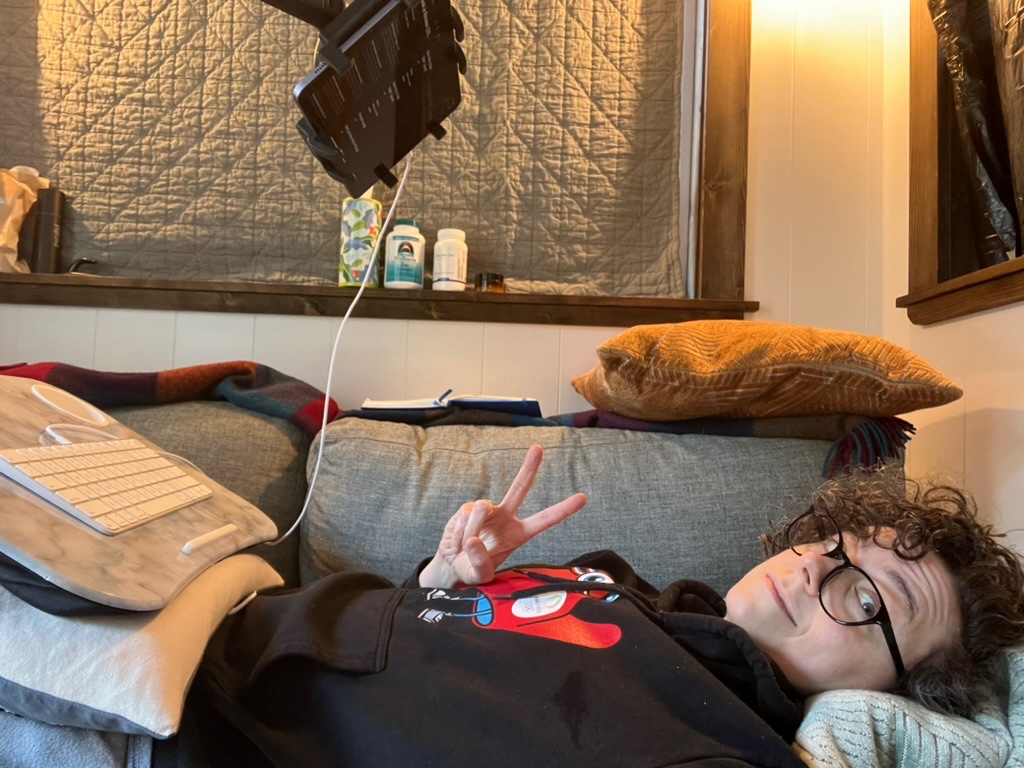
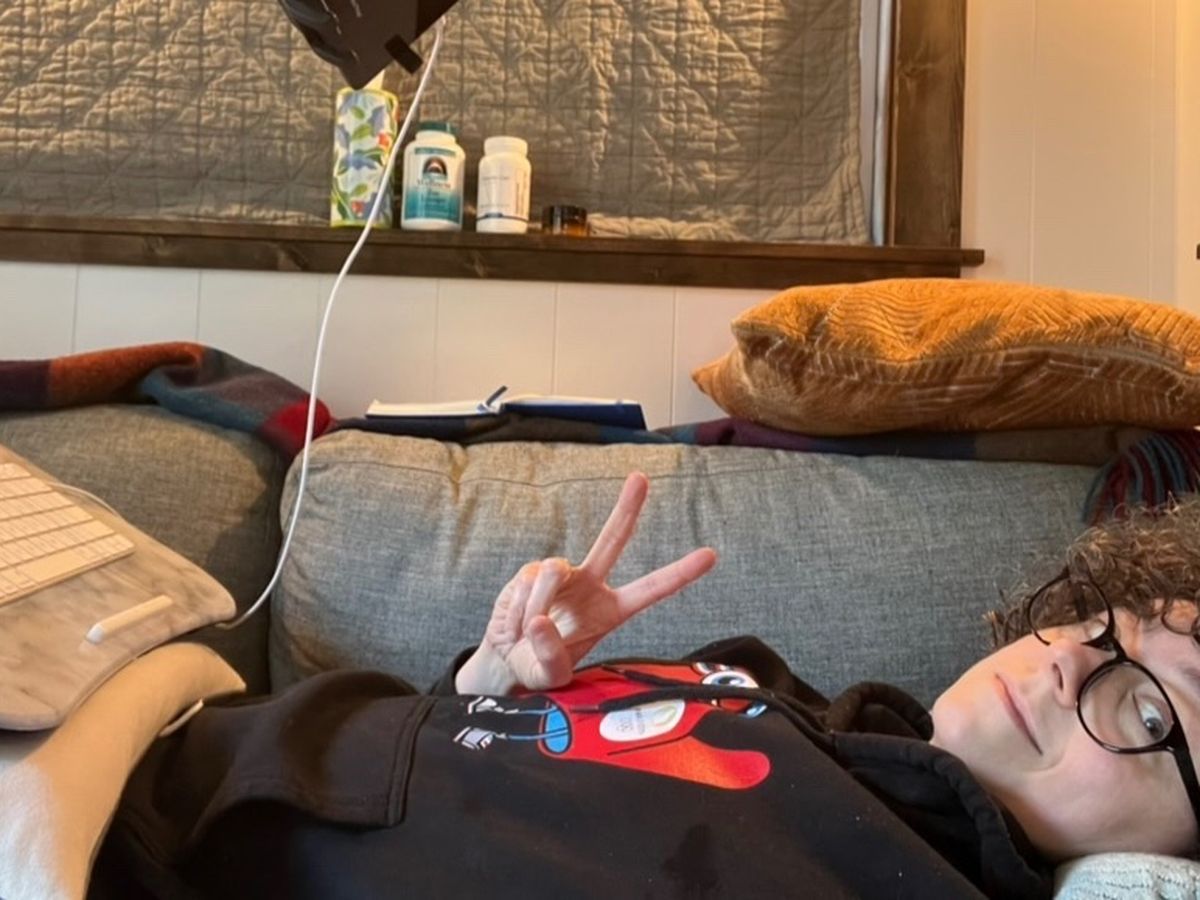
A: I now drive myself to most of my appointments, whereas for the prior two years I was unable to do so _at all_. I’ve gotten closer to being able to care for myself around the house, though I still need help from friends sometimes in keeping up with dishes and laundry. My MCAS (which will likely improve as my Lyme is treated) hasn’t landed me in the ER yet this calendar year!—typically I would’ve already had a couple serious ER visits by this point in the year. And I’ve started to be able to go on short walks (< 1 mi) once a week on average, sometimes twice. That’s huge. I haven’t been able to regularly go on even short walks since 2021! Still, even though I’ve made progress, I’m still spending a lot of my days lying down on a couch and minimizing physical movement. My life is still very much far from normal, and I can only reliably work a few hours per week, but on my best days I’m getting to briefly enjoy activities I haven’t gotten to enjoy doing at all in several years.
Q5: Where does the money go in your current monthly burn rate?
A: A few months ago, I calculated in detail what my exact monthly medical costs are. I pulled current pricing for everything I take. (In a couple surprise instances, I was able to switch brands to something cheaper but still effective; I also signed up for a lot of “auto-ship & save!” deals to cut my costs even further. I didn’t save a ton, but I at least saved a little!) This was many hours of work and culminated in a giant spreadsheet I shared with a couple friends, who could vet in detail what I hoped to ask for in the GoFundMe. My overall current monthly costs are as follows:
- Medications & medically-necessary supplements; insurance used to cover more of this, but my marketplace plan is determined to fleece me: $2,944
- Meals; I cannot stand long enough to make my own meals and I have a heavily restricted diet which means there are zero convenience meals I can buy from the grocery store, I must therefore rely on a local custom meals service: $2,167
- Appointments (doctor visits, neuro physical therapy, atlas orthogonal chiropractic, and talk therapy - some of which used to be covered by insurance, and now _none_ of which are covered by insurance): $1,857
- Rent for my apartment plus utilities: $1,780
- Rent for my tiny home parking space plus utilities (I will be selling the tiny home; no buyer yet): $960
- Tests/bloodwork; estimated, my insurance regularly screws me over even on basic bloodwork so it’s always a crapshoot: $152
- Medical insurance premium: $542
- Other fixed bills (internet, cell phone, car insurance, renter’s insurance, tiny home insurance, gas for car, etc): $427
- Monthly housekeeping: $233
This totals $11,602 per month. I hoped to ask for one year of expenses at my current burn rate, but couldn’t really bring myself to ask for more than $120k total. Hopefully my tiny home will sell soon and I won’t be paying that parking spot rent for much longer!
Q6: How the hell does someone spend $665,000 on being severely ill for 5.5 years?
A: The following are my actual out-of-pocket costs, after any insurance coverage. I started itemizing my medical costs for tax purposes in 2023, so I’ll share before and after that separately since the later years have more detail in my personal bookkeeping notes.
--> Total during 2021-2022:
I first became severely ill in Dec 2020; I was dealing with severe acute episodes that would land me in the ER, and my POTS was so bad I was effectively a daily fall risk. I needed a lot of household help and supervision. 2022 was better in terms of being able to care for myself—we were unwittingly treating my Lyme for a few months. I worsened again abruptly later that year due to what turned out to be a mold issue in the townhouse I was renting. I lost a lot of belongings and had to pay to replace them; those costs aren’t included here but were significant.
- $113,975 - Medical care at large
- $50,700 - Home care
- $23,598 - Trip to NY to see a mast cell specialist, as directed by my main doctor. This was a three week trip due to multiple appointments, lab work, and need to rest. The test results from this visit provided the data to later correctly diagnose me with Lyme disease.
- $16,746 - Meal service; their invoices combine food and labor costs, so this is an estimate of what I was paying for the labor, meaning above and beyond what I would have been paying for food if I weren’t too ill to cook for myself.
--> Total during 2023-2025:
While 2023 was a sicker year again due to the 2022 mold exposure, I experienced a bit of improvement in Oct/Nov—again because we were unwittingly treating Lyme—then I suddenly tanked again once I was pulled off the unknown-to-us Lyme treatment. 2024 was a pretty sick year that I spent largely bed/couch-bound and requiring rides to any appointments. I experienced a severe worsening in Sept 2024 that I did not fully recover from until early autumn 2025, a few months after starting Lyme treatment.
- $140,533 - Home care; this is mostly assistance with light chores and often bringing meals bedside when I was bedbound; a little of this includes rides to appointments within more general home care visits, and some includes patient advocates I paid to help fight my insurance company for me; also Task Rabbits for picking up prescriptions
- $93,042 - Medications and medically-necessary supplements
- $54,373 - Treatments (neuro PT, atlas orthogonal chiropractic, lots of electrolyte drink, and a bit of talk therapy)
- $26,598 - Meal service (labor costs, not including estimated food costs)
- $36,681 - Health insurance premiums (COBRA)
- $34,358 - Doctor appointments
- $16,213 - Tests (diagnostic tests and mobile phlebotomy fees)
- $6,700 - Transportation to appointments
- $6,391 - Hospitals, ER visits, ambulance rides
- $6,054 - Devices & Misc other expenses (compression socks, PT tools, continuous glucose monitors, pill cutters, etc).
--> The total cost of my illness from 2021 through 2025 is around $625,962. Those years were more expensive than my current burn rate for several reasons:
- I didn’t yet have a diagnosis, so we were running lots of tests and sending me to lots of specialists.
- My illness was severe, and worsening, and initially there was a sense we might be racing a clock.
- I had borderline severe ME/CFS for large chunks of time and required an immense amount of home care. (I received even more care than is represented here, in the form of friends lending their time for free to care for me when they could.)
But I now have a diagnosis, fewer doctors to see, and fewer tests to run. I just need to keep up with my current treatment directions, rest as much as I can, rotate treatments when it seems like we’ve gotten as much progress as we can out of a particular antimicrobial regimen, and be patient.
--> In 2026, my medical costs so far are pretty closely represented by my monthly burn rate. Adding up medical costs, meal service labor costs, plus housekeeping, that’s around $39,462 that my illness has required so far this year. My home care costs are quite a bit lower this year, not only because my need for such help has decreased quite a bit, but also because for the moment I have enough friend support to largely meet my home care needs. Any funds raised in excess of my goal may be put towards hiring a little bit of paid home care help again, to give my main caregiver friend a well-earned break.
All together that totals around $665,000 my illness has cost me in medical and home care costs since I became seriously ill in December 2020.
Some people might read this figure and think “was all of that medical spending really necessary?” I say this with the confidence of someone who has now done at least a few thousand hours of medical field reading: while I could have perhaps saved a single-digit percent here or there, had I not had this money with which to hire care and to explore different options for medical treatment until I found the correct one, I would otherwise be dead. That’s not me being dramatic, that’s a patient expert telling you a fact. And ultimately, I was the one who pushed for prioritizing Lyme treatment—I was the one who saved my own skin. What actually would have saved me money would have been doctors correctly diagnosing me all the way back in 2018!, when I first began trying to get medical help for what, to me, was already clearly some sort of physical illness. Instead I endured two years of doctors telling me it was all in my head, before starting to find doctors who’d take me seriously at all. And even then, simply being taken seriously wasn’t yet enough.
A very real and difficult truth is that had I ignored the advice of my main doctor in 2021, I could have saved years and hundreds of thousands of dollars. That doctor (the same one who put me on an ill-advised treatment in December 2020 and caused me to go from medium sick to severely sick in the first place) somewhat tested me for Lyme and co-infections, saw results that were “equivocal” for borrelia, and told me: “You probably don’t have Lyme disease. But if you treat other things for say 3 years and are still sick, I would suggest treating for Lyme anyway and seeing what happens.” When I did start getting opinions from actual Lyme expert doctors–three of them! to be extra sure!--they looked more closely at my results and told me that what my prior doctor had interpreted as “equivocal” was really more of a clear positive to anyone who knows what they’re looking for in diagnosing Lyme. Please learn from my experience: if you have reason to suspect Lyme for yourself, the only doctors that will give you an accurate diagnosis are the doctors who are experts in Lyme, treating nothing but Lyme patients day in and day out. Generalists will always, always, downplay the possibility of Lyme.
Lastly, I hope seeing how much home care costs (for me home care costs alone were nearly $200k!) puts into perspective how ludicrous it is that we expect infinite free labor from family members when one person has a serious medical condition requiring a lot of daily support. It isn’t fair to the family members working for free; it isn’t fair to those of us without family who must find a way to fully fund our own home care or perish. We need an actual social safety net for this–all of us, whether currently ill or lucky enough to be healthy for now, need this safety net.
Q7: Is there really nothing else you can do to generate more money on your own?
A: I’ve done everything possible to avoid having to ask for help. I’ve entirely drained my retirement accounts. I’ve sold my beloved Yamaha piano. (I’ve been playing piano since I was 7; a beloved piano isn’t just a piano, it’s a friend.) I had really hoped to avoid having to sell my beautiful and perfect tiny home, but nonetheless I have been working on selling it anyway. However: 1, it is not yet sold and I don’t know when I will find a buyer—people seem twitchy about spending money in this economy (can’t say I blame them) and 2, I will be getting _much_ less money for it than I expected (about 1/3 less), and much less than it is worth. Also, I will likely have more unexpected medical costs beyond the base monthly burn rate I’ve detailed here, such as later reparative spinal surgery that insurance almost certainly won’t cover. I’m hoping to reserve the tiny home sale proceeds for these unexpected lump costs.
Lastly, as stated elsewhere, I’m very slowly growing my management coaching/consulting business as my recovery allows. If you’d like to work with me as I open availability for more clients, you can find me at thewordsmithery.co [link] and get on my waitlist! It would be lovely to see some familiar faces from my professional past as I piece my career back together.
Q8: Haven’t you asked for assistance before?
A: There are two times I’ve asked for community assistance thus far:
- An informal fundraiser in 2021 that raised about $17,000. (I think I still owe a couple of folks tarot readings!, I plan to track those down in my email archives soon.) This money was key in securing home care help at the time since it was before either of my equity events happened.
- A small invitation of support in my weekly (ish) personal newsletter, for my 40th birthday in 2024. I didn’t really signal boost this very much outside of that readership; I received about $1,100.
In addition to those two times I’ve asked publicly for help, in total since 2021 I’ve received $15,000 privately from friends to help defray the cost of home care.
Q9: What’s the deal with “Post-Treatment Lyme Disease”?
A: The term “Post-Treatment Lyme Disease” is used by the CDC and others to unscientifically push the claim that if a patient does not fully recover from Lyme disease with the CDC-recommended two weeks of doxycycline (or similar), then borrelia (and other related pathogens) can no longer be the culprit. This is simply false, and anyone who knows the first thing about Lyme and co-infections should be suspicious of the claims that an antibiotic with poor intracellular activity [link] could somehow cure a Lyme infection, in two weeks no less! Two weeks of doxycycline is not “treatment”. The “treatment” in “Post-Treatment Lyme Disease” is not actually treatment! If you’d like to read more about this, here are a couple places to start:
But mostly, I once again highly recommend the Buhner books [link] mentioned previously in these FAQs.
Sometimes, people have some permanent physical damage after fully treating their infections, _but that’s the exception and not the rule_. (I’ve heard some truly wild anecdotal recovery stories in the patient spaces I’m in.) If you ask doctors who actually treat Lyme patients, they’ll tell you that most people are able to get quite a lot better most of the time—the catch is simply that treatment just takes a long time (sometimes even several years), and often patients need to cycle among various different treatments for best results.