- S
- J
- J
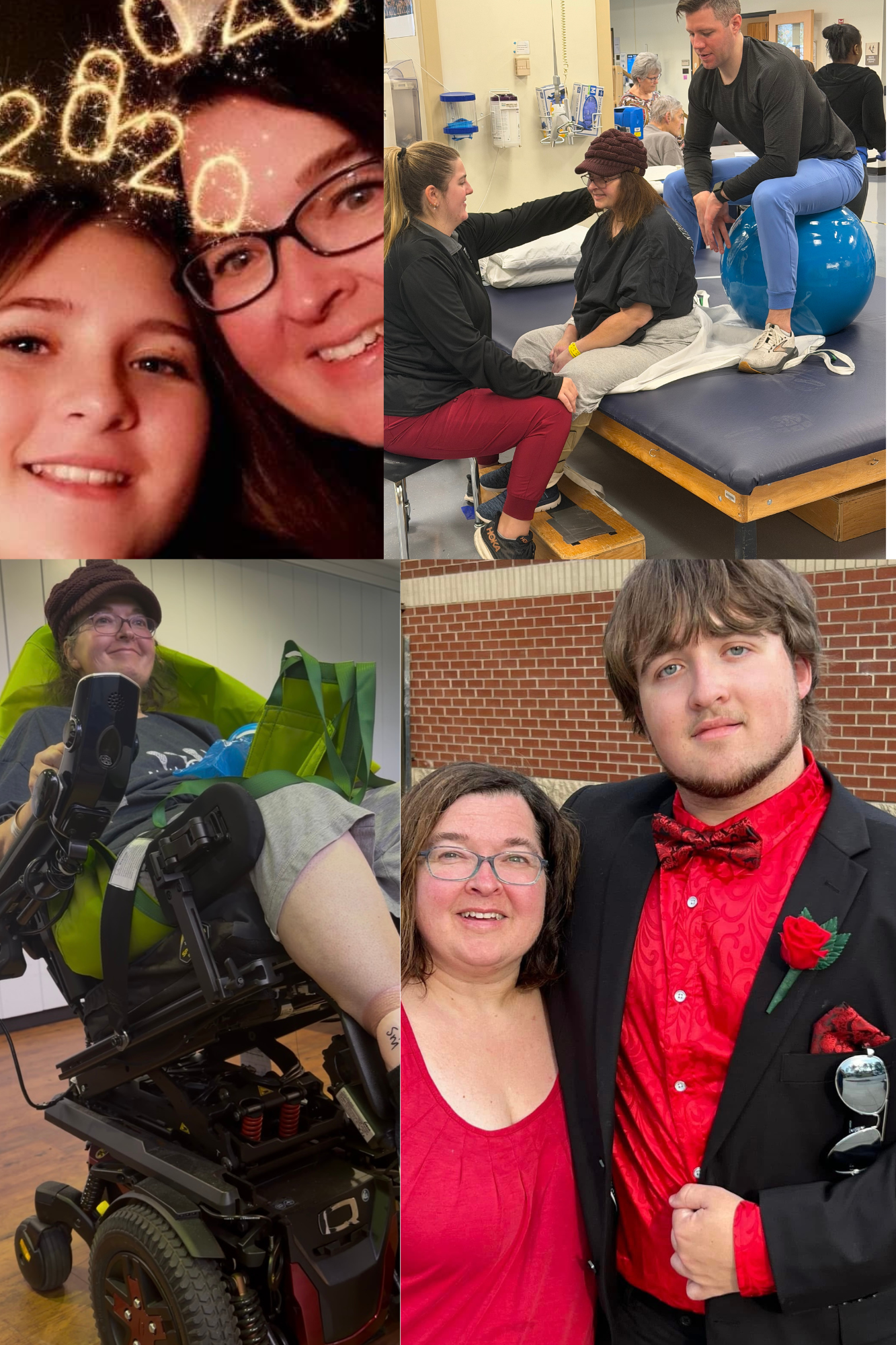
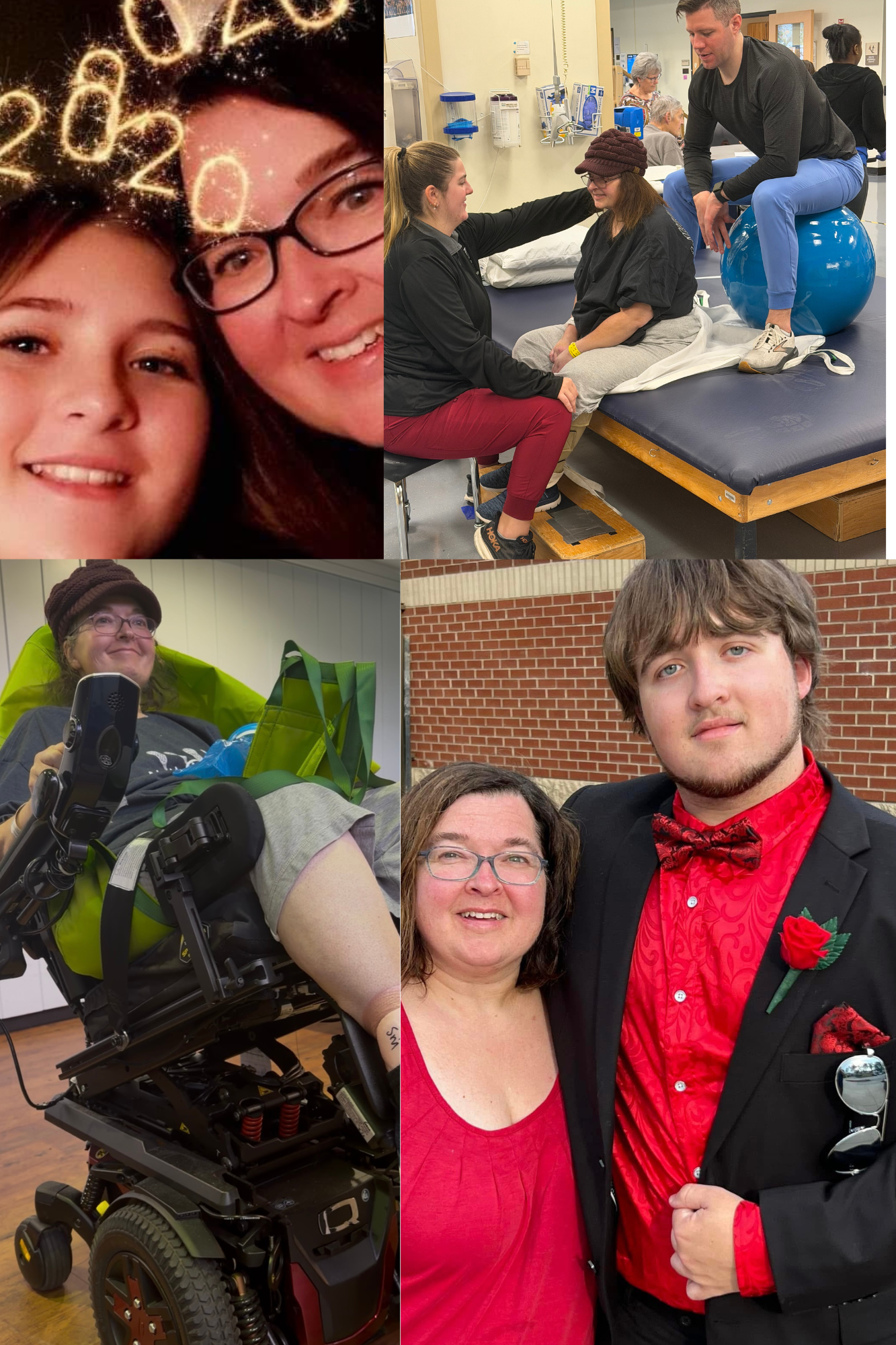
Hi, this is Harry. I am reaching out to our wonderful network of family and friends to try and raise funds to help get Juliana home where she can continue her recovery. Doing a GoFundMe is one of the last things I wanted to do. With that said, I have come to the realization that we need help at this time. We have been told our first-year costs are estimated to be about $125,000 or more. Those funds are for in home nursing, physical and occupational therapists visits, buying medical equipment, treatments, and supplies that are not covered by insurance, making the basement an accessible area/bath/kitchenette for her to live (our house has two flights of stairs and her wheelchair alone is 300lbs), recover, and do in home PT and OT, and for acquiring wheelchair accessible transportation.
We have had so many amazing family and friends already helping, visiting, and wanting to assist. I want you to know we appreciate and love you all! If you cannot help financially, please don't worry. Sharing this and her story would mean a lot as well as a text, call or hug!
Thank you so much for your love and support during this difficult time!
Here is her story...
Over the past 2–3 years, Juliana started having weakness and balance issues. After a lot of tests and trying to find the cause, CTs and MRIs discovered the abnormality in her spinal cord. After much research and getting opinions, she decided to have surgery to treat or repair the issue and fix or slow the muscle and balance problems.
The first surgeon, who diagnosed the issue, was not experienced in this procedure. Her preferred doctor — a previous surgeon who had been doing MRIs on her every few years since her first brain surgery 20 years ago — told us he was retiring and not taking new cases he couldn’t see through. The third surgeon was very positive and convincing that she would do great. His approach was going to be minimally invasive, and she should make a quick recovery with a very good long-term prognosis.
Due to her condition, she had put on weight over the past couple of years and decided to have gastric bypass surgery in May to prepare for the brain/spinal surgery. That has gone well. To date, she has lost about 110 lbs.
Jump to September.
Two weeks post-surgery, she was not improving. The doctor’s demeanor toward us changed. I was questioning why she was not responding and improving as expected. I had to firmly request more scans to check the position of the shunt in her spine. He said nothing had changed and there was no need. I then insisted on the tests. They finally did the scans and we were told everything looked right. I asked why she was not improving like he said she would. He said he didn’t know, but patients who do well respond and recover quickly, and unfortunately, she wasn’t. I was dumbfounded by his response.
We received a letter a week later that he was retiring. He knew we came to him because her previous doctor was retiring. He never mentioned anything about he was retiring as well. He didn’t schedule any follow-up appointments, avoided me by coming to see her at off times, or had his residents and nurses check on her.
The hospital then decided that after three weeks in ICU, and about a week out of ICU with little improvement, she needed to go to sub-acute care (a nursing home), or I could just take her home. We had three days to figure it out, or they were sending her wherever there was an open bed.
Again, we had to step in and advocate that this was not the care she needed. On the last day, I finally got her accepted to acute care rehab in a hospital setting. There, she started rehab with some great PT and OT therapists. It was at this point I first learned of her diagnosis (you would assume the hospital medical team would have informed us of this — wrong). Her diagnosis was/is Incomplete Quadriplegia. I was floored. This was never disclosed or discussed with us.
As we were mentally processing what we’d been told, she had another setback. Every time they set her upright, her blood pressure would drop so low they couldn’t get a reading. It took two weeks to get her blood pressure somewhat stable, and she was finally able to start the rehab process.
Acute care rehab is usually about two weeks. We appealed with insurance, and they gave her an extra 10 days. She was doing great. She has the ability to use both arms and legs — just not well. Her muscles work and respond, just not as they are supposed to due to the spinal surgery and damage caused to the spinal cord from the shunt placement. Her right side is relatively strong and has movement, but it is limited. The bigger issue now is her left side. She has a little strength and movement, but little to no feeling; although she can move it, she can’t really control that side unless she is looking directly at what she is trying to do. Amazing how the brain and spine work.
With zero-gravity resistance, it is very encouraging to see the movement she has, but with the slightest resistance, she has issues. That is still very positive. With assistance, she is able to stand, and as her muscles strengthen, it gets a little better each time. She can stand, with assistance, for about two minutes.
Unfortunately, her time at acute care ended. We wanted her home, but she decided she wasn’t ready to come home. It was just not anything we had prepared for. She was supposed to come out better than she went into surgery, or at least with a clear path to recovery.
Now we are close to two months post-op.
We found a somewhat acceptable sub-acute (nursing home), and she moved on to her next steps in rehabilitation. For about a week or so, she was getting treatment, resting, and recovering. Everything was progressing, just slowly. Then she started having vision issues. On the fourth day at the nursing facility of not receiving her medical care for the vision issues, I had them call 911, and we took her to the emergency room. She was seen relatively quickly, and it was determined she needed to go back to the doctor and hospital where she was treated and had her medical records. The problem was that her surgeon had retired.
This is where things have started to improve.
After 10 hours in the ER on Halloween (Friday), she was transferred back to Emory, put in a nice room, sent for testing, and assigned to an amazing neuro medical team. On Sunday evening, the nurse came in and said, “We are moving you to ICU, and you are having surgery tonight.” After processing everything, we finally had the chance to speak with the surgeon and resident. We were told they were putting a drain in her brain where cerebrospinal fluid is produced. The shunt in her spinal cord was not working, and fluid had built up around her brain stem, causing severe double vision. She was starting with the simplest fix for a very complex problem. Since the previous surgeon had retired, they weren’t sure why he placed the shunt in the spinal cord as it was already damaged and very thin from the syrinx. They were hopeful to relieve the pressure before any more damage occurred and try to treat the vision issues. She was not as optimistic about the vision.
After a week or so in ICU, her vision cleared up (which surprised the surgeon), and after more MRIs and CT scans, the fluid had decreased, and the syrinx was reducing. They then went back in with another surgery to install an adjustable shunt in the brain with a tube down her spine to her stomach to drain the fluids.
After another successful week or so, she was discharged with time for us to choose an acute care facility, with a full plan on follow-ups and a care plan. She was even accepted to The Shepherd Center — the leading spinal cord and TBI rehab hospital in the country! Unfortunately, no bed was available at the time.
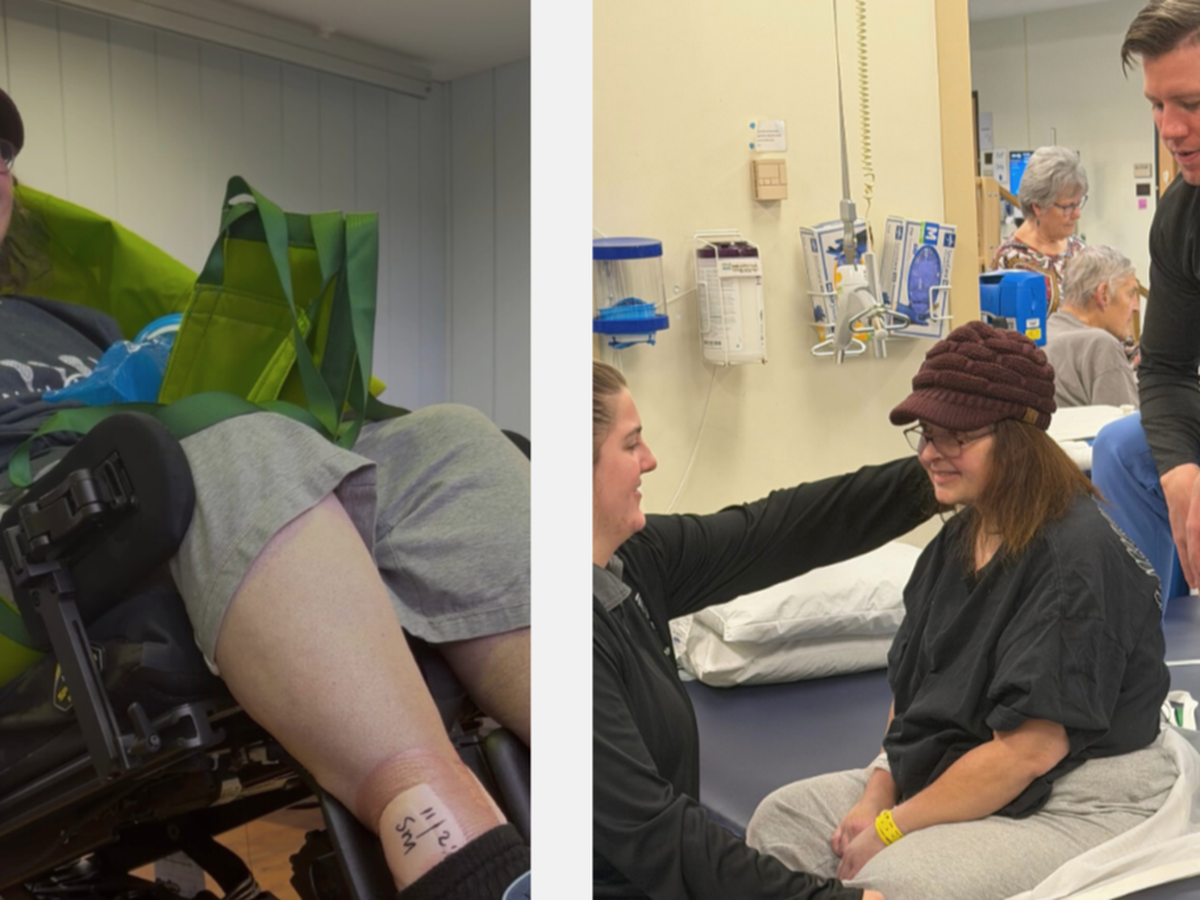
Again, the new facility has great OT and PT therapists and very good nursing. Here she was put in a power wheelchair while hers is being custom-built. She has finally stood again, sat up on her own, and even rested on her stomach (she is a stomach sleeper and didn’t know if she would ever be able to again).
Finally, she is making good progress again. She seems to be in a good place mentally and hopefully on the road to recovery.
What her full recovery will be is still unknown. We are back to waiting on the spinal cord to recover. We are told it could take anywhere from six months to a year to five years, as every spinal injury is different and depends on many factors.
The team told me privately they do not know why the first surgeon went into the damaged area on the spinal cord. We are just thankful for the new team of doctors and the many therapists we have now.
As of December 1st she transfered to the Shepherd Center in Atlanta for continued rehabilitation and working on her new normalcy. Whatever that is going to be.
Stay tuned for more as we start the transition from hospital and rehab to moving her home and continuing the rehab process!
Juliana and Harry