- K
- b
- T
Who are we?
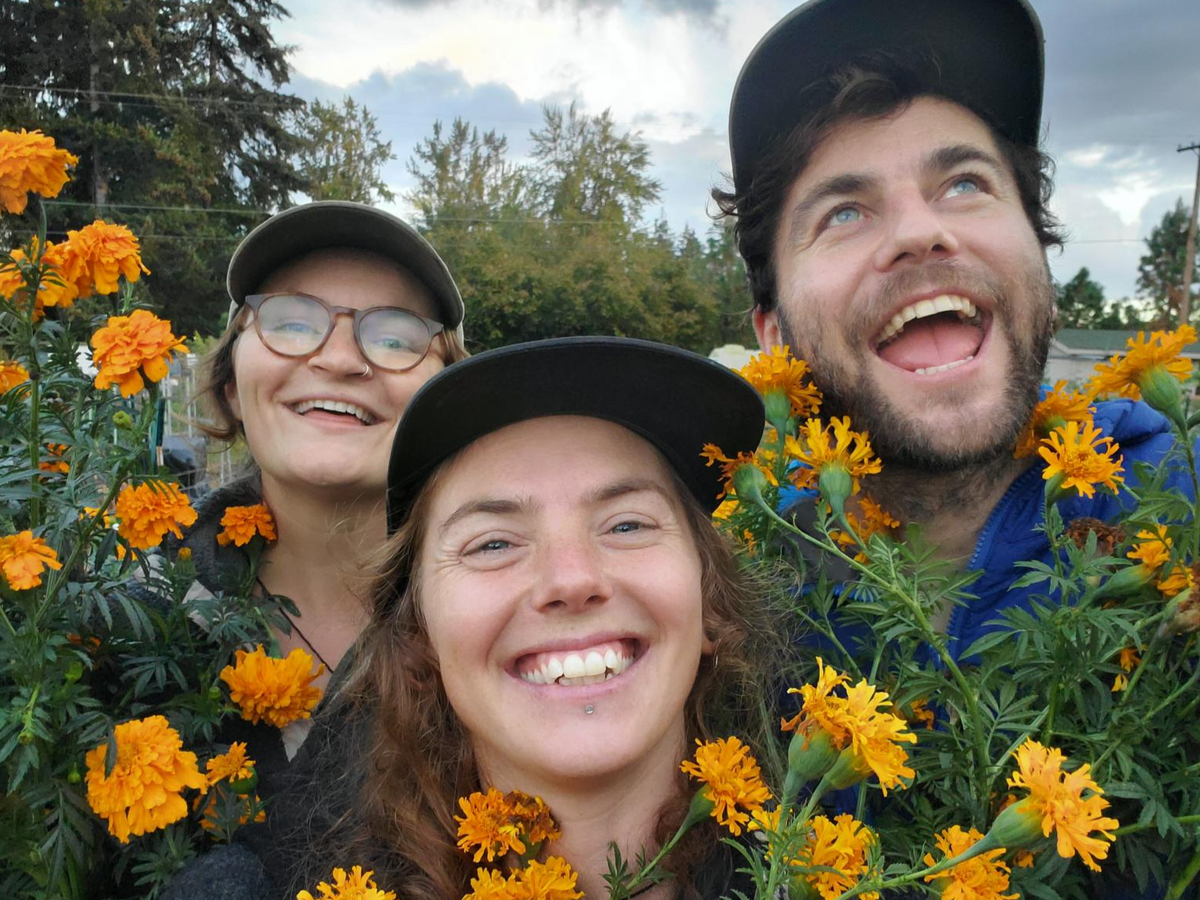
Hello, our names are Cameron, Mae and Tim (left to right in picture) and we are fundraising for the start-up costs of our charitable organization, Deeply Seeded. The three of us currently work as ecological landscapers with various clients around Eugene, mostly working with native and edible landscapes.
What is the project you would be supporting?
In this project we are looking to build positive environmental change through building free food access, native habitat and using dry farming methods as a way to close waste loops and decrease water usage. We are creating social change by having the site be a hub for community connection, education and a source of beauty in the Eugene community.
We are just now putting our first plot at Alton Baker Community Gardens to bed after a very productive year. We tested out multiple varieties of different fruits, veggies, flowers and herbs including: tomatoes, thornless blackberries, yellow squash, corn, okra, mellons, peppers, bush beans, eggplant, tomatillos, marigolds, strawflower, perennial cornflower, pineapple sage, calendula and chives.
The Deeply Seeded team has been using our personal funds to keep the project running for the last year and we are now looking to expand and apply for grants. In the meantime, we are in need of funds to support the costs of supplies for next year at our current site in the Alton Baker Community Gardens and a new site being established in the River Road neighborhood.
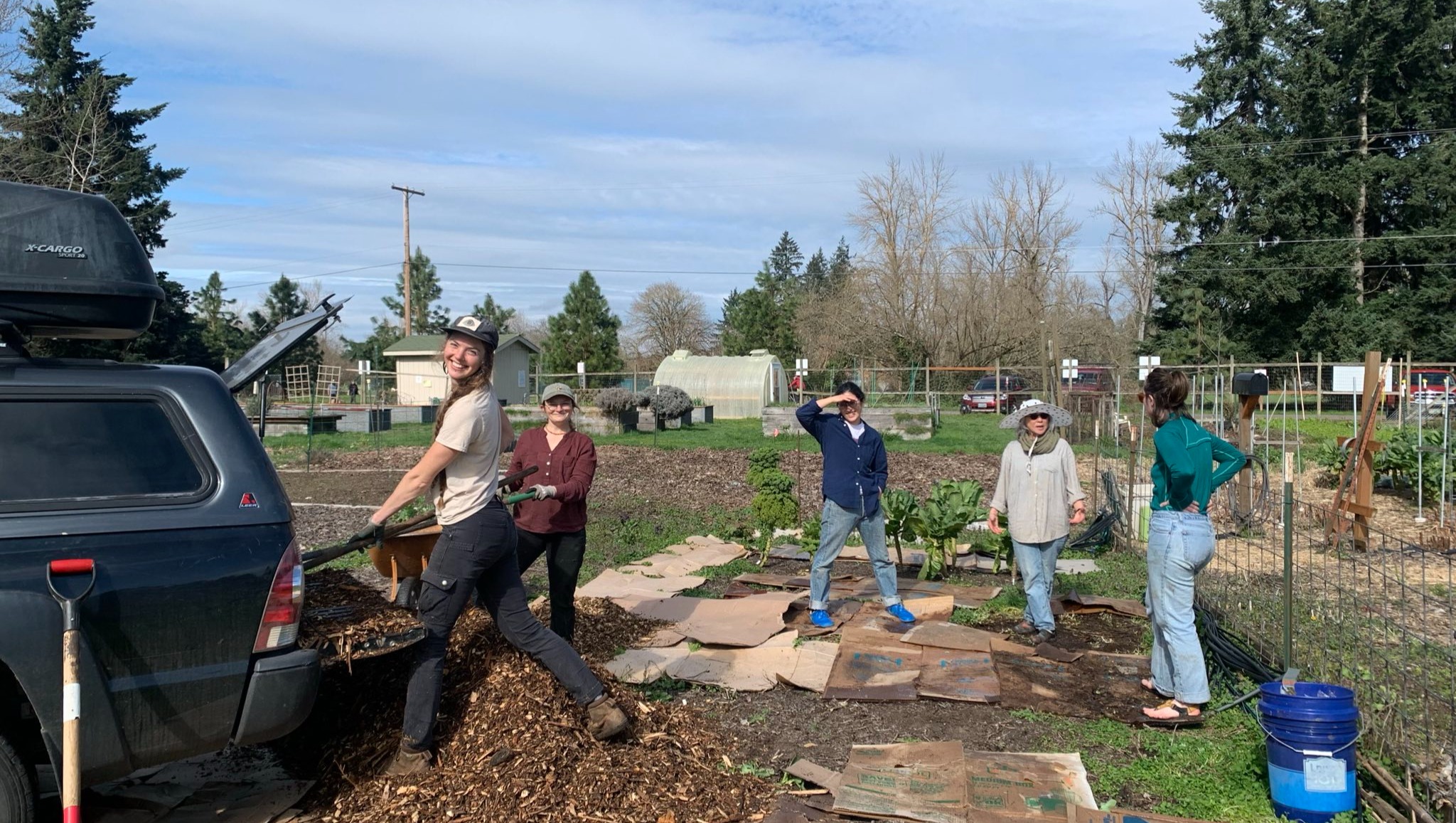
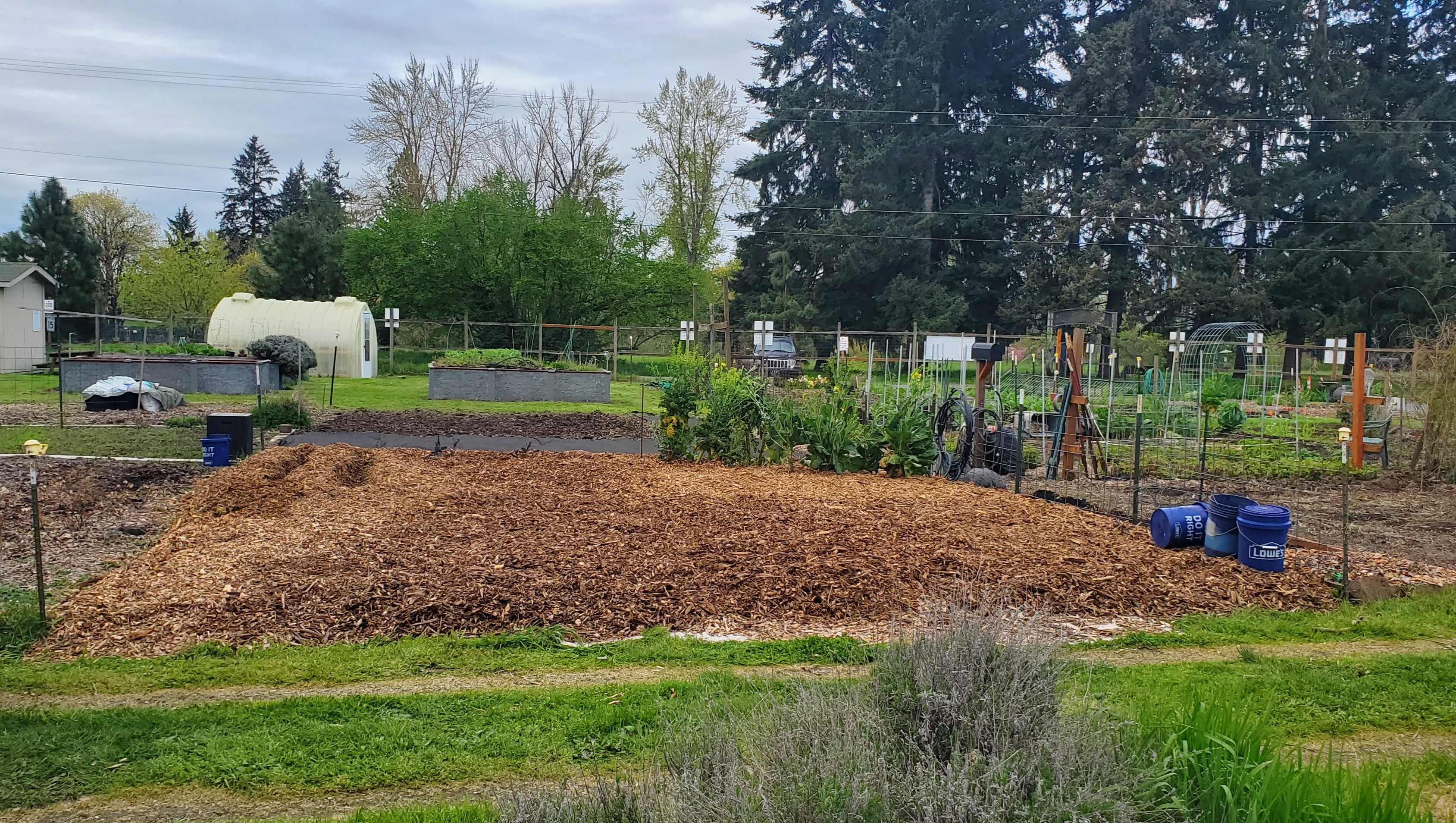
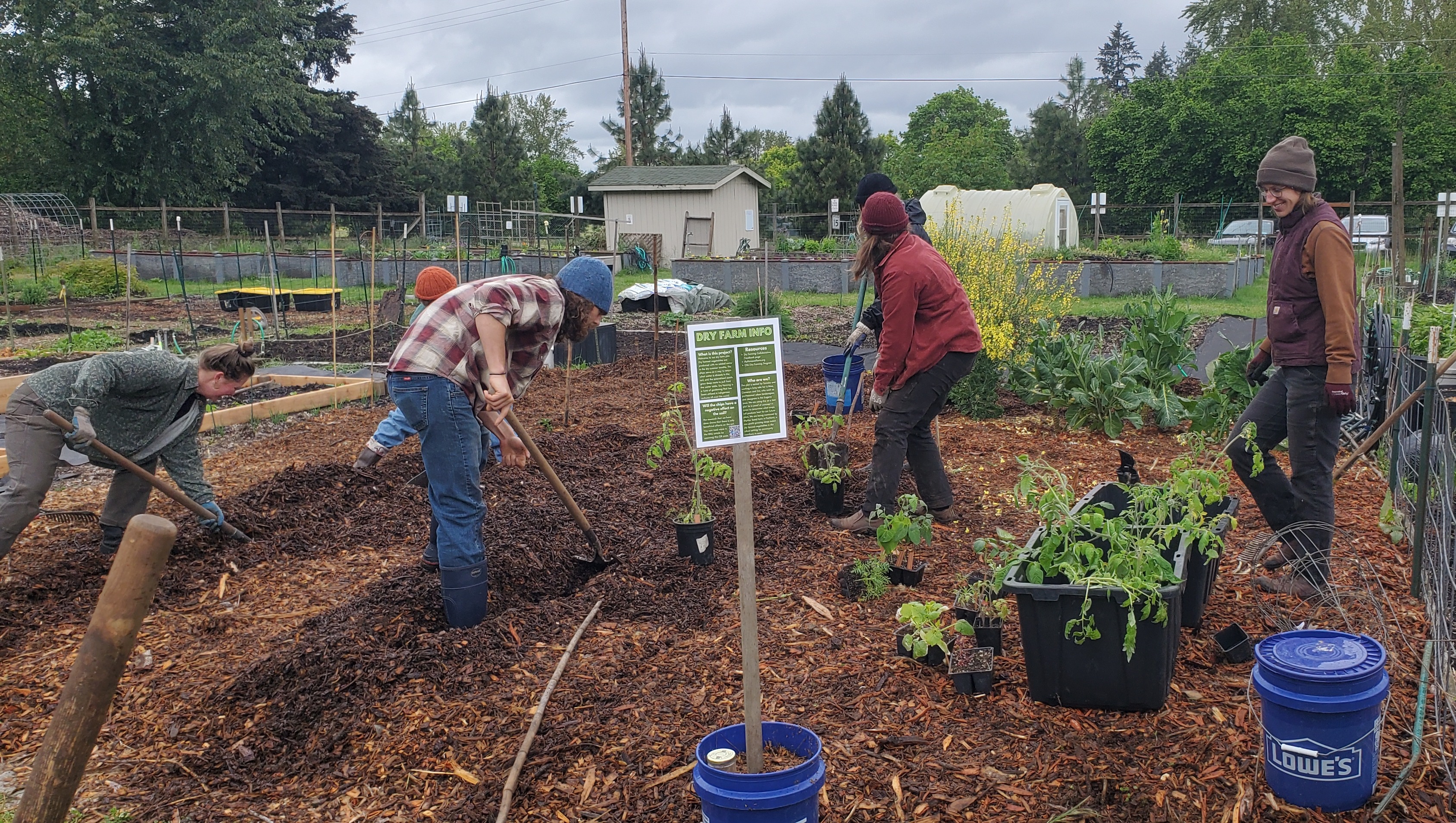
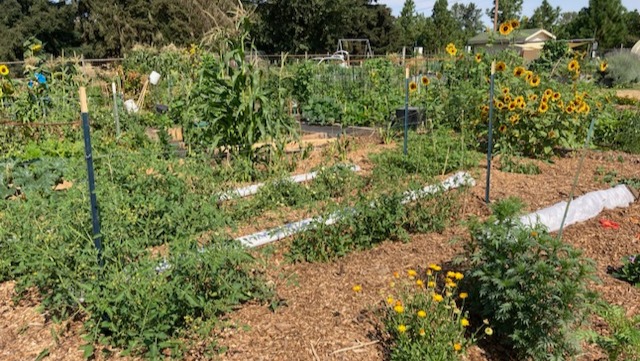
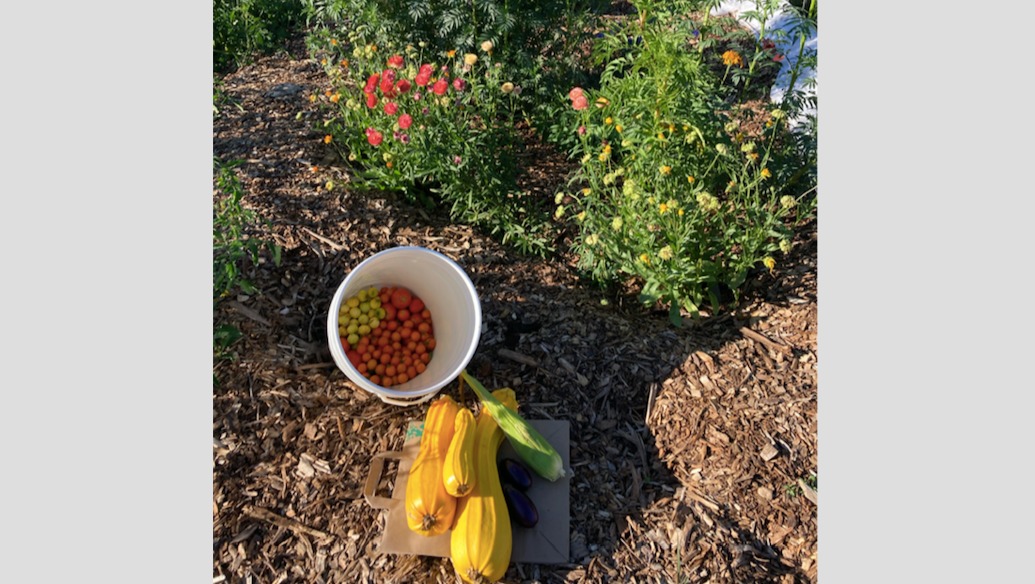
What is deep mulch dry farming?
As defined by the Dry Farm Institute, dry farming is “crop production without irrigation during a dry season, usually in a region that receives at least 20 inches (50 cm) of annual rainfall, and utilizes the moisture stored in the soil from the rainy season.” (dryfarming.org) Deeply Seeded will be using the deep mulching method of dry farming which calls for a thick 1 foot layer of wood chips to aid water retention in the soil. The initial 1 foot of chips is left fallow for a year and then planted the next spring as the lower layer of chips breaks down to soil, organic matter and usable nutrients. Each year 6 inches of arborists chips are added to the top as the chips continue to break down.
What are the funds going towards?
-Logo and website design
-Starts/Seeds for next year
-Tomato trellises
-Infrastructure building materials
-Shade cloth
-Misc gardening supplies
-Snacks for volunteers
-Signage for educating public
-Community Garden membership
-Initial costs for marketing materials