- H
- M
Help a Black Woman Pay for EDo Treatment
0% complete
$10,796 raised of $15K
250 donations
A Black woman is in need of our community's support so that she can complete her life-saving eating disorder treatment in residential, partial hospitalization, and intensive outpatient. She is requesting anonymity to protect her safety.
An example of what she has had to deal with while trying to heal in residential and partial hospitalization:
In response to "the racism of this institution is overwhelming", staff members would often say "focus on what you can control and don't hide behind racism in order to not make progress with your ED."
More examples (too many to count) of how racism has shown up in her EDo treatment:
- Staff denying and delaying medical care for a serious physical issue for days
- Staff ignoring the impact of current racial trauma both externally and within the treatment center
- Staff not intervening during blatant racism in groups
The work of activists and professionals such as, Rawiyah Tariq , Jessica Wilson , Whitney Trotter , Safiya McHale , and Alishia McCullough are continuing to bring attention to anti-Blackness within the eating disorder community. If you have learned from their work and/or you are taking action to divest from small or large, white institutions, please like, share, and donate to this Black woman so she can rest about money while healing. Instead of paying for a conference and/or training led by white folks, donate the money you would have on those and use it here.
For anyone who doesn't know how much residential eating disorder treatment costs , it can be shocking to discover that one month of care can cost more than $50,000. Even if insurance covers the cost of treatment, many people do not have disability insurance to cover the cost of their bills while not working. It can take 3-6 months to move through residential, partial-hospitalization, and intensive outpatient treatment programs. Many people do not have savings to cover living expenses for 3-6 months.
Healing from an eating disorder takes time. It is a complex biological and behavioral medical issue. Our society does not take into account the amount of time healing takes and how that impacts our ability to survive under capitalism.
Black people have been historically and are currently underdiagnosed, misdiagnosed, and do not receive the life-saving treatment that they need because of systemic racism at all levels of healthcare. Then they must endure re-traumatization by overwhelmingly white treatment providers who do not recognize systemic oppression and the power dynamics that they are inherently a part of; while facing past racial trauma in their therapy and needing this treatment to stay alive.
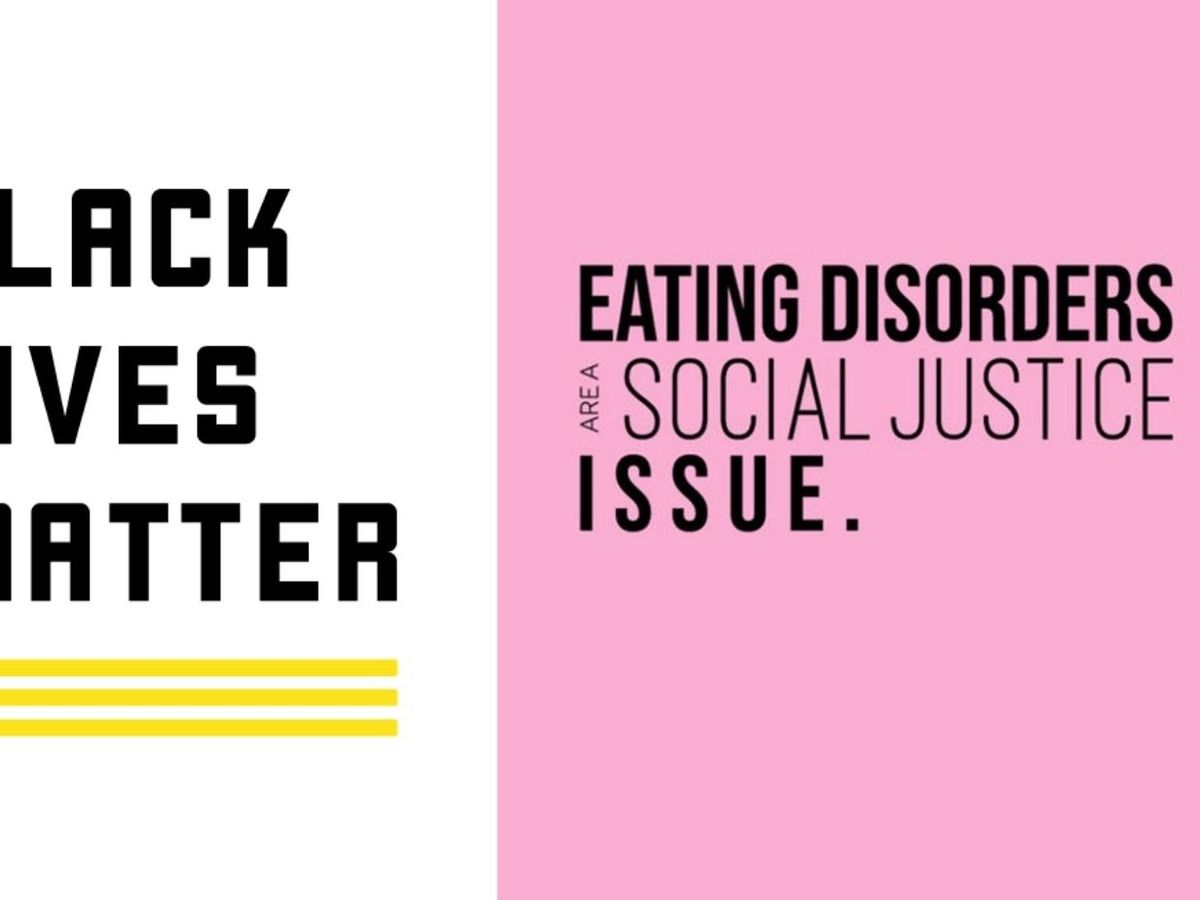
A special thank you to Nalgona Positivity Pride for letting us use their "Eating Disorders are a social justice issue." photo.
Thank you for taking action to contribute to this Black woman's healing and showing up as a community for her!
Remember to like, comment, donate, and share to boost this until our goal is met.
Thank you!
An example of what she has had to deal with while trying to heal in residential and partial hospitalization:
In response to "the racism of this institution is overwhelming", staff members would often say "focus on what you can control and don't hide behind racism in order to not make progress with your ED."
More examples (too many to count) of how racism has shown up in her EDo treatment:
- Staff denying and delaying medical care for a serious physical issue for days
- Staff ignoring the impact of current racial trauma both externally and within the treatment center
- Staff not intervening during blatant racism in groups
The work of activists and professionals such as, Rawiyah Tariq , Jessica Wilson , Whitney Trotter , Safiya McHale , and Alishia McCullough are continuing to bring attention to anti-Blackness within the eating disorder community. If you have learned from their work and/or you are taking action to divest from small or large, white institutions, please like, share, and donate to this Black woman so she can rest about money while healing. Instead of paying for a conference and/or training led by white folks, donate the money you would have on those and use it here.
For anyone who doesn't know how much residential eating disorder treatment costs , it can be shocking to discover that one month of care can cost more than $50,000. Even if insurance covers the cost of treatment, many people do not have disability insurance to cover the cost of their bills while not working. It can take 3-6 months to move through residential, partial-hospitalization, and intensive outpatient treatment programs. Many people do not have savings to cover living expenses for 3-6 months.
Healing from an eating disorder takes time. It is a complex biological and behavioral medical issue. Our society does not take into account the amount of time healing takes and how that impacts our ability to survive under capitalism.
Black people have been historically and are currently underdiagnosed, misdiagnosed, and do not receive the life-saving treatment that they need because of systemic racism at all levels of healthcare. Then they must endure re-traumatization by overwhelmingly white treatment providers who do not recognize systemic oppression and the power dynamics that they are inherently a part of; while facing past racial trauma in their therapy and needing this treatment to stay alive.
A special thank you to Nalgona Positivity Pride for letting us use their "Eating Disorders are a social justice issue." photo.
Thank you for taking action to contribute to this Black woman's healing and showing up as a community for her!
Remember to like, comment, donate, and share to boost this until our goal is met.
Thank you!